Loading breed
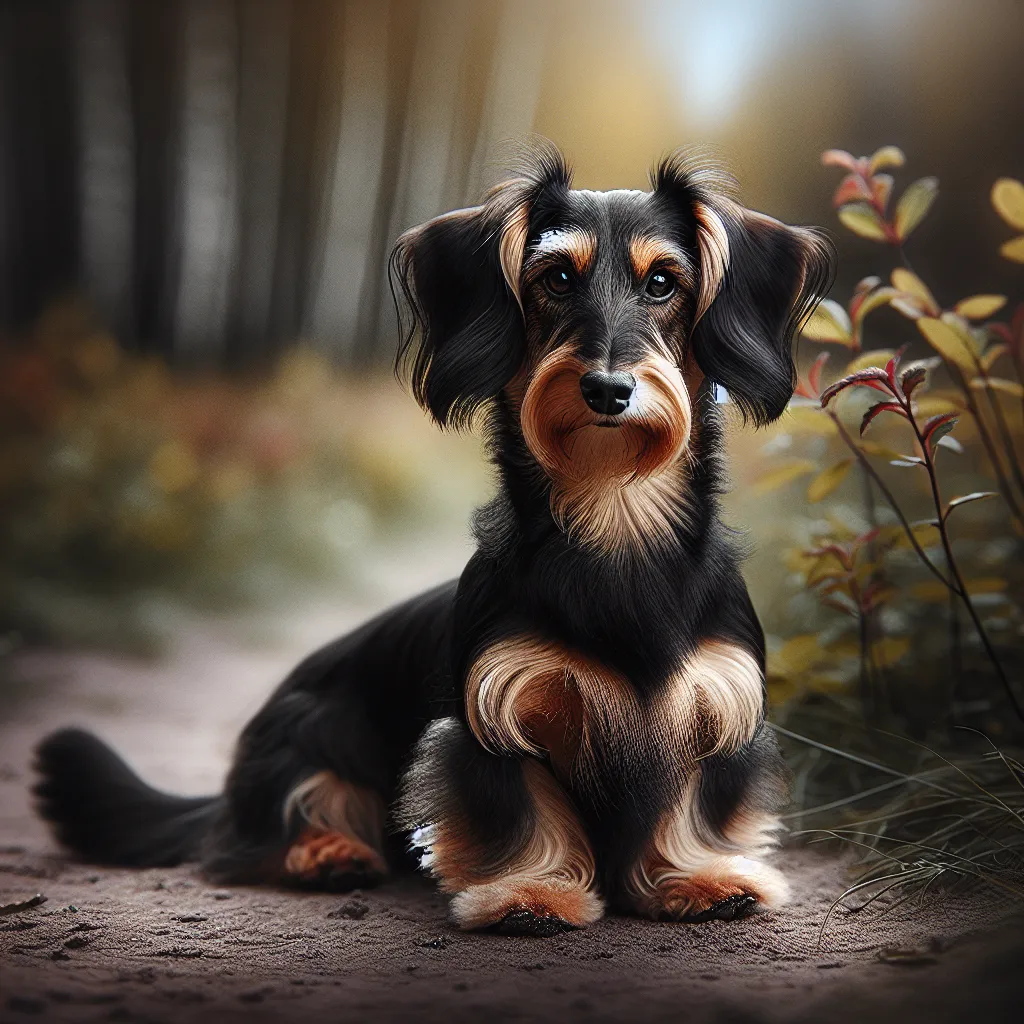
Miniature Dachshund
Health grade D- Height18–21 cm
- Weight3–6 kg
- Life expectancy12–16 yrs
- Puppy price1,200–2,500 €
- Energy3/5
The Essentials at a Glance
The Zwergdackel is a courageous, extremely self-confident Baujäger (earth dog) — bred to hold its own against predators in narrow tunnels completely independently. It is precisely this fearless independence that makes him a big dog in a small package.
- Health grade D: The Miniature Dachshund is rated D for health, as the breed is affected by significant breed-specific problems.
- You appreciate a dog with a strong mind of its own and take his stubborn nature with humor instead of insisting on blind obedience.
- You provide him with real scent work or tracking — an unemployed Baujäger will quickly find his own projects otherwise.
- You expect him to turn around immediately when called during a walk — he was bred to make his own decisions underground, far away from your voice.
Self-check
Would the Miniature Dachshund really fit your life?
Answer 6 quick questions about your everyday life and see how well the Miniature Dachshund fits you — including an honest cost estimate per month, per year, and across the dog's lifetime.
Fit checkCost estimateRisk dice
Takes about 1 minute · free & anonymous
Is the Miniature Dachshund right for you?
At a glance
Miniature Dachshund overview
The essentials — key facts, traits, and health priorities — before you dive deeper.
Health grade
Relative to other breeds
S
A
B
C
D
E
Very healthyHigher risk
Elevated risk — responsible breeding really matters.
See full health info & tests →
Note: This health overview is AI-assisted and editorially reviewed. It is for orientation only and does not replace veterinary advice.
Lifespan
12–16 yrs
Height
18–21 cm
Weight
3–6 kg
Practical
- Puppy price: 1,200 – 2,500 €
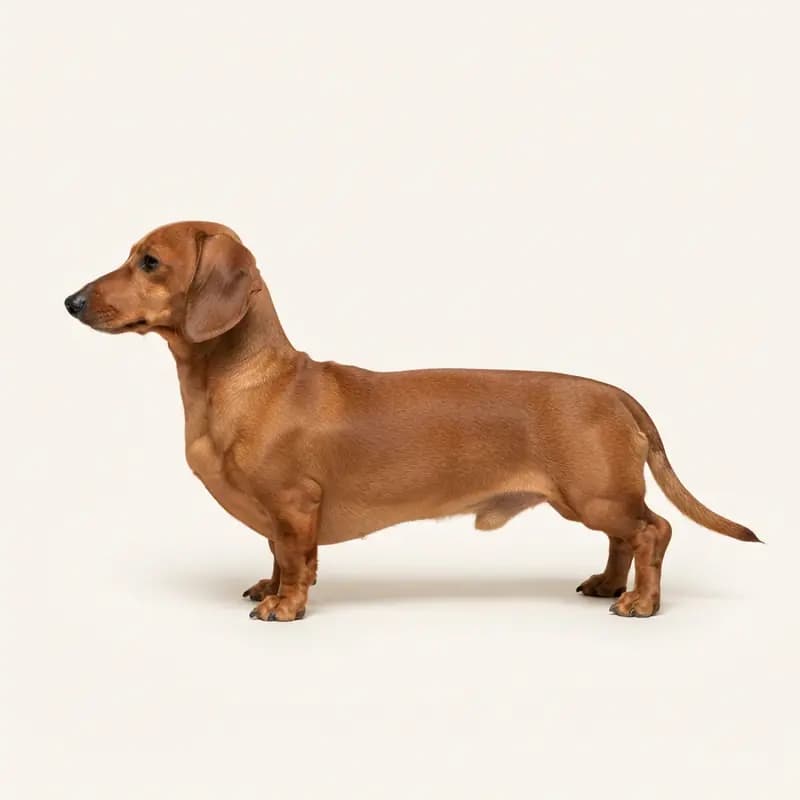
- Coat: Short, smooth, without undercoat
- Origin: Germany
Temperament
Energy
Trainability
Family fit
With kids
Daily life
Care effort
Shedding
Barking
City-friendly
Guard instinct
What matters most
Especially with a Miniature Dachshund, choosing the right breeder is the single most important decision you'll make. Serious breeders consistently test the parents for inherited conditions, prioritize healthy early socialization, and stay accountable long after handover. A cheap puppy without health screening tends to become the most expensive dog later on.
See HonestDog breeder standards →Colors & coat
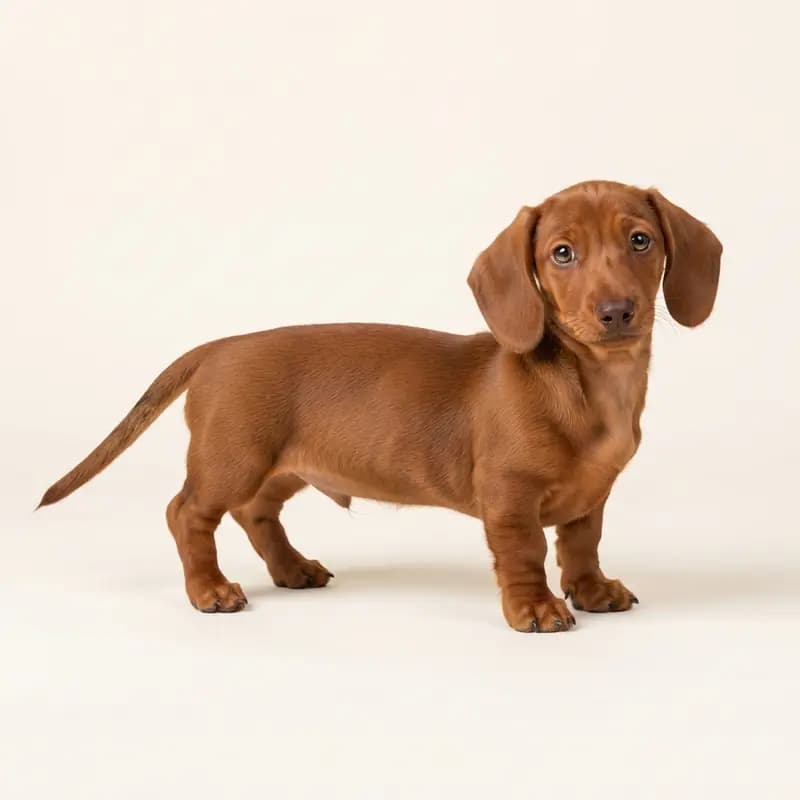
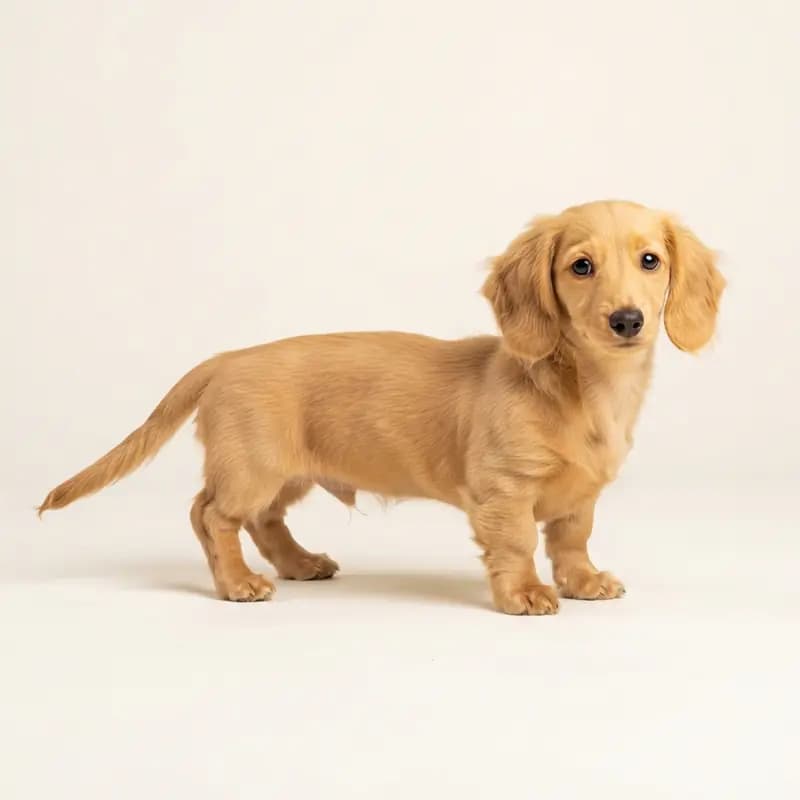
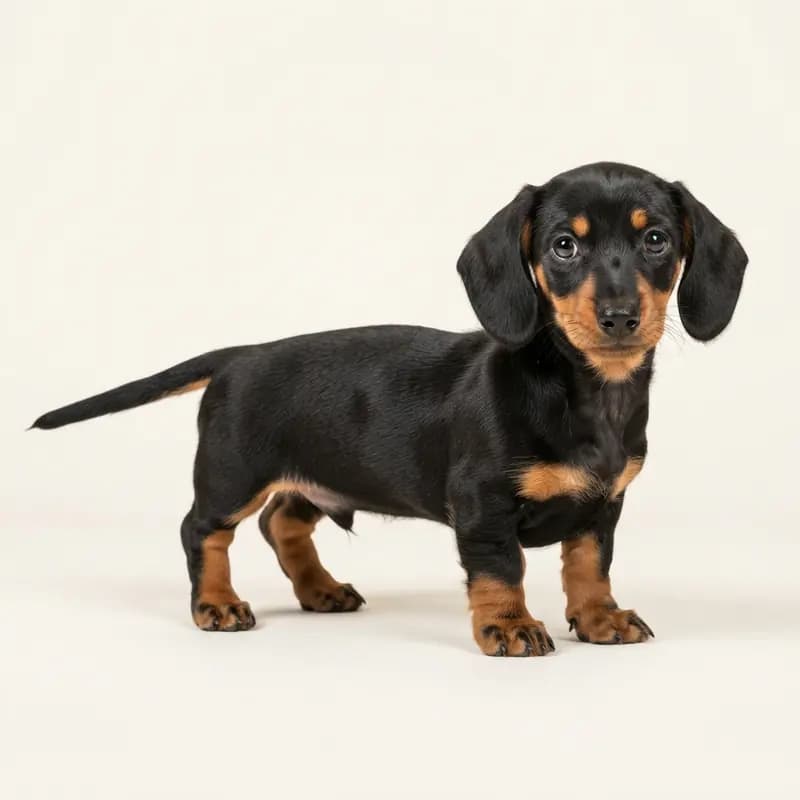
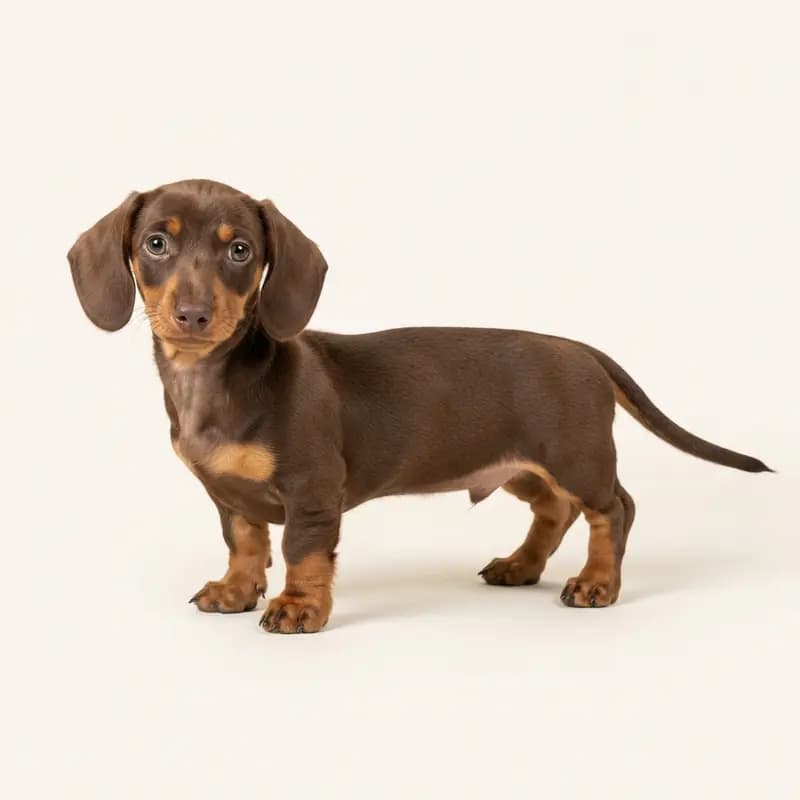
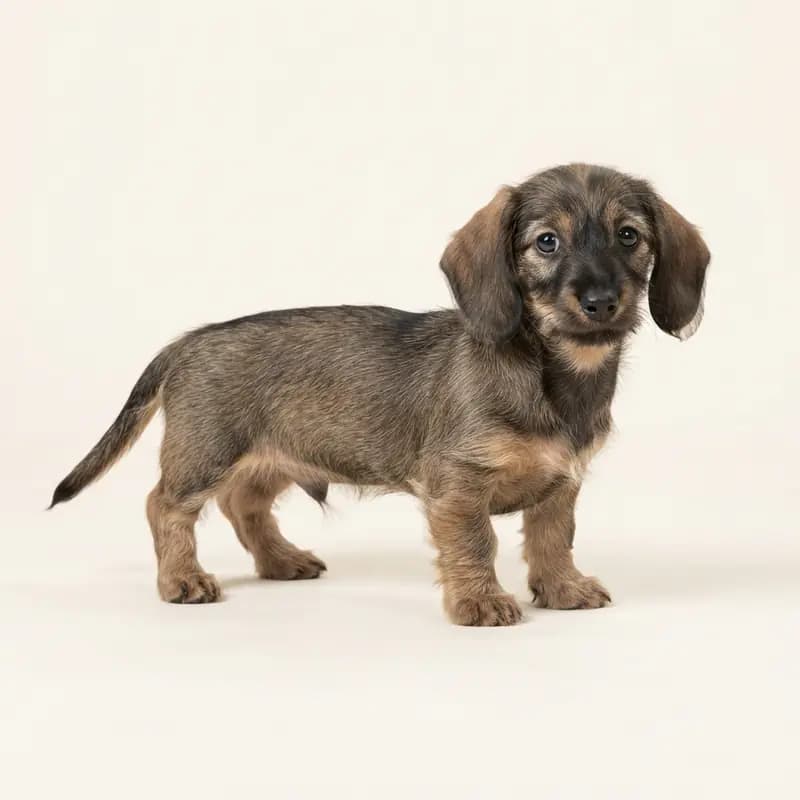
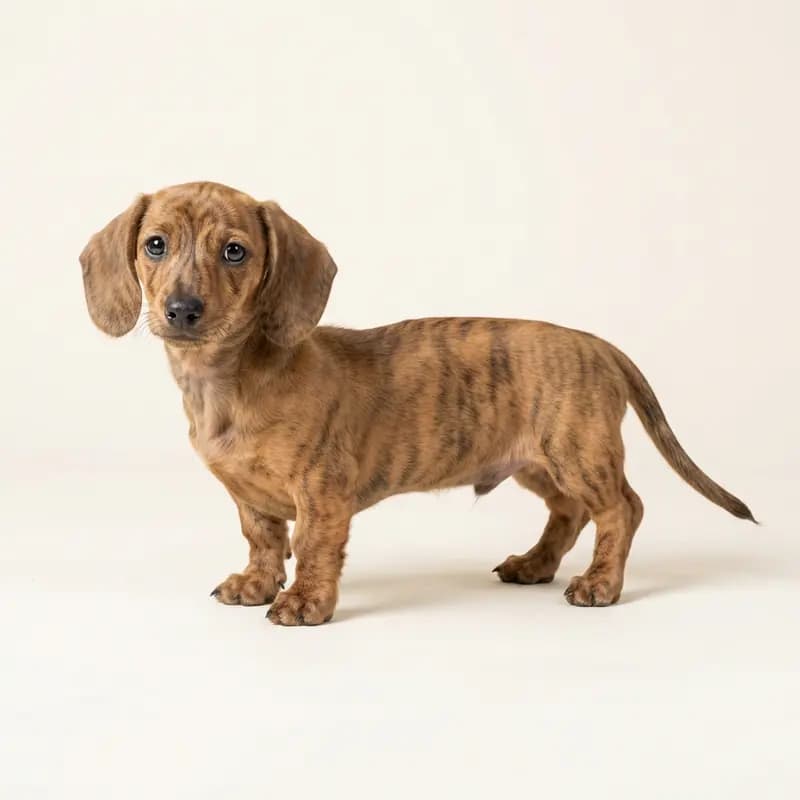
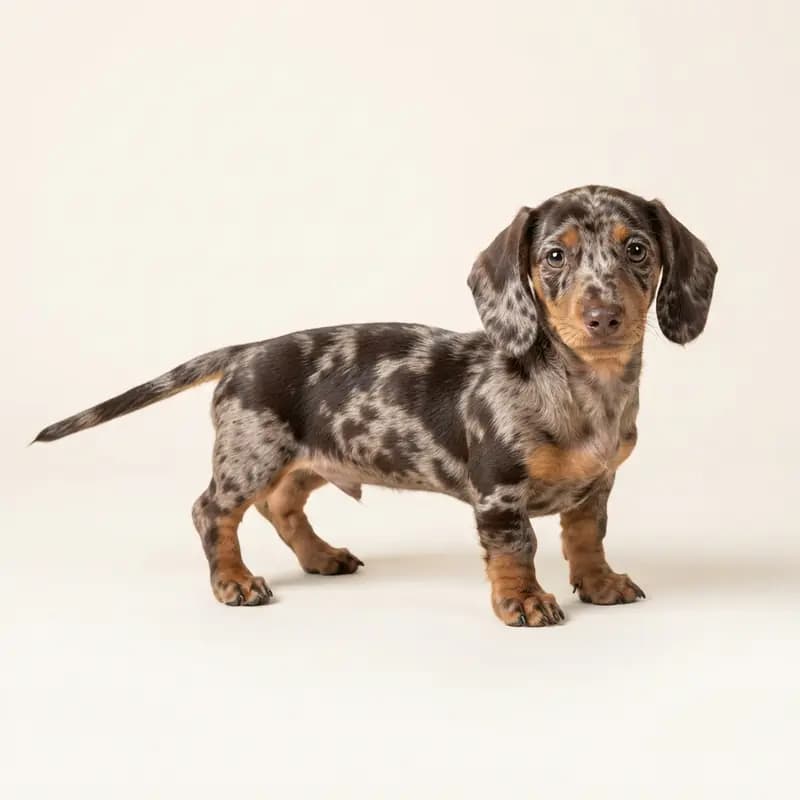
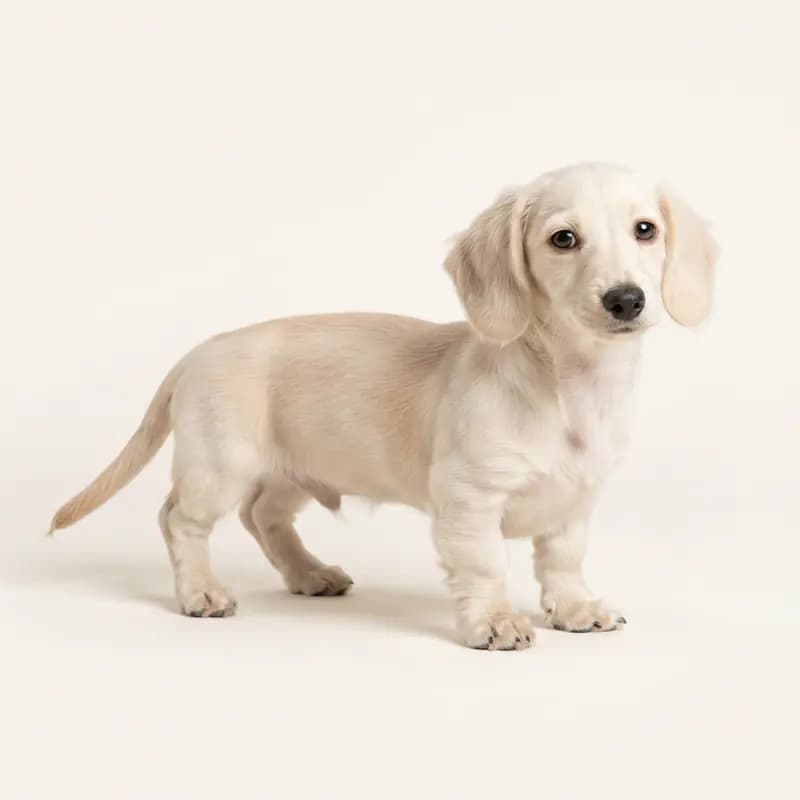
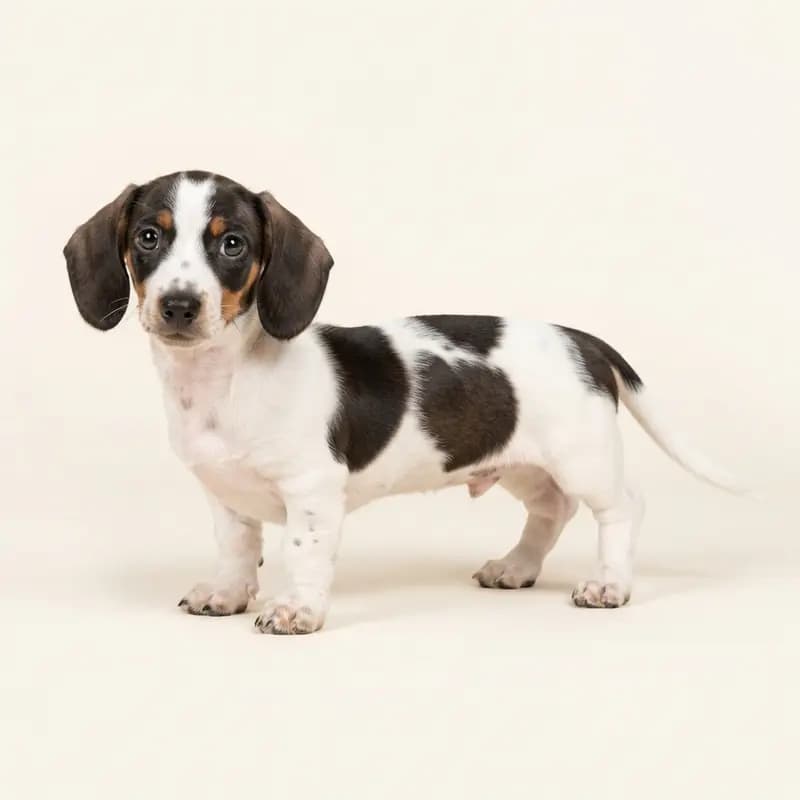
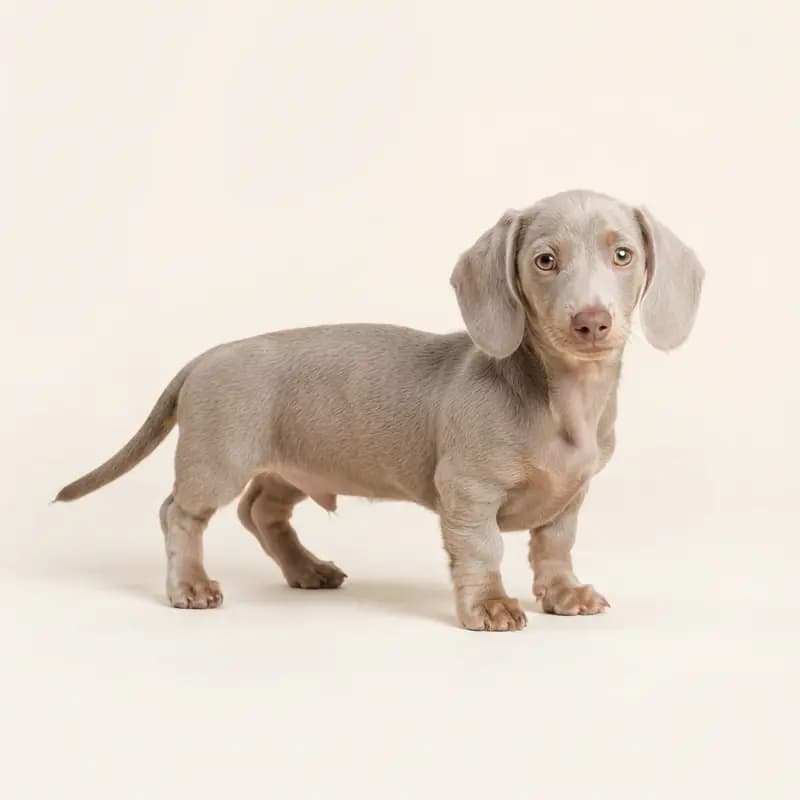
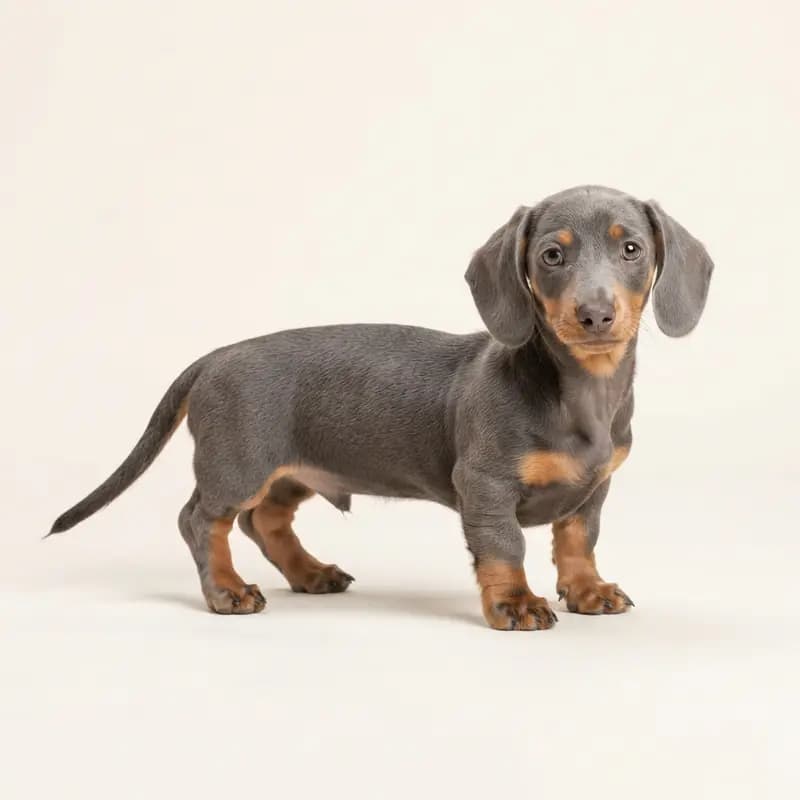
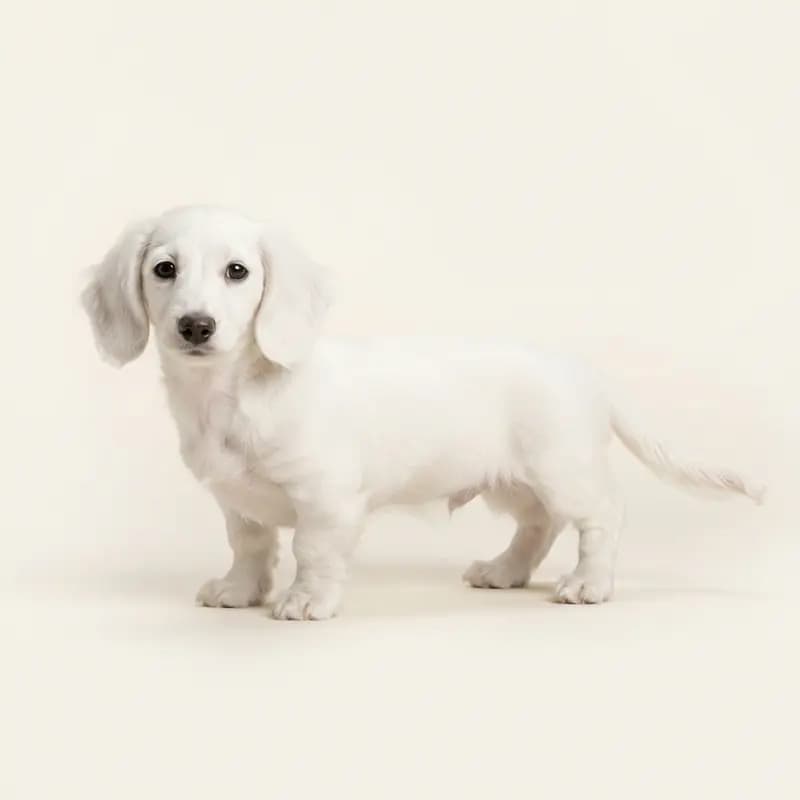
What colors does the Miniature Dachshund come in?
The coat colors you will see in Miniature Dachshund litters — including which ones fall outside the breed standard and which carry genetic risk.
Eye colors
 Brown
Brown Blue
Blue Partial (split eye)
 Odd-eyed
Coat type
 Illustrative image
Short
 Smooth
 Illustrative image
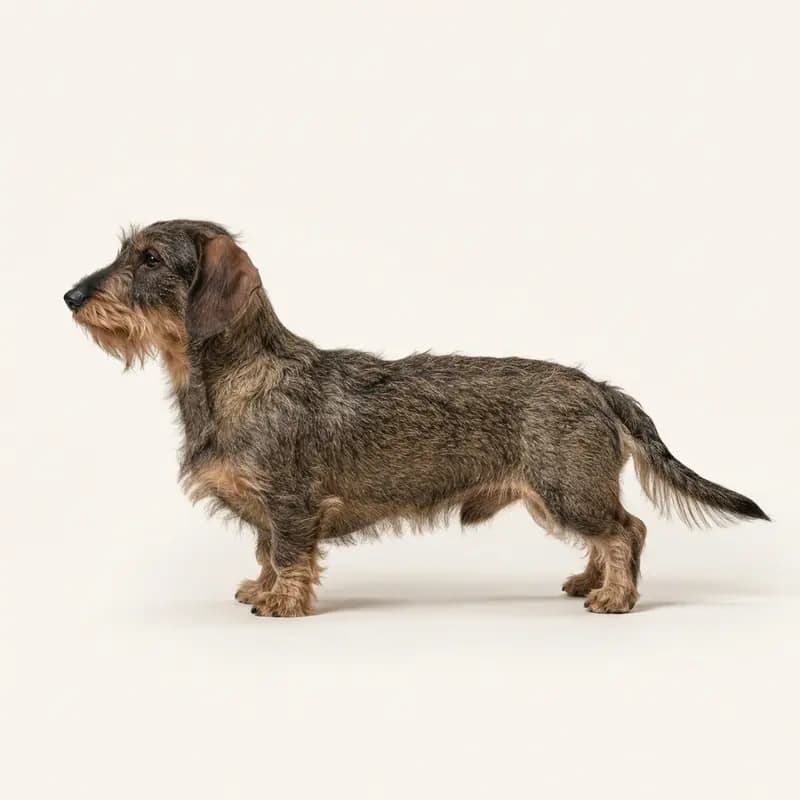
Wire
 Illustrative image
Medium
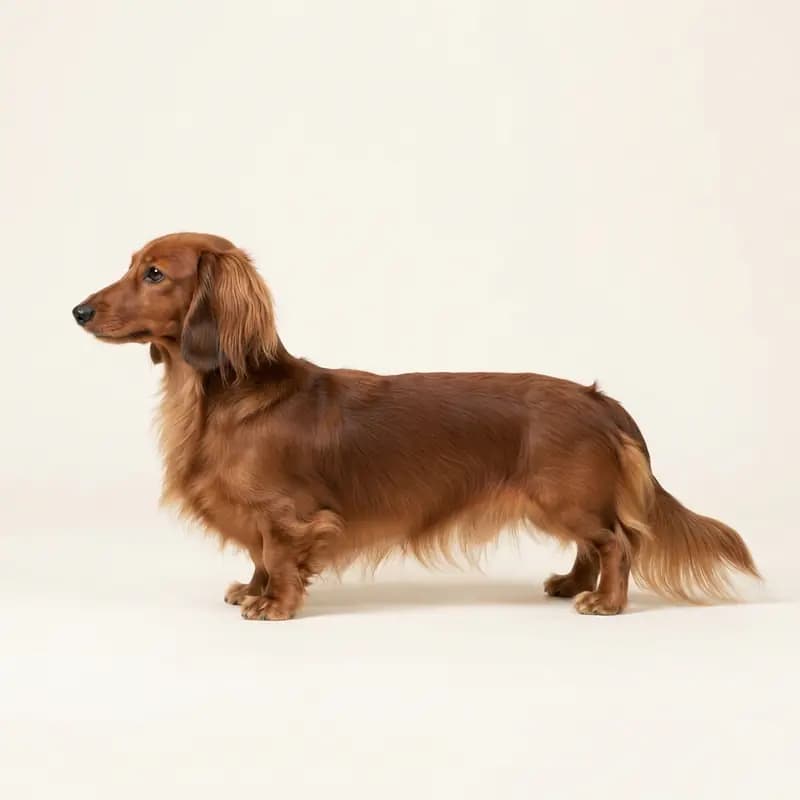 Illustrative image
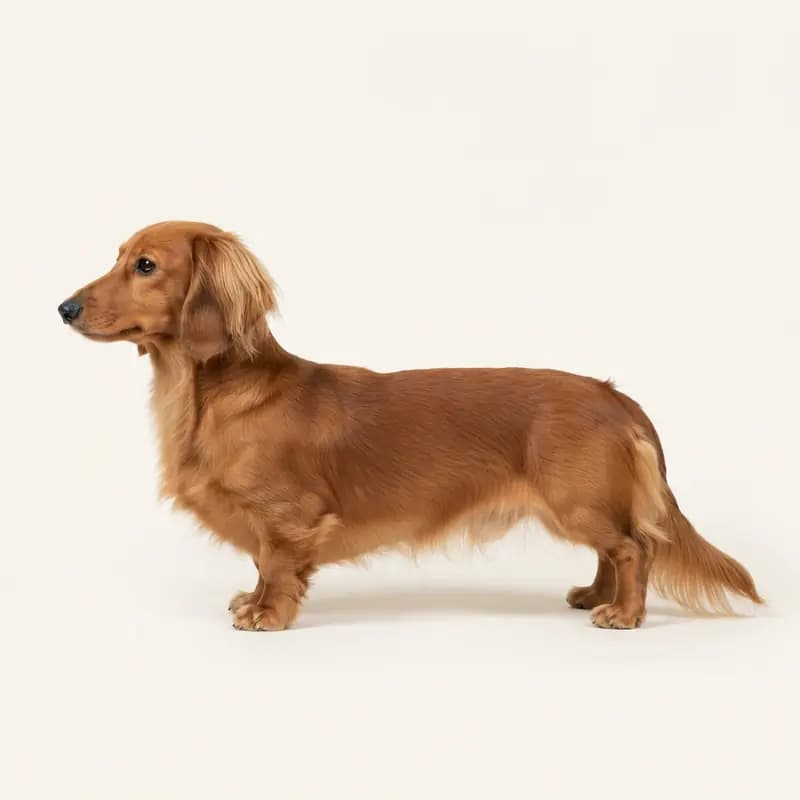
Long
 Silky
Silky
Is the Miniature Dachshund right for you?
Perfect for you if:
- You appreciate a dog with a strong mind of its own and take his stubborn nature with humor instead of insisting on blind obedience.
- You provide him with real scent work or tracking — an unemployed Baujäger will quickly find his own projects otherwise.
- You live on the ground floor or are prepared to consistently carry him up and down stairs, as his unique physique is not made for many steps.
- You are looking for a loyal companion who often forms a very close bond with a single person.
Less ideal if:
- You expect him to turn around immediately when called during a walk — he was bred to make his own decisions underground, far away from your voice.
- You live in an apartment with thin walls and have sensitive neighbors — Dackels are extremely vigilant and have a surprisingly deep, loud voice.
- You are looking for an athletic and enduring companion for your jogging sessions or long bike rides.
- You have small, boisterous children who cannot yet reliably respect the physical boundaries of this dog.
The real vibes check
A Zwergdackel doesn't negotiate, he decides. What is vital for survival in a fox den is exactly what he applies in your living room — just without the fox. If you accept that, you won't get a cute lap dog, but a fearless, incredibly charming hunter on short legs.
Breed Profile
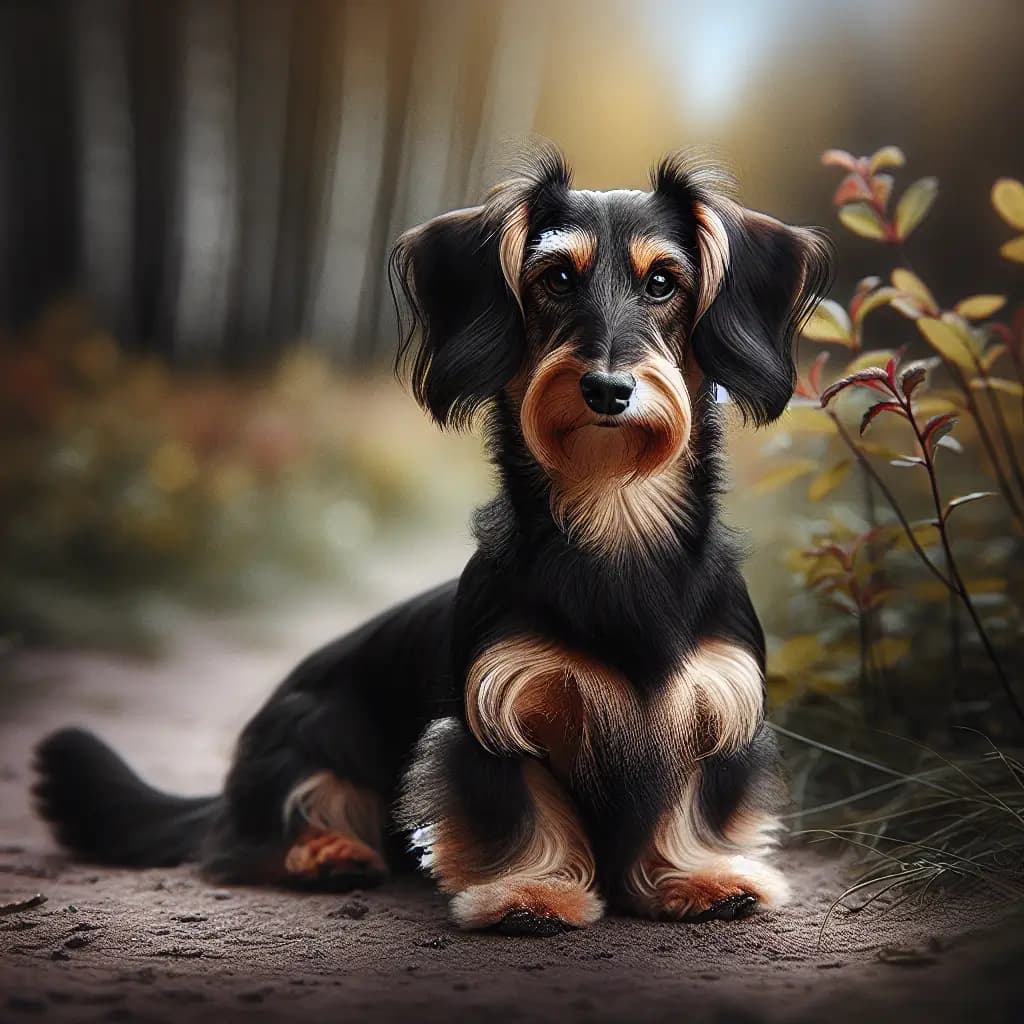
The miniature dachshund is a small but strong-willed dog breed that belongs to the dachshund group. Originally bred in Germany for hunting badgers and other small animals, the miniature dachshund is distinguished by its long body, short legs, and lively appearance. Its head is elongated with expressive, dark eyes and long, hanging ears that give it a distinctive look. Despite its compact size, the miniature dachshund shows a lot of courage and endurance, making it a vigilant and loyal companion. Within the breed, there are different coat types – short-haired, long-haired, and wire-haired – each with different grooming requirements. The miniature dachshund is a lively, intelligent dog that is valued both as a family dog and as a hunting companion.
All measurements in detail
- Height
- 18 - 21 cm (Female), 18 - 21 cm (Male)
- Weight
- 3 - 6 kg (Female), 4 - 6 kg (Male)
- Life Expectancy
- 12 - 16 yrs
- Character
- Loyal, intelligent, attached to the family, but reserved towards strangers, high hunting drive
- Coat
- Short, smooth, without undercoat
- Coat Color
- Black, Brown, Red
- Price
- 1200 - 2500 €
Character & Temperament
The miniature dachshund is a lively and brave little dog with a distinct character. Despite its compact size, it shows a great deal of self-confidence and curiosity, making it a charming and sometimes stubborn companion. It is very affectionate and forms a close bond with its family, especially seeking closeness to its people. Miniature dachshunds are intelligent and eager to learn but require consistent and patient training, as they can sometimes be stubborn. Due to their hunting instinct, which comes from their original use as a badger dog, they show a strong prey drive and are often very alert. They are therefore well suited as small watchdogs that attentively alert to strangers. Despite their temperament, miniature dachshunds are also playful and enjoy shared activities but need sufficient mental and physical exercise to remain balanced. They are not dogs that like to be left alone for long, as they greatly appreciate the company of their people. Overall, the miniature dachshund is a lively, loyal, and brave companion who brings much joy with the right guidance.
| Watchfulness Reports unusual activity but stays controlled. | Moderate |
| Openness to Strangers Neither pushily friendly nor suspicious. | Neutral |
| Hunting or Herding Drive Powerful instinct that can override recall when triggered. | Strong |
Fun Fact!
Miniature dachshunds: Miniature dachshunds are known for their long bodies and short legs, which help them slip effortlessly into tight burrows and dens – perfect for their original task as badger hunters. Despite their size, they have a great deal of courage and endurance!
What Awaits You
Miniature dachshunds are lively and curious dogs with a strong hunting instinct. They are intelligent and willful but require consistent training and sufficient activity. Despite their small size, they are brave and alert, which makes them good companions. Miniature dachshunds are well suited as family dogs if their needs for exercise and mental stimulation are taken into account.
Housing & Care
Miniature dachshunds are lively and curious dogs that, despite their small size, require a lot of energy and attention. They are very affectionate and form a close bond with their owners, which makes them well-suited as family dogs. Due to their strong hunting instinct, they should be well socialized and trained early on to enable harmonious coexistence with other dogs and pets. Miniature dachshunds are brave and sometimes a bit stubborn, which requires consistent but loving leadership. They are suitable for families with children but should be supervised when interacting with small children, as they can be sensitive. Regular exercise and mental stimulation are important to keep the miniature dachshund balanced and content, even though they can adapt well to apartment living.
- Family Friendly
Loves family life and thrives in a group.
Family-oriented - Child Friendly
Gets on well with children — with adult supervision.
With supervision - Dog Friendly
Usually gets on fine with other dogs.
Generally tolerant - City Friendly
Adapts well to city living and urban environments.
Well-suited to city life
Owning a dog is a privilege, but it's also a real responsibility. Before you bring one into your life, be honest with yourself about the commitment it takes.
Training & Education
Miniature dachshunds are surprisingly eager to learn and stubborn despite their small size. They have a strong hunting instinct, which becomes apparent during training and must be taken into account. Due to their stubbornness, patience and consistency are especially important to work successfully with them. Miniature dachshunds benefit from short, varied training sessions that are designed to be playful. Positive reinforcement and praise motivate them best, while harsh or too strict methods can quickly lead to resistance. Their independence requires the owner to have a good sense of the right approach and clear leadership. Although they are not as work-oriented as Labradors or German Shepherds, miniature dachshunds are well suited for scent work, retrieving games, and small dog sports that promote their natural sense of smell. It is important that they are mentally challenged to avoid boredom and resulting behavioral problems. Overall, training a miniature dachshund requires time, empathy, and creativity. Those who bring these qualities will be rewarded with a lively, clever, and loyal companion.
Nutrition & Care
Miniature Dachshund: Miniature Dachshunds are lively and curious dogs that need a balanced diet to stay healthy and fit. High-quality food with a good proportion of proteins and nutrients is important to support their energy and avoid overweight, as they can be prone to weight gain. The coat of the miniature dachshund is short to medium length and requires regular care. Weekly brushing is usually sufficient to keep the coat clean and shiny as well as to remove loose hair. During the shedding season in spring and autumn, increased shedding can occur, making more intensive brushing advisable. Miniature dachshunds adapt well to the Central European climate. Their coat protects them from the cold, but they should still be well protected in cold temperatures, as their short legs expose them more to ground-level cold. In summer, it is important to ensure enough shade and water to prevent overheating.
| Care Level Minimal effort — occasional brushing and bathing. | Low-maintenance |
| Exercise Needs Needs 1–2 hours of real exercise daily. | Active |
| Shedding Regular shedding — dog hair on clothes is now normal. | Moderate |
| Trainability Has its own ideas and will test limits. | Strong-willed |
Our experts are still reviewing this information. Spotted something wrong? Email us at info@honestdog.de.
Health & hereditary diseases
Health
D
Elevated risks
Health grade
The Miniature Dachshund is rated D for health, as the breed is affected by significant breed-specific problems. Over 95% of Dachshunds carry the genetic predisposition for Chondrodystrophy (CDDY), which is why about one in six to seven Dachshunds suffers an intervertebral disc herniation (IVDD) in the course of their life – in some varieties, the proportion is even significantly higher. A responsible breeder counteracts this through targeted back screening and breeding selection, and has their dogs tested for intervertebral disc disease (IVDD) and Chondrodystrophy (CDDY). Before buying, you should also ask to see the results for Cone-Rod Dystrophy (Progressive Retinal Atrophy) and Neuronal Ceroid Lipofuscinosis (NCL), where the limit 'free or carrier' (carrier only when mated with a free partner) applies, as well as demand proof of freedom from Osteogenesis imperfecta (OI) and Glaucoma, generic.
Grade is relative to other breeds — AI-assisted and editorially reviewed.
In daily life this can mean
You should pay attention to strict weight management, avoid letting him jump off furniture, and plan a budget from the start for the treatment of breed-typical back problems.
The breeder's role
Responsible breeders have the parents' spines examined and pay attention to strong back musculature to reduce the risk of painful herniated discs in the bloodline as much as possible.
Note: This health overview is AI-assisted and editorially reviewed. It is for orientation only and does not replace veterinary advice.
No Health Tests Available
No specific health tests are currently available for this breed.
Costs & where to find one
How much does a Miniature Dachshund cost?
A Miniature Dachshund costs around ~€150 per month (€80 – €280, depending on your setup). The first year adds up to roughly ~€4,520 including purchase, equipment and puppy school; across the dog's life (14 years) it comes to about ~€28,410.
With surgery cover, running costs come to about ~€140 per month — in return, your share of a major operation drops from several thousand euros to around 20 percent.
Per month
~€150
In the first year
~€4,520
Across the dog's life
~€28,410
Purchase from a breeder: €1,200 – €2,500
Estimate at a mid-range setup (suburban, dry food, 1–2 hours of daily exercise), average German prices, as of July 2026.
Calculate your personal costs1-minute self-check with your own answers
Looking for a Miniature Dachshund?
Appearance, variants & origin
 Illustrative imageIllustrative imageIllustrative imageIllustrative image
History
The full history
The history of the miniature dachshund begins in the 19th century in Germany. Originally, it was bred as a smaller version of the standard dachshund to be used in hunting badgers and other small animals in narrow burrows. Through selective breeding, a compact, brave, and agile dog was developed that, despite its small size, retained the typical characteristics of the dachshund – endurance, courage, and a strong hunting instinct. The miniature dachshund quickly became popular as a companion dog and is today a valued breed kept both as a family dog and as a hunting companion.
Original Use
The miniature dachshund was bred to hunt badgers and other small animals in narrow dens.
Origin
Germany
Date
1600
Owner experiences
What owners say about the Miniature Dachshund
Kassandra M., Halterin aus Köln (Rüde, seit 2021)
Mein kleiner Zwergdackel ist im Alltag ein echter Schatz, aber man darf sich von der geringen Größe absolut nicht täuschen lassen. Er hat ein riesiges Selbstbewusstsein und weiß ganz genau, was er will. Wenn wir draußen unterwegs sind und er eine Fährte in die Nase bekommt, schaltet er sofort auf stur. Da ist sein Erbe als Jagdhund einfach spürbar – er entscheidet dann blitzschnell selbst, ob mein Rufen gerade wichtig genug ist oder nicht.
Trotzdem ist er im Haus unglaublich anhänglich und verschmust. Er sucht extrem die Nähe und kuschelt sich am liebsten ganz dicht an mich heran. Man braucht für die Erziehung einfach eine riesige Portion Konsequenz und Geduld, denn der berühmte 'Dackelblick' bringt einen sonst schnell dazu, jede Regel über den Haufen zu werfen.
Udo S., Halter aus Hessen (Rüde, seit 2023)
Wir haben uns ganz bewusst für einen Zwergdackel entschieden, weil er durch seine kompakte Größe von knapp 5 Kilo im Alltag, beim Reisen oder wenn man ihn doch mal tragen muss, einfach super praktisch ist. Allerdings ist er im Vergleich zu größeren Standarddackeln gefühlt etwas empfindlicher. Bei nasskaltem Regenwetter zittert er unheimlich schnell und weigert sich regelrecht, auch nur einen Fuß vor die Tür zu setzen.
Ein riesiges Thema, das uns von Anfang an begleitet, ist die Rückengesundheit. Man muss höllisch aufpassen, dass sie nicht unkontrolliert von Sofas oder Betten springen, da die Wirbelsäule durch die lange Statur so anfällig für Bandscheibenprobleme ist. Wir haben überall kleine Rampen aufgestellt, damit er gar nicht erst in Versuchung gerät, gefährliche Sprünge zu machen.
Daniela B., Halterin aus Bayern (Rüde, seit 2022)
Wer glaubt, ein Zwergdackel sei ein reiner Schoßhund, der irrt sich gewaltig. Mein kleiner Kerl hat Energie für drei und fordert seine Beschäftigung auch ein. Wenn ihm langweilig ist oder er seinen Willen nicht bekommt, kann er extrem lautstark protestieren und bellt dann auch gerne mal ausdauernd, um seinen Standpunkt klarzumachen.
Auch der Jagdtrieb ist im Alltag allgegenwärtig. Jede weglaufende Katze oder jeder Vogel im Garten weckt sofort seinen Verfolgungsinstinkt, und beim Spaziergang klebt seine Nase quasi ununterbrochen am Boden. Man bekommt hier einen vollwertigen, charakterstarken Arbeitshund im Miniformat – man muss diese eigenständige Persönlichkeit einfach lieben und damit umgehen können.
Paraphrased from real owner reports
Loading owner stories
FAQ & more
Frequently asked questions about the Miniature Dachshund
Is a Miniature Dachshund the right dog for me?
The Miniature Dachshund is an adaptable dog that adjusts well to various lifestyles. Research the temperament, grooming needs, and space requirements before deciding.
How long does a Miniature Dachshund live?
The average life expectancy of a Miniature Dachshund is 12-16 years. With proper care and regular vet visits, your dog can live a long, healthy life.
How much grooming does a Miniature Dachshund need?
Miniature Dachshund grooming requirements include regular brushing, nail trimming, and dental care. HonestDog provides detailed grooming tips for every breed.
Is a Miniature Dachshund good for families with children?
The Miniature Dachshund can be a great family dog. Proper training and socialization are key. HonestDog provides family suitability information for every breed.
What colors does the Miniature Dachshund come in?
The Miniature Dachshund comes in these colors: Red, Yellow, Black and tan, Brown and tan, Wild boar, Brindle, Merle, Cream, Piebald, Isabella, Blue and tan, White. Colors that fall outside the breed standard are marked as such on the breed page.
Loading related articles
Are you a Miniature Dachshund breeder?
Showcase your kennel on HonestDog and reach families searching for a responsibly bred Miniature Dachshund.