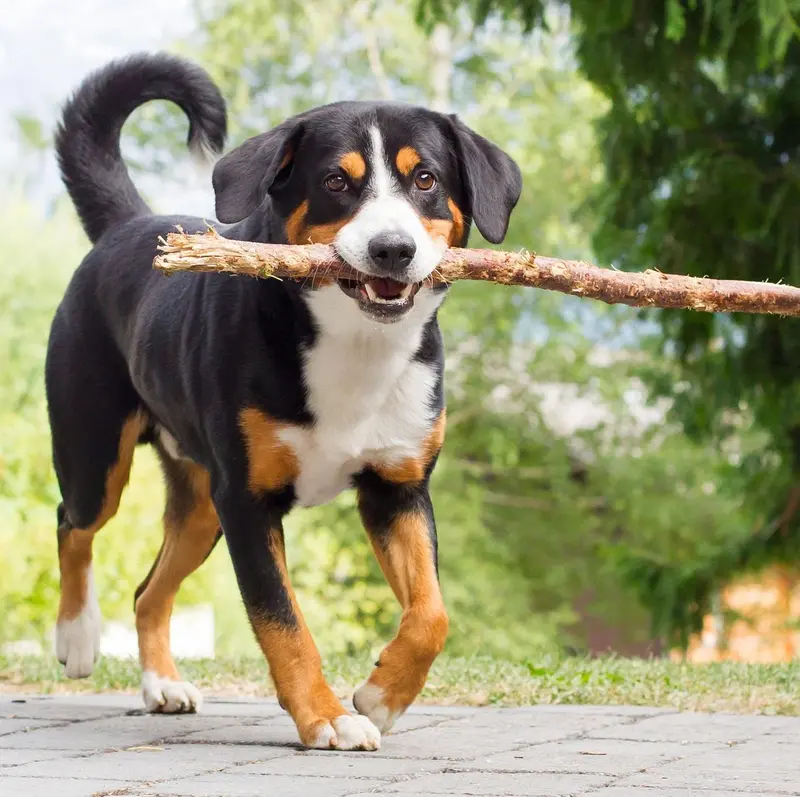
The Core Character: A Swiss Working Dog with a Strong Drive
When looking into the Appenzeller Sennenhund temperament, you'll encounter a breed born and bred for hard work. Originally used in the Swiss Alps as a cattle driver, herder, and farm watchdog, this dog still carries that heritage within today. They aren't companion dogs content with short walks around the block; instead, you get an agile, versatile, and lively canine who needs a real job in life.
Physically, the breed has a robust and powerful build, with males standing 52 to 56 centimeters tall at the shoulder and weighing between 25 and 32 kilograms. This physical presence is mirrored in the Appenzeller Sennenhund temperament: they are bold, fearless, and always alert to their surroundings. One of their most defining traits is an intense bond with their chosen people. While fiercely loyal and affectionate with family, they are typically suspicious and reserved around strangers. This makes them exceptional guardians who keep a watchful eye on home and property.
The Appenzeller Sennenhund Temperament in Daily Life
In everyday life, the high energy level of these dogs is very apparent. An Appenzeller usually starts the day wide awake and ready for action with you. Their disposition is marked by quick wit and rapid reactions—traits that enable them to make split-second decisions when herding cattle.
In a modern family setting, however, this means the dog quickly picks up on environmental stimuli and reacts immediately. A passing cyclist, a running child, or unusual noises on the property rarely go unnoticed. The Appenzeller Sennenhund temperament therefore calls for an owner capable of channeling this high level of watchfulness into calm, orderly paths, helping the dog learn when intervention is needed and when it's time to relax.
You can find detailed historical background and the official breed standard through the German Kennel Club (VDH), which oversees breeding lines in Germany.
Who Is This Mountain Dog Suited For?
Choosing a dog of this breed requires careful thought because their needs are quite specific. It's essential to weigh whether your lifestyle harmonizes with the demands of this agile Swiss breed.
Families and Children
As a family pet, the breed certainly has great qualities. They are very kid-friendly, and when properly exercised, the Appenzeller proves to be a tolerant and playful companion. However, their strong herding and driving instinct must be accounted for. When interacting with running, noisy children, the dog may try to take control and "herd" the kids, which can occasionally manifest as nipping at heels—typical behavior for cattle dogs. Toddlers and dogs should never be left unsupervised anyway, but with this breed, clear guidance from adults is especially important.
Singles, Couples, and Seniors
For active singles or couples who spend plenty of time outdoors, the Appenzeller makes a loyal companion for hiking, jogging, or cycling. They are only suitable for seniors if those individuals are physically very fit and can match the dog's high exercise drive throughout its 12-to-14-year lifespan.
Even though their trainability is rated as very high, experts often advise beginners against this breed. The combination of high intelligence, protective and herding instincts, and a certain independence demands dog-savvy leadership. Beginners who still choose this breed should work closely with a qualified dog school early on.
You can get a comprehensive overview of all physical traits and further details in the Appenzeller Sennenhund breed profile.
Living Situation and Coexistence
The environment where an Appenzeller lives has a huge impact on their emotional balance.
Country House vs. City Apartment
The urban suitability of this breed is rated as moderate to low. A densely populated city environment with constantly shifting stimuli, many strangers, and other dogs in close quarters often spells stress for such a watchful dog. Additionally, the Appenzeller has a strong tendency to bark and reliably announces changes in its territory. In a thin-walled apartment building, this almost inevitably leads to neighbor disputes. An ideal home is a house with a securely fenced yard, preferably in a rural or village setting where they can live out their watchdog duties, at least to some degree.
Compatibility with Other Animals
The Appenzeller Sennenhund is generally well-compatible with other dogs, provided they were well socialized from puppyhood. Rough, physical play is not unusual among mountain dogs. They can get accustomed to cats or other pets, ideally during their first few months of life. Their prey drive toward wildlife is usually low, with focus heavily skewed toward herding and guarding.
Exercise and Stimulation: More Than Just a Walk
A short morning walk and an evening stroll are nowhere near enough to tire out an Appenzeller Sennenhund. They require an active life with ample physical and mental stimulation. If this dog gets bored, they will find their own jobs—and those rarely align with what the owner has in mind. Destructive behavior toward furniture, excessive barking, or herding family members are common results of under-stimulation.
Meaningful activities for the Appenzeller include:
- Dog Sports: Agility, treibball, or tournament dog sports tire them out physically and strengthen teamwork with humans.
- Nosework: Tracking, trailing, or target object searches mentally exhaust the dog and lead to calm, focused fatigue.
- Obedience Training: Obedience or learning tricks challenges their intelligence.
- Biking or Horse Companion: Following proper training and the completion of growth, they make enduring partners.
Breed associations like the Schweizer Sennenhund-Verein für Deutschland e.V. (SSV) regularly emphasize that only the combination of exercise and mental work makes the Appenzeller a balanced family member.
Typical Challenges in Ownership
Anyone choosing this breed should know the potential stumbling blocks. One of the main topics is vocalness. The Appenzeller was bred to drive herds with loud barking and announce strangers on the farm loudly. This behavior can be controlled through training, but never completely eliminated.
Another challenge is suspicion toward strangers. Visits from repair workers or friends often require management from the owner. The dog needs to learn that their human controls the situation and that they don't need to corner or bark at guests.
Separation anxiety is also a consideration with mountain dogs. They are strongly attached to their human pack and dislike being left alone for long periods. Being left alone must be practiced in very small steps and with great patience starting in puppyhood.
Training: Clarity, Consistency, and Calm
Training an Appenzeller demands a high degree of confidence and poise. These dogs are extremely intelligent and quickly memorize not only desired commands but also any inconsistency from their owner. If a rule applies on Monday but an exception is made on Tuesday, the Appenzeller will spot that loophole and use it.
Harshness or shouting have no place in training. The sensitive Appenzeller often responds to rough handling with stubbornness or a loss of trust. Positive reinforcement, clear body language, and calm yet firm leadership yield the best results. Since this breed brings plenty of energy anyway, it's up to humans to bring calm into daily life. Relaxation training and teaching a designated resting spot are just as important for young Appenzellers as the "sit" or "stay" command.
Regarding health, care must be taken not to physically overload the dog during its growth phase to prevent joint problems. Information on growth load limits can be found through veterinary advisory centers or the Federal Chamber of Veterinarians.
Appenzeller Sennenhund Experiences: What Owners Report
When gathering and evaluating Appenzeller Sennenhund experiences, a clear picture emerges. Many owners appreciate the immense loyalty and the "will to please" once the human-dog relationship is cemented. It is often reported that indoors, the Appenzeller turns out to be a calm and cuddly companion—provided they have received adequate exercise beforehand.
At the same time, experienced owners warn against underestimating the herding and guarding drives. The first few years of life require a lot of time and patience, especially regarding the dog's frustration tolerance and impulse control. Those who invest this initial time and training win an indestructible partner for life who will stick with their family through thick and thin.
The dense, smooth coat with undercoat requires only moderate grooming. Regular brushing is usually enough, though shedding during the spring and autumn coat change is definitely noticeable.
Frequently Asked Questions (FAQ)
Does the Appenzeller Sennenhund bark a lot?
Yes, the Appenzeller Sennenhund is among the more vocal breeds. As a classic farm and driving dog, it's in their genes to announce changes in their environment and approaching strangers with loud barking. With consistent training, this behavior can be reduced to an acceptable level, but signaling cannot and should not be completely trained out of them.
Is the Appenzeller Sennenhund suitable for beginners?
Generally, experts do not recommend this breed as a classic beginner dog. Their high energy level, protective drive, and high intelligence require very consistent and clear leadership. Beginners can master this task with the support of a professional dog trainer, but must be willing to invest heavily in dog education.
How much exercise does an Appenzeller Sennenhund need daily?
This dog needs at least two to three hours of exercise and active stimulation daily. Simple on-leash walks are not enough. A mix of free running, dog sports (like agility or treibball), and mental enrichment via search games or trick training is necessary to keep them healthy and balanced.
Can you keep an Appenzeller in an apartment?
Keeping one in a city apartment is very demanding and usually not species-appropriate. Due to their watchfulness and vocal tendencies, problems frequently arise in multi-family rental buildings. The ideal setup for an Appenzeller is a house with a securely fenced yard in a rural area where they can burn off energy and display their natural watchdog tendencies without causing conflicts.
The Path to Your New Companion
The Appenzeller Sennenhund is a loyal, robust, and immensely intelligent dog that can tremendously enrich the lives of active people. They demand a clear job, close family ties, and consistent yet loving guidance to provide orientation. If you're ready to embrace this demanding yet rewarding creature and adapt your daily life accordingly, you will gain a loyal partner for the next 12 to 14 years.
Acquiring such a dog should be done thoughtfully. Prices for puppies from reputable breeding typically range between 1,000 and 2,500 euros. Carefully selecting a breeder who prioritizes health and a sound temperament is the first vital step.
At HonestDog, we focus on transparency and animal welfare to help you find a suitable and healthy dog. If you've decided this breed fits your lifestyle, browse our platform to find responsibly bred Appenzeller Sennenhund puppies for sale.