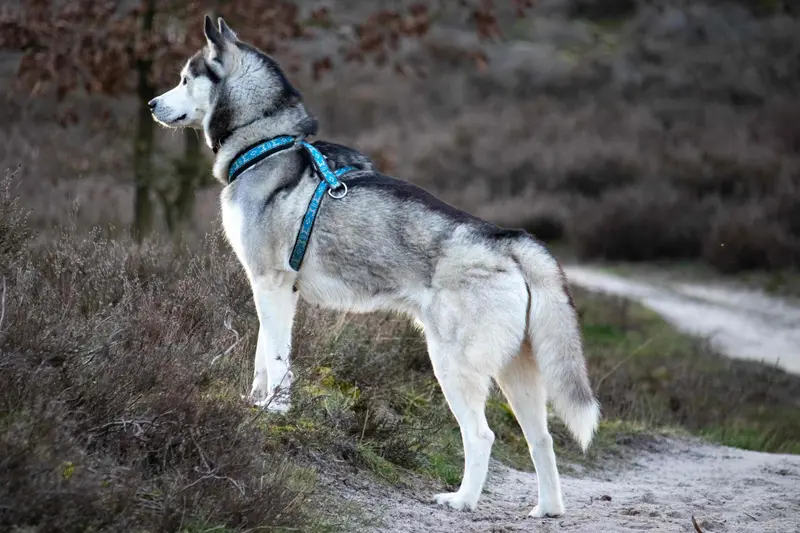
With their striking blue eyes, wolf-like appearance, and elegant build, siberian husky temperament and looks capture the hearts of many dog lovers. Visually, the breed is undoubtedly one of the most striking in the canine world. However, beneath that beautiful facade lies a working dog specialized over centuries. Anyone interested in this breed must fully understand the siberian husky temperament. A northern sled dog places demands on its owners that differ fundamentally from those of traditional companion or herding dogs.
Deciding on this dog requires an honest look at your living situation. The siberian husky personality is shaped by independence, an extremely high drive for movement, and strong instincts. This guide explores the deep facets of the husky character and helps you assess whether you can truly meet the needs of this demanding dog.
The Core Character: Typical Traits of the Siberian Husky
To grasp the siberian husky temperament, it helps to look at its origins. The breed originally comes from the harsh, unforgiving regions of Siberia. There, they were bred by the Chukchi nomads as resilient draft animals. Their job was to transport light loads over enormous distances in freezing temperatures. This history is firmly anchored in their DNA and defines their daily behavior to this day.
Independence Instead of Blind Obedience
Unlike many European working dogs that cooperate closely with humans, sled dogs often had to make their own decisions. If a musher unknowingly steered the team onto thin ice, it was life-saving for the lead dog to refuse the command and find a different path. This intelligent independence is often misunderstood as stubbornness in everyday life.
A husky is not a dog that performs commands simply to please its human ("will to please"). They question the purpose of commands. If you expect your dog to enthusiastically retrieve a ball thirty times or come flying back joyfully the first time you call, you will likely feel frustrated with this breed. The siberian husky temperament is more cat-like: loyal, yet always autonomous.
Mischievous, Open, and Communicative
Despite their independence, huskies are extremely social animals. The breed standard aptly describes them as loyal, mischievous, and outgoing. They completely lack guard dog qualities. They generally greet strangers in a friendly to boisterous manner. A burglar would likely receive an enthusiastic welcome rather than a chase.
Another striking feature is their style of communication. A husky rarely barks. Instead, they howl, whine, "talk," and sing. This vocal behavior strengthens pack cohesion, though it can quickly lead to neighbor disputes in densely populated residential areas.
Who Is a Siberian Husky Suitable For?
The breed places high demands on the owner's time, space, and physical fitness. Experience with siberian huskies clearly shows that purchases made purely for their looks often end in the dog being rehomed. The match between dog and human must be especially precise here.
Are Huskies Good Family Dogs? (Child Friendliness)
Although they are generally open toward people, caution is advised when it comes to small children (child friendliness is often rated just 1 out of 5 stars). This is not due to malice, but rather the combination of size (males weigh 20–27 kg), boisterous energy (energy level 5/5), and a certain lack of boundaries. A young, under-exercised husky can easily knock over toddlers during play.
Additionally, these dogs have a low threshold for fast movements, which can trigger their prey drive. In families with older, sturdy children who understand the rules of interacting with dogs, they can integrate as loyal companions. Nevertheless, living together always requires attentive adult supervision.
Beginners, Singles, and Seniors
The breed is only conditionally recommended for dog beginners. Anyone choosing this breed as a first-time dog owner needs a lot of theoretical knowledge in advance and, ideally, direct support from competent trainers experienced with northern breeds from day one. Singles must ensure they can manage the enormous time commitment required for exercise and care alongside their careers. Since huskies dislike being left alone, this often requires a solid network of pet sitters. For seniors, this physically demanding dog is generally unsuitable unless it is an older, calmer rescue animal.
Living Situation and Housing
The environment plays a crucial role in harmonious coexistence. The husky is a child of nature who feels uncomfortable in cramped conditions.
City Living vs. Rural Environment
The breed's suitability for city life is rated as extremely low (1/5). Noise, a lack of off-leash areas, asphalt, and small apartments run counter to the needs of a sled dog. A husky belongs in the countryside or at least on the direct outskirts of town with quick access to nature.
A house with a yard is ideal, but that's where the next challenge awaits: the breed is known as a master escape artist. A standard one-meter-high fence is little more than a athletic warmup for a motivated husky. Fences often need to be two meters high and anchored deep into the ground, as these dogs are not only excellent jumpers but also persistent diggers. Digging deep hollows in the earth to cool off in summer is deeply rooted in their instincts.
Compatibility with Other Animals and Prey Drive
They often get along well with other dogs (4/5), especially when socialized early on. They appreciate the company of conspecifics and enjoy living in multi-dog households. However, this changes abruptly with animals outside the canine species.
The siberian husky has a strongly developed hunting and prey drive. In the tundra, sled dogs often had to forage for themselves during the summer months. Today, this survival instinct means that cats, rabbits, deer, or even birds are viewed as prey. Letting them run off-leash in wooded areas is often impossible for their entire lives. Living with a house cat can work if the puppy is carefully habituated from an early age, but it is never guaranteed.
Exercise Requirements and Species-Appropriate Activities
A short walk in the morning and evening is nowhere near enough. Anyone wanting to properly exercise a husky needs to think in terms of kilometers, not minutes.
Physical Exercise
This breed's energy level reaches the absolute maximum. These dogs want to run, pull, and feel their physical strength. Sled dog sports are the most species-appropriate form of activity. These include:
- Canicross: Trail running where the dog pulls the runner.
- Bikejoring: The dog pulls a mountainbike.
- Dogscooting: Pulling a specialized scooter.
- Classic Sled Dog Sports: Working with a training cart or sled, often in a multi-dog team.
Temperature regulation is a critical topic. With their dense double coat designed for temperatures well below freezing, huskies quickly overheat during European summers. Sled dog sports and intense running training should be strictly limited or stopped entirely when outdoor temperatures exceed 15 degrees Celsius.
Mental Stimulation
Although the focus is often on physical performance, the siberian husky temperament also needs mental food. Tracking work (mantrailing) or extensive sniffing games in the forest tire out their minds. Agility or obedience are tolerated by some huskies, but rarely align with their true nature.
Challenges: What Makes the Husky Character Demanding
Even with the best preparation, there are breed-specific traits that can test your patience in everyday life.
Because the husky is a dedicated pack animal, it often suffers from severe separation anxiety when left alone. An isolated husky will quickly look for substitute activities, which frequently manifest as destructive behavior (chewing furniture, doors, carpets) or hours of loud howling. Being left alone must be built up positively in tiny steps over months.
Grooming (grooming effort 3/5, shedding 3/5) should not be underestimated either. Twice a year, the coat blows. During this time, the dogs shed undercoat in clumps. Daily, intensive brushing is mandatory, yet fine undercoat will still end up all over your home.
For more in-depth information on breed-specific standards and breeding regulations, take a look at the websites of the German Kennel Club (VDH) or specifically the German Club for Nordic Dogs (DCNH).
Training: Practical Tips for the Husky Temperament
Trainability is rated 2 out of 5 points. This doesn't mean these dogs can't learn—they learn lightning-fast—but they decide for themselves whether executing a command is worth their while.
Successful training with this breed relies on three pillars:
- Building a Relationship: A husky follows a leader they trust and who acts with sovereignty. Harshness or physical coercion will only result in complete refusal from these sensitive yet proud dogs.
- Resource Control and Motivation: Figure out what your dog truly wants. A husky won't take their eyes off a female in heat on the horizon for a dry piece of tripe. The reward must be high-value. Often, the movement itself (being released to run) is the greatest reward.
- Consistency: What is forbidden today must remain forbidden tomorrow. A husky registers every inconsistency immediately and will use the weakness in the system to their advantage.
Special attention in training must be given to long-line training and recall to channel their strong hunting drive early on.
Frequently Asked Questions (FAQ) About the Husky Character
Can huskies be kept in an apartment?
Keeping one in an apartment is theoretically possible if the dog gets extremely well exercised physically and mentally outdoors for most of the day. In practice, however, this is very difficult to implement. A house with a securely fenced yard matches the breed's nature much better.
왜 siberian huskies howl so much? Why do Siberian Huskies howl so much?
Howling is an ancient means of communication for wolves and northern dog breeds used to contact the pack, mark territory, or express emotions like frustration and joy. When a husky howls, it is calling out to its social partners. It is natural behavior that can hardly ever be completely trained out of them.
How strong is the husky's prey drive really?
The prey drive is generally very high. Many sled dogs had to feed themselves during the summer months in their regions of origin, which is why hunting and catching prey is deeply anchored in them. Off-leash walks in the open countryside are not feasible for most representatives of this breed, as they immediately react to tracks or visual stimuli from wildlife.
Does the husky cope well with warm summer temperatures?
Thanks to their special double coat, huskies are masters of insulation—this applies primarily to cold, but also offers some protection against direct sunlight. Nevertheless, they suffer during Central European heatwaves. Activities in summer must be shifted to the cool early morning or late evening hours, and the dog always needs cool retreat spots.
Conclusion: Finding the Right Path
The siberian husky temperament is demanding, primitive, and not for people looking for a casual companion dog for relaxing Sunday strolls. However, if you appreciate the independence of these dogs, enjoy pushing yourself in nature through wind and weather, and are willing to heavily align your life with the animal's needs, you will find a loyal and humorous companion for 12 to 15 years.
If you have thoroughly considered the requirements and are ready for the sled dog adventure, we recommend reading further. All compact data, measurements, and health facts can be found in our detailed Siberian Husky breed profile. If you have decided to share your life with one of these special dogs, you can look around for reputable and verified breeders to find healthy Siberian Husky puppies. Take your time choosing the right breeder—a healthy start in life is the foundation for a happy dog life.