Loading breed
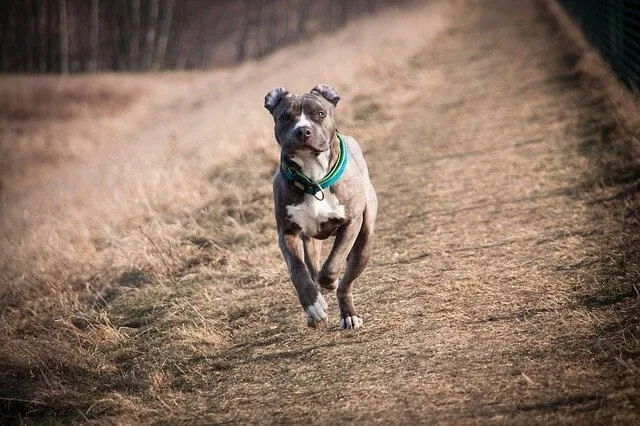
American Staffordshire Terrier
Health grade C- Shoulder height43–48 cm
- Weight18–32 kg
- Life expectancy12–14 yrs
- Puppy price800–1,800 €
- Energy4/5
The essentials at a glance
The American Staffordshire Terrier is a solid, extremely people-oriented bull-type breed—bred for uncompromising drive, strength, and tenacity. Behind that muscular facade lies a loyal companion who would do anything for their family, but often has little patience for other dogs.
- Health grade C: In the American Staffordshire Terrier, severe hereditary neurological disorders such as polyneuropathy with juvenile laryngeal paralysis (ALLP) and cerebellar ataxia (CA1), as well as heart diseases and elbow dysplasia (ED), define the breed-typical risk.
- You can confidently manage physical strength and already have experience with consistent, calm dog training.
- You enjoy physically demanding activities—a bull-type needs an outlet for their energy and tenacity, whether through tug-of-war games or weight pulling.
- You expect relaxed visits to the dog park—the genetics of this bull-type often include a deep intolerance toward dogs of the same sex, which is not just a matter of training.
How the health grade is calculated
Sources for required breeding screenings. Deutscher Club für Bullterrier e.V.
Self-check
Would the American Staffordshire Terrier really fit your life?
Answer 6 quick questions about your everyday life and see how well the American Staffordshire Terrier fits you — including an honest cost estimate per month, per year, and across the dog's lifetime.
Fit checkCost estimateRisk dice
Takes about 1 minute · free & anonymous
Similar Breeds
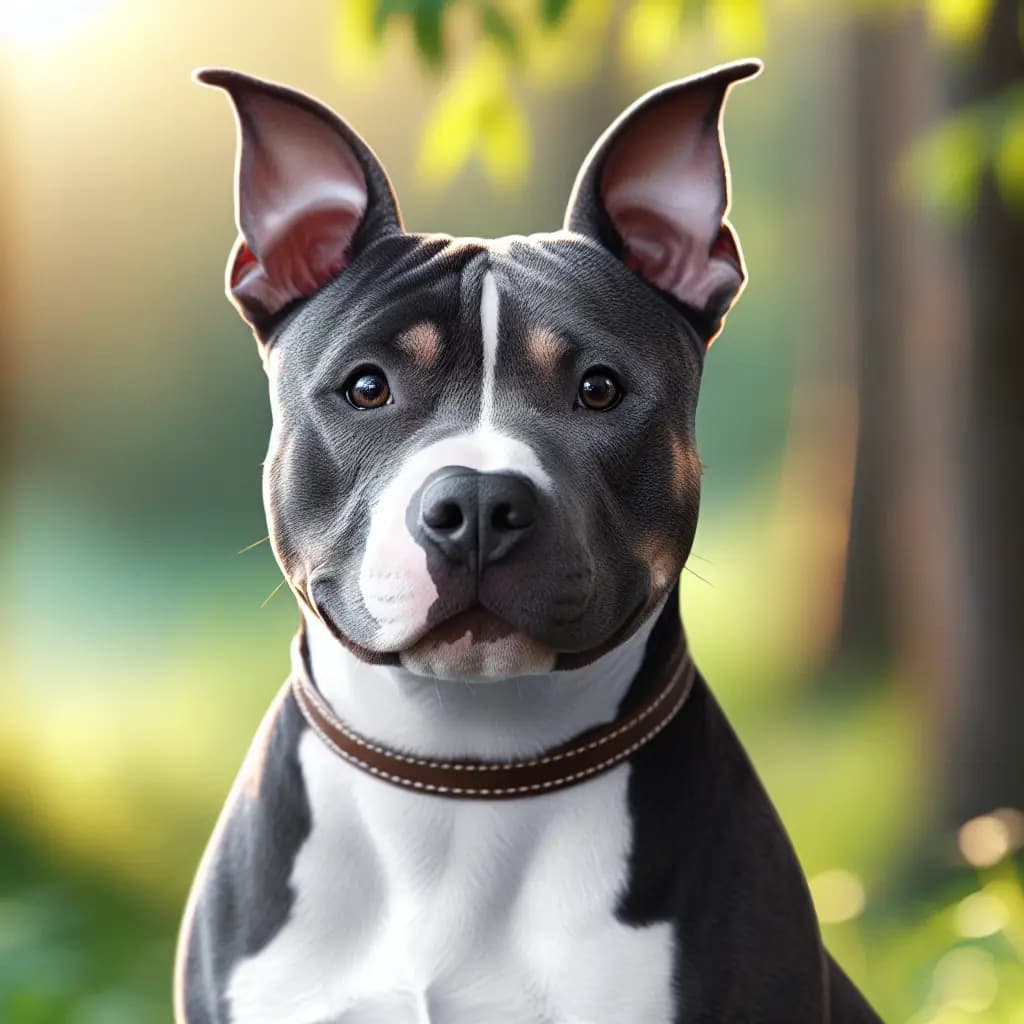
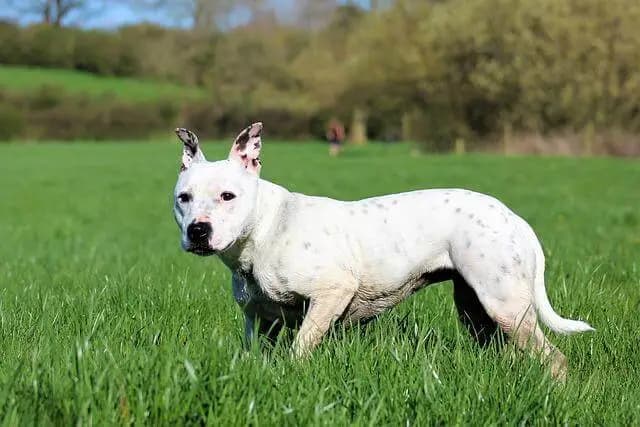
Staffordshire Bull TerrierClose relative

American BullyClose relative
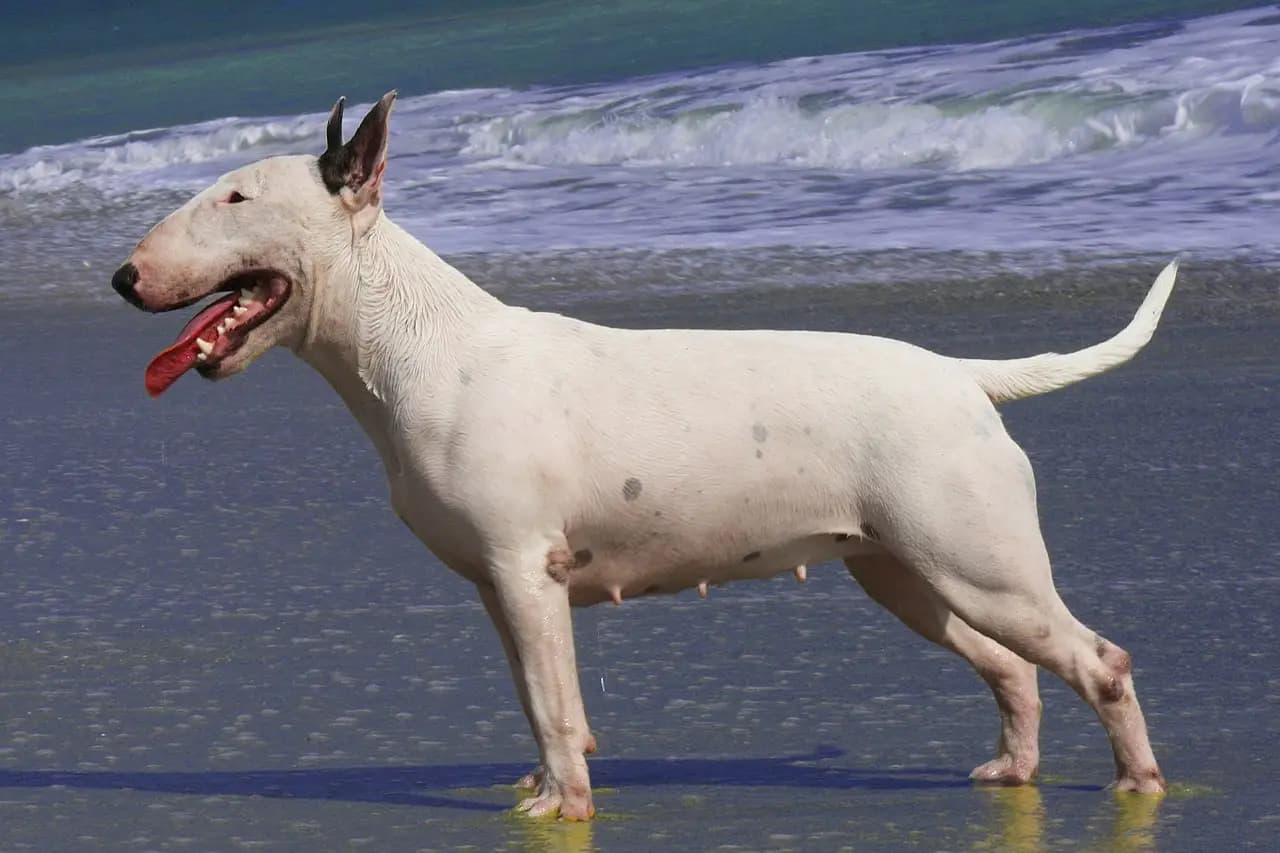
Bull TerrierSame FCI section
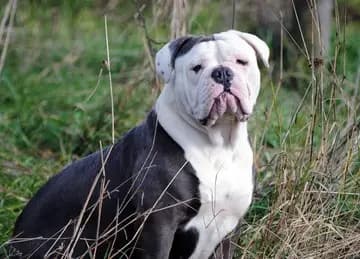
American BulldogSimilar profile

Dogo ArgentinoSimilar profile
Is the American Staffordshire Terrier right for you?
At a glance
American Staffordshire Terrier overview
The essentials — key facts, traits, and health priorities — before you dive deeper.
Lifespan
12–14 yrs
Shoulder height
43–48 cm
Weight
18–32 kg
Practical
- Puppy price: 800 – 1,800 €
- Coat: Short, smooth, dense
- Origin: USA
Temperament
Energy
Trainability
Family fit
With kids
Daily life
Care effort
Shedding
Barking
City-friendly
Guard instinct
What matters most
Especially with a American Staffordshire Terrier, choosing the right breeder is the single most important decision you'll make. Serious breeders consistently test the parents for inherited conditions, prioritize healthy early socialization, and stay accountable long after handover. A cheap puppy without health screening tends to become the most expensive dog later on.
See HonestDog breeder standards →Colors & coat
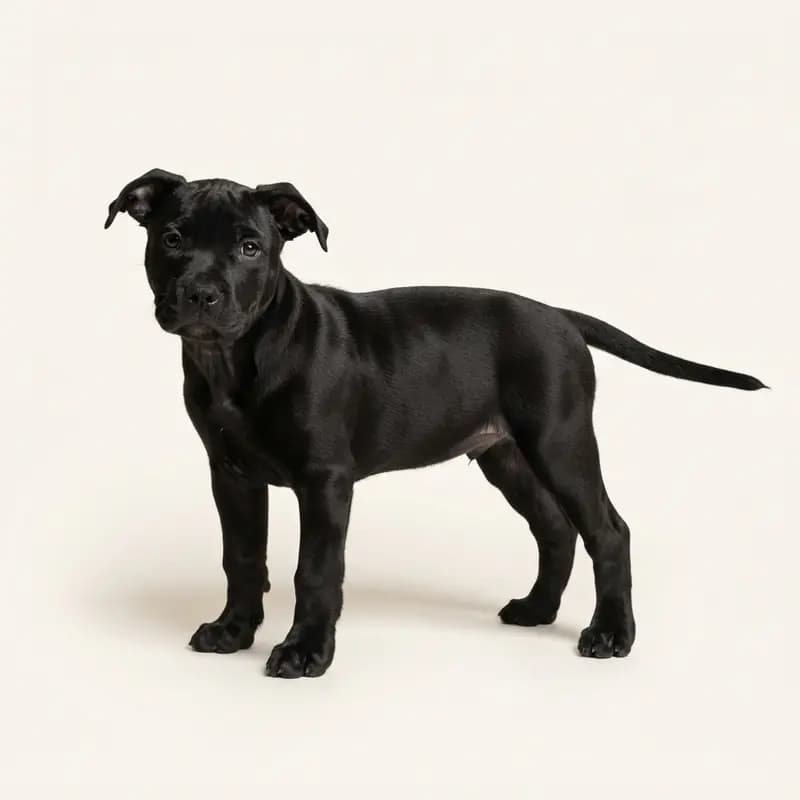
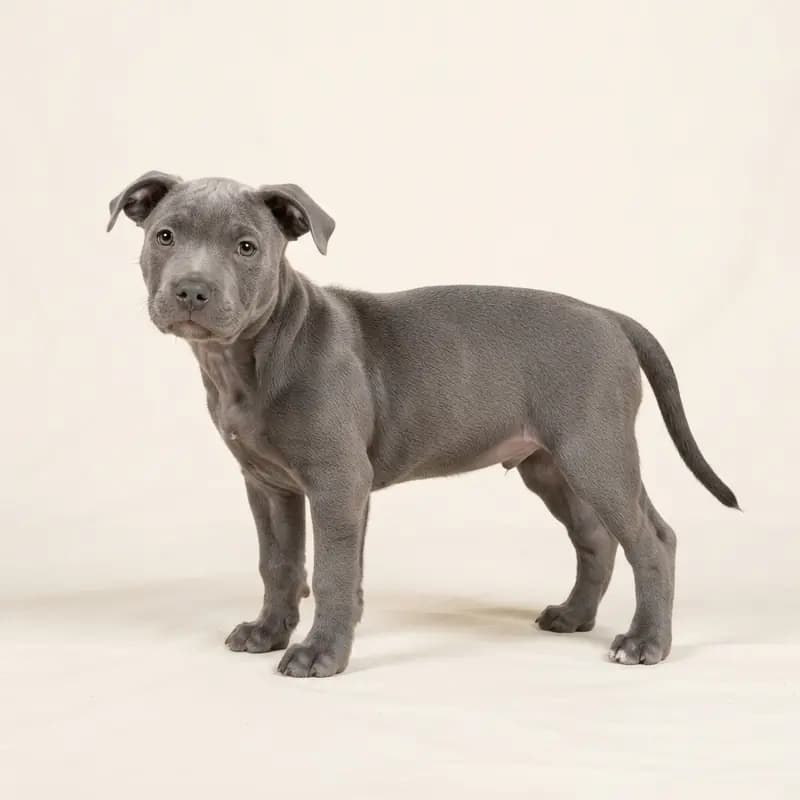
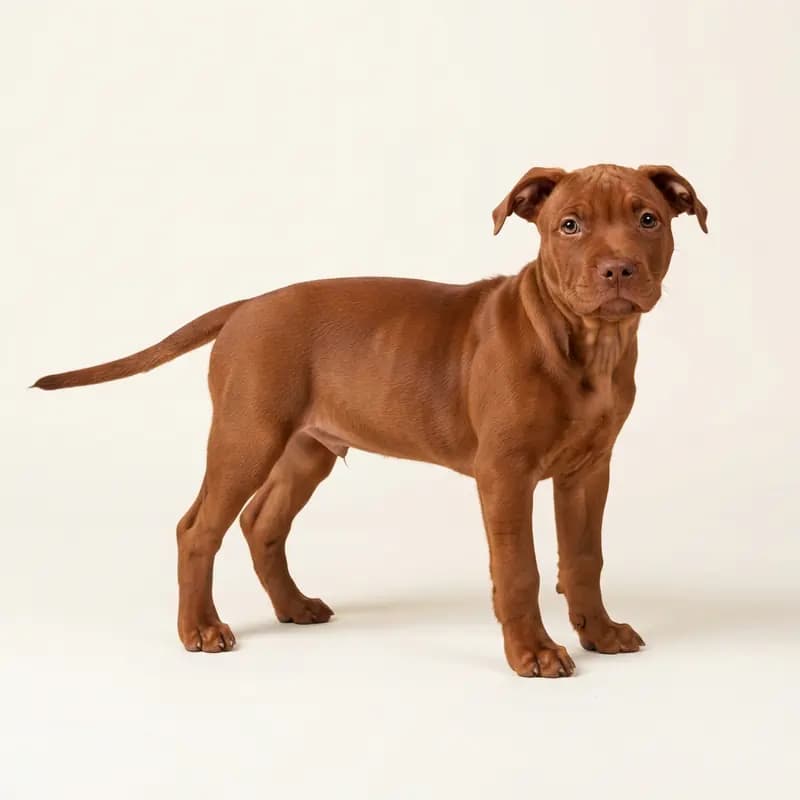
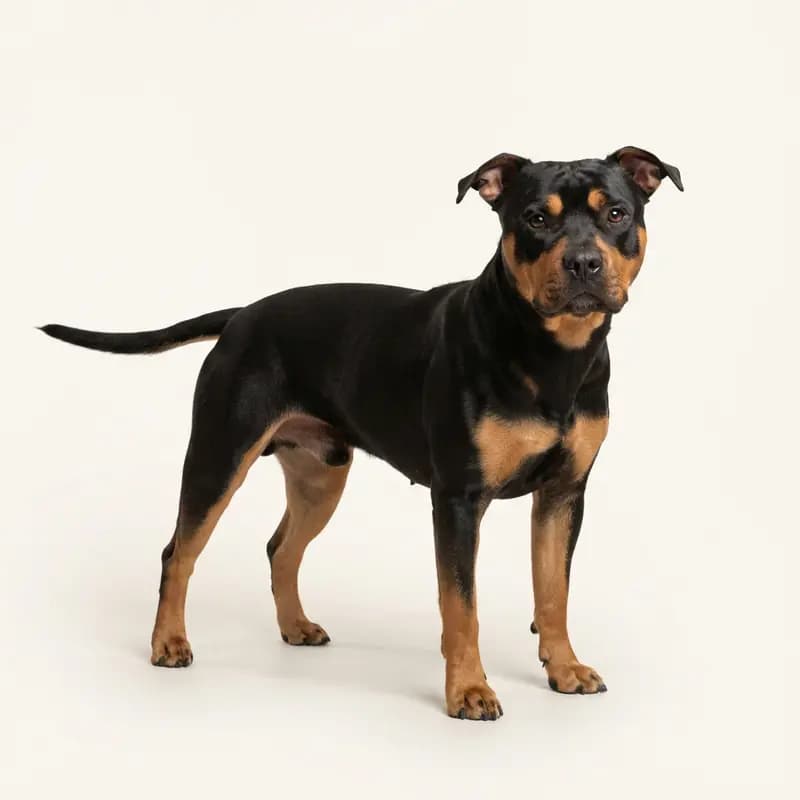
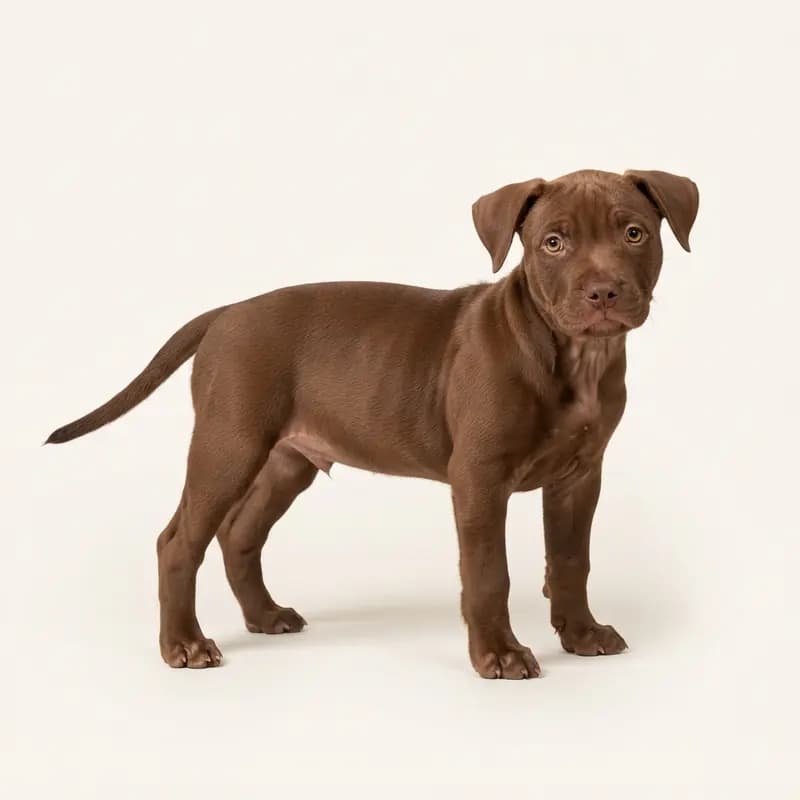
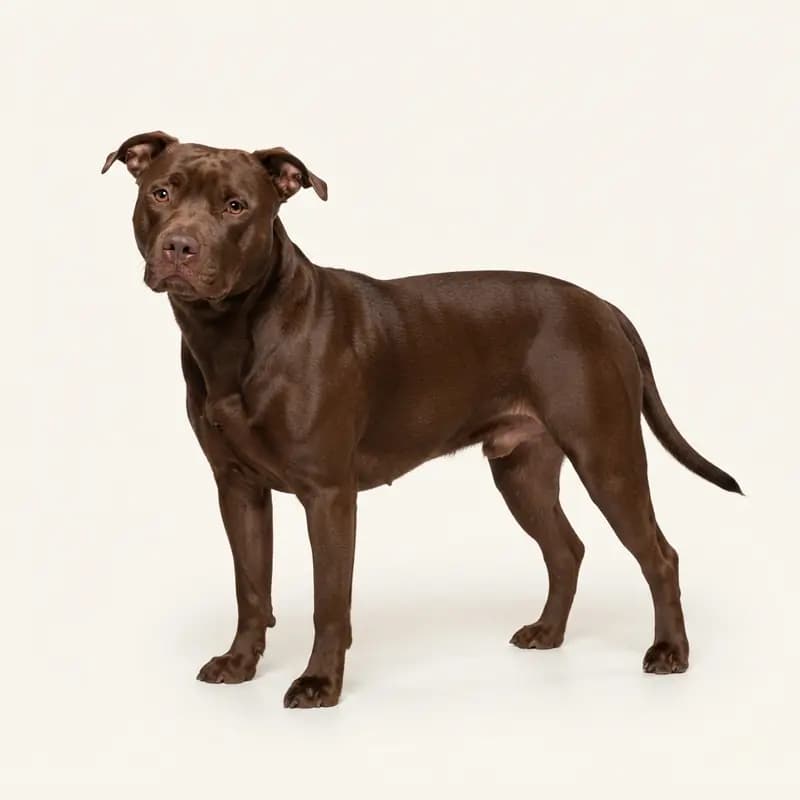
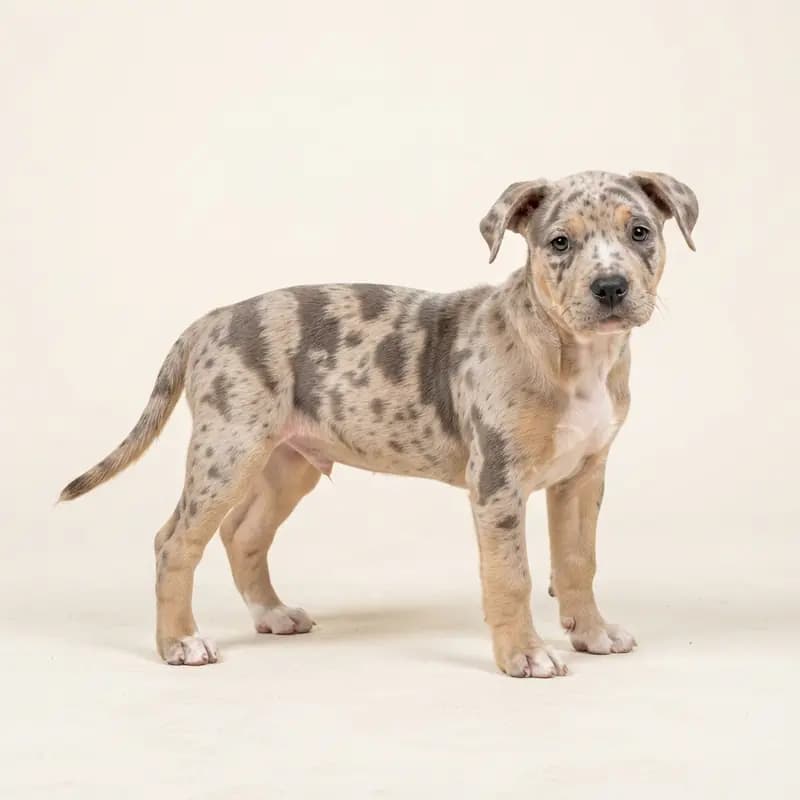
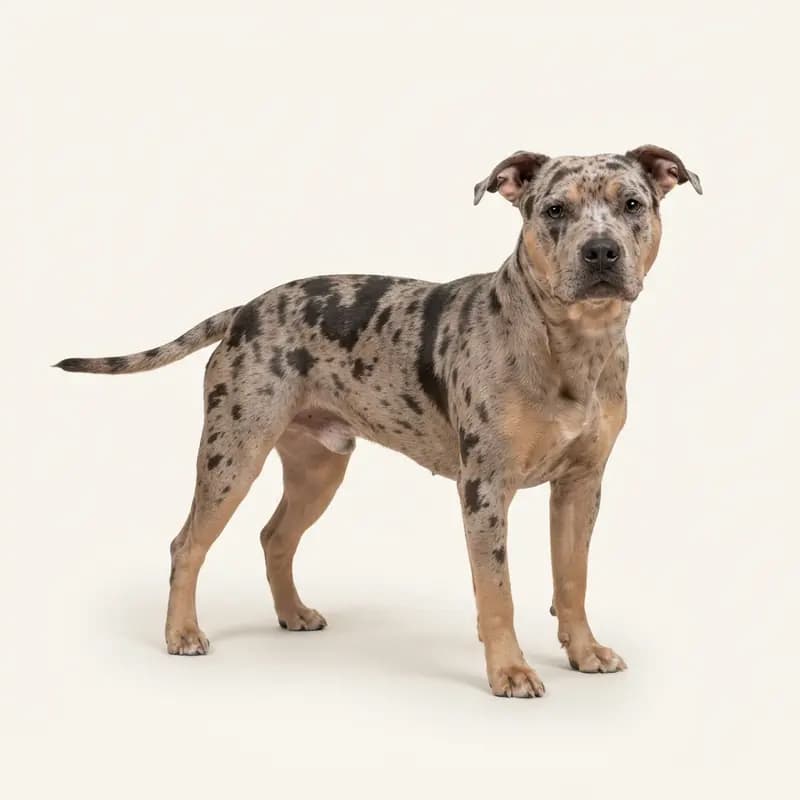
What colors does the American Staffordshire Terrier come in?
The coat colors that occur in the American Staffordshire Terrier — including which ones fall outside the breed standard and which carry genetic risk.
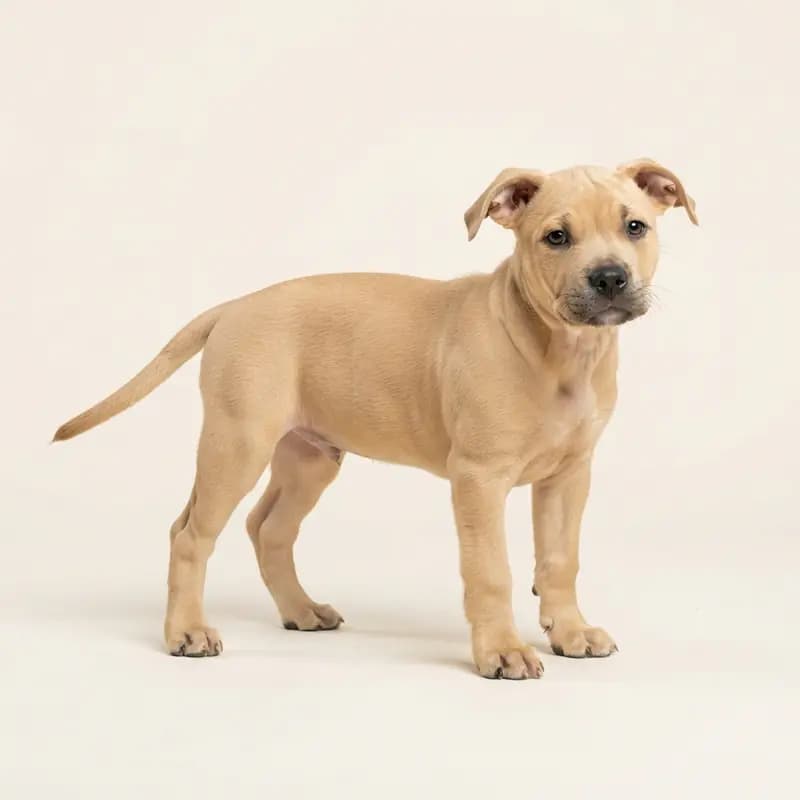
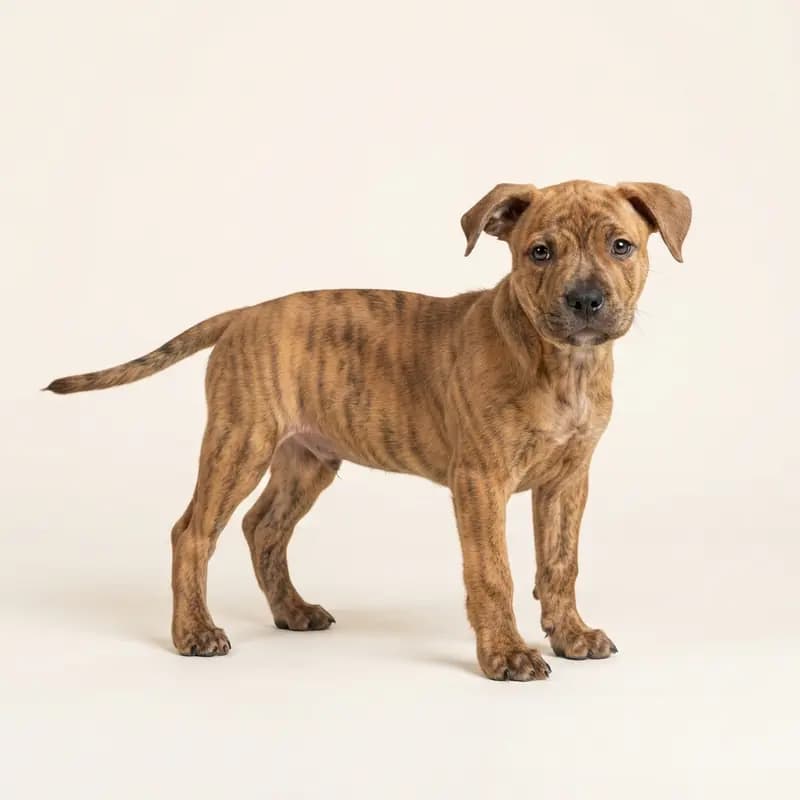
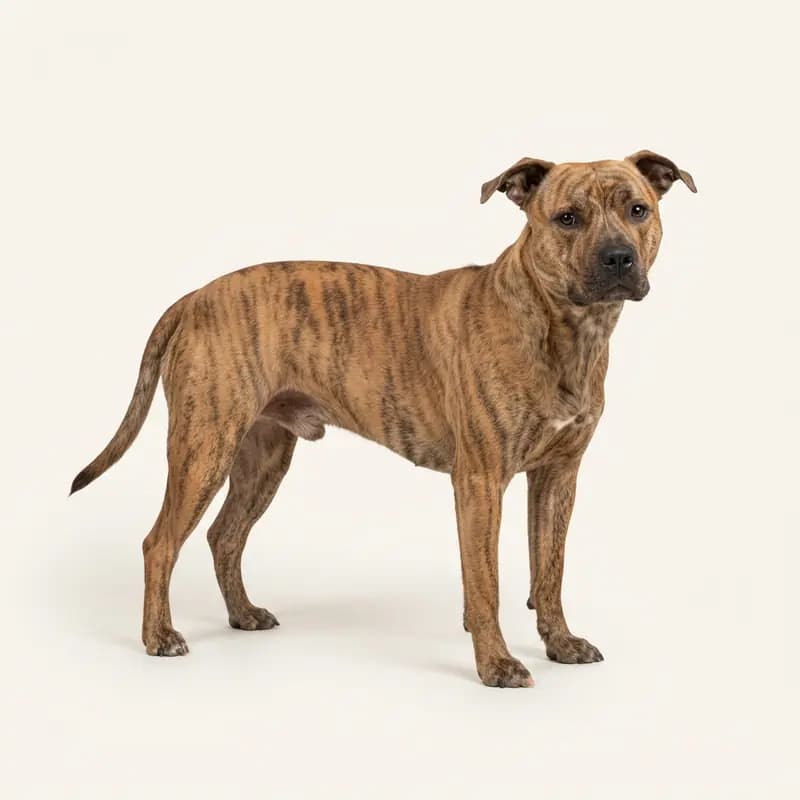
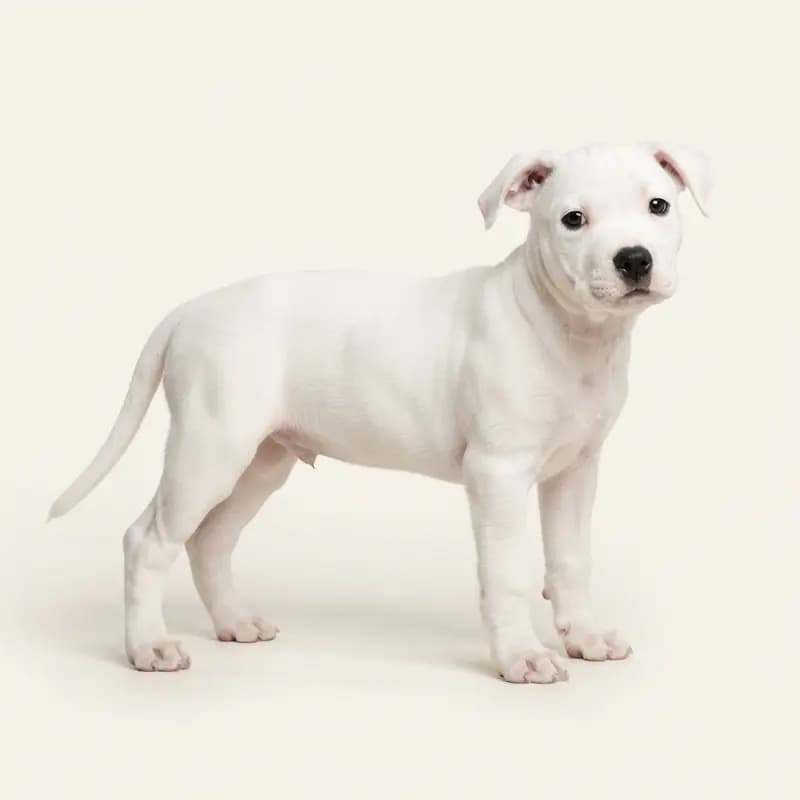
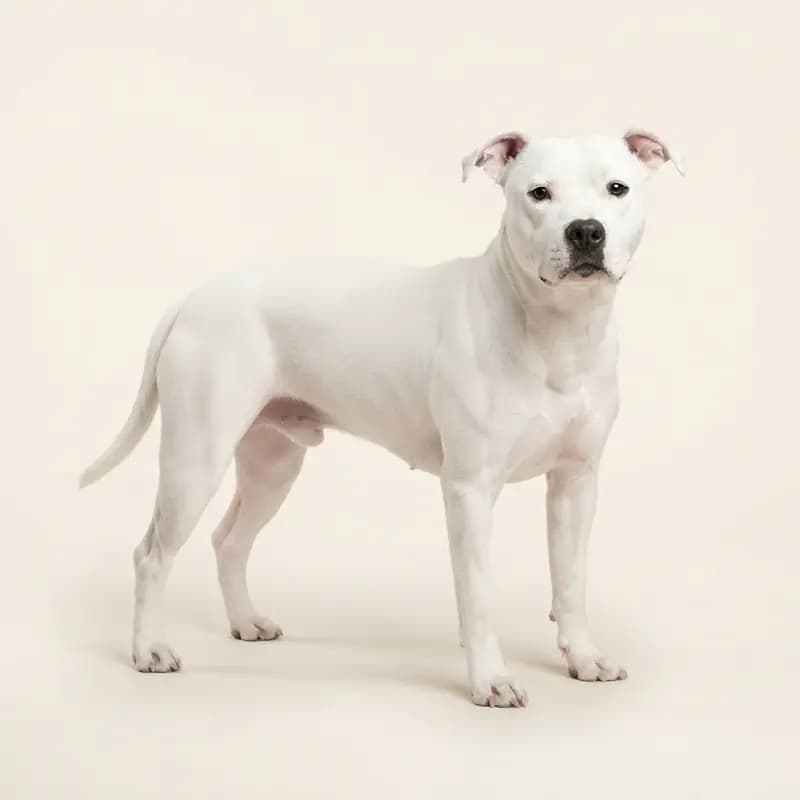
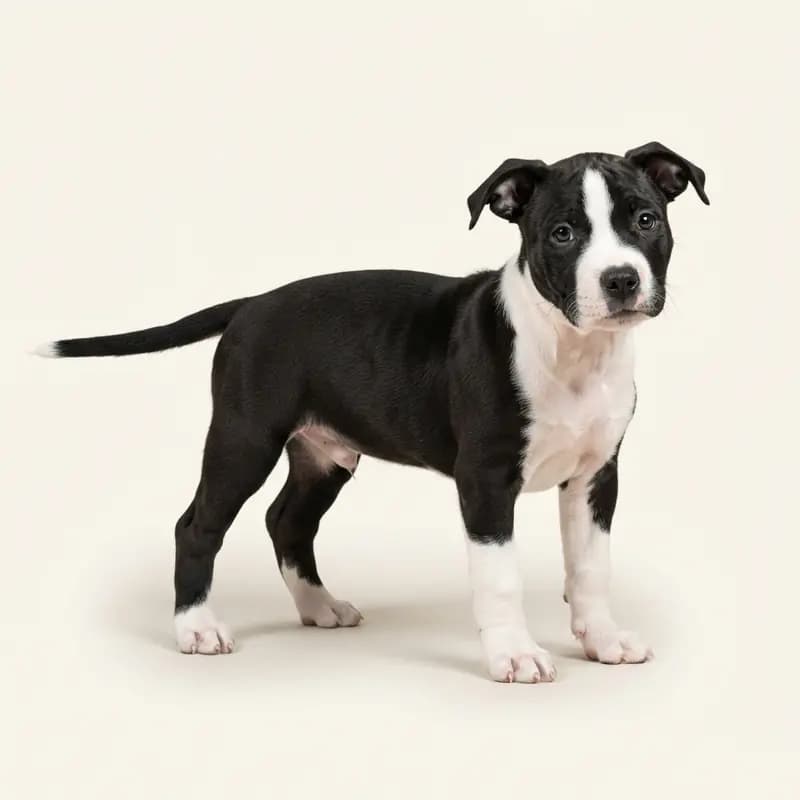
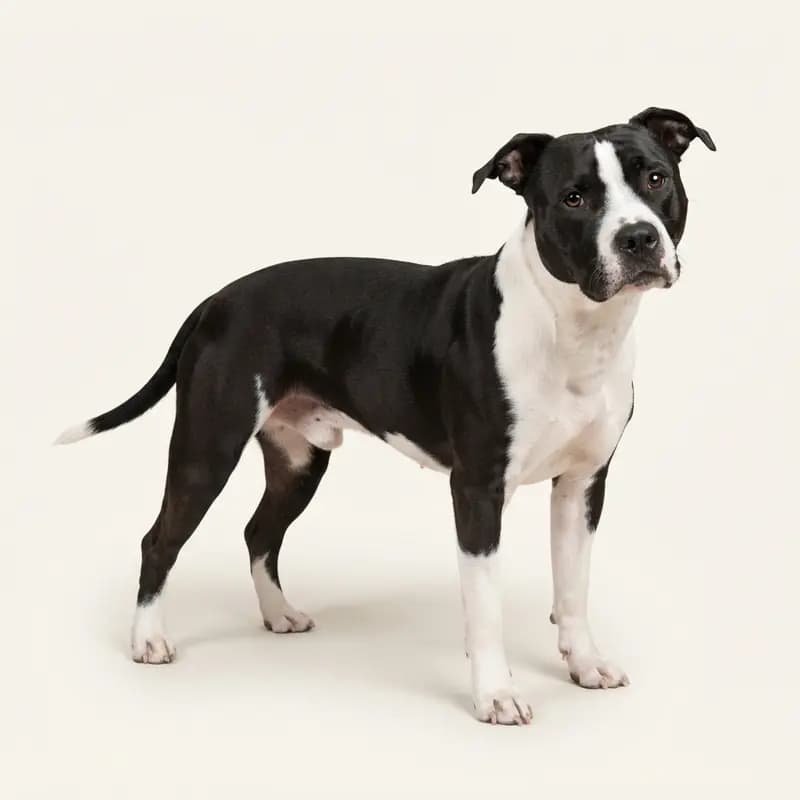
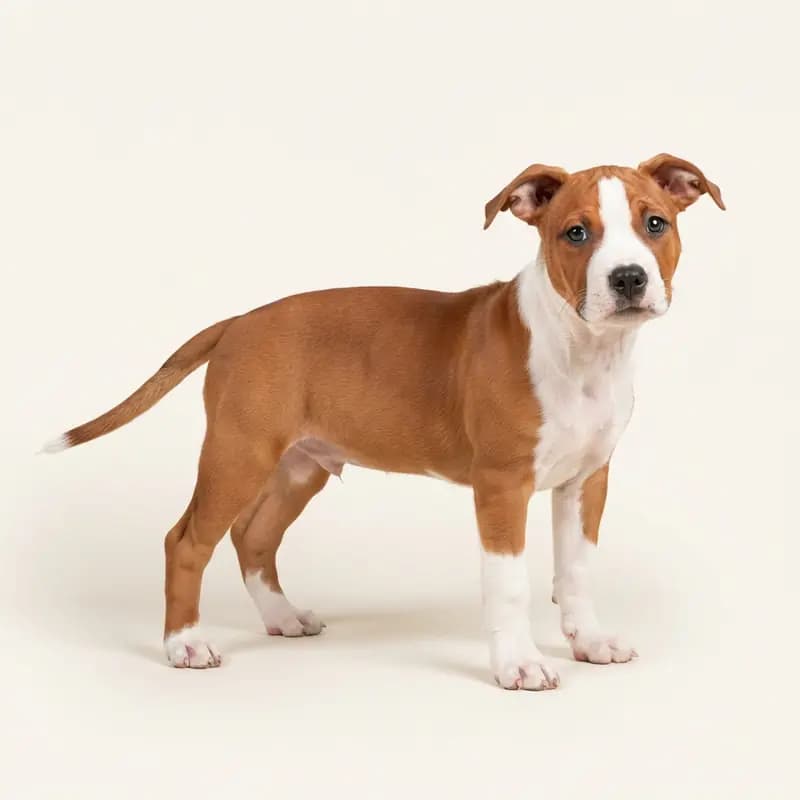
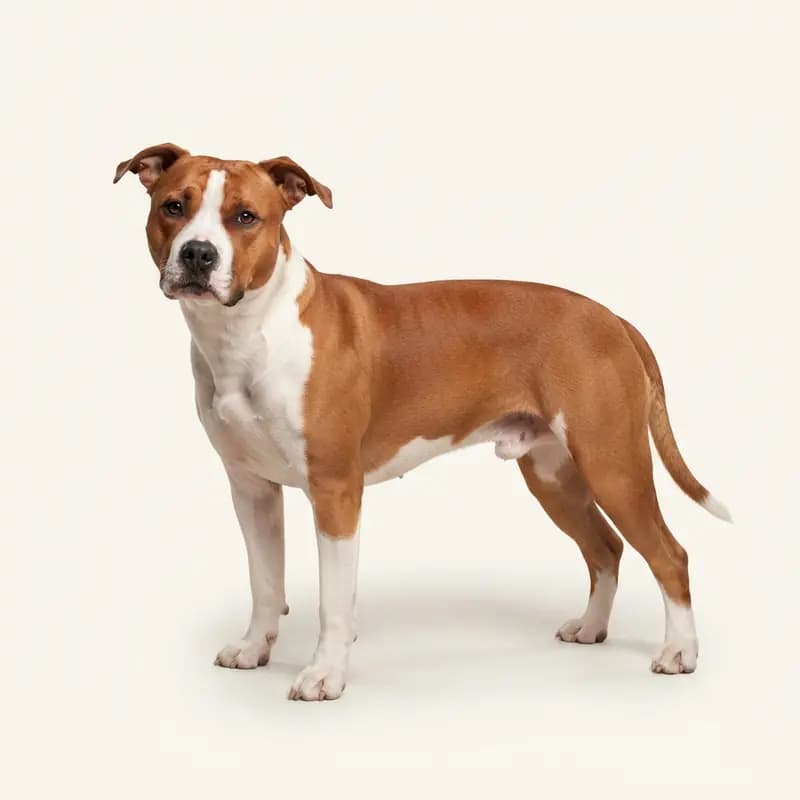
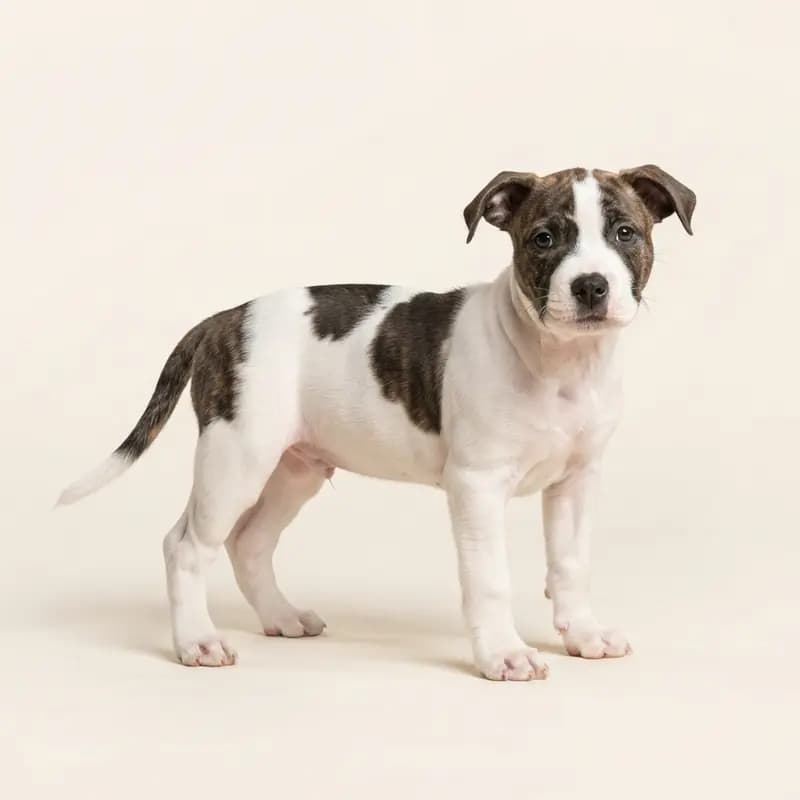
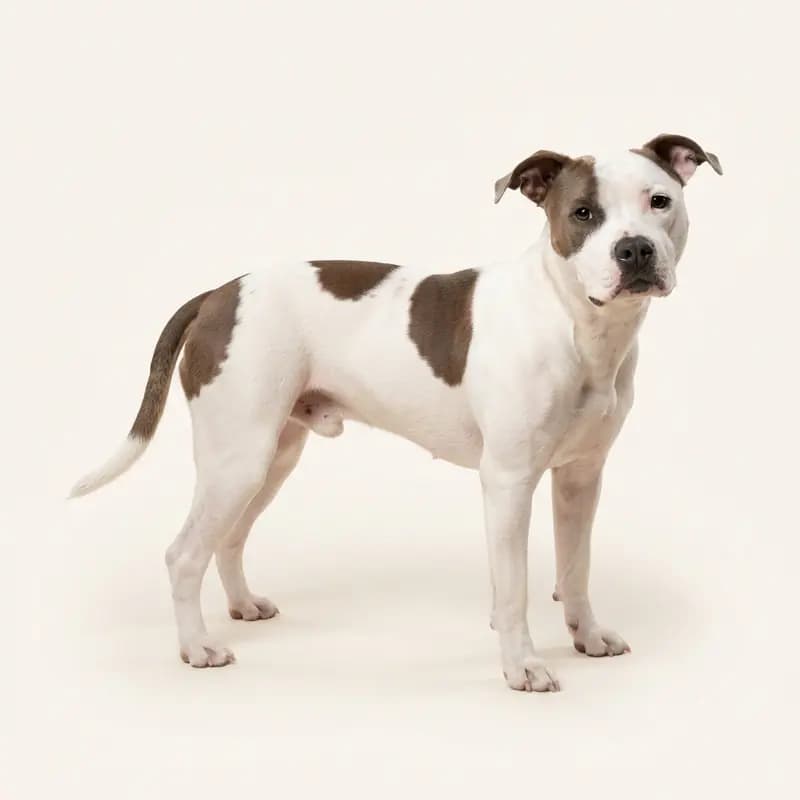
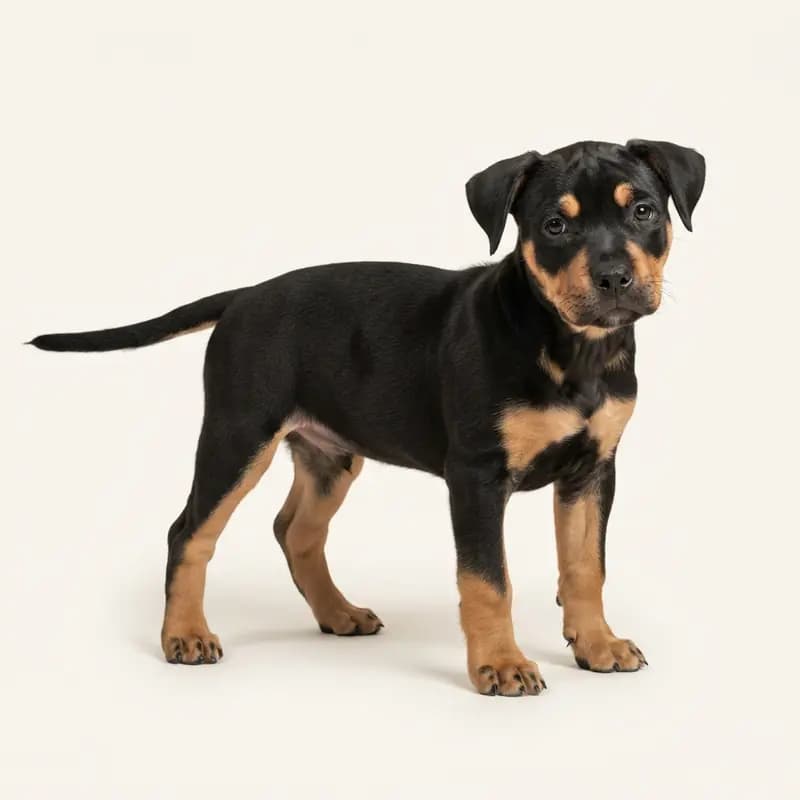
Eye colors
 Brown
 Amber
Coat type
 Short
 Smooth
Perfect for you if:
- You are looking for a dog to be the only pet in the home, one that will focus all of its affection on you without reservation.
- You are prepared to handle prejudices in everyday life with composure and an impeccably well-trained dog.
Less ideal if:
- You are physically unable to securely hold 30 kilos of pure muscle if they decide to lunge in a conflict situation.
- You live or rent in a region where strict breed-specific legislation makes ownership difficult, expensive, or illegal.
- You have little patience for intensive training and muzzle conditioning, both of which are often indispensable in daily life.
The real vibes check
An AmStaff is not a dog that avoids conflict—it is a powerhouse that, in case of doubt, will always choose to move forward. You aren't getting an 'everybody's darling' for the dog park, but rather an affectionate, clingy bodyguard for your living room sofa. If you channel their strength with calm authority, you will have the most loyal shadow you could ever imagine.
Breed Profile
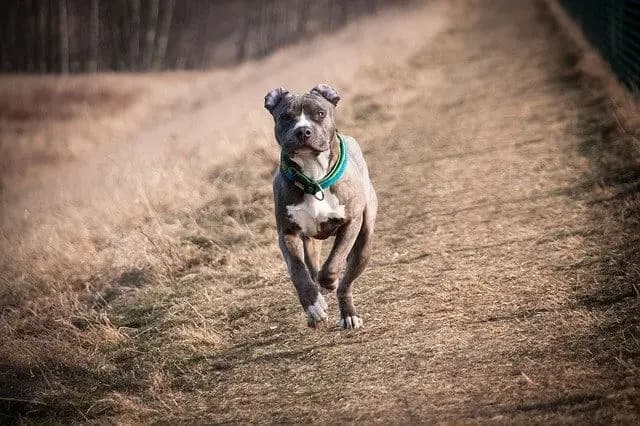
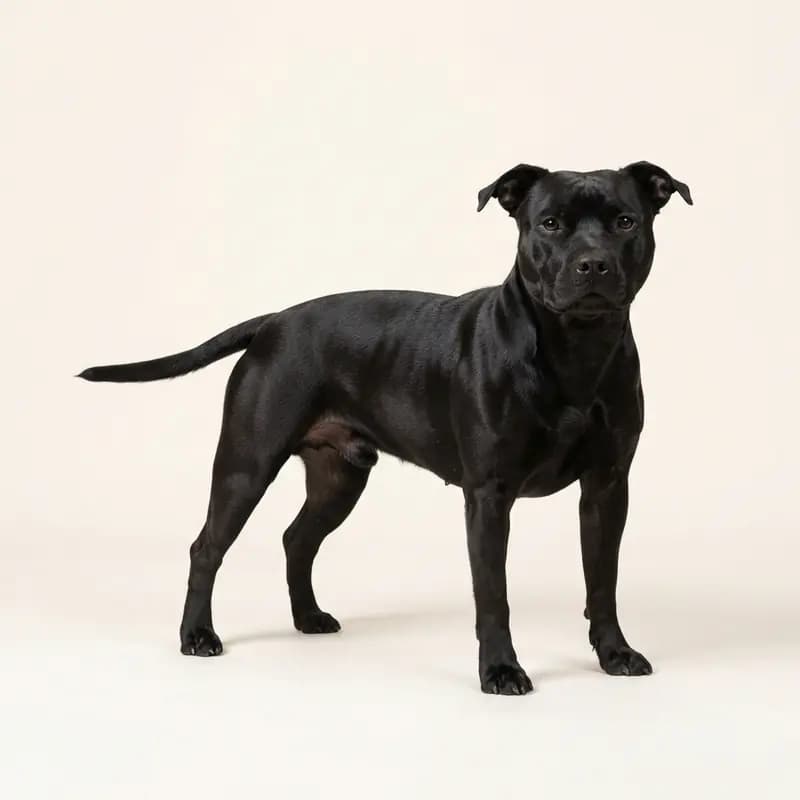
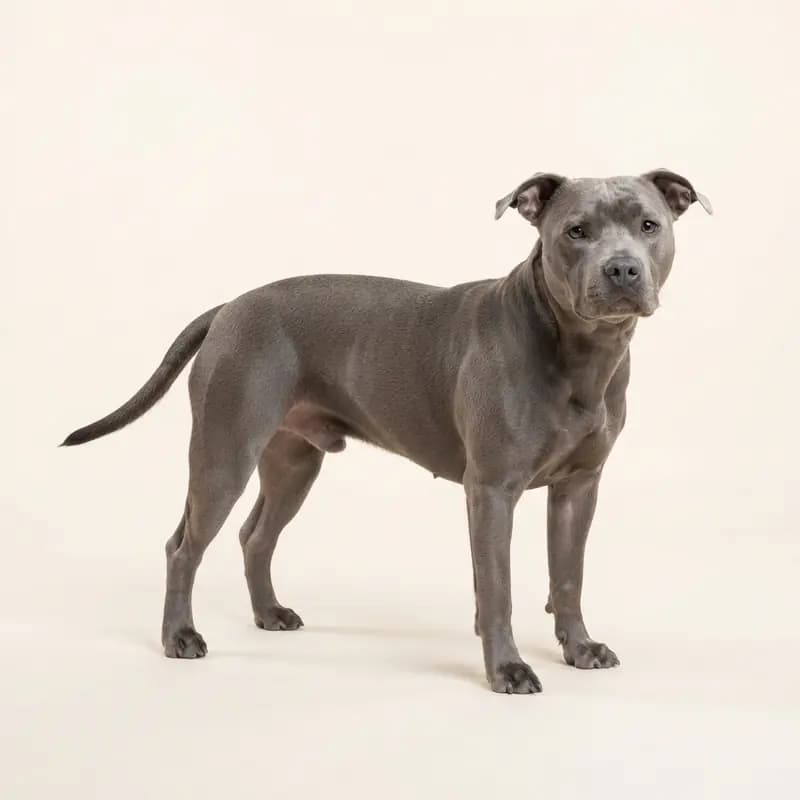
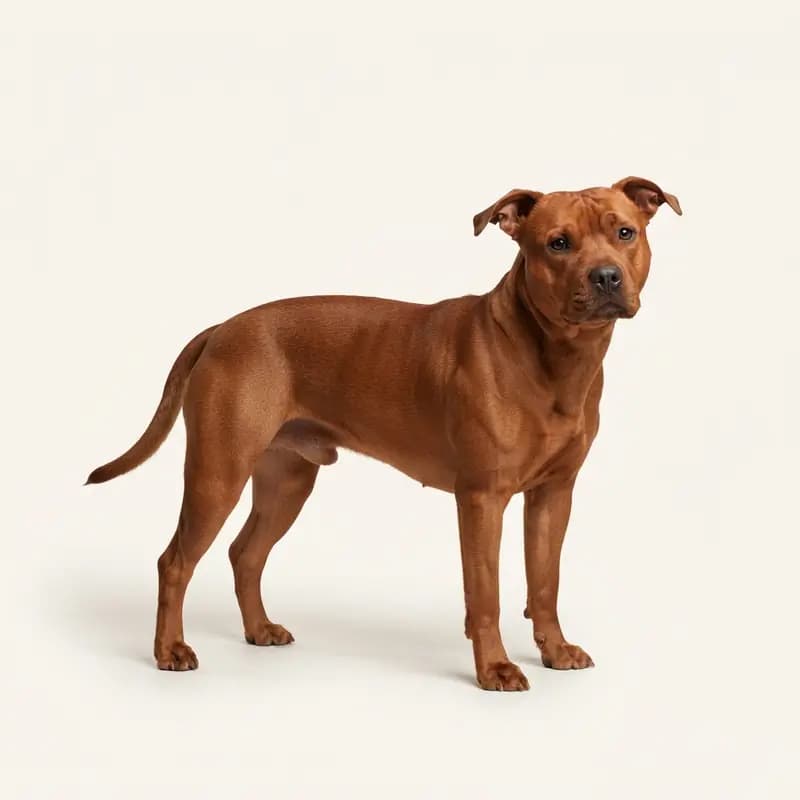
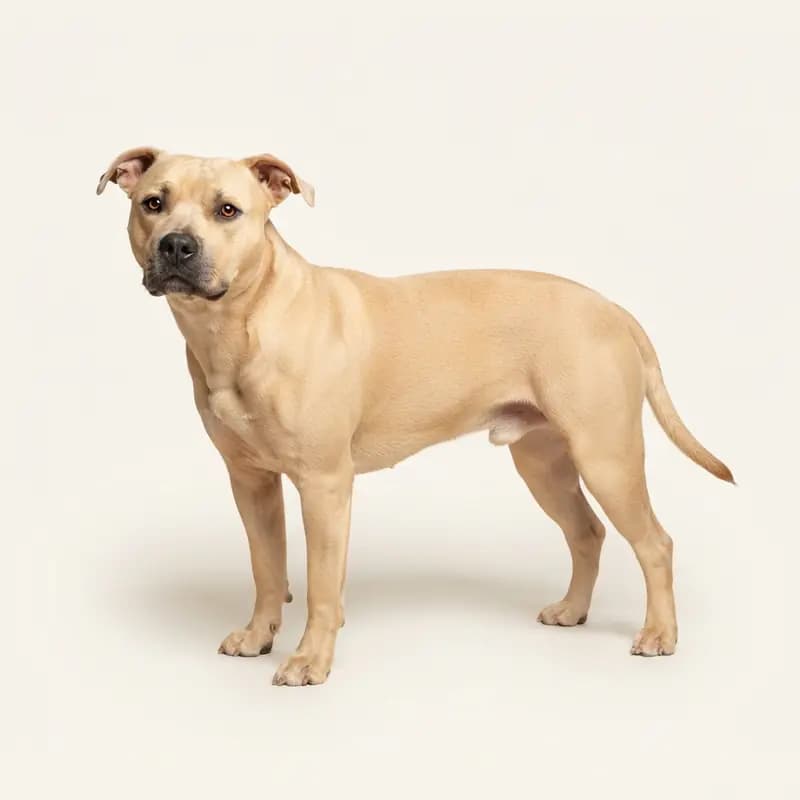
The American Staffordshire Terrier, often called Amstaff, is a breed characterized by its muscular strength, elegant lines and confident charisma. The body is strong and athletic, giving this breed remarkable agility and strength. The head is broad with a short, strong muzzle, and the ears are set high and may either be left untouched or, as in some cases, cropped. The eyes are dark and round, and they give the Amstaff an intelligent and attentive expression. The fur is short, smooth and dense and feels firm. The American Staffordshire Terriers belong to FCI Group 3, which includes terriers. There are no official distinctions between show and performance lines within the breed.
All measurements in detail
- Height
- 43 - 46 cm (Female), 46 - 48 cm (Male)
- Weight
- 18 - 25 kg (Female), 25 - 32 kg (Male)
- Life Expectancy
- 12 - 14 yrs
- Character
- Loyal, brave, loving
- Coat
- Short, smooth, dense
- Coat Color
- Diverse; including black, blue, brown, fawn, red and more.
- Price
- 800 - 1800 €
Character & Temperament
The American Staffordshire Terrier is a fascinating dog that forms a very close bond with its family. He is known for his loyalty and protective instinct. His loving nature makes him a great companion, especially if you are looking for a dog that will be loyal to you. In terms of temperament, the Amstaff is an energetic dog. He is not hyperactive, but he needs regular exercise to stay healthy both physically and mentally. He loves being outside and is always ready for adventure and games. It is noteworthy that although he is a strong and powerful dog, he is very gentle with his family and often does not know how strong he actually is. The Amstaff's intelligence and attentiveness are impressive. He is capable of learning complex tasks and is often very eager to please. Although he bonds closely with his family, he may need some time to get used to new people. He tends to be alert, making him a natural watchdog. However, it is important to emphasize that he is not an aggressive dog as long as he is properly socialized and trained. The American Staffordshire Terrier can learn to stay alone with proper training, but it should be noted that he is a breed that bonds strongly with his people and is happiest when included in their activities. He is not necessarily a dog for people who work very long hours or are away often. One of the characteristic features of the Amstaff is its strong prey drive. He may show a strong interest in small animals, meaning he may not be the best candidate for a home with small pets such as cats or rabbits unless he is socialized early and properly. There are no official distinctions when it comes to lines, but it is important to note that some Amstaffs may have stronger working characteristics than others. This can affect their temperament and training needs. It is therefore advisable to do careful research and speak to reputable breeders before purchasing an American Staffordshire Terrier.
| Watchfulness A natural watchdog with real protective instinct. | High |
| Openness to Strangers Neither pushily friendly nor suspicious. | Neutral |
| Hunting or Herding Drive Mild interest in movement and small animals — easily managed. | Low |
Fun Fact!
Did you know that the American Staffordshire Terrier was originally bred as a fighting dog, but is now valued as a loving family dog and is even used as a therapy dog in some countries?
What Awaits You
American Staffordshire Terriers are active dogs with great endurance. Stimuli can be associated with very high arousal. Therefore, good socialization is important. Depending on the federal state, there may be restrictions on keeping them.
Housing & Care
The American Staffordshire Terrier can be kept both in the city and in the country, provided he gets enough exercise and mental stimulation. He is a family dog and loves to be involved in activities. He generally gets along well with children, but because of his strength he should always be supervised, especially with smaller children. When it comes to other pets, such as cats, it is important that the dog is properly socialized early on. In some federal states, this breed is considered a listed dog and special requirements must be observed.
- Family Friendly
Loves family life and thrives in a group.
Family-oriented - Child Friendly
Takes boisterous and affectionate children in its stride.
Patient with children - Dog Friendly
Can get on with dogs it knows — strangers are a different story.
With familiar dogs - City Friendly
City-appropriate with enough exercise and stimulation.
Manageable in cities
Owning a dog is a privilege, but it's also a real responsibility. Before you bring one into your life, be honest with yourself about the commitment it takes.
Training & Education
The American Staffordshire Terrier is an intelligent and active dog that requires a lot of physical and mental activity. It is well suited for dog sports such as agility, protection or obedience. However, note that Amstaffs can sometimes have a tendency to become ball junkies, so it's important to keep play in moderation and teach the dog that there are other interesting activities too. It is also crucial that the Amstaff learns frustration tolerance and impulse control. Positive reinforcement and patience are crucial in training. It is important to set clear boundaries with your dog and be consistent.
Nutrition & Care
A balanced diet is crucial for the health and well-being of the American Staffordshire Terrier. Due to their tendency to skin allergies, it may be advisable to use hypoallergenic feed. It is important to keep an eye on the amount of food as this breed is prone to obesity. When it comes to grooming, Amstaffs are pretty easy to care for. Their fur is short, dense and smooth, with no undercoat. They shed moderately, so brushing them regularly is enough to remove dead hair. The climate in Germany should not be a problem for the Amstaff, but they should wear a coat in very cold winter weather.
| Care Level Minimal effort — occasional brushing and bathing. | Low-maintenance |
| Exercise Needs Needs several hours of serious exercise every day. | Very active |
| Shedding Hair everywhere, always — no white clothing survives. | Very heavy |
| Trainability Bred to work closely alongside humans. | Highly trainable |
Our experts are still reviewing this information. Spotted something wrong? Email us at info@honestdog.de.
Health & hereditary diseases
Health
C
Solid, watch carefully
Health grade
In the American Staffordshire Terrier, severe hereditary neurological disorders such as polyneuropathy with juvenile laryngeal paralysis (ALLP) and cerebellar ataxia (CA1), as well as heart diseases and elbow dysplasia (ED), define the breed-typical risk. The Deutscher Club für Bullterrier e.V. makes genetic testing for ALLP mandatory for breeding, whereby carriers may only be mated with clear partners. A health-oriented breeder additionally tests the parent animals for cerebellar ataxia (CA1) and neuronal ceroid lipofuscinosis 4A (NCL-4A), has the heart examined, and has the joints X-rayed for elbow dysplasia (ED) and hip dysplasia (HD). Before buying, make sure to ask for the complete DNA results, heart examination report, and proof of ED 0–1 and HD A–C for both parents.
Grade is relative to other breeds — AI-assisted and editorially reviewed.
Methodology and data: HonestDog Dog Breed Health Report 2026
What matters most for this breed
Tap any item to see details.
In daily life this can mean
With joint-friendly rearing, a healthy weight, and regular veterinary check-ups, most of these dogs remain active and fit for a long time.
The breeder's role
Responsible breeders test for polyneuropathy with juvenile laryngeal paralysis (ALLP) and cerebellar ataxia (CA1), and additionally have the parents' heart and elbows (ED) examined.
Note: This health overview is AI-assisted and editorially reviewed. It is for orientation only and does not replace veterinary advice.
Health risks for this breed
What matters most for this breed — what's common, how much it affects the dog's life, and how to protect yourself as a buyer.
14
Risks tracked
10
Core standard
10
High severity
Eyes
Most affected area
Where this breed is vulnerable
Tap a body region to see the inherited conditions linked to it.
The three most important risks
Pick a region on the map to explore other areas.
severemoderatemild
How thoroughly does the breeder test?
Tier 1 is the core standard: the tests Deutscher Club für Bullterrier e.V. requires, plus further tests from the recommended health standard for this breed. Tiers 2 and 3 show how responsible breeders go beyond.
Core standard. Tests marked “Club standard” are required by Deutscher Club für Bullterrier e.V. for breeding approval; the others are part of the recommended health standard for this breed. Ask any reputable breeder for the results.
Other breeding-approval requirements
Not health tests, but required for breeding: the club asks for these results too. They don't count toward the risks or the rating.
D-Locus (d1) (D-Lokus)
Required by Deutscher Club für Bullterrier e.V.
Acceptable result: result on file
Note: This health overview is AI-assisted and editorially reviewed. It is for orientation only and does not replace veterinary advice.
Costs & where to find one
How much does a American Staffordshire Terrier cost?
A American Staffordshire Terrier costs around ~€180 per month (€90 – €340, depending on your setup). The first year adds up to roughly ~€4,290 including purchase, equipment and puppy school; across the dog's life (13 years) it comes to about ~€30,210.
With surgery cover, running costs come to about ~€180 per month — in return, your share of a major operation drops from several thousand euros to around 20 percent.
Per month
~€180
In the first year
~€4,290
Across the dog's life
~€30,210
Purchase price per HonestDog's market analysis (asking prices in Germany, as of October 2026): €800 – €1,800
Small sample: 8 unique listings in the rolling three-month window. Data for this breed · Methodology
Estimate at a mid-range setup (suburban, dry food, 1–2 hours of daily exercise), average German prices, as of July 2026.
Calculate your personal costs1-minute self-check with your own answers
Looking for a American Staffordshire Terrier?
HonestDog Concierge
No verified American Staffordshire Terrier breeders on HonestDog yet
We currently have no breeders for this breed who have passed our verification. Create your short buyer profile: we'll set up your search alert, review a possible source and email you within 28 days.
Legal Notice
American Staffordshire Terrier is classified as a restricted or dangerous dog breed in several German federal states. Depending on your location, requirements may include a permit, temperament test, leash and muzzle obligation, restricted insurance options, and a significantly higher dog tax. Always check with your local authorities.
Full guide to restricted-breed ownership in GermanyAppearance, variants & origin
 Illustrative image
 Illustrative image
 Illustrative image
 Illustrative image
History
The full history
The American Staffordshire Terrier has its roots in England in the early 19th century. Crossing between the Old English Bulldog and various terrier breeds led to the development of the Staffordshire Bull Terrier, the direct ancestor of the Amstaff. In the 1800s, these dogs were brought to America, where breeders began breeding larger and heavier versions, which eventually became known as American Staffordshire Terriers. They were originally used for dog fighting and as rat catchers, but when dog fighting was banned, their popularity as family dogs began to increase. The American Kennel Club (AKC) recognized the American Staffordshire Terrier as a separate breed in 1936. It is important to note that the American Staffordshire Terrier is often confused with the American Pit Bull Terrier, but they are separate breeds.
Original Use
The American Staffordshire Terrier was originally bred for dog fighting, but was later valued as a family and guard dog.
Origin
USA
Date
1800
Owner experiences
With their own family, owners almost all describe the American Staffordshire Terrier as very affectionate, sensitive and almost pushy in…Summarized from publicly shared owner experiences
With their own family, owners almost all describe the American Staffordshire Terrier as very affectionate, sensitive and almost pushy in its cuddliness. Many owners value its high tolerance threshold at home and stress how gently and patiently these dogs treat their people, including children, despite their tremendous muscle power. At the same time, owners often joke that the breed occasionally forgets its own build during play or greetings and can act like a little battering ram.
A dominant topic in owner forums, though, is the social side of daily life. Many owners stress that as an Amstaff owner you need very thick skin when it comes to prejudice, skeptical looks and disapproving comments from passersby or other dog owners. They also point again and again to the strict official requirements and high hurdles that come with the breed's restricted-breed status (such as temperament tests, muzzle and leash requirements and higher tax rates), which shape daily life to a large extent.
In training, experienced owners highlight the breed's eagerness to learn and its intelligence.Summarized from publicly shared owner experiences
In training, experienced owners highlight the breed's eagerness to learn and its intelligence. The Amstaff is considered cooperative and motivated, but like many terriers it tends toward a certain stubbornness and likes to test inconsistent rules. Owners unanimously advise against harshness or pressure; instead, they say, the breed needs very calm, confident and reliable leadership with clearly defined boundaries.
Owners pay particular attention to how these dogs get along with other dogs. While many puppies and young dogs are easygoing at first, numerous owners report that problems can arise once the dog reaches sexual maturity, especially in encounters with same-sex dogs. Owner accounts describe intensive, early training in frustration tolerance and loose-leash walking as essential, so that the dogs' sometimes tremendous physical strength can be kept under control at all times when there's something exciting going on outside.
Sources:dogforum.demit-tier.de
Although the American Staffordshire Terrier is generally considered a robust, athletic breed, owners in forums talk strikingly often abou…Summarized from publicly shared owner experiences
Although the American Staffordshire Terrier is generally considered a robust, athletic breed, owners in forums talk strikingly often about skin and food issues. Recurring reports mention sensitive skin, atopic dermatitis, severe itching, repeated ear infections and allergic reactions to environmental triggers or certain protein sources. For owners whose dogs are affected, this often means lengthy elimination diets and extensive veterinary care.
Owners also note that because the coat is short and lacks a dense undercoat, many dogs are sensitive to cold, wet weather and start to feel the cold quickly in winter. The musculoskeletal system is another topic among owners: because of the muscular, compact build and the breed's explosive play style, owners recommend paying attention to healthy joint development and, while the dog is young, avoiding overload from too much stair climbing or uncontrolled jumping.
Sources:mypetclub.dezooroyal.de
Paraphrased from real owner reports · translated from German
FAQ & more
Is a American Staffordshire Terrier the right dog for me?
The American Staffordshire Terrier is an active dog that needs plenty of exercise and mental stimulation. Research the temperament, grooming needs, and space requirements before deciding.
How long does a American Staffordshire Terrier live?
The average life expectancy of a American Staffordshire Terrier is 12-14 years. With proper care and regular vet visits, your dog can live a long, healthy life.
How much grooming does a American Staffordshire Terrier need?
American Staffordshire Terrier grooming requirements include regular brushing, nail trimming, and dental care. HonestDog provides detailed grooming tips for every breed.
Is a American Staffordshire Terrier good for families with children?
The American Staffordshire Terrier can be a great family dog. Proper training and socialization are key. HonestDog provides family suitability information for every breed.
What colors does the American Staffordshire Terrier come in?
The American Staffordshire Terrier comes in these colors: Black, Blue, Red, Fawn, Brindle, White, Black and white, Red and white, Piebald, Black and tan, Liver, Merle. Colors that fall outside the breed standard are marked as such on the breed page.
Guides & Articles about American Staffordshire Terrier
Magazine
Most Dangerous Dog Breeds: Bite Stats Truth
Most dangerous dog breeds: what bite statistics and experts actually reveal. Discover essential facts and insights every dog owner needs to know.
Dog Seekers
Dog Liability Insurance: Rules, Costs & Key Coverage
Is dog liability insurance mandatory and what matters? Learn regional laws, costs, and essential coverage options explained neutrally.
Dog Owners
Dog License Hamburg: Rules, Test & Costs 2026
Dog license Hamburg: who needs it, what the practical exam involves, and how much it costs, including breed-specific rules as of October 2026.
Are you a American Staffordshire Terrier breeder?
Showcase your kennel on HonestDog and reach families searching for a responsibly bred American Staffordshire Terrier.