MalteseSame FCI section
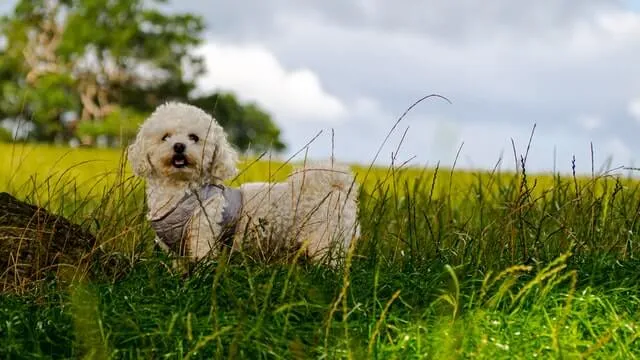
The Bichon Frisé is a cheerful, extremely people-oriented companion dog—bred for one specific task: to provide constant companionship to its human. This very specialization makes it the perfect everyday companion, but it also means that it detests being left alone.
Self-check
Answer 6 quick questions about your everyday life and see how well the Bichon Frise fits you — including an honest cost estimate per month, per year, and across the dog's lifetime.
At a glance
The essentials — key facts, traits, and health priorities — before you dive deeper.
Health grade
Relative to other breeds
Average — several important tests are expected.
Tests mandated by the breed club
Per AKC/CHIC
See full health info & tests →
Note: This health overview is AI-assisted and editorially reviewed. It is for orientation only and does not replace veterinary advice.
Lifespan
12–15 yrs
Height
25–29 cm
Weight
3–6 kg
Practical
Temperament
Daily life
What matters most
Especially with a Bichon Frise, choosing the right breeder is the single most important decision you'll make. Serious breeders consistently test the parents for inherited conditions, prioritize healthy early socialization, and stay accountable long after handover. A cheap puppy without health screening tends to become the most expensive dog later on.
See HonestDog breeder standards →Colors & coat
The coat colors you will see in Bichon Frise litters — including which ones fall outside the breed standard and which carry genetic risk.
Eye colors
 Brown
BrownCoat type
 Illustrative image
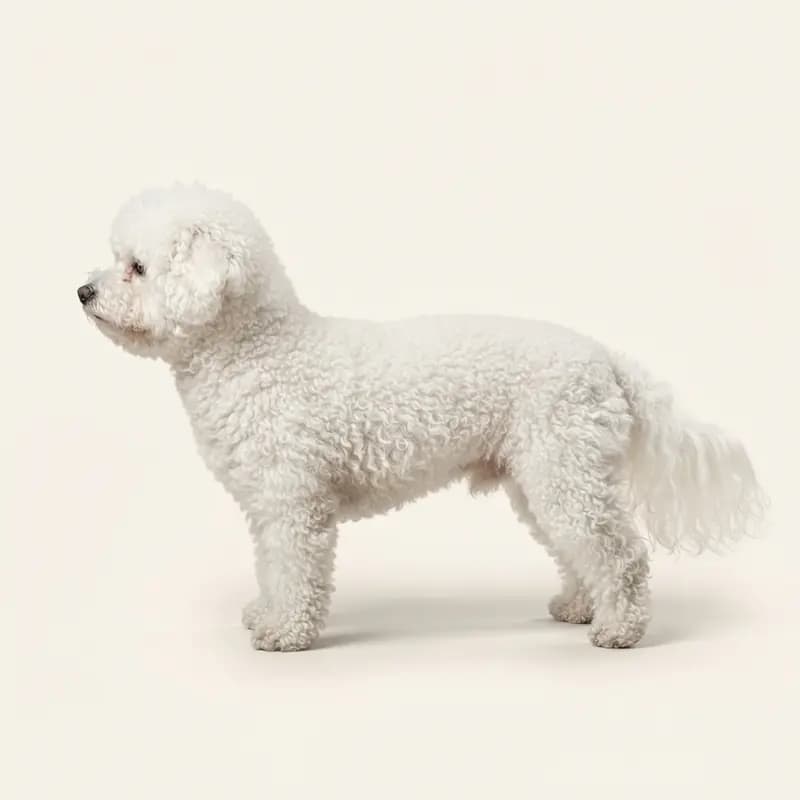
Curly
 Double coat
 Illustrative image
Medium
The real vibes check
A Bichon Frisé is like a cheerful, white shadow that follows you from the sofa to the bathroom. It wasn't bred to track scents or guard your home, but to share your life—non-stop. If you love this kind of unconditional closeness, you'll have the most loyal friend; if you are actually looking for an independent roommate, this constant presence will feel overwhelming.
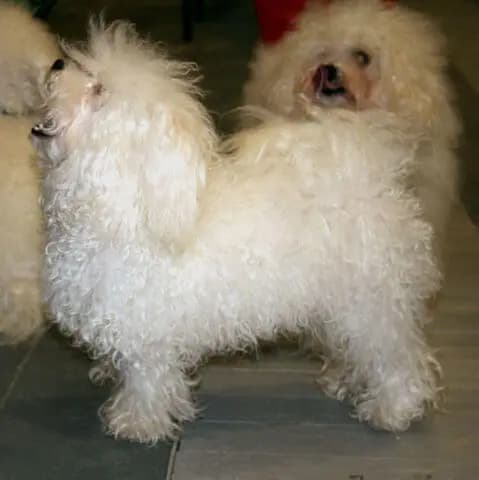
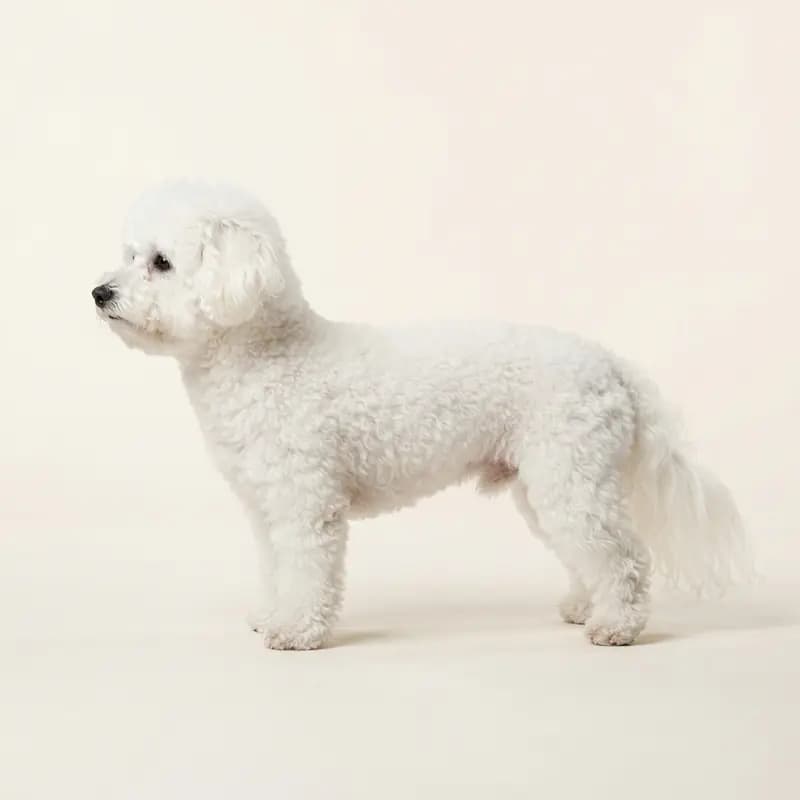
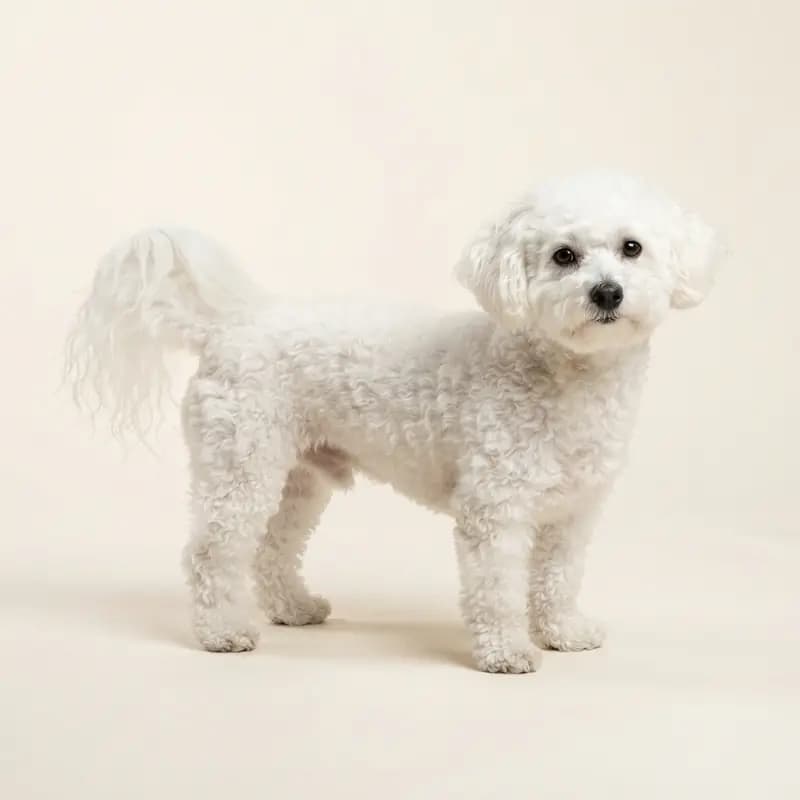
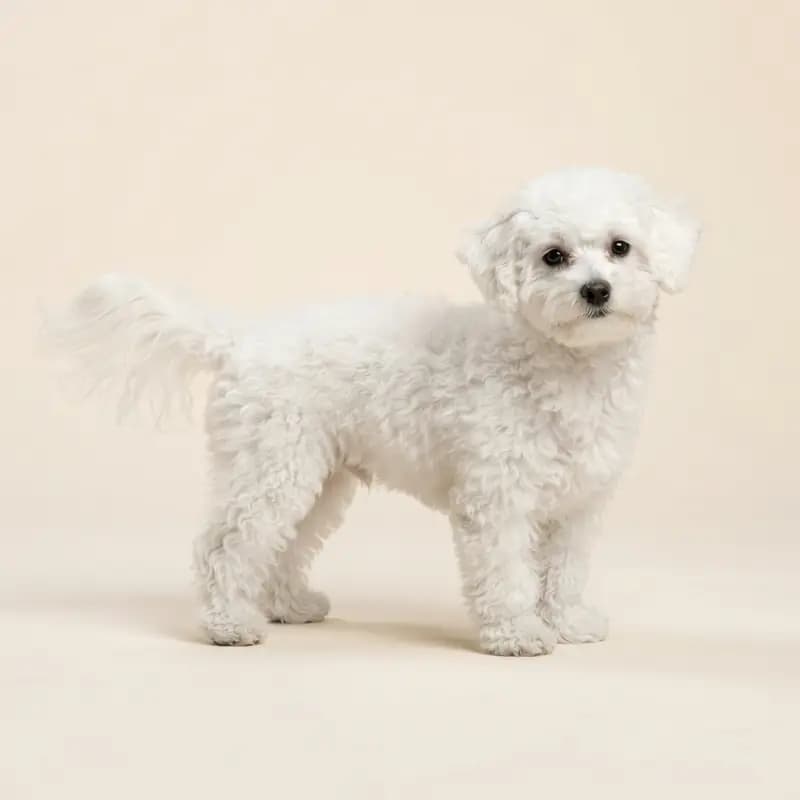
The Bichon poil fris, also known as the Bichon Frise or simply Bichon, is a small, cheerful dog with a remarkable curly, white coat. He belongs to FCI Group 9, companion dogs, which reflects his popularity as a pet and lap dog. With his clever face, dark eyes and distinct coat texture, he is an eye-catching little dog that often piques the interest of people looking for a loving and charming companion. There are no differences between show and performance lines in Bichons, as they are bred primarily as companion dogs and not for specific working purposes. Their coat texture and general appearance are fairly consistent within the breed, although individual variations may occur in the amount of fur and body proportions.
The Bichon "poil fris" is a lively, charming and playful dog with a loving and friendly personality. They are known for their cheerful temperament and love of companionship, whether cuddling or playing with their humans. They are very people-oriented and love being part of family life. They adapt well to different living conditions as long as they receive enough attention and affection. Bichons may be small, but they are not shy or reserved. They are bold and confident, often displaying a temperament that is larger than their actual body. They are active and energetic, love to play and run, but can also be calm and relaxed when around their humans. As an intelligent breed, Bichons have good memories and can learn quickly. They enjoy mental stimulation and can be trained well with positive training methods. Although they love company, they can also learn to be alone as long as they are well socialized and properly trained. Bichons are not hunting dogs, but they have a natural instinct to explore their surroundings and pursue things that catch their attention. They are alert and often alert when they notice something unfamiliar or interesting, making them good watchdogs for the home. Although they have high social skills, Bichons can sometimes be territorial and possessive of their toys or food. This can be well managed with proper socialization and training. It's important to expose them to different people, animals and environments from a young age to ensure they grow up balanced and confident.
| Watchfulness Occasionally alerts but is fundamentally open. | Low |
| Openness to Strangers Warms up quickly and is generally welcoming. | Friendly |
| Hunting or Herding Drive Barely any prey drive — small animals trigger nothing. | Very low |
Fun Fact!
Did you know that the Bichon "poil fris" was a popular lap dog of the French and Italian aristocracy in the 14th century? Today, this charming breed is a popular star in the dog show world and a beloved family companion.
The Bichon Frisé is an intelligent, alert dog that likes to move and is also suitable for beginners with appropriate activity and training.
The Bichon "poil fris" is an excellent city dog that can adapt to different living conditions. While he is active and requires daily walks and playtime, his smaller body makes him well suited to living in an apartment or a house with a small yard. These dogs are very social and generally get along well with children and other pets, including cats, when properly socialized.
Lives for its family — the born family companion.
Extraordinarily patient and loving — a true family dog.
Actively enjoys the company of other dogs.
Small space, noise, lots of people — no problem at all.
Owning a dog is a privilege, but it's also a real responsibility. Before you bring one into your life, be honest with yourself about the commitment it takes.
Despite their small size, Bichons "poil fris" are intelligent and active dogs that require both physical and mental stimulation. They are eager to learn and respond well to positive reinforcement. Their natural energy and curiosity make them good candidates for dog sports such as agility or obedience. It is important to note that they can quickly become bored with excessive repetition of activities such as ball games, which can lead to obsessive behavior. It is therefore advisable to make the training varied and, in addition to the physical training, also offer mental stimulation, such as search games or learning new tricks. These dogs are usually not aggressive, but they can sometimes be territorial. Therefore, it is important to teach them to develop frustration tolerance and impulse control. Good behavior and socialization are particularly important for this breed to ensure they are happy and well-adjusted.
The Bichon "poil fris" diet should be balanced and tailored to the specific needs of this breed. They tend to gain weight when overfed, so it's important to monitor their food intake and ensure they get enough exercise. High-quality food with a balanced ratio of protein, fat and carbohydrates is ideal for this breed. In terms of grooming, the Bichon "poil fris" has a double undercoat and a curly top coat that requires regular grooming to prevent mats and tangles. The coat should be brushed daily and professionally trimmed approximately every 6-8 weeks. They shed little to no shed, making them a good choice for allergy sufferers. Despite their thick fur, they also cope well with the climate in Germany.
| Care Level Needs regular professional grooming — time-consuming and costly. | High-maintenance |
| Exercise Needs Needs 1–2 hours of real exercise daily. | Active |
| Shedding No or minimal hair loss — suitable for allergy sufferers. | No shedding |
| Trainability Bred to work closely alongside humans. | Highly trainable |
Our experts are still reviewing this information. Spotted something wrong? Email us at info@honestdog.de.
Solid, watch carefully
Health grade
The Bichon Frisé is a popular companion dog, but it carries an above-average risk for certain genetic conditions, which is why we have assigned it a grade of C. Particular focus should be placed on patellar luxation, as well as neurological issues such as episodic falling and the painful condition syringomyelia. Prospective buyers should insist on seeing certified health test results for the parents to minimize these risks.
Grade is relative to other breeds — AI-assisted and editorially reviewed.
What matters most for this breed
Tap any item to see details.
You should ensure the dog is raised in a way that protects its joints, check its teeth regularly, and maintain its coat consistently to prevent painful skin inflammation.
Reputable breeders have the parents' knees and eyes examined and pay attention to flawless dentition and healthy coat structure to reduce risks within the bloodline.
Note: This health overview is AI-assisted and editorially reviewed. It is for orientation only and does not replace veterinary advice.
What matters most for this breed — what's common, how much it affects the dog's life, and how to protect yourself as a buyer.
Tap a body region to see the inherited conditions linked to it.
The three most important risks
Pick a region on the map to explore other areas.
Tier 1 reflects the tests AKC/CHIC actually mandates. Tiers 2 and 3 show how responsible breeders go beyond.
Club standard. Tests the relevant breed-club (VDH / FCI / AKC parent club) mandates for registration. Any serious breeder should provide these.
No entries in this tier.
No entries in this tier.
Note: This health overview is AI-assisted and editorially reviewed. It is for orientation only and does not replace veterinary advice.
A Bichon Frise costs around ~€180 per month (€90 – €330, depending on your setup). The first year adds up to roughly ~€4,740 including purchase, equipment and puppy school; across the dog's life (13.5 years) it comes to about ~€31,710.
With surgery cover, running costs come to about ~€170 per month — in return, your share of a major operation drops from several thousand euros to around 20 percent.
Per month
~€180
In the first year
~€4,740
Across the dog's life
~€31,710
Purchase from a breeder: €1,000 – €2,500
Estimate at a mid-range setup (suburban, dry food, 1–2 hours of daily exercise), average German prices, as of July 2026.
 Illustrative imageIllustrative imageIllustrative image
 Illustrative image
The exact origin of the Bichon poil fris is unknown, but it has roots in the Mediterranean region and is closely related to other breeds such as the Maltese and the Bichon Bolognese. It is believed that sailors brought the Bichon with them as a companion on their voyages, thus spreading the breed to different parts of the world. The breed became very popular in Spain and Italy, particularly in the royal courts, where the dogs were often exchanged as gifts. Over time, the Bichon "poil fris" also became popular in France and was a favorite of the French aristocracy. After the French Revolution, Bichons lost their status as royal pets and had to find their way on the streets. Some were adopted by street artists and learned the art of performing tricks, which further boosted their popularity. The breed was finally standardized in the late 19th century and recognized in 1933 by the Soci"t" Centrale Canine, the national kennel club in France. The F"d"ration Cynologique Internationale (FCI) recognized the breed in the same year. The American Kennel Club (AKC) recognized the Bichon "poil fris" in 1972.
The Bichon à poil frisé was bred as a companion dog for the upper class and is known for its cheerful nature and curly coat.
France/Spain
1300
Wir haben uns damals für einen Bichon Frisé entschieden, weil wir einen unkomplizierten, fröhlichen Begleiter gesucht haben, der auch für Anfänger gut geeignet ist. Und was soll ich sagen: Unser Kleiner ist wirklich ein absoluter Sonnenschein! Er ist wahnsinnig lebensfroh, ein echter kleiner Quatschkopf und bringt uns jeden Tag zum Lachen. Er ist unheimlich menschenbezogen und am liebsten überall mit dabei.
Allerdings sollte man den Pflegeaufwand auf keinen Fall unterschätzen. Das Fell wächst unaufhörlich und wächst ihm auch schnell über die Augen, sodass er ohne regelmäßiges Schneiden rasch zottelig und ungepflegt aussieht. Wir gehen mindestens 4- bis 6-mal im Jahr zum Hundefriseur. Ein weiteres rassetypisches Thema sind die Tränenkanäle. Unser Rüde hat leider Probleme damit, was sich durch sehr auffällige, rostroten Verfärbungen (Augenringe) im weißen Fell bemerkbar macht. Das erfordert zusätzliche, tägliche Pflege.
Wir haben uns für einen Bichon Frisé entschieden, weil die Rasse als absolut allergikerfreundlich und nicht-haarend beschrieben wird, da meine Tochter eine Katzenallergie hat. Bei ihr gab es zum Glück auch gar keine Probleme. Ich selbst habe allerdings nach dem Einzug des Welpen heftig reagiert – mit juckenden Augen, Ausschlag und Atemnot.
Was uns völlig überrascht hat: Unser Welpe hat anfangs unheimlich stark gehaart! Wenn wir ihn gebürstet haben, war die Bürste komplett voll, und nach dem Kuscheln sah meine Kleidung aus wie ein Schafpelz. Es stellte sich heraus, dass das am weichen Welpenfell lag. Man sollte sich also nicht blind darauf verlassen, dass ein Bichon-Welpe von Tag eins an überhaupt keine Haare verliert. Nach dem Fellwechsel hat sich das zum Glück gelegt, aber die Bürste ist bei der täglichen Pflege trotzdem immer gut gefüllt.
Unser Bichon Frisé ist ein absolut treuer, anhänglicher und extrem kluger Hund. Er lernt Tricks unglaublich schnell und will seinen Menschen eigentlich immer gefallen. Diese extreme Menschenbezogenheit hat bei uns jedoch zu einer echten Herausforderung geführt: dem Alleinebleiben.
Obwohl wir das Training von Anfang an kleinschrittig aufgebaut haben, zeigte er mit etwa 9 Monaten massive Verlustängste. Sobald wir den Raum verließen, fing er an zu speicheln, sodass seine Pfoten und die Schnauze ganz nass und braun verfärbt waren. Er lief dann unruhig umher, konnte sich nicht mit Spielzeug beschäftigen und beruhigte sich erst wieder, wenn einer von uns zurückkam. Wer sich einen Bichon anschafft, muss wissen, dass diese Hunde extrem sensibel sind und das Alleinebleiben bei dieser Rasse sehr viel Geduld und intensives Training erfordern kann.
Paraphrased from real owner reports
The Bichon Frise is an adaptable dog that adjusts well to various lifestyles. Research the temperament, grooming needs, and space requirements before deciding.
The average life expectancy of a Bichon Frise is 12-15 years. With proper care and regular vet visits, your dog can live a long, healthy life.
Bichon Frise grooming requirements include regular brushing, nail trimming, and dental care. HonestDog provides detailed grooming tips for every breed.
The Bichon Frise can be a great family dog. Proper training and socialization are key. HonestDog provides family suitability information for every breed.
The Bichon Frise comes in these colors: White.
Showcase your kennel on HonestDog and reach families searching for a responsibly bred Bichon Frise.