Loading breed
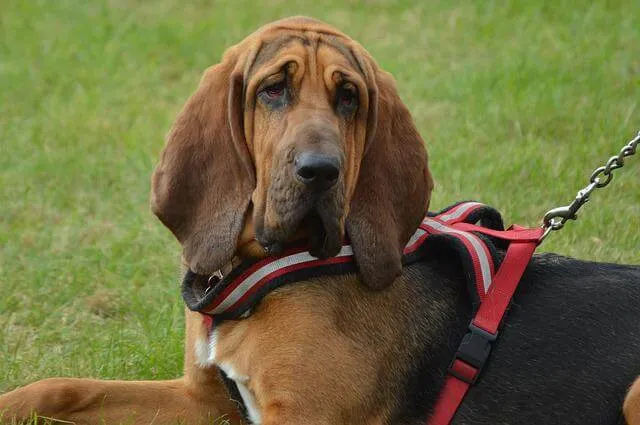
Bloodhound
Health grade D- Height60–70 cm
- Weight36–50 kg
- Life expectancy10–12 yrs
- Puppy price1,500–2,500 €
- Energy5/5
The Essentials at a Glance
The Bloodhound is a gentle but incredibly determined Schweißhund (scent hound)—bred to track a cold trail for miles and days on end, completely immersed in his own world of scents.
- Health grade D: Due to its extreme build, the Bloodhound carries significant health risks, with the life-threatening gastric dilatation-volvulus (GDV), severe hip dysplasia (HD), and painful eye problems such as ectropion / entropion particularly burdening the breed.
- You aren't looking for a jogging partner, but rather want to engage in hours of scent work (mantrailing)—because simple exercise will never be enough to tire out this specialist.
- You have plenty of patience and a good sense of humor to handle a dog who decides for himself when a scent trail is more important than your command.
- You expect a dog that can be reliably walked off-leash in the woods—as soon as this tracker's nose hits the ground, his ears effectively switch off.
Is the Bloodhound right for you?
At a glance
Bloodhound overview
The essentials — key facts, traits, and health priorities — before you dive deeper.
Health grade
Relative to other breeds
S
A
B
C
D
E
Very healthyHigher risk
Elevated risk — responsible breeding really matters.
See full health info & tests →
Note: This health overview is AI-assisted and editorially reviewed. It is for orientation only and does not replace veterinary advice.
Lifespan
10–12 yrs
Height
60–70 cm
Weight
36–50 kg
Practical
- Puppy price: 1,500 – 2,500 €
- Coat: Short, dense, smooth undercoat
- Origin: Belgium
Temperament
Energy
Trainability
Family fit
With kids
Daily life
Care effort
Shedding
Barking
City-friendly
Guard instinct
What matters most
Especially with a Bloodhound, choosing the right breeder is the single most important decision you'll make. Serious breeders consistently test the parents for inherited conditions, prioritize healthy early socialization, and stay accountable long after handover. A cheap puppy without health screening tends to become the most expensive dog later on.
See HonestDog breeder standards →Colors & coat
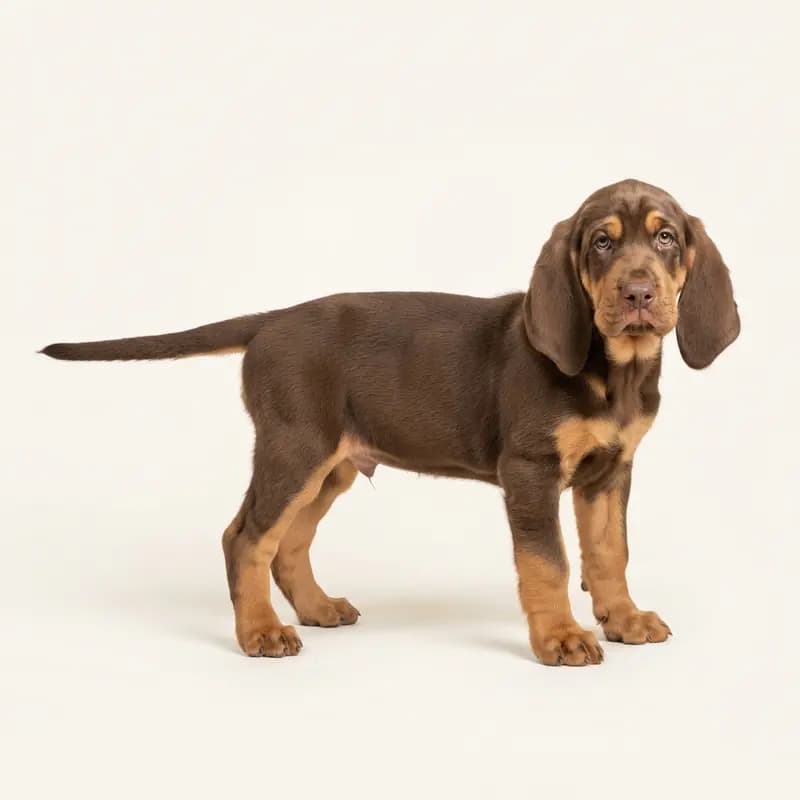
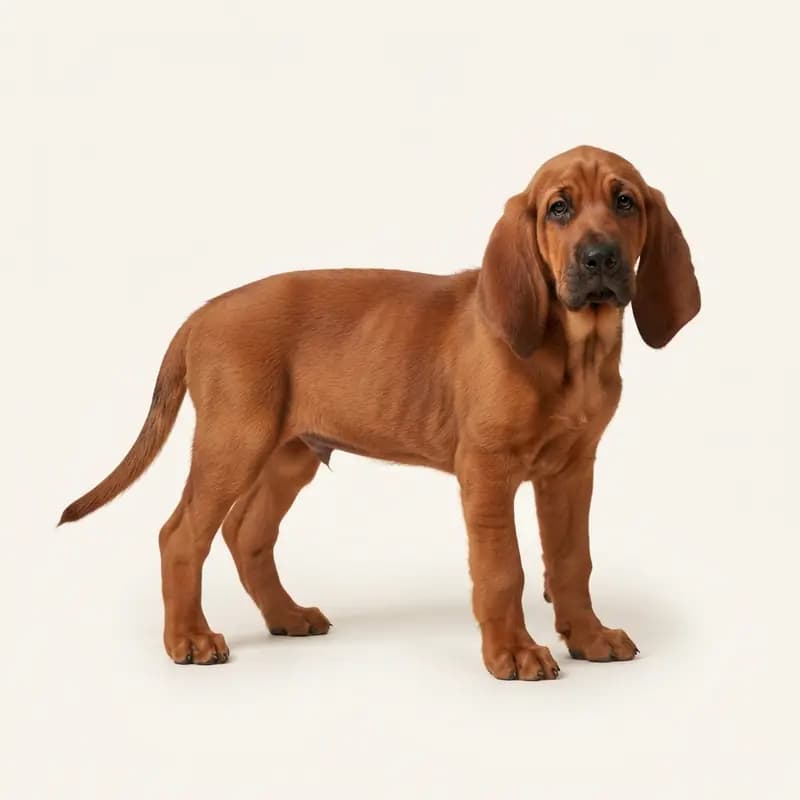
What colors does the Bloodhound come in?
The coat colors you will see in Bloodhound litters — including which ones fall outside the breed standard and which carry genetic risk.
Eye colors
 Brown
Brown Amber
Amber
Coat type
 Short
Short Smooth
Is the Bloodhound right for you?
Perfect for you if:
- You aren't looking for a jogging partner, but rather want to engage in hours of scent work (mantrailing)—because simple exercise will never be enough to tire out this specialist.
- You have plenty of patience and a good sense of humor to handle a dog who decides for himself when a scent trail is more important than your command.
- You have a house with a completely escape-proof garden and tolerant neighbors who won't be bothered by deep, loud baying.
- You appreciate a giant who is very calm and people-friendly indoors, loves cuddles, and gets along well with other dogs.
Less ideal if:
- You expect a dog that can be reliably walked off-leash in the woods—as soon as this tracker's nose hits the ground, his ears effectively switch off.
- You are fussy about cleanliness—drool on the walls and dirt from deep skin folds are just part of daily life.
- You cannot physically handle 50 kilograms of pure pulling power on a long line if he suddenly decides to follow a fresh trail.
The real vibes check
A Bloodhound is like a highly intelligent professor deeply engrossed in his research: when he is reading a trail, the rest of the world simply ceases to exist. You aren't getting an obedient follower, but an independent specialist. Anyone who tries to train this instinct out of him will fail—but those who celebrate him as a mantrailing partner will gain a deeply relaxed friend.
Self-check
Would the Bloodhound really fit your life?
Answer 6 quick questions about your everyday life and see how well the Bloodhound fits you — including an honest cost estimate per month, per year, and across the dog's lifetime.
Fit checkCost estimateRisk dice
Takes about 1 minute · free & anonymous
Breed Profile
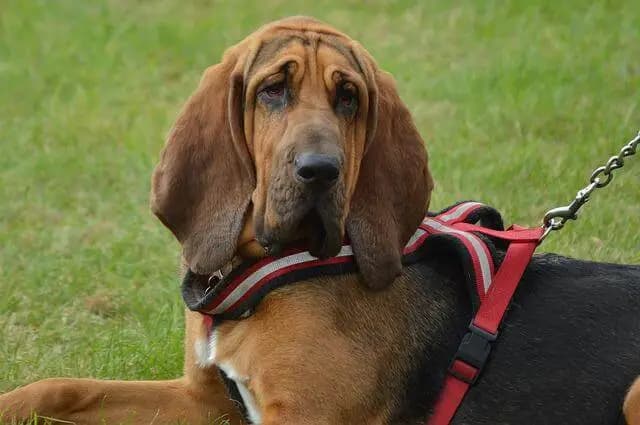
With its imposing stature and typical lop-eared ears, the Bloodhound is a sight that you won't soon forget. His powerful physique and the deep wrinkles on his face give him a noble charisma. This dog belongs to FCI group 6, the running and bloodhounds. Its appearance reflects its use as a sniffer dog - particularly noticeable is its long, hanging skin, which helps capture odor particles and supports its keen sense of smell.
All measurements in detail
- Height
- 60 - 64 cm (Female), 66 - 70 cm (Male)
- Weight
- 36 - 45 kg (Female), 41 - 50 kg (Male)
- Life Expectancy
- 10 - 12 yrs
- Character
- Patient, persistent, friendly
- Coat
- Short, dense, smooth undercoat
- Coat Color
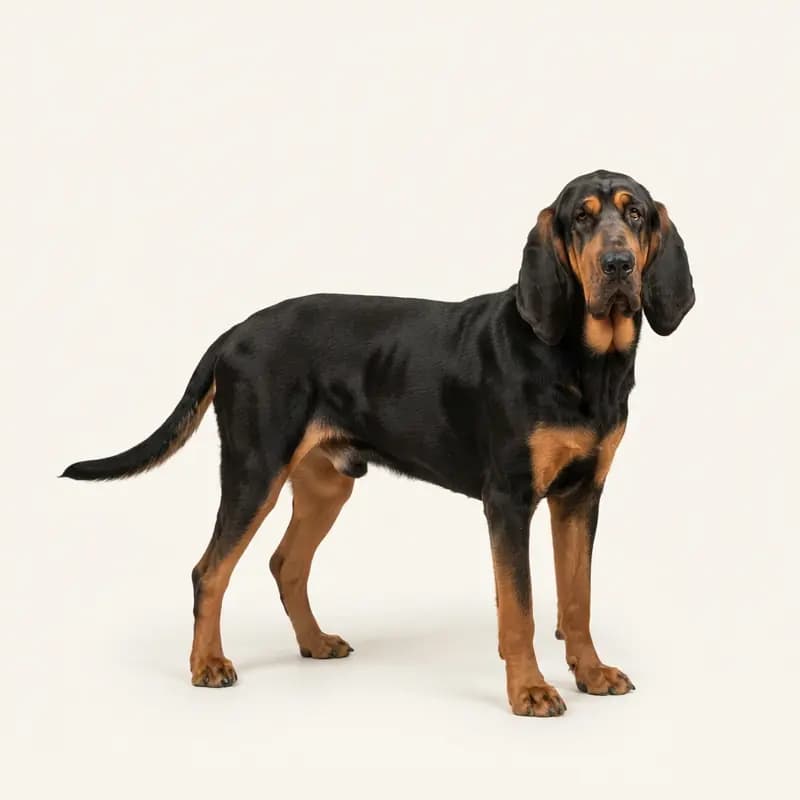
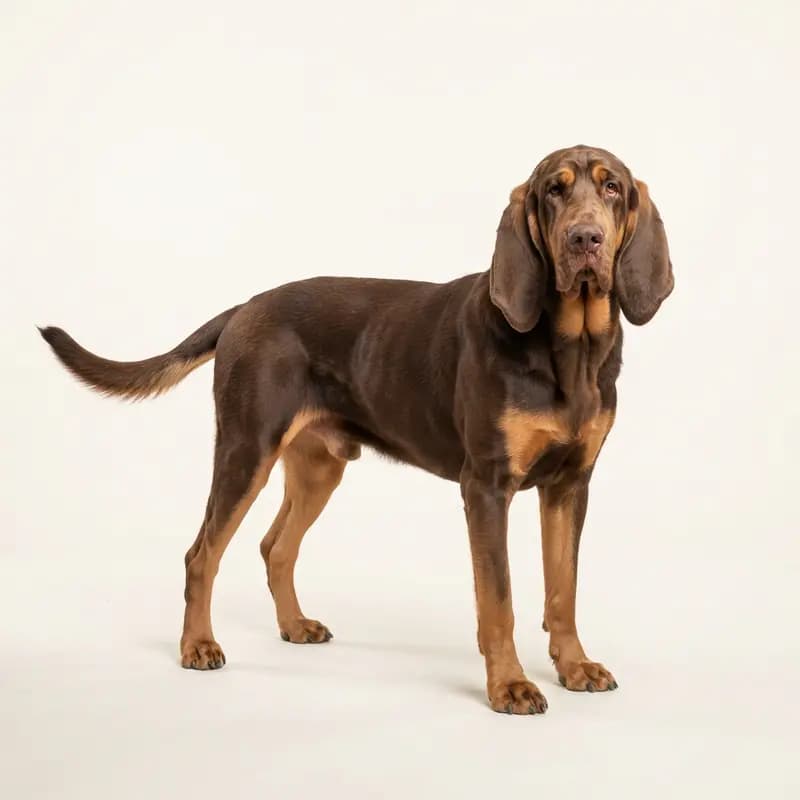
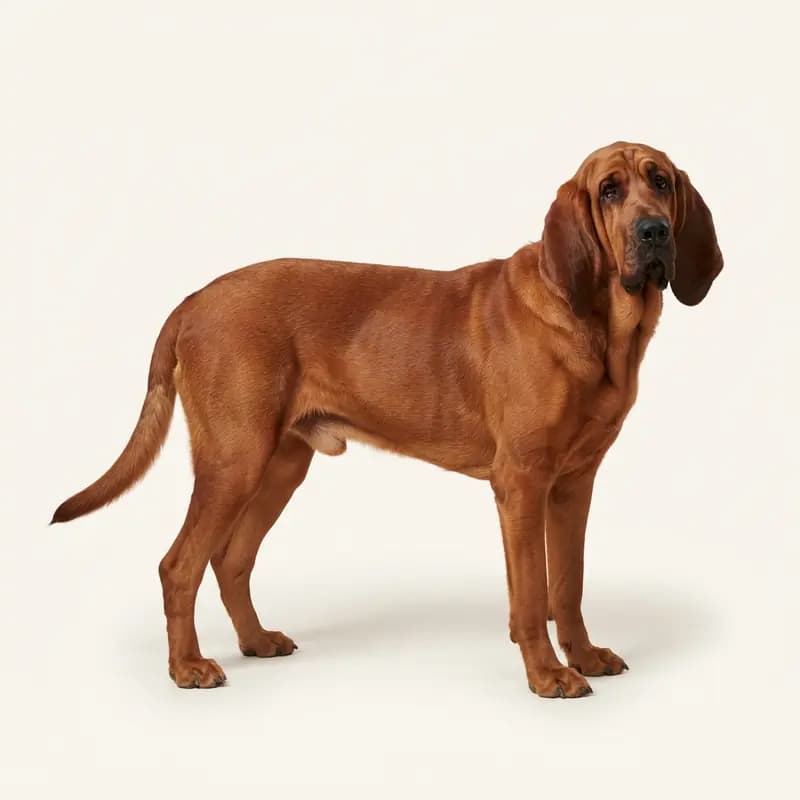
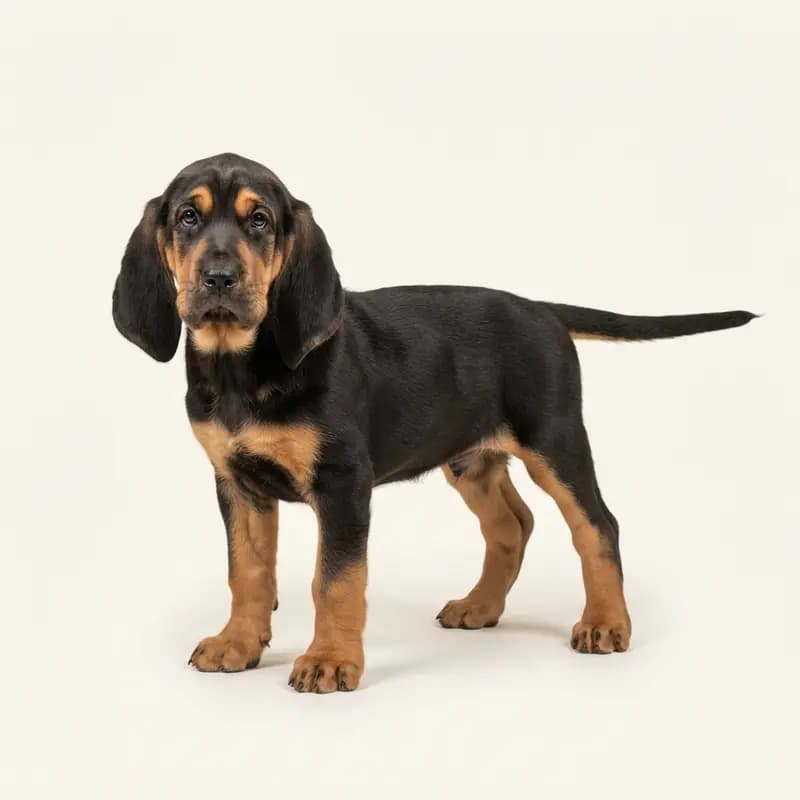
- Liver & Tan, Red & Tan, Black & Tan
- Price
- 1500 - 2500 €
Character & Temperament
Bloodhounds are true specialists when it comes to detecting scents. Their exceptional sense of smell, which is one of the best in the animal kingdom, makes them perfect sniffer dogs. Not only are they persistent and tireless in pursuing a trail, but they also show remarkable patience and perseverance. They are very focused and can hardly be distracted. Despite their stubbornness, Bloodhounds are extremely friendly and good-natured dogs that have a calm and patient nature. They are very open-minded towards people and enjoy being part of a family. They also generally get along well with children and are very tolerant and patient. Bloodhounds are not exactly watchdogs, but they can be wary of strangers and defend their territory if they feel threatened. Because of their endurance and willingness to work, Bloodhounds are not couch potatoes. They need regular physical and mental activity to be happy and balanced. Walks, nose work or search games are ideal activities for these dogs. Their nose is always active, so walks should always be on a leash to prevent uncontrolled running away. Although they value their independence, Bloodhounds can learn to stay alone if taught gently. However, the alone time should not be too long, otherwise they may become restless and unwanted behavior may develop. Bloodhounds are very sensitive dogs that react sensitively to their surroundings. They always strive to please their people and show a high level of attachment to their caregivers. A quiet and relaxed home in which they can feel safe and secure is therefore particularly important for their well-being.
| Watchfulness Occasionally alerts but is fundamentally open. | Low |
| Openness to Strangers Neither pushily friendly nor suspicious. | Neutral |
| Hunting or Herding Drive This drive runs deep — no amount of training eliminates it. | Very strong |
Fun Fact!
Did you know that the Bloodhound is able to follow a scent trail over several days? Their skills are so impressive that in some jurisdictions the results of a Bloodhound tracking are admissible in court.
What Awaits You
Due to their size and loose connective tissue, Bloodhounds have many health problems. These include problems with the musculoskeletal system, eye problems, problems with inflammation in the skin folds.
Housing & Care
Bloodhounds are generally suitable for various living situations, including city life, as long as they get enough exercise and mental stimulation. However, given their size and need for regular exercise, a home with a garden would be ideal. They are very child-friendly and are generally considered to get along well with other dogs and pets, although their interactions with smaller pets should always be monitored due to their strong hunting instincts.
- Family Friendly
Lives for its family — the born family companion.
Ideal family dog - Child Friendly
Extraordinarily patient and loving — a true family dog.
Excellent with children - Dog Friendly
Actively enjoys the company of other dogs.
Dog-friendly - City Friendly
City-appropriate with enough exercise and stimulation.
Manageable in cities
Owning a dog is a privilege, but it's also a real responsibility. Before you bring one into your life, be honest with yourself about the commitment it takes.
Training & Education
Bloodhounds are intelligent and eager to learn, which makes training easier, but they can also be stubborn and independent, which requires patience and consistency. Positive reinforcement is the most effective approach, and early socialization is crucial to ensure they become balanced and confident. This breed requires a lot of mental and physical stimulation to stay happy and healthy. They are well suited to various dog sports, especially those that utilize their excellent sense of smell, such as mantrailing or search games. Bloodhounds can also become ball junkies, so it's important to keep play in moderation and provide other forms of stimulation and training. It is crucial to teach Bloodhounds to develop impulse control and frustration tolerance from the beginning. In particular, training recall and leash walking can be a challenge due to their strong sense of smell and hunting instinct and requires consistency and patience.
Nutrition & Care
Bloodhounds require a balanced, nutrient-dense diet tailored to their specific needs. Because of their size and high activity level, they need a diet high in protein and healthy carbohydrates, as well as sufficient vitamins and minerals. When it comes to grooming, the Bloodhound is uncomplicated. His short, dense coat does shed, but a regular brush can help remove loose hair and keep his coat clean and healthy. The Bloodhound's deep skin folds require special attention and must be cleaned regularly to prevent skin infections. Since the Bloodhound has an undercoat, it feels quite comfortable in temperate climates, such as Germany.
| Care Level Needs regular professional grooming — time-consuming and costly. | High-maintenance |
| Exercise Needs Working-dog energy that needs burning off every single day. | High-drive |
| Shedding Hair everywhere, always — no white clothing survives. | Very heavy |
| Trainability Willing to learn with clear rules and regular training. | Balanced |
Our experts are still reviewing this information. Spotted something wrong? Email us at info@honestdog.de.
Health & hereditary diseases
Health
D
Elevated risks
Health grade
Due to its extreme build, the Bloodhound carries significant health risks, with the life-threatening gastric dilatation-volvulus (GDV), severe hip dysplasia (HD), and painful eye problems such as ectropion / entropion particularly burdening the breed. A responsible breeder counteracts these risks through targeted selection and has their breeding stock comprehensively tested. Before buying, you should definitely demand the official findings for hip dysplasia (HD) with a result of FCI A/B or OFA Fair or better, as well as for elbow dysplasia (ED) with a result of FCI Grade 0 or OFA normal. In addition, veterinary proof of freedom from keratoconjunctivitis sicca (KCS), cherry eye, and exposure keratopathy syndrome must be available, and for the hereditary disease degenerative myelopathy, carriers must only be mated if the other partner is proven to be clear.
Grade is relative to other breeds — AI-assisted and editorially reviewed.
In daily life this can mean
You should keep his ears and skin folds clean and dry, ensure he is raised in a way that protects his joints, and adjust his feeding routine to lower the risk of bloat.
The breeder's role
Reputable breeders have the parents' hips, elbows, eyes, and hearts tested and prioritize moderate skin development without extreme folds to reduce health risks in the bloodline.
Note: This health overview is AI-assisted and editorially reviewed. It is for orientation only and does not replace veterinary advice.
No Health Tests Available
No specific health tests are currently available for this breed.
Costs & where to find one
How much does a Bloodhound cost?
A Bloodhound costs around ~€220 per month (€110 – €420, depending on your setup). The first year adds up to roughly ~€5,440 including purchase, equipment and puppy school; across the dog's life (11 years) it comes to about ~€31,550.
With surgery cover, running costs come to about ~€220 per month — in return, your share of a major operation drops from several thousand euros to around 20 percent.
Per month
~€220
In the first year
~€5,440
Across the dog's life
~€31,550
Purchase from a breeder: €1,500 – €2,500
Estimate at a mid-range setup (suburban, dry food, 1–2 hours of daily exercise), average German prices, as of July 2026.
Calculate your personal costs1-minute self-check with your own answers
Looking for a Bloodhound?
HonestDog Concierge
No verified Bloodhound breeders on HonestDog yet
We currently have no breeders for this breed who have passed our verification. Create your short buyer profile: we'll set up your search alert, review a possible source and email you within 28 days.
Appearance, variants & origin
 Illustrative image
 Illustrative image
 Illustrative image
 Illustrative image
History
The full history
The Bloodhound originally comes from Belgium and is a very old breed. It is believed that his ancestors have been around since the 3rd century AD. were used as hunting and sniffer dogs. In the Middle Ages they came to England and France, where they were used, among other things, as court dogs - their ability to follow human tracks was highly valued. The Bloodhound has been recognized as an independent breed since the 19th century.
Original Use
The Bloodhound was bred for tracking game and later searching for missing people due to its excellent sense of smell.
Origin
Belgium
Date
1000
Owner experiences
What owners say about the Bloodhound
Sabine T., Halterin aus Hessen (Rüde, seit 2011)
Wer sich einen Bloodhound ins Haus holt, muss sich darüber im Klaren sein, dass diese Hunde nicht dafür gezüchtet wurden, brav Befehle auszuführen. Sie sind darauf spezialisiert, eigenständig Probleme zu lösen – und sich dabei, wenn nötig, auch gegen ihren Menschen durchzusetzen. Das macht sie als typische '08/15-Familienhunde' eigentlich ungeeignet, aber ihr absolut liebenswertes, fast schon clowneskes Wesen entschädigt für so einiges.
Wir hatten in der Welpenzeit vor allem damit zu kämpfen, unseren Rüden stubenrein zu bekommen. Das hat bei ihm gefühlt deutlich länger gedauert als bei anderen Rassen, und auch das Alleinbleiben war eine echte Geduldsprobe. Man muss sich als Halter einfach völlig auf diese Rasse einstellen und viel Geduld mitbringen. Wenn man diese Hürden aber erst einmal gemeistert hat, hat man einen unfassbar treuen und charmanten Begleiter an seiner Seite.
Christian S., Halter aus Niedersachsen (Rüde, seit 2023)
Mein Rüde sieht zwar groß und robust aus, aber er ist im Grunde eine extrem sensible Seele. Auf harte Korrekturen reagiert er überhaupt nicht gut, da muss man sehr feinfühlig vorgehen. Gleichzeitig ist er täuschend schlau: In der Hundeschule hat er sich wochenlang so verhalten, als würde ihn das alles überhaupt nichts angehen, nur um am Prüfungstag plötzlich mit einer perfekten Punktzahl zu glänzen. Ein echter Dickkopf, der genau weiß, was er tut!
Ein weiteres, etwas unappetitliches Detail, das man in keinem Rassebuch liest: Seine Blähungen riechen manchmal wirklich bestialisch. Trotzdem ist es das Schönste überhaupt, ihn bei der Nasenarbeit zu beobachten. Wenn er eine Fährte hat, ist er voll in seinem Element und arbeitet mit einer unglaublichen Begeisterung. Man braucht Humor und starke Nerven, aber missen möchte ich ihn auf keinen Fall.
Paraphrased from real owner reports
Loading owner stories
FAQ & more
Frequently asked questions about the Bloodhound
Is a Bloodhound the right dog for me?
The Bloodhound is an active dog that needs plenty of exercise and mental stimulation. Research the temperament, grooming needs, and space requirements before deciding.
How long does a Bloodhound live?
The average life expectancy of a Bloodhound is 10-12 years. With proper care and regular vet visits, your dog can live a long, healthy life.
How much grooming does a Bloodhound need?
Bloodhound grooming requirements include regular brushing, nail trimming, and dental care. HonestDog provides detailed grooming tips for every breed.
Is a Bloodhound good for families with children?
The Bloodhound can be a great family dog. Proper training and socialization are key. HonestDog provides family suitability information for every breed.
What colors does the Bloodhound come in?
The Bloodhound comes in these colors: Black and tan, Brown and tan, Red.
Loading related articles
Are you a Bloodhound breeder?
Showcase your kennel on HonestDog and reach families searching for a responsibly bred Bloodhound.