Tyrolean HoundSame FCI section
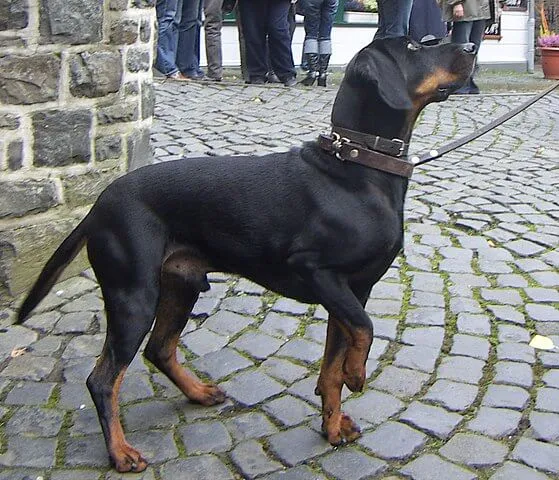
The Brandlbracke is an athletic, long-legged scenthound and a specialist in tracking by scent—bred for demanding blood-tracking work in the mountains, where it can follow a trail for hours completely independently.
How the health grade is calculated
Sources for required breeding screenings. Deutscher Brackenverein e.V.
Self-check
Answer 6 quick questions about your everyday life and see how well the Brandlbracke fits you — including an honest cost estimate per month, per year, and across the dog's lifetime.
At a glance
The essentials — key facts, traits, and health priorities — before you dive deeper.
Lifespan
12–14 yrs
Shoulder height
48–56 cm
Weight
15–20 kg
Practical
Temperament
Daily life
What matters most
Especially with a Brandlbracke, choosing the right breeder is the single most important decision you'll make. Serious breeders consistently test the parents for inherited conditions, prioritize healthy early socialization, and stay accountable long after handover. A cheap puppy without health screening tends to become the most expensive dog later on.
See HonestDog breeder standards →Colors & coat
The coat colors that occur in the Brandlbracke — including which ones fall outside the breed standard and which carry genetic risk.
Eye colors
 Brown
BrownCoat type
 Short
Short Smooth
The real vibes check
At home, the Brandlbracke is often a gentle, unobtrusive shadow—but as soon as their nose touches the ground in the woods, a switch flips. You aren't getting a dog that constantly checks in with you on a walk, but a highly specialized professional who takes their job more seriously than anything else. If you don't channel this uncompromising hunting passion into constructive outlets, they will find their own work.
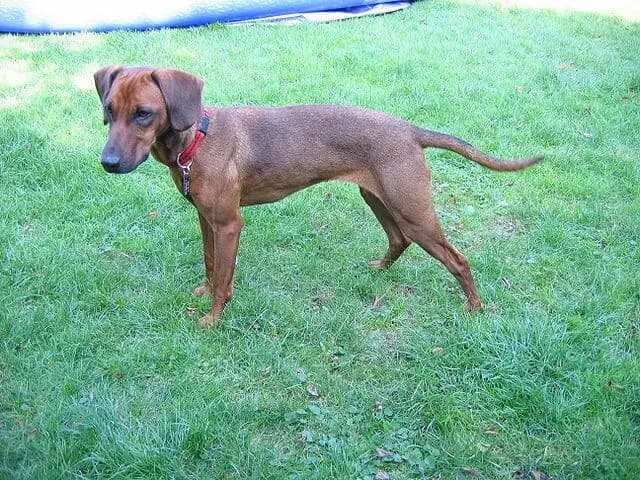
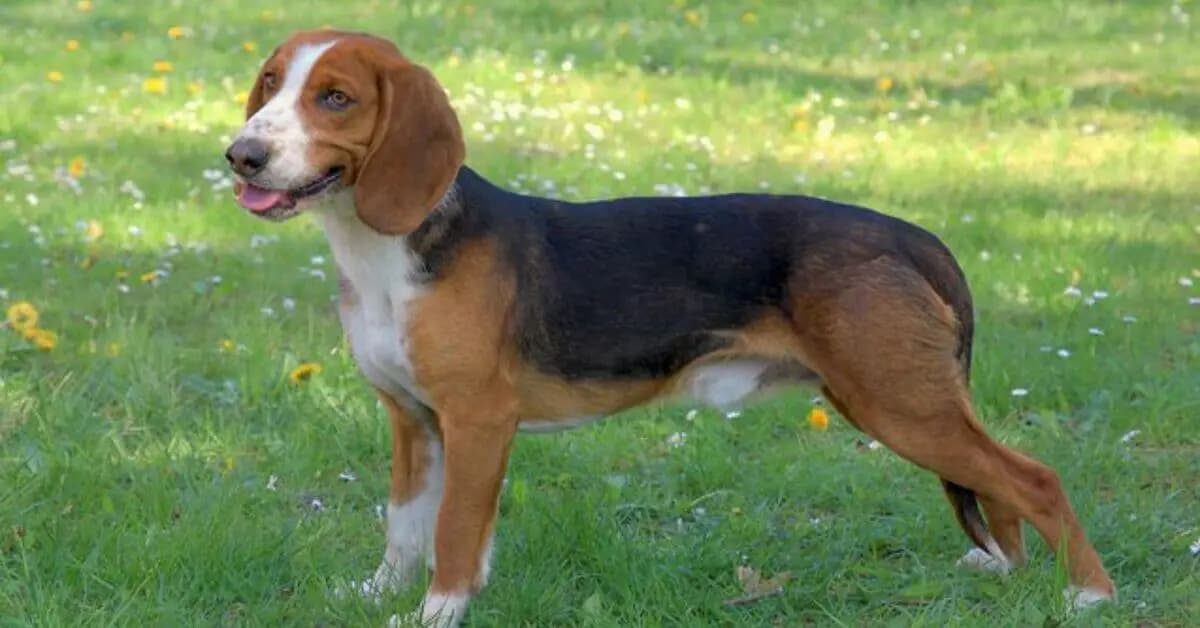
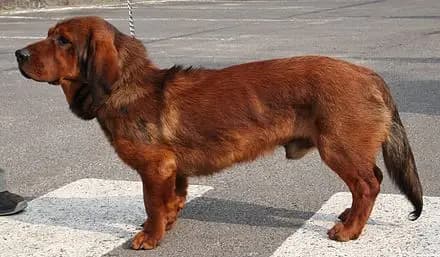
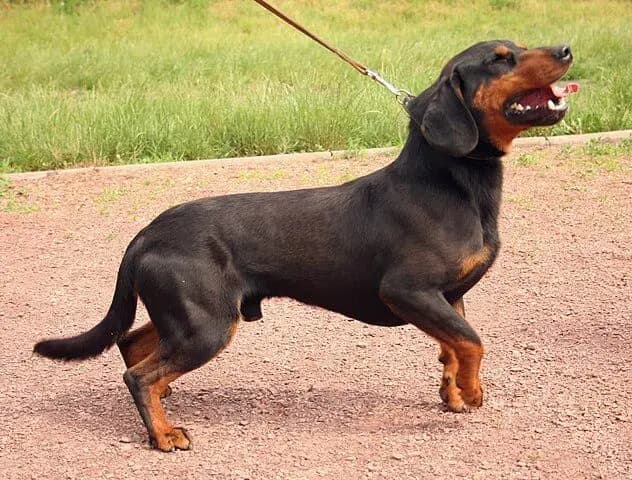
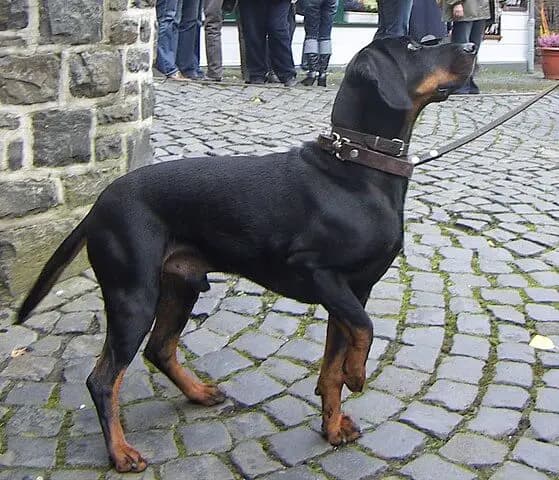
The Brandlbracke, also known as the Austrian Smooth-Haired Hound or Austrian Black and Tan Hound, is an elegant and powerful dog with balanced proportions. Her bright, deep brown eyes and the remarkable black and brown fur color, which also gave her her name, give her an unmistakable look. The FCI lists them in Group 6: scent hounds, bloodhounds and related breeds. The Brandlbracke's body structure is perfectly tailored to the needs of a hunting dog that must also be able to perform well in mountainous terrain. It is compact and athletic, but also elegant and agile. Their ears are medium long and drooping, their expression alert and intelligent. There is no distinction between performance and show lines in the Brandlbracke, which is due to its heavy use as a working dog rather than a show dog.
The character of the Brandlbrack is influenced by its work as a mountain hunting dog. She is an active and persistent dog who needs a lot of exercise and mental activity. Their original use as a bloodhound has made them a focused and independent dog, also capable of making independent decisions and working independently. Her temperament is rather calm and balanced, but she also has an active and playful side. She is very people-oriented and forms a strong bond with her caregiver. However, she can also learn to stay alone for short periods of time as long as she gets enough exercise and activity. The Brandlbracke shows pronounced hunting behavior and is particularly good at tracking and pointing out tracks. Therefore, she should only be kept in an environment where she can express this behavior without endangering herself or others. Even though the Brandlbracke can work independently, she is still very focused on her caregiver and enjoys working with her. She is alert and attentive, but not overly barky. Their intelligence and willingness to please make them a versatile and adaptable dog that can fit well into family life. As with all dogs, socialization and training should begin in puppyhood. Positive and consistent training will help her to develop her full potential and become a happy and well-balanced dog. She is a loyal and reliable companion who wants nothing more than to be with her family and work.
| Watchfulness Strong territorial instinct — may actively confront intruders. | Very high |
| Openness to Strangers Neither pushily friendly nor suspicious. | Neutral |
| Hunting or Herding Drive This drive runs deep — no amount of training eliminates it. | Very strong |
Fun Fact!
The Brandlbracke is a national treasure in Austria and is often referred to as the "national dog".
The Brandlbracke is a lively and enduring hunting dog, especially valued for its excellent sense of smell. These dogs are very eager to work and need meaningful activities to fully realize their potential. They are friendly with people and are well suited for active families who spend a lot of time outdoors. The Brandlbracke impresses with its versatility and strong hunting instinct.
The Brandlbrack is an active and lively dog that needs a lot of space and exercise. Therefore, she is not necessarily suitable for city or apartment living unless you can provide her with enough daily exercise and mental stimulation. She is known for her friendly and social behavior and usually gets along well with children and other pets. However, it is always important to teach children how to interact with dogs and supervise all interactions to ensure they are respectful and safe.
Loves family life and thrives in a group.
Gets on well with children — with adult supervision.
Actively enjoys the company of other dogs.
Can manage in the city, but only with very active owners.
Owning a dog is a privilege, but it's also a real responsibility. Before you bring one into your life, be honest with yourself about the commitment it takes.
As a working dog, the Brandlbrack requires a lot of mental and physical stimulation. Training that meets these needs, such as tracking or agility, can be very beneficial for them. She is intelligent and eager to learn, which usually makes training easier. It is important to make sure that you do not “over-occupy” the dog. Despite its activity, the Brandlbrack also needs rest times to relax and regenerate. The Brandlbrack, like many other hunting dogs, can become a ball junkie if it is not sufficiently exercised. It is therefore important to keep them busy in a variety of ways and not just with ball games. Frustration tolerance and impulse control are important skills that should be trained in the Brandlbracke. She tends to be very focused and goal-oriented, which can sometimes lead to impulsive behavior.
The Brandlbracke needs a balanced and healthy diet that is tailored to their size, age and level of activity. A mixture of high-quality dry or wet food and occasional fresh components such as meat, vegetables and fruit can be a good basis for a healthy diet. In terms of care, the Brandlbrack is an easy breed to care for. She has short, smooth and dense fur without an undercoat. Their coat sheds moderately, so regular brushing will help remove dead hair and keep the coat clean and shiny. Despite its thick fur, the Brandlbrack is well adapted to the climate in Germany and can tolerate both hot summers and cold winters well.
| Care Level Minimal effort — occasional brushing and bathing. | Low-maintenance |
| Exercise Needs Needs several hours of serious exercise every day. | Very active |
| Shedding Regular shedding — dog hair on clothes is now normal. | Moderate |
| Trainability Has its own ideas and will test limits. | Strong-willed |
Our experts are still reviewing this information. Spotted something wrong? Email us at info@honestdog.de.
Robust
Health grade
The Brandlbracke is a very robust hunting dog breed with a low genetic burden. Hip dysplasia (HD), as the primary risk, is well under control through mandatory screenings, while potential eye diseases and neurological disorders should be monitored via recommended testing. Anyone who consistently ensures with the breeder that the parent animals are free of HD will generally receive a genetically very healthy dog.
Grade is relative to other breeds — AI-assisted and editorially reviewed.
Methodology and data: HonestDog Dog Breed Health Report 2026
What matters most for this breed
Tap any item to see details.
You should ensure the dog is raised in a way that protects their joints and regularly check and clean their floppy ears to prevent painful infections early on.
Reputable breeders have the hips, elbows, and eyes of the parent animals tested and pay attention to healthy ear conformation to reduce risks within the bloodline.
Note: This health overview is AI-assisted and editorially reviewed. It is for orientation only and does not replace veterinary advice.
What matters most for this breed — what's common, how much it affects the dog's life, and how to protect yourself as a buyer.
Tap a body region to see the inherited conditions linked to it.
The three most important risks
Pick a region on the map to explore other areas.
Tier 1 reflects the tests Deutscher Brackenverein e.V. actually mandates. Tiers 2 and 3 show how responsible breeders go beyond.
Club standard. Tests that the relevant breed club (VDH / FCI / AKC parent club) requires. Any serious breeder should be able to show you these.
No entries in this tier.
Note: This health overview is AI-assisted and editorially reviewed. It is for orientation only and does not replace veterinary advice.
A Brandlbracke costs around ~€170 per month (€90 – €320, depending on your setup). The first year adds up to roughly ~€4,710 including purchase, equipment and puppy school; across the dog's life (13 years) it comes to about ~€29,110.
With surgery cover, running costs come to about ~€160 per month — in return, your share of a major operation drops from several thousand euros to around 20 percent.
Per month
~€170
In the first year
~€4,710
Across the dog's life
~€29,110
Estimated purchase price from a breeder: €1,200 – €2,500
Estimate at a mid-range setup (suburban, dry food, 1–2 hours of daily exercise), average German prices, as of July 2026.
HonestDog Concierge
We currently have no breeders for this breed who have passed our verification. Create your short buyer profile: we'll set up your search alert, review a possible source and email you within 28 days.
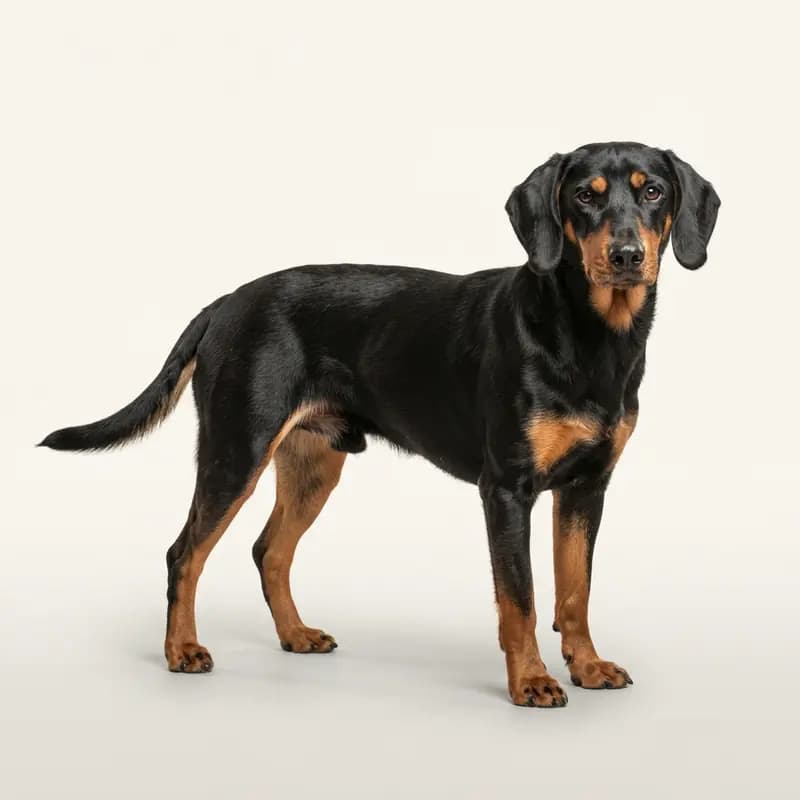 Illustrative image
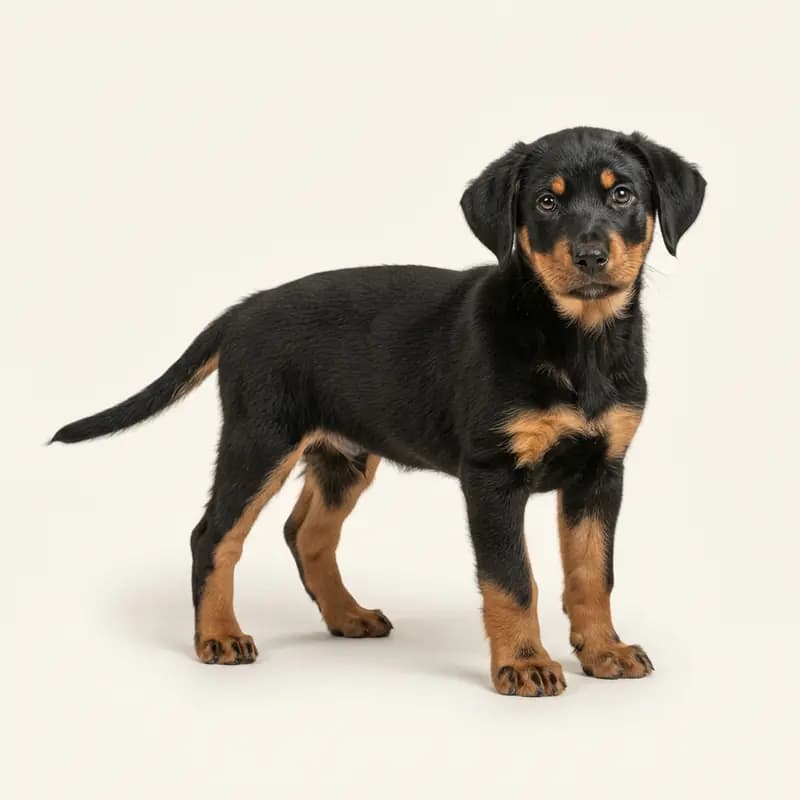 Illustrative image
The Brandlbracke, also known as the Vieräugl, is a traditional Austrian dog breed with roots reaching deep into the history of alpine hunting. It is widely believed to be a direct descendant of the so-called Celtic Bracke, tracing its origins back to eras long before the Middle Ages. Starting in the 19th century, more targeted breeding of these robust scenthounds began in the Austrian Alps. Originally, the Brandlbracke was bred for the loud hunting of hares and foxes, as well as a reliable bloodhound for tracking wounded game in rugged, mountainous terrain. Its remarkable stamina, keen sense of direction, and courage made it an indispensable companion for hunters in the high mountains. The breed is particularly noted for its sure-footedness and ability to follow trails under difficult climatic and topographical conditions. The official and definitive recognition of the Brandlbracke as an independent breed by the Fédération Cynologique Internationale (FCI) took place on August 28, 1954. While it remains highly valued and utilized as a specialized hunting dog in its Austrian homeland, it has remained a rare sight outside of the Alpine republic.
The Brandlbracke was bred for hunting hares and other game in mountainous terrain and is known for its stamina.
Austria
1800
At home, owners often describe the Austrian Black and Tan Hound as strikingly gentle, cuddly and sensitive. With enough exercise it is very calm indoors, seeks out its people and bonds closely with them. With children who are steady on their feet, it is generally seen as patient and friendly.
That harmonious side does depend on the hound being challenged mentally and physically. Owners repeatedly stress that life as a couch dog or simple walks are not enough for it. Experienced owners firmly reject keeping it in a kennel run, since the breed needs to be fully part of family life to develop its balanced temperament.
A recurring everyday topic is being left alone. Some owners report that after a period of getting used to it, their dogs rest calmly for a few hours, but restlessness quickly breaks through when they're under-stimulated. Give it the companionship it needs and a real job, though, and owners find it an affectionate, pleasant companion indoors.
Sources:sabinemiddelhaufeshundundnatur.nethund.infofloxik.deforum.wildundhund.de
In training, many owners run into the typical character of an independent-minded scent hound. The Austrian Black and Tan Hound is considered biddable and people-oriented, but it has a strong independent streak that shouldn't be confused with the unconditional obedience of other working breeds. It quickly answers pressure or harshness with stubbornness or insecurity; instead, owners report that only calm consistency, patience and positive reinforcement get results.
The biggest practical challenge is its very strong trailing and prey drive. As soon as a fresh scent hits its nose, many of these dogs mentally check out. Owner accounts show that off-leash time outside fenced areas or outside a hunting context is often difficult or impossible. For many owners, the long line therefore remains an essential companion in the woods for years.
Owners agree that the breed's keen tracking instinct has to be deliberately channeled. If the dog isn't used for hunting, challenging substitute work such as intensive tracking or serious mantrailing is a must. Without that outlet, the dog tends to go looking for its own paths and trails.
Owners and breed experts agree in describing the Austrian Black and Tan Hound as a rugged, tough and hardy breed shaped by the harsh weather and terrain of the high Alps. In bloodlines bred strictly for performance and working ability, there is little susceptibility to breed-typical hereditary diseases.
Owners describe the short, dense coat with its undercoat as very easy to care for: dirt dries and brushes out easily. The parts that need particular attention in daily life are mainly the floppy ears, which should be checked regularly for dirt or inflammation, and the body after outings through dense undergrowth.
Because of their tireless drive to work and their toughness, many of these hounds tend to hide exhaustion or minor injuries. Owners therefore point out that it's up to the human to actively manage how hard the dog works, since the dog itself will hardly stop as long as there's a trail to follow. With appropriate care and a healthy breeding base, the breed is considered vital and long-lived well into old age.
Sources:hund.infofloxik.dezooroyal.dezooplus.desabinemiddelhaufeshundundnatur.net
Paraphrased from real owner reports · translated from German
The Brandlbracke is an active dog that needs plenty of exercise and mental stimulation. Research the temperament, grooming needs, and space requirements before deciding.
The average life expectancy of a Brandlbracke is 12-14 years. With proper care and regular vet visits, your dog can live a long, healthy life.
Brandlbracke grooming requirements include regular brushing, nail trimming, and dental care. HonestDog provides detailed grooming tips for every breed.
The Brandlbracke can be a great family dog. Proper training and socialization are key. HonestDog provides family suitability information for every breed.
The Brandlbracke comes in these colors: Black and tan.
Showcase your kennel on HonestDog and reach families searching for a responsibly bred Brandlbracke.