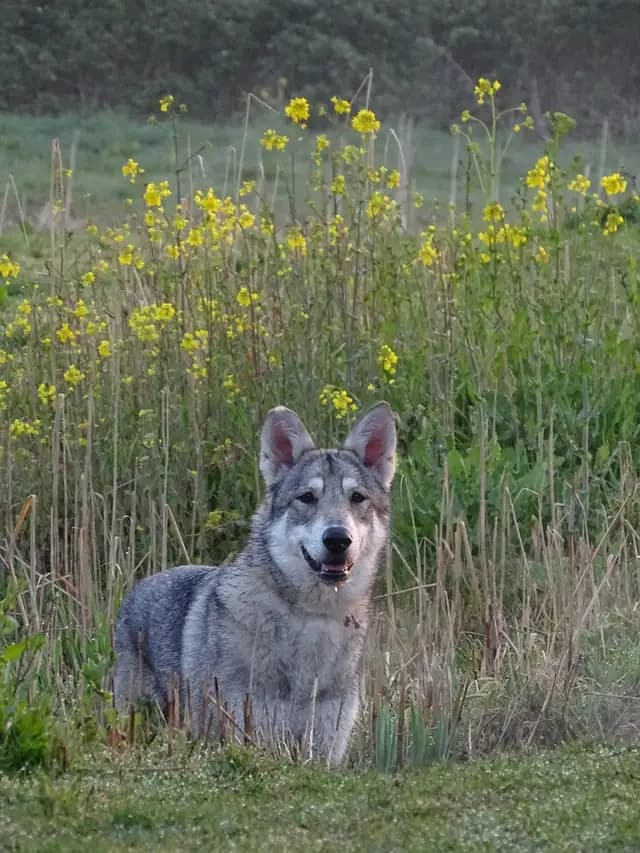
Saarloos WolfdogSame FCI section
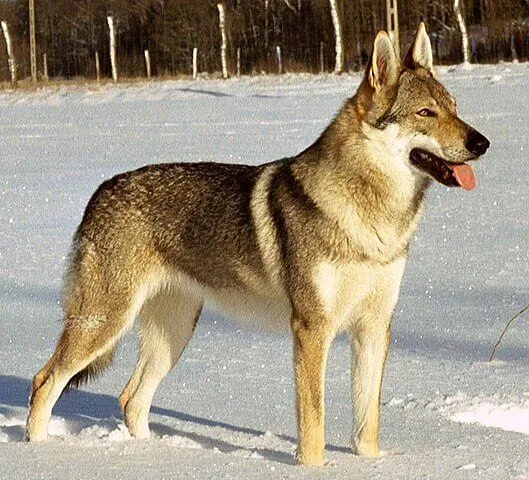
The Czechoslovakian Wolfdog is an extremely resilient, highly intelligent, and primitive Gebrauchshund (working dog) — bred from a military experiment to combine the trainability of the German Shepherd with the instinctual reliability and senses of the Carpathian wolf.
Self-check
Answer 6 quick questions about your everyday life and see how well the Czechoslovakian Wolfdog fits you — including an honest cost estimate per month, per year, and across the dog's lifetime.
At a glance
The essentials — key facts, traits, and health priorities — before you dive deeper.
Lifespan
12–15 yrs
Shoulder height
60–75 cm
Weight
20–40 kg
Practical
Temperament
Daily life
What matters most
Especially with a Czechoslovakian Wolfdog, choosing the right breeder is the single most important decision you'll make. Serious breeders consistently test the parents for inherited conditions, prioritize healthy early socialization, and stay accountable long after handover. A cheap puppy without health screening tends to become the most expensive dog later on.
See HonestDog breeder standards →Colors & coat
The coat colors that occur in the Czechoslovakian Wolfdog — including which ones fall outside the breed standard and which carry genetic risk.
Eye colors
 Amber
AmberCoat type
 Medium
 Double coat
The real vibes check
A Czechoslovakian Wolfdog is not a pet that wants to blindly please you — he is a sensitive observer who checks every single day whether you are qualified to lead the pack. If you pass this test, you get an incomparably deep, instinctual bond; if you fail, he will take control himself.
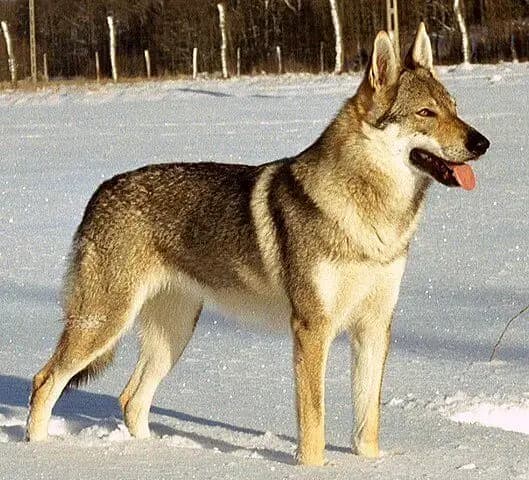
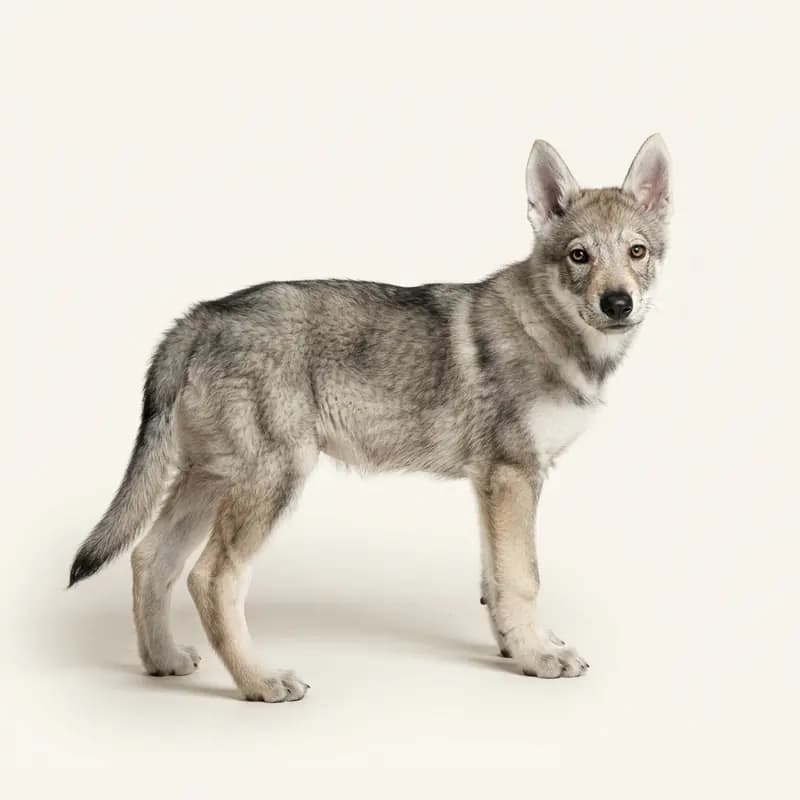
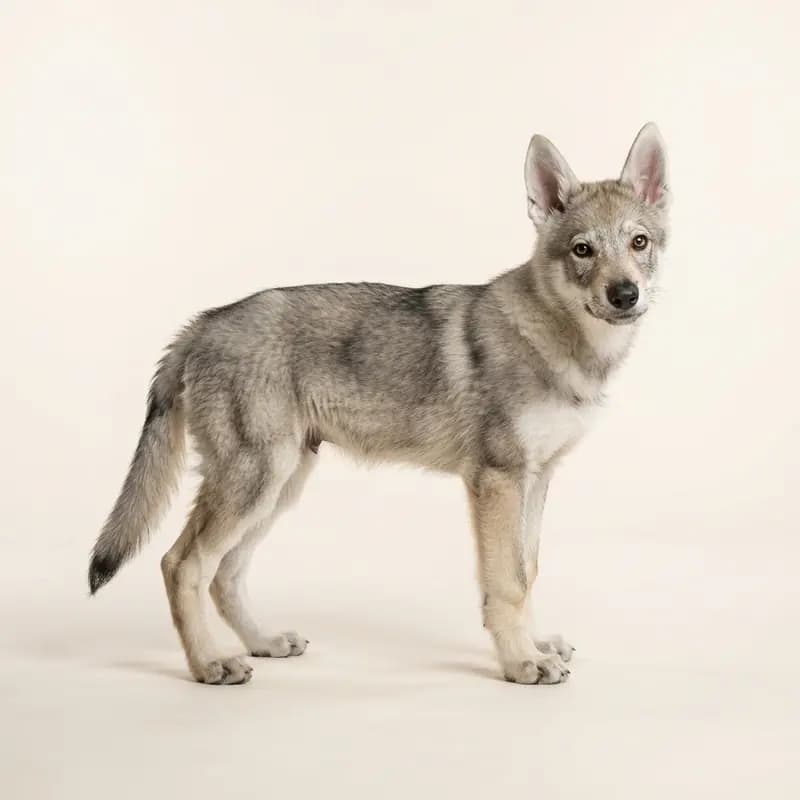
The Czechoslovakian Wolfhound's appearance is very reminiscent of a wolf. With his strong physique, straight back, slim, muscular legs and great endurance, he creates an extremely vital impression. His facial expression is attentive and curious. He belongs to FCI Group 1, the herding and driving dogs. The breed presents a uniform picture and no distinction is made between performance and show lines. What is striking is its weatherproof fur, which also protects it from colder temperatures. Its typical coat color is wolf gray, which, along with its bushy tail, which hangs when resting and curls when excited, and erect ears, gives it its wolf-like appearance.
Despite its wolf-like appearance, the Czechoslovakian Wolfhound is a dog with its own personality. He is very people-oriented and needs close contact with his people. He is very playful and eager to learn and shows a great willingness to work together. His high intelligence and quick comprehension make training with him a joy, but also a challenge, as he can quickly become underchallenged and then make decisions independently. The Czechoslovakian wolfhound shows itself in everyday life as an active dog that needs a lot of exercise. A long walk or a round of jogging is not enough for him - he wants to be mentally and physically challenged. It is therefore particularly suitable for active people who like to train or do sports with their dog. Despite his activity, he can also enjoy periods of rest and is a pleasant companion in the home environment. His temperament is rather balanced and he is rarely hyperactive. Despite his activity, he has a certain calm and composure that characterizes him. However, he can also be independent and make decisions, which requires consistent and fair leadership from his caregiver. The Czechoslovakian Wolfhound can learn to stay alone well, but it should not be left alone for hours. He wants to be with his family and take part in family life. Despite his people-oriented nature, he is not a lap dog that wants to be cuddled all day. Although he enjoys being close to his people, he also needs his space. When he goes for a walk he shows a strong hunting instinct. Small animals and birds are interesting prey for him that he would like to hunt. It is therefore important that he learns to control this drive as a puppy. Consistent training and strong basic obedience are essential. The Czechoslovakian Wolfhound is a very alert dog. He perceives his surroundings precisely and reports any unusual noises or movements. He doesn't bark excessively, but only when he sees a reason to. His alertness makes him a good house and family dog who wants to protect his family and his territory.
| Watchfulness Strong territorial instinct — may actively confront intruders. | Very high |
| Openness to Strangers Careful around unfamiliar people — thaws slowly. | Cautious |
| Hunting or Herding Drive Powerful instinct that can override recall when triggered. | Strong |
Fun Fact!
Did you know that the Czechoslovakian Wolfhound was originally bred to be used as a patrol dog on the border between Czechoslovakia and the GDR?
A vigilant, primitive dog that resembles a wolf in appearance. They are highly intelligent, strong, active, loyal and devoted to their owner. They have excellent senses of sight, hearing and smell and are known for their excellent endurance.
As an original service dog and due to its high activity, the Czechoslovakian wolfhound is only partially suitable as a city dog. He needs a lot of exercise and mental activity is difficult to ensure in an urban environment. He gets along very well with children and is usually friendly with other dogs. Whether he gets along with cats or other pets depends largely on his socialization.
Gets on well with different people and varying routines.
Fine with calm, respectful children — not small tornadoes.
Usually gets on fine with other dogs.
Suffers in tight urban conditions.
Owning a dog is a privilege, but it's also a real responsibility. Before you bring one into your life, be honest with yourself about the commitment it takes.
Raising and training the Czechoslovakian Wolfhound requires patience, consistency, and a positive, reward-based approach. He is very intelligent and willing to learn, but can also be stubborn. Early socialization and consistent but fair upbringing are therefore particularly important. Due to its high level of activity and its strong urge to move, the Czechoslovakian Wolfhound is ideal for various dog sports such as agility, obedience or mantrailing. However, it is important to be careful not to "over-occupy" the dog, as he also needs rest periods. The Czechoslovakian Wolfhound can tend to be a "ball junkie." so you should approach ball games in moderation and not make them your main activity. Instead, alternative employment opportunities should be offered that match his natural abilities, such as nose work or search games.
The Czechoslovakian Wolfhound's diet should be balanced and high quality. It should cover his high energy needs without overfeeding him. A combination of dry and wet food is just as possible as feeding with fresh meat or the so-called BARF diet (biologically species-appropriate raw food). Grooming the Czechoslovakian Wolfhound is quite straightforward. It has a thick undercoat and a thick top coat that protects it from wind and weather. In Germany he copes very well with the climate. However, he sheds quite a bit, especially during the coat change in spring and autumn, the coat should be brushed regularly to remove dead hair and to ventilate the skin.
| Care Level Regular brushing and occasional professional grooming. | Moderate |
| Exercise Needs Working-dog energy that needs burning off every single day. | High-drive |
| Shedding Hair everywhere, always — no white clothing survives. | Very heavy |
| Trainability Has its own ideas and will test limits. | Strong-willed |
Our experts are still reviewing this information. Spotted something wrong? Email us at info@honestdog.de.
Solid
Health grade
The Czechoslovakian Wolfdog is considered a robust breed, but it carries a few serious genetic risks. In particular, degenerative myelopathy (DM), an insidious nerve disease, and pituitary dwarfism (CPHD) must be ruled out through genetic testing of the parents. Additionally, elbow dysplasia (ED) is an issue, which is why you should only purchase from breeders with complete X-ray documentation.
Grade is relative to other breeds — AI-assisted and editorially reviewed.
Methodology and data: HonestDog Dog Breed Health Report 2026
What matters most for this breed
Tap any item to see details.
You should ensure that the dog is raised in a way that is gentle on the joints and maintain a healthy weight to keep the musculoskeletal system of this large, active dog resilient for a long time.
Reputable breeders have hips and elbows X-rayed and genetically screen the parent animals to specifically avoid severe neurological diseases and dwarfism in the lineage.
Note: This health overview is AI-assisted and editorially reviewed. It is for orientation only and does not replace veterinary advice.
What matters most for this breed — what's common, how much it affects the dog's life, and how to protect yourself as a buyer.
Tap a body region to see the inherited conditions linked to it.
The three most important risks
Pick a region on the map to explore other areas.
Tier 1 reflects the tests VDH / AKC CHIC actually mandates. Tiers 2 and 3 show how responsible breeders go beyond.
Club standard. Tests that the relevant breed club (VDH / FCI / AKC parent club) requires. Any serious breeder should be able to show you these.
No entries in this tier.
Note: This health overview is AI-assisted and editorially reviewed. It is for orientation only and does not replace veterinary advice.
A Czechoslovakian Wolfdog costs around ~€190 per month (€100 – €370, depending on your setup). The first year adds up to roughly ~€5,400 including purchase, equipment and puppy school; across the dog's life (13.5 years) it comes to about ~€34,380.
With surgery cover, running costs come to about ~€190 per month — in return, your share of a major operation drops from several thousand euros to around 20 percent.
Per month
~€190
In the first year
~€5,400
Across the dog's life
~€34,380
Estimated purchase price from a breeder: €1,500 – €3,000
Estimate at a mid-range setup (suburban, dry food, 1–2 hours of daily exercise), average German prices, as of July 2026.
HonestDog Concierge
We currently have no breeders for this breed who have passed our verification. Create your short buyer profile: we'll set up your search alert, review a possible source and email you within 28 days.
 Illustrative image
 Illustrative image
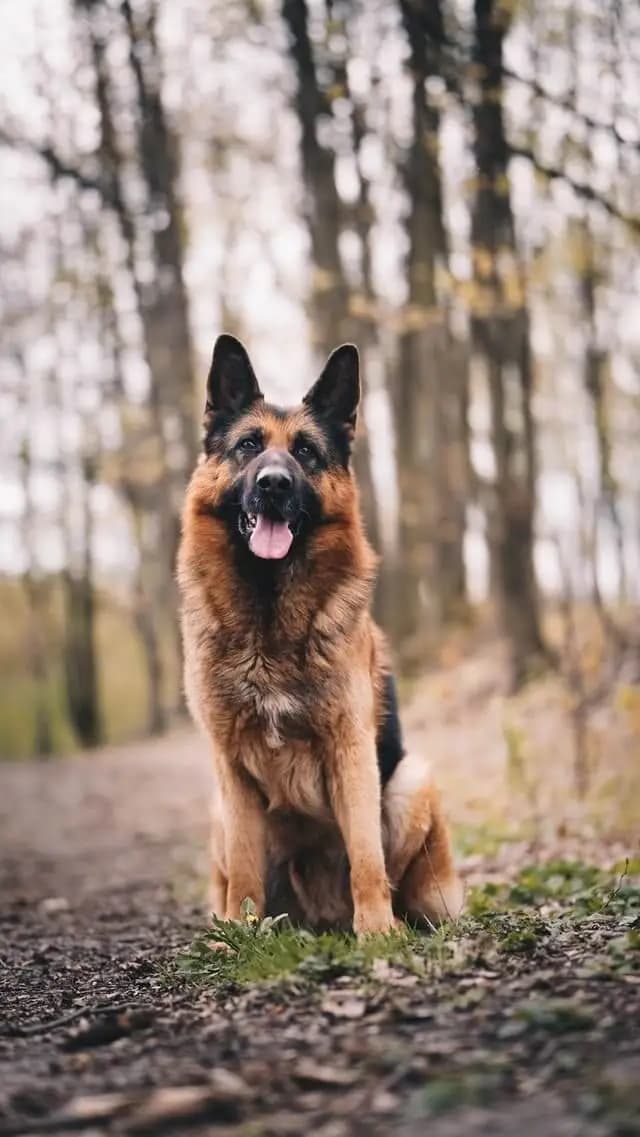
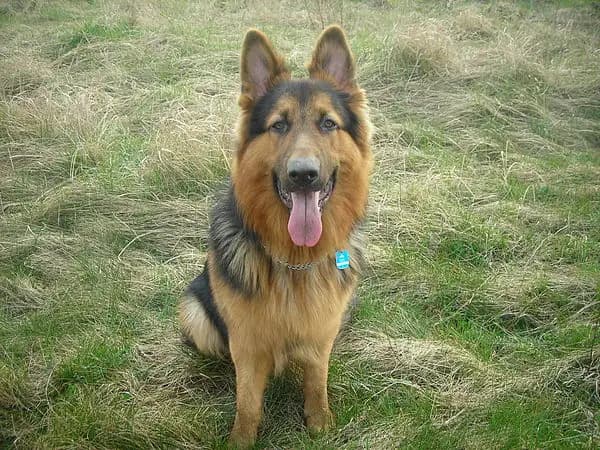
The Czechoslovakian wolfhound is a relatively young breed of dog that emerged in the 1950s in what was then Czechoslovakia by crossing German Shepherd dogs and Carpathian wolves. The breeding project was originally initiated by Karel Hartl to create a service dog that would combine the robustness and appearance of a wolf with the learning ability and obedience of a German Shepherd. However, the first generations of these crosses were difficult to train and showed a strong hunting instinct. Only after further crossings and strict selection did today's Czechoslovakian wolfhound emerge, which is suitable both as a service dog and as a family dog. The breed was officially recognized by the FCI in 1982.
The Czechoslovakian wolfhound was created by crossing the German shepherd and the Carpathian wolf, originally for military purposes and as a guard dog.
Czechoslovakia
1955
Many owners say that being left alone is one of the biggest ongoing issues with this breed. Because of their very strong attachment to their people and their instinctive pack sense, many of these dogs develop real separation stress. Owners regularly describe setbacks even after months of training in small steps: the dogs whine or howl for long stretches, destroy furniture or find surprisingly creative ways out of rooms and yards.
Anyone choosing this breed has to accept that life will need to revolve heavily around the dog. People who know the breed consider the Czechoslovakian Wolfdog almost unsuitable for anyone working full time who would regularly have to leave the dog home alone for hours. Many owners take their dogs everywhere or arrange care that leaves no gaps.
Despite these hurdles, owners describe living closely with one of these dogs as an unusually deep bond. At home, provided they get enough exercise and mental work, the dogs are calm, loyal and sensitive companions that like to be near their people without being pushy.
Sources:von-isegrims-erben.demit-tier.dedogorama.appamba-versicherungen.delieblingskoeter.at
When it comes to training, experienced owners stress that the Czechoslovakian Wolfdog has no classic "will to please." It learns very quickly, but it immediately questions repetitive drills or anything it sees as pointless, and then simply stops cooperating. According to community reports, harshness or pressure almost always leads to a loss of trust or stubborn refusal. The key is real motivation, fairness and complete composure on the owner's part.
A recurring topic on walks is the strong hunting drive, which often only fully emerges once the dog reaches adulthood. Many owners report that off-leash time in woods or near fields either takes years of intensive training or has to be managed permanently with a long line, because movement can trigger hunting behavior in a split second.
How well these dogs get along with other dogs also comes up often. Puppies are frequently still open, but adults, especially toward dogs of the same sex, tend to communicate very clearly and sometimes roughly, and they have little tolerance for strange dogs that crowd them. Owners need to think ahead and be able to handle their dog calmly and confidently.
Sources:dogorama.appamba-versicherungen.dehundeforum.comsctw.chforum.hundund.de
Owners and breed circles consider the Czechoslovakian Wolfdog very robust, weatherproof and long-lived. Problems typical of trendy fashion breeds are rare. Committed owners do, however, point to breed-typical screenings such as hip and elbow dysplasia and tests for degenerative myelopathy, to rule out hereditary diseases in advance.
In everyday life, owners mention digestive sensitivities or intolerances when switching foods more often than organic diseases. The dense coat also takes some grooming during the seasonal shed, when the undercoat comes out in huge amounts.
Animal-welfare reports and breed clubs warn especially often that the biggest danger for these dogs is people underestimating their temperament. Because many buyers are drawn in by the striking looks, dogs of this breed end up in rescue, above all during adolescence, when owners are overwhelmed by escape attempts, an inability to stay home alone or territorial behavior.
Sources:von-isegrims-erben.deamba-versicherungen.dedogforum.detierforum.demartinruetter.com
Paraphrased from real owner reports · translated from German
The Czechoslovakian Wolfdog is an active dog that needs plenty of exercise and mental stimulation. Research the temperament, grooming needs, and space requirements before deciding.
The average life expectancy of a Czechoslovakian Wolfdog is 12-15 years. With proper care and regular vet visits, your dog can live a long, healthy life.
Czechoslovakian Wolfdog grooming requirements include regular brushing, nail trimming, and dental care. HonestDog provides detailed grooming tips for every breed.
The Czechoslovakian Wolfdog can be a great family dog. Proper training and socialization are key. HonestDog provides family suitability information for every breed.
The Czechoslovakian Wolfdog comes in these colors: Wolf grey, Grey.
Showcase your kennel on HonestDog and reach families searching for a responsibly bred Czechoslovakian Wolfdog.