Cane CorsoSame FCI section
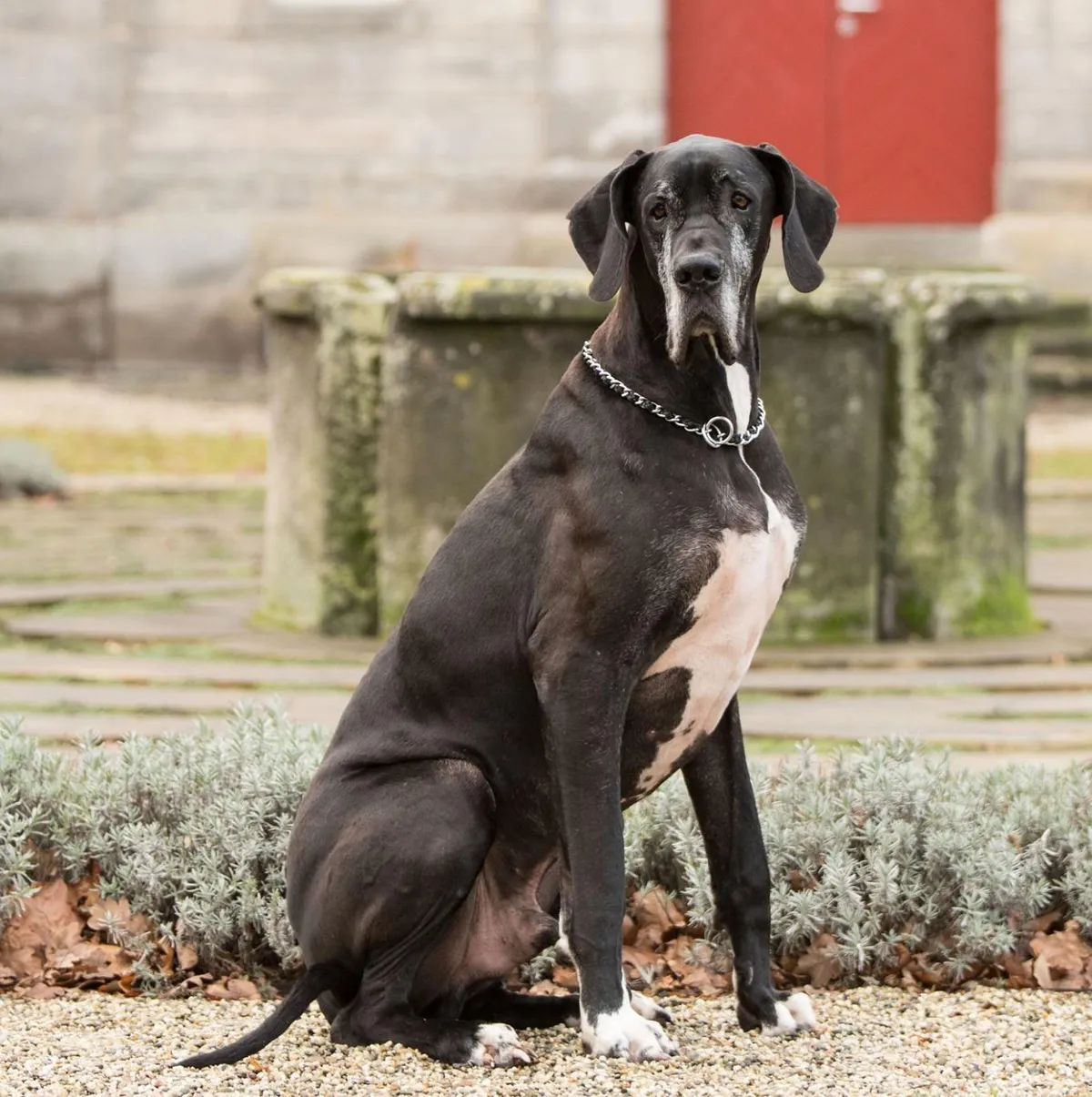
The Deutsche Dogge (Great Dane) is a majestic, extremely people-oriented mastiff-type guardian—once bred for defensive wild boar hunting, today it is a sensitive XXL companion dog that protects its family with pure presence rather than aggression.
How the health grade is calculated
Sources for required breeding screenings. Deutscher Doggen Club 1888 e.V.
Self-check
Answer 6 quick questions about your everyday life and see how well the Great Dane fits you — including an honest cost estimate per month, per year, and across the dog's lifetime.
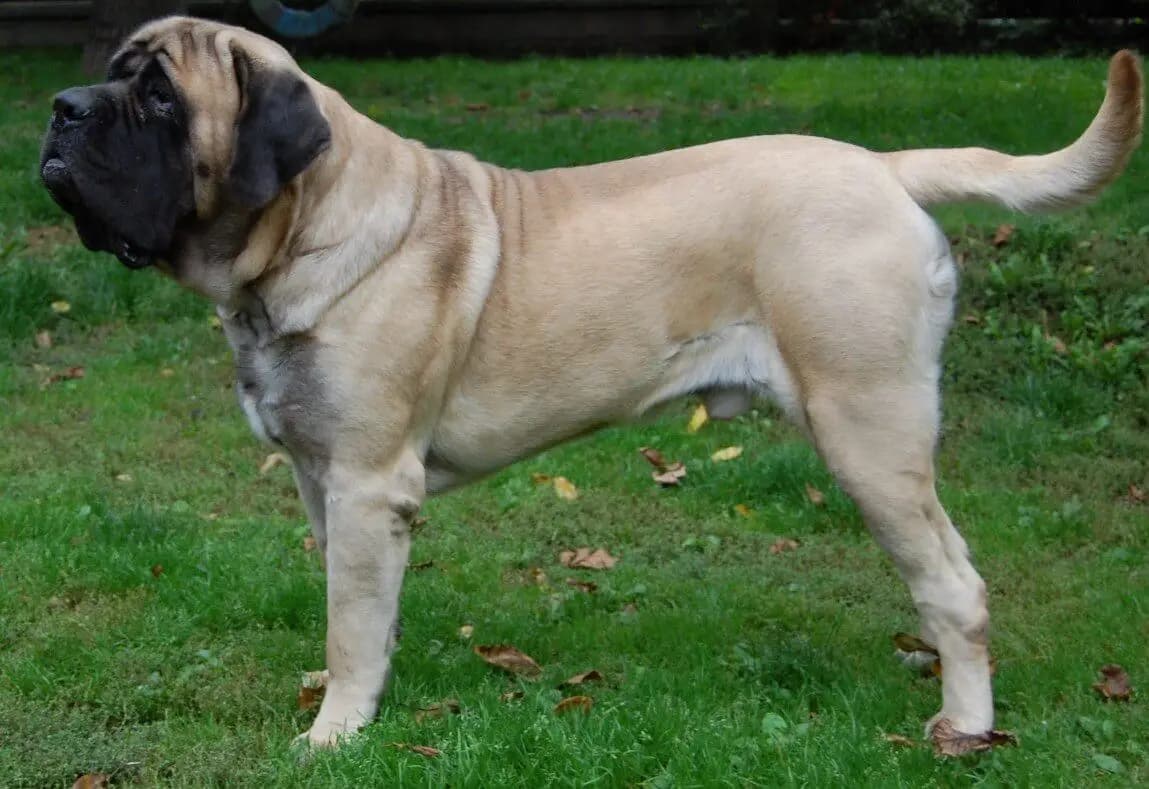

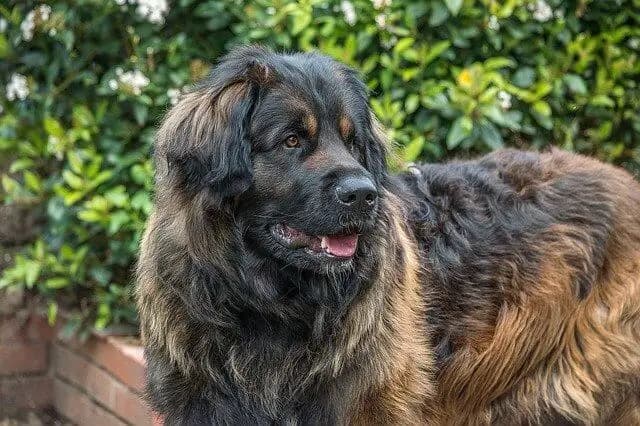

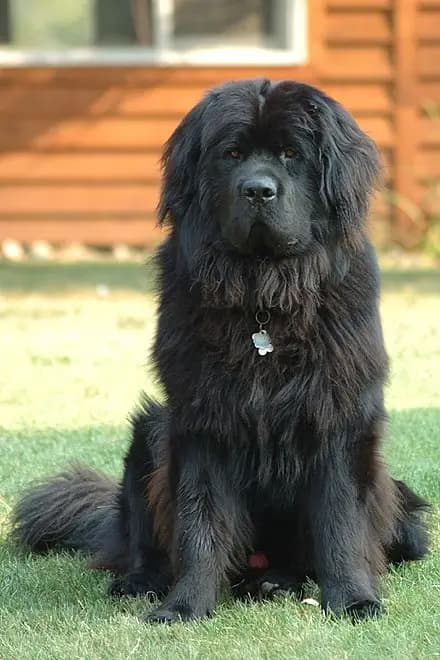
At a glance
The essentials — key facts, traits, and health priorities — before you dive deeper.
Lifespan
8–10 yrs
Shoulder height
72–90 cm
Weight
45–90 kg
Practical
Temperament
Daily life
What matters most
Especially with a Great Dane, choosing the right breeder is the single most important decision you'll make. Serious breeders consistently test the parents for inherited conditions, prioritize healthy early socialization, and stay accountable long after handover. A cheap puppy without health screening tends to become the most expensive dog later on.
See HonestDog breeder standards →Colors & coat
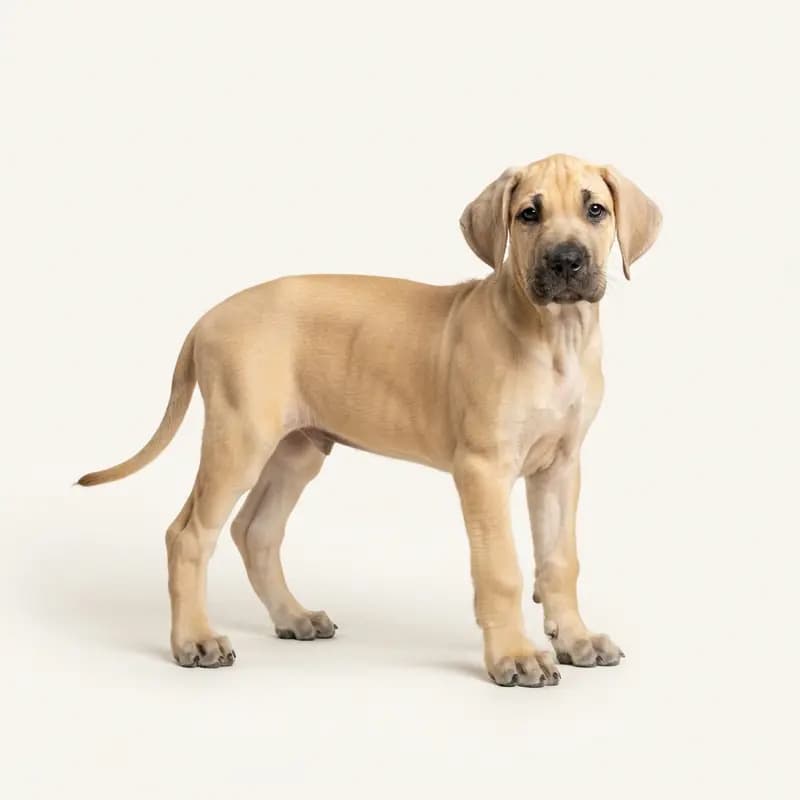
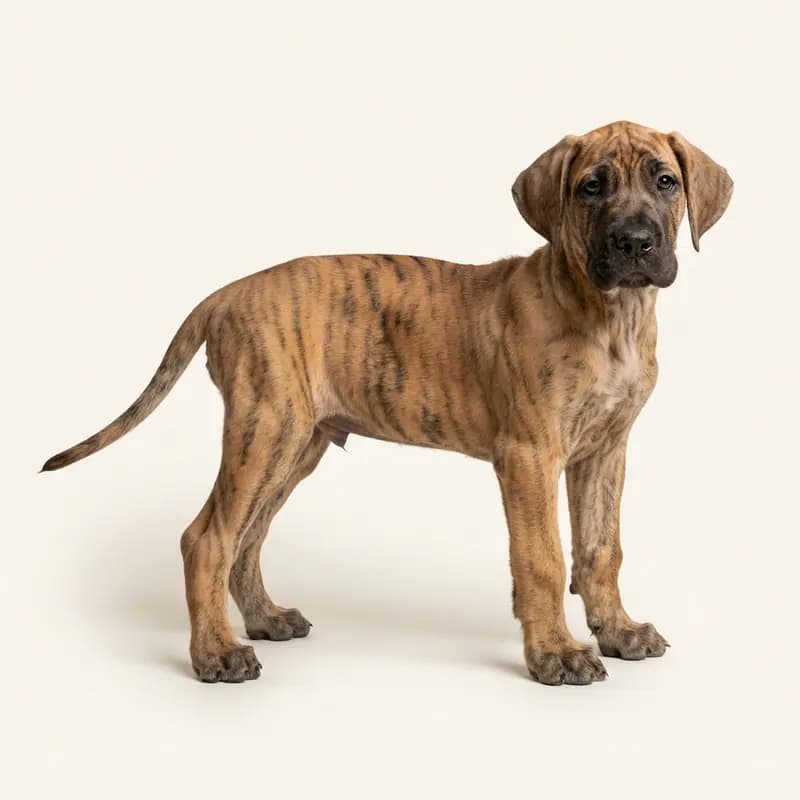
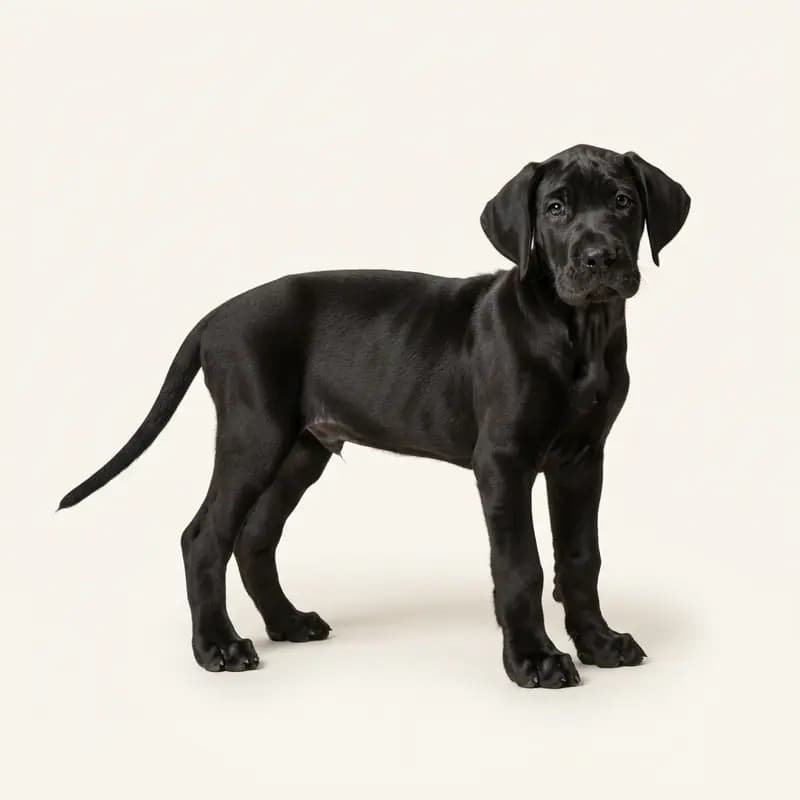
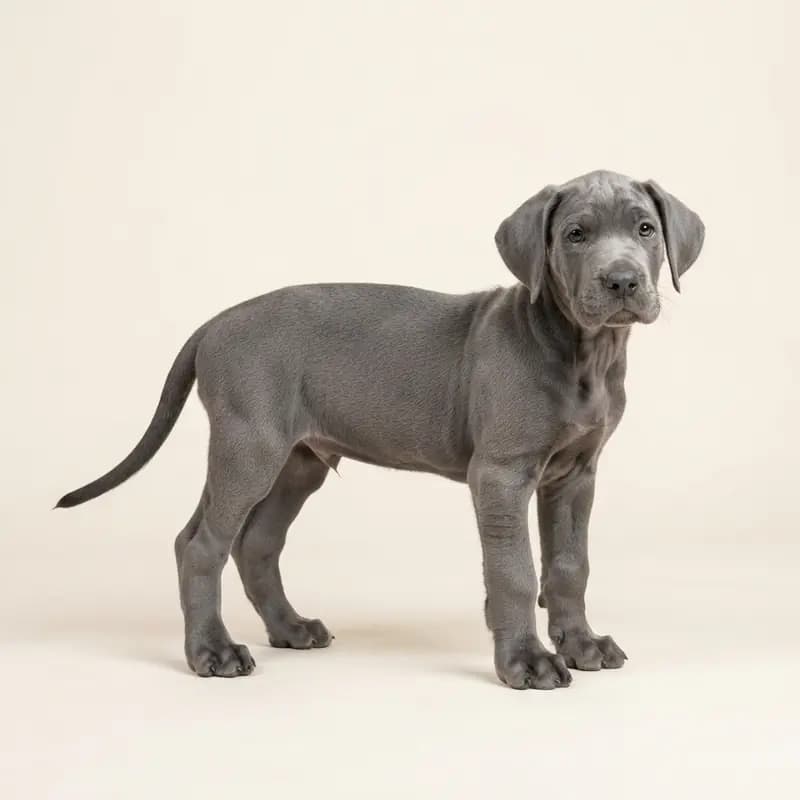
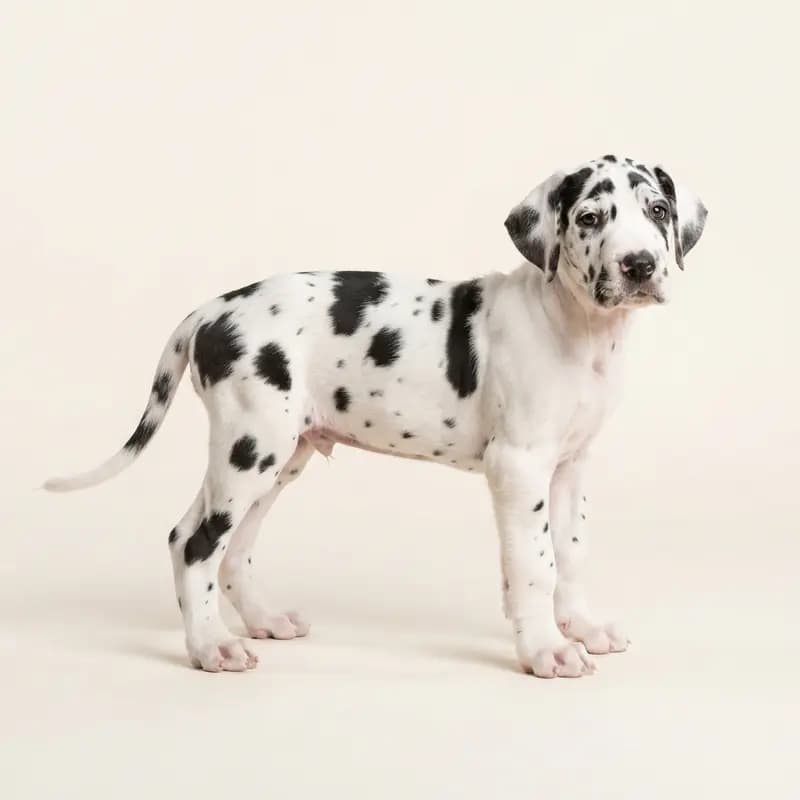
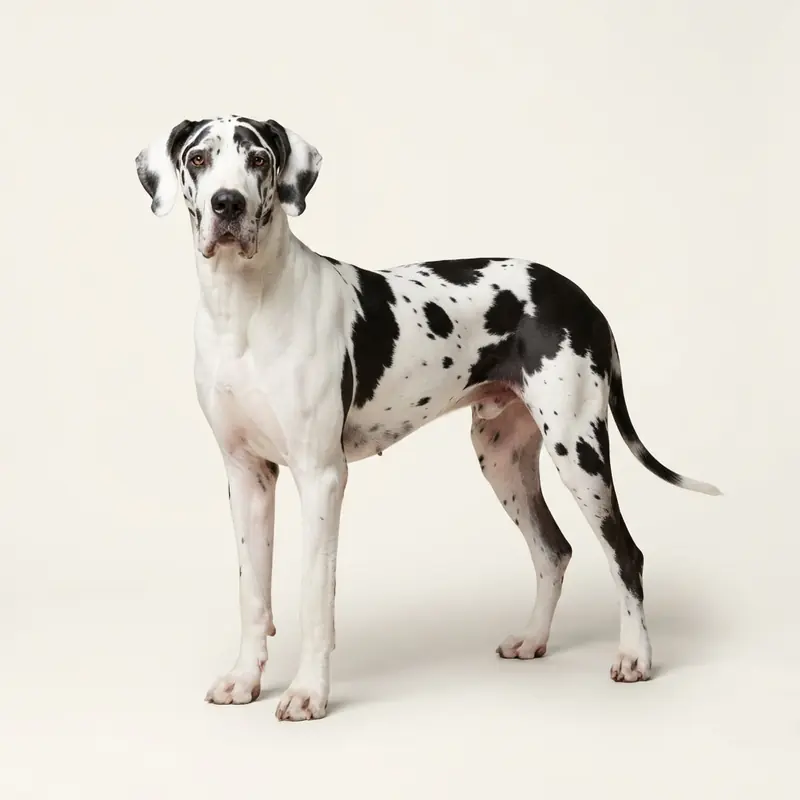
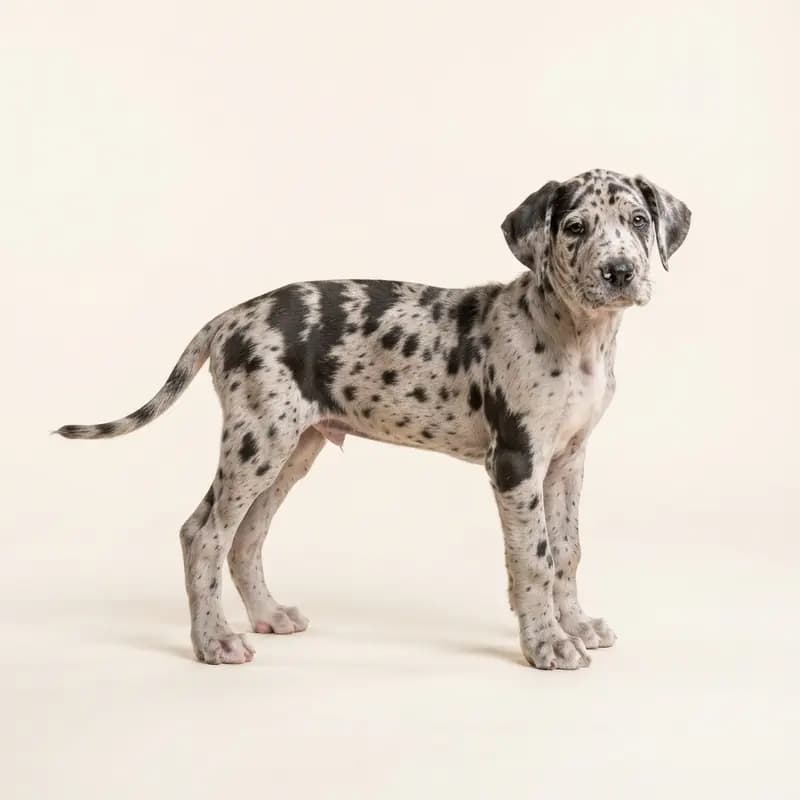
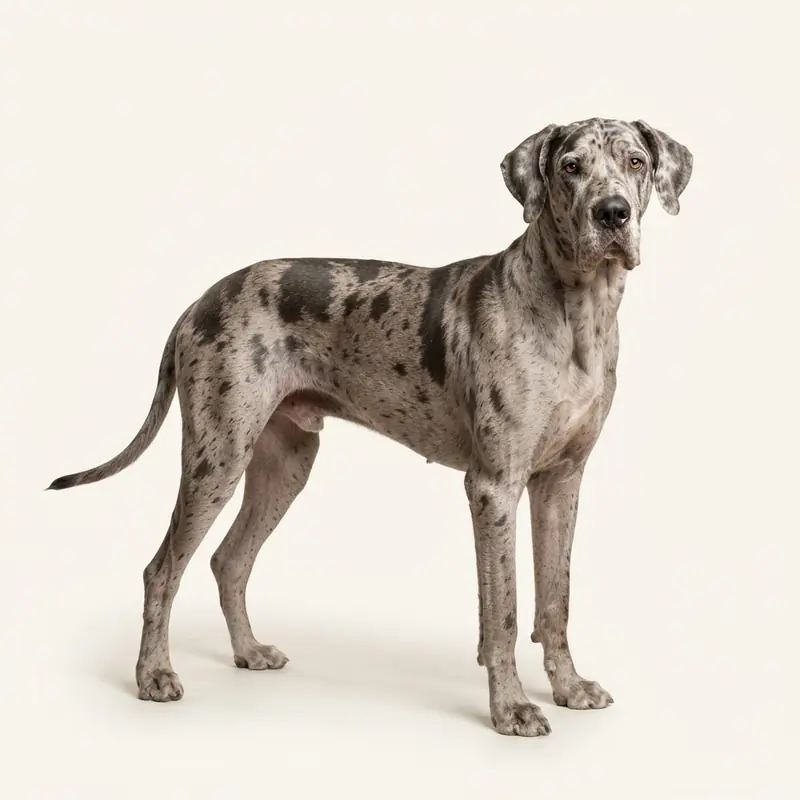
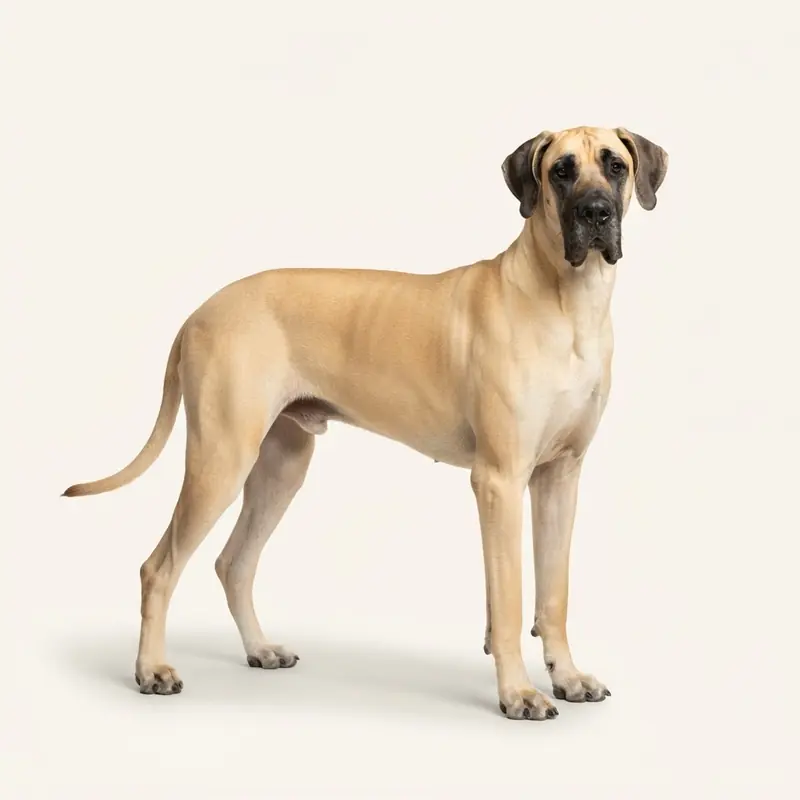
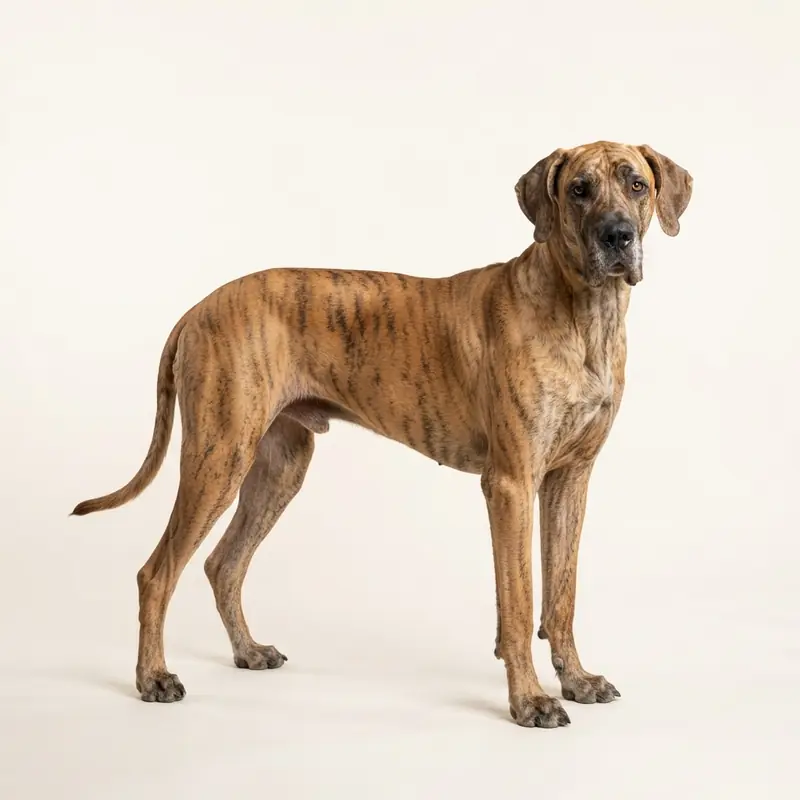
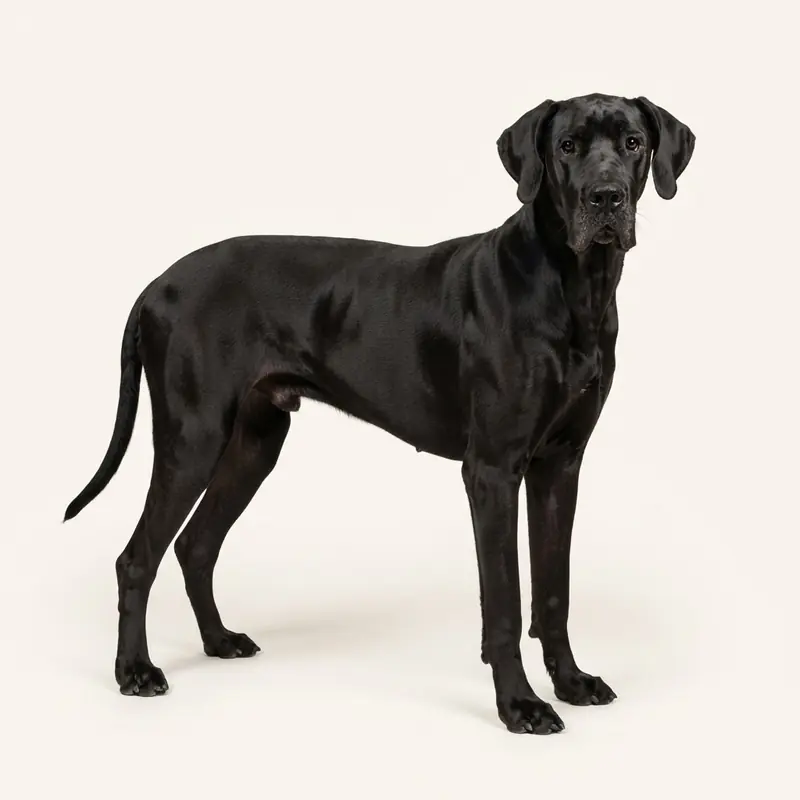
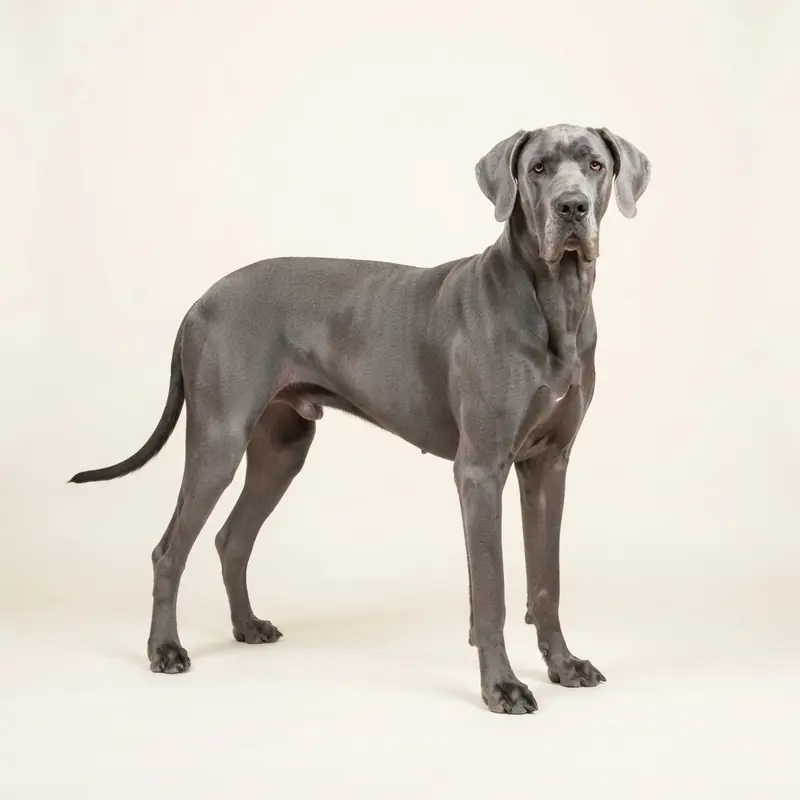
The coat colors that occur in the Great Dane — including which ones fall outside the breed standard and which carry genetic risk.
Eye colors
 Brown
 Amber
 Blue
 Odd-eyed
Coat type
 Short
 Smooth
The real vibes check
A Great Dane is firmly convinced that it is a lap dog and will try to roll its 70 kilos completely onto you on the sofa. You aren't getting a distant bodyguard, but a massive, soft shadow that follows every move you make in the house. If you accept that your coffee table will never be safe again and that privacy is a foreign concept, you will gain the most loyal companion of your life.
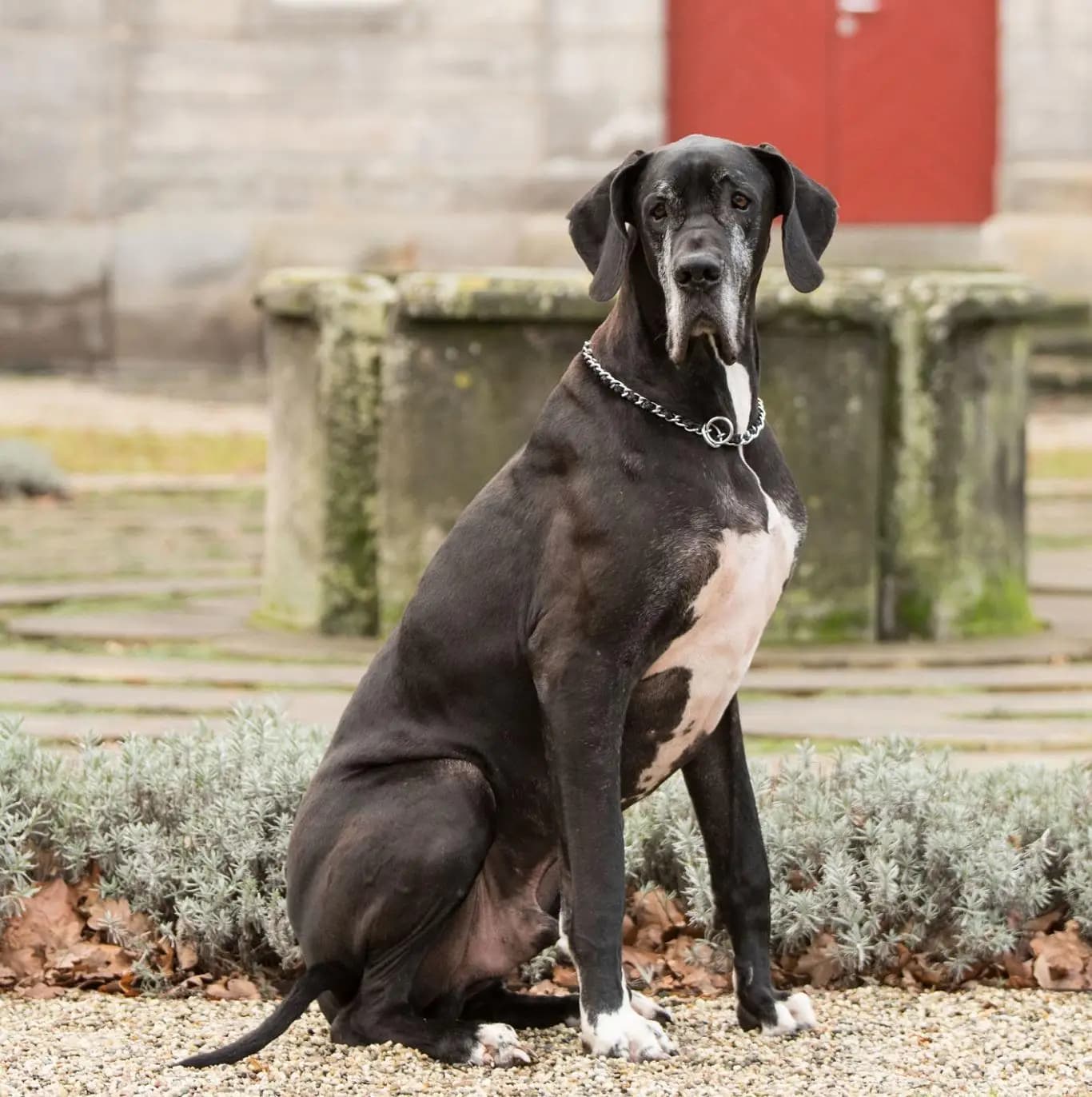
The Great Dane, often referred to as the "gentle giant" or "Apollo of dog breeds" is an impressive presence. It belongs to FCI Group 2, Section 2.1, Molossoids, Great Dane-like dogs. Its large, muscular body, strong neck and long, straight nose give it a majestic and imposing appearance. Their eyes are medium-sized and expressive, while their ears are set high and lie against their cheeks when resting.
The Great Dane is a giant with a heart of gold. Her personality is characterized by a strong bond with her family. They are extremely people-oriented and love being close to their loved ones. Learning to stay alone can be a challenge for the Great Dane because he doesn't like to be separated from his family. With the right training, they can learn to stay alone for short periods of time. The Great Dane is generally not particularly sensitive to stimuli, but rather shows a calm temperament, especially in adulthood. However, when it reacts to a stimulus, this reaction can be more violent due to its size and strength. The Great Dane is intelligent but can sometimes be stubborn, which is due to its independence as a hunting dog. When fighting wild boars, the ancestors of the breed ultimately made their own decisions. Their imposing size as well as their strong protective instinct and vigilance make them natural guardians, although they are usually not overly aggressive in their territorial motivation.
| Watchfulness A natural watchdog with real protective instinct. | High |
| Openness to Strangers Neither pushily friendly nor suspicious. | Neutral |
| Hunting or Herding Drive Noticeable drive — needs attention around small animals. | Moderate |
Fun Fact!
Despite their size, the Great Dane often thinks that he is a lap dog and loves to snuggle up with his people.
Great Danes are considered calm and sensitive dogs. They are often described as unsafe, so appropriate breeding and socialization is important. Great Danes have a rather short life expectancy.
Keeping a Great Dane requires space. Due to their size, they are not necessarily suitable as a city dog unless you have a sufficiently large, single-story home and access to large green spaces. It is only suitable to a limited extent for dog beginners, because you should deal intensively with the husbandry requirements and the correct training in advance. The Great Dane is generally tolerant of other pets, especially if they are properly socialized from an early age. They sometimes show amazing patience and care towards children. However, they often cannot estimate their own size and strength, which is why they should only have contact with children under supervision.
Loves family life and thrives in a group.
Gets on well with children — with adult supervision.
Actively enjoys the company of other dogs.
Suffers in tight urban conditions.
Owning a dog is a privilege, but it's also a real responsibility. Before you bring one into your life, be honest with yourself about the commitment it takes.
Great Danes are intelligent and eager to learn, but training them requires patience and consistency. It's important to start socialization and training early, as an untrained Great Dane can become a real problem with his strength. Your Great Dane needs to learn early on not to be too rough with people and other dogs. Learning frustration tolerance and impulse control is also crucial for the Great Dane to promote balanced behavior. Positive training based on rewards is particularly effective. It is also important not to overwhelm the dog as this can lead to health problems. With interactive retrieval training you can put a Great Dane to good use. She can also let off steam physically, for example by having to pull the dummy out of a pile of heavy objects. You should avoid sports like agility to protect your joints.
Great Danes require a balanced diet based on their specific needs as a large breed. High-quality food with an appropriate ratio of protein, fat and carbohydrates is important. Due to their susceptibility to gastric torsion, feeding should be done in smaller portions throughout the day and should not be allowed to play after feeding. In terms of care, the Great Dane is relatively easy to care for. Their fur is short and dense, without an undercoat. They shed moderately, but regular brushing helps remove loose hair and keep the coat clean. The climate in Germany is generally suitable for Great Danes, although they may need shelter in extremely cold temperatures.
| Care Level Minimal effort — occasional brushing and bathing. | Low-maintenance |
| Exercise Needs Needs 1–2 hours of real exercise daily. | Active |
| Shedding Hair everywhere, always — no white clothing survives. | Very heavy |
| Trainability Willing to learn with clear rules and regular training. | Balanced |
Our experts are still reviewing this information. Spotted something wrong? Email us at info@honestdog.de.
High risks
Health grade
The Great Dane has an average lifespan of only around six to eight years, with life-threatening gastric dilatation-volvulus (GDV) being among the most frequent emergencies. Furthermore, severe conditions such as dilated cardiomyopathy, cervical spondylomyelopathy (Wobbler syndrome), and hip dysplasia (HD) burden the breed significantly. While the Deutsche Doggen Club 1888 e.V. mandates X-ray screening for hip dysplasia (HD) with a cut-off limit of HD A–C for breeding approval, responsible breeders additionally screen for heart diseases. Therefore, in addition to official HD findings, you must insist on seeing clear results for dilated cardiomyopathy and aortic stenosis, as well as clear eye certificates regarding cataracts and primary open-angle glaucoma.
Grade is relative to other breeds — AI-assisted and editorially reviewed.
Methodology and data: HonestDog Dog Breed Health Report 2026
What matters most for this breed
Tap any item to see details.
You should expect more frequent vet visits, strictly limit physical exertion after meals, and plan for a higher budget for heart screenings right from the start.
Responsible breeders comply with mandatory screening for hip dysplasia (HD) and additionally have parent dogs tested for dilated cardiomyopathy, aortic stenosis, and eye diseases.
Note: This health overview is AI-assisted and editorially reviewed. It is for orientation only and does not replace veterinary advice.
What matters most for this breed — what's common, how much it affects the dog's life, and how to protect yourself as a buyer.
Tap a body region to see the inherited conditions linked to it.
The three most important risks
Pick a region on the map to explore other areas.
Tier 1 reflects the tests Deutscher Doggen Club 1888 e.V. actually mandates. Tiers 2 and 3 show how responsible breeders go beyond.
Club standard. Deutscher Doggen Club 1888 e.V. requires these tests for breeding approval. Ask any reputable breeder for the results.
Not health tests, but required for breeding: the club asks for these results too. They don't count toward the risks or the rating.
Note: This health overview is AI-assisted and editorially reviewed. It is for orientation only and does not replace veterinary advice.
A Great Dane costs around ~€240 per month (€130 – €470, depending on your setup). The first year adds up to roughly ~€6,380 including purchase, equipment and puppy school; across the dog's life (9 years) it comes to about ~€29,550.
With surgery cover, running costs come to about ~€260 per month — in return, your share of a major operation drops from several thousand euros to around 20 percent.
Per month
~€240
In the first year
~€6,380
Across the dog's life
~€29,550
Estimated purchase price from a breeder: €1,800 – €3,500
Estimate at a mid-range setup (suburban, dry food, 1–2 hours of daily exercise), average German prices, as of July 2026.
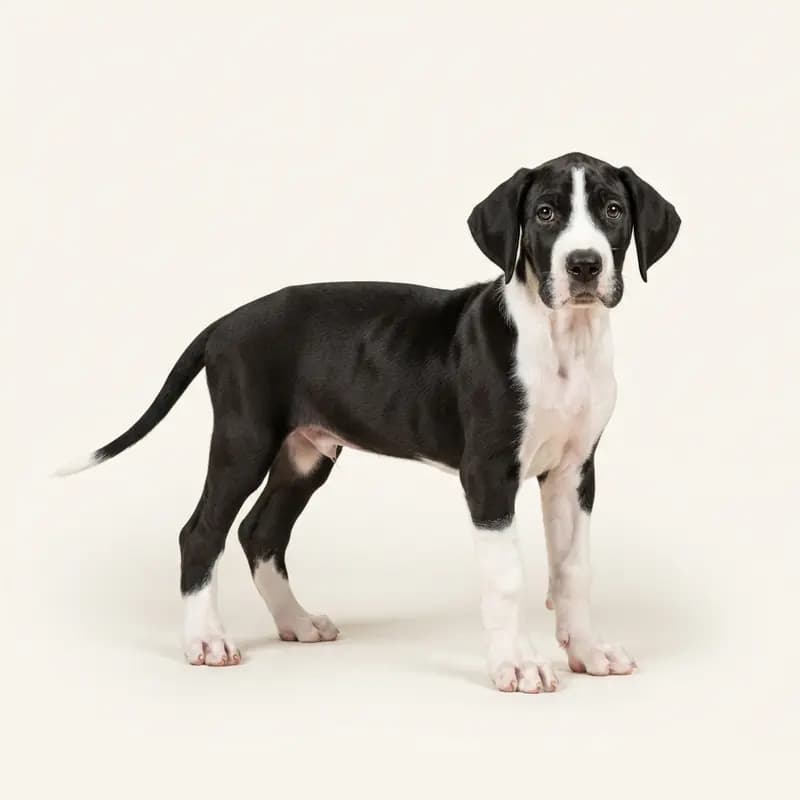
 Illustrative image
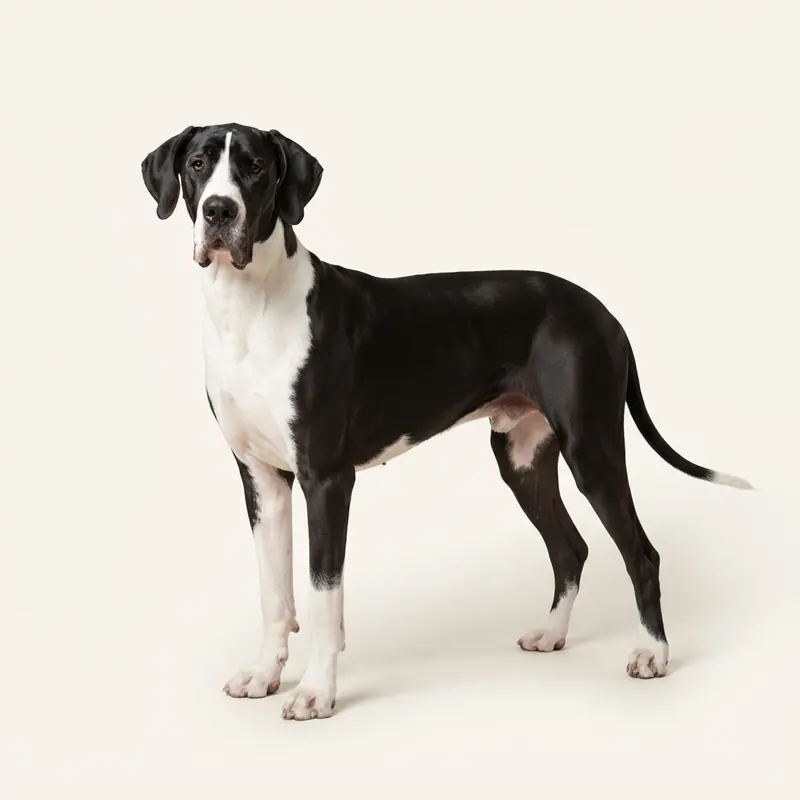
 Illustrative image
 Illustrative image
 Illustrative image
The Great Dane has its roots in a variety of molossoid dog breeds that were crossed with Irish wolfhounds in various European countries. They were bred in the 16th and 17th centuries as hunting dogs for wild boars and bears and were also used as court and bodyguards at royal courts. In the 19th century, breeders in Germany began to refine the breed, placing more emphasis on its friendly nature and imposing appearance. The Great Dane was recognized as a separate breed in 1888, with several European countries wanting to claim the Great Dane's origins until the name "Deutsche Dogge" was finally agreed upon, although in English it is called "Great Dane".
The Great Dane was originally bred as a hunting dog for large game and later as a guard and companion dog.
Germany
1878
At home and in family life, owners almost unanimously describe the Great Dane as an affectionate, cuddly "lapdog in giant size." These dogs seek a great deal of body contact and want to be part of everything. Despite their huge build, with enough to do they are usually calm and almost unnoticeable indoors. With their own family's children they are generally surprisingly careful, although their sheer body weight means their people still need to keep a watchful eye.
On the other side are the major logistical and practical demands that many owners stress. Danes can drool quite a bit, and splatters on walls or furniture after drinking or shaking call for a relaxed household. Stairs are also a constant hurdle: upper-floor apartments without an elevator are considered unsuitable, because a sick or old dog weighing 60 to 80 kilograms can't be carried. The car, beds and vacation rentals also have to be chosen with these dimensions in mind from the start.
Sources:rund-ums-baby.dedogvers.dedas-schaeferhund-forum.dedoggen-rettung.deaxolotlforum.de
In owners' accounts of training, they keep pointing to the fine balance between strong leadership and high sensitivity. Great Danes are very sensitive to harshness, pressure or impatience; they shut down or quickly become insecure. At the same time, the breed doesn't forgive any slackness when it comes to leash manners and basic obedience. Mistakes that get shrugged off as trivial in smaller breeds quickly become a serious safety risk in a dog with this much leverage and mass.
A particular challenge is the sometimes lengthy period of maturing. Males in particular are only considered fully mature mentally at three to four years old. In adolescence many test their limits, which, together with an awakening guarding and protective instinct and a certain independence, calls for a lot of patience and clear rules. Around other dogs, adult Danes not infrequently tend to be pushy or intolerant, which is why owners urge early, confident socialization.
Sources:das-schaeferhund-forum.dedoggen-rettung.detierwelt.chzooroyal.demeinedogge.de
Health and life expectancy are the most painful topic in owners' accounts. The breed has a comparatively low average age; many Danes live only six to eight years on average. Forums often describe this as a constant emotional burden, since owners have to come to terms with aging and saying goodbye early on. The most frequently named acute dangers are bloat (gastric torsion), heart disease (DCM) and bone tumors.
On top of that comes physical vulnerability in the first year of life. The very fast growth calls for closely monitored feeding and protecting the skeleton; overexertion quickly leads to joint damage or growth disorders. Owners also regularly point out the serious financial side: vet bills, medication doses based on body weight and the amount of food needed run well above what most other breeds cost.
Sources:dogvers.dedas-schaeferhund-forum.detierwelt.chdogforum.degesunde-dogge.de
Paraphrased from real owner reports · translated from German
The Great Dane is an adaptable dog that adjusts well to various lifestyles. Research the temperament, grooming needs, and space requirements before deciding.
The average life expectancy of a Great Dane is 8-10 years. With proper care and regular vet visits, your dog can live a long, healthy life.
Great Dane grooming requirements include regular brushing, nail trimming, and dental care. HonestDog provides detailed grooming tips for every breed.
The Great Dane can be a great family dog. Proper training and socialization are key. HonestDog provides family suitability information for every breed.
The Great Dane comes in these colors: Fawn, Brindle, Black, Blue, Harlequin, Merle, Black and white.
Showcase your kennel on HonestDog and reach families searching for a responsibly bred Great Dane.