Golden RetrieverClose relative
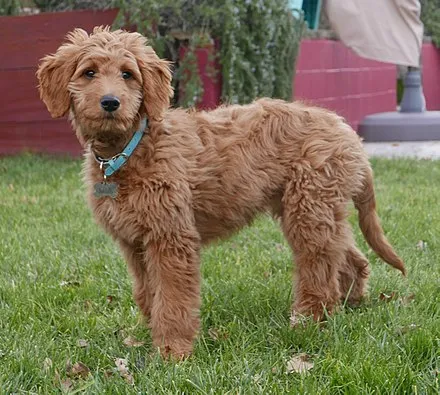
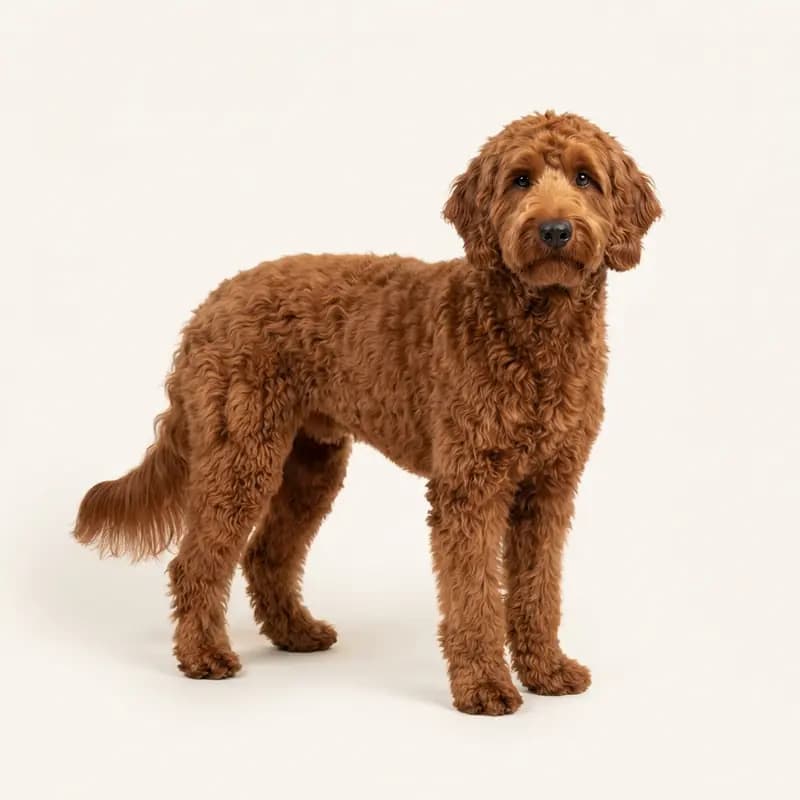
The Goldendoodle is a people-oriented, highly intelligent hybrid dog—a mix of a retriever and a water dog that is often marketed as a low-maintenance family pet, but genetically carries the working drive of two true hunting breeds.
How the health grade is calculated
Sources for required breeding screenings. Goldendoodle Association of North America (GANA)
Self-check
Answer 6 quick questions about your everyday life and see how well the Goldendoodle fits you — including an honest cost estimate per month, per year, and across the dog's lifetime.


At a glance
The essentials — key facts, traits, and health priorities — before you dive deeper.
Lifespan
10–15 yrs
Shoulder height
53–63 cm
Weight
22–35 kg
Practical
Temperament
Daily life
What matters most
Especially with a Goldendoodle, choosing the right breeder is the single most important decision you'll make. Serious breeders consistently test the parents for inherited conditions, prioritize healthy early socialization, and stay accountable long after handover. A cheap puppy without health screening tends to become the most expensive dog later on.
See HonestDog breeder standards →Colors & coat
The coat colors that occur in the Goldendoodle — including which ones fall outside the breed standard and which carry genetic risk.
Eye colors
 Brown
 Amber
 Blue
 Green
Coat type
 Illustrative image
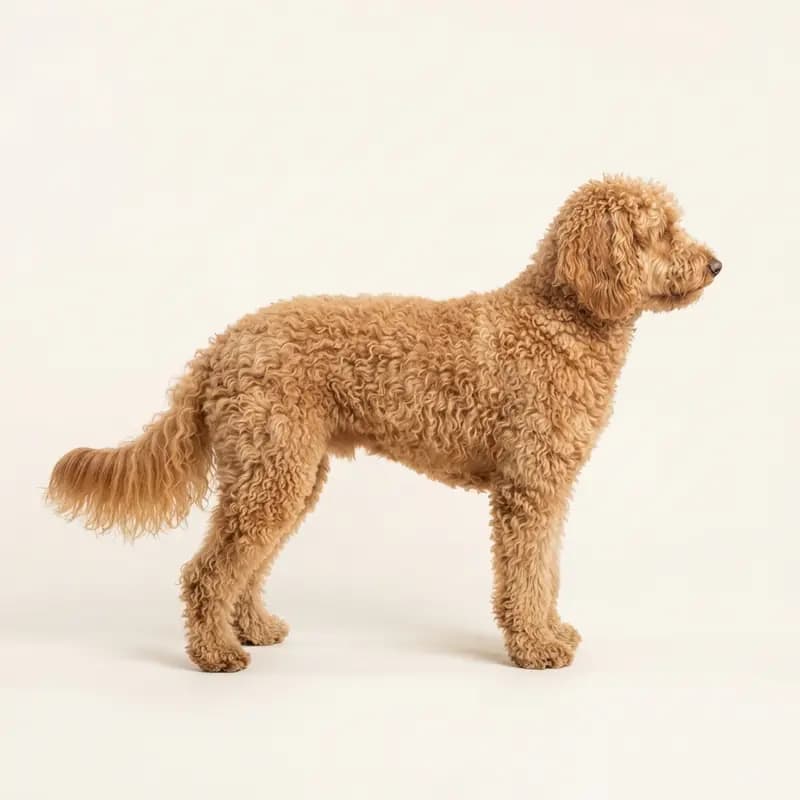
Curly
 Illustrative image
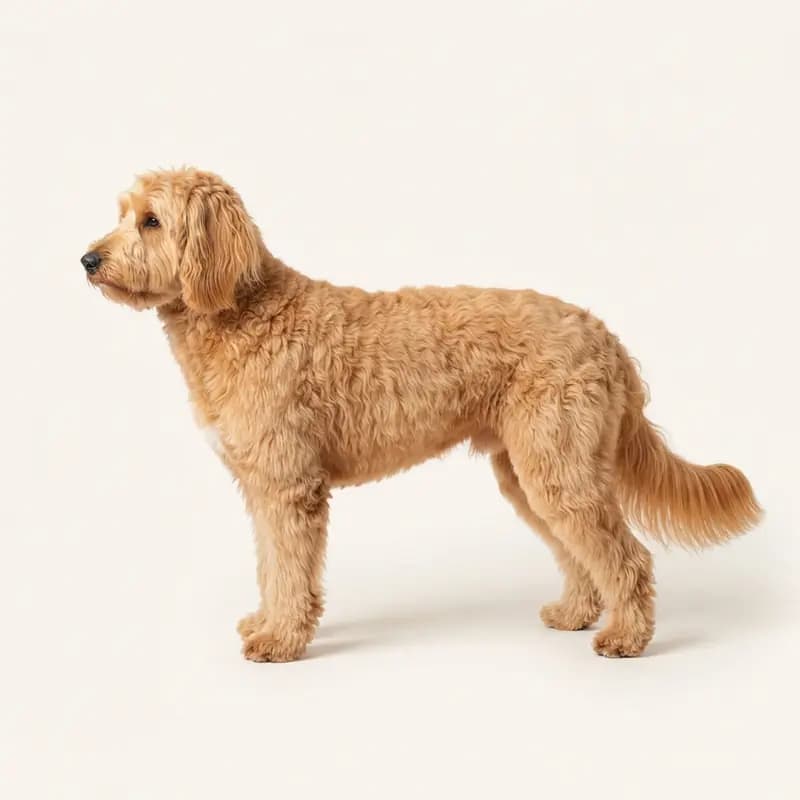
Medium
 Illustrative image
Long
The real vibes check
A Goldendoodle is not a ready-made stuffed animal from a catalog, but a surprise package consisting of two highly intelligent hunting breeds. If you are ready to work with the dog you actually have—instead of the perfect advertising promise—you will gain an incredibly versatile and loyal partner.
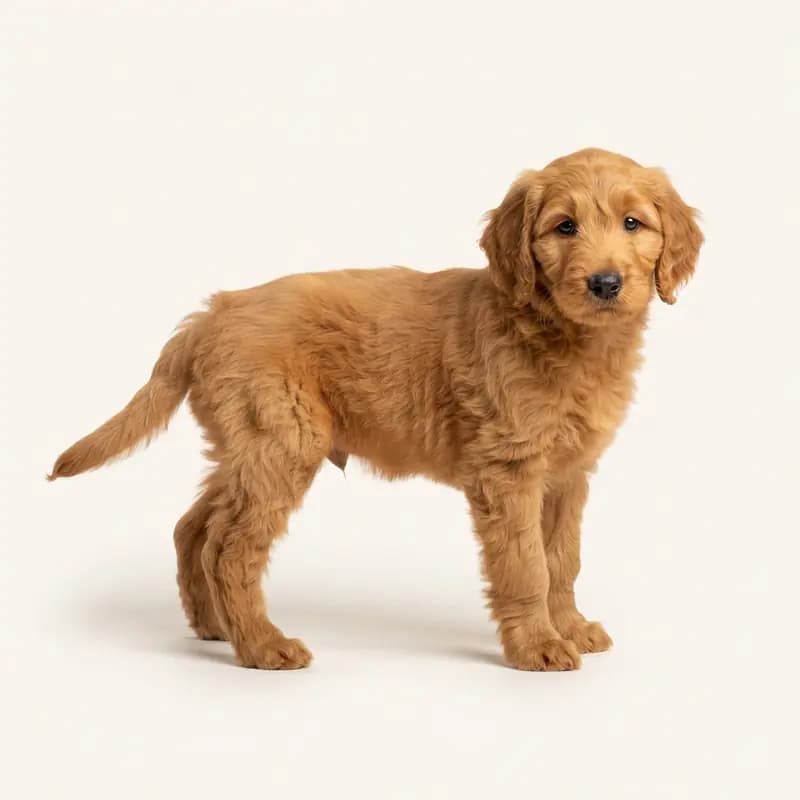
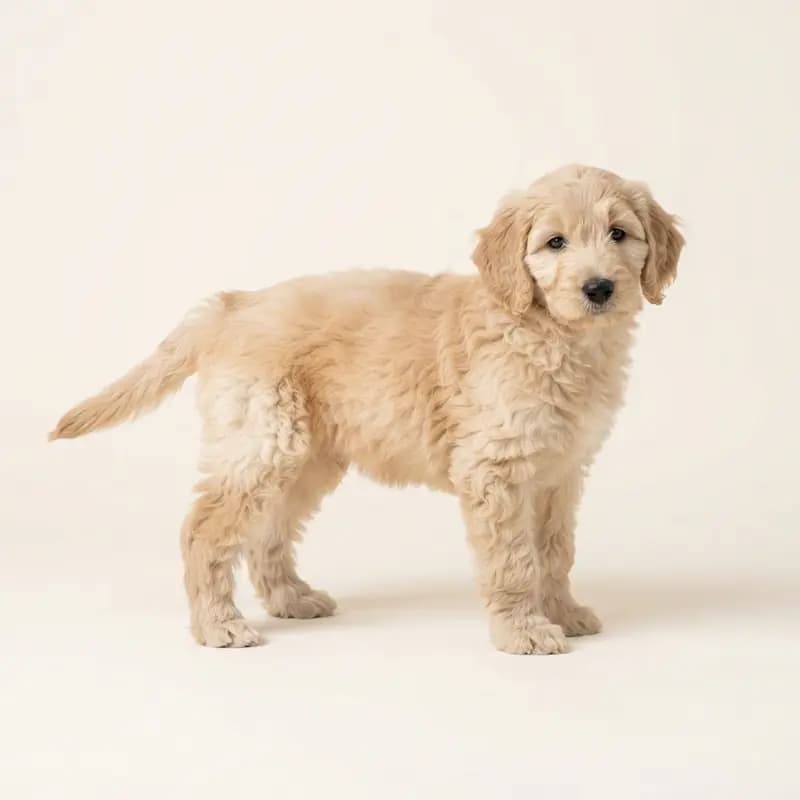
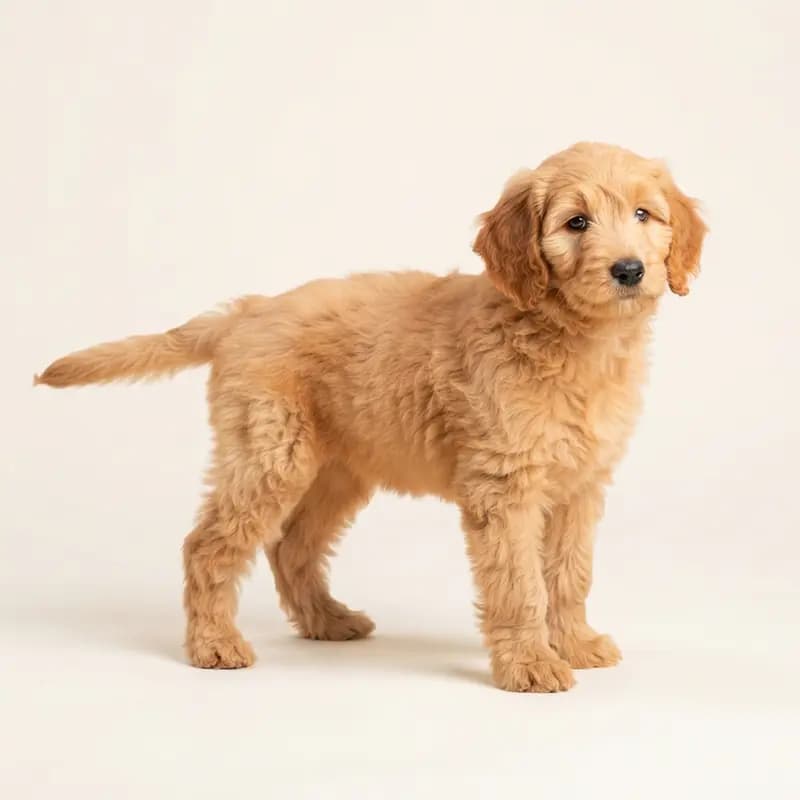
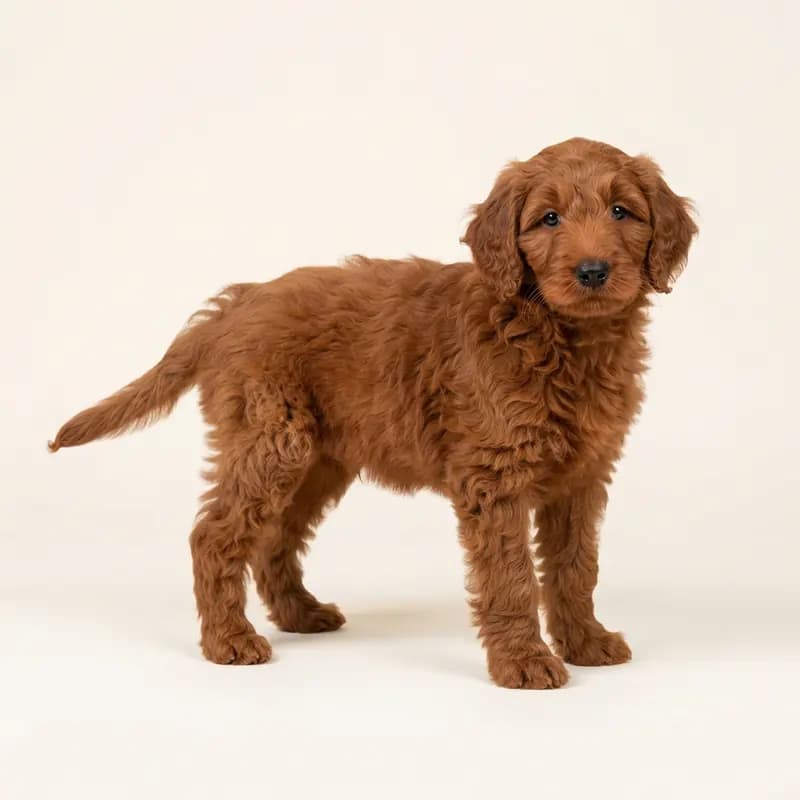
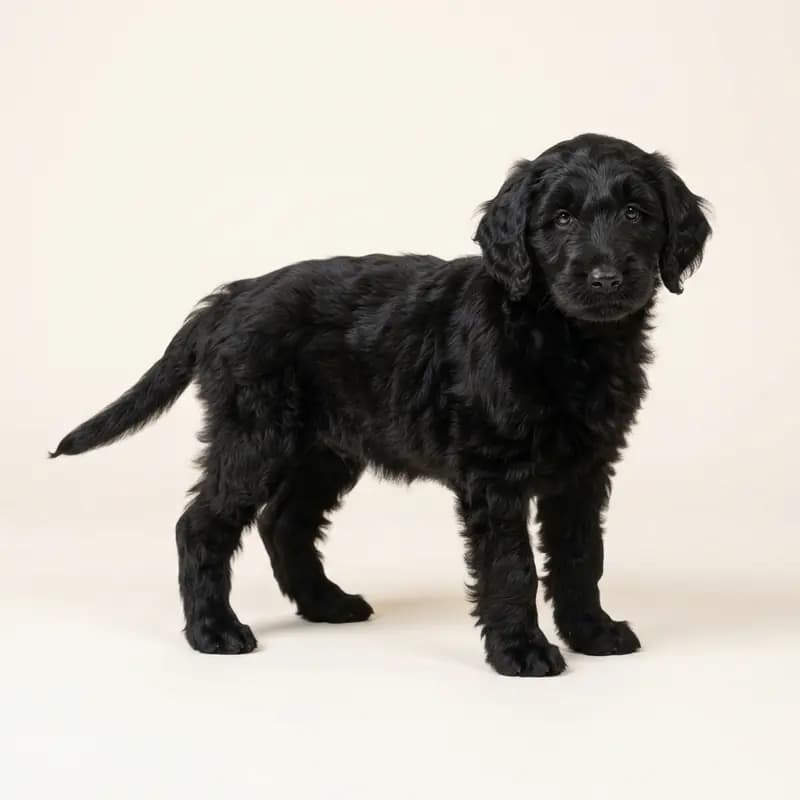
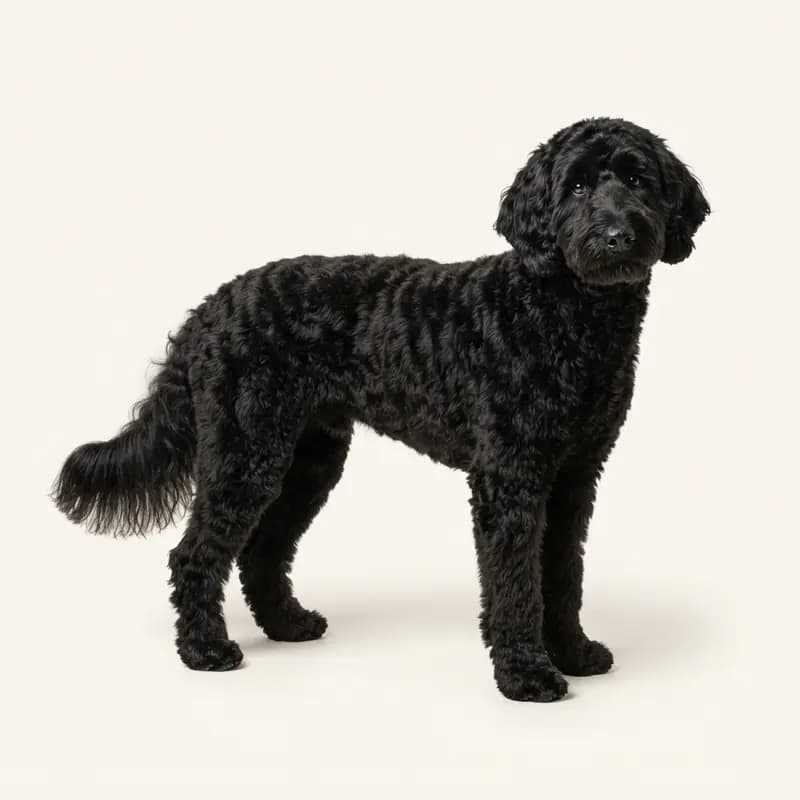
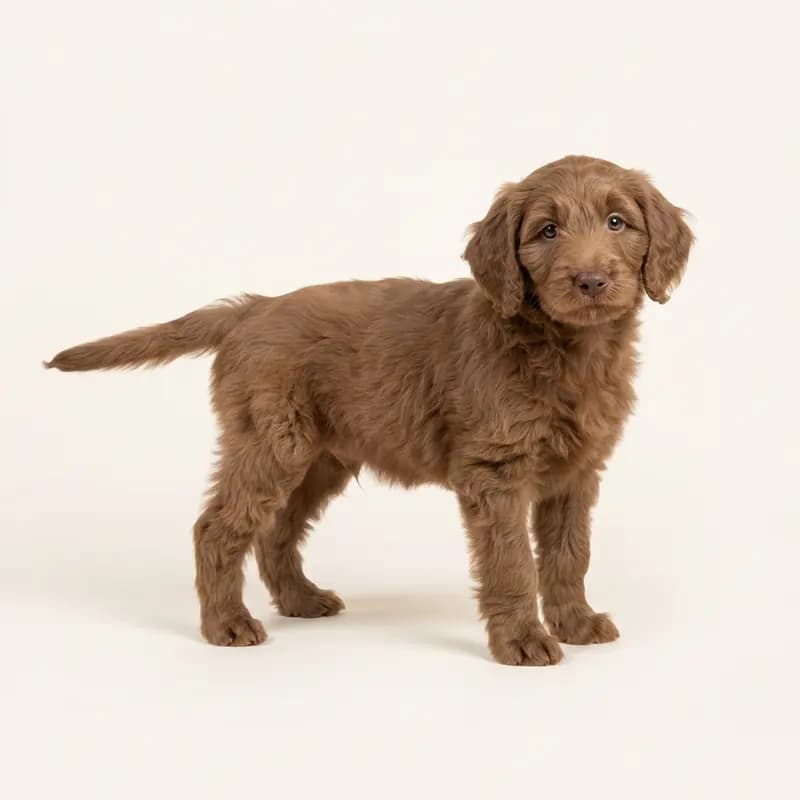
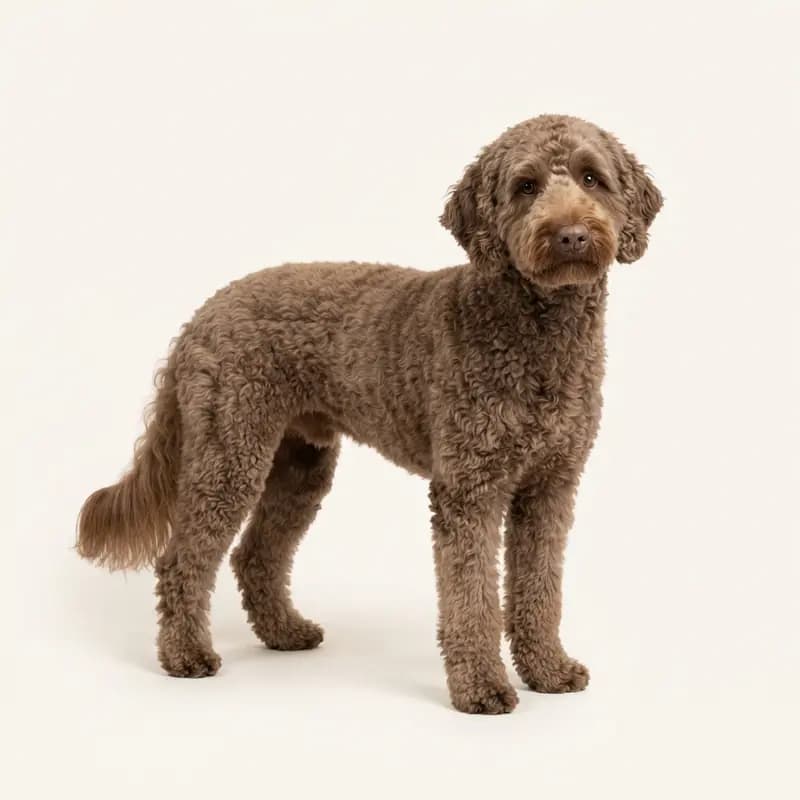
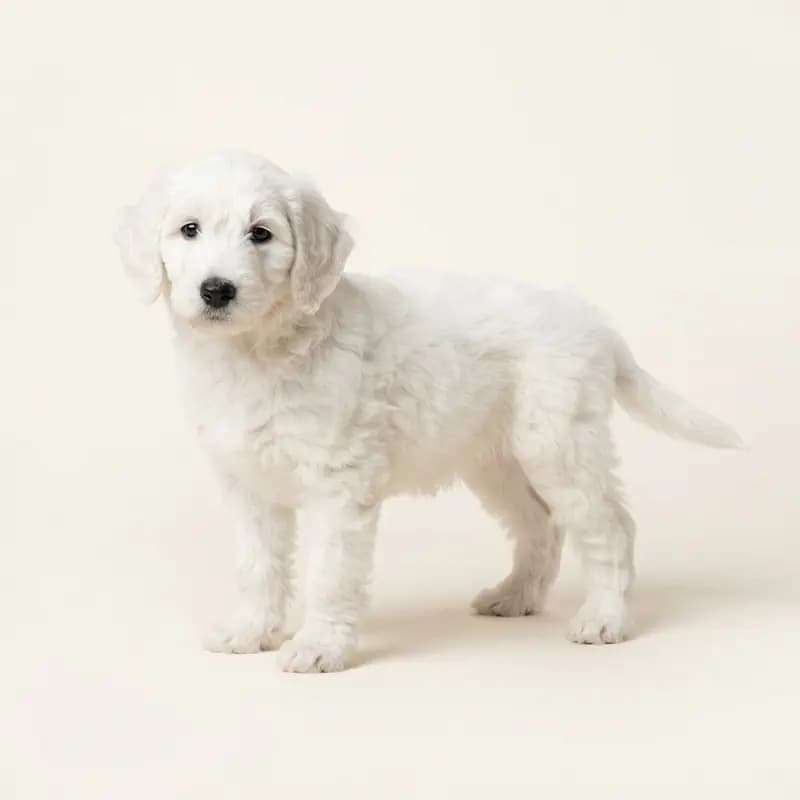
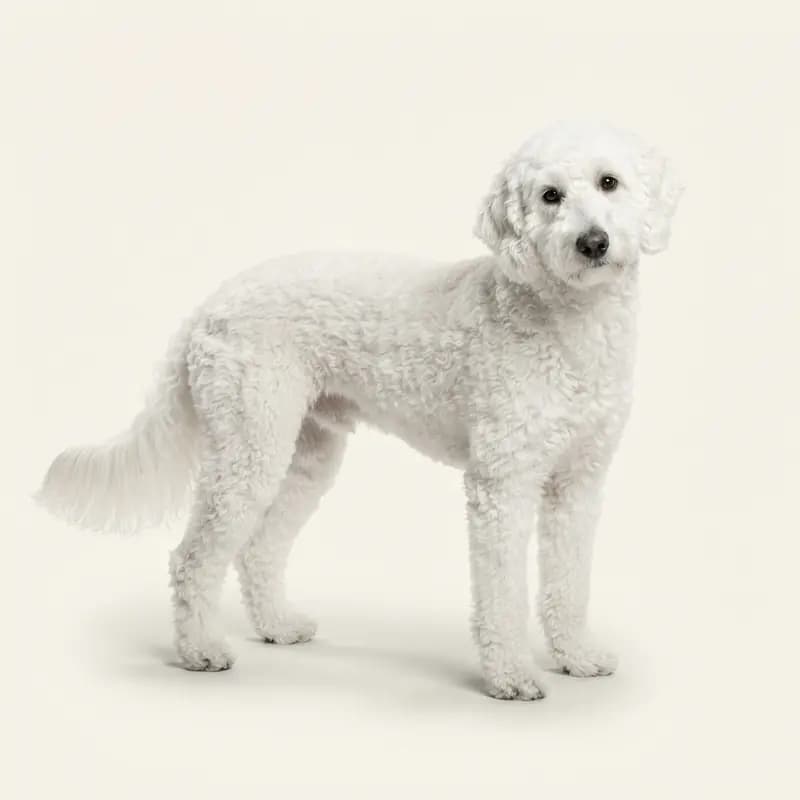
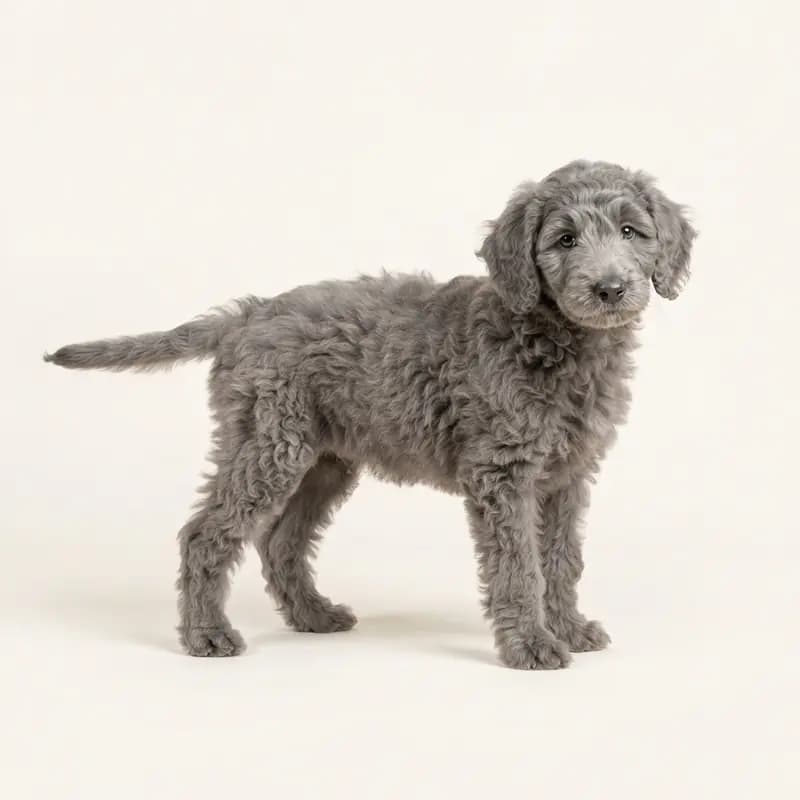
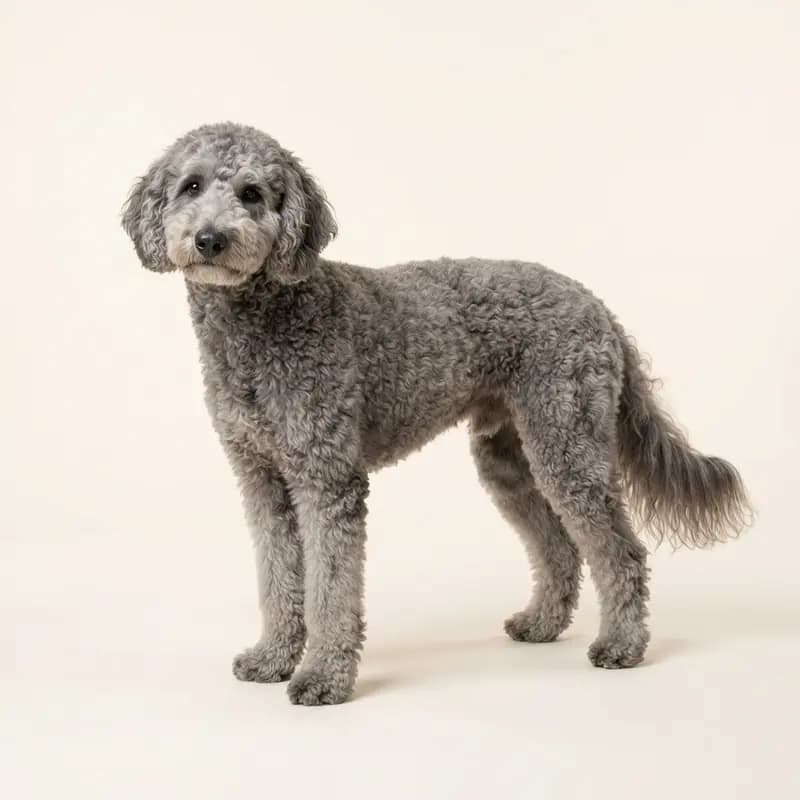
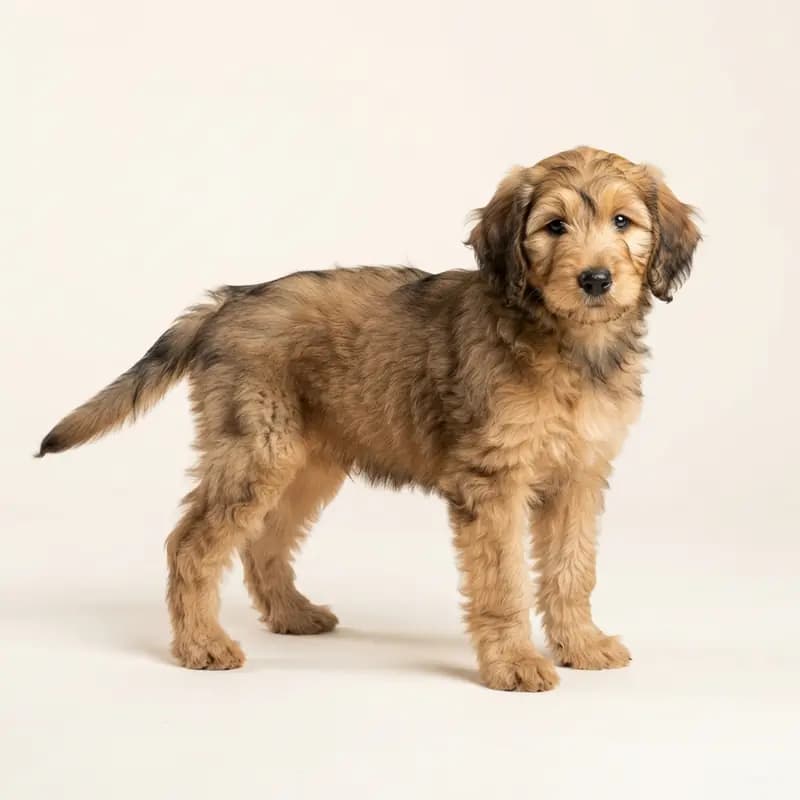
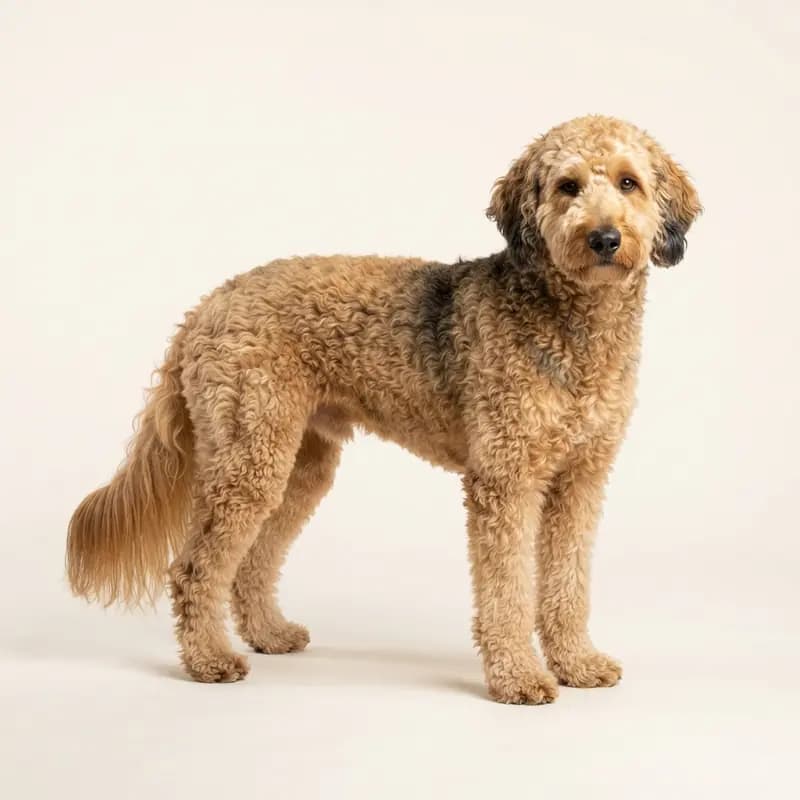
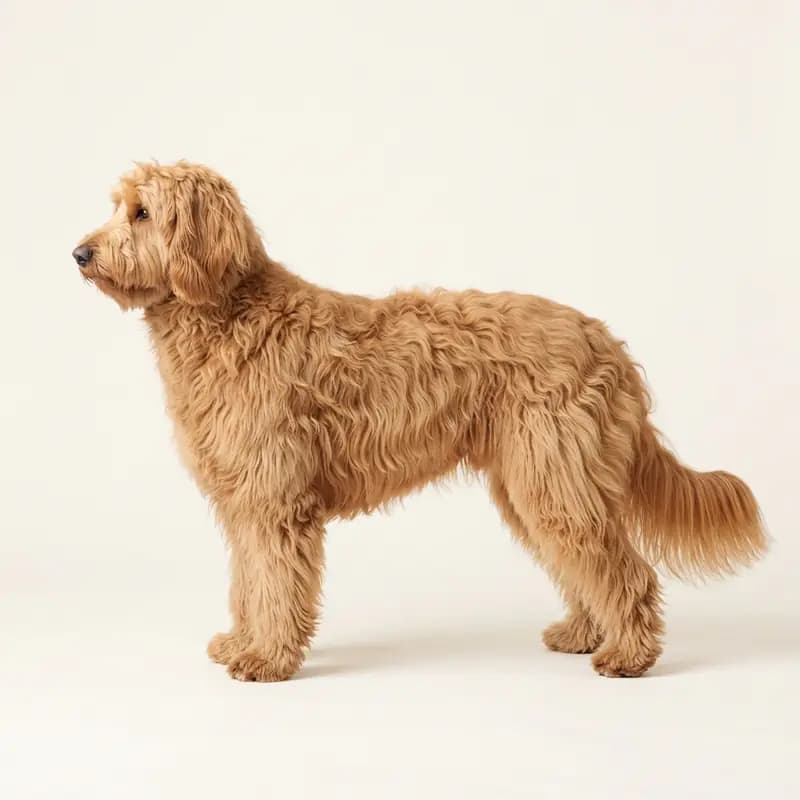
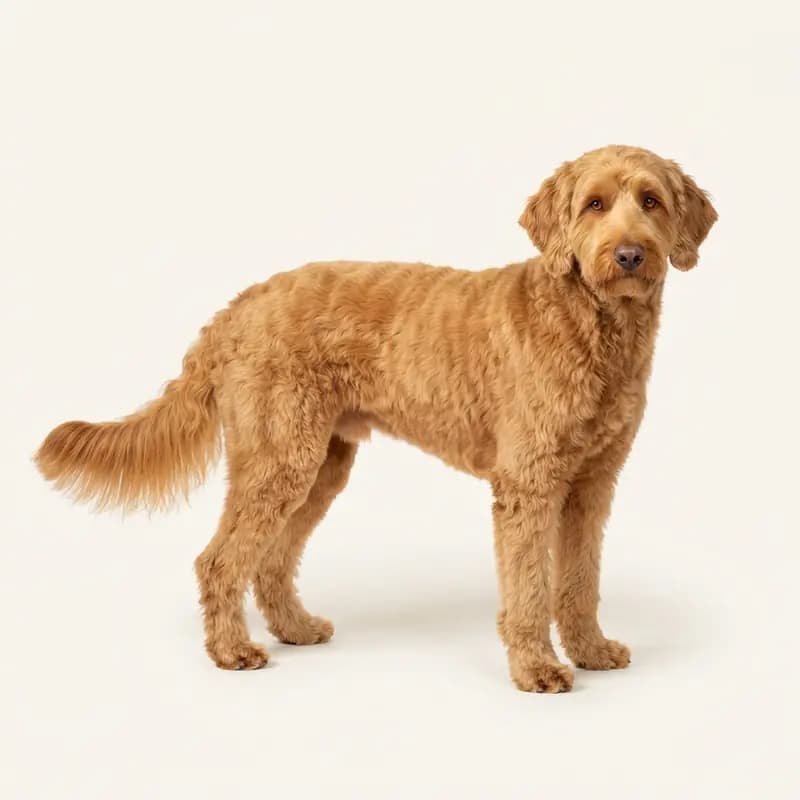
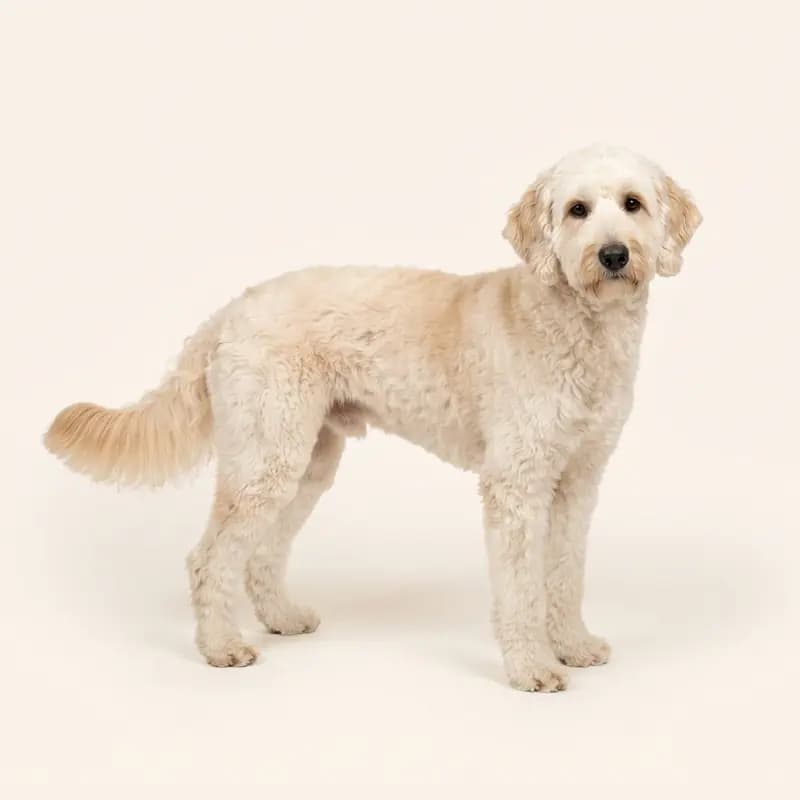
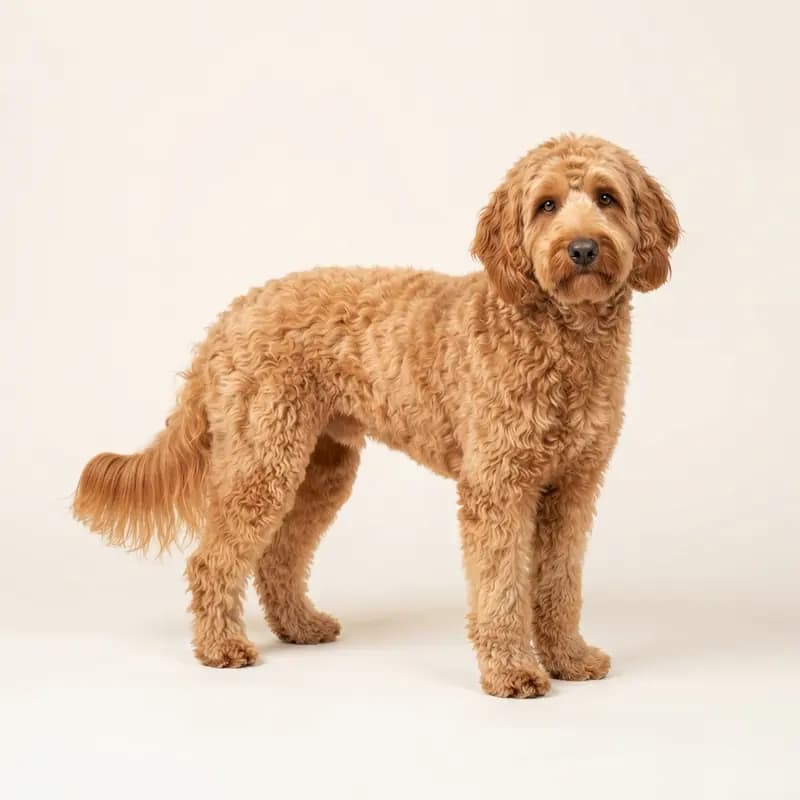
The Goldendoodle is a hybrid dog created by crossing a purebred Golden Retriever and a purebred Poodle. It is not a breed recognized by the FCI, but rather a so-called designer dog. Its appearance can therefore vary quite a bit depending on whether he has inherited more Golden Retriever or Poodle characteristics. However, it is generally similar to both breeds, with a robust build and a thick, curly or wavy coat.
Goldendoodles are known for their friendliness, intelligence, and playful nature. They love the company of their humans and are usually in a very good mood. They are exceptionally social and get along well with children and other animals, making them excellent family dogs. Goldendoodles are generally very active and playful. They love long walks, playing in the park and other physical activities. Thanks to their intelligence, they are also well suited to dog sports that require mental work. However, their need for exercise is not as high as that of some other breeds, so they can cope well in a smaller apartment as long as they get enough exercise. A well-socialized and trained Goldendoodle is usually not inclined to exhibit strong hunting or prey-catching behavior, which makes it easier to live with. They also don't tend to be overly alert or territorial, meaning they are usually friendly towards strangers and make good visiting dogs in schools or retirement homes. Goldendoodles can learn to stay alone, but they definitely prefer to be around their people. However, like any dog, they should be trained to stay alone from an early age to avoid excessive attachment or separation anxiety. They are not loners and require lots of human interaction and mental stimulation to be happy and well-adjusted. Although the Goldendoodle is a friendly and sociable dog that loves to play and be active, it also has a calm and gentle side. They love relaxing with their family and can be very cuddly. They are very people-oriented and build a strong bond with their family. This love and loyalty, combined with their natural intelligence and desire to please, makes them wonderful companion dogs.
| Watchfulness Occasionally alerts but is fundamentally open. | Low |
| Openness to Strangers Warms up quickly and is generally welcoming. | Friendly |
| Hunting or Herding Drive Mild interest in movement and small animals — easily managed. | Low |
Fun Fact!
Did you know that the name Goldendoodle is a combination of Golden Retriever and Poodle and this adorable breed became popular in North America in the 1990s to combine the hypoallergenic qualities of the Poodle with the friendly and loving temperament of the Golden Retriever?
The Goldendoodle is a friendly and intelligent dog that comes from the crossbreeding of a Golden Retriever and a Poodle. These dogs are very social and are well suited as family dogs. They are active, eager to learn, and require regular activity. Due to their hypoallergenic coat, they are especially suitable for allergy sufferers. Goldendoodles are versatile, for example as therapy or companion dogs.
Goldendoodles are generally well suited to city life as long as they receive enough exercise and mental stimulation. They get along well with other dogs and are usually friendly with children as long as they are treated with respect. With their friendly and social nature, they can often adapt well to living with other pets such as cats.
Lives for its family — the born family companion.
Extraordinarily patient and loving — a true family dog.
Actively enjoys the company of other dogs.
Adapts well to city living and urban environments.
Owning a dog is a privilege, but it's also a real responsibility. Before you bring one into your life, be honest with yourself about the commitment it takes.
Goldendoodles are intelligent and eager to learn dogs who generally enjoy training. They are well suited to a variety of dog sports, from agility to obedience. At the same time, it is important to ensure balanced training and avoid overworking. Like all dogs, Goldendoodles need rest and relaxation time. Some Goldendoodles can be "ball junkies." and love retrieving balls or other toys. The important thing here is to keep the game balanced and make sure the dog doesn't become obsessed with it. Impulse control and frustration tolerance are important skills to teach when raising a Goldendoodle.
A Goldendoodle's diet should be tailored to its size, age, activity level, and health. They usually benefit from a balanced diet with high-quality proteins, healthy fats, vitamins and minerals. When choosing food, you should choose a product that is specifically designed for your dog's size and life stage. Grooming a Goldendoodle can be challenging due to their curly coat. They have a dense undercoat and require regular brushing to prevent matting and skin problems. Depending on how curly your Goldendoodle's coat is, he may also need regular professional grooming. Goldendoodles cope well with the climate in Germany. Their fur protects them from cold and heat, but it is important to watch them in extreme temperatures and make sure they do not overheat or get too cold. They tend to shed moderately.
| Care Level Regular brushing and occasional professional grooming. | Moderate |
| Exercise Needs Needs 1–2 hours of real exercise daily. | Active |
| Shedding Regular shedding — dog hair on clothes is now normal. | Moderate |
| Trainability Picks up commands quickly and wants to please. | Eager to learn |
Our experts are still reviewing this information. Spotted something wrong? Email us at info@honestdog.de.
Solid, watch carefully
Health grade
In the Goldendoodle, there are breed-typical risks for hip dysplasia (HD), elbow dysplasia (ED), and progressive rod-cone degeneration, PRCD-associated. The Goldendoodle Association of North America (GANA) mandates radiographic screenings for hip dysplasia (HD) with a threshold of HD A–B, for elbow dysplasia (ED) with a score of ED 0, tests for patellar luxation (PL) with a score of PL 0, and a normal ophthalmological eye exam for ocular issues. A health-focused breeder additionally tests for progressive rod-cone degeneration, PRCD-associated, Von Willebrand disease type I, and cataracts. Ask to see the certificates before buying, and ensure that for PRCD or Von Willebrand disease type I, a carrier was mated exclusively with a clear partner.
Grade is relative to other breeds — AI-assisted and editorially reviewed.
Methodology and data: HonestDog Dog Breed Health Report 2026
What matters most for this breed
Tap any item to see details.
You should focus on joint-friendly rearing, maintaining a healthy weight, and regular check-ups for eyes and skin to identify potential issues early on.
Responsible breeders screen in advance for hip dysplasia (HD), elbow dysplasia (ED), patellar luxation (PL), and eye problems, as well as additionally for PRCD, to prevent joint and eye diseases.
Note: This health overview is AI-assisted and editorially reviewed. It is for orientation only and does not replace veterinary advice.
What matters most for this breed — what's common, how much it affects the dog's life, and how to protect yourself as a buyer.
Tap a body region to see the inherited conditions linked to it.
The three most important risks
Pick a region on the map to explore other areas.
Tier 1 is the core standard: the tests Goldendoodle Association of North America (GANA) requires, plus further tests from the recommended health standard for this breed. Tiers 2 and 3 show how responsible breeders go beyond.
Core standard. Tests marked “Club standard” are required by Goldendoodle Association of North America (GANA) for breeding approval; the others are part of the recommended health standard for this breed. Ask any reputable breeder for the results.
No entries in this tier.
No entries in this tier.
Note: This health overview is AI-assisted and editorially reviewed. It is for orientation only and does not replace veterinary advice.
A Goldendoodle costs around ~€190 per month (€100 – €360, depending on your setup). The first year adds up to roughly ~€6,120 including purchase, equipment and puppy school; across the dog's life (12.5 years) it comes to about ~€32,460.
With surgery cover, running costs come to about ~€190 per month — in return, your share of a major operation drops from several thousand euros to around 20 percent.
Per month
~€190
In the first year
~€6,120
Across the dog's life
~€32,460
Estimated purchase price from a breeder: €2,000 – €4,000
Estimate at a mid-range setup (suburban, dry food, 1–2 hours of daily exercise), average German prices, as of July 2026.

 Illustrative image
 Illustrative image
 Illustrative image
 Illustrative image
The Goldendoodle originated in the USA and was first bred in the 1990s. The breeders' goal was to create a dog with the best characteristics of both parent breeds: the kindness, loyalty and intelligence of the Golden Retriever and the hypoallergenicity and low shedding of the Poodle. Although the Goldendoodle is not yet recognized as a separate breed, it has quickly established itself as a popular companion and family dog.
The Goldendoodle was created by crossing the Golden Retriever and Poodle to create a hypoallergenic companion dog with a friendly nature.
USA
1990er
In everyday family life, the vast majority of owners describe the Goldendoodle as a very affectionate, cheerful and social companion. It is intensely people-focused: many owners stress that it wants to be part of everything and gets along great with children and other dogs. Its empathetic nature and quick mind also make it a valued therapy dog and school dog.
At the same time, owners point out that in reality its energy level and temperament are often higher than those of a classic Golden Retriever. Many Doodles tend to be pushy and overexuberant when greeting. Being left alone is a recurring challenge: because they bond so closely with their people, separation is often hard for them, so alone-time training has to be built up patiently from puppyhood.
Coat care and shedding are among the most hotly discussed topics in forums and owner groups. Contrary to the marketing promise that Doodles are low-maintenance "allergy dogs", owners report that grooming can be a lot of work. Because the Goldendoodle is a cross, the coat varies widely from wavy to curly. When the Retriever's fine undercoat combines with the continuously growing Poodle hair, the coat mats down to the skin very quickly unless it is combed thoroughly several times a week or daily.
Many owners make clear that the "non-shedding" promise doesn't hold across the board: some dogs barely shed, while others shed noticeably. The coat also acts as a magnet for burrs, leaves, dirt and moisture, all of which take real effort to remove after every walk. For owners, regular trips to the groomer every six to eight weeks, or learning to clip the dog themselves, are a fixed part of daily life and an ongoing expense.
Sources:dogforum.denonohundesalon.atzza-online.deforum.hund.infodogorama.app
When it comes to training and keeping the dog busy, owners highlight the Goldendoodle's considerable intelligence and eagerness to learn. These dogs usually pick up basic cues and tricks incredibly fast. Owners warn, however, against mistaking this cleverness for "self-training": these dogs learn unwanted behaviors just as fast as wanted ones and actively demand mental engagement from their people.
Contrary to the assumption that Goldendoodles have little prey drive, many owners report strong hunting and flushing instincts that come from both the Poodle and the Golden Retriever, a working gundog. Many Doodles react strongly to moving sights, game trails or birds, which makes consistent anti-chase and recall training on a long line necessary. Owners also report that combining the two breeds can make a dog easily stimulated and somewhat nervous, so targeted settle and frustration-tolerance exercises are essential for a balanced temperament.
Paraphrased from real owner reports · translated from German
The Goldendoodle is an adaptable dog that adjusts well to various lifestyles. Research the temperament, grooming needs, and space requirements before deciding.
The average life expectancy of a Goldendoodle is 10-15 years. With proper care and regular vet visits, your dog can live a long, healthy life.
Goldendoodle grooming requirements include regular brushing, nail trimming, and dental care. HonestDog provides detailed grooming tips for every breed.
The Goldendoodle can be a great family dog. Proper training and socialization are key. HonestDog provides family suitability information for every breed.
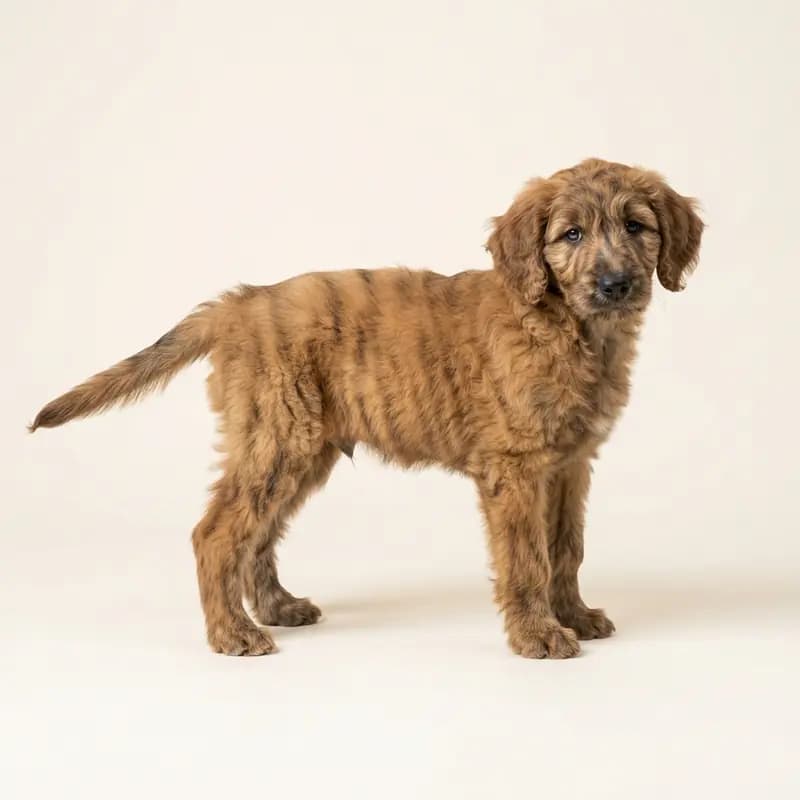
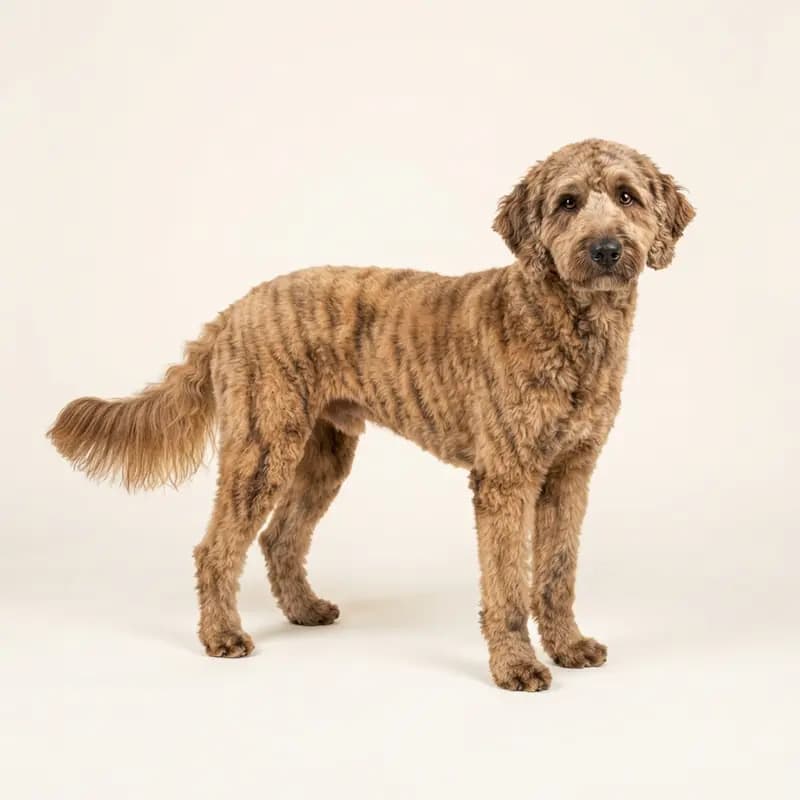
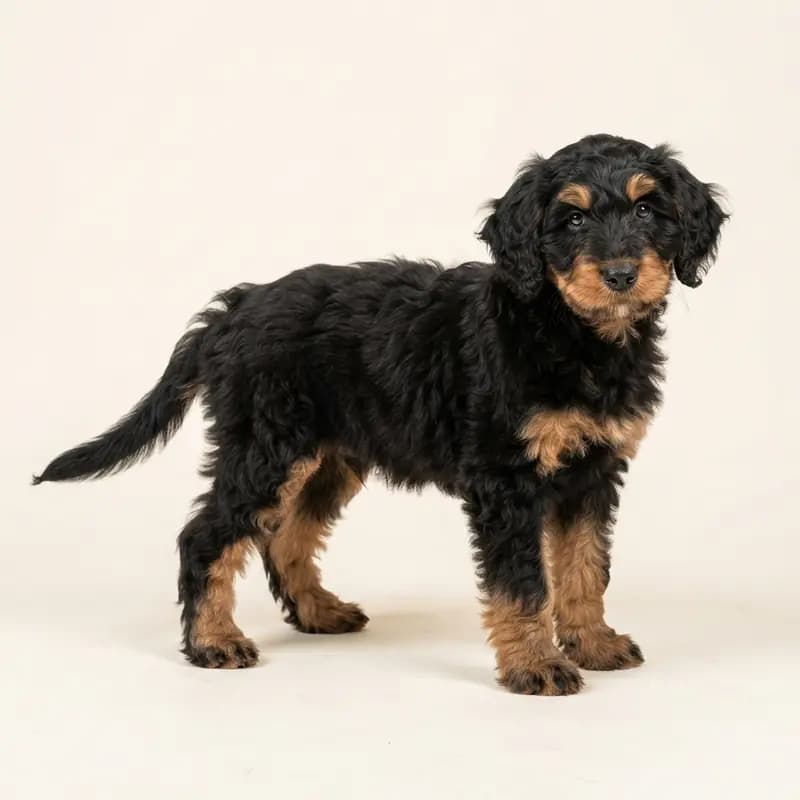
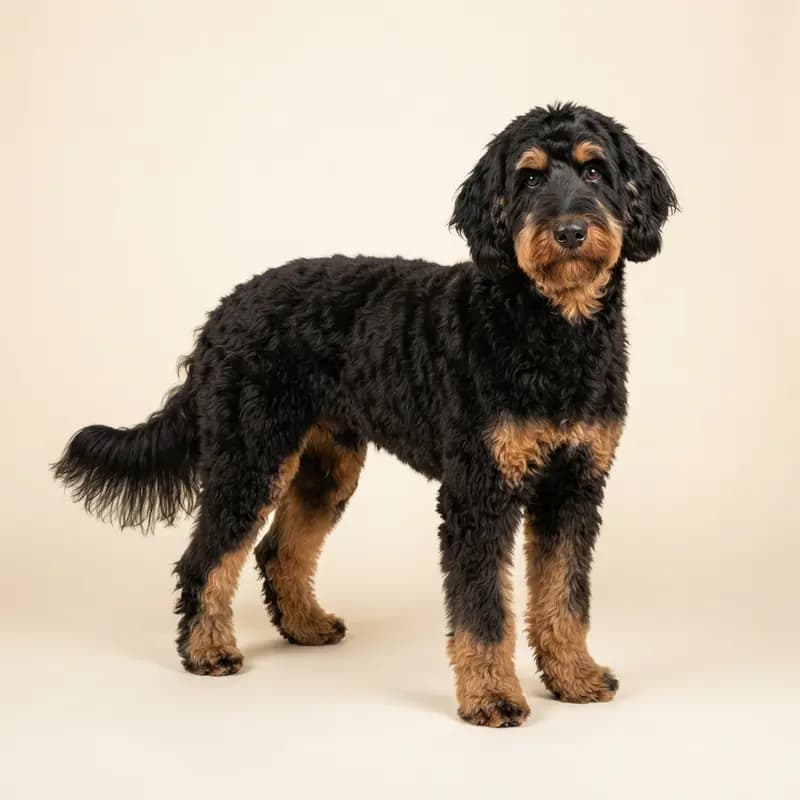
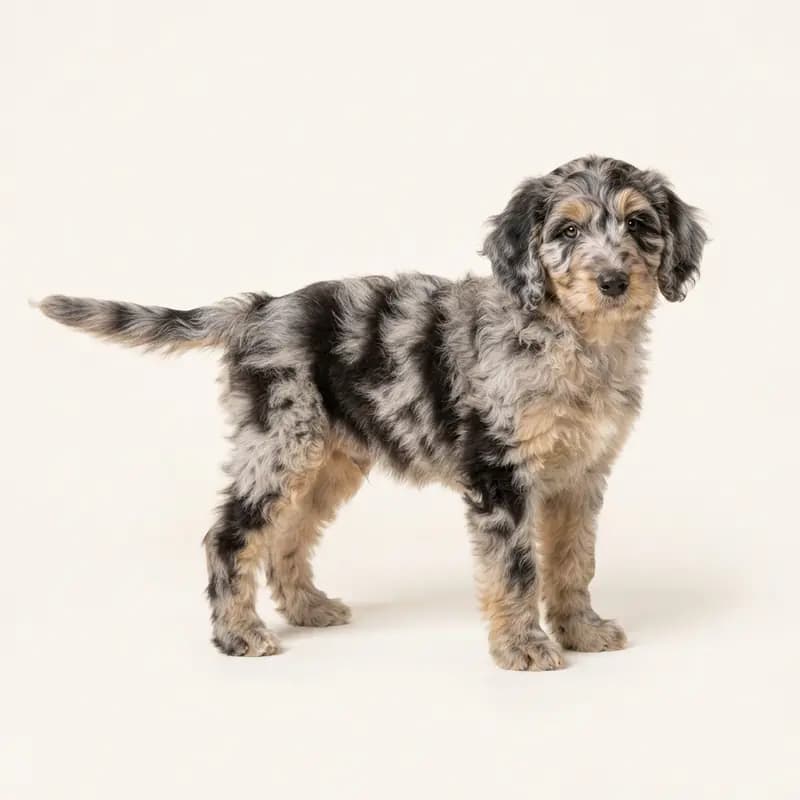
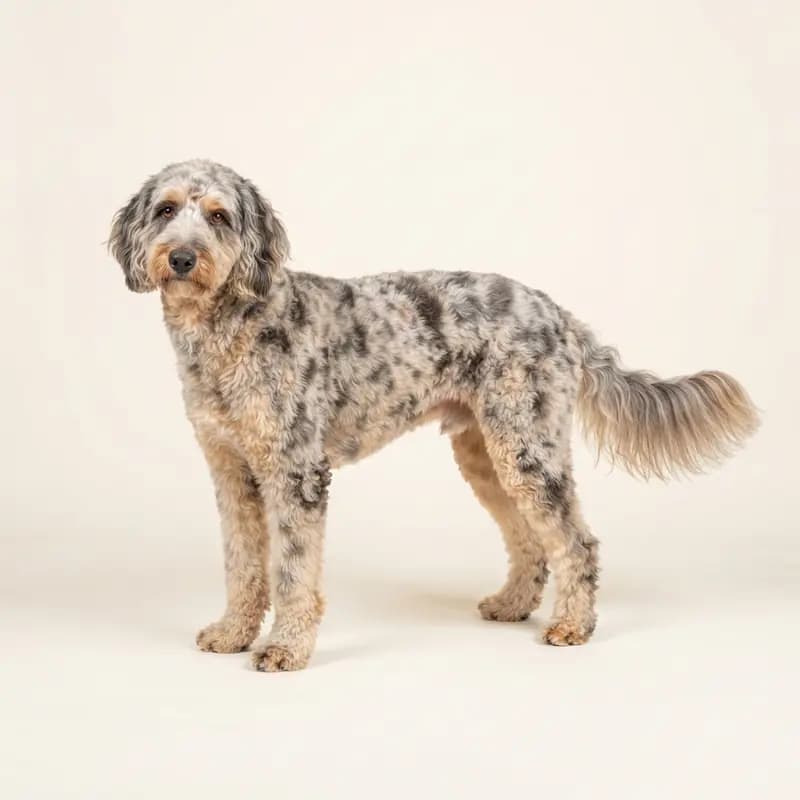
The Goldendoodle comes in these colors: Gold, Cream, Apricot, Red, Black, Brown, White, Grey, Sable, Brindle, Black and tan, Merle.
Choosing between an Australian Labradoodle and a Goldendoodle? Compare temperament, grooming, and costs to find your perfect family companion.
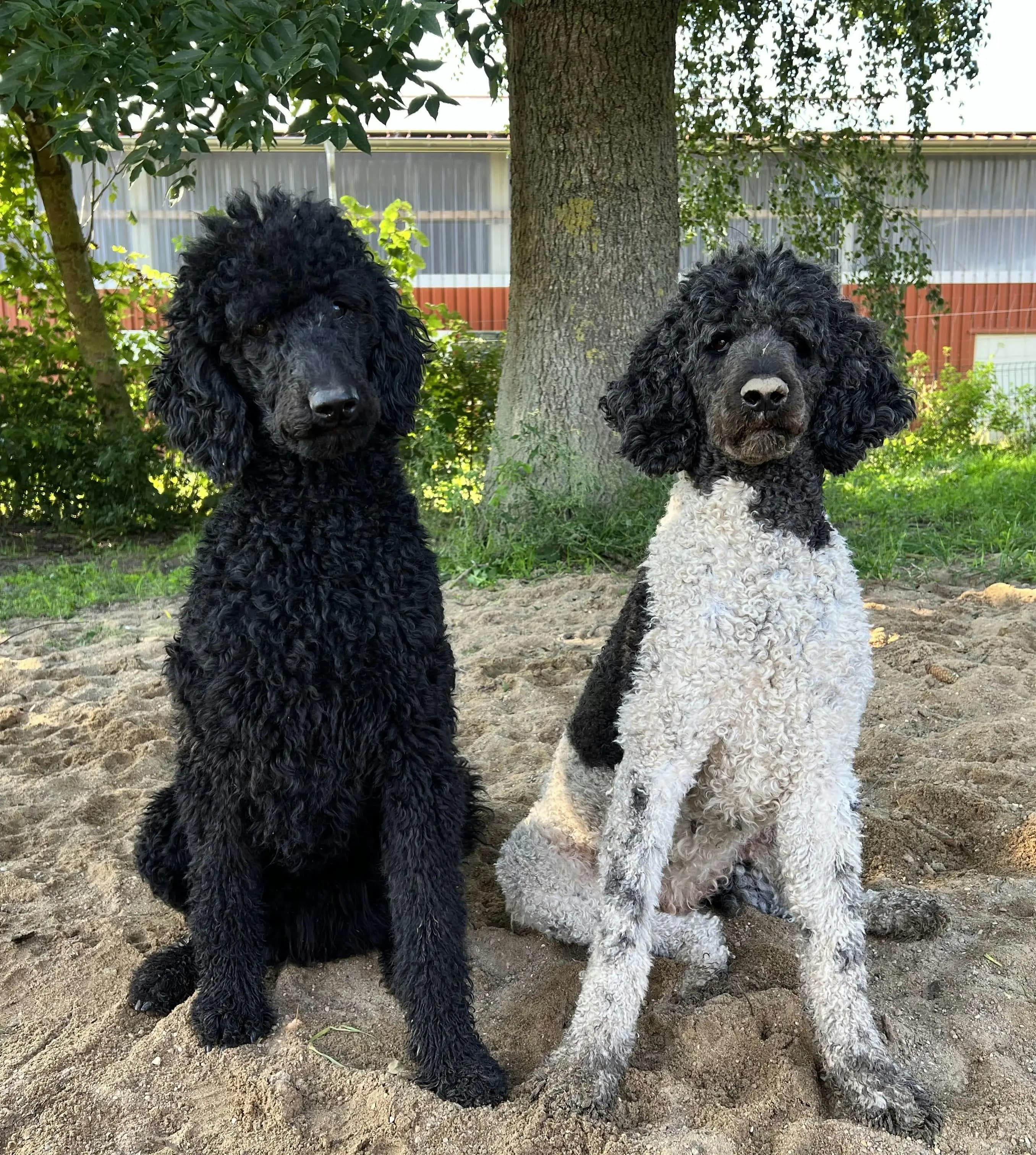
Poodle or Goldendoodle? Compare character, grooming, and costs to discover which of these popular breeds is the perfect fit for your lifestyle.
Should you choose a Maltipoo or a Goldendoodle? Compare their personalities, grooming needs, and costs to find the perfect companion for your home.
Showcase your kennel on HonestDog and reach families searching for a responsibly bred Goldendoodle.