Bavarian Mountain HoundSame FCI section
The Hanoverian Scenthound is a stoic, incredibly resilient tracking dog—bred as a highly specialized blood-tracking hound to track wounded game on a long leash through difficult terrain. This deep level of focus makes him a loyal companion who absolutely requires a genuine job to do.
How the health grade is calculated
Sources for required breeding screenings. Verein Hirschmann e.V. · Verein Hirschmann e.V.
Self-check
Answer 6 quick questions about your everyday life and see how well the Hanoverian Scenthound fits you — including an honest cost estimate per month, per year, and across the dog's lifetime.
At a glance
The essentials — key facts, traits, and health priorities — before you dive deeper.
Lifespan
10–14 yrs
Shoulder height
50–55 cm
Weight
25–40 kg
Practical
Temperament
Daily life
What matters most
Especially with a Hanoverian Scenthound, choosing the right breeder is the single most important decision you'll make. Serious breeders consistently test the parents for inherited conditions, prioritize healthy early socialization, and stay accountable long after handover. A cheap puppy without health screening tends to become the most expensive dog later on.
See HonestDog breeder standards →Colors & coat
The coat colors that occur in the Hanoverian Scenthound — including which ones fall outside the breed standard and which carry genetic risk.
Eye colors
 Brown
Coat type
 Short
 Smooth
The real vibes check
A Hanoverian Scenthound on a trail is like a surgeon at the operating table—the rest of the world ceases to exist for him. You aren't getting a classic companion dog that just tags along, but a highly professional colleague for the forest. If you challenge and guide this absolute devotion to his nose, he will never leave your side in everyday life.
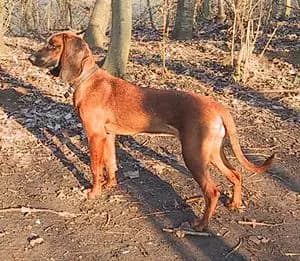
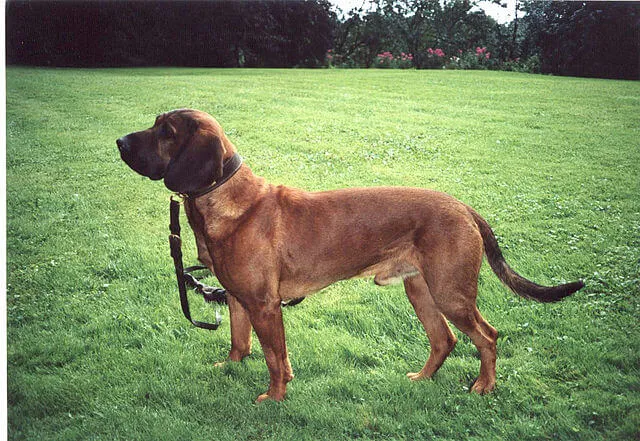
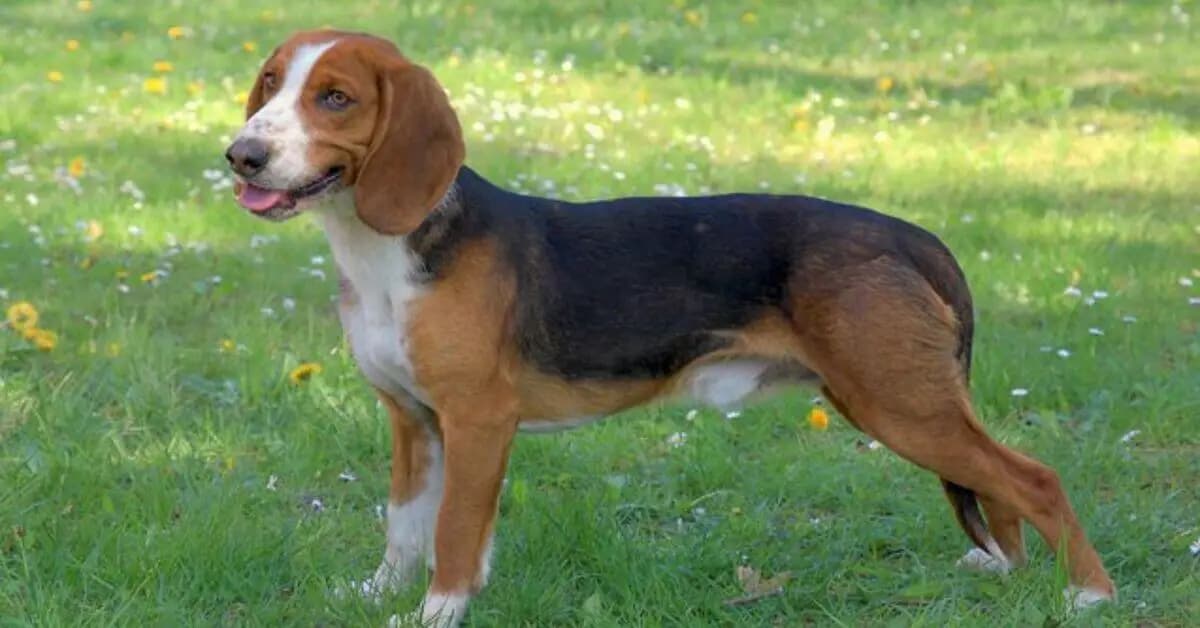
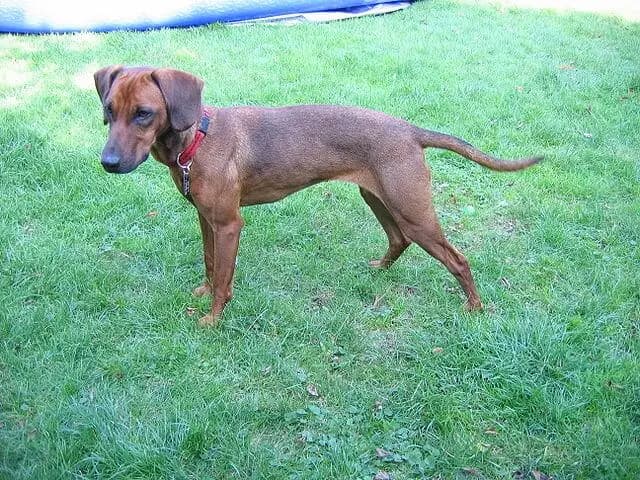
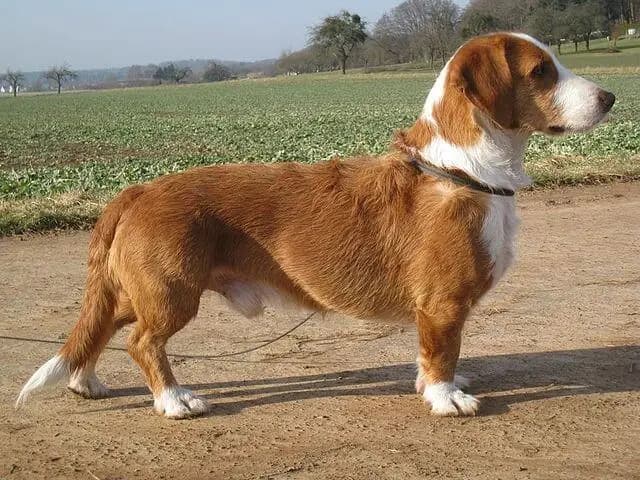
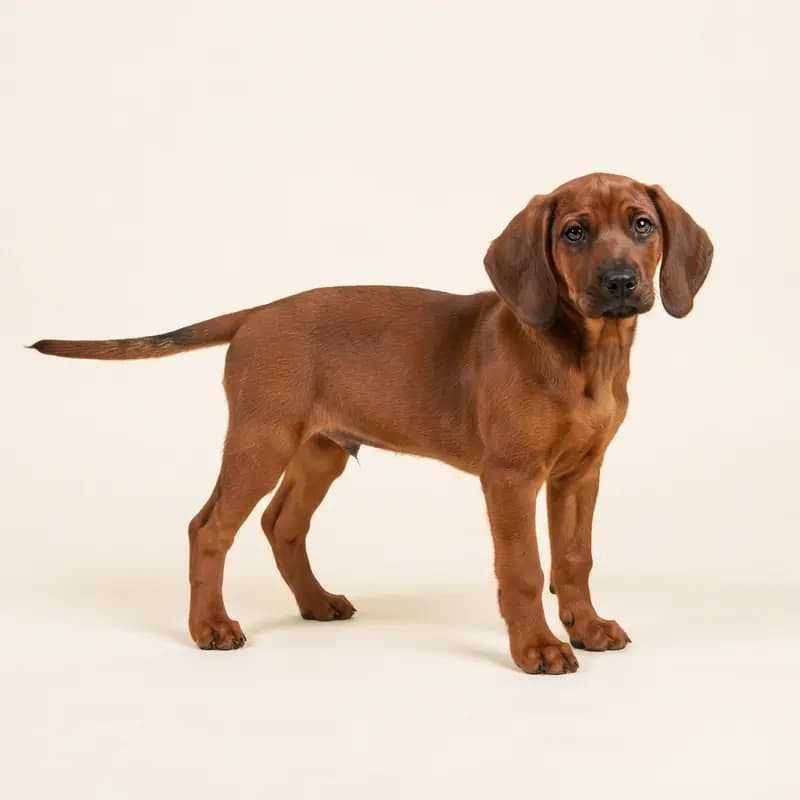
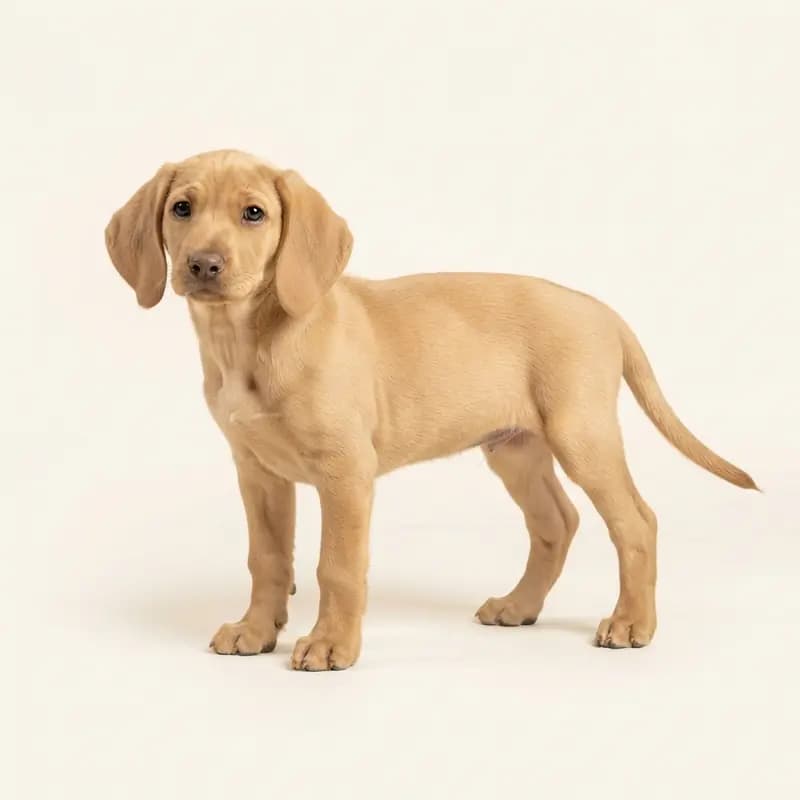
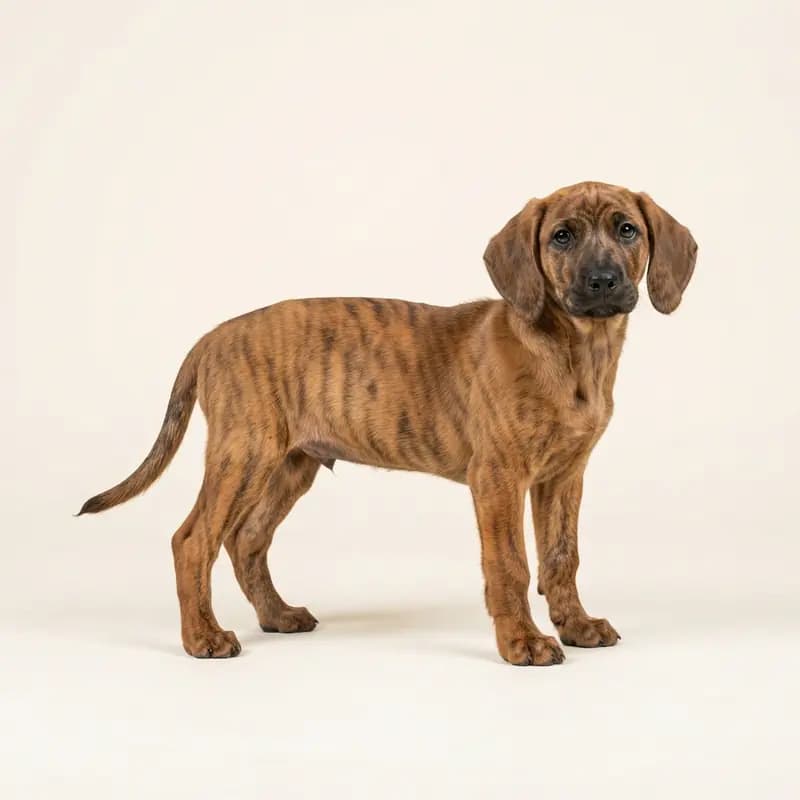
The Hanoverian Scenthound is an impressive sight. He is strong and well proportioned with strong bone structure and powerful musculature. His head is broad and the expression in his dark brown eyes shows intelligence and seriousness. His ears are set high and of medium length, drooping, giving him a noble and serious look. The Hanoverian Scenthound has a short, dense and smooth coat that protects it from bad weather. This dog belongs to FCI Group 6: Hounds, Scenthounds and related breeds. The Hanoverian Scenthound does not differentiate between performance and show lines. Its appearance clearly shows its abilities and purpose as a working dog, especially as a tracker.
The Hanoverian Scenthound is known for its loyalty, intelligence and calm character. He is a highly specialized working dog who takes his job very seriously and is extremely reliable. In his element he shows incredible concentration and endurance. He is a fairly calm dog who has a strong bond with his Establishes a reference person. He is therefore very people-oriented and needs close contact with his family. Despite his calm and serious nature, the Hanoverian Scenthound can also be playful, especially when around people he knows and trusts. Since this breed was traditionally used to search for wounded game, the Hanoverian Scenthound can have a strong hunting instinct. However, his drive is mainly directed towards finding clues and not towards killing wild animals. It is important that potential owners are aware of this trait and take appropriate measures to ensure that the dog can express its urges in an appropriate manner. In terms of its independence, the Hanoverian Scenthound is an interesting mix. On the one hand, he is a very independent worker, able to make decisions and solve problems on his own when he is on the trail. On the other hand, he is closely connected to his caregiver and looks for guidance and confirmation. Another aspect to note about this breed is its alertness. The Hanoverian Scenthound is a keen observer and will notice any new visitor or change in his surroundings. However, he is not a classic guard dog and will generally not be aggressive towards strangers. Instead, he will probably stand back and monitor the situation. When it comes to staying alone, Hanoverian Scenthounds can learn to be alone for short periods of time, provided they receive enough physical and mental exercise. However, you should note that these dogs form close bonds with their people and prefer to be around them. Therefore, you should make sure that your future four-legged friend is not left alone for too long. All in all, the Hanoverian Scenthound is a fascinating, loyal and intelligent dog that builds a close bond with its people and, with the right leadership and appropriate activity, is a balanced and contented member of the family.
| Watchfulness A natural watchdog with real protective instinct. | High |
| Openness to Strangers Warms up quickly and is generally welcoming. | Friendly |
| Hunting or Herding Drive This drive runs deep — no amount of training eliminates it. | Very strong |
Fun Fact!
Did you know that the Hanoverian Scenthound is one of the oldest hunting dog breeds in Germany? They have an impressive history and were used to track game as early as the Middle Ages!
The Hanoverian Scenthound has a calm and secure temperament, but at the same time it is sensitive towards its handler and picky and demanding towards strangers. He has a high level of concentration when tracking and a strong loyalty to the hunter in charge.
As a working dog used to track game, the Hanoverian Scenthound is best kept in rural areas or in households with large gardens. He is less suited to city life as he needs sufficient exercise and mental stimulation to be happy and balanced. Although the Hanoverian Scenthound forms a strong bond with his family, he is not necessarily the best choice for families with small children. He is not a classic family dog and can feel uncomfortable in loud and chaotic environments. They are generally good with other pets, provided they have been properly socialized.
Loves family life and thrives in a group.
Takes boisterous and affectionate children in its stride.
Usually gets on fine with other dogs.
City-appropriate with enough exercise and stimulation.
Owning a dog is a privilege, but it's also a real responsibility. Before you bring one into your life, be honest with yourself about the commitment it takes.
The Hanoverian Scenthound is an intelligent, serious and determined animal that loves challenges when training. His traditional role as a sniffer dog should be taken into account in his training, such as using search games and tracking to satisfy his natural instincts. Since this breed has a strong work ethic, it is important to find a good balance and not risk overworking the dog. A certain level of frustration tolerance and impulse control should be developed during training to help the dog keep a cool head even in stressful or exciting situations. Hanoverian Scenthounds can have a tendency to become “ball junkies,” but this can be offset by a variety of activities and workouts that satisfy their work urges in other ways. It's important to challenge the dog mentally and use his problem-solving skills to keep him busy and happy.
The Hanoverian Scenthound is an active dog that requires a balanced diet to meet its energy needs. High-quality food that is tailored to the dog's age, weight and activity level is important for its health and performance. Whether you choose dry food, wet food, or a raw diet, make sure your dog is getting all the necessary nutrients. Grooming the coat of the Hanoverian Scenthound is relatively uncomplicated. Its short, thick fur can kept healthy and clean through occasional brushing. This breed has an undercoat and can tolerate the climate in Germany well. They shed moderately and more during the spring and fall seasons.
| Care Level Minimal effort — occasional brushing and bathing. | Low-maintenance |
| Exercise Needs Needs several hours of serious exercise every day. | Very active |
| Shedding Regular shedding — dog hair on clothes is now normal. | Moderate |
| Trainability Willing to learn with clear rules and regular training. | Balanced |
Our experts are still reviewing this information. Spotted something wrong? Email us at info@honestdog.de.
Solid
Health grade
In the Hanoverian Scenthound, the typical health risks lie primarily in the musculoskeletal system with hip dysplasia (HD), elbow dysplasia (ED), and lumbosacral transitional vertebrae (LTV), while ectropion / entropion may also occur occasionally. The Verein Hirschmann e.V. mandates strict X-ray examinations for breeding approval in order to include only resilient dogs in breeding. Make sure to demand the official test results of the parent animals showing HD A, ED 0–1, and LÜW 0. A responsible breeder also pays attention to healthy eyelids and proves that both parents are free from ectropion / entropion.
Grade is relative to other breeds — AI-assisted and editorially reviewed.
Methodology and data: HonestDog Dog Breed Health Report 2026
What matters most for this breed
Tap any item to see details.
You should ensure a healthy weight and joint-friendly upbringing to relieve the strain on your dog's heavily used back and joints in daily life.
Responsible breeders take X-rays for hip dysplasia (HD), elbow dysplasia (ED), and lumbosacral transitional vertebrae (LTV), and ensure freedom from ectropion / entropion.
Note: This health overview is AI-assisted and editorially reviewed. It is for orientation only and does not replace veterinary advice.
What matters most for this breed — what's common, how much it affects the dog's life, and how to protect yourself as a buyer.
Tap a body region to see the inherited conditions linked to it.
The three most important risks
Pick a region on the map to explore other areas.
Tier 1 reflects the tests Verein Hirschmann e.V. actually mandates. Tiers 2 and 3 show how responsible breeders go beyond.
Club standard. Verein Hirschmann e.V. requires these tests for breeding approval. Ask any reputable breeder for the results.
No entries in this tier.
Note: This health overview is AI-assisted and editorially reviewed. It is for orientation only and does not replace veterinary advice.
A Hanoverian Scenthound costs around ~€190 per month (€100 – €370, depending on your setup). The first year adds up to roughly ~€5,530 including purchase, equipment and puppy school; across the dog's life (12 years) it comes to about ~€30,830.
With surgery cover, running costs come to about ~€190 per month — in return, your share of a major operation drops from several thousand euros to around 20 percent.
Per month
~€190
In the first year
~€5,530
Across the dog's life
~€30,830
Estimated purchase price from a breeder: €1,800 – €3,000
Estimate at a mid-range setup (suburban, dry food, 1–2 hours of daily exercise), average German prices, as of July 2026.
HonestDog Concierge
We currently have no breeders for this breed who have passed our verification. Create your short buyer profile: we'll set up your search alert, review a possible source and email you within 28 days.

 Illustrative image
 Illustrative image
 Illustrative image
The history of the Hanoverian Scenthound goes back a long way. It is descended from medieval hunting dogs that were bred specifically to search for wounded game. The dogs of this breed have their origins in the region around Hanover, Germany, where they have been known since the 17th century. The Hanoverian Scenthound is known for its skills as a sniffer dog and was primarily used to search for injured game. His impressive endurance and unwavering will make him an invaluable aid to hunters. The breed was systematically developed and spread by the Hirschmann Association in the 19th century. In 1894 the "Verein Hirschmann e.V." was founded, which is dedicated to the breeding and promotion of this breed. The Hanoverian Scenthound was officially recognized as an independent breed in 1935.
The Hanoverian Scenthound was developed for searching for injured game and is characterized by an excellent sense of smell.
Germany
Mittelalter
Owners and handlers describe the Hanoverian Scenthound as an exceptionally calm and easygoing housemate in everyday family life. Indoors it stands out for an almost stoic love of comfort and likes close physical contact with its main people. With its own family, children included, it is usually very gentle, patient, and friendly.
Owners agree, however, that the breed is by no means suited to life as a pure companion or couch dog. Many stress that this balanced behavior at home only exists when the dog has a challenging job, ideally real hunting work tracking wounded game. Without that deep mental work, scenthounds tend toward frustration and problem behavior. With strangers they are usually reserved to indifferent; they do alert to changes around them, but beyond the watchfulness typical of the breed they show no unprovoked sharpness.
Sources:zooplus.chedogs.dedeine-tierwelt.dedeutscher-schweisshundeverband.de
When it comes to handling and training, owners keep highlighting how strongly the Hanoverian focuses on its handler and how sensitive it is. It usually bonds closely with one main person and responds keenly to that person's moods. According to owner accounts, pressure, harshness, or loud commands quickly cause these dogs to "shut down" and stubbornly refuse. Calm, confident, and reliable leadership is therefore described as essential.
At the same time, the breed needs a high degree of consistency. On walks, its very fine nose keeps the hunting drive ever-present: once the dog has picked up a trail, it takes solid basic obedience to hold its attention. Breeders and experienced handlers regularly point out that these dogs were selected for independent thinking and problem-solving while tracking. A Hanoverian Scenthound questions unclear instructions and needs owners who respect its independence instead of insisting on blind obedience.
Sources:zooplus.chdeutscher-schweisshundeverband.depetbook.dehunde-fan.de
Owners see the Hanoverian Scenthound as a sturdy, weatherproof working dog without any excessive health weaknesses. The dense, coarse coat is easy to care for and only needs occasional brushing. The breed club (Verein Hirschmann) breeds strictly for performance, with a strong focus on sound bones and working ability. Even so, experienced owners urge caution with heavier dogs of the breed when it comes to the joints (especially hip dysplasia) and bloat after feeding.
A recurring point in owner accounts is ear care: the long, hanging ears need regular checking and cleaning, because tracking low to the ground through underbrush easily traps dirt, moisture, or parasites that can lead to infections. Many tracking handlers also point out that the real health risk often lies in the dangerous work on game that fights back (such as wild boar), which is why fitness and good physical conditioning are essential for this breed.
Sources:zooplus.chdeine-tierwelt.devierbeinerwelten.depetbook.deweidwerk.at
Paraphrased from real owner reports · translated from German
The Hanoverian Scenthound is an active dog that needs plenty of exercise and mental stimulation. Research the temperament, grooming needs, and space requirements before deciding.
The average life expectancy of a Hanoverian Scenthound is 10-14 years. With proper care and regular vet visits, your dog can live a long, healthy life.
Hanoverian Scenthound grooming requirements include regular brushing, nail trimming, and dental care. HonestDog provides detailed grooming tips for every breed.
The Hanoverian Scenthound can be a great family dog. Proper training and socialization are key. HonestDog provides family suitability information for every breed.
The Hanoverian Scenthound comes in these colors: Red, Fawn, Brindle.
Showcase your kennel on HonestDog and reach families searching for a responsibly bred Hanoverian Scenthound.