Loading breed
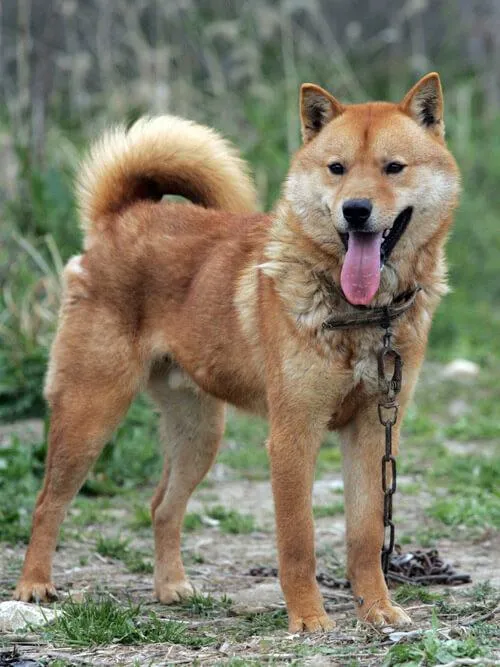
Korean Jindo
Health grade D- Height45–55 cm
- Weight16–23 kg
- Life expectancy12–15 yrs
- Puppy price2,000–3,500 €
- Energy4/5
The Essentials at a Glance
The Jindo is an incorruptibly loyal, lightning-fast, and self-reliant primitive dog breed—bred for centuries on a Korean island for independent hunting and guarding, which makes them highly intelligent survivors who often bond with only one person.
- Health grade D: With a grade of D, the Jindo shows clear breed-specific problems, with hip dysplasia (HD), epilepsy, and hypothyroidism being among the serious health risks.
- You are looking for a 'one-person dog' that bonds closely with you instead of greeting every stranger in the park with excitement.
- You have a secure, escape-proof fenced property, as these dogs are true climbing artists the moment they catch a scent.
- You expect them to remain reliably recallable in the woods when they spot game—as an independent hunter, they will choose the prey in case of doubt.
Is the Korean Jindo right for you?
At a glance
Korean Jindo overview
The essentials — key facts, traits, and health priorities — before you dive deeper.
Health grade
Relative to other breeds
S
A
B
C
D
E
Very healthyHigher risk
Elevated risk — responsible breeding really matters.
See full health info & tests →
Note: This health overview is AI-assisted and editorially reviewed. It is for orientation only and does not replace veterinary advice.
Lifespan
12–15 yrs
Height
45–55 cm
Weight
16–23 kg
Practical
- Puppy price: 2,000 – 3,500 €
- Coat: Short to medium length, dense, with an undercoat
- Origin: South Korea
Temperament
Energy
Trainability
Family fit
With kids
Daily life
Care effort
Shedding
Barking
City-friendly
Guard instinct
What matters most
Especially with a Korean Jindo, choosing the right breeder is the single most important decision you'll make. Serious breeders consistently test the parents for inherited conditions, prioritize healthy early socialization, and stay accountable long after handover. A cheap puppy without health screening tends to become the most expensive dog later on.
See HonestDog breeder standards →Colors & coat
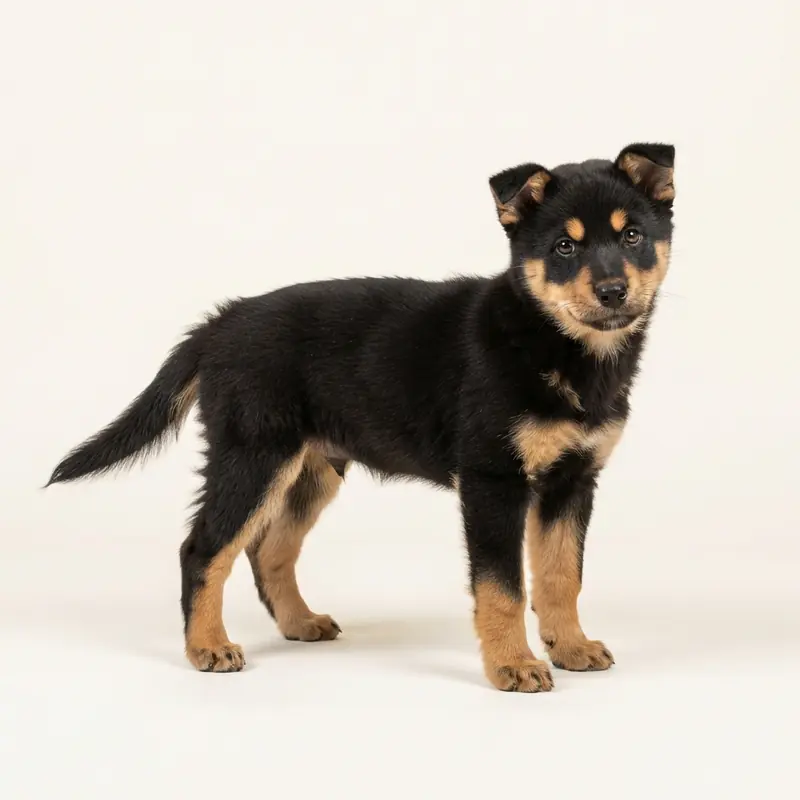
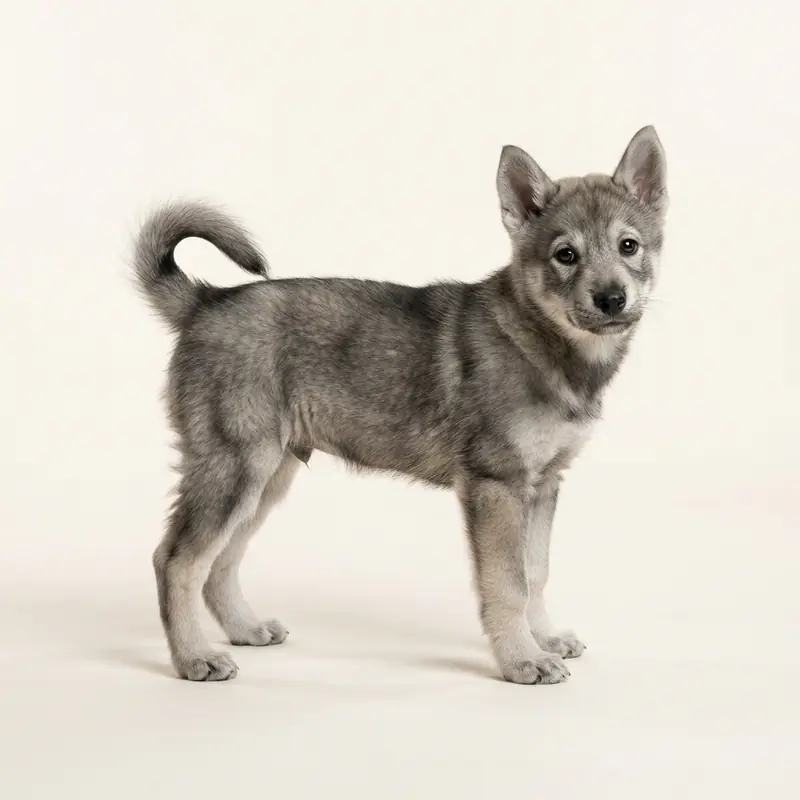
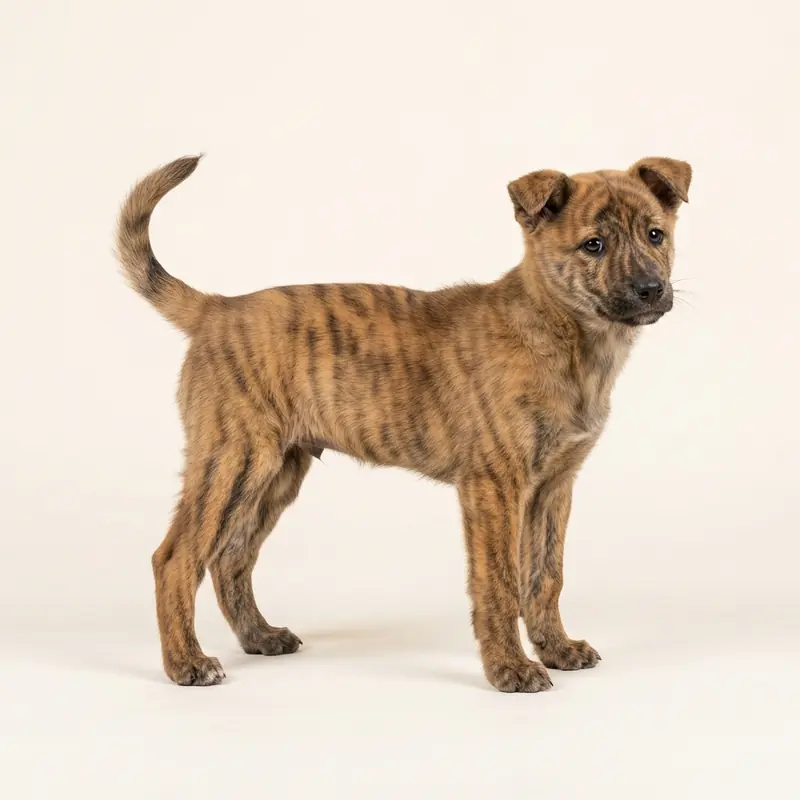
What colors does the Korean Jindo come in?
The coat colors you will see in Korean Jindo litters — including which ones fall outside the breed standard and which carry genetic risk.
Eye colors
 Brown
Brown
Coat type
 Medium
 Double coat
Is the Korean Jindo right for you?
Perfect for you if:
- You are looking for a 'one-person dog' that bonds closely with you instead of greeting every stranger in the park with excitement.
- You have a secure, escape-proof fenced property, as these dogs are true climbing artists the moment they catch a scent.
- You enjoy cooperating with your dog on an equal footing (e.g., in tracking work) rather than demanding blind obedience.
- You radiate calm, confident leadership that an independent thinker will choose to follow voluntarily and without pressure.
Less ideal if:
- You expect them to remain reliably recallable in the woods when they spot game—as an independent hunter, they will choose the prey in case of doubt.
- You live in a busy household with constantly changing visitors, whom a vigilant primitive dog will inevitably try to control.
- You require a classic 'will-to-please' for dog sports like agility or obedience.
- You have other small pets like cats, which are deeply anchored in their genetics as prey.
The real vibes check
A Jindo is like a proud cat in a dog's body: extremely clean, quiet, and absolutely incorruptible. They don't follow commands because you say so, but only if they respect you and find the task meaningful. If you earn this respect, you get an unwavering companion who would walk through fire for you—if not, you are just coincidentally living under the same roof.
Self-check
Would the Korean Jindo really fit your life?
Answer 6 quick questions about your everyday life and see how well the Korean Jindo fits you — including an honest cost estimate per month, per year, and across the dog's lifetime.
Fit checkCost estimateRisk dice
Takes about 1 minute · free & anonymous
Breed Profile
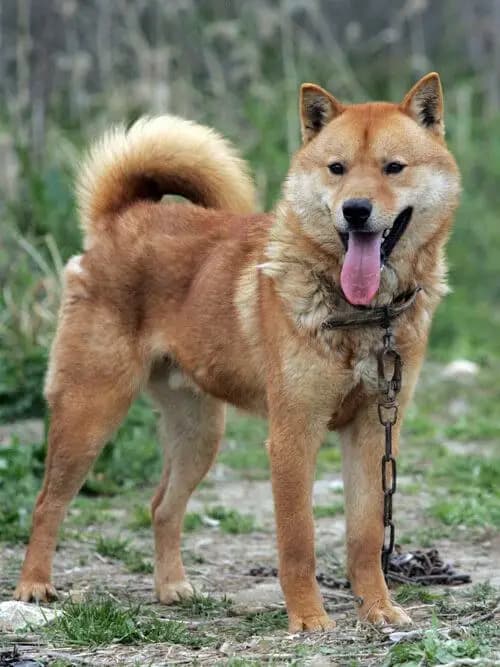
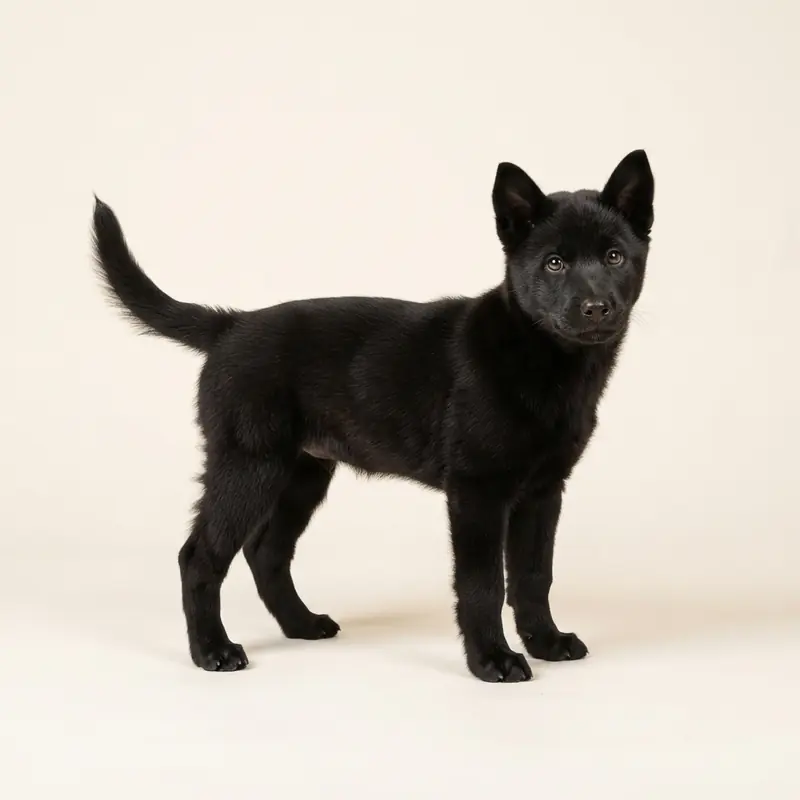
The Jindo is a medium-sized dog known for its elegant appearance. He is well proportioned and has a strong and muscular build. Its head is wedge-shaped with well-set ears that stand erect, and its eyes are almond-shaped and exude an alert and intelligent aura. Its fur is short to medium long, very dense and has a generous undercoat. This dog belongs to FCI Group 5, Spitz and Primordial Type dogs, and falls under Section 5, Asian Spitz and related breeds. There is no significant distinction between show and performance lines in this breed.
All measurements in detail
- Height
- 45 - 50 cm (Female), 50 - 55 cm (Male)
- Weight
- 16 - 19 kg (Female), 18 - 23 kg (Male)
- Life Expectancy
- 12 - 15 yrs
- Character
- Independent, loyal, intelligent
- Coat
- Short to medium length, dense, with an undercoat
- Coat Color
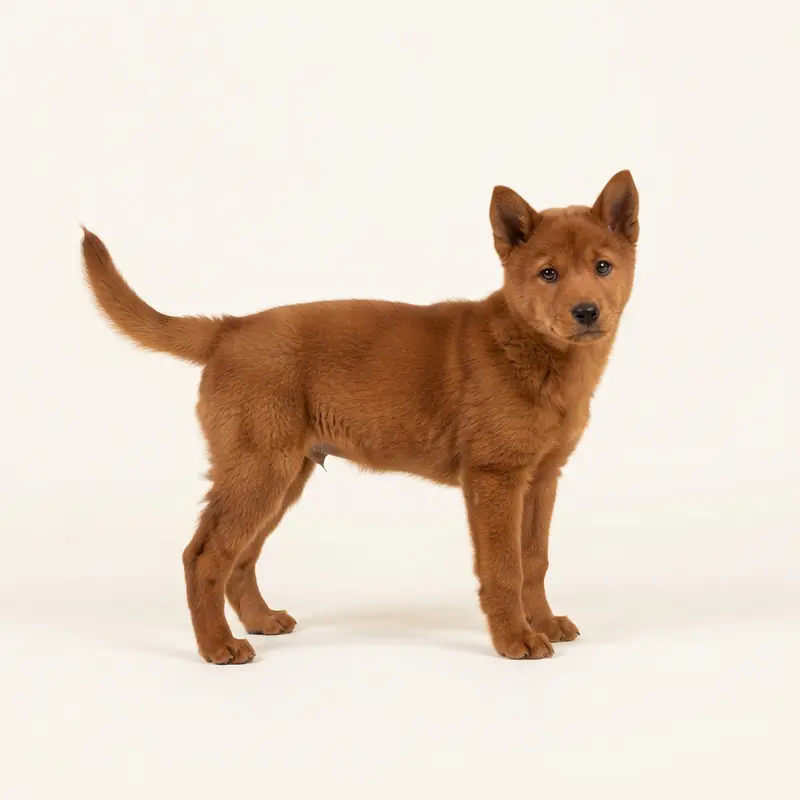
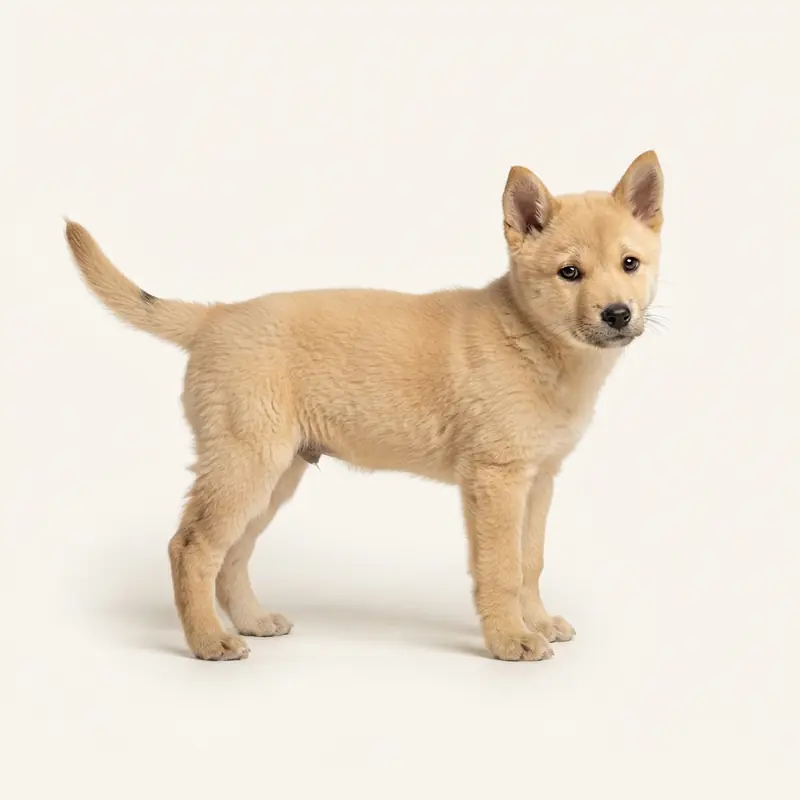
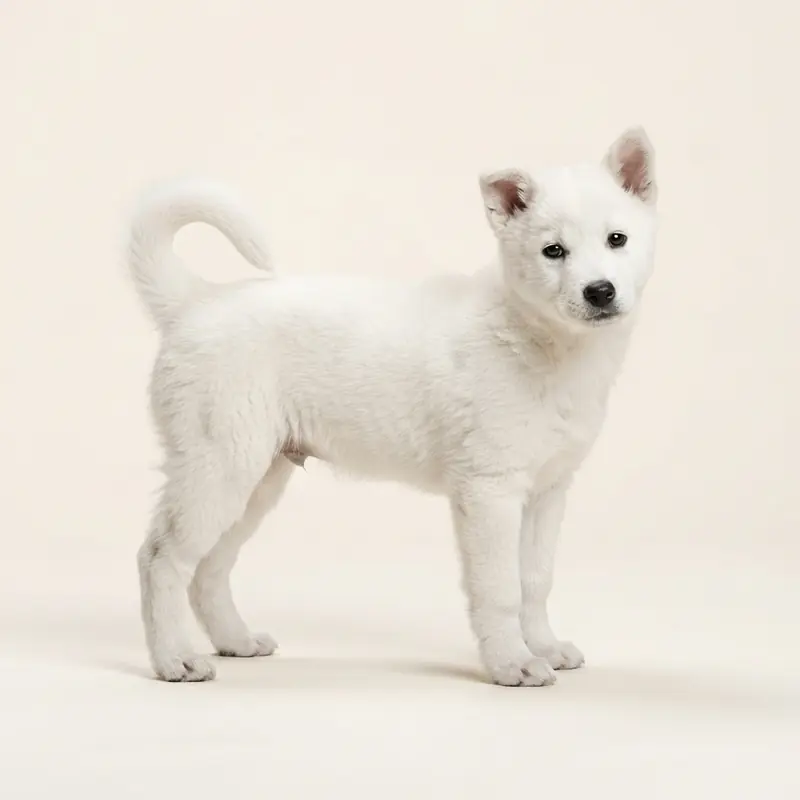
- White, Yellow, Red, Brindle, Black and Tan, Gray
- Price
- 2000 - 3500 €
Character & Temperament
The Jindo is known for its independent yet incredibly loyal character. He is an extremely intelligent dog that learns quickly and forms a strong bond with his owner. This breed is not necessarily suitable for first-time owners as it requires consistent and understanding leadership. Despite their independent nature, Jindos love being part of the family. However, they are also known to have a certain degree of independence and can sometimes pose challenges to their owners. Jindos are naturally alert and can therefore make excellent watchdogs. They are generally reserved with strangers and are often needy Time to build trust with new people. It is important to note that this breed develops a strong relationship with a person or family and can be very territorial. The Jindo breed has high energy levels and requires a lot of exercise and mental stimulation. They are excellent hunters and exhibit strong prey and hunting behavior. Therefore, they should be kept in a securely fenced area and given regular training sessions and games to exercise them physically and mentally. Although Jindos are perfectly capable of staying alone for short periods of time, they prefer to be close to their family. Their loyalty and attachment to their owners can cause them to suffer from separation anxiety when left alone for long periods of time. It's important to teach them early on that it's okay to be alone sometimes. It is also important to note that Jindos have a certain independence and self-reliance, which can sometimes be interpreted as stubbornness. They have minds of their own and require an owner who is patient and consistent in training to bring out the best companion in them. Finally, it is worth noting that the Jindo has a strong hunting instinct. This means that they tend to prey on smaller animals and may not get along well with other pets, especially cats or small rodents. It is therefore advisable to socialize them well from an early age and teach them how to behave towards other animals. The Jindo is a loyal, intelligent and alert dog that forms a strong bond with its family. He is active and needs a lot of exercise, both physical and mental. His independence and self-reliance can be a challenge, but with the right training and guidance he is a loyal and reliable companion.
| Watchfulness A natural watchdog with real protective instinct. | High |
| Openness to Strangers Neither pushily friendly nor suspicious. | Neutral |
| Hunting or Herding Drive Mild interest in movement and small animals — easily managed. | Low |
Fun Fact!
Did you know that the Jindo is considered a national cultural asset in South Korea and is strictly protected there?
What Awaits You
The Jindo is a loyal, alert and intelligent dog that developed as a breed on an island off the coast of South Korea. Medium in size and natural in appearance, they are valued as independent hunters, demanding guardians and loyal companions.
Housing & Care
Jindos are adaptable dogs that can thrive in both urban and rural environments. However, they require adequate exercise and mental stimulation and therefore should not be kept in a small apartment without access to a garden or regular walks. They are known for their loyalty and attachment to their family, which means they can get along well with children as long as they know and respect how to interact with dogs. However, Jindos are territorial and may exercise caution around smaller children who they may view as a threat to their territory. Therefore, it is important to ensure early socialization and proper introductions. Jindos have a strong hunting instinct, meaning they don't always get along well with other pets, especially cats or small rodents. Early and positive interactions with other animals can help, but a Jindo may be best cared for in a household where he is the only pet.
- Family Friendly
Loves family life and thrives in a group.
Family-oriented - Child Friendly
Gets on well with children — with adult supervision.
With supervision - Dog Friendly
Usually gets on fine with other dogs.
Generally tolerant - City Friendly
City-appropriate with enough exercise and stimulation.
Manageable in cities
Owning a dog is a privilege, but it's also a real responsibility. Before you bring one into your life, be honest with yourself about the commitment it takes.
Training & Education
Jindos are intelligent and independent dogs that require consistent and patient training. Their independent spirit can be challenging at times as they tend to have a mind of their own and are not always willing to follow orders. Positive reinforcement and patience are key here. They are active dogs and benefit from activities that keep both their bodies and minds occupied. Agility, tracking or protection work could be good ways to use their natural abilities and give them a meaningful job. It's important to note that Jindos don't tend to become ball junkies, but they still need adequate exercise and mental stimulation. One area that you should place particular emphasis on is training impulse control and frustration tolerance. Because of their independence and strong will, Jindos can sometimes become frustrated when they don't get what they want. It is important to teach them how to deal with frustration and control their impulses.
Nutrition & Care
The Jindo's diet should be balanced and varied. As medium-sized dogs with high activity levels, they need a diet rich in proteins and healthy fats to maintain their energy. It is always best to choose high-quality dog food that is specifically formulated for their size, age, and activity level. When it comes to grooming, the Jindo is relatively easy to care for. They have a double layer of fur with a thick undercoat that protects them from the elements. They shed moderately throughout the year and have a more pronounced shedding phase twice a year. Regular brushing can help keep the coat clean and healthy and reduce the amount of hair in the house. The Jindo should cope well with the climate in Germany. Their dense undercoat provides protection from the cold in winter, and they can withstand heat Tolerate quite well in summer as long as they have access to shade and fresh water.
| Care Level Regular brushing and occasional professional grooming. | Moderate |
| Exercise Needs Needs several hours of serious exercise every day. | Very active |
| Shedding Hair everywhere, always — no white clothing survives. | Very heavy |
| Trainability Bred to make decisions without human direction. | Very independent |
Our experts are still reviewing this information. Spotted something wrong? Email us at info@honestdog.de.
Health & hereditary diseases
Health
D
Elevated risks
Health grade
With a grade of D, the Jindo shows clear breed-specific problems, with hip dysplasia (HD), epilepsy, and hypothyroidism being among the serious health risks. A responsible breeder therefore has their breeding animals comprehensively tested to minimize these risks, and performs mandatory screenings for patellar luxation (PL) as well as eye diseases such as cataracts and progressive retinal atrophy, generic. When buying a puppy, make sure to ask to see the official test results of the parent dogs: for hip dysplasia (HD), the result should be B or better, for patellar luxation (PL) and hypothyroidism, it should be normal, and for eye diseases such as cataracts or progressive retinal atrophy, generic, a status of free is required.
Grade is relative to other breeds — AI-assisted and editorially reviewed.
In daily life this can mean
With joint-friendly rearing, a healthy weight, and regular veterinary checks of the eyes and thyroid, most dogs remain fit well into old age.
The breeder's role
Reputable breeders have the hips, elbows, knees, eyes, and thyroid of the parent animals tested to minimize genetic risks in the line from the start.
Note: This health overview is AI-assisted and editorially reviewed. It is for orientation only and does not replace veterinary advice.
No Health Tests Available
No specific health tests are currently available for this breed.
Costs & where to find one
How much does a Korean Jindo cost?
A Korean Jindo costs around ~€180 per month (€90 – €340, depending on your setup). The first year adds up to roughly ~€5,730 including purchase, equipment and puppy school; across the dog's life (13.5 years) it comes to about ~€32,670.
With surgery cover, running costs come to about ~€180 per month — in return, your share of a major operation drops from several thousand euros to around 20 percent.
Per month
~€180
In the first year
~€5,730
Across the dog's life
~€32,670
Purchase from a breeder: €2,000 – €3,500
Estimate at a mid-range setup (suburban, dry food, 1–2 hours of daily exercise), average German prices, as of July 2026.
Calculate your personal costs1-minute self-check with your own answers
Looking for a Korean Jindo?
HonestDog Concierge
No verified Korean Jindo breeders on HonestDog yet
We currently have no breeders for this breed who have passed our verification. Create your short buyer profile: we'll set up your search alert, review a possible source and email you within 28 days.
Appearance, variants & origin
 Illustrative image
 Illustrative image
 Illustrative image
 Illustrative image
History
The full history
The Korea Jindo Dog, commonly referred to as the Jindo, originates from the island of the same name off the southwest coast of South Korea. The exact origins of the breed likely date back to ancient times. Due to the geographical isolation of Jindo Island, the bloodline remained largely untouched by outside influences for many centuries, preserving the original Asian Spitz type to this day. Traditionally, the Jindo was used by the local population primarily as a resilient and courageous hunting dog for game such as deer and wild boar, as well as a vigilant guardian of home and property. Its profound loyalty and strong prey drive made it an indispensable companion. In its homeland, the Jindo enjoys a special status: as early as 1962, the breed was declared a National Natural Monument by the South Korean government, which strictly regulated the export of the dogs and ensured their protection. On an international level, the Jindo also gained recognition over time. The Fédération Cynologique Internationale (FCI) officially and definitively recognized the Korea Jindo Dog as an independent breed with standard number 334 on July 6, 2005.
Original Use
The Jindo was used for hunting game and as a guard dog.
Origin
South Korea
Date
Antike
Owner experiences
What owners say about the Korean Jindo
Christian B., Halter aus dem Ruhrgebiet (Rüde, seit 2021)
Mein Jindo ist ein absoluter Traum, was seine Loyalität mir gegenüber angeht, aber man darf seinen extremen Jagdtrieb und seine Unabhängigkeit niemals unterschätzen. Er ist ein regelrechter Ausbrecherkönig. Einen herkömmlichen, etwa 1,80 Meter hohen Zaun überwindet er ohne Probleme aus dem Stand, wenn er auf der anderen Seite ein Eichhörnchen sieht. Zu Hause hat er sogar schon Holzbretter aus unserem Gartenzaun gerissen, nur um an Beute zu kommen – ich kann gar nicht mehr zählen, wie oft ich den Zaun schon reparieren musste.
Auch das Thema Hundebox war bei uns ein absolutes Desaster. Der Versuch, ihn an eine Box zu gewöhnen, scheiterte kläglich: Er hat eine eigentlich stabile Metallbox in weniger als einer Stunde komplett zerlegt. Jindos sind extrem schlau und lernen in Sekundenschnelle, wie man Verschlüsse öffnet. Man braucht für diese Rasse wirklich unendlich viel Geduld, starke Nerven und ein absolut ausbruchsicheres Grundstück.
Sabine K., Halterin aus Berlin (Hündin, seit 2023)
Was mich an meiner Jindo-Hündin täglich fasziniert, ist ihre extreme Reinlichkeit. Sie würde niemals freiwillig ins Haus oder auch nur in den eigenen Garten machen. Sie putzt sich fast wie eine Katze und hat absolut keinen typischen Hundegeruch. Aber diese extreme Selbstständigkeit und Intelligenz haben eine Kehrseite: Sie ist sehr territorial und Fremden gegenüber extrem misstrauisch. Jemand Fremdes kann ihr nicht einfach so ein Geschirr anlegen oder mit ihr spazieren gehen – das ist völlig unmöglich, weshalb wir im Alltag keine normalen Hundesitter nutzen können.
Beim Gassigehen müssen wir zudem hochkonzentriert sein. Ein normales Halsband funktioniert bei ihrem schlanken Kopf überhaupt nicht, da schlüpft sie sofort rückwärts raus. Wir nutzen ein teures Sicherheitsgeschirr, aber selbst da rutschen manchmal die Gurte, wenn sie mit voller Wucht in die Leine springt, weil sie eine Katze sichtet. Man muss die Leine wirklich fest im Griff haben und geht am besten mitten auf der Straße, um Abstand zu halten. Sie ist eben ein echter Hund vom Urtyp und kein leichtführiger Begleiter.
Thomas M., Halter aus München (Rüde, seit 2022)
Wir haben unseren Jindo-Mischling aus dem Tierschutz adoptiert, und er verhält sich zu 100 % wie ein typischer Jindo. Seine Loyalität mir gegenüber ist unbeschreiblich tief – er weicht mir zu Hause kaum von der Seite. Gleichzeitig hasst er Wasser abgrundtief. Schon bei leichtem Nieselregen blockiert er völlig und will am liebsten gar nicht erst vor die Tür gehen, was unter Jindo-Haltern ein bekanntes Phänomen ist.
Ein Freilauf ist bei uns allerdings absolut undenkbar, das habe ich leider auf die harte Tour lernen müssen. Sein Jagdtrieb schießt in einer Zehntelsekunde von Null auf Hundert. Wenn er ein Kaninchen oder ein Eichhörnchen im Gebüsch entdeckt, gibt es kein Halten mehr. Er geht dann völlig lautlos, aber blitzschnell ins Unterholz und packt zu. Wer sich einen Jindo anschafft, muss sich im Klaren darüber sein, dass der Hund eventuell sein Leben lang an der Leine bleiben muss und man beim Spaziergang ununterbrochen vorausschauend agieren muss.
Paraphrased from real owner reports
Loading owner stories
FAQ & more
Frequently asked questions about the Korean Jindo
Is a Korean Jindo the right dog for me?
The Korean Jindo is an active dog that needs plenty of exercise and mental stimulation. Research the temperament, grooming needs, and space requirements before deciding.
How long does a Korean Jindo live?
The average life expectancy of a Korean Jindo is 12-15 years. With proper care and regular vet visits, your dog can live a long, healthy life.
How much grooming does a Korean Jindo need?
Korean Jindo grooming requirements include regular brushing, nail trimming, and dental care. HonestDog provides detailed grooming tips for every breed.
Is a Korean Jindo good for families with children?
The Korean Jindo can be a great family dog. Proper training and socialization are key. HonestDog provides family suitability information for every breed.
What colors does the Korean Jindo come in?
The Korean Jindo comes in these colors: Red, Fawn, White, Black, Black and tan, Wolf grey, Brindle.
Loading related articles
Are you a Korean Jindo breeder?
Showcase your kennel on HonestDog and reach families searching for a responsibly bred Korean Jindo.