Loading breed
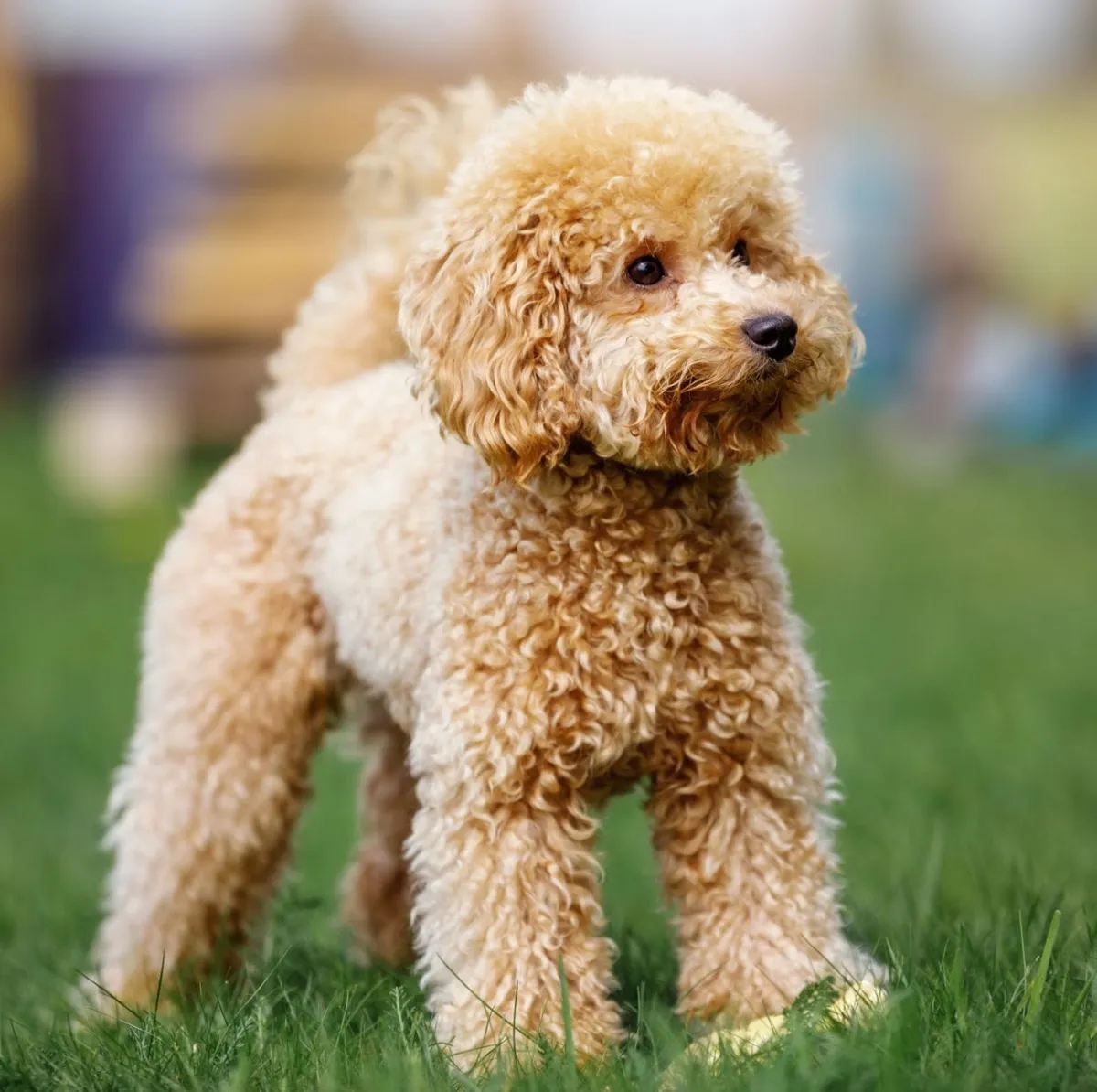
Medium Poodle
Health grade B- Height35–45 cm
- Weight7–12 kg
- Life expectancy12–15 yrs
- Puppy price1,500–2,500 €
- Energy3/5
The Essentials at a Glance
The Kleinpudel is an elegant, lightning-smart companion dog—at heart a former Wasserapportierhund (water retriever), whose bright, alert mind now craves clever everyday tasks rather than duck hunting.
- Health grade B: The Kleinpudel is an agile and long-lived companion, but it does have a certain predisposition for eye conditions such as Progressive Retinal Atrophy (PRA-PRCD) and cataracts, as well as patellar luxation.
- You are looking for a dog that wants to be mentally challenged—trick training, agility, or scent games are right up his alley, because simply tagging along isn't enough for his level of intelligence.
- You want an adaptable companion who feels just as comfortable in a city apartment as in the countryside, provided he gets enough stimulation.
- You are looking for a low-maintenance, 'natural' dog that just dries off on a blanket after a muddy walk—his coat forgives no negligence and mats quickly.
Is the Medium Poodle right for you?
At a glance
Medium Poodle overview
The essentials — key facts, traits, and health priorities — before you dive deeper.
Health grade
Relative to other breeds
S
A
B
C
D
E
Very healthyHigher risk
Solid — a handful of items a good breeder watches.
See full health info & tests →
Note: This health overview is AI-assisted and editorially reviewed. It is for orientation only and does not replace veterinary advice.
Lifespan
12–15 yrs
Height
35–45 cm
Weight
7–12 kg
Practical
- Puppy price: 1,500 – 2,500 €
- Coat: Curly, dense, no undercoat
- Origin: Germany/France
Temperament
Energy
Trainability
Family fit
With kids
Daily life
Care effort
Shedding
Barking
City-friendly
Guard instinct
What matters most
Especially with a Medium Poodle, choosing the right breeder is the single most important decision you'll make. Serious breeders consistently test the parents for inherited conditions, prioritize healthy early socialization, and stay accountable long after handover. A cheap puppy without health screening tends to become the most expensive dog later on.
See HonestDog breeder standards →Colors & coat
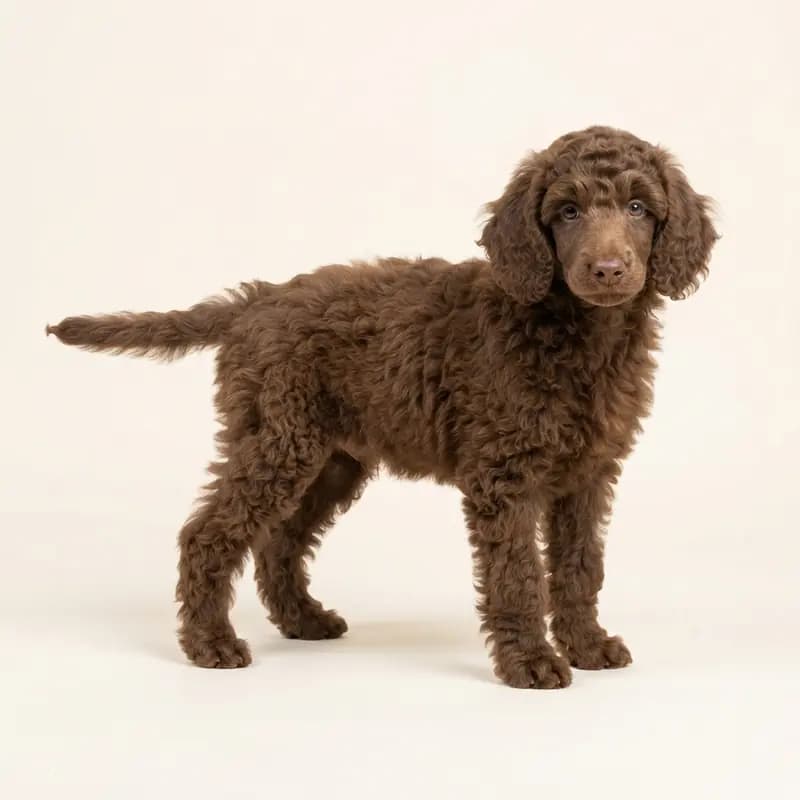
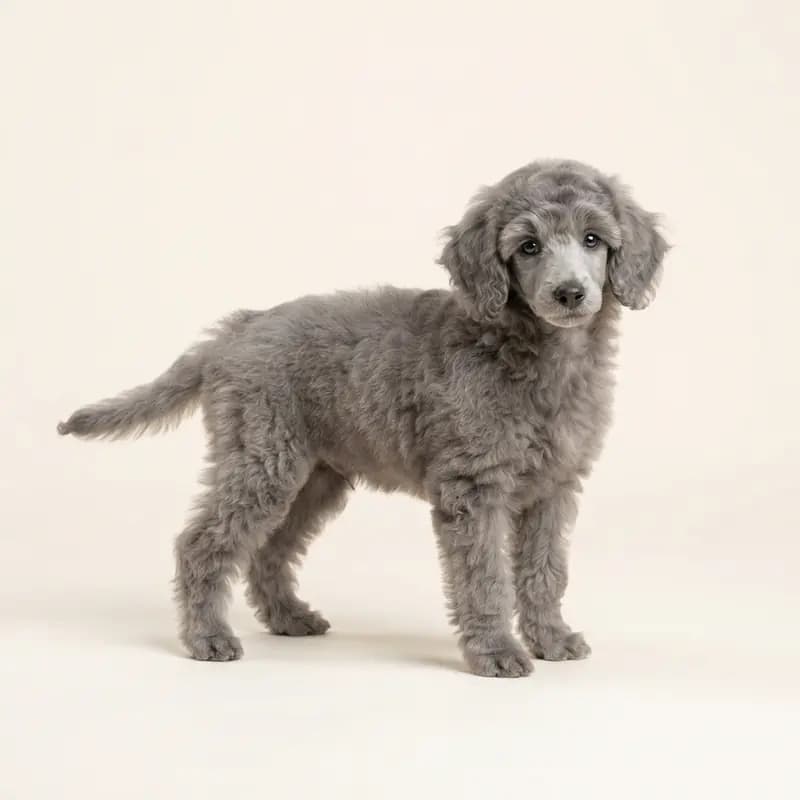
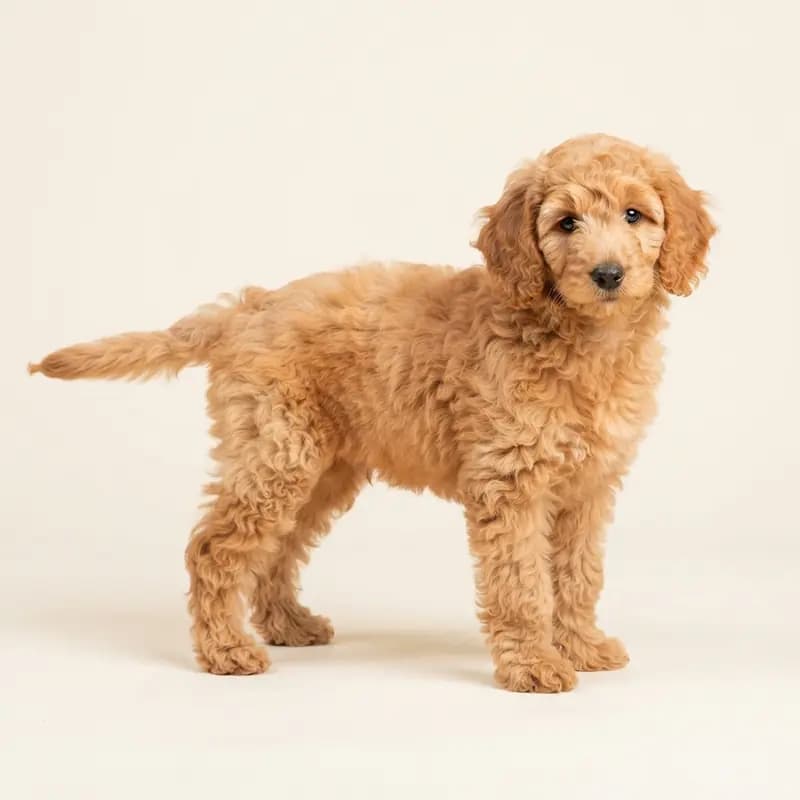
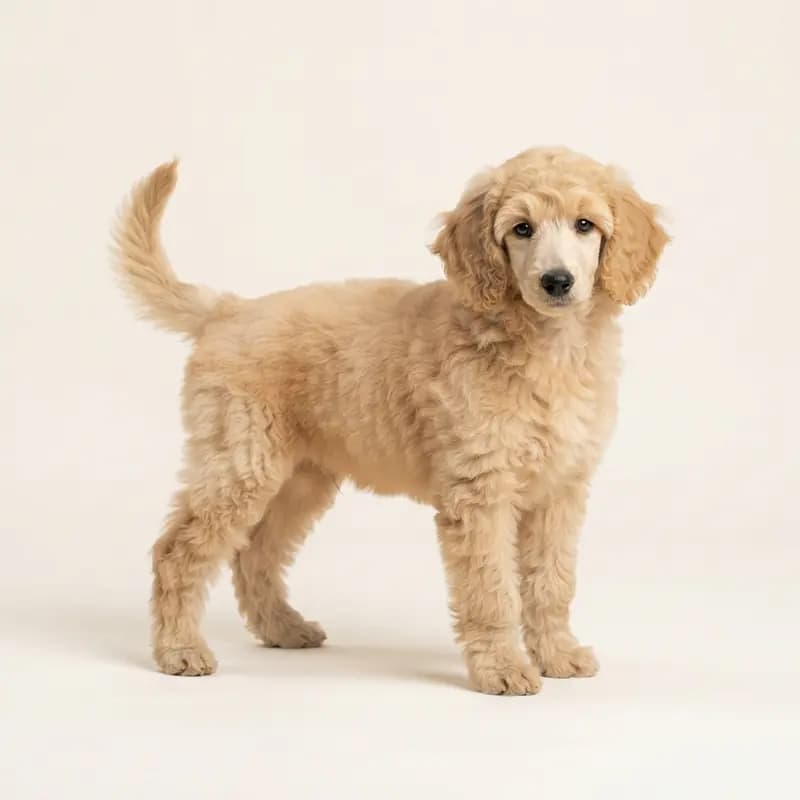
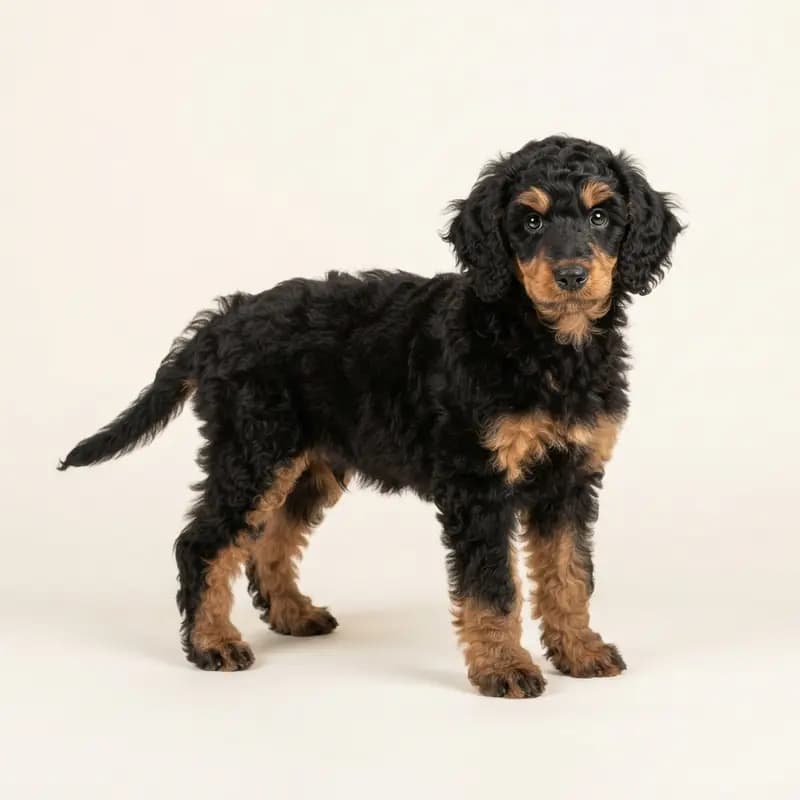
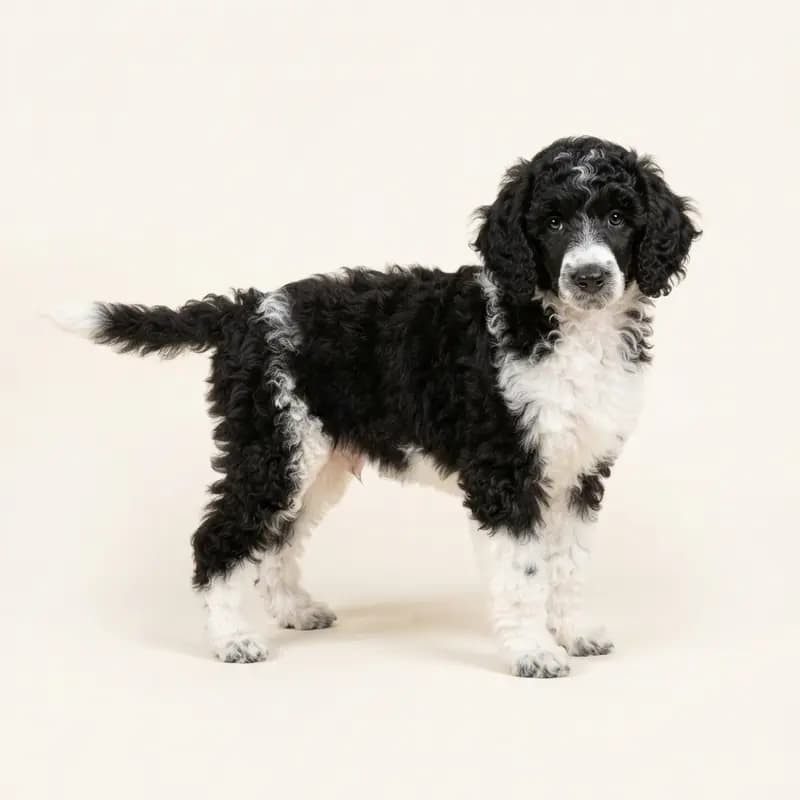
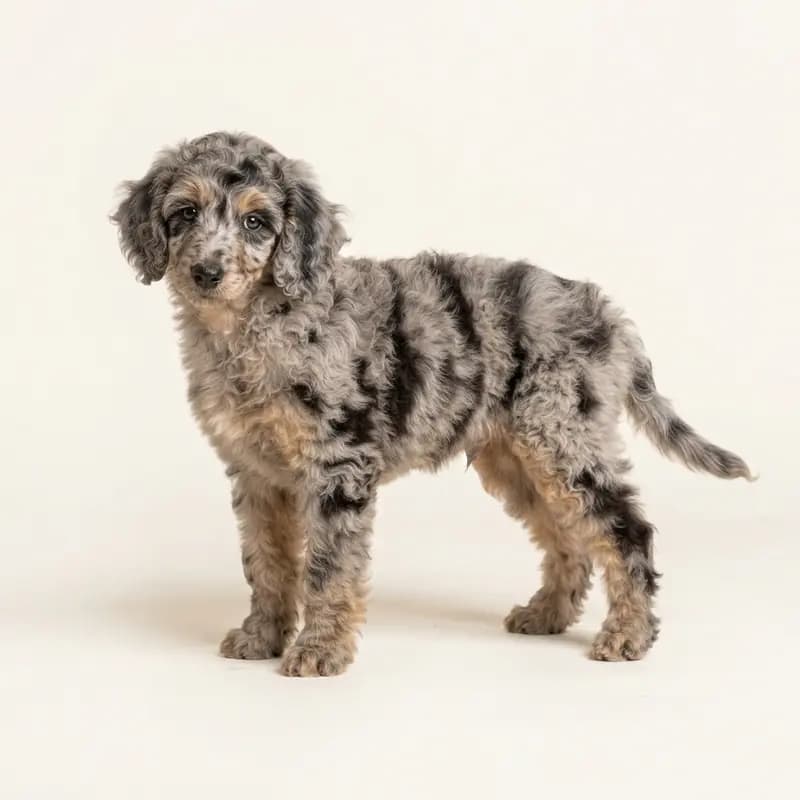
What colors does the Medium Poodle come in?
The coat colors you will see in Medium Poodle litters — including which ones fall outside the breed standard and which carry genetic risk.
Eye colors
 Brown
Brown Amber
Amber
Coat type
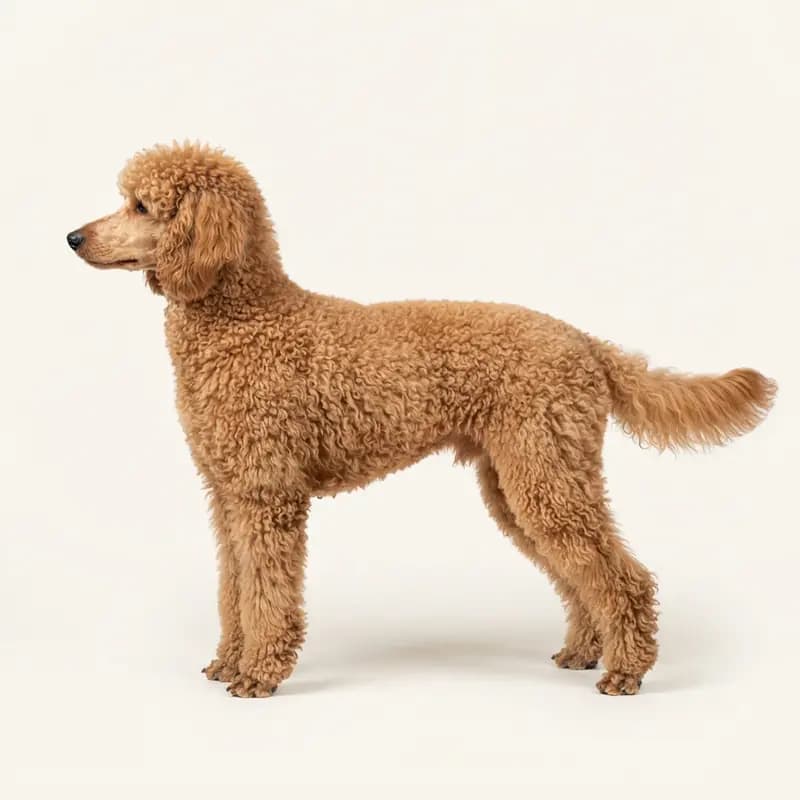 Illustrative image
Curly
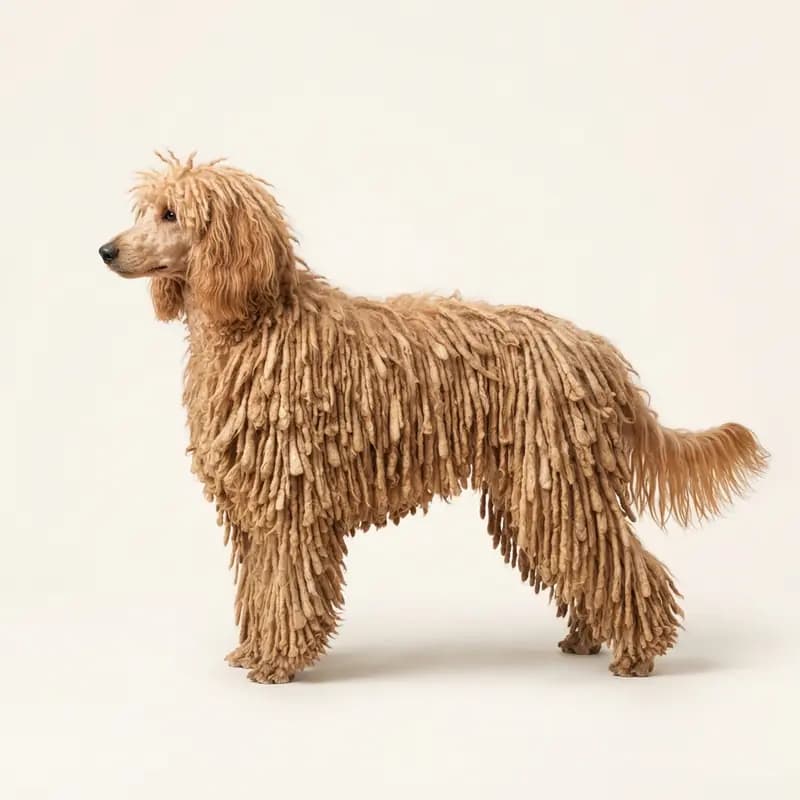 Illustrative image
Corded
Is the Medium Poodle right for you?
Perfect for you if:
- You are looking for a dog that wants to be mentally challenged—trick training, agility, or scent games are right up his alley, because simply tagging along isn't enough for his level of intelligence.
- You want an adaptable companion who feels just as comfortable in a city apartment as in the countryside, provided he gets enough stimulation.
- You are prepared to regularly invest time and budget into professional grooming to benefit from his non-shedding coat.
- You are a dedicated beginner and motivated to channel his incredibly quick ability to learn in the right direction from day one.
Less ideal if:
- You are looking for a low-maintenance, 'natural' dog that just dries off on a blanket after a muddy walk—his coat forgives no negligence and mats quickly.
- You believe a little curly-haired dog raises itself—his heritage as an Apportierhund ensures he will immediately see through any inconsistency and charm you into doing things his way.
- You have to leave him alone for many hours regularly—he bonds extremely closely with his humans and tends to bark if he feels frustrated or lonely.
The real vibes check
A Kleinpudel is like the gifted student in the front row: give him exciting tasks, and he will shine as your biggest fan and star pupil. If you let him starve mentally, he will use his enormous intelligence to reorganize your household according to his own rules. You aren't getting a mere lap dog, but an athletic all-rounder in a curly outfit.
Self-check
Would the Medium Poodle really fit your life?
Answer 6 quick questions about your everyday life and see how well the Medium Poodle fits you — including an honest cost estimate per month, per year, and across the dog's lifetime.
Fit checkCost estimateRisk dice
Takes about 1 minute · free & anonymous
Breed Profile
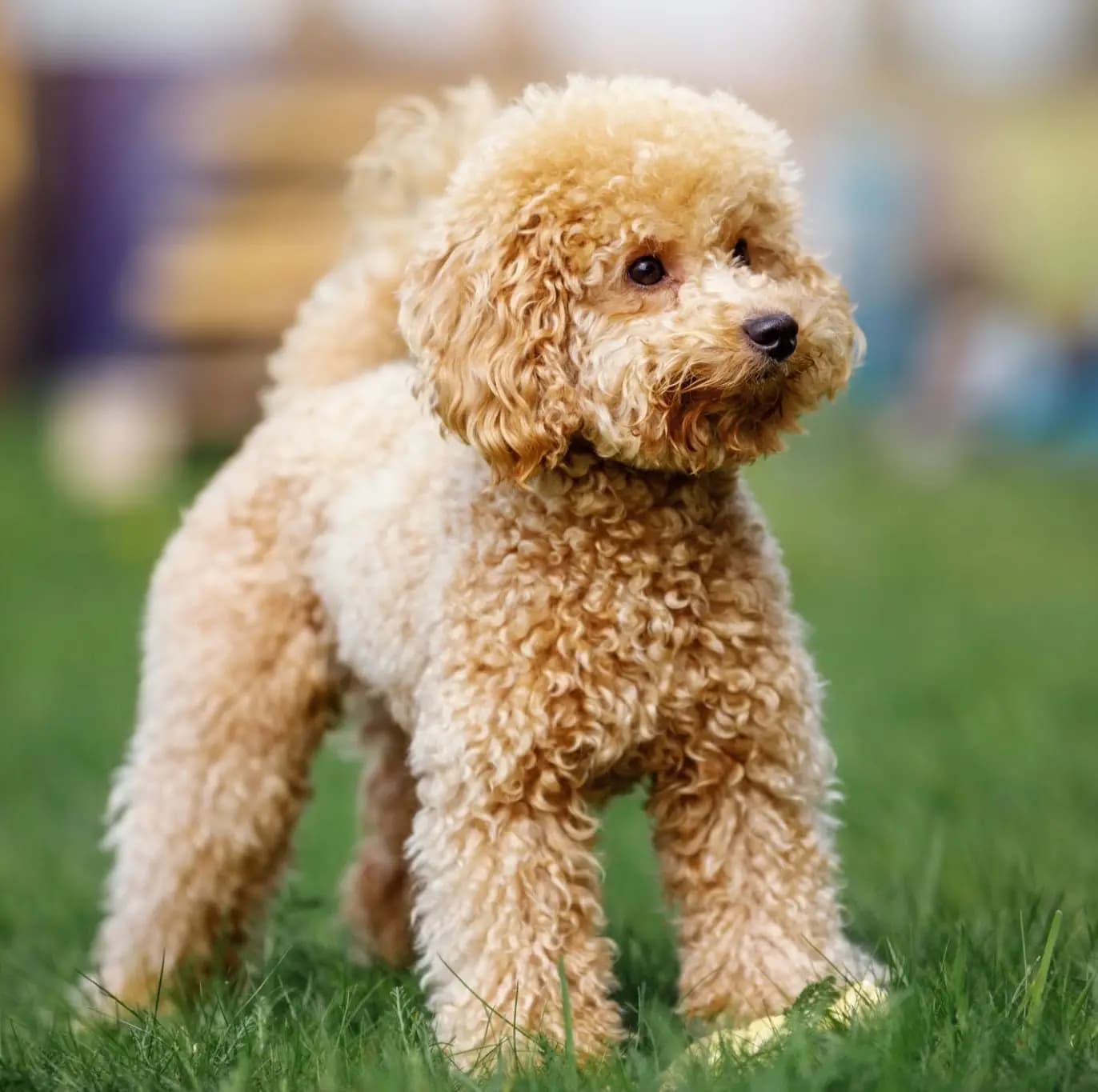
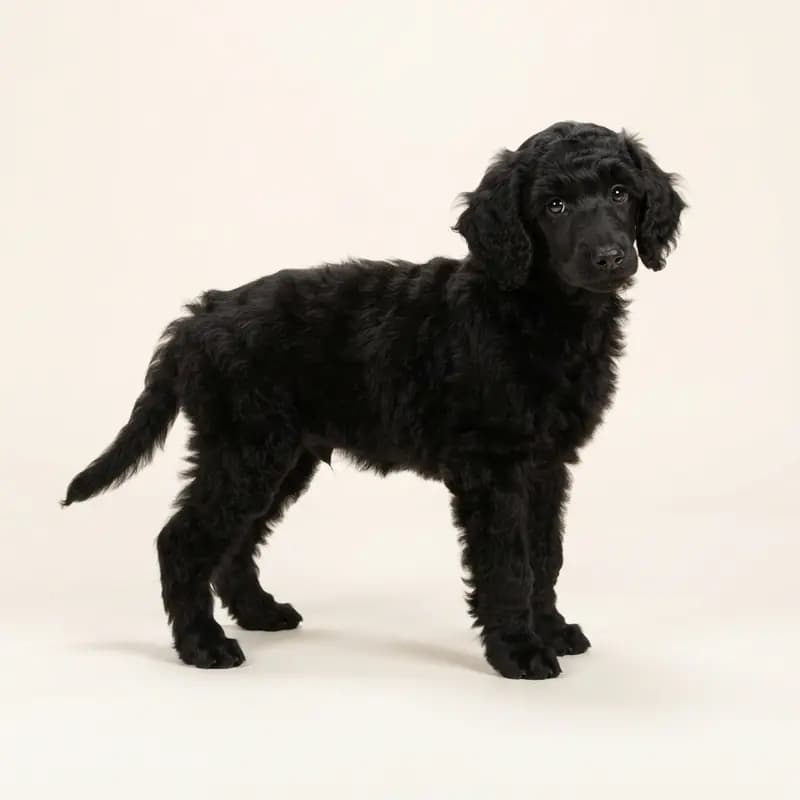
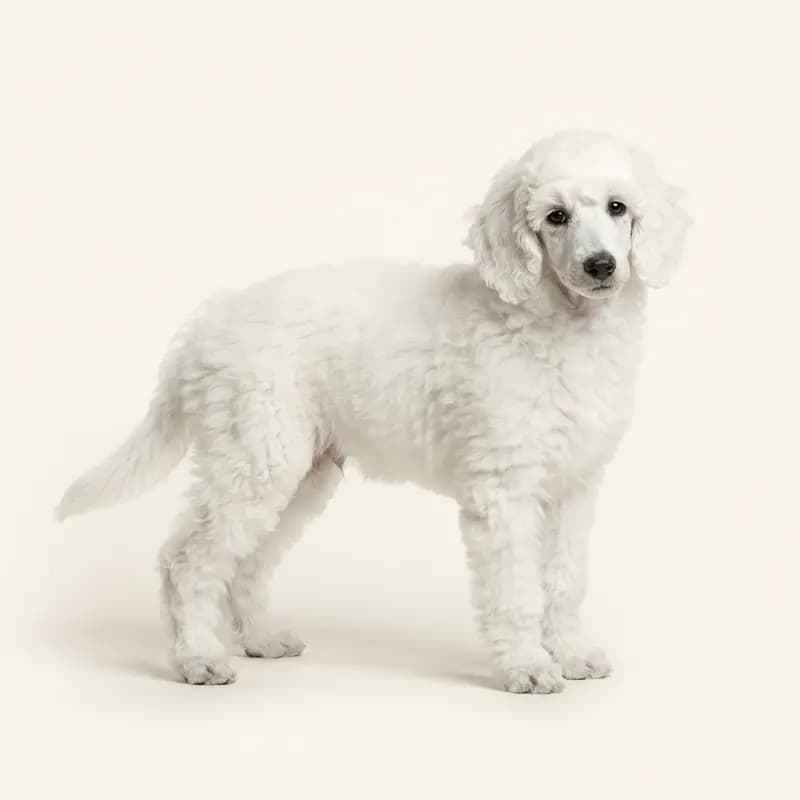
The miniature poodle, also known as a toy poodle, is a smaller variant of the poodle and, like the larger breed representatives, is characterized by its curly coat. He belongs to FCI Group 9, which includes companion dogs. The appearance of the Miniature Poodle is characterized by its lush, tightly curled coat and graceful movements. He has a square profile, with a well-proportioned body and long, straight legs. His eyes are dark and almond-shaped, giving him an intelligent and attentive expression. The ears are long and droopy, and the coat can be trimmed in a variety of styles, some more practical and others more flamboyant.
All measurements in detail
- Height
- 35 - 45 cm (Female), 35 - 45 cm (Male)
- Weight
- 7 - 12 kg (Female), 7 - 12 kg (Male)
- Life Expectancy
- 12 - 15 yrs
- Character
- Intelligent, eager to learn, affectionate
- Coat
- Curly, dense, no undercoat
- Coat Color
- Diverse (e.g. black, white, brown, apricot)
- Price
- 1500 - 2500 €
Character & Temperament
The Miniature Poodle is a highly intelligent and affectionate dog that bonds closely with its family. He is eager to learn and is ideal for various dog sports, such as agility, obedience and rally obedience. The Miniature Poodle's intelligence makes him a quick learner, but it also means he needs to be mentally challenged to be happy. The Miniature Poodle's affectionate nature means that he is very people-oriented and enjoys being part of family activities. He can learn to stay alone, but he prefers company and can suffer from separation anxiety if left alone for long periods of time. The Miniature Poodle is generally a moderately active dog. Although he has a strong play instinct and enjoys physical activity, he is not prone to becoming hyperactive. However, it is important to provide him with regular exercise and mental stimulation to prevent possible behavioral problems. One trait that sets the Miniature Poodle apart is its alertness. He is alert and will often warn his family about visitors or unusual noises.
| Watchfulness Reports unusual activity but stays controlled. | Moderate |
| Openness to Strangers Neither pushily friendly nor suspicious. | Neutral |
| Hunting or Herding Drive Noticeable drive — needs attention around small animals. | Moderate |
Fun Fact!
Did you know that Miniature Poodles appeared as star performers in many European circus shows during the 18th century, thanks to their intelligence and ability to learn complex tricks?
What Awaits You
Miniature Poodles are lively, very intelligent dogs that want to work. They enjoy working with people and need a lot of activity and exercise. They come in different sizes. In addition to the small poodle (often also called the standard poodle), there are also toy poodles, standard poodles or royal poodles and toy poodles. Teacup Poodles are so small that they suffer from many torturous breeding traits.
Housing & Care
The Miniature Poodle is very adaptable and can live well in both the city and the country. He is intelligent, friendly and enjoys the company of people. Therefore, he should be considered part of the family and not left alone for long periods of time. He generally gets along well with children, especially when socialized at a young age, but as with any dog, it is important that interactions are supervised by adults. The Miniature Poodle also gets along well with other dogs and cats, especially if socialized early on.
- Family Friendly
Lives for its family — the born family companion.
Ideal family dog - Child Friendly
Takes boisterous and affectionate children in its stride.
Patient with children - Dog Friendly
Actively enjoys the company of other dogs.
Dog-friendly - City Friendly
Small space, noise, lots of people — no problem at all.
Ideal city dog
Owning a dog is a privilege, but it's also a real responsibility. Before you bring one into your life, be honest with yourself about the commitment it takes.
Training & Education
The Miniature Poodle is an intelligent and docile animal that is often successful in dog sports such as agility and obedience. He also has a natural ability to fetch and can enjoy games where he retrieves balls or frisbees. However, since he has a high ability to learn, he may become bored if he repeats the same game too much. It is therefore important to incorporate variety into the training and also give him mentally demanding tasks. In terms of training, it is important that the Miniature Poodle learns frustration tolerance and impulse control at an early age. Through positive reinforcement, consistency and patience, the Miniature Poodle can become a well-behaved and balanced family member and is also suitable as a beginner dog. As with all dogs, it is important to begin socialization early to ensure the puppy has positive experiences with new people, places and situations.
Nutrition & Care
A Miniature Poodle's diet should be tailored to its age, weight and health status. Miniature Poodles have a fast metabolism and therefore require a nutrient-rich diet. They are prone to becoming overweight if they are overfed, so it is important to monitor their calorie intake and exercise them regularly. The Poodle's special trademark is its curly, dense coat. It is constantly growing, so the Poodle will need to be sheared every 2 to 6 weeks depending on the desired coat length. Long-haired poodles should be brushed several times a week to prevent the fur from becoming matted. The poodle hardly sheds and has no seasonal coat change. This makes him a good dog for allergy sufferers. Poodles do not have an undercoat, meaning a dog coat may be necessary in cold weather.
| Care Level Daily care is non-negotiable — neglect affects health. | Very high-maintenance |
| Exercise Needs Needs 1–2 hours of real exercise daily. | Active |
| Shedding Hair everywhere, always — no white clothing survives. | Very heavy |
| Trainability Bred to work closely alongside humans. | Highly trainable |
Our experts are still reviewing this information. Spotted something wrong? Email us at info@honestdog.de.
Health & hereditary diseases
Health
B
Solid
Health grade
The Kleinpudel is an agile and long-lived companion, but it does have a certain predisposition for eye conditions such as Progressive Retinal Atrophy (PRA-PRCD) and cataracts, as well as patellar luxation. Since established health tests exist for these primary risks, the likelihood of health issues can be effectively managed when purchasing a puppy from a reputable breeder. Overall, the breed shows an average genetic burden that is well-controlled through responsible selection.
Grade is relative to other breeds — AI-assisted and editorially reviewed.
In daily life this can mean
You should pay attention to a healthy body weight and good preventative care—in return, many of these dogs can remain active for a long time, though they do require attention to their eye health.
The breeder's role
Responsible breeders have the kneecaps and eyes of the parent animals tested so that Kleinpudel can remain healthy and mobile for as long as possible.
Note: This health overview is AI-assisted and editorially reviewed. It is for orientation only and does not replace veterinary advice.
No Health Tests Available
No specific health tests are currently available for this breed.
Costs & where to find one
How much does a Medium Poodle cost?
A Medium Poodle costs around ~€190 per month (€100 – €350, depending on your setup). The first year adds up to roughly ~€5,100 including purchase, equipment and puppy school; across the dog's life (13.5 years) it comes to about ~€33,500.
With surgery cover, running costs come to about ~€180 per month — in return, your share of a major operation drops from several thousand euros to around 20 percent.
Per month
~€190
In the first year
~€5,100
Across the dog's life
~€33,500
Purchase from a breeder: €1,500 – €2,500
Estimate at a mid-range setup (suburban, dry food, 1–2 hours of daily exercise), average German prices, as of July 2026.
Calculate your personal costs1-minute self-check with your own answers
Looking for a Medium Poodle?
Appearance, variants & origin
 Illustrative imageIllustrative image
 Illustrative image
 Illustrative image
History
The full history
The poodle's exact origins are uncertain, but it is believed to have originated in Germany or France. The Poodle was originally a water dog used for retrieving waterfowl, which may be where its name derives from. The Miniature Poodle was created by breeding smaller Poodles and quickly became popular as a companion dog, especially among nobles and the upper class. He was valued for his intelligence and elegant appearance. The Toy Poodle was recognized as an independent variant within the Poodle breed in the 20th century. The American Kennel Club (AKC) in the USA, for example, recognized the Miniature Poodle and the Toy Poodle as separate variants in the 1940s.
Original Use
The Miniature Poodle was originally bred for water hunting and retrieving waterfowl. He later developed into a popular companion and show dog.
Origin
Germany/France
Date
1500
Owner experiences
What owners say about the Medium Poodle
Sabine M., Halterin aus Essen (Rüde, seit 2021)
Als wir uns für einen Kleinpudel entschieden haben, hieß es im Bekanntenkreis oft: 'Der perfekte Begleithund, haart nicht und hat kaum Jagdtrieb.' Das mit dem Haaren stimmt zwar, aber die Fellpflege wird extrem unterschätzt. Wir verbringen jede Woche viel Zeit mit Bürsten, und alle paar Wochen steht das Scheren an. Das ist ein echter Zeit- und Kostenfaktor, den man vor dem Kauf unbedingt auf dem Schirm haben muss.
Und zum Thema Jagdtrieb: Von wegen 'nicht vorhanden'! Unser Rüde ist ein leidenschaftlicher Sichtjäger. Vögel, Eichhörnchen oder Mäuse – sobald sich etwas bewegt, ist er im Jagdmodus. Wir mussten von Anfang an sehr konsequent an der Impulskontrolle und dem Rückruf arbeiten. Wer einen reinen, unkomplizierten Mitläufer sucht, unterschätzt die Rasse leicht. Dafür ist er beim Hundesport ein absoluter Traum, weil er extrem schnell lernt und geistig gefordert werden will.
Christian T., Halter aus Hamburg (Hündin, seit 2022)
Unsere Hündin ist unglaublich anhänglich und am liebsten jede Sekunde ganz nah bei uns. Diese extreme Menschenbezogenheit hat allerdings eine Kehrseite: Das Alleinbleiben war für uns ein monatelanges, hartes Training. Sie neigt rassetypisch schnell zu Trennungsangst und hat anfangs sofort angefangen zu bellen, sobald wir auch nur kurz den Raum verlassen haben.
Außerdem haben wir gelernt, dass man bei dieser Rasse von Tag eins an aktiv Ruhe trainieren muss. Kleinpudel sind sehr sensibel und neigen dazu, extrem 'hibbelig' zu werden und völlig zu überdrehen, wenn sie nicht lernen, abzuschalten. Wir mussten erst lernen, sie im Alltag auch mal bewusst zu ignorieren und ihr feste Ruhephasen zu verordnen. Sie ist ein toller Hund, aber man darf ihre quirlige und sensible Art nicht unterschätzen.
Annett R., Halterin aus Leipzig (Rüde, seit 2020)
Die Intelligenz des Kleinpudels ist ein echtes zweischneidiges Schwert. Unser Rüde versteht neue Kommandos oft schon nach wenigen Wiederholungen. Das Problem ist nur: Er lernt unerwünschte Dinge genauso schnell! Wenn man einmal unkonsequent ist oder aus Mitleid eine Ausnahme macht, merkt er sich das sofort und nutzt es aus. Man darf sich von dem niedlichen Look nicht täuschen lassen – sie sind extrem clever und hinterfragen Regeln gern.
Was uns außerdem überrascht hat, ist seine ausgeprägte Wachsamkeit. Er ist sehr aufmerksam und schlägt sofort an, wenn es an der Tür klingelt oder ungewöhnliche Geräusche im Treppenhaus zu hören sind. Das Bellen mussten wir von Anfang an konsequent deckeln, damit es nicht ausartet. Er ist ein fantastischer, treuer Begleiter, aber er braucht eine klare Führung und darf nicht unterfordert werden.
Paraphrased from real owner reports
Loading owner stories
Community Posts
FAQ & more
Frequently asked questions about the Medium Poodle
Is a Kleinpudel the right dog for me?
The Kleinpudel is an adaptable dog that adjusts well to various lifestyles. Research the temperament, grooming needs, and space requirements before deciding.
How long does a Kleinpudel live?
The average life expectancy of a Kleinpudel is 12-15 years. With proper care and regular vet visits, your dog can live a long, healthy life.
How much grooming does a Kleinpudel need?
Kleinpudel grooming requirements include regular brushing, nail trimming, and dental care. HonestDog provides detailed grooming tips for every breed.
Is a Kleinpudel good for families with children?
The Kleinpudel can be a great family dog. Proper training and socialization are key. HonestDog provides family suitability information for every breed.
What colors does the Kleinpudel come in?
The Kleinpudel comes in these colors: Black, White, Brown, Grey, Apricot, Fawn, Black and tan, Black and white, Merle. Colors that fall outside the breed standard are marked as such on the breed page.
Loading related articles
Are you a Medium Poodle breeder?
Showcase your kennel on HonestDog and reach families searching for a responsibly bred Medium Poodle.