Loading breed

Lakeland Terrier
Health grade C- Height35–39 cm
- Weight7–9 kg
- Life expectancy12–15 yrs
- Puppy price1,500–2,500 €
- Energy3/5
The Essentials at a Glance
The Lakeland Terrier is a fearless, highly agile Erdhund (earth dog)—bred to pursue foxes deep into their rocky dens in the rugged mountains of the Lake District. This intrepid hardware makes him a self-confident companion who never shies away from a challenge.
- Health grade C: The Lakeland Terrier is a very robust breed with a pleasingly low genetic disease burden.
- You bring a healthy dose of humor and consistency to the table to debate with a dog bred to make completely independent decisions in a fox den.
- You are looking for a tireless, robust companion for long hikes in nature or dynamic dog sports.
- You expect him to turn around immediately at the sight of a fleeing cat—he is a specialized hunter for whom the urge to chase overrides everything else.
Is the Lakeland Terrier right for you?
At a glance
Lakeland Terrier overview
The essentials — key facts, traits, and health priorities — before you dive deeper.
Health grade
Relative to other breeds
S
A
B
C
D
E
Very healthyHigher risk
Average — several important tests are expected.
See full health info & tests →
Note: This health overview is AI-assisted and editorially reviewed. It is for orientation only and does not replace veterinary advice.
Lifespan
12–15 yrs
Height
35–39 cm
Weight
7–9 kg
Practical
- Puppy price: 1,500 – 2,500 €
- Coat: Hard, dense, undercoat present
- Origin: England
Temperament
Energy
Trainability
Family fit
With kids
Daily life
Care effort
Shedding
Barking
City-friendly
Guard instinct
What matters most
Especially with a Lakeland Terrier, choosing the right breeder is the single most important decision you'll make. Serious breeders consistently test the parents for inherited conditions, prioritize healthy early socialization, and stay accountable long after handover. A cheap puppy without health screening tends to become the most expensive dog later on.
See HonestDog breeder standards →Colors & coat
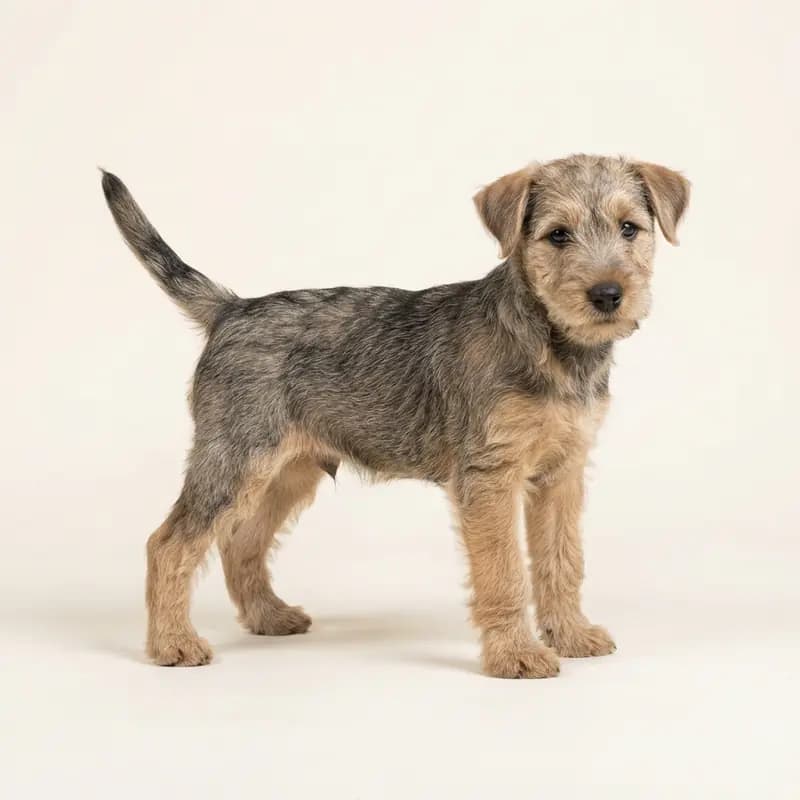
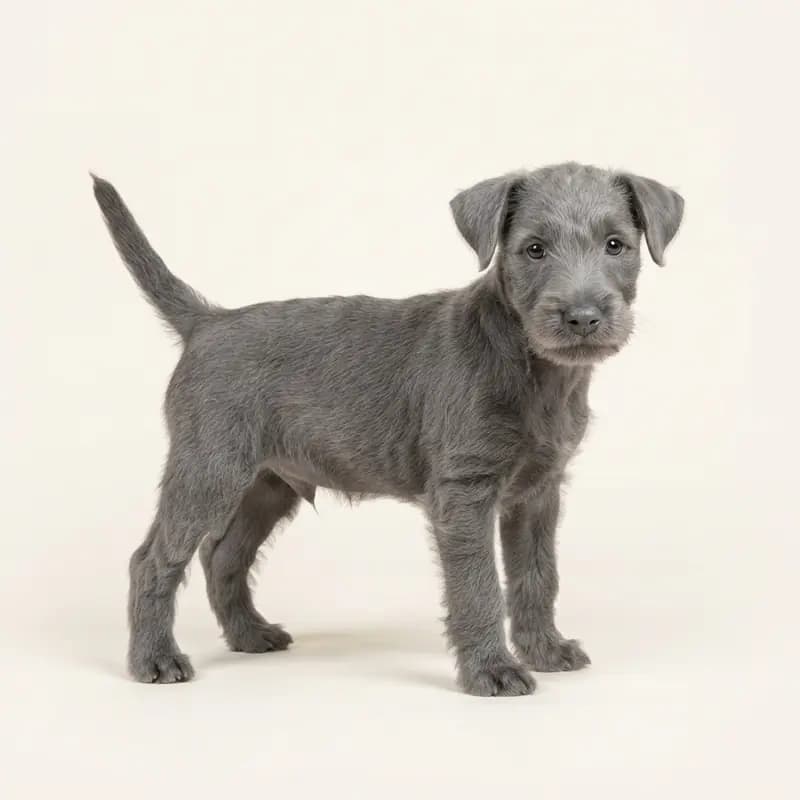
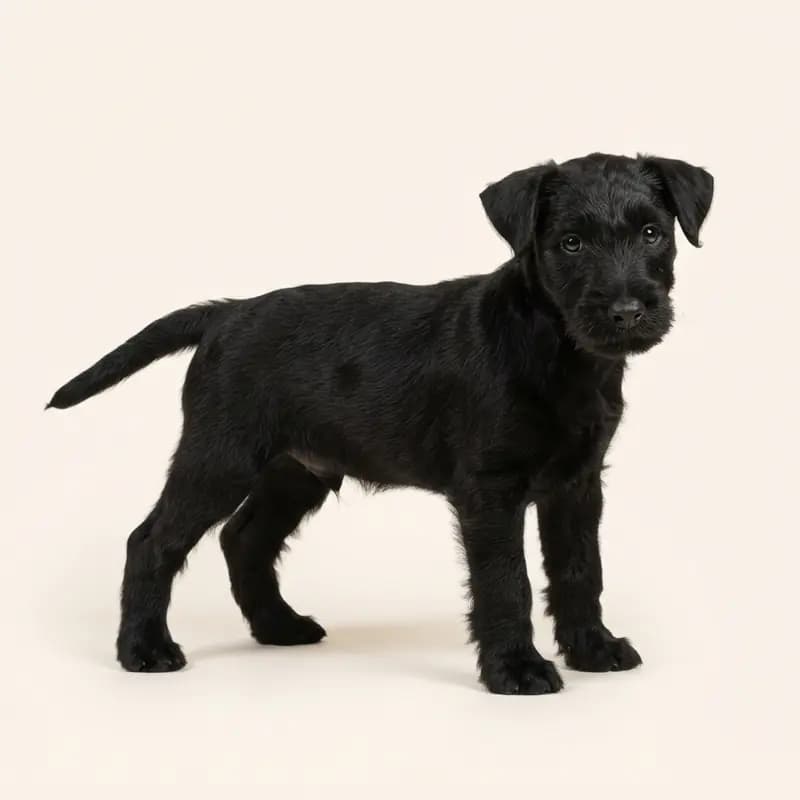
What colors does the Lakeland Terrier come in?
The coat colors you will see in Lakeland Terrier litters — including which ones fall outside the breed standard and which carry genetic risk.

Eye colors
 Brown
Brown Amber
Amber
Coat type
 Wire
Wire Double coat
Is the Lakeland Terrier right for you?
Perfect for you if:
- You bring a healthy dose of humor and consistency to the table to debate with a dog bred to make completely independent decisions in a fox den.
- You are looking for a tireless, robust companion for long hikes in nature or dynamic dog sports.
- You enjoy active mental stimulation and scent games to keep his sharp mind occupied beyond just physical exercise.
- You can secure your house or garden so that a lightning-fast hunter doesn't go off on his own patrol the moment a gap opens up.
Less ideal if:
- You expect him to turn around immediately at the sight of a fleeing cat—he is a specialized hunter for whom the urge to chase overrides everything else.
- You want a dog that obeys blindly and anticipates your every wish, as unconditional submission goes against his nature.
- You live in a place with thin walls and have neighbors who would be bothered by a vigilant, vocal terrier.
- You keep small pets in the same household that look like perfect prey to him.
The real vibes check
A Lakeland Terrier loves to cuddle on the sofa, but deep down, he remains a fearless warrior in a compact format. What once enabled him to face a fox in a dark rock crevice ensures that in everyday life, he won't back down from even the largest dog. You aren't getting a passive follower, but a huge, courageous personality on small paws that will challenge you every single day.
Self-check
Would the Lakeland Terrier really fit your life?
Answer 6 quick questions about your everyday life and see how well the Lakeland Terrier fits you — including an honest cost estimate per month, per year, and across the dog's lifetime.
Fit checkCost estimateRisk dice
Takes about 1 minute · free & anonymous
Breed Profile
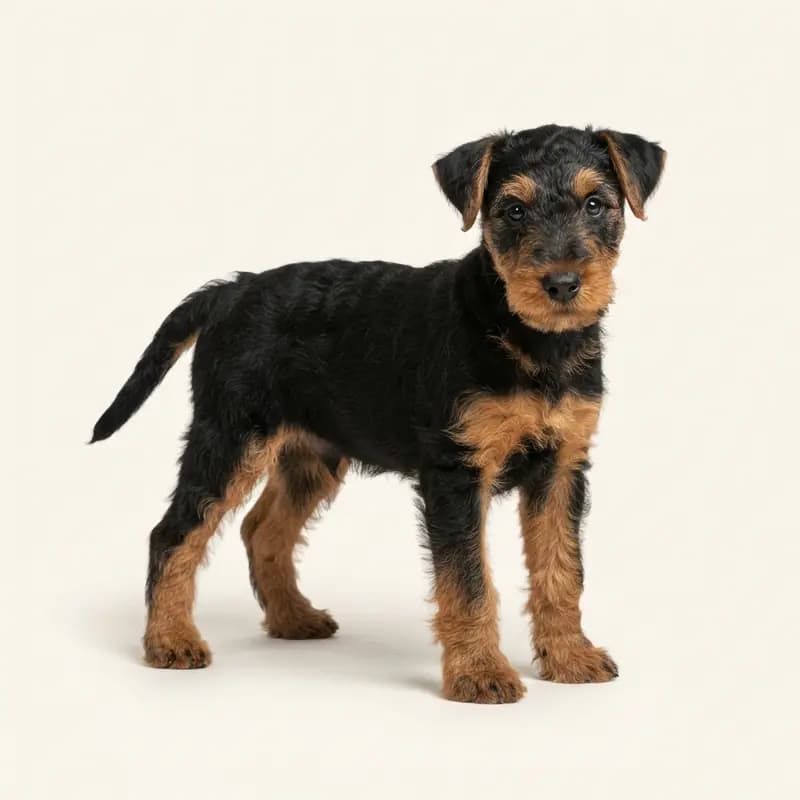
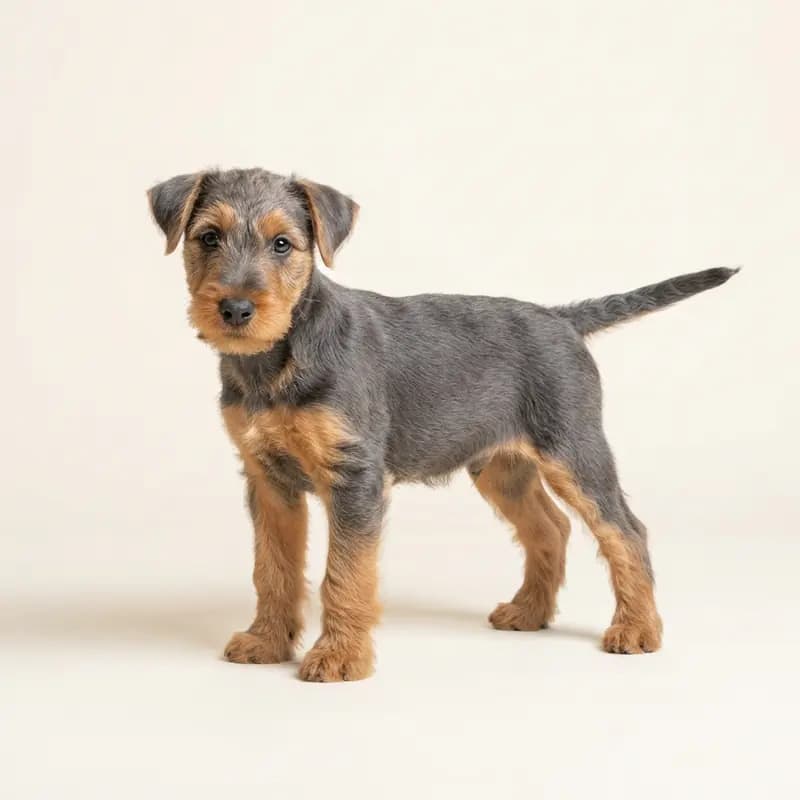
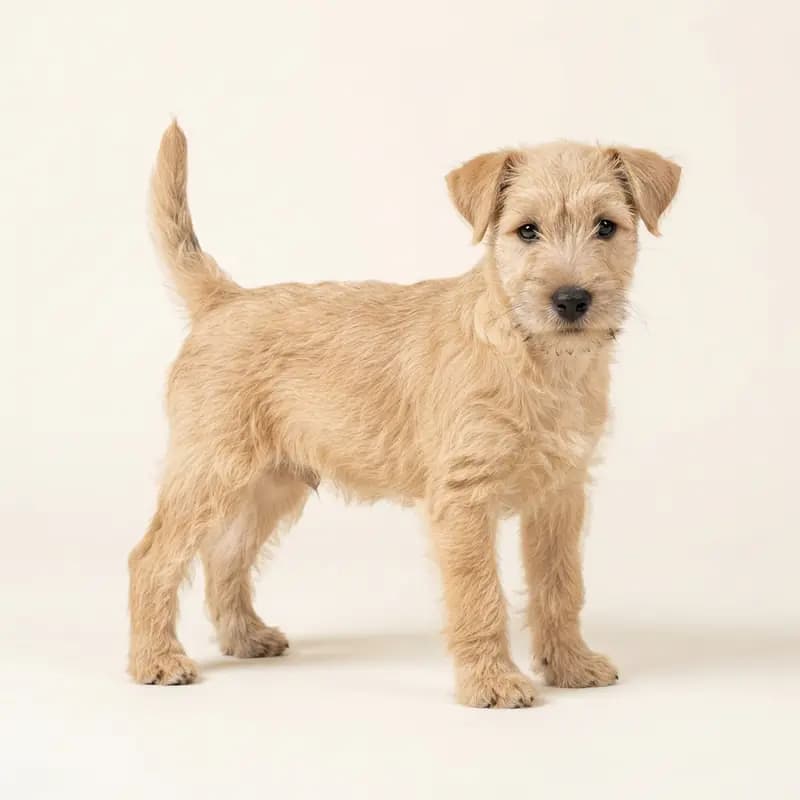
The Lakeland Terrier is a small, compact and well-proportioned breed of dog native to the Lake District in northwest England. The body is strong and athletic, which helps the dogs move quickly and nimbly over rough terrain. They belong to FCI Group 3: Terriers and are known for their hard, dense fur that protects them from the elements. The Lakeland Terrier's face is a distinctive feature with dark, oval eyes and an intelligent and alert expression. Their ears are small and V-shaped that fall forward. Their tail is usually carried erect, giving them a happy and lively appearance.
All measurements in detail
- Height
- 35 - 39 cm (Female), 35 - 39 cm (Male)
- Weight
- 7 - 8 kg (Female), 8 - 9 kg (Male)
- Life Expectancy
- 12 - 15 yrs
- Character
- Active, intelligent, confident
- Coat
- Hard, dense, undercoat present
- Coat Color
- Black, blue, red, wheat, gray or saddle colored
- Price
- 1500 - 2500 €
Character & Temperament
Lakeland Terriers are active and intelligent dogs that are known for their cheeky and confident personality. They are cheerful and tireless, which makes them great companion dogs. Their work instincts are still strong, meaning they need plenty of exercise and mental stimulation. As terriers, they are independent thinkers who like to explore the world in their own way. They can also be quite stubborn, which can make them a challenge at times. Despite their independence, they are very people-oriented and build strong bonds with their families. They love being the center of attention and are always ready to start a game or activity. Although they are small, they are brave and will not hesitate to defend themselves against larger dogs. Their high energy and strong hunting instincts make them enthusiastic and persistent hunters. Therefore, it is important to provide them with a safe and enclosed environment to play and explore. Lakeland Terriers are also very alert and will quickly become aware of any suspicious noises or movements. They tend to bark a lot, especially when they are bored or calm. Although they can learn to stay alone, it is better not to leave them unattended for long periods of time as they can be prone to destructive behavior when bored or anxious. The Lakeland Terrier's social nature tends to make them good companions for other dogs, although they should exercise caution around smaller pets, such as cats or rodents, due to their prey drive. Early socialization and training are crucial to ensure they get along well with other dogs and people. They tend to get along well with children, especially when growing up with them, but due to their energy and roughness they should always be supervised. Overall, the Lakeland Terrier is a fun and charming companion that is perfect for active families willing to meet his needs for exercise and mental stimulation. Her intelligence, wit, and stamina make her a unique and rewarding companion for those willing to embrace her quirks and meet her needs.
| Watchfulness Occasionally alerts but is fundamentally open. | Low |
| Openness to Strangers Warms up quickly and is generally welcoming. | Friendly |
| Hunting or Herding Drive Powerful instinct that can override recall when triggered. | Strong |
Fun Fact!
Did you know that the Lakeland Terrier was originally bred to repel foxes and other pests from the rocks and caves of the Lake District in England? This explains their ability to crawl through narrow spaces and their fearlessness against larger animals!
What Awaits You
The Lakeland Terrier comes from Cumberland, the most northwestern, high-altitude, bare, lake-rich county in England. The Lakeland hunting grounds were located in the rugged highlands of Cumberland and neighboring counties. Bred from the "Old English Black and Tan Terrier", the Bedlington was crossed to improve its temperament and the Border because of its wiry, water-repellent hair. The Lakeland is endowed with a lot of self-confidence and has an uncomplicated, happy nature that makes him a very good family dog. Enterprising and persistent, fearless in his demeanor, he is very suitable as an attentive guard. Difficulties can arise when meeting other dogs. However, if trained consistently, the Lakeland is an active, spirited companion who is ideal as a playmate for children.
Housing & Care
Despite their high energy and hunting instincts, Lakeland Terriers can be kept as city dogs as long as they get enough exercise and mental stimulation. They generally get along well with children but should always be supervised to avoid excessive play or rough behavior. With early and proper socialization, they can also get along well with other pets, including cats.
- Family Friendly
Loves family life and thrives in a group.
Family-oriented - Child Friendly
Gets on well with children — with adult supervision.
With supervision - Dog Friendly
Usually gets on fine with other dogs.
Generally tolerant - City Friendly
City-appropriate with enough exercise and stimulation.
Manageable in cities
Owning a dog is a privilege, but it's also a real responsibility. Before you bring one into your life, be honest with yourself about the commitment it takes.
Training & Education
Lakeland Terriers are intelligent and eager to learn, making them good candidates for training and education. They respond well to positive reinforcement and can learn a variety of commands and tricks. However, they can also be stubborn, so training requires patience and consistency. Because of their hunting instincts, it is important to begin leash and recall training early. They also enjoy various dog sports such as agility and flyball, which can help channel their energy and keep them mentally stimulated. However, it is important to be careful not to over-busy or over-stimulate them, as this can lead to stress and anxiety. Lakeland Terriers tend to develop a strong bond with their owners, and they can exhibit frustration and separation anxiety when left alone for long periods of time. Therefore, it is important to teach them to stay alone and train their impulse control.
Nutrition & Care
The Lakeland Terrier's diet should be balanced and nutritious to support its high energy and health. High-quality dog food that contains meat as the main ingredient is always a good choice. Make sure you control portion sizes to avoid becoming overweight, as they can be prone to weight gain if overfed. Grooming the Lakeland Terrier is relatively straightforward, thanks to its hard and dense coat that doesn't shed much. They have an undercoat that protects them from extreme weather conditions. Their coat should be brushed regularly to keep it clean and tangle-free. They get along well with the climate in Germany.
| Care Level Regular brushing and occasional professional grooming. | Moderate |
| Exercise Needs Needs 1–2 hours of real exercise daily. | Active |
| Shedding No or minimal hair loss — suitable for allergy sufferers. | No shedding |
| Trainability Has its own ideas and will test limits. | Strong-willed |
Our experts are still reviewing this information. Spotted something wrong? Email us at info@honestdog.de.
Health & hereditary diseases
Health
C
Solid, watch carefully
Health grade
The Lakeland Terrier is a very robust breed with a pleasingly low genetic disease burden. The primary focus is on hereditary eye conditions such as Primary Lens Luxation (PLL) and cataracts, both of which are well-controlled through targeted mandatory health tests. Aside from these manageable risks, there are hardly any breed-specific health issues, making this terrier a very healthy companion.
Grade is relative to other breeds — AI-assisted and editorially reviewed.
In daily life this can mean
With joint-friendly rearing, a healthy weight, and regular eye check-ups, most dogs remain fit and active for a long time.
The breeder's role
Reputable breeders have the knees, hips, and eyes of the parent animals carefully screened to reduce health risks in the lineage.
Note: This health overview is AI-assisted and editorially reviewed. It is for orientation only and does not replace veterinary advice.
No Health Tests Available
No specific health tests are currently available for this breed.
Costs & where to find one
How much does a Lakeland Terrier cost?
A Lakeland Terrier costs around ~€170 per month (€90 – €310, depending on your setup). The first year adds up to roughly ~€4,820 including purchase, equipment and puppy school; across the dog's life (13.5 years) it comes to about ~€29,750.
With surgery cover, running costs come to about ~€160 per month — in return, your share of a major operation drops from several thousand euros to around 20 percent.
Per month
~€170
In the first year
~€4,820
Across the dog's life
~€29,750
Purchase from a breeder: €1,500 – €2,500
Estimate at a mid-range setup (suburban, dry food, 1–2 hours of daily exercise), average German prices, as of July 2026.
Calculate your personal costs1-minute self-check with your own answers
Looking for a Lakeland Terrier?
Appearance, variants & origin

 Illustrative image
 Illustrative image
 Illustrative image
 Illustrative image
History
The full history
The Lakeland Terrier is one of the oldest terrier breeds and comes from the picturesque Lake District in northwest England. Originally it was used as a working dog whose main task was to hunt foxes and other pests that posed a threat to sheep herds. Their size and agility allowed them to pursue foxes into their dens, a talent that was particularly useful in the harsh and mountainous landscape of their home range. The breed was developed in the early 1800s and is likely descended from a mix of Bedlington Terrier and Fox Terrier. However, they were not officially recognized by the Kennel Club in Great Britain until 1932.
Original Use
The Lakeland Terrier was bred to hunt foxes and other predators in the Lake District fells.
Origin
England
Date
1900
Owner experiences
What owners say about the Lakeland Terrier
Julia T., Halterin aus Bayern (Hündin, seit 2005)
Als Besitzerin einer Lakeland-Hündin kann ich bestätigen: Diese Hunde sind zwar etwas kleiner als Welsh Terrier, aber sie haben es faustdick hinter den Ohren und sind extrem hartnäckig. Wenn meine Hündin sich etwas in den Kopf setzt, braucht es eine Menge Geduld und Konsequenz. Vor allem beim Thema Jagdtrieb muss man höllisch aufpassen. Früher hat sie leider mal eine Katze erwischt, was für uns ein Schock war. Nach einem Umzug in ein altes Haus mit Mäuseproblem haben wir uns dann aber doch an eine eigene Katze herangewagt. Mit viel Geduld und kontrollierter Gewöhnung hat es tatsächlich geklappt – am Ende lagen die beiden sogar zusammen auf dem Sofa.
Auch beim Spazierengehen fordert sie mich täglich heraus. Früher ist sie oft grummelnd oder bellend losgelaufen, sobald sie eine Fährte hatte, und mein Rufen verhallte ungehört. Ich habe dann gelernt, gar nicht sofort hinterherzurufen, sondern einfach stehenzubleiben. Sie dreht sich dann meist nach ein, zwei Metern um, um zu schauen, wo mein Kommando bleibt. Man muss bei dieser Rasse einfach lernen, ihren eigenwilligen Kopf auszutricksen und selbst die Ruhe zu bewahren.
Christian F., Halter aus Baden-Württemberg (Rüde, seit 2006)
Mein Lakeland-Rüde ist ein absolutes Energiebündel, aber leider mussten wir uns schon früh mit einer schweren gesundheitlichen Herausforderung auseinandersetzen. Bereits im Alter von fünfeinhalb Monaten erlitt er seinen ersten epileptischen Anfall. Seitdem begleiten uns die Krampfanfälle. Die großen Grand-Mal-Anfälle liegen zwar zeitlich weit auseinander, dauern dafür aber oft quälend lange. Mittlerweile kommen auch noch kleinere Absencen und Phasen von plötzlicher Angst hinzu. Wir stehen immer wieder vor der Frage, wie wir ihm den Alltag erleichtern können – auch das Thema Kastration zur Reduzierung von hormonellem Stress haben wir tierärztlich abgewogen.
Trotz seiner Erkrankung hat er diesen unverkennbaren, frechen Terrier-Charakter behalten. Er ist unglaublich wachsam und kommentiert gerne mal lautstark, was um ihn herum passiert – selbst der Staubsaugerroboter wird von ihm ordentlich beschimpft! Beim gemeinsamen Zerrspiel packt ihn die pure Lebensfreude und er knurrt leidenschaftlich vor sich hin. Man braucht für einen Lakeland wirklich Humor und starke Nerven, aber seine charmante, verschmuste Art entschädigt für jede anstrengende Phase.
Paraphrased from real owner reports
Loading owner stories
FAQ & more
Frequently asked questions about the Lakeland Terrier
Is a Lakeland Terrier the right dog for me?
The Lakeland Terrier is an adaptable dog that adjusts well to various lifestyles. Research the temperament, grooming needs, and space requirements before deciding.
How long does a Lakeland Terrier live?
The average life expectancy of a Lakeland Terrier is 12-15 years. With proper care and regular vet visits, your dog can live a long, healthy life.
How much grooming does a Lakeland Terrier need?
Lakeland Terrier grooming requirements include regular brushing, nail trimming, and dental care. HonestDog provides detailed grooming tips for every breed.
Is a Lakeland Terrier good for families with children?
The Lakeland Terrier can be a great family dog. Proper training and socialization are key. HonestDog provides family suitability information for every breed.
What colors does the Lakeland Terrier come in?
The Lakeland Terrier comes in these colors: Black and tan, Blue and tan, Red, Wheaten, Grizzle, Liver, Blue, Black.
Loading related articles
Are you a Lakeland Terrier breeder?
Showcase your kennel on HonestDog and reach families searching for a responsibly bred Lakeland Terrier.