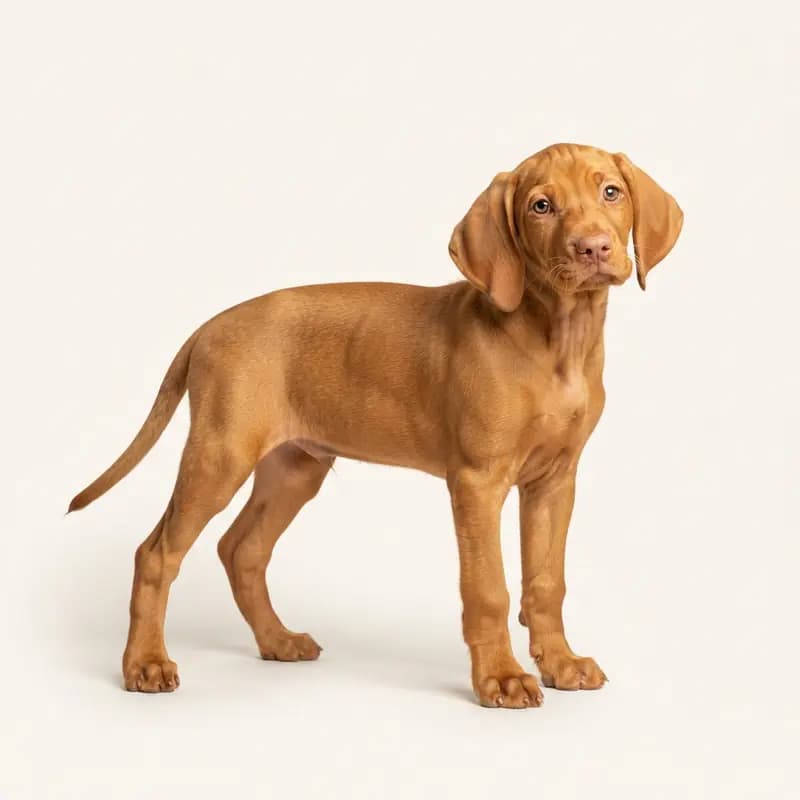
Wirehaired VizslaClose relative
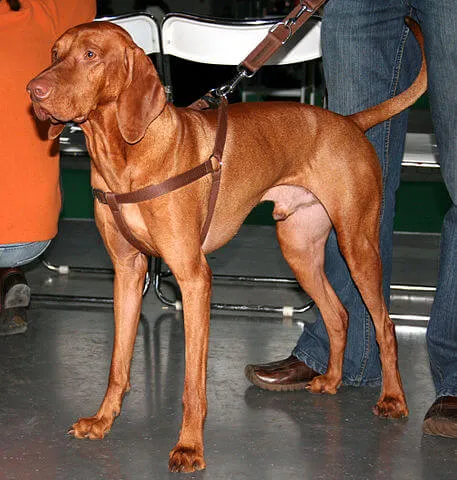
The Magyar Vizsla is a highly elegant, extremely people-oriented Vorstehhund (pointing dog) — bred to work in perfect harmony with the hunter, scanning vast areas and indicating game by standing perfectly still. It is precisely this sensitivity that makes them a proverbial 'velcro dog' that needs physical closeness like air to breathe.
How the health grade is calculated
Sources for required breeding screenings. Verein für Ungarische Vorstehhunde e.V.
Self-check
Answer 6 quick questions about your everyday life and see how well the Hungarian Vizsla fits you — including an honest cost estimate per month, per year, and across the dog's lifetime.


At a glance
The essentials — key facts, traits, and health priorities — before you dive deeper.
Lifespan
12–14 yrs
Shoulder height
54–64 cm
Weight
18–30 kg
Practical
Temperament
Daily life
What matters most
Especially with a Hungarian Vizsla, choosing the right breeder is the single most important decision you'll make. Serious breeders consistently test the parents for inherited conditions, prioritize healthy early socialization, and stay accountable long after handover. A cheap puppy without health screening tends to become the most expensive dog later on.
See HonestDog breeder standards →Colors & coat
The coat colors that occur in the Hungarian Vizsla — including which ones fall outside the breed standard and which carry genetic risk.
Eye colors
 Brown
Coat type
 Short
 Smooth
The real vibes check
A Vizsla is not a dog that just lives alongside you; it is a shadow that would prefer to crawl right inside you. This intense bond comes at a price: they soak up your moods like a sponge and immediately mirror any of your insecurities. You aren't getting a robust follower, but a highly sensitive athlete who needs a real job and a confident, calm person to maintain their mental balance.
The Hungarian Vizsla, also known as the Hungarian Pointer, is an impressive sight. He has an elegant and athletic appearance that highlights his work skills. His coat is short, dense and smooth, without an undercoat. The color varies from various shades of gold-red to sandy colors. His eyes are dark, in harmony with the color of his coat, giving him an attentive and intelligent expression. This dog belongs to FCI group 7, the pointers. The breed is not divided into performance and show lines, however there are two different types, the short-haired and wire-haired Vizsla, which differ primarily in coat structure. The breed is characterized by its versatility and is popular as a working dog, hunting dog, family dog and show dog.
If you're looking for a dog that's both a loving companion and an eager worker, the Magyar Vizsla could be just the one for you. This dog is known for its energy, intelligence and strong bond with its people. The Vizsla is a versatile working dog and shows natural talent in many areas. Although he was originally bred as a hunting dog, he also shows talent in other areas such as rescue work, search and tracking work, obedience training and even agility. It is this versatility that makes the Vizsla such a remarkable dog. Despite his willingness to work, the Vizsla is also a devoted and loving family dog. He is very people-oriented and loves being around his people. He has a strong desire to please and quickly forms close bonds with his family. This breed is known for being a "shadow", i.e. it tends to follow its owner everywhere and likes to seek close physical contact, such as cuddling and snuggling. This dog is full of energy and needs lots of exercise to be happy and balanced. He's definitely not a couch potato and is best suited for active families who spend a lot of time outdoors. The Vizsla is also an intelligent dog that learns quickly and enjoys trying new things. However, he can be a little stubborn at times, so patient and consistent training is important. Although the Vizsla has strong hunting behavior, it can learn to control this behavior. However, he may be easily distracted by wildlife while out walking, so it's important to get him used to the leash early and keep him under control. The breed also has a strong guarding instinct and tends to be attentive and alert. However, she is not aggressive and tends to be friendly towards strangers once she realizes they pose no danger. One of the Vizsla's outstanding features is its adaptability. Although he feels most comfortable in a rural setting with plenty of space to run and play, he can also adapt well to city life provided he gets enough exercise and mental stimulation. When it comes to being alone, the Vizsla is a dog that loves being around its people. He can learn to stay alone for short periods of time, but he should not be left alone for long hours. He is a social dog who needs the company of his people and, if possible, other dogs. All in all, the Magyar Vizsla is a lively and loving dog that is both a loyal companion and an eager worker. He needs a home that can provide him with lots of love, exercise and mental stimulation, and in return will be a loyal and devoted companion. With his intuitive and loving personality, the Vizsla is sure to make every day an adventure.
| Watchfulness Reports unusual activity but stays controlled. | Moderate |
| Openness to Strangers Warms up quickly and is generally welcoming. | Friendly |
| Hunting or Herding Drive This drive runs deep — no amount of training eliminates it. | Very strong |
Fun Fact!
Did you know that the Magyar Vizsla is affectionately called a "Velcro dog"? Hardly any other breed wants to be close to you as much – ideally it snuggles right up against you, often even under the blanket. And because it has practically no undercoat, it especially loves to seek your warmth. Also typical: its golden-rust coat and its nose almost always glow in the same warm shade.
Magyar Vizsla are popular dogs that have a motivation to hunt. They are considered friendly and enjoy working with people. Appropriate utilization and activity is mandatory for the dog owner. There are two types of fur: short-haired and rough-haired.
Despite its high energy, the Hungarian Vizsla can also be kept in the city as long as it receives enough exercise and mental stimulation. He is an adaptable dog that can live both in an apartment and in a house with a garden. His intelligence and desire to please his people make him a great city dog when walked regularly. Small children are usually not a problem for the Vizsla as long as they treat him respectfully and calmly. Thanks to their friendly and patient nature, they often make good family dogs. They can also get along well with other pets, including cats, especially if they are used to them from an early age.
Lives for its family — the born family companion.
Takes boisterous and affectionate children in its stride.
Actively enjoys the company of other dogs.
Can manage in the city, but only with very active owners.
Owning a dog is a privilege, but it's also a real responsibility. Before you bring one into your life, be honest with yourself about the commitment it takes.
The Magyar Vizsla is an intelligent and willing learner who responds well to positive reinforcement and motivational training techniques. His intelligence and desire to please his people make him a good student. It is suitable for a variety of dog sports such as agility, flyball or obedience. A potential risk is that the Vizsla becomes a ball junkie. Because they require a high level of stimulation and activity, chasing a ball or Frisbee can become an obsession. It is important to vary ball games and combine them with other activities to prevent this. Frustration tolerance and impulse control should also be taken into account in education and training. Because they have strong hunting instincts, it is important to encourage these skills to prevent unwanted behavior and ensure they are happy and well-adjusted.
Your Hungarian Vizsla's diet should be tailored to his activity level. Due to their high energy and athletic build, they require a balanced diet rich in proteins and carbohydrates. Fresh water should always be available. It is important to avoid overfeeding as this can lead to weight gain and health problems. Therefore, your dog's weight should be checked regularly and the feeding amount adjusted accordingly. Grooming the Magyar Vizsla is quite straightforward as it has a short, dense coat with no undercoat. Regular brushing helps remove loose hair and keeps skin healthy. They shed moderately and their coat color helps camouflage the fur in most households. The Vizsla also copes well with the climate in Germany. However, in very cold temperatures he may need a dog coat as he does not have an undercoat to insulate him.
| Care Level Minimal effort — occasional brushing and bathing. | Low-maintenance |
| Exercise Needs Working-dog energy that needs burning off every single day. | High-drive |
| Shedding Regular shedding — dog hair on clothes is now normal. | Moderate |
| Trainability Bred to work closely alongside humans. | Highly trainable |
Our experts are still reviewing this information. Spotted something wrong? Email us at info@honestdog.de.
Solid
Health grade
In the Magyar Vizsla, hereditary risks such as hip dysplasia (HD), elbow dysplasia (ED), and severe genetic diseases like lupoid dermatosis (ECLE) and cerebellar abiotrophy (VMP1) play a role. The Verein für Ungarische Vorstehhunde e.V. mandates an ophthalmological eye examination for eye issues prior to breeding. Responsible breeders go significantly further and additionally examine the parent animals for joint health as well as via DNA testing for ECLE and VMP1. Before buying a puppy, ask to see proof of a clear eye test, X-ray findings showing HD A–B and ED 0, and the genetic tests, where carriers may only be mated with proven clear partners.
Grade is relative to other breeds — AI-assisted and editorially reviewed.
Methodology and data: HonestDog Dog Breed Health Report 2026
What matters most for this breed
Tap any item to see details.
Ensure your dog is raised in a way that protects their joints, and because they lack an undercoat, protect them from getting chilled in wet and cold weather to keep them healthy and active for a long time.
Responsible breeders provide proof of the mandatory clear eye examination for ocular issues and additionally test the parent animals for hip dysplasia (HD), elbow dysplasia (ED), and lupoid dermatosis (ECLE).
Note: This health overview is AI-assisted and editorially reviewed. It is for orientation only and does not replace veterinary advice.
What matters most for this breed — what's common, how much it affects the dog's life, and how to protect yourself as a buyer.
Tap a body region to see the inherited conditions linked to it.
The three most important risks
Pick a region on the map to explore other areas.
Tier 1 reflects the tests Verein für Ungarische Vorstehhunde e.V. actually mandates. Tiers 2 and 3 show how responsible breeders go beyond.
Club standard. Verein für Ungarische Vorstehhunde e.V. requires these tests for breeding approval. Ask any reputable breeder for the results.
Not health tests, but required for breeding: the club asks for these results too. They don't count toward the risks or the rating.
Wesensbeurteilung
Required by Verein für Ungarische Vorstehhunde e.V.
Acceptable result: result on file
Note: This health overview is AI-assisted and editorially reviewed. It is for orientation only and does not replace veterinary advice.
A Hungarian Vizsla costs around ~€180 per month (€100 – €340, depending on your setup). The first year adds up to roughly ~€4,990 including purchase, equipment and puppy school; across the dog's life (13 years) it comes to about ~€30,970.
With surgery cover, running costs come to about ~€180 per month — in return, your share of a major operation drops from several thousand euros to around 20 percent.
Per month
~€180
In the first year
~€4,990
Across the dog's life
~€30,970
Estimated purchase price from a breeder: €1,500 – €2,500
Estimate at a mid-range setup (suburban, dry food, 1–2 hours of daily exercise), average German prices, as of July 2026.
The Magyar Vizslas have a long and interesting history. Their roots go back to the 10th century, when they were brought to Central Europe by the Magyars, the ancestors of today's Hungarians. They were the constant companions of the nobles and served as both hunting and guard dogs. The breed was so popular that it was even depicted on medieval tapestries and writings. In the 19th and 20th centuries, as hunting methods changed, the Vizsla was further developed into a pointer. His job was to track down the game, lead it and show the hunters where it was. Although the breed almost became extinct during the two world wars, efforts were made to save and preserve it. Today, the Hungarian Vizsla is a symbol of Hungarian national pride and is valued around the world for its versatility, intelligence and loving nature. The breed was recognized by the FCI in 1938 and has steadily increased in popularity since then.
The Magyar Vizsla was bred to be a versatile hunting dog for field and water work.
Hungary
Mittelalter
Owners consistently describe the Vizsla as very affectionate, sensitive, and cuddly at home. Many jokingly call it a "Velcro dog" that wants constant body contact, likes to lie in laps, or follows its people from room to room. Well integrated into the family, it is considered a warm-hearted, child-loving companion that can be surprisingly calm indoors, provided it has had enough exercise.
At the same time, owner reports highlight a key downside of this close bond: many Vizslas find it hard to be left alone, which usually takes especially gentle, long-term training. Many young dogs are also described as real whirlwinds that often rush up to strangers or other dogs boisterously and without manners. To stay balanced at home, the Vizsla therefore needs set rest periods from an early age so it doesn't get overexcited.
Sources:hundeforum.comreddit.comsnuggle-dreamer.rocksdogforum.de
Forums and owner accounts repeatedly stress that training a Vizsla takes a light touch. The breed is considered cooperative and eager to learn ("will to please"), but it is very sensitive to pressure, strictness, or impatient harshness. Owners and trainers warn that rough training methods make the dog insecure, lead to avoidance behavior, or do lasting damage to its trust. Calm, clear consistency built on positive reinforcement is the key to success.
A big topic in training is the dog's inborn hunting and searching drive. Because pointing dogs naturally keep in touch with their handler, though, owners say this drive can be redirected well in many Vizslas with targeted anti-chasing training and other outlets. Dummy training, tracking or mantrailing, and retrieving games are especially recommended to keep the dog's busy mind satisfied and make reliable off-leash time possible in daily life.
Sources:hundeforum.comdogforum.dedogorama.appforum.wildundhund.desabinemiddelhaufeshundundnatur.net
Among owners, the Vizsla is generally seen as an agile, running-loving, and mostly hardy breed that often reaches old age in good shape. The short coat is easy to care for but comes with some practical quirks: lacking a dense undercoat, Vizslas get chilled quickly in cold, wet weather or after swimming in cool water. Many owners simply reach for a protective coat in winter and during rainy spells.
On the health side, owners discuss a few recurring weak spots. As in many medium to large breeds, hip dysplasia (HD) and joint health play a role, which is why owners put weight on health-tested bloodlines. Breed forums and expert articles also occasionally mention skin problems, allergies, food intolerances, and rare hereditary conditions (such as epilepsy or autoimmune diseases). Owners also often discuss the fact that Vizslas frequently get visible gray hairs on the face at a fairly young age, a harmless but noticeable breed trait.
Sources:hundeforum.comsnuggle-dreamer.rockssabinemiddelhaufeshundundnatur.netzooplus.deforum.wildundhund.de
Paraphrased from real owner reports · translated from German
The Hungarian Vizsla is an active dog that needs plenty of exercise and mental stimulation. Research the temperament, grooming needs, and space requirements before deciding.
The average life expectancy of a Hungarian Vizsla is 12-14 years. With proper care and regular vet visits, your dog can live a long, healthy life.
Hungarian Vizsla grooming requirements include regular brushing, nail trimming, and dental care. HonestDog provides detailed grooming tips for every breed.
The Hungarian Vizsla can be a great family dog. Proper training and socialization are key. HonestDog provides family suitability information for every breed.
The Hungarian Vizsla comes in these colors: Gold.
Trying to choose between a Small Munsterlander and a Vizsla? Compare their temperament, exercise needs, and care to find your perfect match.
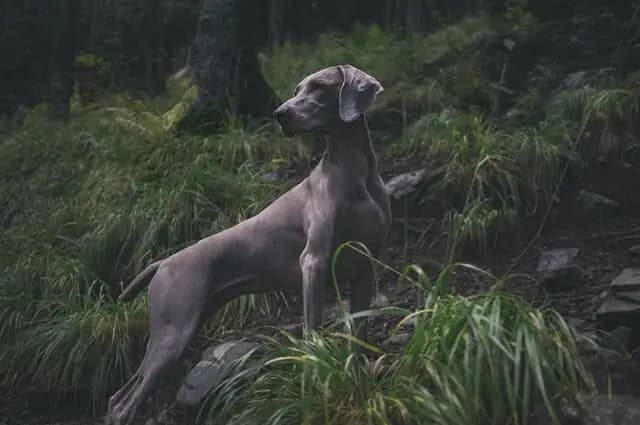
Comparing the Vizsla and Weimaraner: discover key differences in personality, care, and exercise needs to find the perfect companion for your home.
Get expert Vizsla training tips. Learn puppy socialization, advanced commands, and mental enrichment strategies tailored for this sensitive hunting breed.
Showcase your kennel on HonestDog and reach families searching for a responsibly bred Hungarian Vizsla.