Bull TerrierClose relative
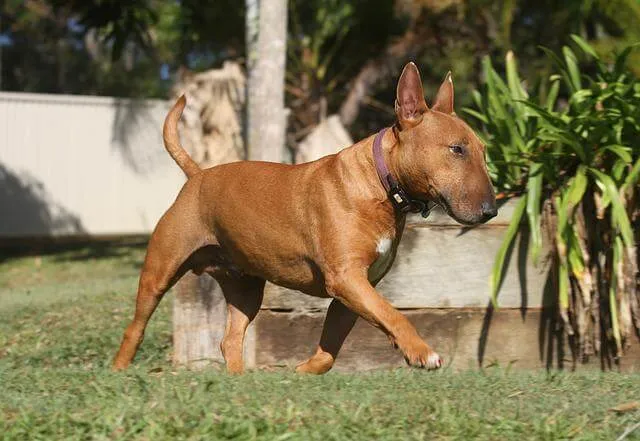
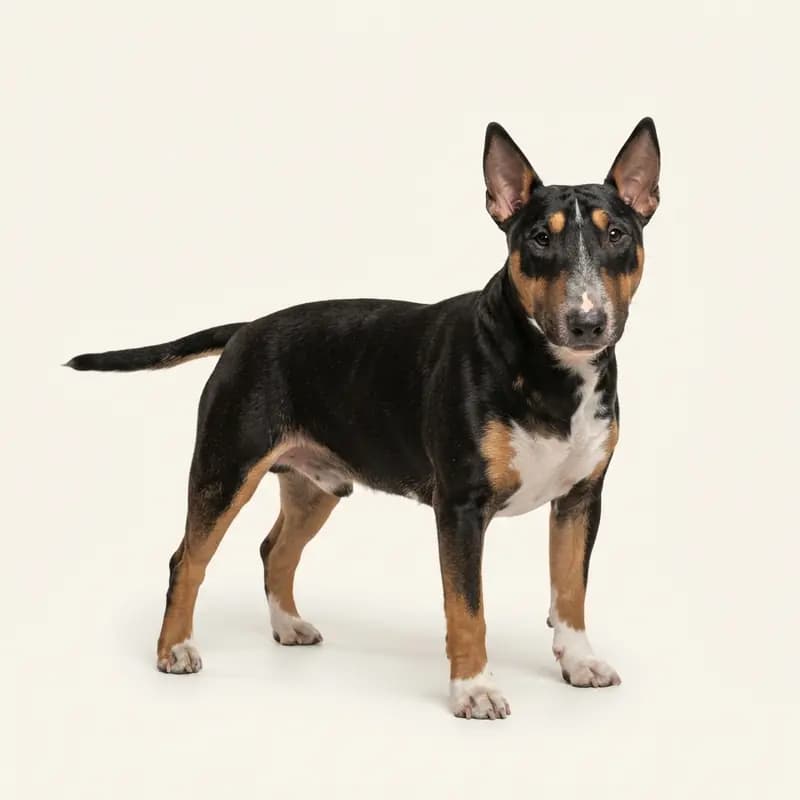
The Miniature Bullterrier is a stubborn, extremely people-oriented clown—bred as a compact bull-type dog that combines the tenacity of a terrier with enormous physical robustness. A powerhouse that will immediately exploit any inconsistency with charm.
Self-check
Answer 6 quick questions about your everyday life and see how well the Miniature Bull Terrier fits you — including an honest cost estimate per month, per year, and across the dog's lifetime.

At a glance
The essentials — key facts, traits, and health priorities — before you dive deeper.
Lifespan
11–14 yrs
Shoulder height
25–36 cm
Weight
8–15 kg
Practical
Temperament
Daily life
What matters most
Especially with a Miniature Bull Terrier, choosing the right breeder is the single most important decision you'll make. Serious breeders consistently test the parents for inherited conditions, prioritize healthy early socialization, and stay accountable long after handover. A cheap puppy without health screening tends to become the most expensive dog later on.
See HonestDog breeder standards →Colors & coat
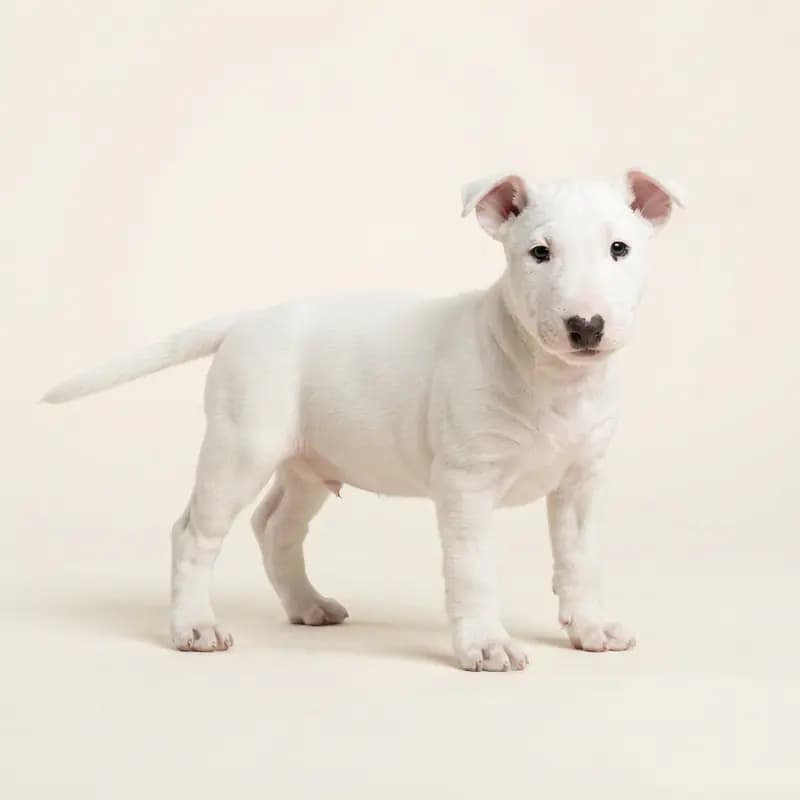
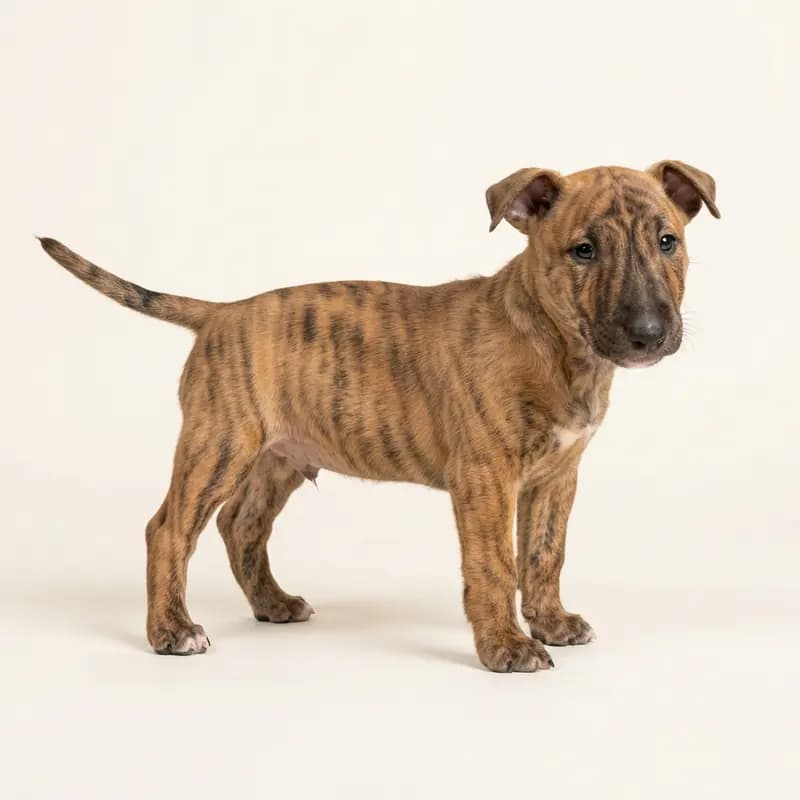
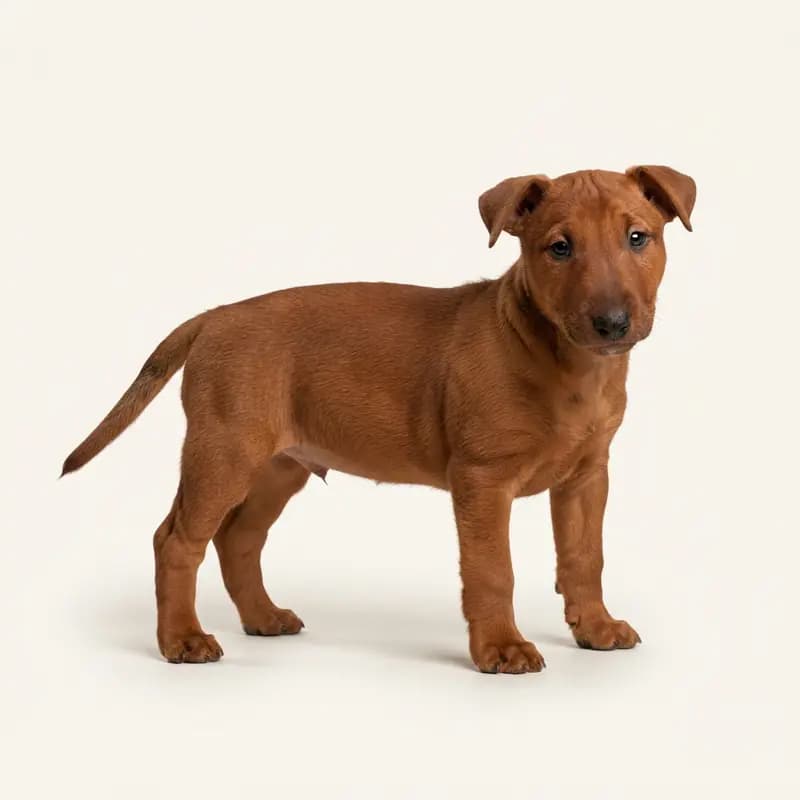
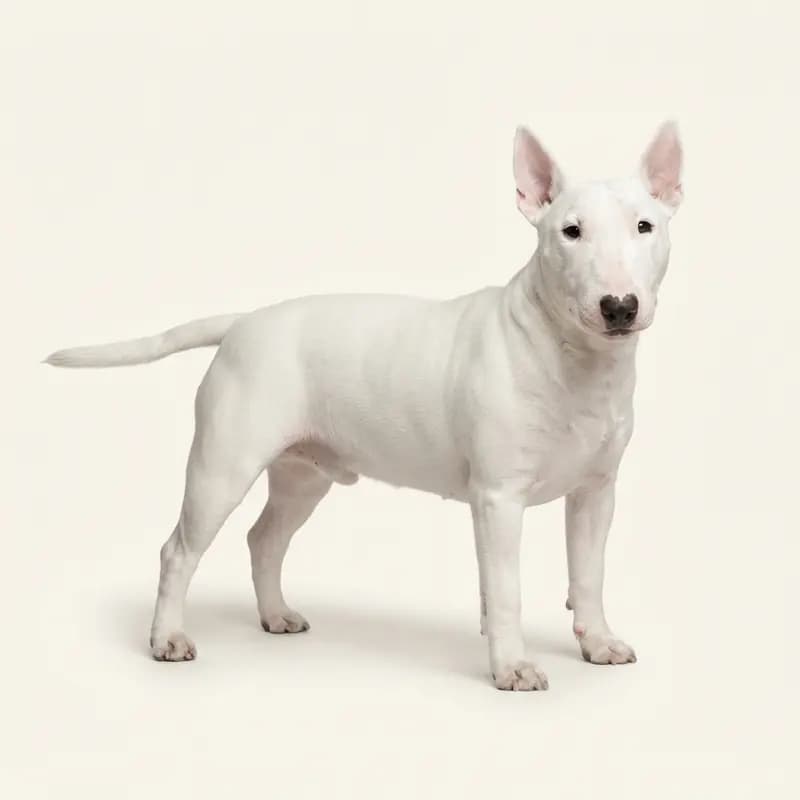
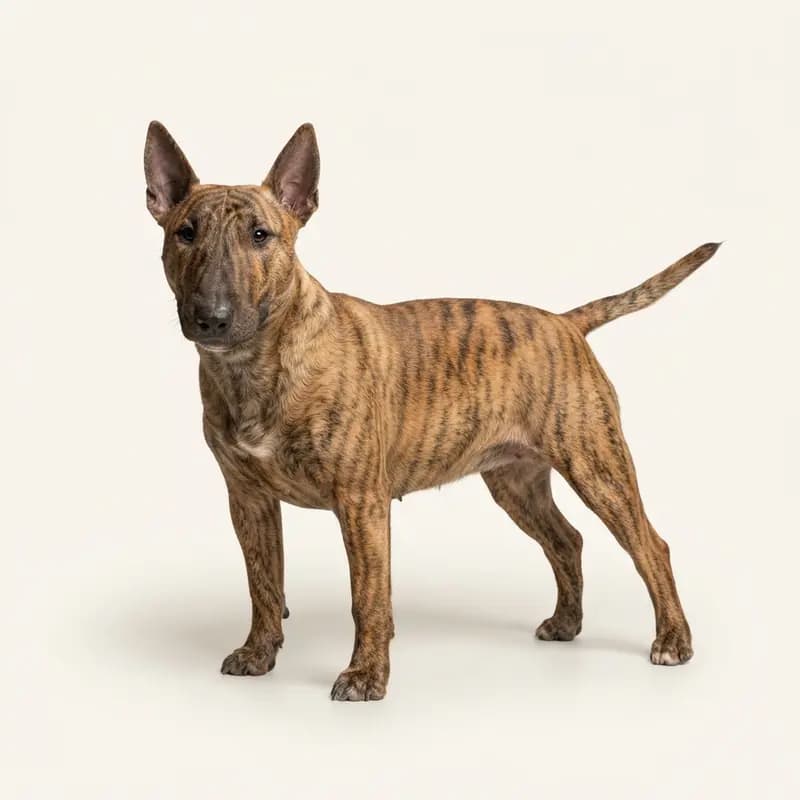
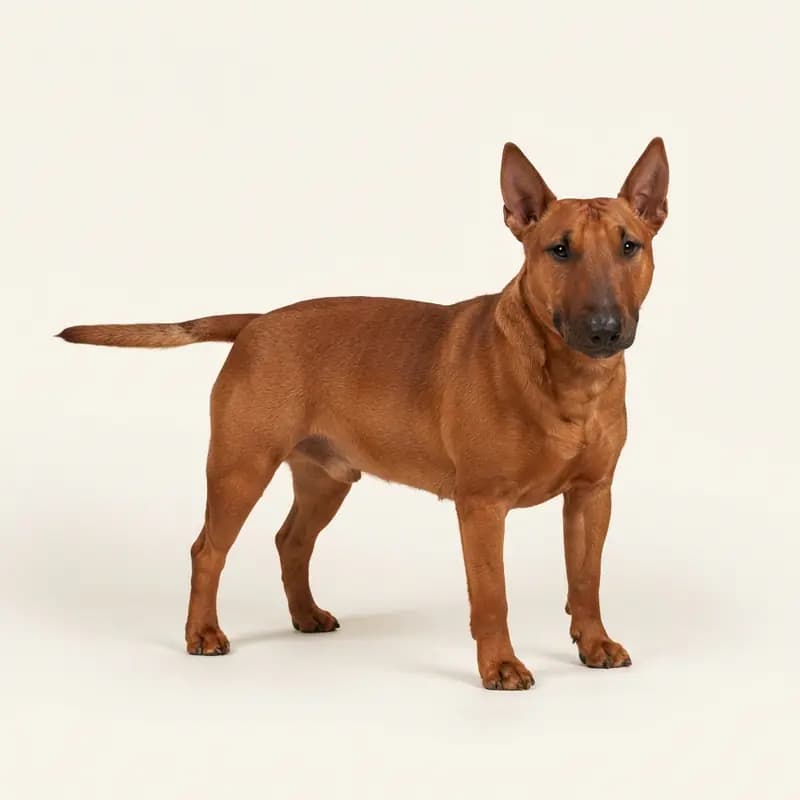
The coat colors that occur in the Miniature Bull Terrier — including which ones fall outside the breed standard and which carry genetic risk.
Eye colors
 Brown
BrownCoat type
 Short
Short Smooth
The real vibes check
A Miniature Bullterrier is not a dog that obeys you blindly—he is a stubborn roommate in a tank costume who weighs every command to see if it's worth his while. What he lacks in classic obedience, he makes up for with boundless, often intrusive love for his humans. You aren't getting a perfect teacher's pet, but an extremely loyal clown who tests your humor and your resolve every single day.
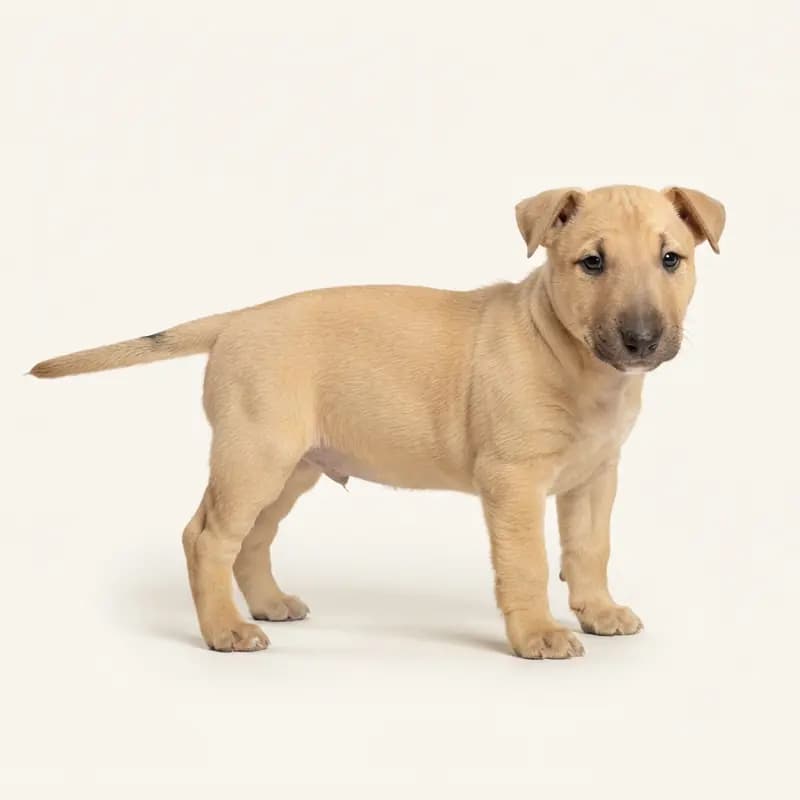
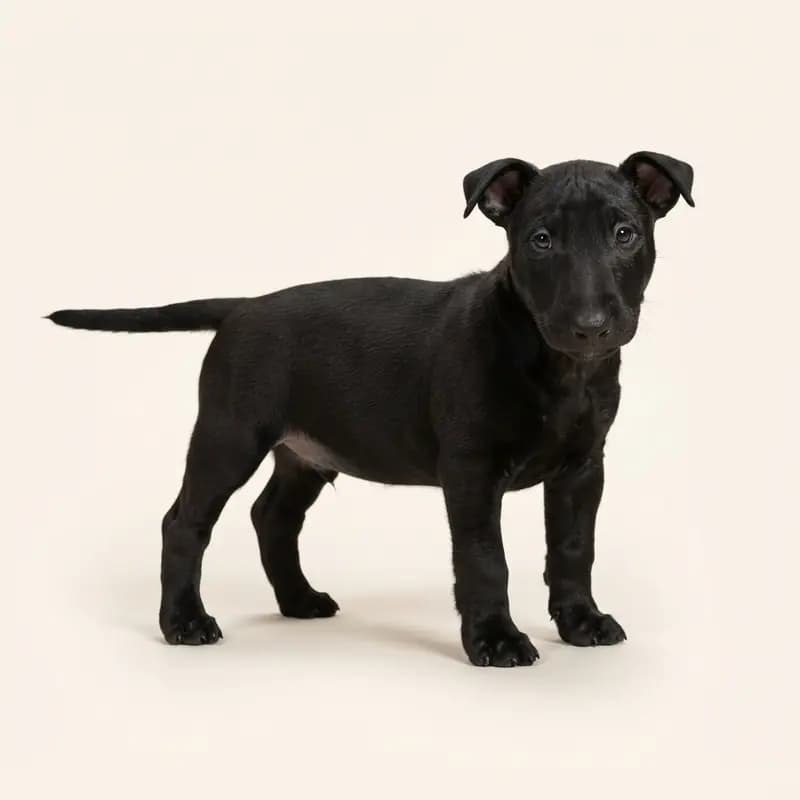
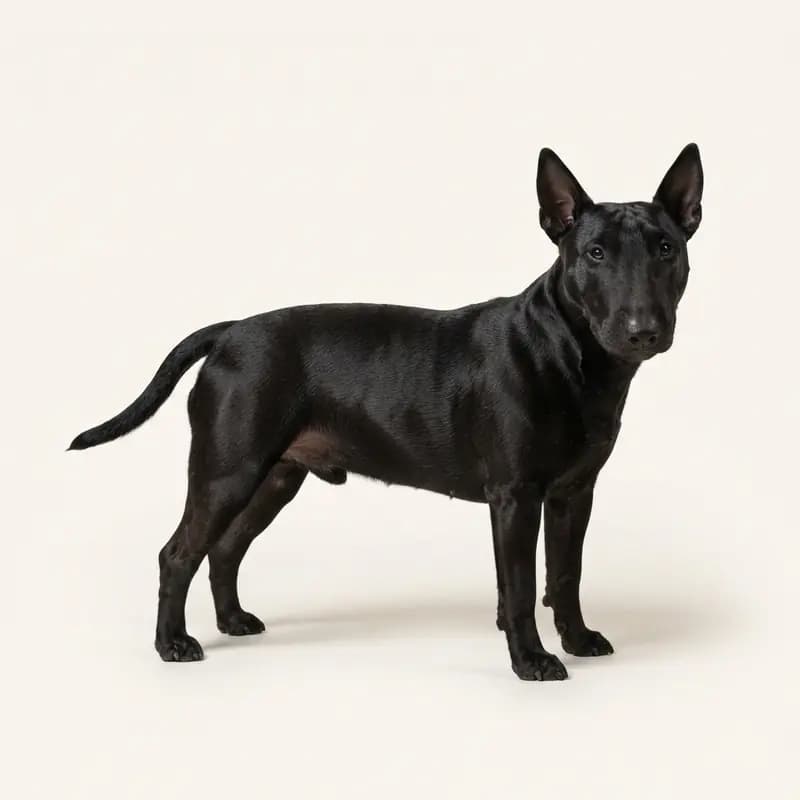
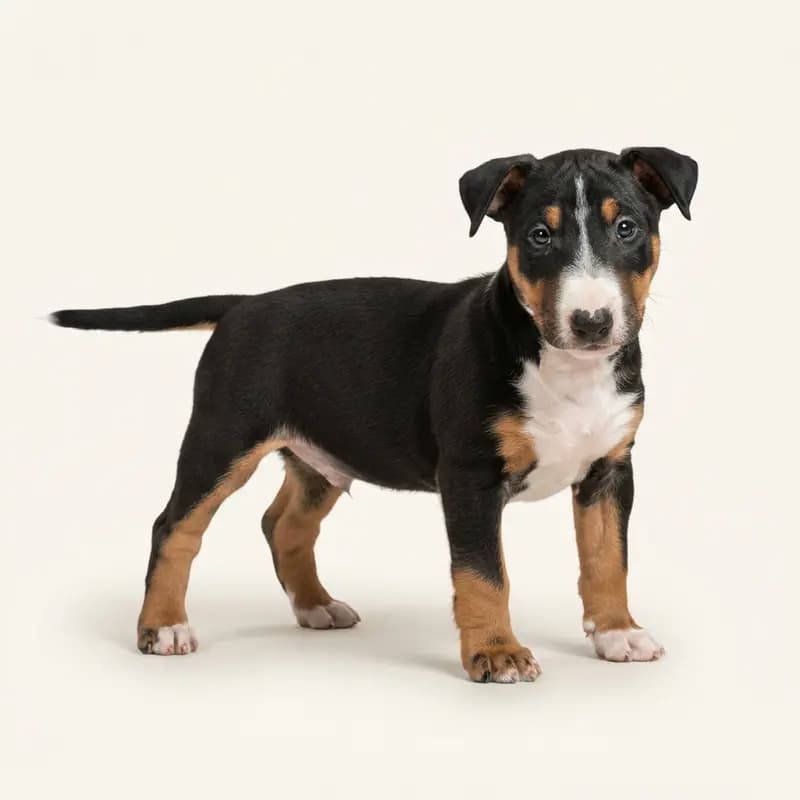
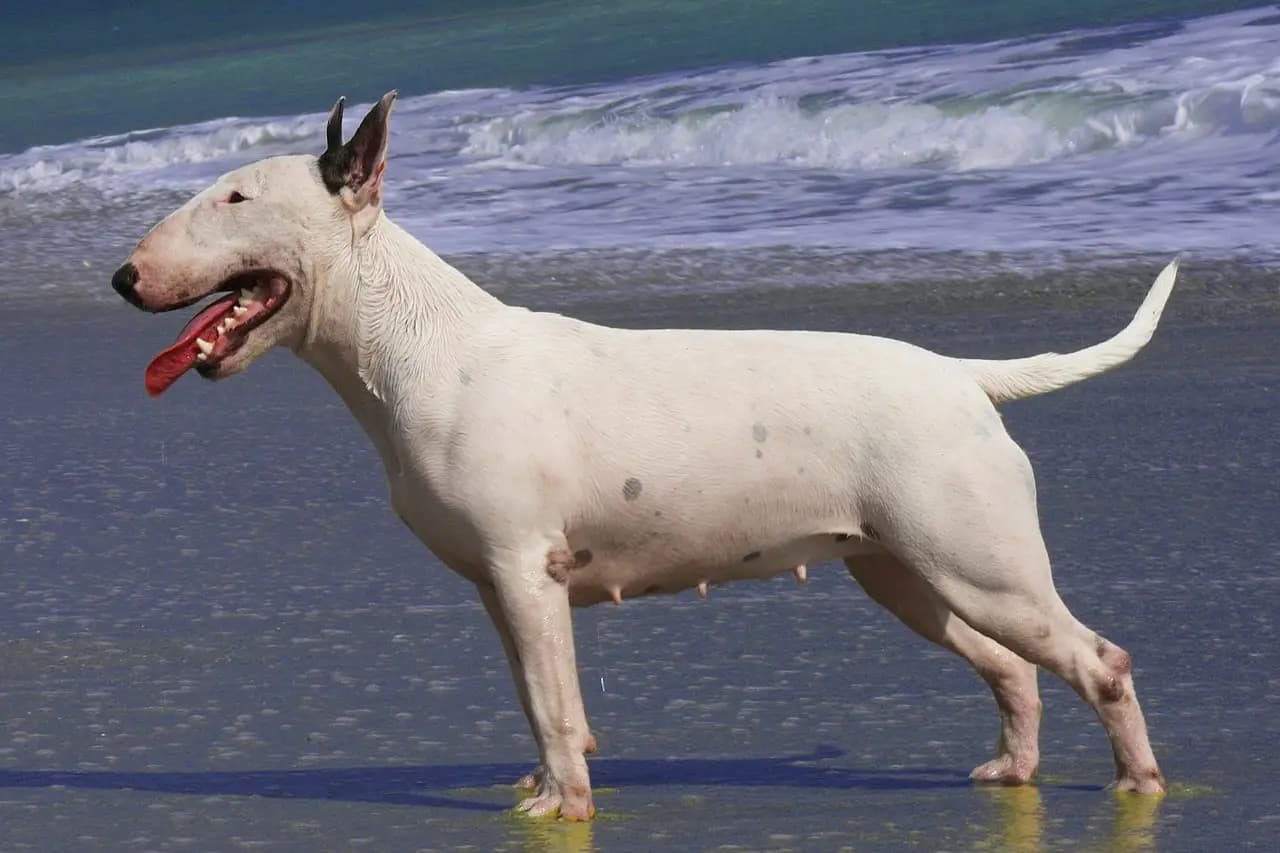
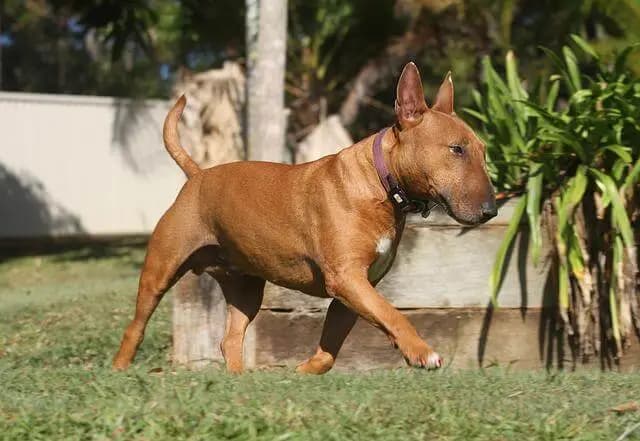
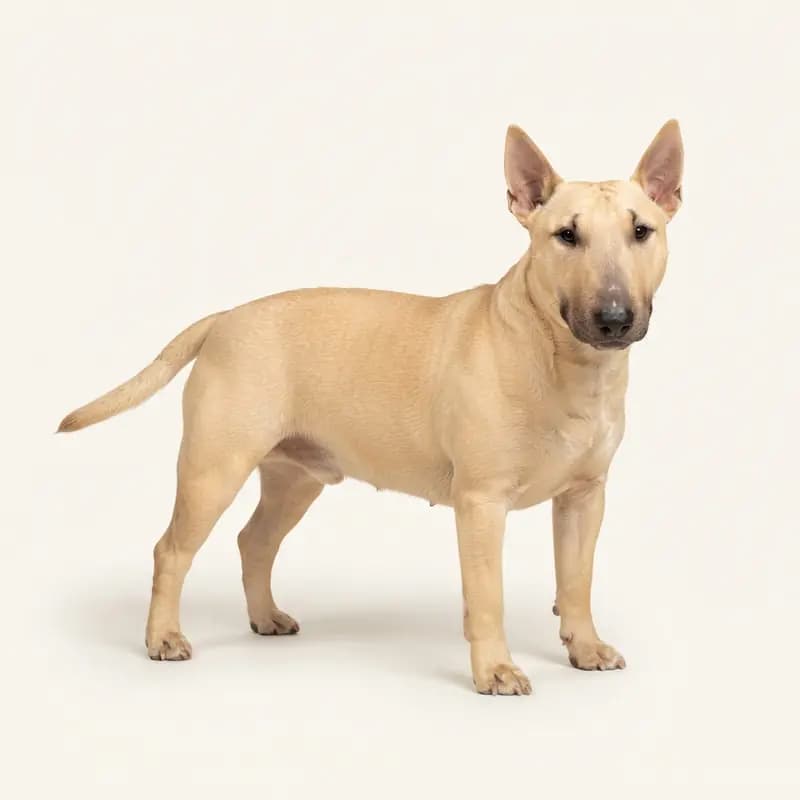
The Miniature Bull Terrier, also known as the Mini Bull, is a smaller version of the Standard Bull Terrier. Despite their reduced size, they are characterized by a very muscular and robust build. Their most distinctive feature is undoubtedly the so-called "egg-shaped" head, with its small, triangular and closely spaced eyes, which give these dogs their very own, unmistakable expression. This breed belongs to FCI group 3, the terriers. There is no difference between show and performance lines in Miniature Bull Terriers. It is therefore a very uniform breed, whose representatives all have the same level of activity and energy.
If you are looking for a small dog but with a big temperament and lots of energy, then the Miniature Bull Terrier could be just the breed for you. These dogs are known for their active lifestyle and strong play instinct. They love to romp around with their people and discover new things. With their funny and charming nature, they often ensure laughter and a good mood. Thanks to their terrier heritage, Miniature Bull Terriers are also very brave and brave dogs. They stop at nothing and are always ready to protect their family. Despite their bravery, they are not prone to excessive aggression and are usually quite friendly and social towards other dogs and people. When it comes to their independence, the Miniature Bull Terrier can sometimes be a little particular be intimate. Like many terriers, they are known for their stubbornness. However, that doesn't mean they don't enjoy spending time with their family. On the contrary, they are very people-oriented and value the company of their people very much. Despite their energy and playfulness, Miniature Bull Terriers can learn to stay alone as long as they are properly prepared. However, they should not be left alone for excessive periods of time, otherwise they may become bored and develop destructive behavior. Because of their history as rat hunters, Miniature Bull Terriers have strong hunting instincts. This can be controlled through training and socialization, but you should always be on guard when your Mini Bull is around smaller animals. When it comes to alertness, Miniature Bull Terriers are pretty good. They are always alert and ready to protect their family if they believe there is danger. However, they are not prone to excessive barking and are generally quite calm dogs as long as they get enough exercise and mental stimulation.
| Watchfulness A natural watchdog with real protective instinct. | High |
| Openness to Strangers Neither pushily friendly nor suspicious. | Neutral |
| Hunting or Herding Drive Mild interest in movement and small animals — easily managed. | Low |
Fun Fact!
Did you know that the Miniature Bull Terrier is also known as “the clown of dog breeds?” is referred to? Their cheerful and often silly behavior often brings much entertainment and laughter into their home!
Miniature Bull Terriers, like Bull Terriers, are powerful and responsive dogs. They are not beginner dogs and the appropriate handling of stimuli must be practiced with them at an early stage.
Despite their energy and playfulness, Miniature Bull Terriers can be kept well in the city as long as they get enough exercise and mental stimulation. They generally get along well with other dogs and pets, but should always be supervised when around smaller animals due to their hunting instincts. Miniature Bull Terriers are known for their love of children and can make great family dogs. They are very patient and tolerant of children, but as with any dog, interactions between children and dogs should always be supervised to ensure that both the child and dog are safe and respectful of one another. In some federal states, this breed is considered a listed dog and special requirements must be observed.
Gets on well with different people and varying routines.
Gets on well with children — with adult supervision.
Can get on with dogs it knows — strangers are a different story.
Adapts well to city living and urban environments.
Owning a dog is a privilege, but it's also a real responsibility. Before you bring one into your life, be honest with yourself about the commitment it takes.
When raising and training Miniature Bull Terriers, it is important to use a positive, reward-based approach. They are intelligent and trainable, but can also be a little stubborn, which can sometimes make training a challenge. Therefore, patience and consistency in upbringing are very important. Miniature Bull Terriers need lots of mental and physical stimulation to be happy and well-adjusted. They love learning new things and solving tasks, so intelligence toys and obedience exercises can be a great way to challenge their minds. It is important to be careful not to overwhelm the dog, because even though they like to be active, they also need enough rest and relaxation. As with many terrier breeds, there is a risk of Miniature Bull Terriers becoming "ball junkies." can be. They love chasing balls and other toys, and without proper boundaries, this behavior can quickly become obsessive. Therefore, it is important to keep play in moderation and ensure that your dog also has other forms of stimulation and activity.
In terms of nutrition, Miniature Bull Terriers require a balanced diet with high-quality proteins, healthy fats and a good mix ation of fruits and vegetables. As with any dog breed, it is important to avoid obesity as it can lead to a variety of health problems. Some Mini Bull Terriers can also be sensitive to certain foods, so it's important to watch for possible signs of food allergies or intolerances. In terms of care, Miniature Bull Terriers are quite easy to care for. They have short, smooth fur without an undercoat and do not shed much. They are therefore also suitable for people with mild allergies. Regular brushing helps keep the coat healthy and shiny and removes dead hair. An occasional bath can also be helpful, especially if your Mini Bull likes to run around outdoors and get dirty.
| Care Level Regular brushing and occasional professional grooming. | Moderate |
| Exercise Needs Needs several hours of serious exercise every day. | Very active |
| Shedding No or minimal hair loss — suitable for allergy sufferers. | No shedding |
| Trainability Bred to work closely alongside humans. | Highly trainable |
Our experts are still reviewing this information. Spotted something wrong? Email us at info@honestdog.de.
Elevated risks
Health grade
The Miniature Bull Terrier has significant health issues, which is why you must be extremely careful when buying. The serious risks of the breed include the fatal hereditary disease lethal acrodermatitis (LAD), painful polycystic kidney disease (PKD), and laryngeal paralysis. A responsible breeder minimizes these dangers through targeted screening and mates carriers of LAD or laryngeal paralysis exclusively with proven clear dogs. Before buying, you must demand the written test results of the parent animals: a genetic test for lethal acrodermatitis (LAD) and laryngeal paralysis (either clear or carrier), the ultrasound scan for polycystic kidney disease (PKD) with a normal result, and proof of bilateral hearing (BILATERAL_HEARING) via testing for congenital hereditary sensorineural deafness (CHSD).
Grade is relative to other breeds — AI-assisted and editorially reviewed.
Methodology and data: HonestDog Dog Breed Health Report 2026
What matters most for this breed
Tap any item to see details.
With regular checks on teeth and skin, as well as routine veterinary care, most of these issues can be managed well in everyday life.
Reputable breeders have the parents' eyes, hearing, heart, kidneys, and knees checked and pay attention to a healthy jaw to reduce risks within the bloodline.
Note: This health overview is AI-assisted and editorially reviewed. It is for orientation only and does not replace veterinary advice.
What matters most for this breed — what's common, how much it affects the dog's life, and how to protect yourself as a buyer.
Tap a body region to see the inherited conditions linked to it.
The three most important risks
Pick a region on the map to explore other areas.
Tier 1 reflects the tests AKC CHIC / DCBT actually mandates. Tiers 2 and 3 show how responsible breeders go beyond.
Club standard. Tests that the relevant breed club (VDH / FCI / AKC parent club) requires. Any serious breeder should be able to show you these.
Note: This health overview is AI-assisted and editorially reviewed. It is for orientation only and does not replace veterinary advice.
A Miniature Bull Terrier costs around ~€170 per month (€90 – €320, depending on your setup). The first year adds up to roughly ~€5,660 including purchase, equipment and puppy school; across the dog's life (12.5 years) it comes to about ~€29,580.
With surgery cover, running costs come to about ~€170 per month — in return, your share of a major operation drops from several thousand euros to around 20 percent.
Per month
~€170
In the first year
~€5,660
Across the dog's life
~€29,580
Estimated purchase price from a breeder: €2,000 – €3,500
Estimate at a mid-range setup (suburban, dry food, 1–2 hours of daily exercise), average German prices, as of July 2026.
 Illustrative image
 Illustrative image
 Illustrative image
 Illustrative image
The history of the Miniature Bull Terrier is closely linked to that of the larger Bull Terrier. These dogs were originally bred in England in the 19th century as fighting dogs by crossing the old English terrier with the bulldog. The smaller miniature version was later developed by crossing smaller breeds to create a more compact dog that was better suited to rat hunting. The Miniature Bull Terrier was recognized as an independent breed by the FCI in 1939. Despite their checkered past, today's Miniature Bull Terriers are a far cry from their pugnacious ancestors and are known for their friendly and lively temperament.
The Miniature Bull Terrier was originally bred for dog fighting, but was later valued as a companion and show dog.
England
1800
Many owners describe the Miniature Bull Terrier as a loyal "clown" at home with the family. Owner accounts keep coming back to how affectionate and cuddly these dogs are in their own home. They constantly seek close physical contact with their people, would rather share the sofa than lie anywhere else, and show a very high tolerance threshold and a lot of patience with people and children they know.
At the same time, owners say you shouldn't let the handy size fool you. The Mini Bull is seen as a compact bundle of muscle that is explosive, fast and full of drive outdoors. Many owners stress that these dogs are relaxed housemates indoors as long as they get enough to do, but that they quickly start working over furniture or other objects when they're under-challenged or left alone too long.
A recurring everyday theme is how other people react. Although the breed is classified differently from the standard Bull Terrier under the law in many regions, passersby and other dog owners often meet its distinctive look with reservations and uncertainty. Experienced owners therefore say you need a thick skin and a willingness to educate people.
Sources:miniatur-bullterrier.eupeqaboo.commit-tier.dedogorama.appamba-versicherungen.de
Owners agree that the Miniature Bull Terrier needs firm leadership in training, along with plenty of humor and patience. A good dose of stubbornness is typical of the breed: commands often get questioned, and blind obedience is hardly something to expect. Owners report that pressure or harshness only makes these dogs stubborn and shut down, while consistent training built on positive reinforcement, food and play gets the best results.
Impulse control and frustration tolerance are among the biggest challenges in practice. Many owners describe young Mini Bulls reacting very loudly and theatrically when they're excited, when they're told no, or when they meet other dogs. In owner accounts, deliberately teaching calm and consistent mat training are considered essential foundations for keeping the dog from getting wound up in daily life.
Many owners also warn against underestimating the prey drive toward small animals and the typically boisterous way these dogs play with other dogs. Many Minis do get along with other dogs, but dogs of other breeds fairly often misread their very physical style as a provocation, so walks call for a lot of foresight and good leash manners.
Sources:miniatur-bullterrier.eumit-tier.dedogorama.appamba-versicherungen.demini-bull-terrier.de
Health discussions among owners focus heavily on skin and food problems. Sensitive skin, allergic reactions, itching and paw licking come up very often, especially in mostly white dogs. Many owners go through a long odyssey of elimination diets and special feeding before they find a food their dog tolerates.
Another central point in owner accounts is choosing a responsible breeder. Owners point out that breed-typical genetic risks such as lens luxation (PLL), kidney disease, heart defects and congenital deafness can only be minimized by carefully tested parents. Lethal acrodermatitis (LAD) also comes up regularly in breed circles as a gene test that must not be skipped.
Despite these known weak spots, owners describe a Miniature Bull Terrier from healthy bloodlines as a surprisingly robust, tough dog with a high pain tolerance that keeps remarkable vitality and playfulness well into old age. Still, owners explicitly advise newcomers to set money aside early or plan for suitable pet health insurance.
Sources:miniatur-bullterrier.eupeqaboo.commit-tier.deamba-versicherungen.deforum.hundund.de
Paraphrased from real owner reports · translated from German
The Miniature Bull Terrier is an active dog that needs plenty of exercise and mental stimulation. Research the temperament, grooming needs, and space requirements before deciding.
The average life expectancy of a Miniature Bull Terrier is 11-14 years. With proper care and regular vet visits, your dog can live a long, healthy life.
Miniature Bull Terrier grooming requirements include regular brushing, nail trimming, and dental care. HonestDog provides detailed grooming tips for every breed.
The Miniature Bull Terrier can be a great family dog. Proper training and socialization are key. HonestDog provides family suitability information for every breed.
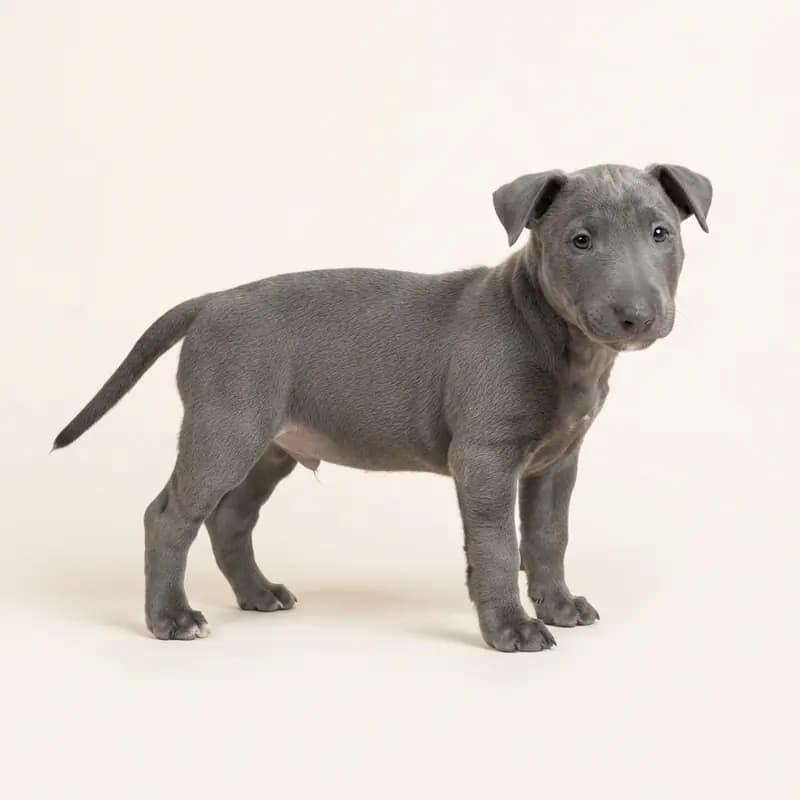
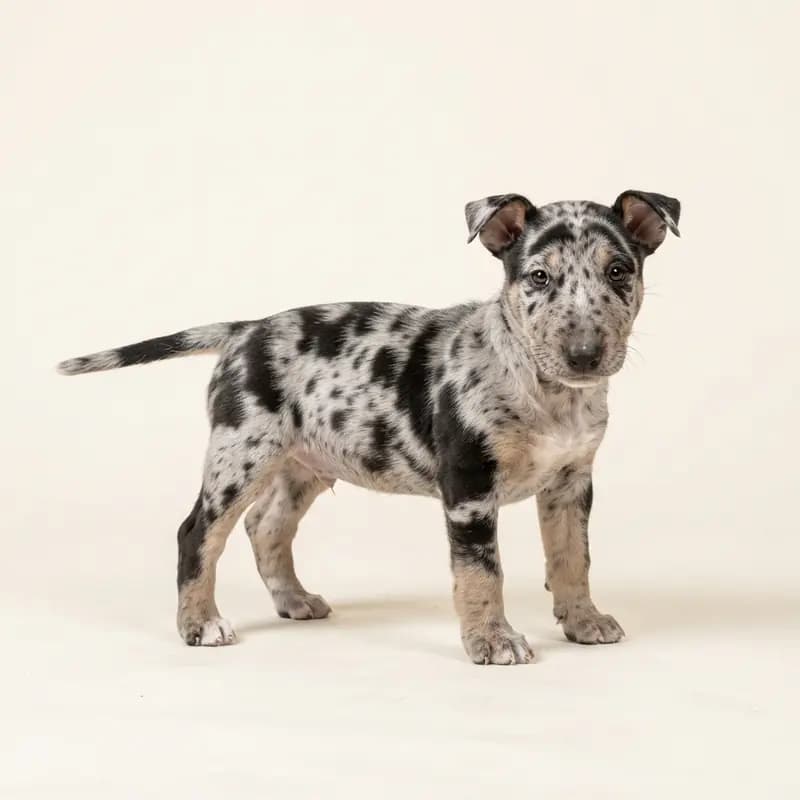
The Miniature Bull Terrier comes in these colors: White, Brindle, Red, Fawn, Black, Tricolor, Blue, Liver, Merle. Colors that fall outside the breed standard are marked as such on the breed page.
Showcase your kennel on HonestDog and reach families searching for a responsibly bred Miniature Bull Terrier.