Loading breed
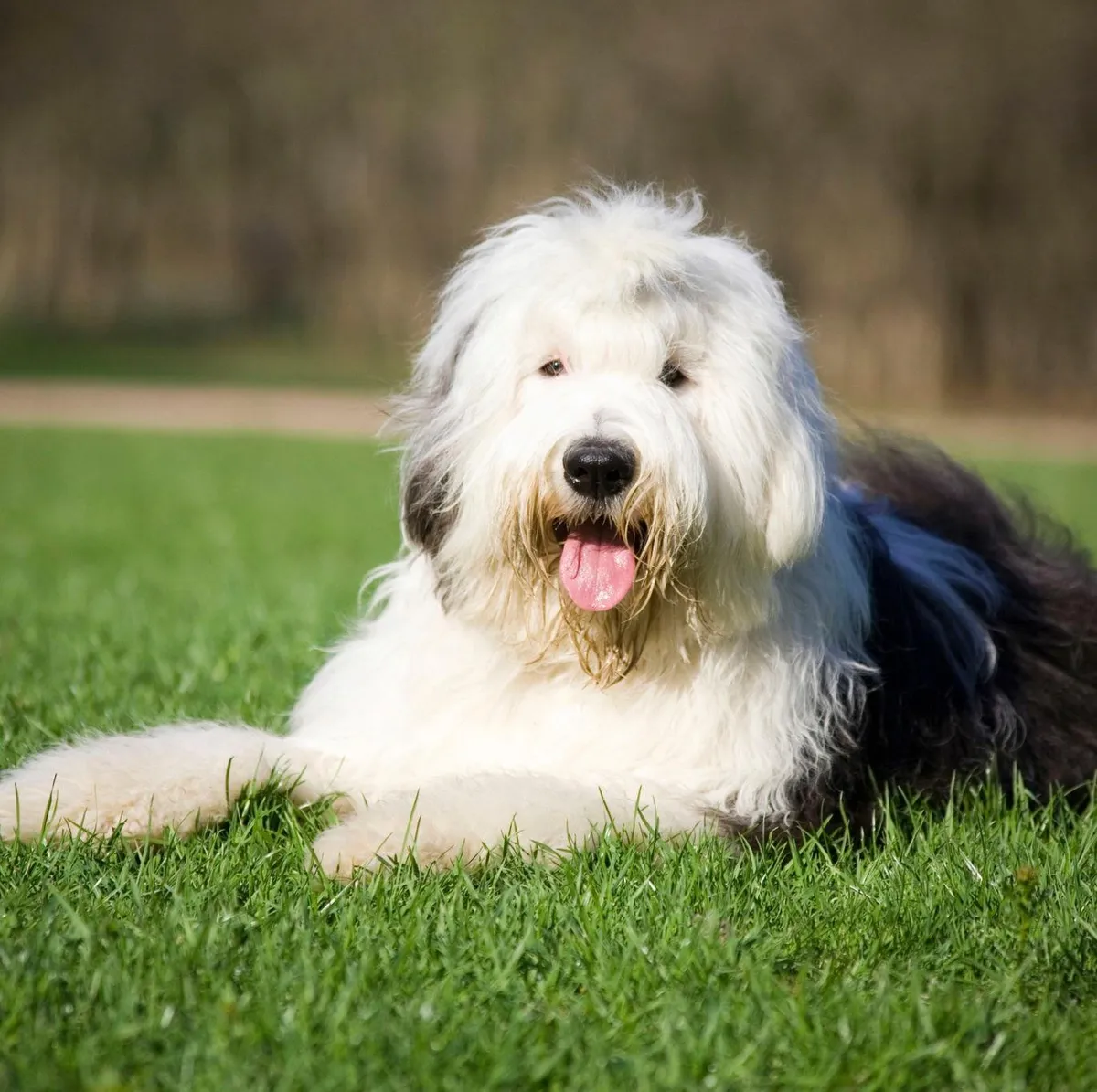
Old English Sheepdog
Health grade C- Height56–65 cm
- Weight27–45 kg
- Life expectancy10–12 yrs
- Puppy price2,000–3,500 €
- Energy3/5
The Essentials at a Glance
The Bobtail is a massive, surprisingly agile Treibhund (herding dog)—bred to drive cattle and sheep over long distances to market, which gives him enormous stamina, a deep voice, and an unwavering protective instinct to this day.
- Health grade C: With 18 documented hereditary diseases, the Old English Sheepdog carries an above-average genetic burden, which requires great caution when purchasing a puppy.
- You are prepared to invest several hours a week in truly demanding coat care to prevent matting down to the skin.
- You enjoy channeling his herding genes into the right outlets through scent work, lunging, or long hikes.
- You expect him not to try to herd playing children or guests—controlling movement is his deeply ingrained hardware.
Is the Old English Sheepdog right for you?
At a glance
Old English Sheepdog overview
The essentials — key facts, traits, and health priorities — before you dive deeper.
Health grade
Relative to other breeds
S
A
B
C
D
E
Very healthyHigher risk
Average — several important tests are expected.
See full health info & tests →
Note: This health overview is AI-assisted and editorially reviewed. It is for orientation only and does not replace veterinary advice.
Lifespan
10–12 yrs
Height
56–65 cm
Weight
27–45 kg
Practical
- Puppy price: 2,000 – 3,500 €
- Coat: Dense, long, with an undercoat
- Origin: England
Temperament
Energy
Trainability
Family fit
With kids
Daily life
Care effort
Shedding
Barking
City-friendly
Guard instinct
What matters most
Especially with a Old English Sheepdog, choosing the right breeder is the single most important decision you'll make. Serious breeders consistently test the parents for inherited conditions, prioritize healthy early socialization, and stay accountable long after handover. A cheap puppy without health screening tends to become the most expensive dog later on.
See HonestDog breeder standards →Colors & coat
What colors does the Old English Sheepdog come in?
The coat colors you will see in Old English Sheepdog litters — including which ones fall outside the breed standard and which carry genetic risk.
Eye colors
 Brown
Brown Blue
Blue Odd-eyed
 Partial (split eye)
Coat type
 Long
Long Double coat
Is the Old English Sheepdog right for you?
Perfect for you if:
- You are prepared to invest several hours a week in truly demanding coat care to prevent matting down to the skin.
- You enjoy channeling his herding genes into the right outlets through scent work, lunging, or long hikes.
- You are looking for an extremely people-oriented, almost clingy family dog who prefers to be right in the middle of everything rather than just on the sidelines.
- You have a house with a garden where he can live out his breed-typical vigilance without his extremely loud voice causing immediate conflicts.
Less ideal if:
- You expect him not to try to herd playing children or guests—controlling movement is his deeply ingrained hardware.
- You place great value on a spotless home—in his lush coat, he effortlessly carries half the forest, burrs, and plenty of mud straight onto your sofa.
- You have to leave him alone regularly for a normal full-time job—this dog needs his human pack around him and withers in isolation.
The real vibes check
Underneath the mountain of fluffy fur is not a giant stuffed animal, but an athletic, assertive worker who likes to make his own decisions. If you guide his stubborn herding streak with consistency and accept the dirt in the house, you get an unwavering clown who would literally walk through fire for his family.
Self-check
Would the Old English Sheepdog really fit your life?
Answer 6 quick questions about your everyday life and see how well the Old English Sheepdog fits you — including an honest cost estimate per month, per year, and across the dog's lifetime.
Fit checkCost estimateRisk dice
Takes about 1 minute · free & anonymous
Breed Profile
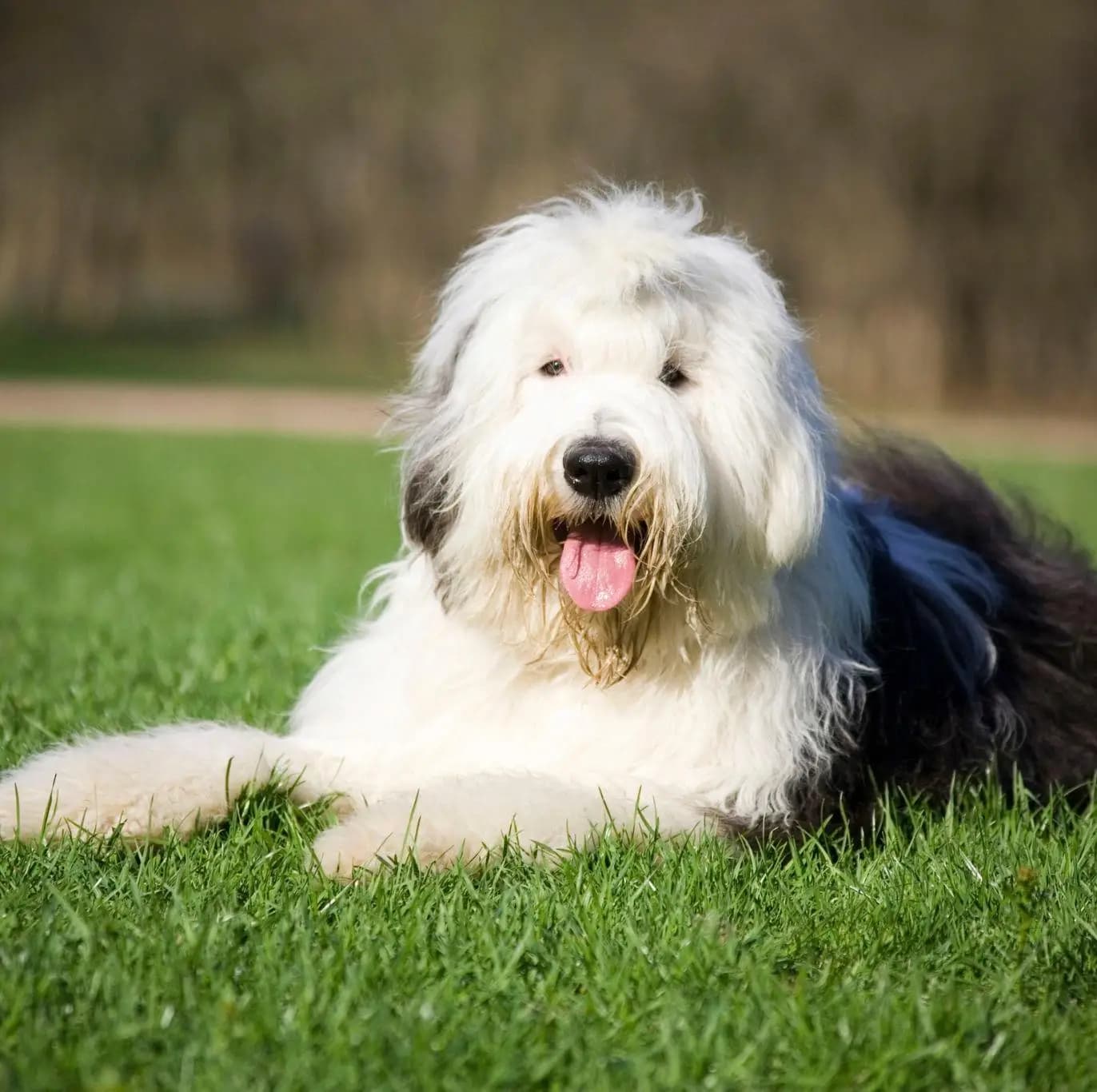
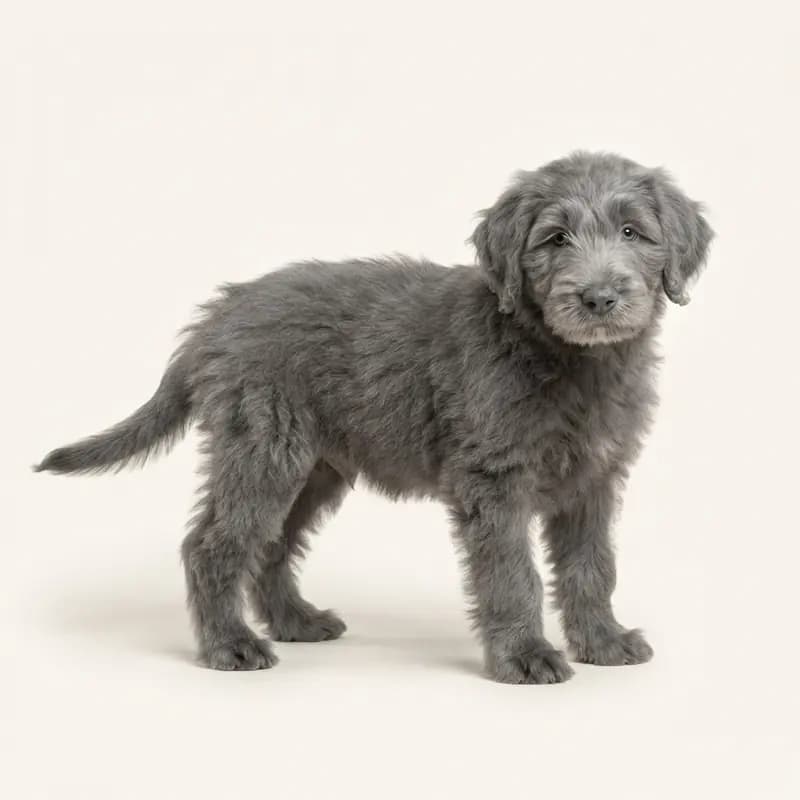
The Old English Sheepdog, also affectionately known as the Bobtail, is a large, powerful dog known for its thick, long and slightly curly coat. He belongs to FCI Group 1, the herding dogs and cattle dogs. The characteristic coat color is usually blue, gray or blue-gray, often combined with white markings. His face is often obscured by his fur, which sometimes falls over his eyes, and he has a distinct "bear" look. His ears are small and droopy, and he has a strong build built for endurance and strength. Its tail is often naturally short or is shortened in some countries. There are no strict distinctions between performance and show lines in the Old English Sheepdog, but you can still see differences in coat length and build between dogs from different breed lines.
All measurements in detail
- Height
- 56 - 61 cm (Female), 61 - 65 cm (Male)
- Weight
- 27 - 36 kg (Female), 32 - 45 kg (Male)
- Life Expectancy
- 10 - 12 yrs
- Character
- Intelligent, affectionate, playful
- Coat
- Dense, long, with an undercoat
- Coat Color
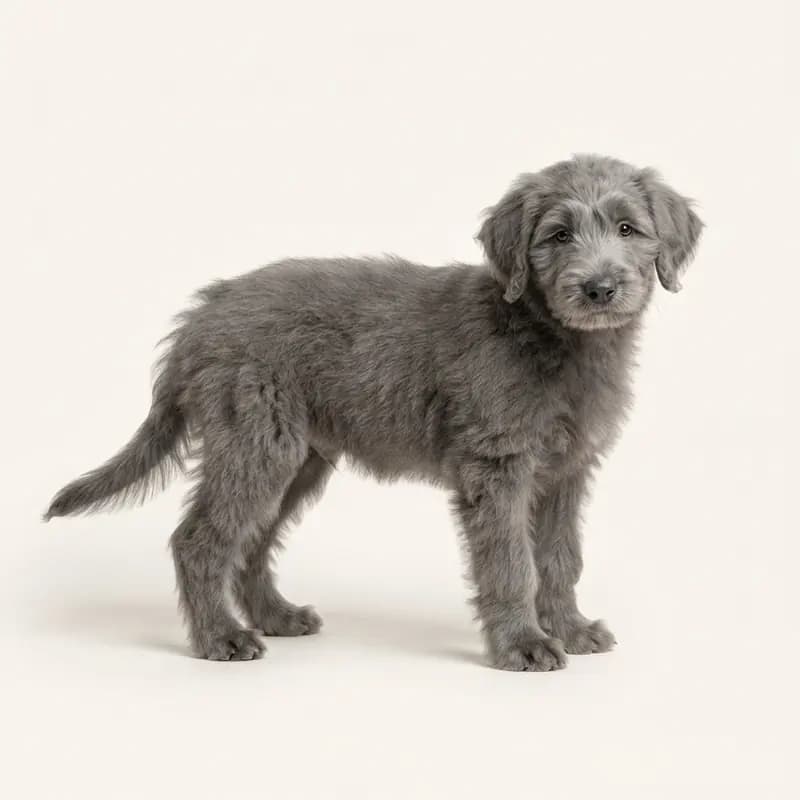
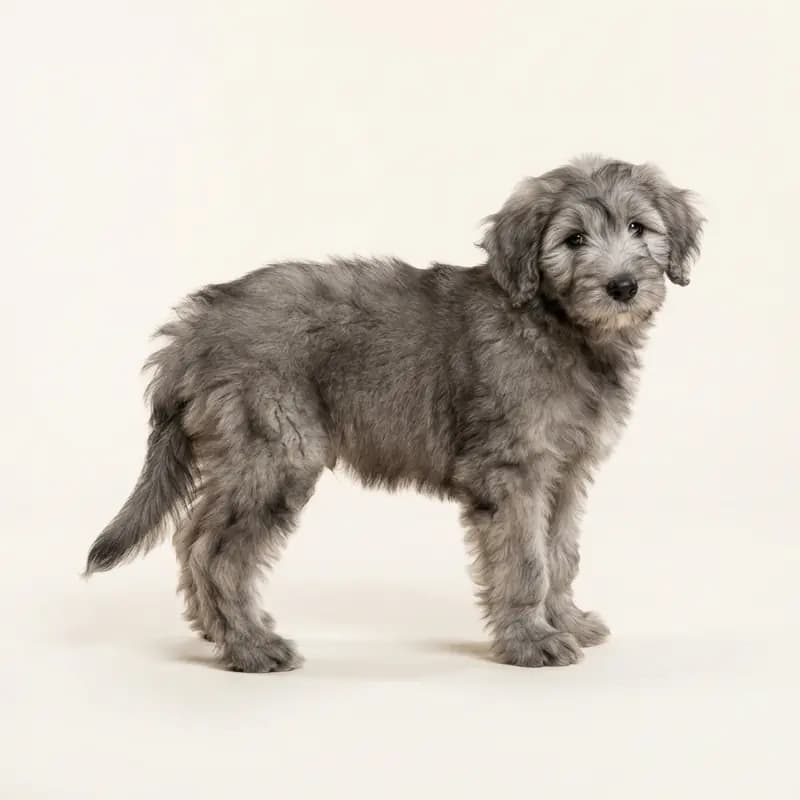
- Blue, gray, blue-gray, with or without white markings
- Price
- 2000 - 3500 €
Character & Temperament
The Old English Sheepdog is a wonderful companion who has both an active and loving side. Its origins as a herding dog are reflected in its intelligent and alert character. He is also very affectionate and people-oriented. A Bobtail loves spending time with his family and often develops a particularly close bond with a specific person in the household. As a herding dog, the Old English Sheepdog has an innate instinct to care for its "flock", which in this case is its family. He can be somewhat protective, but he is usually not aggressive. The temperament of the Old English Sheepdog is overall balanced. He is playful and active, but not hyperactive. He enjoys long walks, games and activities that challenge both his body and mind. It's important to note that this breed can also exhibit a bit of clownish behavior, which is often amusing and shows how much they enjoy life. The Bobtail also has a gentle side and can be very patient. This often makes him a good companion for children, although it should be noted that his size and strength make him a better fit for families with older children. Old English Sheepdogs can learn to stay alone, but they prefer being in company and can suffer from separation anxiety if left alone for long periods of time. It is also important to take care of their coat as it requires regular grooming to avoid mats and skin problems. In terms of hunting behavior, the Old English Sheepdog does not tend to exhibit strong prey-catching behavior, but it can still be stimulated by movement and sound. His alertness and herding instincts make him alert to his surroundings and he can be trained to be a good watchdog without becoming aggressive. In conclusion, the Old English Sheepdog is a loving, intelligent and active companion who is looking for a family willing to give him the time, activity and affection he needs. In the right environment, the Bobtail will be a loyal and happy part of family life, winning over the hearts of its people with its charming personality and endearing nature.
| Watchfulness Occasionally alerts but is fundamentally open. | Low |
| Openness to Strangers Warms up quickly and is generally welcoming. | Friendly |
| Hunting or Herding Drive This drive runs deep — no amount of training eliminates it. | Very strong |
Fun Fact!
Did you know that the Old English Sheepdog is often referred to as a "Bobtail"? is called because in the past it was common to shorten its tail to identify it as a working dog? Today this is no longer common or even banned in many countries.
What Awaits You
Bobtails are active and intelligent dogs that like to be kept busy. They can be alert and territorial, so appropriate breeding and training is important.
Housing & Care
The Old English Sheepdog requires a lot of space and exercise and is therefore more suitable for living in the country or in a house with a garden than for a city apartment. He generally gets along well with children, but due to his size, caution should be exercised around very young children. He can also get along well with other pets, including cats, if he is introduced to them from an early age.
- Family Friendly
Lives for its family — the born family companion.
Ideal family dog - Child Friendly
Extraordinarily patient and loving — a true family dog.
Excellent with children - Dog Friendly
Actively enjoys the company of other dogs.
Dog-friendly - City Friendly
City-appropriate with enough exercise and stimulation.
Manageable in cities
Owning a dog is a privilege, but it's also a real responsibility. Before you bring one into your life, be honest with yourself about the commitment it takes.
Training & Education
The Bobtail is intelligent and learns quickly, but it can also be a little stubborn. It is important to start training early and be consistent. This breed enjoys activities such as agility, obedience, and herding. Care should be taken not to over-exercise the dog as this can lead to stress. Old English Sheepdogs can sometimes become obsessed with balls or other toys. It is therefore important to offer them a balanced mix of activities and to ensure that they do not become too fixated on a single toy. It is also beneficial to teach them frustration tolerance and impulse control so that they can cope well in different situations. Since the Old English Sheepdog is a herding dog, it is in its nature to herd and protect. This behavior should be channeled appropriately to ensure the dog lives a happy and fulfilling life while being socially acceptable.
Nutrition & Care
The Old English Sheepdog's diet should be balanced and nutritious to support his active lifestyle. High-quality dry food supplemented with fresh meat, vegetables and occasionally fish is a good choice. It is important to watch your weight as being overweight can put strain on your joints and lead to health problems. When it comes to grooming, the Bobtail has a thick undercoat and a long, dense coat that requires regular grooming to prevent matting. Thorough brushing is necessary at least once a week, and more often during shedding periods. The Old English Sheepdog copes well with the climate in Germany, but in the warmer months you should be careful that it does not overheat.
| Care Level Needs regular professional grooming — time-consuming and costly. | High-maintenance |
| Exercise Needs Needs 1–2 hours of real exercise daily. | Active |
| Shedding Hair everywhere, always — no white clothing survives. | Very heavy |
| Trainability Bred to work closely alongside humans. | Highly trainable |
Our experts are still reviewing this information. Spotted something wrong? Email us at info@honestdog.de.
Health & hereditary diseases
Health
C
Solid, watch carefully
Health grade
With 18 documented hereditary diseases, the Old English Sheepdog carries an above-average genetic burden, which requires great caution when purchasing a puppy. Hip dysplasia (HD) and severe neurological conditions such as epilepsy are particularly well-known risks for this breed. Furthermore, eye conditions like Collie Eye Anomaly (CEA) must be managed through consistent mandatory health tests to prevent vision impairment.
Grade is relative to other breeds — AI-assisted and editorially reviewed.
In daily life this can mean
You should ensure joint-friendly development, maintain the dense coat consistently to avoid painful matting, and always inform the veterinarian about his drug sensitivity.
The breeder's role
Reputable breeders have joints, eyes, and hearing checked and use genetic tests to reduce the risks of respiratory diseases, exercise intolerance, and drug sensitivities in the line.
Note: This health overview is AI-assisted and editorially reviewed. It is for orientation only and does not replace veterinary advice.
No Health Tests Available
No specific health tests are currently available for this breed.
Costs & where to find one
How much does a Old English Sheepdog cost?
A Old English Sheepdog costs around ~€210 per month (€110 – €400, depending on your setup). The first year adds up to roughly ~€6,070 including purchase, equipment and puppy school; across the dog's life (11 years) it comes to about ~€30,980.
With surgery cover, running costs come to about ~€210 per month — in return, your share of a major operation drops from several thousand euros to around 20 percent.
Per month
~€210
In the first year
~€6,070
Across the dog's life
~€30,980
Purchase from a breeder: €2,000 – €3,500
Estimate at a mid-range setup (suburban, dry food, 1–2 hours of daily exercise), average German prices, as of July 2026.
Calculate your personal costs1-minute self-check with your own answers
Looking for a Old English Sheepdog?
Appearance, variants & origin
 Illustrative image
 Illustrative image
 Illustrative image
 Illustrative image
History
The full history
The Old English Sheepdog has its roots in the agricultural areas of western England. It was originally used as a herding and driving dog for sheep and cattle. Its exact origin is uncertain, but it is thought to have descended from early European sheepdogs, and may also have been influenced by the Bearded Collie. The Old English Sheepdog quickly became valued for its skills and pleasant nature. The breed became popular in the late 19th century and received recognition from the Kennel Club of Great Britain in 1888. The charismatic bobtail also became popular in pop culture, particularly through its appearances in films and advertisements.
Original Use
The Old English Sheepdog was used as a herding dog for flocks of sheep and for driving livestock.
Origin
England
Date
1700
Owner experiences
What owners say about the Old English Sheepdog
Sabine P., Halterin aus Hessen (zwei Rüden, seit 2015)
Als wir uns unseren ersten Bobtail ins Haus geholt haben, dachten viele Freunde, wir schaffen uns ein riesiges, gemütliches Plüschkissen an. Doch man darf nicht vergessen, dass der Old English Sheepdog im Herzen ein echter Arbeitshund ist. Unsere beiden Rüden sind im Alltag zwar unglaublich gutmütig, ausgeglichen und treue Begleiter, aber sie haben auch einen sehr ausgeprägten Wach- und Schutztrieb.
Für mich sind sie im Grunde wie kleine 'Herdenschutzhunde in Light'. Sie passen extrem auf ihre Familie und ihr Territorium auf, was man bei der Erziehung von Anfang an im Blick haben muss. Wer einen reinen, anspruchslosen Mitläufer sucht, unterschätzt diese Rasse leicht. Mit der richtigen Führung und Konsequenz sind sie aber absolut fantastische, loyale Partner fürs Leben.
Thomas B., Halter aus Bayern (Hündin, seit 2018)
Unsere Hündin ist mittlerweile unser dritter Bobtail, und ich kann die Vorurteile von der 'Schlaftablette' absolut nicht bestätigen. Diese Hunde haben ein feuriges Temperament, jede Menge Energie und sind extrem robust. Man muss sie geistig und körperlich sinnvoll beschäftigen – sei es durch Suchspiele oder Hundesport –, sonst suchen sie sich im Haus oder Garten ganz schnell ihre eigenen Aufgaben.
Was man definitiv lieben lernen muss, ist ihre eigenständige und liebenswürdige Sturheit. Ein Bobtail hinterfragt Kommandos gerne mal und verliert seine eigenen Ziele nie ganz aus den Augen. Wer hier mit blindem Gehorsam rechnet, wird enttäuscht. Aber genau dieser eigenwillige, clevere Charakter macht sie für uns so unglaublich liebenswert.
Karin M., Halterin aus Niedersachsen (Rüde, seit 2020)
Man muss ehrlich sein: Die Fellpflege bei einem Bobtail ist ein Fulltime-Job. Was dieser dichte Pelz an Dreck, Kletten und Zecken von jedem Spaziergang mit ins Haus schleppt, ist Wahnsinn. Ohne mehrmaliges, gründliches Bürsten pro Woche verfilzt das Unterfell sofort. Wer extrem penibel mit seiner Wohnung ist, wird mit dieser Rasse wahrscheinlich nicht glücklich.
Auf der anderen Seite wird man mit einer Sanftmut belohnt, die ihresgleichen sucht. Unser Rüde ist im Umgang mit Kindern ein absoluter Traum und unendlich geduldig. Als unser Baby einzog, war er der Erste, der sofort sanft gemeldet hat, wenn die Kleine im Kinderwagen wach wurde. Er ist einfach ein vollwertiges, sensibles Familienmitglied, das immer die Nähe seiner Menschen sucht.
Paraphrased from real owner reports
Loading owner stories
Community Posts
FAQ & more
Frequently asked questions about the Old English Sheepdog
Is a Bobtail the right dog for me?
The Bobtail is an adaptable dog that adjusts well to various lifestyles. Research the temperament, grooming needs, and space requirements before deciding.
How long does a Bobtail live?
The average life expectancy of a Bobtail is 10-12 years. With proper care and regular vet visits, your dog can live a long, healthy life.
How much grooming does a Bobtail need?
Bobtail grooming requirements include regular brushing, nail trimming, and dental care. HonestDog provides detailed grooming tips for every breed.
Is a Bobtail good for families with children?
The Bobtail can be a great family dog. Proper training and socialization are key. HonestDog provides family suitability information for every breed.
What colors does the Bobtail come in?
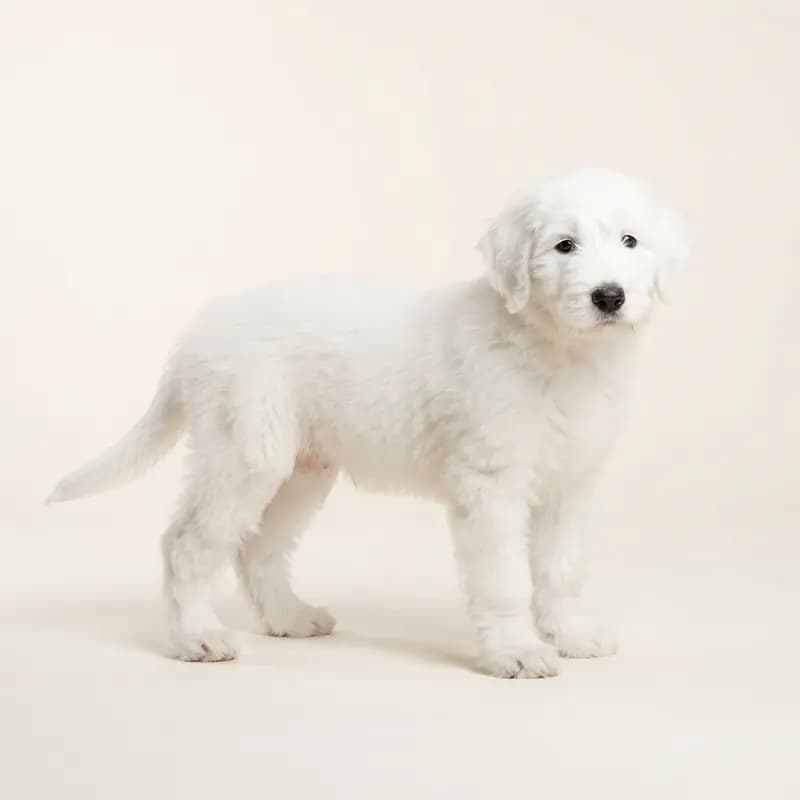
The Bobtail comes in these colors: Grey, Grizzle, Blue, White.
Loading related articles
Are you a Old English Sheepdog breeder?
Showcase your kennel on HonestDog and reach families searching for a responsibly bred Old English Sheepdog.