Jack Russell TerrierClose relative
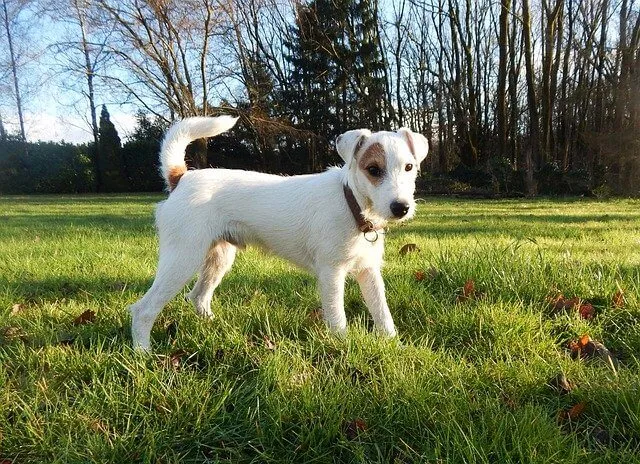
The Parson Russell Terrier is a highly intelligent, explosive bundle of energy—bred as a tenacious Erdhund (earth dog) capable of keeping pace with horses and making independent, courageous decisions in the fox den.
How the health grade is calculated
Sources for required breeding screenings. Parson Russell Terrier Club Deutschland e.V. (PRTCD) - VDH/JGHV
Self-check
Answer 6 quick questions about your everyday life and see how well the Parson Russell Terrier fits you — including an honest cost estimate per month, per year, and across the dog's lifetime.

At a glance
The essentials — key facts, traits, and health priorities — before you dive deeper.
Lifespan
13–15 yrs
Shoulder height
31–38 cm
Weight
5–8 kg
Practical
Temperament
Daily life
What matters most
Especially with a Parson Russell Terrier, choosing the right breeder is the single most important decision you'll make. Serious breeders consistently test the parents for inherited conditions, prioritize healthy early socialization, and stay accountable long after handover. A cheap puppy without health screening tends to become the most expensive dog later on.
See HonestDog breeder standards →Colors & coat
The coat colors that occur in the Parson Russell Terrier — including which ones fall outside the breed standard and which carry genetic risk.
Eye colors
 Brown
Coat type
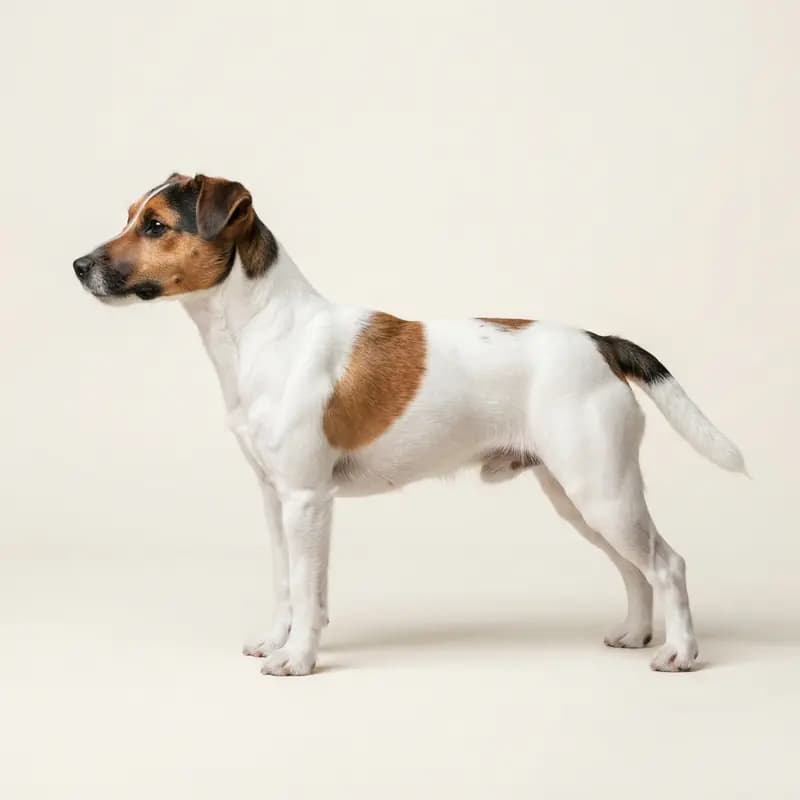 Illustrative image
Smooth
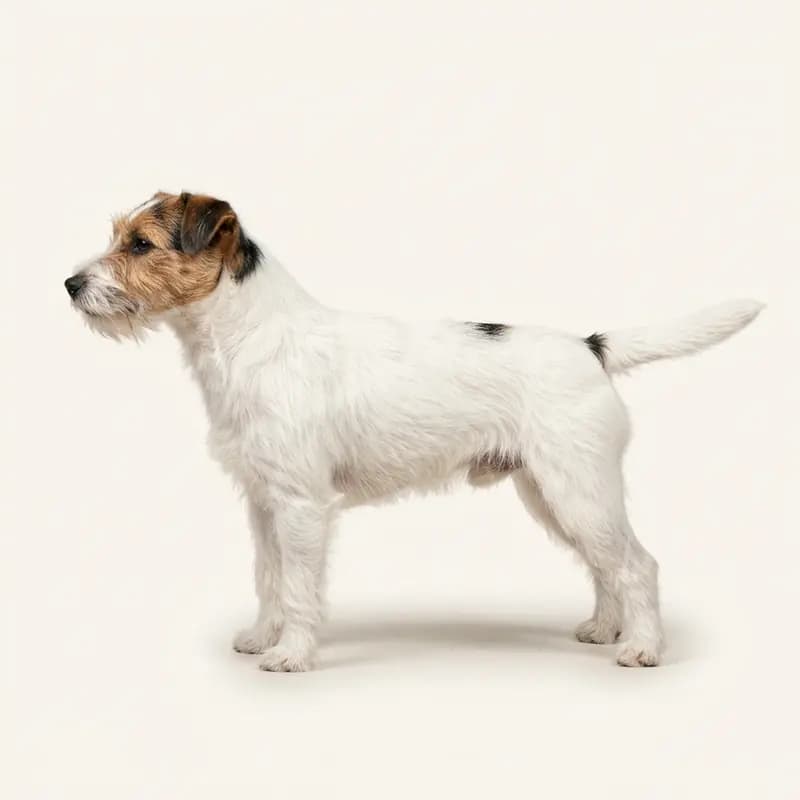 Illustrative image
Wire
The real vibes check
A Parson Russell Terrier doesn't negotiate; it acts. What is vital for survival deep in a fox den—lightning-fast reactions and absolute tenacity—means in everyday life that it will immediately take over if it senses any weakness in your leadership. If you channel this concentrated energy into structured paths, you get an invincible buddy; if not, a little tyrant.
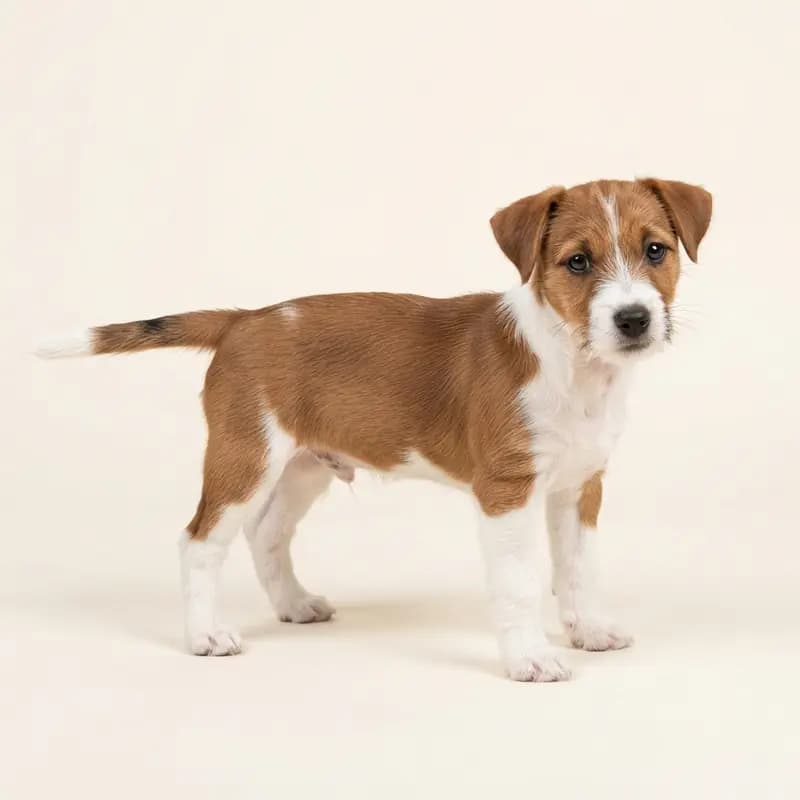
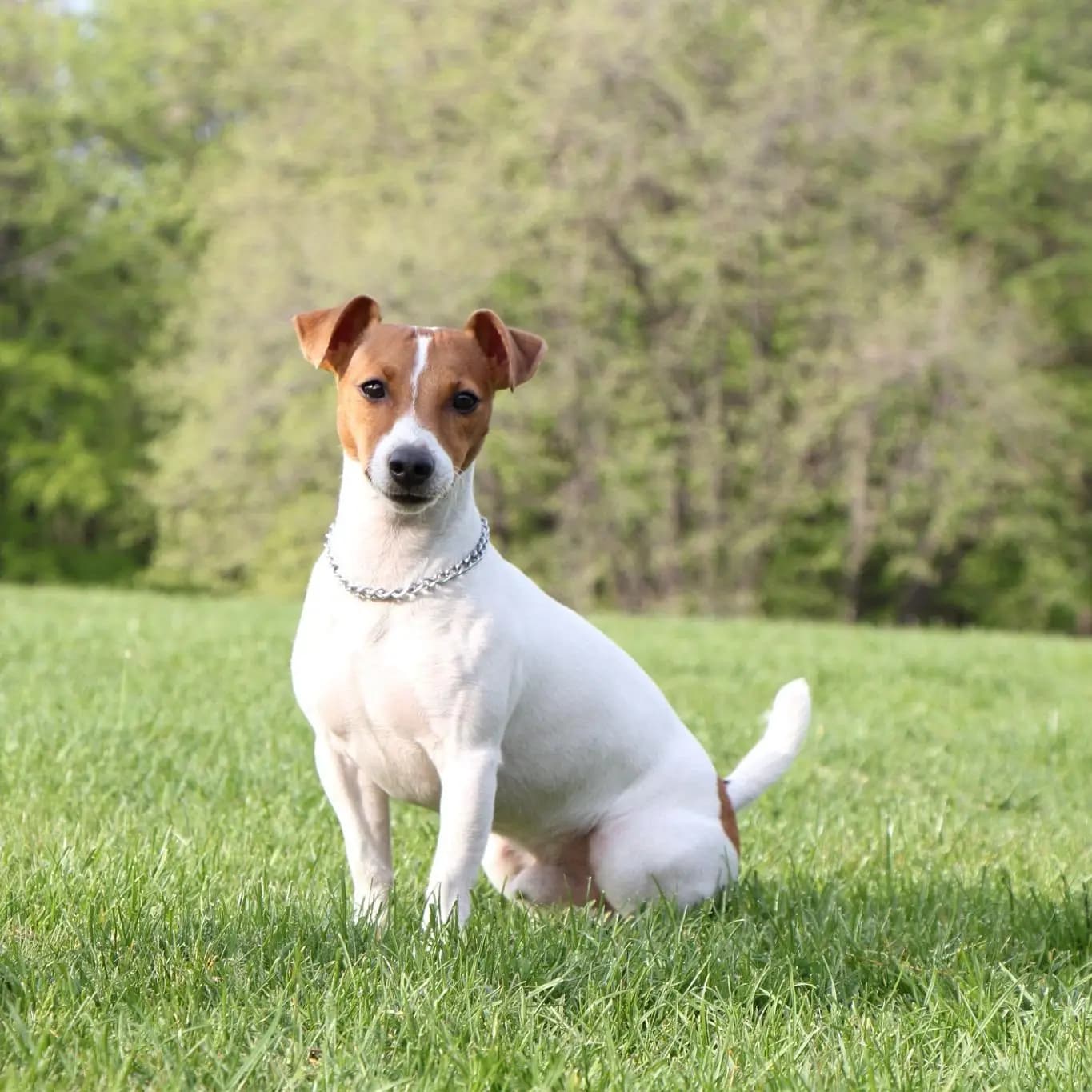
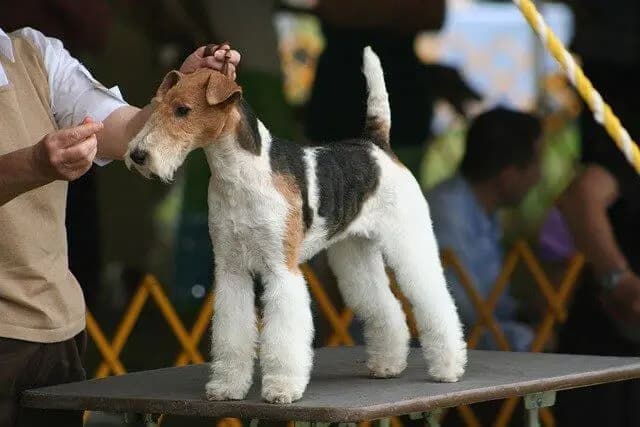
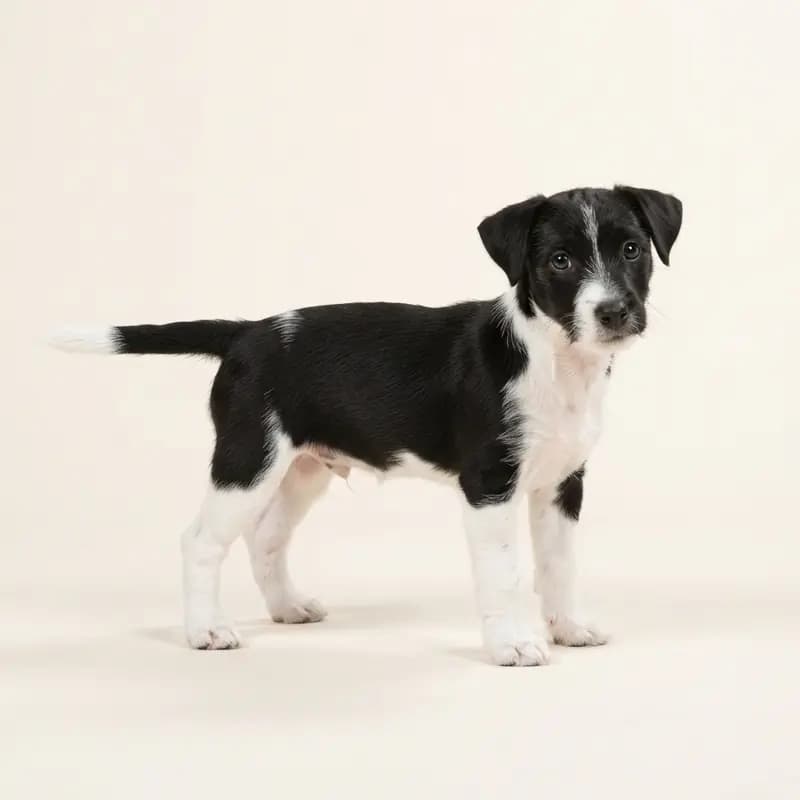
The Parson Russell Terrier, formerly known as the Jack Russell Terrier, is a compact but energetic dog known for both his mind and his body. This dog falls into FCI Group 3: Terrier and is known for its agile and robust build, which gives it incredible agility and endurance. The Parson is a well-balanced dog, with a small, rectangular body and a well-developed physique that allows it to carry out its original duties in fox hunting. He has dark, almond-shaped eyes that are full of intelligence and curiosity, and small V-shaped ears that fall forward. His coat can be smooth or broken, but it is always thick and weatherproof, perfect for his active nature. There is no fundamental distinction between performance and show lines in this breed, although there are of course dogs within each breed that are more suitable for shows or work tasks. In general, however, every Parson should be able to function as both a working dog and a pet, which is a sign of their versatility and adaptability.
The Parson Russell Terrier is known for its active and energetic temperament. This dog has a lot of energy and needs regular physical and mental stimulation to stay happy. He loves to play, run and hunt, and he needs a home that gives him the opportunity to exercise regularly. Despite his need for activity, the Parson is also a very people-oriented dog. He loves spending time with his family and is known for his affection and love of human company. This is not a dog that will be happy staying home alone all day - he wants to be there and see what's going on. The Parson Russell Terrier is also a very intelligent dog. He learns quickly and is capable of learning a variety of commands and tricks. However, he needs consistent and patient training as he sometimes has a mind of his own and may try to take control if he thinks he can get away with it. Another characteristic feature of the Parson Russell Terrier is its strong hunting behavior. This dog was originally bred for hunting, and it still has strong instincts in this regard. He loves to dig and hunt, and he is likely to chase anything that moves. This can be a challenge if he is not kept in a safe area, and he needs to be well trained to learn to keep these instincts under control. Despite his hunting instinct, the Parson Russell Terrier is also a very alert dog. He is always on guard and will likely bark to warn his family if he notices anything unusual. This makes him a good guard dog, although his size means he is not a particularly formidable guard dog.
| Watchfulness A natural watchdog with real protective instinct. | High |
| Openness to Strangers Neither pushily friendly nor suspicious. | Neutral |
| Hunting or Herding Drive This drive runs deep — no amount of training eliminates it. | Very strong |
Fun Fact!
Did you know that the Parson Russell Terrier was originally bred to chase foxes out of their dens? Therefore, they are master diggers and will certainly be happy if they get the opportunity to do a little digging in your garden!
Parson Russel Terriers are small dogs full of energy that are very motivated to hunt. They need a lot of activity and mental stimulation to be pleasant companions.
Parson Russell Terriers are lively and active dogs that need a lot of exercise. Therefore, they are more suitable for a home with a garden than for a purely city apartment. However, they can adapt to apartment life as long as they receive enough exercise and mental stimulation. This breed generally gets along well with children and can make a wonderful family dog. However, smaller children should always be supervised as the Parson Russell Terrier is a high-energy dog and could accidentally knock over a small child. It can cause problems with other pets, especially cats, due to its strong hunting instinct. Careful introduction and monitoring is crucial.
Loves family life and thrives in a group.
Gets on well with children — with adult supervision.
Usually gets on fine with other dogs.
City-appropriate with enough exercise and stimulation.
Owning a dog is a privilege, but it's also a real responsibility. Before you bring one into your life, be honest with yourself about the commitment it takes.
Raising and training a Parson Russell Terrier requires patience and consistency as this breed can be intelligent and sometimes a bit stubborn. They need a lot of mental stimulation and can excel in various dog sports such as agility, flyball or obedience. Particular caution is required to ensure that the Parson Russell Terrier does not become a “ball junkie”. A healthy amount of play and exercise is good, but playing too much ball can lead to obsessive behavior that is difficult to control. It is important to encourage frustration tolerance and impulse control in this breed. Given their predisposition to hunt, it is essential that they learn to control their impulses and not be distracted by every moving object or animal.
Parson Russell Terriers are active and energetic dogs that require a balanced and nutritious diet to maintain their vitality. Good quality dry or wet food that provides all the essential nutrients is a good place to start. When choosing food, you should pay attention to a balanced mix of proteins, carbohydrates, fat, vitamins and minerals. It is also important to ensure that your Parson Russell Terrier does not gain too much weight, as being overweight can lead to a number of health problems. The Parson Russell Terrier has a dense, weatherproof coat with no undercoat, which comes in two varieties: smooth or broken. Both coat types require regular grooming to stay healthy and clean, although the smooth type requires slightly less grooming. A weekly brushing should be enough to remove dead hair and keep the coat in good condition. These dogs may experience seasonal hair loss, especially during shedding in spring and fall.
| Care Level Minimal effort — occasional brushing and bathing. | Low-maintenance |
| Exercise Needs Needs several hours of serious exercise every day. | Very active |
| Shedding No or minimal hair loss — suitable for allergy sufferers. | No shedding |
| Trainability Bred to work closely alongside humans. | Highly trainable |
Our experts are still reviewing this information. Spotted something wrong? Email us at info@honestdog.de.
Solid
Health grade
In the Parson Russell Terrier, there are breed-typical risks for severe neurological diseases such as spinocerebellar ataxia and late-onset spinocerebellar ataxia (CAPN1), as well as primary lens luxation (PLL) and patellar luxation (PL). The Parson Russell Terrier Club Deutschland e.V. (PRTCD) mandates tests for these diseases as well as examinations for hereditary cataract and progressive retinal atrophy for breeding. A health-oriented breeder additionally checks the eyes for primary open-angle glaucoma and retinal dysplasia. Have the official breeding test results of both parents shown to you: patellar luxation (PL) must be graded as PL 0, and for primary lens luxation (PLL), a carrier may only be mated with a clear partner.
Grade is relative to other breeds — AI-assisted and editorially reviewed.
Methodology and data: HonestDog Dog Breed Health Report 2026
What matters most for this breed
Tap any item to see details.
With joint-friendly rearing, a healthy weight, and regular check-ups for eyes and ears, most dogs remain fit and active for a long time.
Responsible breeders test for spinocerebellar ataxia, primary lens luxation (PLL), and patellar luxation (PL) with a threshold of PL 0 to specifically rule out neurological damage, blindness, and joint damage.
Note: This health overview is AI-assisted and editorially reviewed. It is for orientation only and does not replace veterinary advice.
What matters most for this breed — what's common, how much it affects the dog's life, and how to protect yourself as a buyer.
Tap a body region to see the inherited conditions linked to it.
The three most important risks
Pick a region on the map to explore other areas.
Tier 1 is the core standard: the tests Parson Russell Terrier Club Deutschland e.V. (PRTCD) - VDH/JGHV requires, plus further tests from the recommended health standard for this breed. Tiers 2 and 3 show how responsible breeders go beyond.
Core standard. Tests marked “Club standard” are required by Parson Russell Terrier Club Deutschland e.V. (PRTCD) - VDH/JGHV for breeding approval; the others are part of the recommended health standard for this breed. Ask any reputable breeder for the results.
Note: This health overview is AI-assisted and editorially reviewed. It is for orientation only and does not replace veterinary advice.
A Parson Russell Terrier costs around ~€150 per month (€80 – €280, depending on your setup). The first year adds up to roughly ~€4,510 including purchase, equipment and puppy school; across the dog's life (14 years) it comes to about ~€28,360.
With surgery cover, running costs come to about ~€140 per month — in return, your share of a major operation drops from several thousand euros to around 20 percent.
Per month
~€150
In the first year
~€4,510
Across the dog's life
~€28,360
Estimated purchase price from a breeder: €1,200 – €2,500
Estimate at a mid-range setup (suburban, dry food, 1–2 hours of daily exercise), average German prices, as of July 2026.
 Illustrative imageIllustrative image
 Illustrative image
 Illustrative image
The history of the Parson Russell Terrier is closely linked to the Reverend John "Jack" Russell, an avid fox hunter from Devon, England. He developed this breed in the 19th century to have a dog that would be able to chase foxes from their dens without killing them. Jack Russell looked for dogs that were energetic, courageous, intelligent, and had the ability to work underground. The original Jack Russell Terrier, as developed by Reverend Russell, was a versatile working dog capable of performing a variety of tasks. However, over time, different lines within the breed began to develop, with some dogs focusing more on show ring characteristics while others favored working abilities. The breed was originally known as the Jack Russell Terrier, but in 1999 the American Kennel Club (AKC) decided to register the working dogs as Parson Russell Terriers to distinguish them from the smaller, less active dogs often seen in shows. The name "Parson" was chosen to honor Reverend Russell. The FCI recognized the Parson Russell Terrier as a separate breed in 2001. In recent years, the Parson Russell Terrier has established itself as a popular companion dog, although it still shows its working roots.
The Parson Russell Terrier was used for fox hunting and rodent control.
England
1800
Many owners say a Parson Russell Terrier is a great fit for an active household. At home it usually comes across as affectionate, funny and cuddly, a dog that likes being the center of attention and wants to be close to its people. With the right introduction, owners also describe it as playful and sturdy around children.
At the same time, owners make clear that this is not a quiet companion for days spent on the couch. Without enough exercise and mental work, Parson Russell Terriers tend to find their own entertainment. Their alertness also comes up again and again: some owners report a tendency to bark at noises at the door or in the yard, which needs to be guided from the start.
That's why a common piece of advice from the community is to teach a puppy how to settle and rest from an early age. When that balance between action and downtime works, families say they end up with a very loyal, easygoing companion.
Sources:fressnapf.dehundeforum.comforum.wildundhund.deforum.hundund.deparents.at
In discussion forums and dog-school reports, training a Parson Russell Terrier is described as challenging but rewarding. Owners agree that the breed is very intelligent and quick to catch on: it picks up tricks, agility courses and search games in no time. That's also where the typical terrier independence shows, though. These dogs like to question commands when they don't see the point or the reward doesn't come.
The strong hunting and prey drive needs special attention. Many owners report that reliable off-leash time in the woods or near open fields takes years of intensive recall work, or even means keeping the dog on a long line for good. Small animals like squirrels, cats or birds can quickly set off the hunting instinct, too.
Experienced owners say the key is calm, clear consistency plus activities like retrieving-dummy work, mantrailing or nose work. According to owner reports, harshness or pressure usually just leads to pushback or stubbornness, while motivating training that treats the dog as a partner gets the best results.
Sources:fressnapf.deforum.wildundhund.dedogforum.deparents.at
When it comes to daily life and activity, many owners point to how much these compact dogs can do. A Parson Russell Terrier will happily run alongside a bike, join its owner on long hikes or shine in dog sports. With unfamiliar dogs, though, owners occasionally report a lot of self-confidence; males in particular can get into scuffles or act macho if they lack guidance.
On health and care, owners generally describe the breed as tough, agile and resilient. Grooming depends on the coat type: smooth-coated dogs shed regularly, while rough- or broken-coated dogs need hand-stripping several times a year to keep the coat weatherproof.
The breed-typical issues flagged in forums and when buying a puppy are mainly inherited conditions such as patellar luxation and eye diseases, which is why owners strongly advise choosing a breeder carefully. Overall, experienced owners see the Parson Russell Terrier as a sturdy sporting dog that often stays physically fit well into old age.
Sources:fressnapf.deforum.wildundhund.deparents.atdogforum.dedogorama.app
Paraphrased from real owner reports · translated from German
The Parson Russell Terrier is an active dog that needs plenty of exercise and mental stimulation. Research the temperament, grooming needs, and space requirements before deciding.
The average life expectancy of a Parson Russell Terrier is 13-15 years. With proper care and regular vet visits, your dog can live a long, healthy life.
Parson Russell Terrier grooming requirements include regular brushing, nail trimming, and dental care. HonestDog provides detailed grooming tips for every breed.
The Parson Russell Terrier can be a great family dog. Proper training and socialization are key. HonestDog provides family suitability information for every breed.
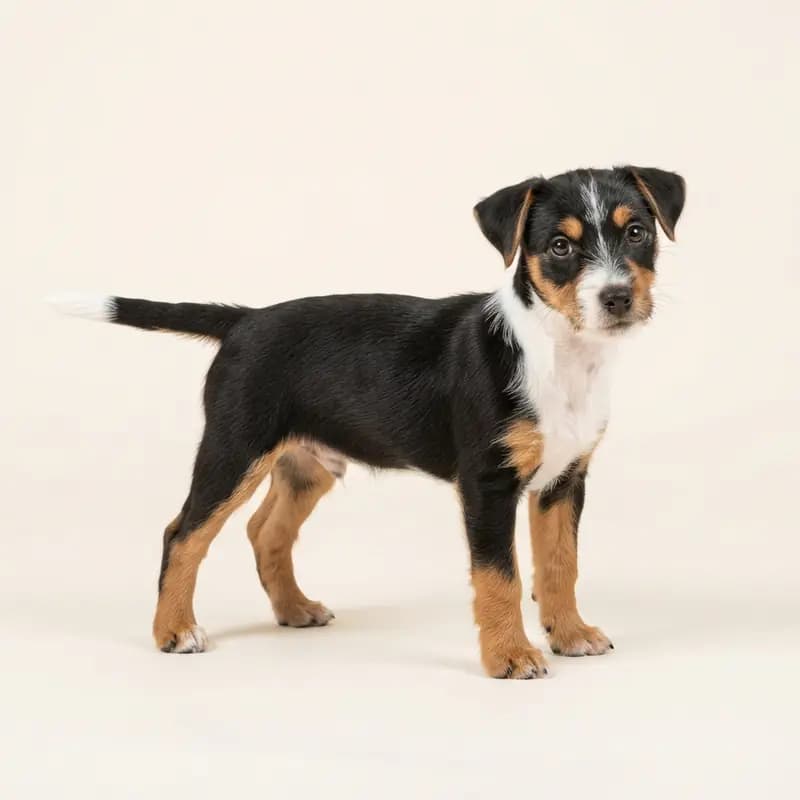
The Parson Russell Terrier comes in these colors: White, Black and white, Brown and white, Tricolor.
Discover small hunting dog breeds, their key traits, and practical training tips to handle their prey drive. What every owner needs to know.
What is the difference between dog breeds and dog types? Learn how HonestDog classifies dogs to help you make a more informed choice.
Showcase your kennel on HonestDog and reach families searching for a responsibly bred Parson Russell Terrier.