German Wirehaired PointerSame FCI section
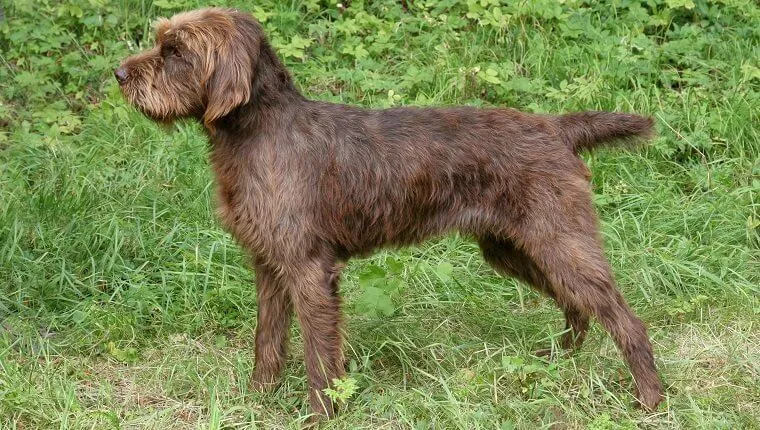
The Pudelpointer is an intelligent, water-loving hunter—a versatile Vorstehhund (pointing dog) that combines the wide-ranging search of the Pointer with the retrieving drive of the Poodle, bred specifically for endurance work in fields, forests, and water.
How the health grade is calculated
Sources for required breeding screenings. Verein Pudelpointer e.V.
Self-check
Answer 6 quick questions about your everyday life and see how well the Pudelpointer fits you — including an honest cost estimate per month, per year, and across the dog's lifetime.


At a glance
The essentials — key facts, traits, and health priorities — before you dive deeper.
Lifespan
12–14 yrs
Shoulder height
55–68 cm
Weight
20–30 kg
Practical
Temperament
Daily life
What matters most
Especially with a Pudelpointer, choosing the right breeder is the single most important decision you'll make. Serious breeders consistently test the parents for inherited conditions, prioritize healthy early socialization, and stay accountable long after handover. A cheap puppy without health screening tends to become the most expensive dog later on.
See HonestDog breeder standards →Colors & coat
The coat colors that occur in the Pudelpointer — including which ones fall outside the breed standard and which carry genetic risk.
Eye colors
 Amber
 Brown
Coat type
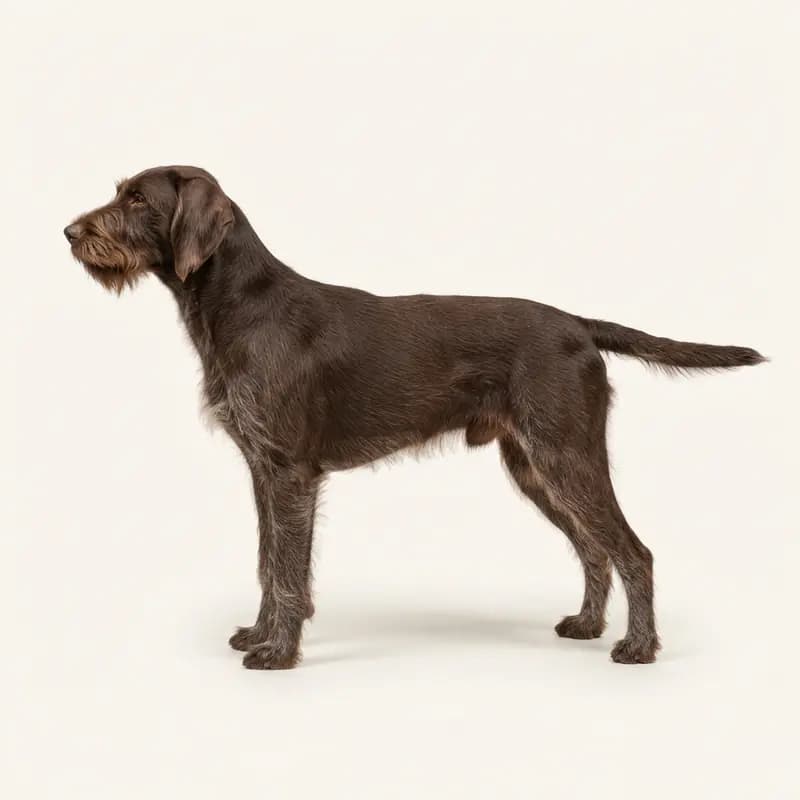 Illustrative image
Medium
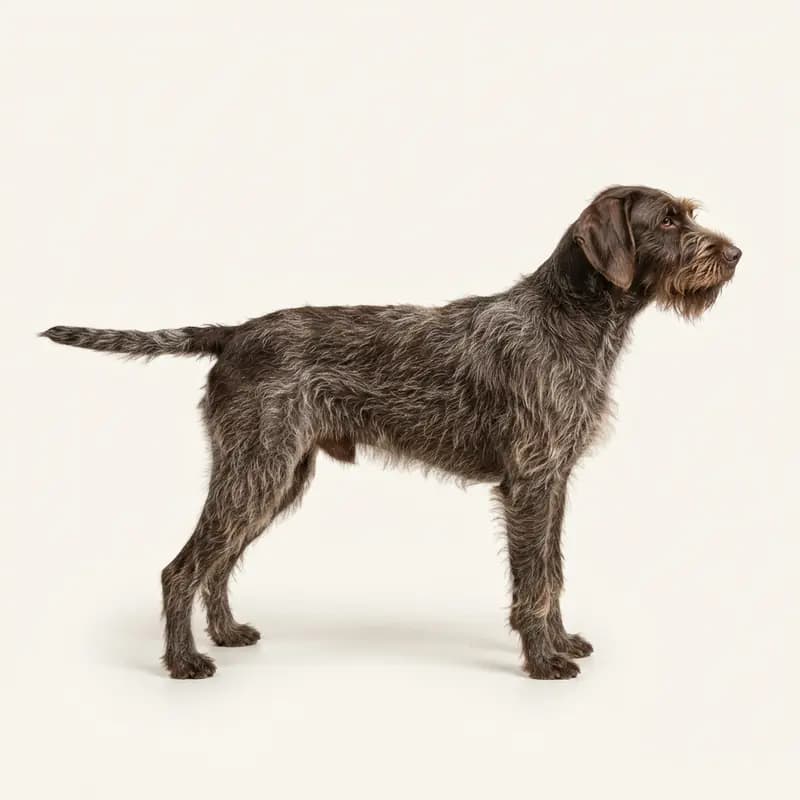 Illustrative image
Wire
 Double coat
The real vibes check
A Pudelpointer isn't a dog that just trots along beside you—he is a highly focused colleague in a rugged work suit who asks you every morning where the next mission is. If you share his passion for hunting, you will have an inseparable, cooperative partner; if not, you will have a frustrated athlete on your leash who finds nature infinitely more exciting than you.
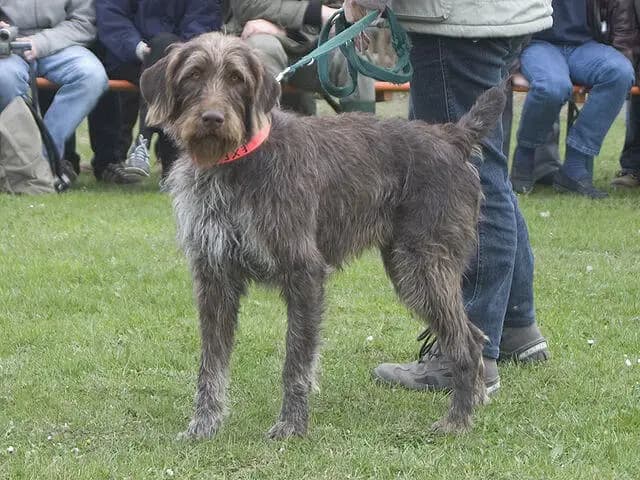
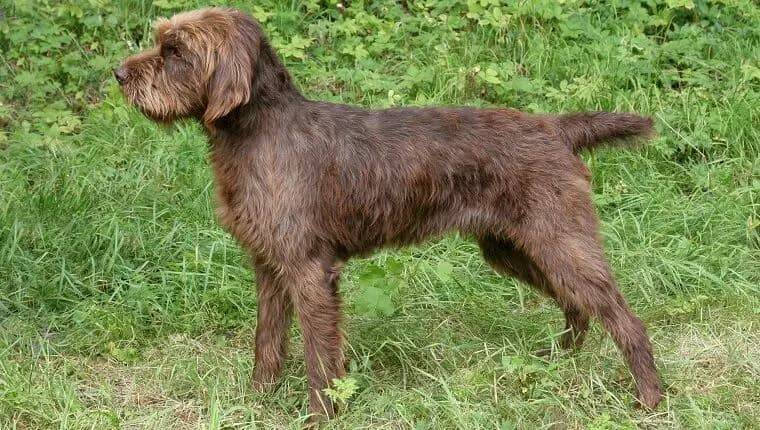
The Pudelpointer is a medium-sized dog with a robust and balanced build that exudes both strength and agility. Its head is well proportioned with a broad skull base and a straight nose. The eyes are medium sized and a dark color that goes well with his fur. The ears are medium long and hang close to the head. The Pudelpointer has a strong neck and a deep chest. His coat is thick and coarse, which helps protect him against the elements, and he has a significant undercoat. This dog belongs to FCI Group 7, which includes pointers. A versatile breed, the Pudelpointer was originally bred for hunting, but now also fulfills many other roles, including that of a companion and working dog. There are no particular differences between the show and working lines as both have the same appearance and temperament.
The Pudelpointer is a versatile dog with a very pleasant nature. He is intelligent, adaptable and loves to be active. Although he was originally bred for hunting, he has proven to be an excellent companion and working dog. He is not only at home in hunting, but also also in various dog sports, including agility, obedience and tracking. In terms of temperament, the Pudelpointer tends to be more active. He loves being outside and playing, but also enjoys being with his people. He can learn to stay alone well, but he definitely prefers being in company and being active. The Pudelpointer is very people-oriented and enjoys being part of the family. He is friendly and sociable and usually gets along well with children and other pets. He has a natural hunting behavior, but this can be well controlled with proper training and socialization. He is naturally vigilant and will defend his family and home if necessary. This makes him a good guard dog, although he is not an aggressive dog. He is more of a "quiet guardian" who shows his alertness through attentiveness and a good awareness of his surroundings rather than through unnecessary barking. In summary, the Pudelpointer is an intelligent, active and adaptable dog that is excellent as both a hunting and family dog. With his love of people and activities, he is the perfect companion for active families looking for a versatile and loving dog.
| Watchfulness Reports unusual activity but stays controlled. | Moderate |
| Openness to Strangers Warms up quickly and is generally welcoming. | Friendly |
| Hunting or Herding Drive This drive runs deep — no amount of training eliminates it. | Very strong |
Fun Fact!
Did you know that the Pudel Pointer gets its name from the two breeds from which it was bred - the Poodle and the Pointer?
The Pudelpointer is a calm, self-confident, versatile hunting dog with a strong hunting instinct and no fear of game or shooting. In his home country of Germany, he has always ranked high in performance tests and in the field. This breed is valued and loved for its willingness to perform and its drive.
Pudelpointers are adaptable dogs that can thrive in both urban and rural environments. However, they need regular physical and mental stimulation to stay happy and healthy. Small children are usually not a problem for Pudelpointers as long as they learn to treat the dog with respect. Pudelpointers can also get along well with other pets, including cats, especially if they are used to them from an early age.
Loves family life and thrives in a group.
Takes boisterous and affectionate children in its stride.
Actively enjoys the company of other dogs.
City-appropriate with enough exercise and stimulation.
Owning a dog is a privilege, but it's also a real responsibility. Before you bring one into your life, be honest with yourself about the commitment it takes.
Pudelpointers are intelligent and hard-working dogs who enjoy training. They tend to learn quickly and respond well to positive reinforcement methods. It is important to keep the training sessions varied and interesting to keep the dog's attention. Because Pudelpointers were originally bred as hunting dogs, they have a natural inclination to work and keep busy. It can therefore be beneficial to give them tasks that utilize their natural instincts and abilities. This can be achieved through various dog sports such as agility, tracking or even rescue dog training. Although Pudelpointers like to keep busy, there is a risk that they can become ball junkies if you allow them to play ball too intensely and too often. It is therefore important to find a balance between activity and relaxation and to avoid overstimulating the dog. Impulse control and frustration tolerance are important aspects of raising a Pudelpointer. It is beneficial to encourage these skills from an early age in order to have a balanced and well-adjusted dog.
Pudelpointers are active dogs and need a balanced diet that is tailored to their energy needs. It is important to choose a quality brand of food that provides the necessary nutrients an active dog needs. Note that a dog's nutritional needs can change throughout his life, depending on factors such as age, health, and activity level. It is always a good idea to consult with a veterinarian to ensure your dog is receiving the proper diet. Pudelpointers have a dense undercoat and a coarse top coat that protects them from bad weather. They generally cope well with the climate in Germany and shed moderately, especially during the coat change in spring and autumn. Regular brushing helps remove dead hair and keeps the coat healthy. Occasional baths can also help keep the coat in good condition keep it, but be careful, too frequent baths can disrupt the natural oils of the skin and fur.
| Care Level Minimal effort — occasional brushing and bathing. | Low-maintenance |
| Exercise Needs Working-dog energy that needs burning off every single day. | High-drive |
| Shedding Hair everywhere, always — no white clothing survives. | Very heavy |
| Trainability Picks up commands quickly and wants to please. | Eager to learn |
Our experts are still reviewing this information. Spotted something wrong? Email us at info@honestdog.de.
Solid
Health grade
In the Pudelpointer, orthopedic risks such as hip dysplasia (HD), elbow dysplasia (ED), and osteochondritis dissecans (OCD) are at the forefront. The Verein Pudelpointer e.V. strictly requires radiographic examinations for HD (cut-off A–B), ED (cut-off ED 0), and OCD (free), as well as an evaluation of teeth and bite, for breeding approval. In addition, pay attention to whether the breeder additionally tests the parent animals for ectropion / entropion and SLC13A1-associated chondrodysplasia, for which carriers may only be mated with free partners. Have these official veterinary reports presented to you completely before purchasing a puppy.
Grade is relative to other breeds — AI-assisted and editorially reviewed.
Methodology and data: HonestDog Dog Breed Health Report 2026
What matters most for this breed
Tap any item to see details.
By ensuring joint-friendly rearing, maintaining a healthy weight, and scheduling regular vet check-ups, you provide the best foundation for a long, active life.
Responsible breeders have parent animals tested as required for HD, ED, OCD, as well as teeth, and voluntarily screen for ectropion / entropion and chondrodysplasia, SLC13A1-associated.
Note: This health overview is AI-assisted and editorially reviewed. It is for orientation only and does not replace veterinary advice.
What matters most for this breed — what's common, how much it affects the dog's life, and how to protect yourself as a buyer.
Tap a body region to see the inherited conditions linked to it.
The three most important risks
Pick a region on the map to explore other areas.
Tier 1 reflects the tests Verein Pudelpointer e.V. actually mandates. Tiers 2 and 3 show how responsible breeders go beyond.
Club standard. Verein Pudelpointer e.V. requires these tests for breeding approval. Ask any reputable breeder for the results.
Not health tests, but required for breeding: the club asks for these results too. They don't count toward the risks or the rating.
DNA-Identitätsnachweis
Required by Verein Pudelpointer e.V.
Acceptable result: Erfolgte und vom Zuchtbuchführer bestätigte DNA-Registrierung
Wesensbeurteilung
Required by Verein Pudelpointer e.V.
Acceptable result: Mindestens zwei bestandene Verbandsprüfungen sowie Spurlaut oder Sichtlaut und Härtenachweis
Dental and bite evaluation
Required by Verein Pudelpointer e.V.
Acceptable result: Scherengebiss, Zangengebiss, keine weiteren Zahnfehler (P1 Fehler sind zulässig)
No entries in this tier.
Note: This health overview is AI-assisted and editorially reviewed. It is for orientation only and does not replace veterinary advice.
A Pudelpointer costs around ~€180 per month (€90 – €340, depending on your setup). The first year adds up to roughly ~€4,990 including purchase, equipment and puppy school; across the dog's life (13 years) it comes to about ~€30,910.
With surgery cover, running costs come to about ~€180 per month — in return, your share of a major operation drops from several thousand euros to around 20 percent.
Per month
~€180
In the first year
~€4,990
Across the dog's life
~€30,910
Estimated purchase price from a breeder: €1,500 – €2,500
Estimate at a mid-range setup (suburban, dry food, 1–2 hours of daily exercise), average German prices, as of July 2026.
HonestDog Concierge
We currently have no breeders for this breed who have passed our verification. Create your short buyer profile: we'll set up your search alert, review a possible source and email you within 28 days.
 Illustrative imageIllustrative image
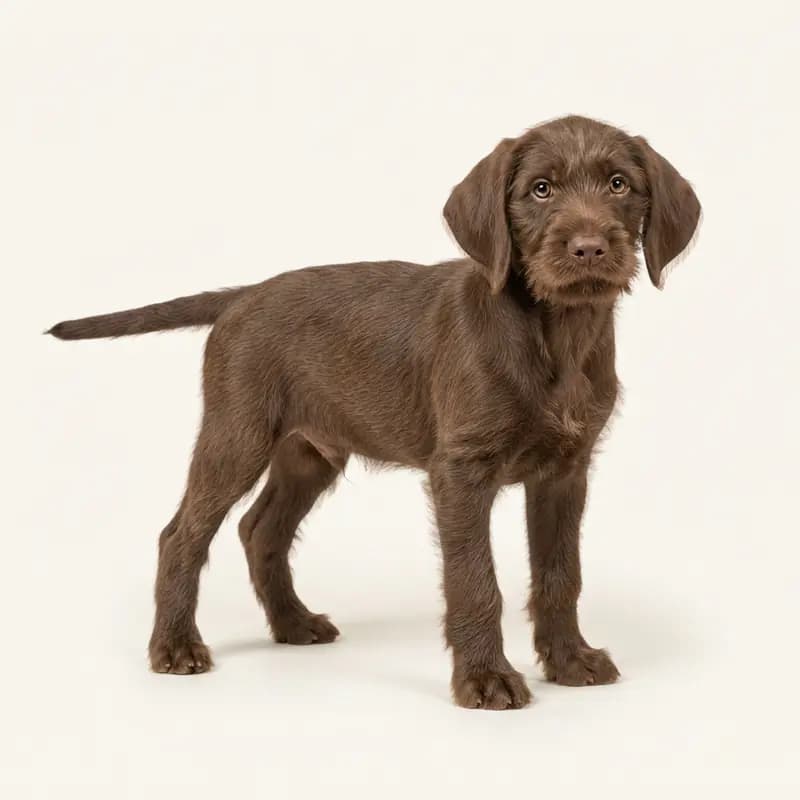 Illustrative image
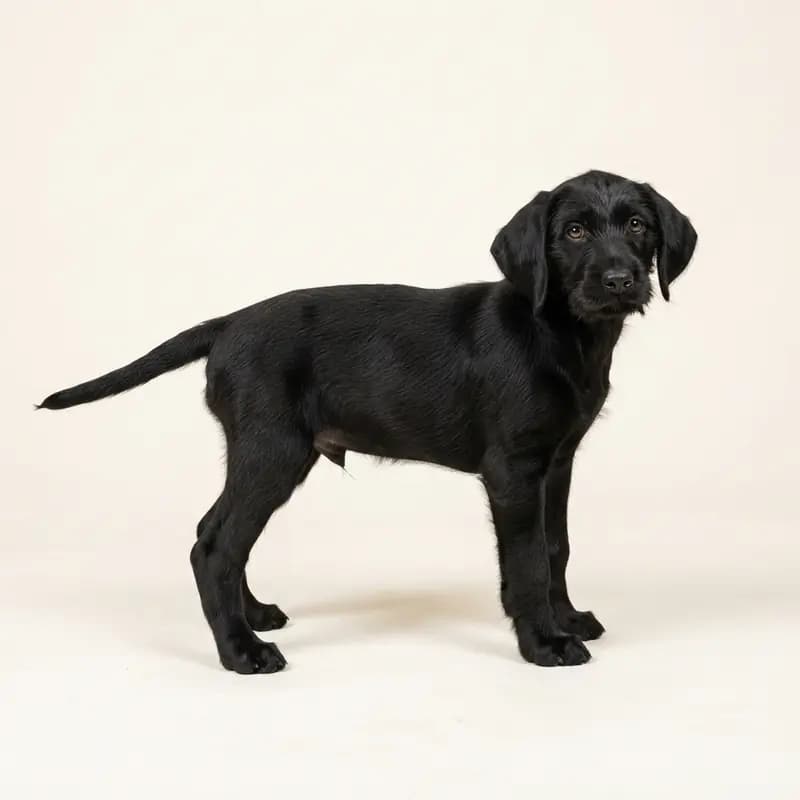 Illustrative image
The Pudelpointer is a German hunting dog breed whose targeted breeding was established in 1881 by the cynological writer Sigismund Freiherr von Zedlitz und Neukirch, better known by his pseudonym Hegewald. His goal was to create a versatile, robust, and steady-tempered all-purpose hunting dog that combined the outstanding traits of two specialized breeds. To achieve this, he deliberately crossed the English Pointer, famous for its excellent field work, keen sense of smell, and wide-ranging pointing, with the old German water poodle, which brought high intelligence, a great love for water, and strong retrieving instincts. Through strict performance selection, a wire-haired pointing dog emerged that is exceptionally well-suited for work in the field, forest, and water. The breed quickly established itself among hunting circles, as it proved its desired versatility and trainability. Contrary to some claims regarding North American origins of the club structures, the first official breed club, the Verein Pudelpointer, was founded in Germany as early as 1897. This association has since been dedicated to the pure breeding and performance testing of the dogs. It was not until much later, in 1977, that a corresponding society was formed in North America. To this day, the Pudelpointer is bred almost exclusively by hunters for hunters, with hunting utility always taking precedence over pure aesthetic ideals.
The Pudelpointer was created by crossing the Poodle and the Pointer to produce a versatile hunting dog capable of both pointing and retrieving.
Germany
1800
Owners consistently describe the Pudelpointer at home and in family life as a very people-oriented, affectionate and even-tempered companion. Many stress that it's remarkably calm indoors as long as it gets enough of a challenge outdoors. Despite the "Pudel" (poodle) in its name, experienced owners strongly warn against mistaking the breed for a mere companion dog or a hypoallergenic family pet. At heart it's a thoroughbred versatile hunting dog with a high energy level and real passion for the work.
With children, the Pudelpointer is usually good-natured and patient, as long as its quiet spaces are respected. Owners do repeatedly report challenges with smaller pets, though: the strong prey drive means many of these dogs see free-roaming cats, poultry or small animals not as housemates but as game. Some dogs also show a noticeable guarding and protective instinct on their own property that has to be channeled properly from the start.
Owner and training reports paint a picture of a very willing, intelligent dog that's quick to spot its handler's mistakes. Accounts often highlight how strongly the breed focuses on its handler and how ready it is to learn, which makes training very pleasant compared with some other pointing breeds. Still, owners dispel the idea that the dog trains itself: being so quick on the uptake also means it exploits any inconsistency right away.
For almost every owner, the biggest training task is keeping the strong hunting drive under control. Even young dogs search with their nose to the ground, point game instinctively and quickly treat every outing as a hunting trip. A reliable recall off leash therefore takes months of strict anti-hunting or obedience training. Plain walks are rarely enough for these dogs; owners stress that without proper substitute work, such as tracking, retrieving, or dummy and water training, they quickly get frustrated and find their own unwanted things to do.
Sources:mit-tier.deforum.wildundhund.desabinemiddelhaufeshundundnatur.netjagdjuenger.de
Owners and breeders regard the Pudelpointer as a very robust, high-performing breed with a life expectancy that's often impressive for a large dog. Because the Verein für Pudelpointer requires strict performance and health tests, many owners report dogs that stay vigorous well into old age. Breed-specific screening focuses mainly on hip dysplasia (HD) and, occasionally, epilepsy, and thanks to breeding selection, serious skeletal disease is described as relatively rare. Older dogs that have worked hard physically throughout their lives can occasionally develop wear and tear in the back or joints.
The weatherproof, dense wirehaired coat is seen as very low-maintenance. Unlike with the Poodle, there's no elaborate clipping; regularly brushing out dirt and burrs after trips through the undergrowth is usually all it takes. Several owners note, however, that the hanging ears need regular checks for infection and moisture, especially in dogs that love the water. Forums also occasionally mention some food sensitivity in young dogs that calls for careful food choices.
Sources:forum.wildundhund.desabinemiddelhaufeshundundnatur.netzooplus.demit-tier.dejagdjuenger.de
Paraphrased from real owner reports · translated from German
The Pudelpointer is an active dog that needs plenty of exercise and mental stimulation. Research the temperament, grooming needs, and space requirements before deciding.
The average life expectancy of a Pudelpointer is 12-14 years. With proper care and regular vet visits, your dog can live a long, healthy life.
Pudelpointer grooming requirements include regular brushing, nail trimming, and dental care. HonestDog provides detailed grooming tips for every breed.
The Pudelpointer can be a great family dog. Proper training and socialization are key. HonestDog provides family suitability information for every breed.
The Pudelpointer comes in these colors: Brown, Black.
Showcase your kennel on HonestDog and reach families searching for a responsibly bred Pudelpointer.