MudiSame working temperament
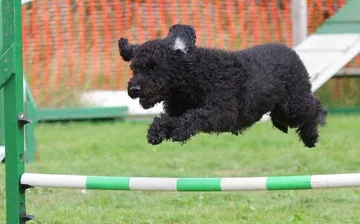
The Pumi is a lightning-fast, vocal, and terrier-like herding dog — bred to drive Hungarian livestock with its voice, agility, and uncompromising commitment. This explosive mix of herding genetics and terrier temperament makes him a true workaholic in a curly coat.
Self-check
Answer 6 quick questions about your everyday life and see how well the Pumi fits you — including an honest cost estimate per month, per year, and across the dog's lifetime.


At a glance
The essentials — key facts, traits, and health priorities — before you dive deeper.
Lifespan
12–14 yrs
Shoulder height
38–47 cm
Weight
8–15 kg
Practical
Temperament
Daily life
What matters most
Especially with a Pumi, choosing the right breeder is the single most important decision you'll make. Serious breeders consistently test the parents for inherited conditions, prioritize healthy early socialization, and stay accountable long after handover. A cheap puppy without health screening tends to become the most expensive dog later on.
See HonestDog breeder standards →Colors & coat
The coat colors that occur in the Pumi — including which ones fall outside the breed standard and which carry genetic risk.
Eye colors
 Brown
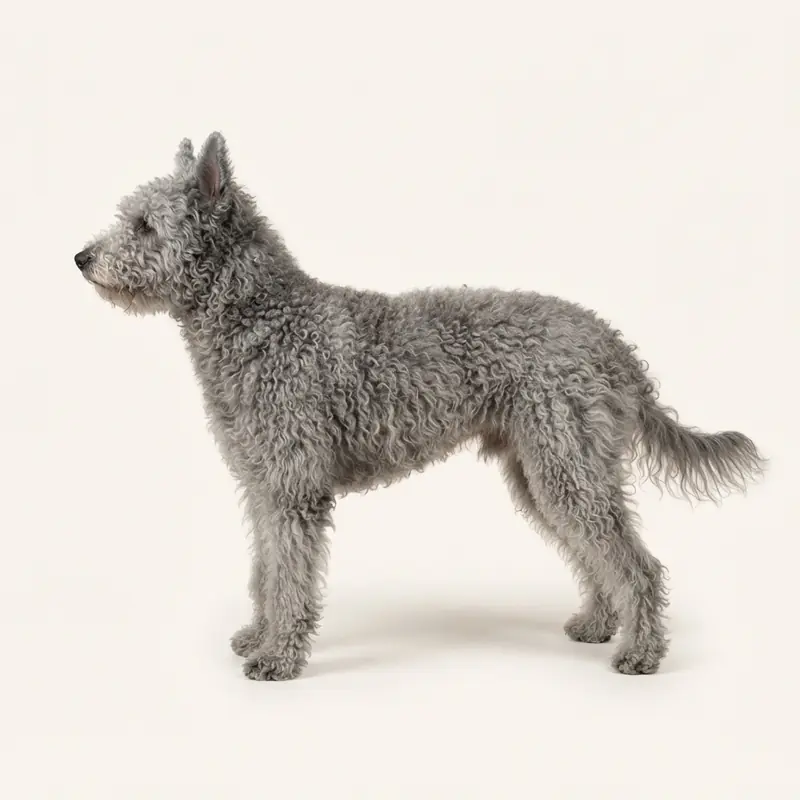
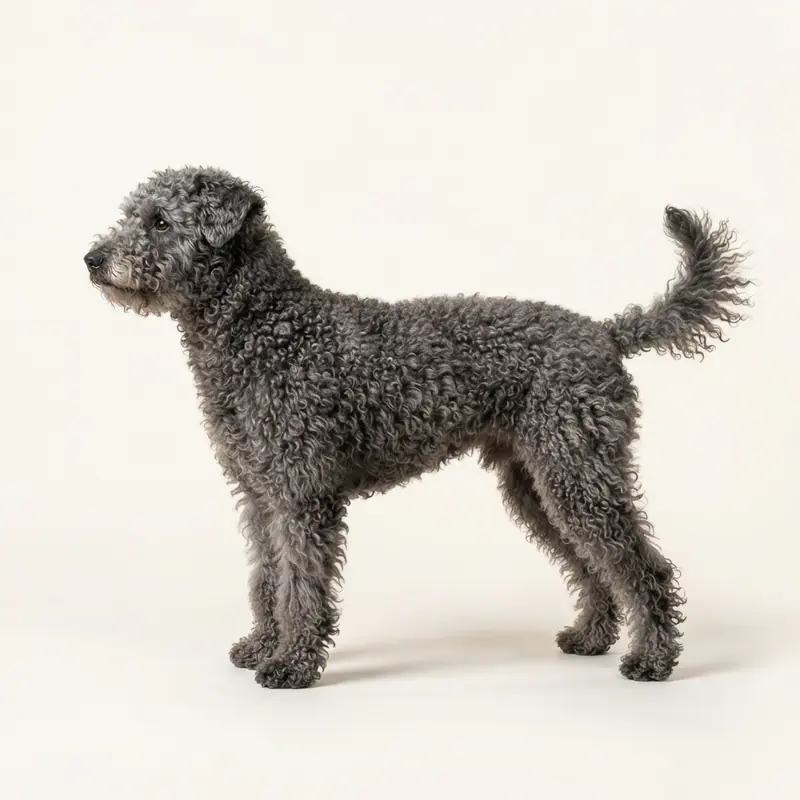
Coat type
 Illustrative image
Medium
 Illustrative image
Curly
 Double coat
The real vibes check
A Pumi is not a cute curly-haired Poodle for relaxed Sunday strolls — he is a high-revving control freak in sheep's clothing who wants to scan, evaluate, and loudly reprimand every movement in his environment. If you learn to guide this brilliant, explosive spirit, you will have the most fascinating working partner; if not, he will take over the management of your household without being asked.
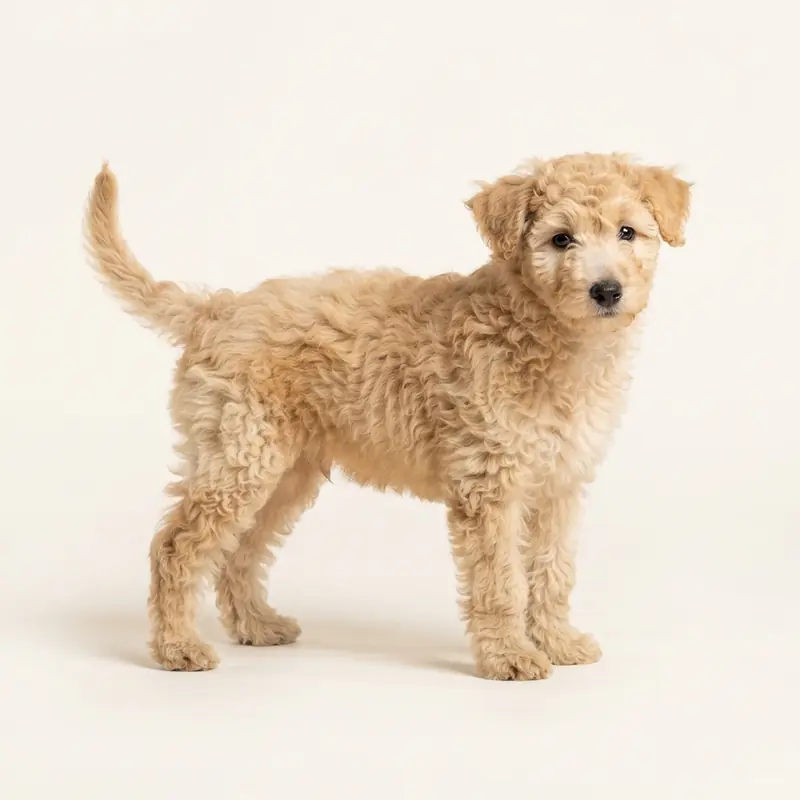
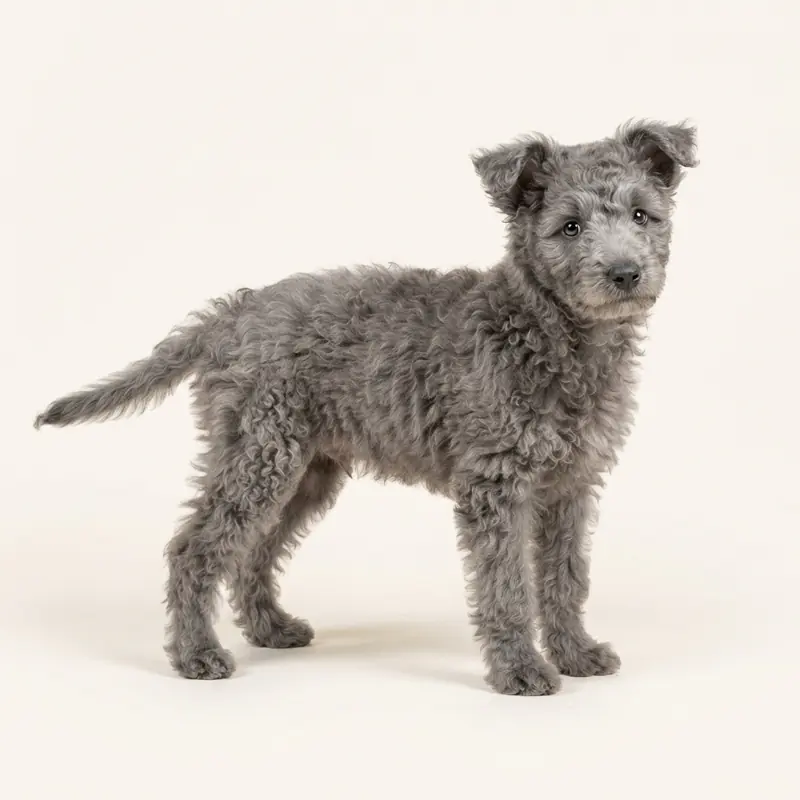
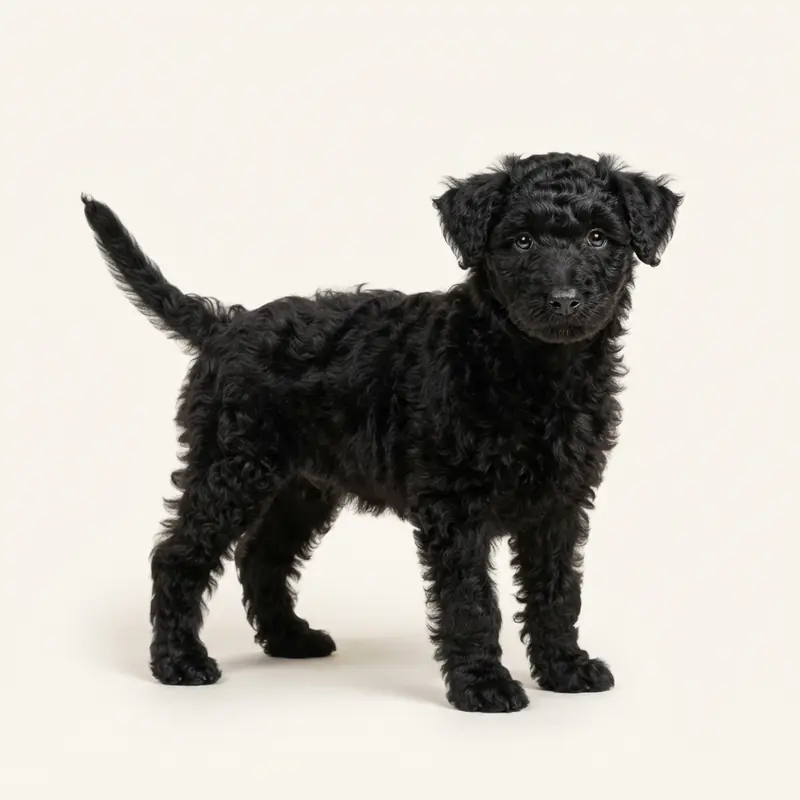
The Pumi is a medium-sized dog with a distinctive appearance, characterized by its curly coat texture and large, high-set ears. The ears are half erect, giving the Pumi a constantly alert appearance. The breed belongs to FCI Group 1, herding and driving dogs. Known for his agility and ability to herd livestock, he was specifically bred to work on the Hungarian plains. Unlike some other dog breeds, Pumis have no distinction between performance and show lines; all Pumis are able to shine both as working dogs and in exhibitions.
The Pumi's personality is as diverse as its appearance. As a herding dog, he is naturally very hard-working and needs something to do to be happy. He is an active dog with lots of energy and intelligence, and you will find that he is always ready to learn and discover new things. This makes him a fantastic partner for dog sports such as agility, obedience or even flyball. Don't forget that the Pumi was bred to be a herding dog and therefore has a strong need to work and keep busy. He can easily become bored and under-challenged if he doesn't receive enough mental and physical stimulation. The Pumi's temperament is more on the active side, and he is known to be a little hyperactive at times, especially as a puppy. When it comes to bonding with people, the Pumi is very people-oriented and forms close bonds with his family. He is alert and suspicious of strangers, making him a good watchdog. He is also quite playful and will love spending time with you, be it playing in the garden or exploring new places together. Because it was originally bred for herding sheep and cattle, the Pumi tends to exhibit strong herding behavior, which is sometimes confused with prey-catching behavior. It is important that you are aware of this and give him clear instructions about what he can and cannot do. Although the Pumi forms a close bond with his family, he can certainly learn to stay alone as long as he is properly prepared. It's important that you teach him that it's okay to be alone and make sure he has enough to do when you're not around. In terms of interaction with other pets, the Pumi can get along well with cats and other dogs as long as it is properly socialized from an early age. Note that due to his herding instinct, he may have a tendency to herd other animals, which can lead to conflict if not handled properly. In conclusion, the Pumi can be a wonderful addition to active families who are willing to invest the time and energy needed to keep this intelligent and energetic dog happy and well-balanced. He is best cared for in an environment where he can express himself physically and mentally and where he is viewed as a full member of the family. With proper socialization, training and employment, the Pumi is sure to become a loved and loyal companion for many years to come.
| Watchfulness Reports unusual activity but stays controlled. | Moderate |
| Openness to Strangers Warms up quickly and is generally welcoming. | Friendly |
| Hunting or Herding Drive Noticeable drive — needs attention around small animals. | Moderate |
Fun Fact!
Did you know that the Pumi is often referred to as the “clown” among dogs? Yes, it's because of his playful character and ability to make people laugh. It will definitely bring life into your everyday life!
Pumis are intelligent, barking dogs that are often reserved towards strangers. They are good guard dogs and often ready to defend themselves. Pumis need a lot of activity and training outside in the fresh air.
The Pumi is suitable for both city and country life as long as it receives enough exercise and mental stimulation. He generally gets along well with children, but because of his energy it is advisable to supervise him around very young children. When it comes to other pets, including cats, the Pumi tends to get along well if properly socialized from an early age.
Loves family life and thrives in a group.
Takes boisterous and affectionate children in its stride.
Usually gets on fine with other dogs.
City-appropriate with enough exercise and stimulation.
Owning a dog is a privilege, but it's also a real responsibility. Before you bring one into your life, be honest with yourself about the commitment it takes.
The Pumi is intelligent and eager to learn, which makes training easier. However, he is also an active dog who likes to work and can therefore become a "ball junkie" in some cases. It is important to offer the Pumi a balanced mix of physical and mental activity without overwhelming him. Training in dog agility or obedience can be a great way to keep the Pumi challenged and happy. It is particularly important to teach the Pumi to develop frustration tolerance and impulse control. This can be achieved through training that encourages patience and calm behavior.
When it comes to nutrition, the Pumi is not particularly demanding. A balanced feed that contains all the nutrients necessary for its activity is ideal. Be careful with treats and extra portions, as small breeds can easily become overweight. The Pumi has an undercoat and its curly coat requires regular grooming to prevent matting. The coat sheds moderately and weekly brushing is usually sufficient. The Pumi gets along well in the German climate, with its thick fur keeping it warm even in cooler temperatures.
| Care Level Minimal effort — occasional brushing and bathing. | Low-maintenance |
| Exercise Needs Needs several hours of serious exercise every day. | Very active |
| Shedding No or minimal hair loss — suitable for allergy sufferers. | No shedding |
| Trainability Bred to work closely alongside humans. | Highly trainable |
Our experts are still reviewing this information. Spotted something wrong? Email us at info@honestdog.de.
Solid, watch carefully
Health grade
In the Pumi, breed-specific risks primarily involve hip dysplasia (HD), degenerative myelopathy (DM), and various eye diseases such as primary lens luxation (PLL), cataracts, or primary open-angle glaucoma (POAG). A health-oriented breeder therefore has their breeding dogs comprehensively examined orthopedically, ophthalmologically, and genetically before mating. Before buying a puppy, you should ask to see official results for hips (HD A–B) and patella luxation (PL 0–1, with PL 1 only allowed to be mated with PL 0). In addition, ensure there is a genetic test for degenerative myelopathy, where a parent may only be a carrier if the partner is proven to be clear, as well as an up-to-date ophthalmological eye exam (ECVO).
Grade is relative to other breeds — AI-assisted and editorially reviewed.
Methodology and data: HonestDog Dog Breed Health Report 2026
What matters most for this breed
Tap any item to see details.
With joint-friendly rearing, a healthy weight, and regular eye check-ups, you can do a lot to ensure your dog stays active for a long time.
Responsible breeders test breeding dogs for hip dysplasia (HD), patellar luxation (PL), degenerative myelopathy (DM), and primary lens luxation (PLL) to prevent joint and eye damage.
Note: This health overview is AI-assisted and editorially reviewed. It is for orientation only and does not replace veterinary advice.
What matters most for this breed — what's common, how much it affects the dog's life, and how to protect yourself as a buyer.
Tap a body region to see the inherited conditions linked to it.
The three most important risks
Pick a region on the map to explore other areas.
Tier 1 is the recommended health standard for this breed. Tiers 2 and 3 show how responsible breeders go beyond.
Recommended standard. These tests make up the recommended health standard for this breed — the baseline of any careful breeding program. Ask any reputable breeder for the results.
No entries in this tier.
Note: This health overview is AI-assisted and editorially reviewed. It is for orientation only and does not replace veterinary advice.
A Pumi costs around ~€160 per month (€90 – €300, depending on your setup). The first year adds up to roughly ~€5,190 including purchase, equipment and puppy school; across the dog's life (13 years) it comes to about ~€28,710.
With surgery cover, running costs come to about ~€160 per month — in return, your share of a major operation drops from several thousand euros to around 20 percent.
Per month
~€160
In the first year
~€5,190
Across the dog's life
~€28,710
Estimated purchase price from a breeder: €1,800 – €3,000
Estimate at a mid-range setup (suburban, dry food, 1–2 hours of daily exercise), average German prices, as of July 2026.
HonestDog Concierge
We currently have no breeders for this breed who have passed our verification. Create your short buyer profile: we'll set up your search alert, review a possible source and email you within 28 days.
 Illustrative imageIllustrative image
 Illustrative image
 Illustrative image
The Pumi originated in Hungary and emerged in the 17th and 18th centuries through the crossing of native Hungarian herding dogs with imported dogs, primarily the Puli and likely also French and German herding dogs. The Pumi was mainly used for herding work and developed into an indispensable companion for Hungarian shepherds. It helped drive and herd sheep and cattle and was valued for its intelligence and vigilance. The Pumi was officially recognized as a distinct breed in 1920, but it took several more decades before it gained international recognition. In the 1970s, the breed began to spread across Europe, and in 2011, the Pumi was accepted into the American Kennel Club's Miscellaneous Class. In 2016, the Pumi was finally recognized as an independent breed by the American Kennel Club.
The Pumi was created by crossing the Puli with French and German herding dogs and was used as a driving and herding dog.
Hungary
1700
In everyday family life, owners describe the Pumi as a very loyal, affectionate companion that's always around. It loves its people dearly and wants to be included in everything. At the same time, experienced owners point out that its cute looks, with those characteristic tipped ears, often hide its true character: the Pumi is a real, very serious working dog that watches over its family and territory attentively. As is typical for the breed, it's usually reserved or even suspicious toward strangers.
A constant theme in owner accounts is the love of barking. Pumis tend to comment loudly on every movement, every noise and every change around them, or to vent frustration vocally. Many owners stress that this reactivity can quickly become a real strain in a thin-walled city apartment or a busy area. Owners also warn about the dynamic herding and controlling instinct: in households with running children, visitors or other pets, a Pumi without guidance tends to want to take charge of situations or correct others on its own.
Sources:paw-champ.comtierwelt.chschnuffelhof.comfressnapf.detackenberg.de
On training and keeping it busy, owners agree: the Pumi learns lightning-fast but demands a lot from your management. Because it's so quick on the uptake and so agile, it shines in dog sports, especially agility, flyball and nose work. It works along eagerly and needs tasks for its brain. Owners warn, however, against making the mistake of trying to "tire out" a young Pumi with nonstop action.
Communities keep stressing that the biggest training hurdle is teaching the dog to settle. Without structured relaxation training and clear frustration tolerance, the Pumi quickly tends toward overstimulation, hyperactivity, nervousness and constantly revving up. Experienced Pumi owners advise against a heavy hand but call for a high degree of consistency: if this clever Hungarian gets no leadership or gets bored, it starts making its own decisions, which can go as far as snapping when frustrated.
Sources:tierwelt.chschnuffelhof.comtackenberg.dedogforum.demit-tier.de
When it comes to grooming, many owners appreciate that the Pumi's curly coat sheds little to not at all and that dirt falls off surprisingly easily once dry. Even so, the coat doesn't look after itself: to prevent mats in the dense undercoat, it has to be worked through thoroughly with a wide-toothed comb regularly, usually every one to two weeks. Every few months the coat is also hand-plucked or trimmed, or cut into shape, and owners advise against simply clipping it short, since that destroys the typical wiry-woolly texture.
Health-wise, the Pumi is considered a relatively robust, long-lived breed that often reaches 13 to 15 years or more. Owners and breed experts point out, however, that you need to pay attention when choosing a breeding line. Since these dogs love to jump and move, screening for hip dysplasia (HD) and patellar luxation plays an important role. Forums also occasionally mention hereditary eye diseases (such as primary lens luxation) and a tendency toward skin and ear problems.
Sources:zoomalia.detierwelt.chfressnapf.deunitedpetclub.comfera24.de
Paraphrased from real owner reports · translated from German
The Pumi is an active dog that needs plenty of exercise and mental stimulation. Research the temperament, grooming needs, and space requirements before deciding.
The average life expectancy of a Pumi is 12-14 years. With proper care and regular vet visits, your dog can live a long, healthy life.
Pumi grooming requirements include regular brushing, nail trimming, and dental care. HonestDog provides detailed grooming tips for every breed.
The Pumi can be a great family dog. Proper training and socialization are key. HonestDog provides family suitability information for every breed.
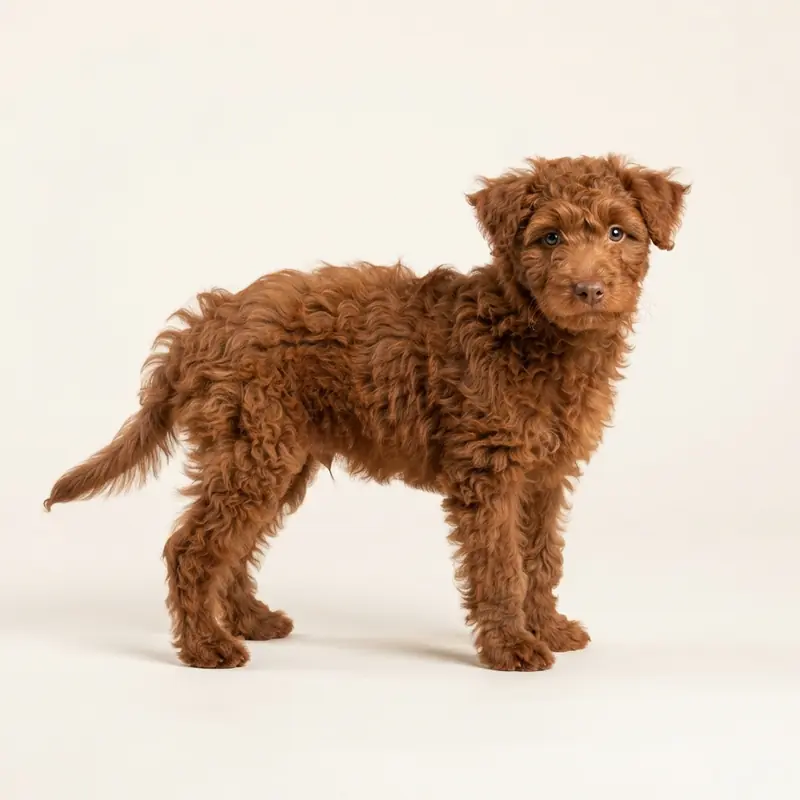
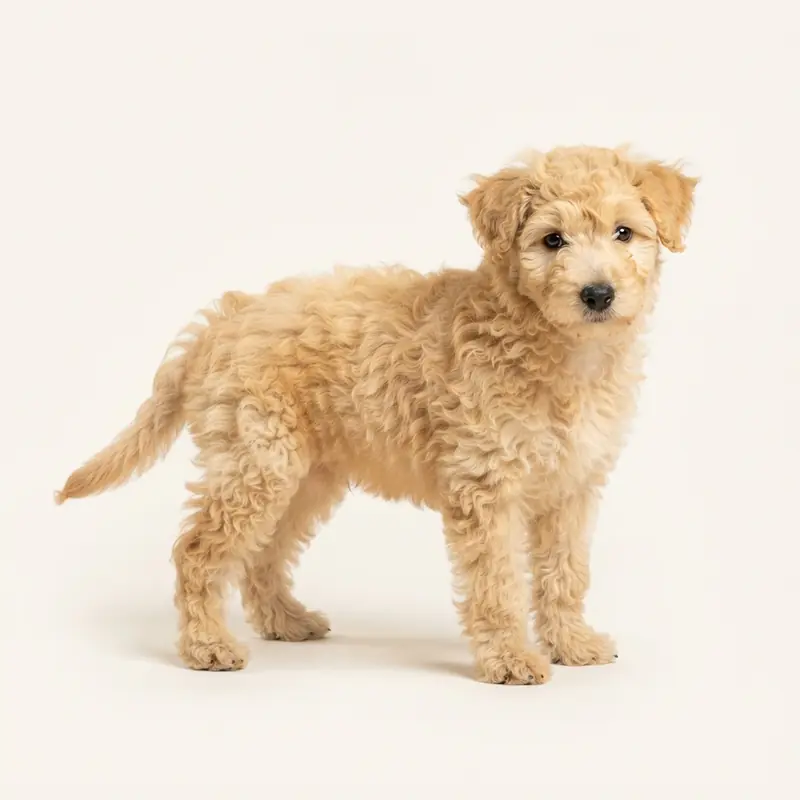
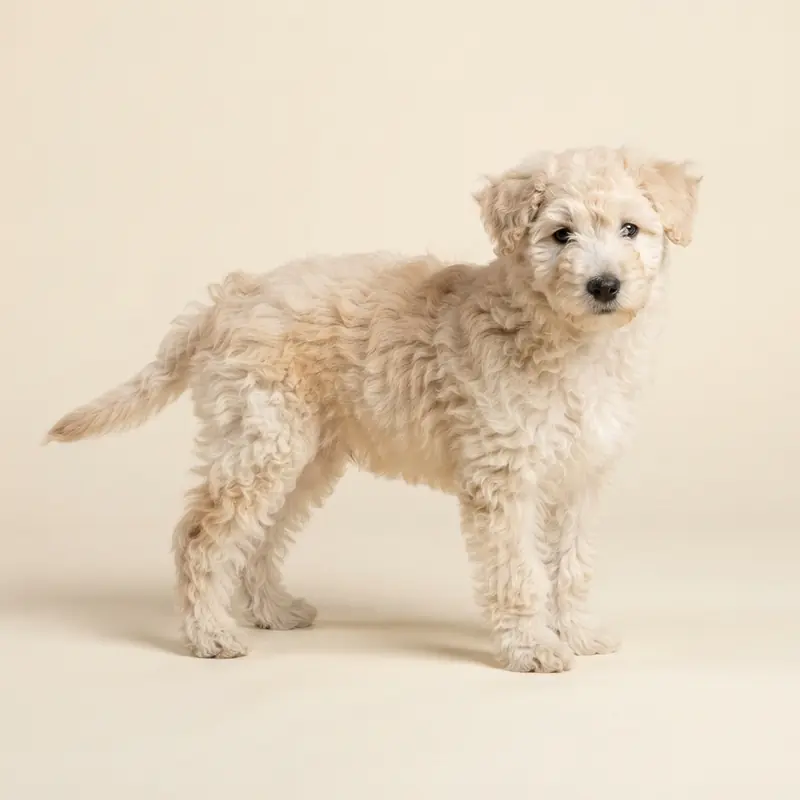
The Pumi comes in these colors: Grey, Black, Fawn, Red, Yellow, Cream, White.
Showcase your kennel on HonestDog and reach families searching for a responsibly bred Pumi.