Afghan HoundSame FCI section
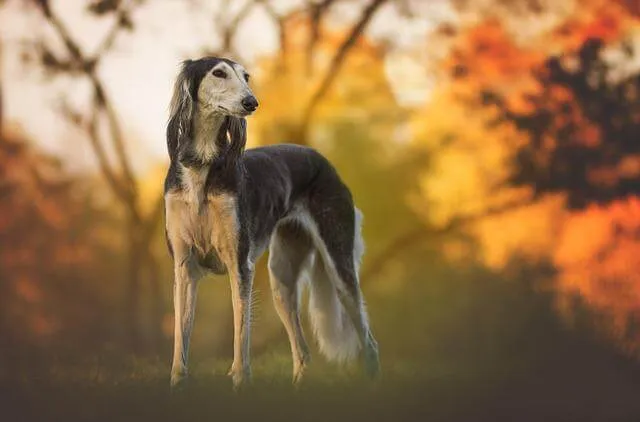
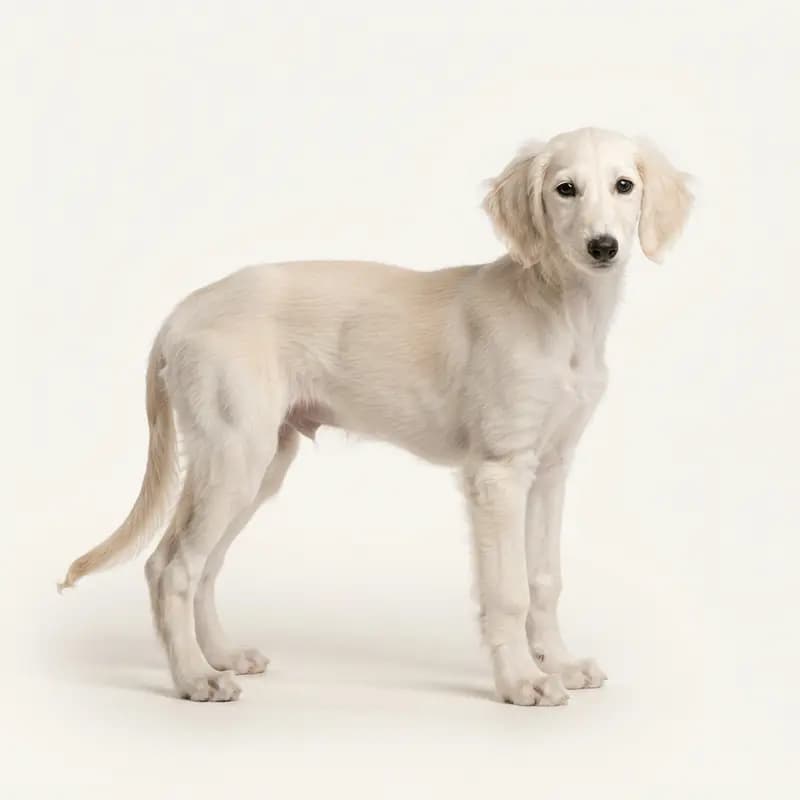
The Saluki is a dignified, lightning-fast sighthound—bred in the Middle East to hunt game across endless desert stretches by sight, which makes them extremely athletic and highly independent.
How the health grade is calculated
Sources for required breeding screenings. Deutscher Windhundzucht- und Rennverband e.V. (DWZRV)
Self-check
Answer 6 quick questions about your everyday life and see how well the Saluki fits you — including an honest cost estimate per month, per year, and across the dog's lifetime.
At a glance
The essentials — key facts, traits, and health priorities — before you dive deeper.
Lifespan
12–14 yrs
Shoulder height
54–71 cm
Weight
16–27 kg
Practical
Temperament
Daily life
What matters most
Especially with a Saluki, choosing the right breeder is the single most important decision you'll make. Serious breeders consistently test the parents for inherited conditions, prioritize healthy early socialization, and stay accountable long after handover. A cheap puppy without health screening tends to become the most expensive dog later on.
See HonestDog breeder standards →Colors & coat
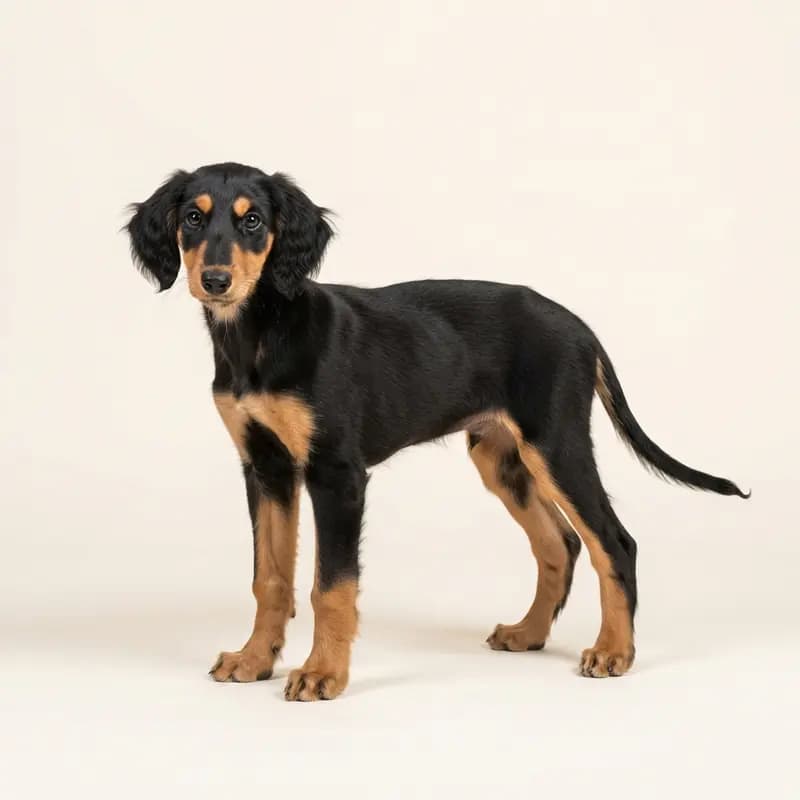
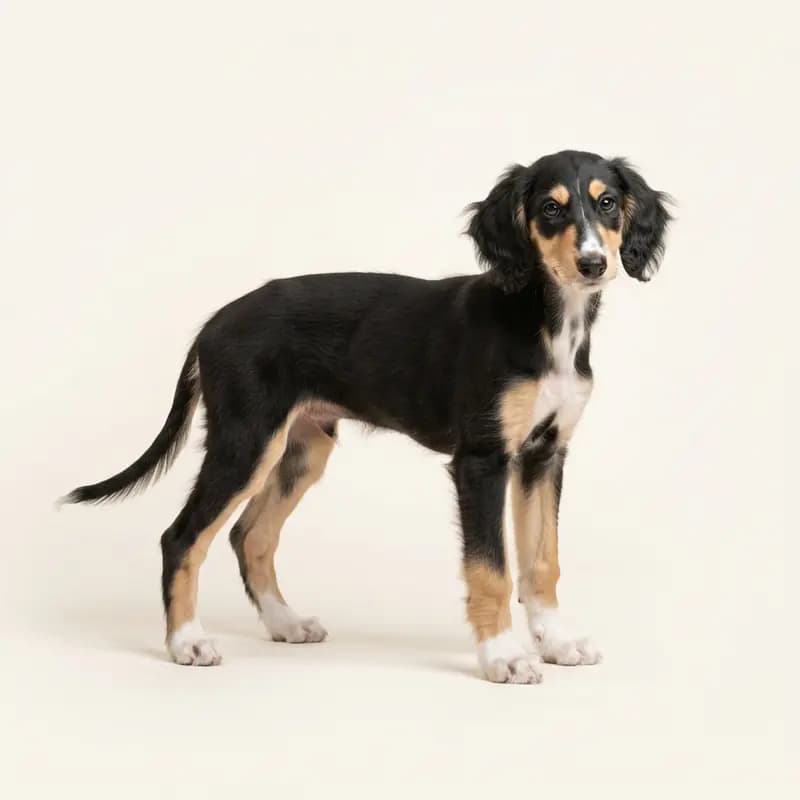
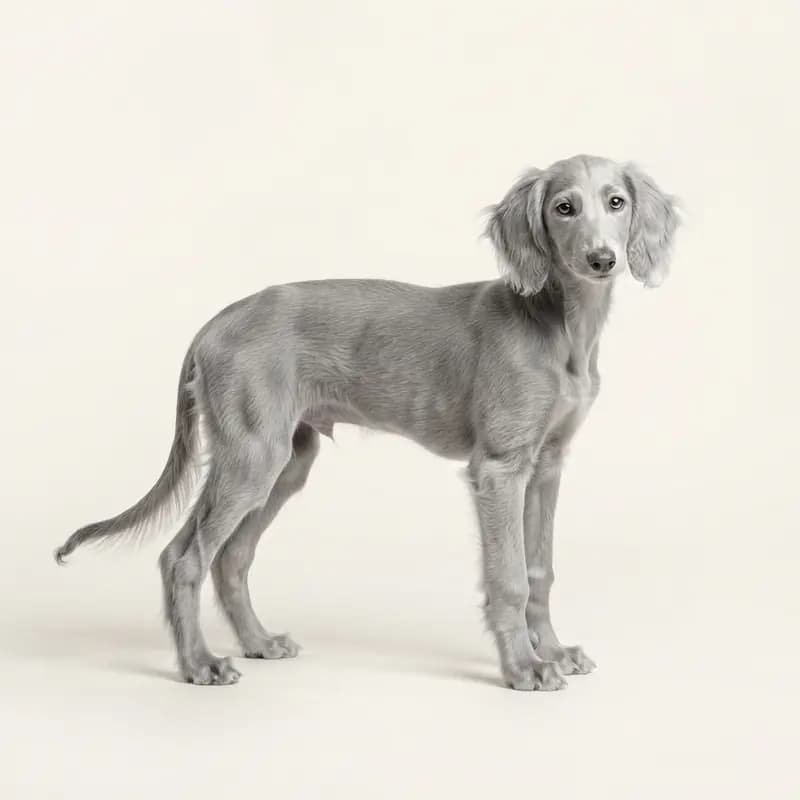
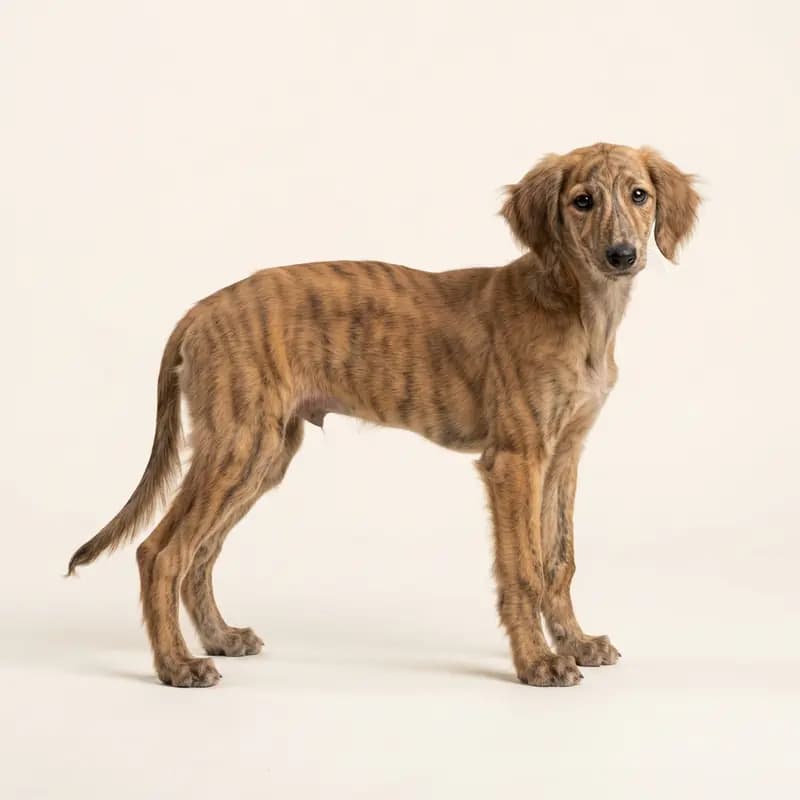
The coat colors that occur in the Saluki — including which ones fall outside the breed standard and which carry genetic risk.
Eye colors
 Brown
 Amber
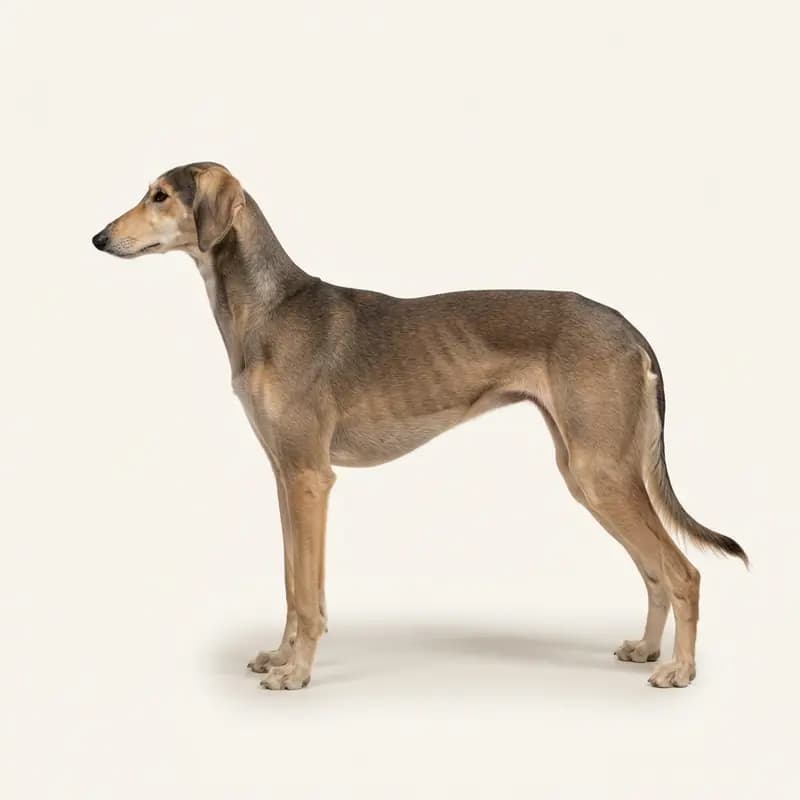
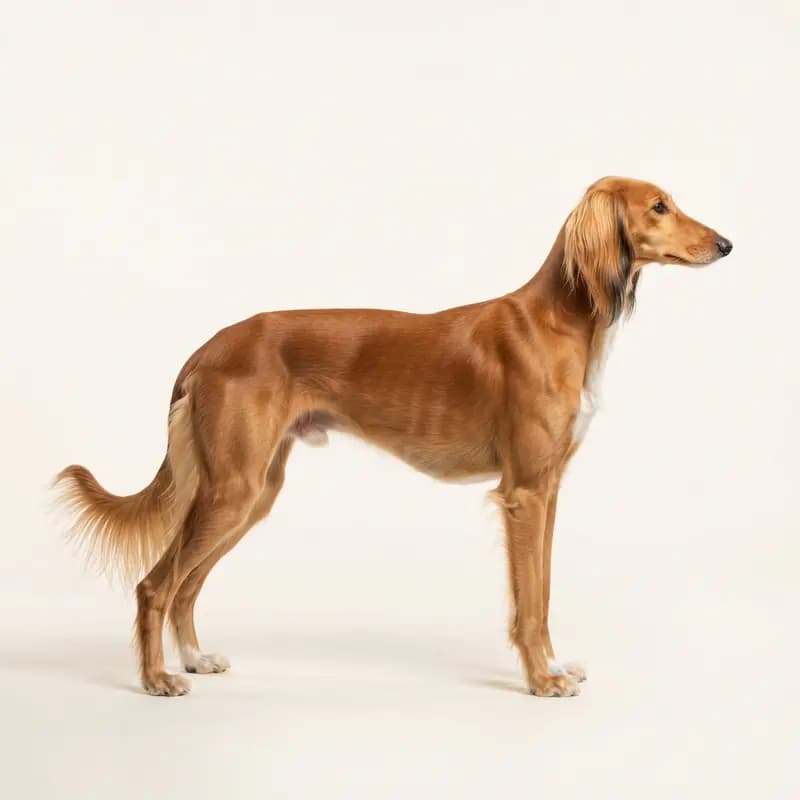
Coat type
 Illustrative image
Short
 Illustrative image
Silky
 Smooth
The real vibes check
A Saluki is essentially a noble cat in the body of an Olympic sprinter. At home, they will lie decoratively and almost silently for hours on the softest cushion they can find—but outside, a jumping hare is all it takes for them to switch into uncompromising hunting mode. You aren't getting an obedient command-follower, but an independent spirit who decides for themselves whether working with you is worth the effort at that moment.
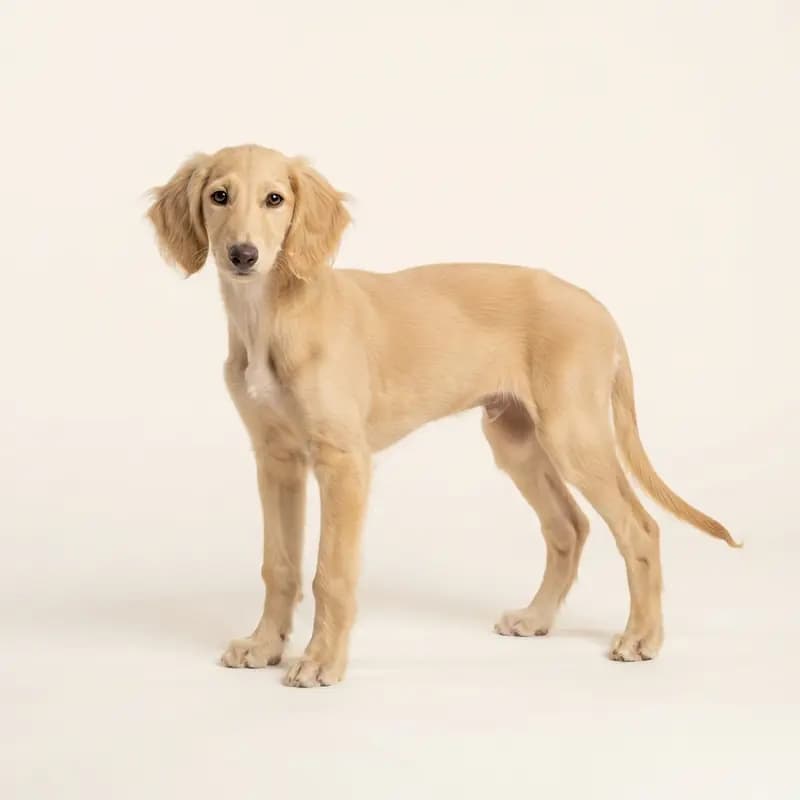
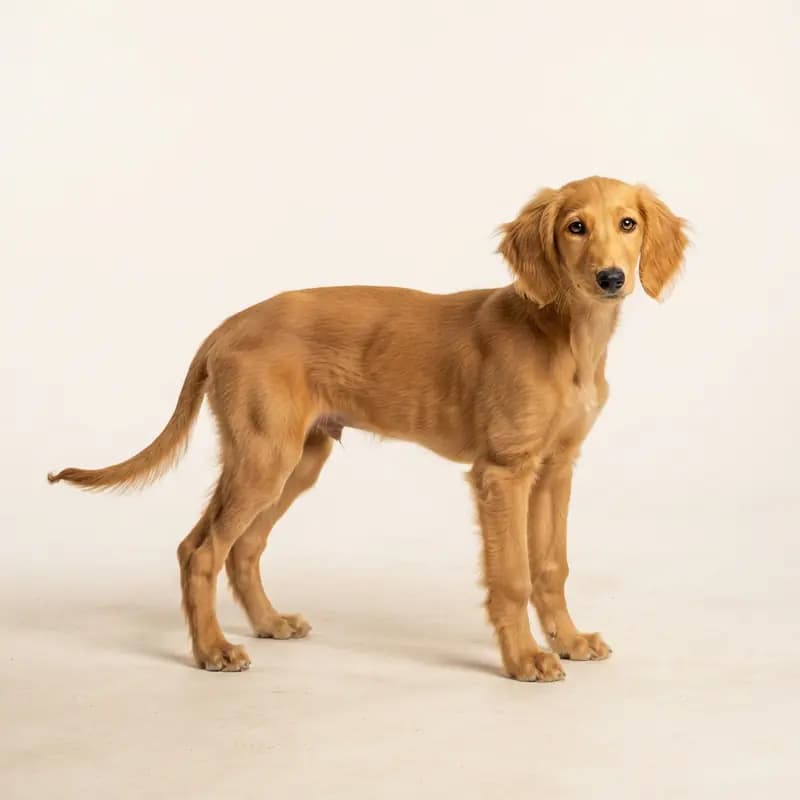
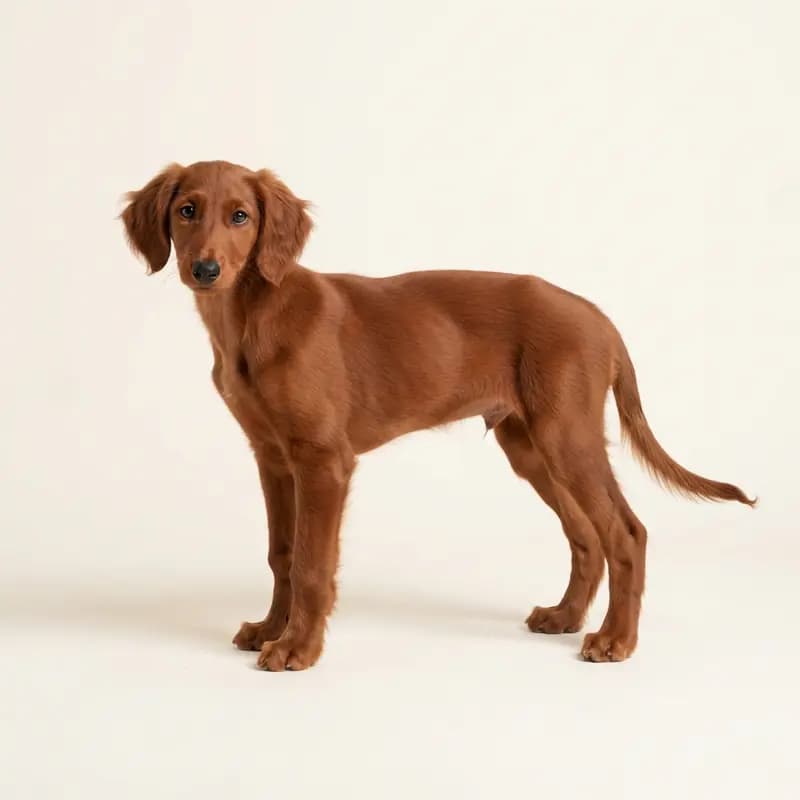
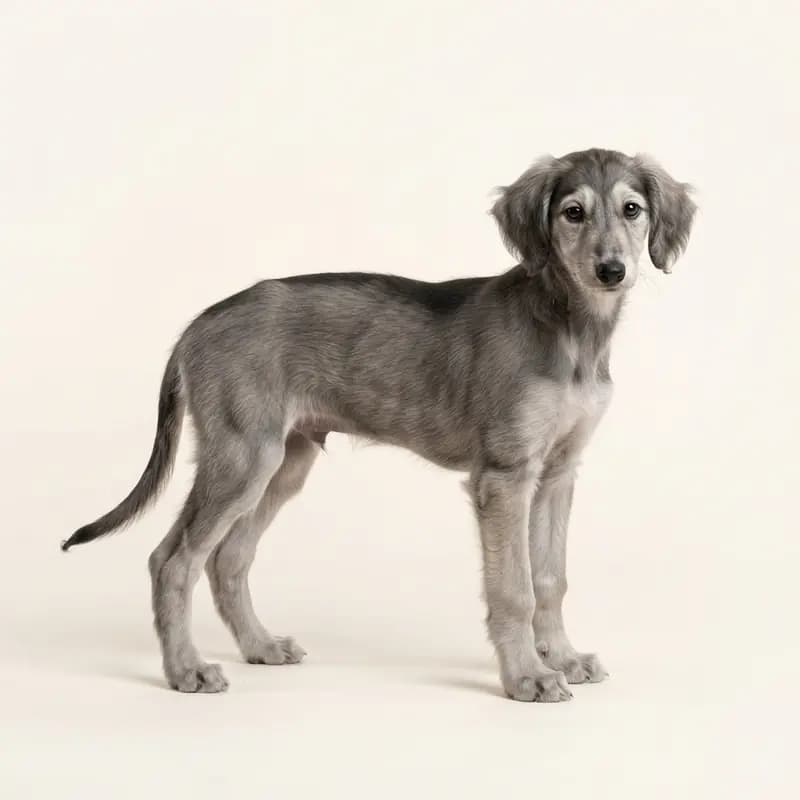
The Saluki, also known as the Persian Greyhound or Arabian Greyhound, is a real feast for the eyes. Its slim and graceful physique is the result of thousands of years of careful selection, making it one of the fastest and most agile dogs on the planet. The Saluki is part of FCI Group 10, which includes sighthounds, and Section 1, which includes long-haired or fringed sighthounds. A distinctive feature of the Saluki is its beautiful, streamlined body, which makes it an excellent runner. The breed has long, slender legs and a deep chest that provides enough space for the heart and lungs to deliver enough oxygen during long runs. The dogs have either short or slightly longer hair. Salukis with longer fur often have a silky "fringe" on the ears and tail, while the short-haired version has practically no fringe. In terms of color, Salukis can have a wide range, from white to cream, gold, red, black and silver, often with various patterns and markings too.
With its proud demeanor and gentle, independent nature, the Saluki is a special dog. He is often described as reserved and aloof, especially towards strangers. But for those For those who are lucky enough to gain his trust, he shows deep affection and loyalty. Salukis are not dogs that constantly seek human attention. While they appreciate the company of their humans, they are also happy when they can spend time alone. That's why they usually learn quickly to stay alone. But despite their independence, they should not be left alone for long periods of time otherwise they may suffer from separation anxiety. Although they are known as calm and easy-going dogs, Salukis also have a lively and playful side. They love to run and play, especially outdoors. Their eagerness to move is a reminder of their days as hunting dogs in the desert. For this reason, Salukis often exhibit strong hunting behavior and should be kept in a safe environment or securely leashed when outside. A garden should be securely fenced in as Salukis can make amazingly high jumps. In terms of their alertness, Salukis are generally not particularly alert dogs. They can be reserved and aloof around strangers, but they are not known to be aggressive or overly protective. Their main drive is hunting and running, not guarding.
| Watchfulness Occasionally alerts but is fundamentally open. | Low |
| Openness to Strangers Warms up quickly and is generally welcoming. | Friendly |
| Hunting or Herding Drive This drive runs deep — no amount of training eliminates it. | Very strong |
Fun Fact!
Although Salukis are known for their speed and endurance, they are also excellent jumpers and can leap over obstacles up to 2 meters high.
Salukis are active dogs with a very high hunting motivation. They need lots of exercise and activity. It is a big challenge to stop a Saluki from hunting, so free running is not always possible.
Although Salukis, with their calm and reserved nature, are able to live in urban environments, they require a lot of exercise and mental exercise. A home with a well-fenced yard would be ideal for them. They generally get along well with children and can live with other pets in the same family, but their strong hunting instincts can make them a danger to smaller pets.
Loves family life and thrives in a group.
Gets on well with children — with adult supervision.
Actively enjoys the company of other dogs.
City-appropriate with enough exercise and stimulation.
Owning a dog is a privilege, but it's also a real responsibility. Before you bring one into your life, be honest with yourself about the commitment it takes.
Salukis are intelligent and trainable, but they can also be independent and stubborn, which can make training a challenge. It is important that training is based on positive reinforcement and requires patience and consistency. Salukis benefit from activities that promote their physical and mental fitness, such as agility, lure coursing, or simply running and playing. However, they also have a high need for rest and should not be overwhelmed. An important aspect of training a Saluki is teaching him to control his natural hunting instincts. This can be achieved through training and offering alternatives such as games and search games.
Salukis are high-energy dogs that require a balanced diet rich in high-quality proteins and healthy fats. It is important that they receive an adequate amount of nutrients to support their active lifestyle. Feeding should be tailored to each dog's individual needs, including their age, weight and health status. Caring for a Saluki is generally quite simple. Their fur is short to medium long and partially has an undercoat. They shed moderately, but regular brushing can help keep their coat clean and healthy. Despite their origins in the hot Middle East, Salukis can adapt well to various climate conditions, including German weather. However, they should be protected from cold in winter as they have low body fat.
| Care Level Minimal effort — occasional brushing and bathing. | Low-maintenance |
| Exercise Needs Needs several hours of serious exercise every day. | Very active |
| Shedding No or minimal hair loss — suitable for allergy sufferers. | No shedding |
| Trainability Has its own ideas and will test limits. | Strong-willed |
Our experts are still reviewing this information. Spotted something wrong? Email us at info@honestdog.de.
Robust
Health grade
The Saluki is considered a very healthy breed, yet there are hereditary risks such as Neuronal Ceroid Lipofuscinosis 8 (Saluki) and Succinic Semialdehyde Dehydrogenase Deficiency (SSADHD). The Deutscher Windhundzucht- und Rennverband e.V. (DWZRV) mandatory requires genetic testing for these two diseases as well as cardiac screening with a limit of Grade 0–1. Carriers may only be mated with proven clear partners. A health-oriented breeder additionally screens for hypothyroidism and pays attention to Color Dilution Alopecia / Blue Dog Syndrome. Before purchasing, ask to see the DNA certificates of both parent animals and verify that two carriers were not mated together.
Grade is relative to other breeds — AI-assisted and editorially reviewed.
Methodology and data: HonestDog Dog Breed Health Report 2026
What matters most for this breed
Tap any item to see details.
For a long and active life, you should ensure they are raised in a way that is gentle on their joints and schedule regular veterinary check-ups for their heart and thyroid.
Responsible breeders test beforehand for Neuronal Ceroid Lipofuscinosis 8 (Saluki), Succinic Semialdehyde Dehydrogenase Deficiency (SSADHD), and heart disease, and additionally check for hypothyroidism.
Note: This health overview is AI-assisted and editorially reviewed. It is for orientation only and does not replace veterinary advice.
What matters most for this breed — what's common, how much it affects the dog's life, and how to protect yourself as a buyer.
Tap a body region to see the inherited conditions linked to it.
The three most important risks
Pick a region on the map to explore other areas.
Tier 1 is the core standard: the tests Deutscher Windhundzucht- und Rennverband e.V. (DWZRV) requires, plus further tests from the recommended health standard for this breed. Tiers 2 and 3 show how responsible breeders go beyond.
Core standard. Tests marked “Club standard” are required by Deutscher Windhundzucht- und Rennverband e.V. (DWZRV) for breeding approval; the others are part of the recommended health standard for this breed. Ask any reputable breeder for the results.
No entries in this tier.
Note: This health overview is AI-assisted and editorially reviewed. It is for orientation only and does not replace veterinary advice.
A Saluki costs around ~€180 per month (€90 – €330, depending on your setup). The first year adds up to roughly ~€4,950 including purchase, equipment and puppy school; across the dog's life (13 years) it comes to about ~€30,330.
With surgery cover, running costs come to about ~€170 per month — in return, your share of a major operation drops from several thousand euros to around 20 percent.
Per month
~€180
In the first year
~€4,950
Across the dog's life
~€30,330
Estimated purchase price from a breeder: €1,500 – €2,500
Estimate at a mid-range setup (suburban, dry food, 1–2 hours of daily exercise), average German prices, as of July 2026.
 Illustrative imageIllustrative image
 Illustrative image
 Illustrative image
The Saluki is one of the oldest dog breeds in existence. Its roots go back thousands of years to the time of the Pharaohs in ancient Egypt. In fact, images of Saluki-like dogs have been found on the walls of pharaohs' tombs, dating back up to 4,000 years. The dogs were bred in the Middle East and were particularly valued for their speed and endurance, which made them excellent hunting dogs. The breed was only introduced to the West in the 19th century and got its name from the Arabic city of Saluki, which means "noble". They were recognized as a separate breed by the English Kennel Club in 1923 and by the American Kennel Club in 1929.
The Saluki was bred as a hunting dog for hunting gazelles and other game in desert regions.
Middle East
Antike
Owners consistently describe the Saluki as a very pleasant, almost unobtrusive housemate. Many compare its behavior indoors to a cat's: it moves quietly, very rarely barks and spends most of the day curled up in the softest spots in the home. The breed is very sensitive to harshness, raised voices or hectic surroundings, which is why owners stress that a calm, understanding home is a basic requirement for living together happily.
The Saluki forms a deep, almost dignified bond with its own family but rarely pushes itself on anyone. It usually meets visitors with polite reserve or complete indifference, which fans of the breed appreciate but outsiders sometimes mistake for arrogance. It is described as a gentle companion for families with older, respectful children; for households with very lively toddlers, however, many owners find its reserved, sensitive nature too delicate.
Sources:mit-tier.dewindhundverband.dereddit.comhundeseite.detierisch-verliebt.de
A dominant topic in forums and owner reports is the Saluki's strong urge to chase by sight and to run. Experienced owners keep stressing that reliable off-leash time in open country is simply impossible for the vast majority of Salukis. The moment it spots movement on the horizon, whether a hare, a deer or a cat, the dog switches into chase mode in a split second and practically can't be called back by voice.
To meet this inborn need to run, owners rely on careful management day to day: in the community, high-fenced exercise areas, sighthound runs or sighthound sports such as lure coursing and track racing are considered essential so the dog can stretch out into a full gallop. At the same time, owners report that leashed walks have to be handled with foresight because the dog is always on the lookout, since a sudden sprint into the leash at that speed can hit with tremendous force.
Sources:windhundverband.dehundeseite.dedogforum.deforum.hundund.dedogvers.de
Experienced sighthound owners regularly warn against false expectations when training a Saluki: the breed has practically no "will to please" and generally questions whether a cue makes sense. If you're looking for blind obedience or precise obedience work, a Saluki won't make you happy. Owners report that commands are followed only when the motivation is right and the bond with its person rests on genuine mutual respect.
Reports agree that pressure, force or rough training methods make the Saluki shut down completely, lose trust and refuse to cooperate at all. What it takes instead is a great deal of patience, consistency and sensitive positive reinforcement. Many owners also mention a typical quirk: a certain cleverness and independence in daily life. According to countless anecdotes, unattended food on kitchen tables or couches gets snatched in a flash and without a sound, with no sign that the dog feels it has done anything wrong.
Sources:mit-tier.dedogvers.dediehundezeitung.comdogforum.deforum.hundund.de
Paraphrased from real owner reports · translated from German
The Saluki is an active dog that needs plenty of exercise and mental stimulation. Research the temperament, grooming needs, and space requirements before deciding.
The average life expectancy of a Saluki is 12-14 years. With proper care and regular vet visits, your dog can live a long, healthy life.
Saluki grooming requirements include regular brushing, nail trimming, and dental care. HonestDog provides detailed grooming tips for every breed.
The Saluki can be a great family dog. Proper training and socialization are key. HonestDog provides family suitability information for every breed.
The Saluki comes in these colors: White, Cream, Fawn, Gold, Red, Grizzle, Black and tan, Tricolor, Silver, Brindle. Colors that fall outside the breed standard are marked as such on the breed page.
Showcase your kennel on HonestDog and reach families searching for a responsibly bred Saluki.