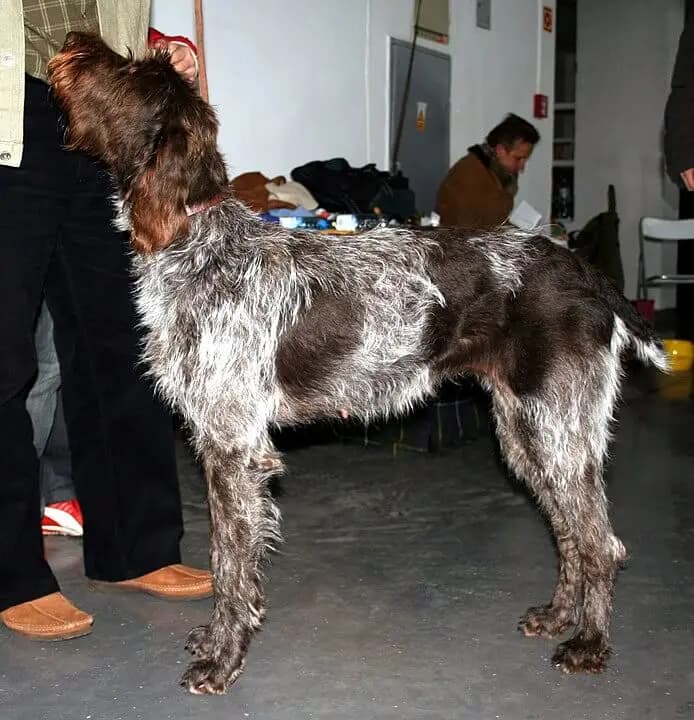
Cesky FousekClose relative
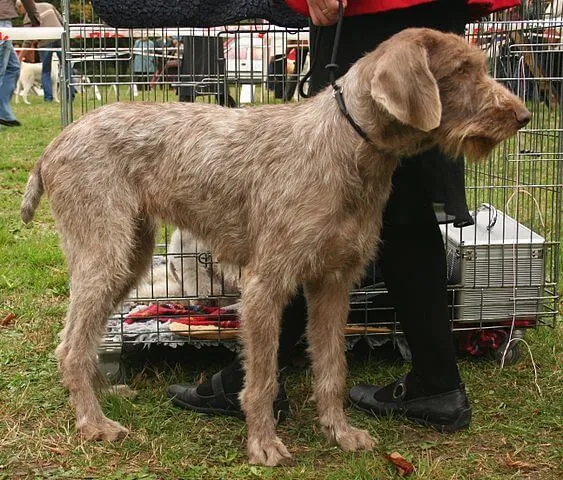
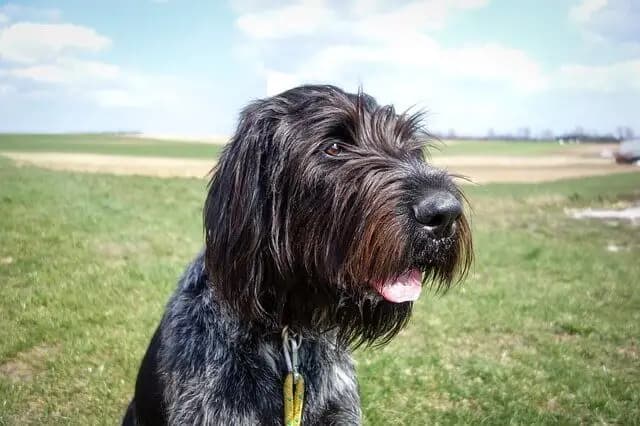
The Slowakischer Rauhbart (Slovakian Rough-haired Pointer) is a robust, enduring, and eager-to-work Vorstehhund (pointing dog)—bred for versatile hunting in fields, forests, and water, where it searches with a keen nose, points, and retrieves reliably.
Self-check
Answer 6 quick questions about your everyday life and see how well the Slovakian Rough-haired Pointer fits you — including an honest cost estimate per month, per year, and across the dog's lifetime.
At a glance
The essentials — key facts, traits, and health priorities — before you dive deeper.
Lifespan
12–15 yrs
Shoulder height
57–68 cm
Weight
24–35 kg
Practical
Temperament
Daily life
What matters most
Especially with a Slovakian Rough-haired Pointer, choosing the right breeder is the single most important decision you'll make. Serious breeders consistently test the parents for inherited conditions, prioritize healthy early socialization, and stay accountable long after handover. A cheap puppy without health screening tends to become the most expensive dog later on.
See HonestDog breeder standards →Colors & coat
The coat colors that occur in the Slovakian Rough-haired Pointer — including which ones fall outside the breed standard and which carry genetic risk.
Eye colors
 Amber
Amber Blue
BlueCoat type
 Wire
Wire Double coat
The real vibes check
A Slowakischer Rauhbart is not a dog for the side-lines—it is a highly specialized outdoor colleague that thrives outside and becomes invisible indoors, as long as its mind has something to do. If you give it a real task, you get an unshakable team partner; if you don't, it will find its own project, usually at the expense of the local wildlife.
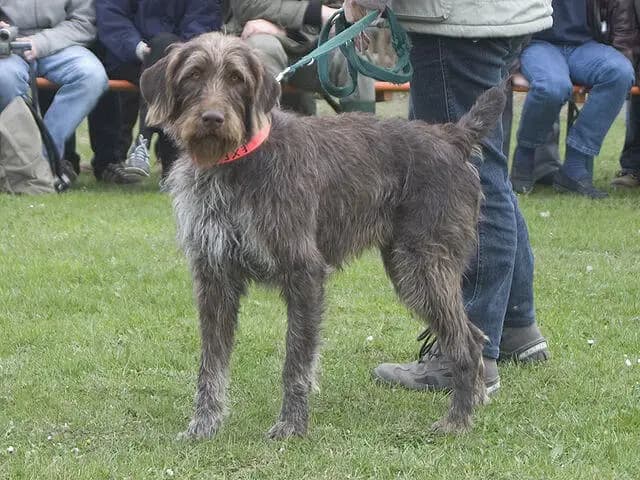
The Slovakian Rough-haired Pointer is a medium-sized dog with a charming appearance. It belongs to FCI Group 7 "Pointing Dogs" and is distinguished by its striking look. The breed is often bred in two lines: working dogs with a stronger focus on performance, and show dogs bred primarily for conformation shows. The Slovakian Rough-haired Pointer has an expressive appearance with alert eyes and a characteristic, dense, and rough coat.
The Slovakian Rough-haired Pointer is an intelligent and courageous dog with a balanced temperament. It is adaptable and adjusts well to different living situations. The Rough-haired Pointer is people-oriented and forms a strong bond with its family. It is playful and affectionate, yet also self-reliant and independent. The Slovakian Rough-haired Pointer handles being left alone well if accustomed to it early on and provided with sufficient physical activity and mental stimulation. It is not prone to excessive separation anxiety, though it enjoys being close to its humans. Proper socialization and training are essential to guide its natural alertness and protective instincts into appropriate channels. Due to its original purpose as a hunting dog, the Slovakian Rough-haired Pointer exhibits an innate hunting and prey drive. Consistent training and targeted guidance are therefore necessary to manage this behavior and provide it with alternative outlets. The Rough-haired Pointer is watchful and responds readily to changes in its environment.
| Watchfulness Strong territorial instinct — may actively confront intruders. | Very high |
| Openness to Strangers Careful around unfamiliar people — thaws slowly. | Cautious |
| Hunting or Herding Drive Powerful instinct that can override recall when triggered. | Strong |
Fun Fact!
The Slovakian Roughbeard is an ancient breed that is closely linked to the history and culture of Slovakia. It has traditionally been used as a guard dog, hunting companion and herd protector and has a long tradition as a loyal and reliable companion.
The Slovakian Wirehaired Pointer is a dog of moderate strength, working type, but with noble traits. He must be fit and able to work on the plains, in the forest and in the water and, above all, to work after the shot to search for and retrieve wounded game. He is obedient and easy to train. The Slovakian Wirehaired Pointer is a dog of moderate strength, working type, but with noble lines.
The Slovakian Roughbeard is a versatile dog that can be kept in both rural and urban areas. However, it is important to provide him with enough exercise and mental stimulation. This can be done through regular walks ive games and involvement in various activities can be achieved. A fenced garden or a nearby park is ideal for satisfying his need for exercise. This breed is good with children, provided it has been trained to interact with children from the start and interactions are supervised. Socialization with other animals should also occur early on to ensure positive compatibility. With proper introduction and supervision, the Slovakian Roughbeard can get along well with other pets, including cats.
Loves family life and thrives in a group.
Gets on well with children — with adult supervision.
Usually gets on fine with other dogs.
Can manage in the city, but only with very active owners.
Owning a dog is a privilege, but it's also a real responsibility. Before you bring one into your life, be honest with yourself about the commitment it takes.
The Slovakian Roughbeard is intelligent and eager to work. He enjoys learning and is eager to please his owner. Consistent but loving training with positive reinforcement is therefore effective. This breed is suitable for various activities and dog sports such as agility, obedience training and tracking. The training should be varied, interesting and challenging in order to stimulate the rough beard mentally and physically. It is important to keep the Slovakian Roughbeard sufficiently occupied to avoid boredom and unwanted behavior. However, it is also important to be careful not to over-exercise the dog, as this can lead to stress and imbalance. A balanced mix of training sessions, mental games and sufficient rest time is recommended. Training should be based on positive reinforcement and encourage the dog to make good decisions. It is important to promote frustration tolerance and impulse control so that the Slovakian Roughbeard becomes a balanced and well-behaved dog. A sensitive and loving approach based on the breed's natural dispositions will result in a happy and obedient dog.
The Slovakian Roughbeard needs a balanced, high-quality diet that is tailored to its activity level and individual needs. It is advisable to choose high-quality dog food that contains all the necessary nutrients. The exact amount of food should be adjusted according to the dog's age, weight and activity level. Fresh water should always be available. The rough beard has a dense, rough top coat with a soft undercoat. The coat requires regular brushing, especially during shedding, to remove dead hair and prevent matting. This breed sheds moderately, but regular brushing will help remove loose hair and make grooming easier. The Slovakian Roughbeard copes well with the climate in Germany. Its thick fur provides it with protection from the cold and it can adapt to different weather conditions.
| Care Level Regular brushing and occasional professional grooming. | Moderate |
| Exercise Needs Needs several hours of serious exercise every day. | Very active |
| Shedding No or minimal hair loss — suitable for allergy sufferers. | No shedding |
| Trainability Picks up commands quickly and wants to please. | Eager to learn |
Our experts are still reviewing this information. Spotted something wrong? Email us at info@honestdog.de.
Robust
Health grade
The Slovakian Rough-haired Pointer is a robust hunting dog breed with very low genetic baggage. Hip dysplasia (HD), as the main risk, is well under control thanks to mandatory breeding examinations. Potential buyers should also pay attention to breed-specific conditions such as hyperuricosuria (risk of urinary stones) and the rare but severe hereditary footpad hyperkeratosis, both of which can be ruled out through genetic testing of the parents.
Grade is relative to other breeds — AI-assisted and editorially reviewed.
Methodology and data: HonestDog Dog Breed Health Report 2026
What matters most for this breed
Tap any item to see details.
You should focus on joint-friendly rearing and a healthy weight, as well as having the eyes checked regularly to ensure your dog stays active for a long time.
Reputable breeders have the hips, elbows, and eyes of the parent animals tested to reduce risks in the lineage.
Note: This health overview is AI-assisted and editorially reviewed. It is for orientation only and does not replace veterinary advice.
What matters most for this breed — what's common, how much it affects the dog's life, and how to protect yourself as a buyer.
Tap a body region to see the inherited conditions linked to it.
The three most important risks
Pick a region on the map to explore other areas.
We sort tests into three tiers — from the mandatory club standard to a fully exemplary program.
Club standard. Tests that the relevant breed club (VDH / FCI / AKC parent club) requires. Any serious breeder should be able to show you these.
No entries in this tier.
Note: This health overview is AI-assisted and editorially reviewed. It is for orientation only and does not replace veterinary advice.
A Slovakian Rough-haired Pointer costs around ~€190 per month (€100 – €370, depending on your setup). The first year adds up to roughly ~€4,990 including purchase, equipment and puppy school; across the dog's life (13.5 years) it comes to about ~€33,850.
With surgery cover, running costs come to about ~€190 per month — in return, your share of a major operation drops from several thousand euros to around 20 percent.
Per month
~€190
In the first year
~€4,990
Across the dog's life
~€33,850
Estimated purchase price from a breeder: €1,200 – €2,500
Estimate at a mid-range setup (suburban, dry food, 1–2 hours of daily exercise), average German prices, as of July 2026.
HonestDog Concierge
We currently have no breeders for this breed who have passed our verification. Create your short buyer profile: we'll set up your search alert, review a possible source and email you within 28 days.
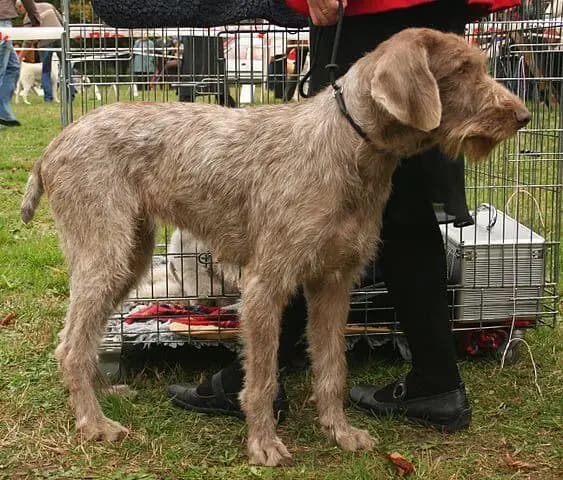
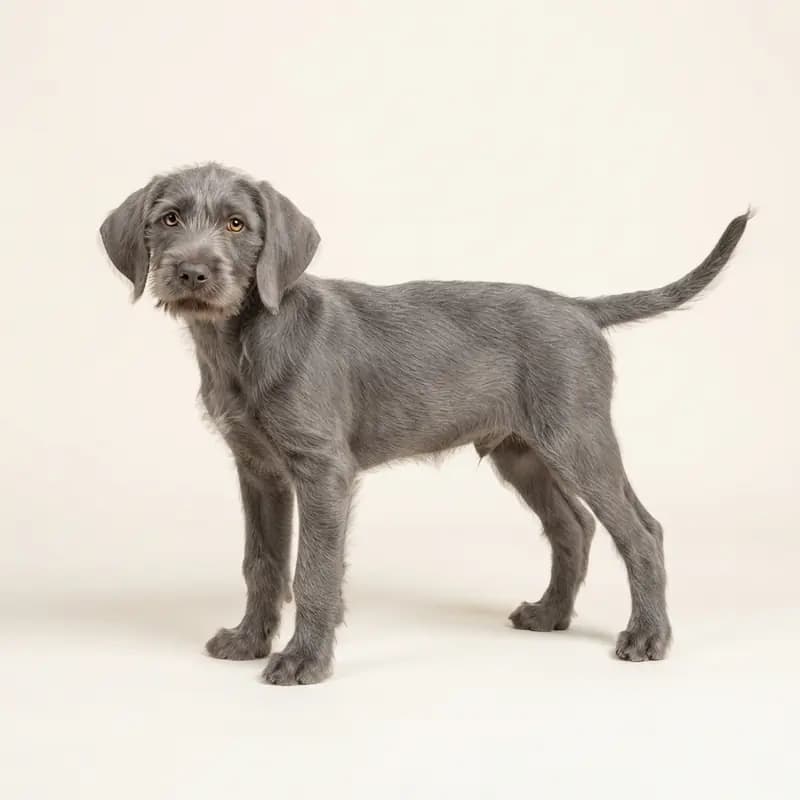 Illustrative image
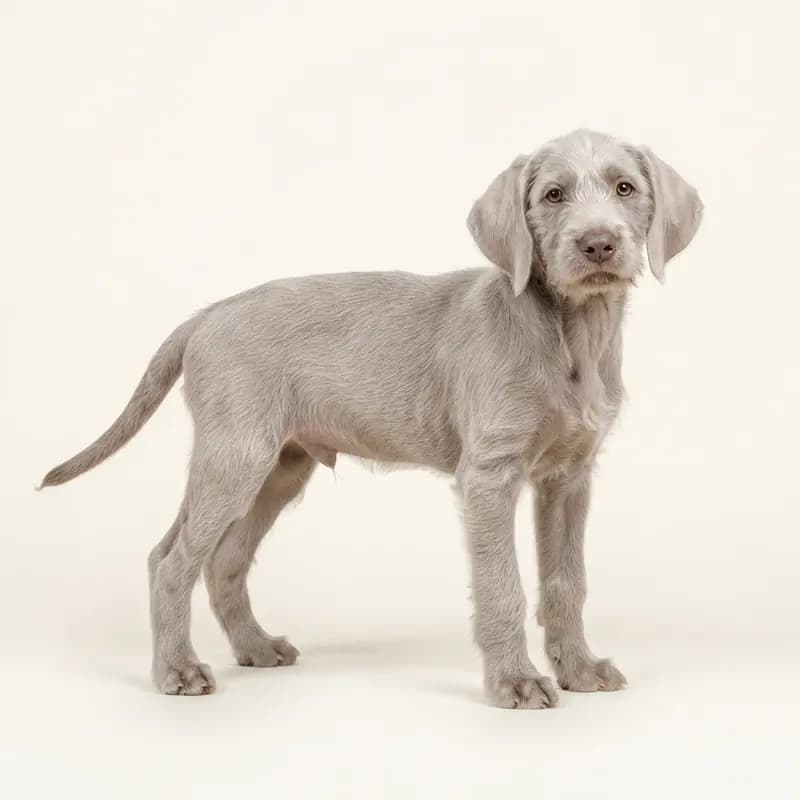 Illustrative image
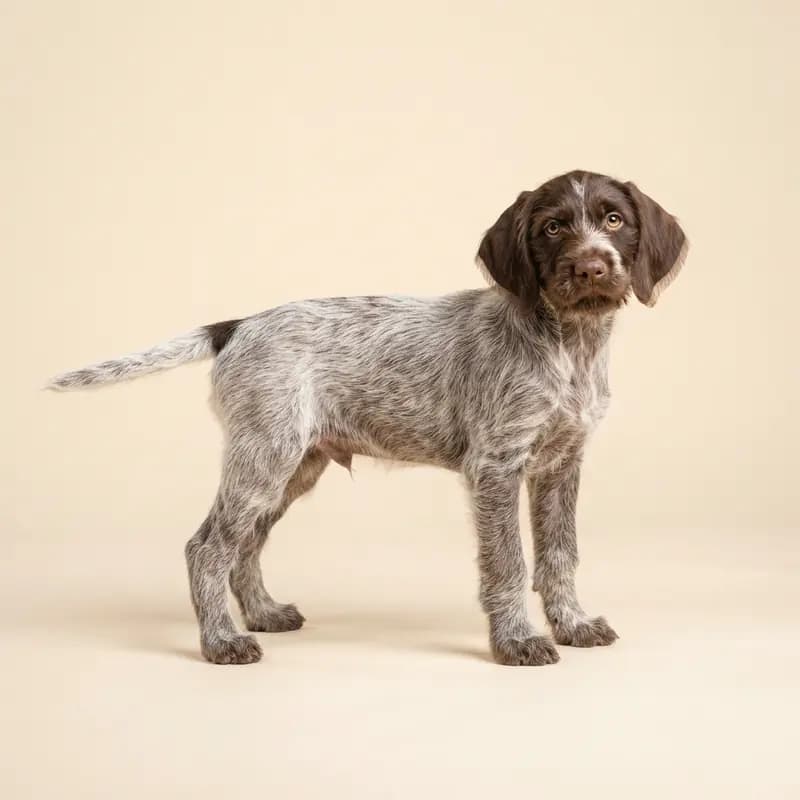 Illustrative image
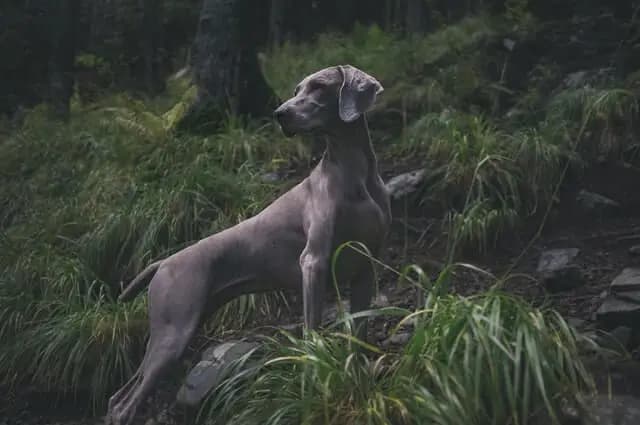
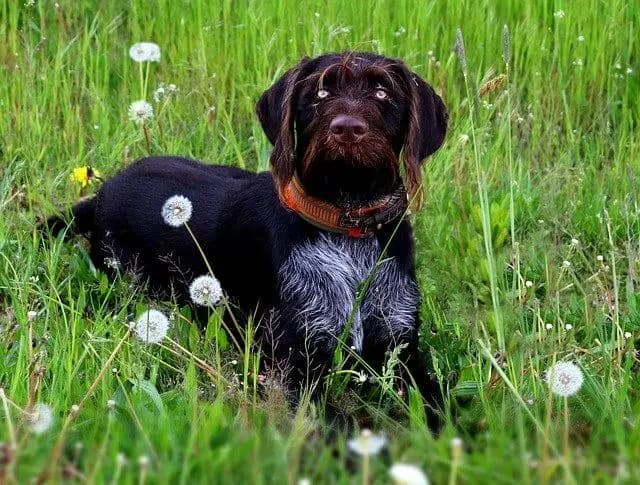
The Slovakian Rough-haired Pointer, also known as the Slovenský hrubosrstý stavač, is a relatively young dog breed whose targeted breeding began in the 1950s in what was then Czechoslovakia. The goal of breeders led by Koloman Slimák was to create a robust and versatile pointing dog capable of handling the demanding climatic and geographical conditions of the Slovakian hunting grounds. To achieve this, they purposefully crossed the Weimaraner with the Cesky Fousek and the German Wirehaired Pointer. The result was a high-performing, wire-haired hunting dog with the distinctive grey coat color of the Weimaraner. The Slovakian Rough-haired Pointer was primarily bred for versatile hunting, retrieving, and for work in both field and water. It is characterized by an excellent sense of smell, great stamina, and a strong hunting instinct. Unlike many older breeds, its development is fully documented due to this systematic breeding approach. After the breed quickly gained hunting significance in its homeland, it received final and official recognition by the Fédération Cynologique Internationale in 1983. To this day, this large pointing dog is kept almost exclusively as a working hunting dog and remains a rather rare sight outside of its country of origin.
The Slovakian Rough-haired Pointer was bred as a versatile hunting dog for field and water work as well as for retrieving.
Slovakia
1950
At home with the family, owners describe the Slovakian Wirehaired Pointer as a very affectionate, sensitive and good-natured housemate. Many stress that it must have close contact with its people and is in no way suited to living in a kennel run. It bonds closely with its family, often seeks physical contact, and is surprisingly calm and settled indoors, as long as it has had plenty of exercise outside.
At the same time, reports point out that a Slovakian Wirehaired Pointer kept only as a couch companion quickly becomes bored and unhappy. With children in a familiar setting it is usually considered patient and playful. Living with other pets such as cats takes a lot of foresight, though: unless it grows up with them from puppyhood, its prey drive means small animals running loose will quickly get chased.
Sources:jagdjuenger.dehundeseite.deedogs.deslowakischer-rauhbart.dezooplus.de
Handlers and trainers describe training as cooperative and smooth, because the dog naturally has a strong desire to please its person ("will to please"). Compared with some other pointing breeds, it is often seen as more biddable and less stubborn. Many owners especially appreciate that out in the field it usually keeps checking in with eye contact on its own and, as a close-working hunter, tends to stay within a manageable range of its person.
Still, people who know the breed stress that training doesn't run itself: hunting drive, a fine nose and sharpness toward small game and predators are deeply rooted. Frustration tolerance and a reliable recall need to be built early and consistently. Owners also warn against harsh or unfair treatment. The Slovakian Wirehaired Pointer is sensitive to too much pressure and works best with clear leadership, patience and positive reinforcement.
Sources:slowakischer-rauhbart.dezooplus.deeinfachtierisch.dehundeseite.desabinemiddelhaufeshundundnatur.net
On health and grooming, most owners report an uncomplicated experience. Because the breed was bred for decades mainly to strict performance and working standards, it is considered genetically fairly robust and not very prone to disease. The wiry topcoat sheds dirt and water, so grooming stays minimal: an occasional brushing is usually enough.
Its distinctive look does call for a few small daily routines. The beard the breed is named for regularly collects food scraps, water and burrs from eating, drinking or nosing through the undergrowth, so it needs frequent cleaning. Owners also point to the hanging ears, which should be dried thoroughly after a lot of water work and checked for infection. People who know the breed add that the breeding base outside Slovakia is small, so choosing parents carefully for hip health and temperament remains important.
Sources:hundeseite.dezooplus.desabinemiddelhaufeshundundnatur.netde.wikipedia.orgforum.wildundhund.de
Paraphrased from real owner reports · translated from German
The Slovakian Rough-haired Pointer is an active dog that needs plenty of exercise and mental stimulation. Research the temperament, grooming needs, and space requirements before deciding.
The average life expectancy of a Slovakian Rough-haired Pointer is 12-15 years. With proper care and regular vet visits, your dog can live a long, healthy life.
Slovakian Rough-haired Pointer grooming requirements include regular brushing, nail trimming, and dental care. HonestDog provides detailed grooming tips for every breed.
The Slovakian Rough-haired Pointer can be a great family dog. Proper training and socialization are key. HonestDog provides family suitability information for every breed.
The Slovakian Rough-haired Pointer comes in these colors: Grey, Silver, Roan.
Showcase your kennel on HonestDog and reach families searching for a responsibly bred Slovakian Rough-haired Pointer.