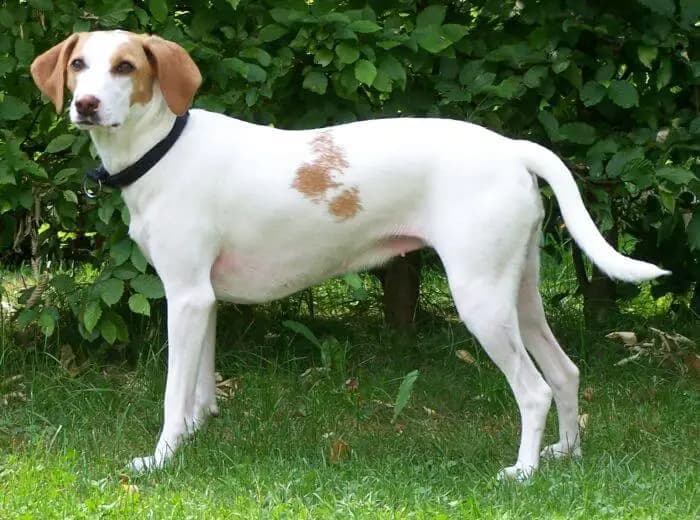
Istrian Shorthaired HoundClose relative
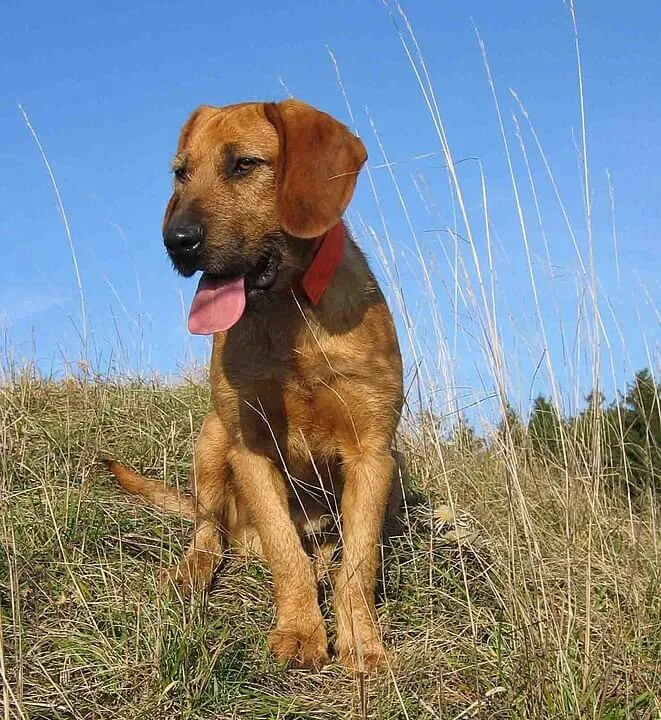
The Steirische Rauhhaarbracke is a tireless, extremely weather-resistant companion—a rugged scent-hound specialist bred to hunt game independently and with a loud voice in rough, mountainous terrain. Without a real job to do, this working machine will wither away.
How the health grade is calculated
Sources for required breeding screenings. Deutscher Brackenverein e.V.
Self-check
Answer 6 quick questions about your everyday life and see how well the Styrian Coarse-haired Hound fits you — including an honest cost estimate per month, per year, and across the dog's lifetime.

At a glance
The essentials — key facts, traits, and health priorities — before you dive deeper.
Lifespan
12–14 yrs
Shoulder height
45–53 cm
Weight
16–22 kg
Practical
Temperament
Daily life
What matters most
Especially with a Styrian Coarse-haired Hound, choosing the right breeder is the single most important decision you'll make. Serious breeders consistently test the parents for inherited conditions, prioritize healthy early socialization, and stay accountable long after handover. A cheap puppy without health screening tends to become the most expensive dog later on.
See HonestDog breeder standards →Colors & coat
The coat colors that occur in the Styrian Coarse-haired Hound — including which ones fall outside the breed standard and which carry genetic risk.
Eye colors
 Brown
Coat type
 Illustrative image
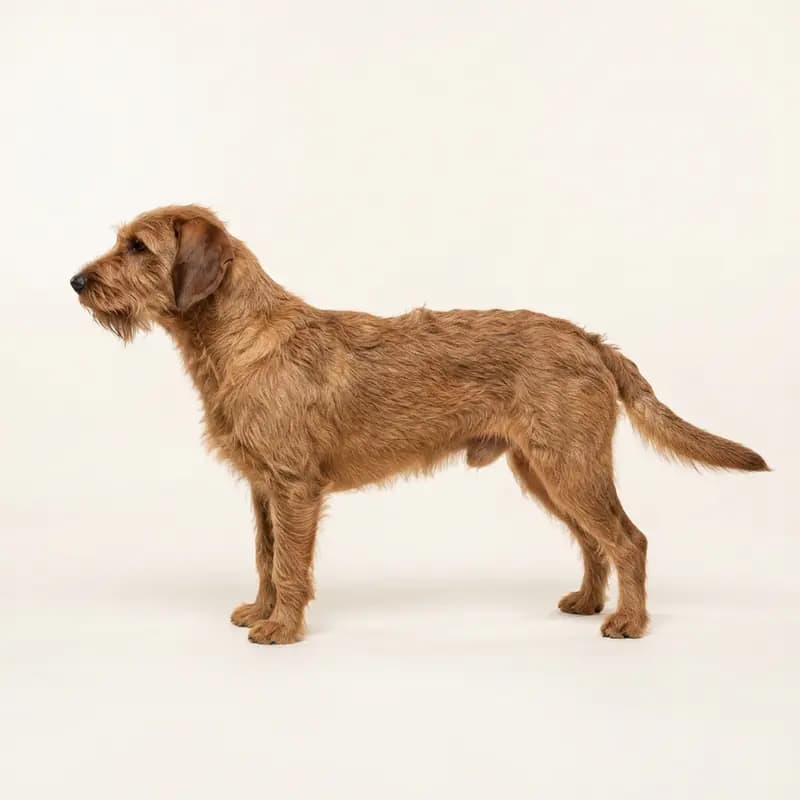
Wire
 Illustrative image
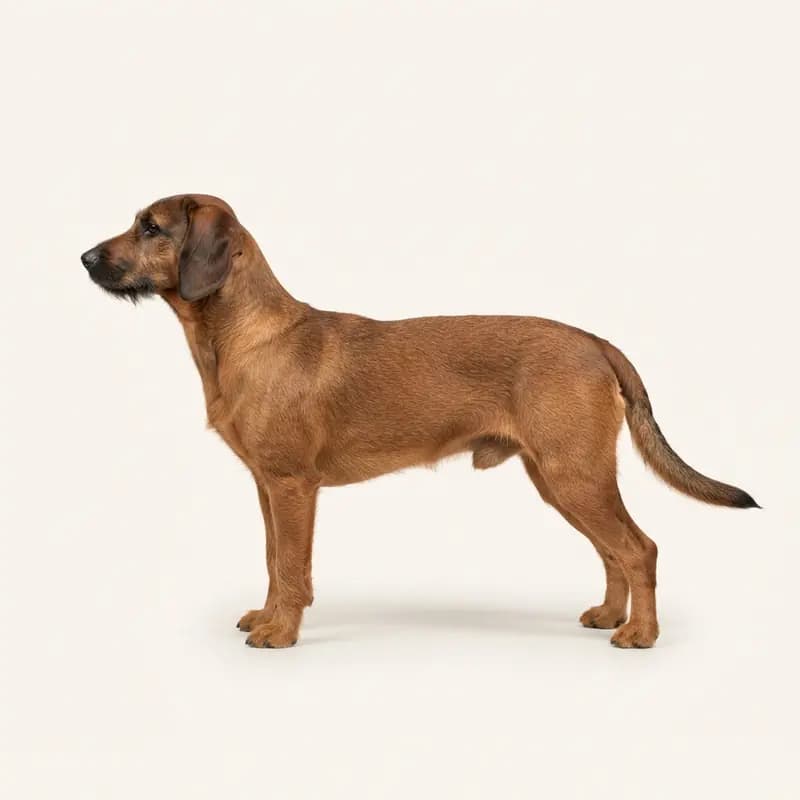
Short
 Double coat
The real vibes check
A Steirische Rauhhaarbracke is not a dog for a polite stroll in the city park—it is a rustic outdoorsman meant for the rough mountain snow. When its nose is glued to the ground and it starts baying, the rest of the world simply ceases to exist for it. You aren't getting a submissive follower of commands, but a highly specialized hunting partner that is only truly happy when it is allowed to work.
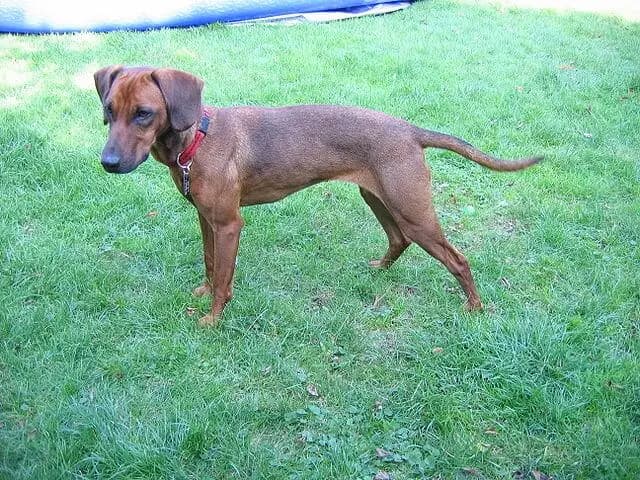
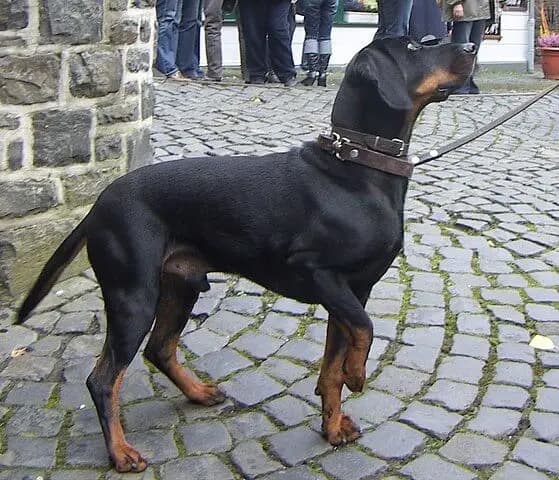
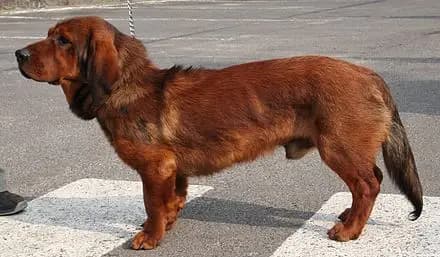
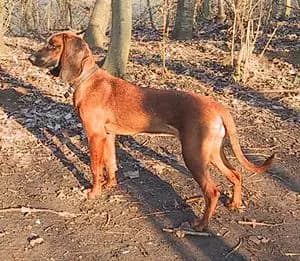
The Styrian Wirehaired Hound is a medium-sized dog with a lively and powerful appearance. The breed belongs to FCI Group 6, the running and bloodhounds. What is striking is the rough, short coat, which protects the dog from the elements and gives it its unmistakable look. Their long ears, which lie flat against the sides of their broad head, are particularly striking. The eyes of the Styrian Roughhaired Hound are dark and radiate a gentle and intelligent nature. She is a working dog through and through and there is no distinction between performance and show lines. This is a testament to the high value that working skills have in breeding this breed.
The Styrian Roughhaired Hound is a loyal and reliable dog that is characterized by its robust nature and agility. She is a working dog with heart and soul who loves being outdoors and having a job to do. It is therefore ideal for active people who like to spend a lot of time in nature and can integrate the dog into their everyday life. Due to their strong hunting instinct, it is important that as the owner of this dog you have experience with hunting dogs and their training. The Styrian Wire-haired Hound requires clear leadership and a task that corresponds to its natural instincts in order to be able to lead a happy and balanced dog life. Despite their strong hunting instinct, the Styrian Wire-haired Hound also shows a loving and affectionate side when it comes to their human pack. She is very people-oriented and enjoys spending time with her family. She can easily learn to stay alone as long as she has enough activity and exercise. She doesn't tend to bark or guard, her attention is more focused on tracking and following trails. Her temperament can be described as active but not hyperactive. She needs lots of exercise and mental stimulation, but is also able to enjoy quiet times. With her robust body and tireless endurance, she is the perfect companion for long hikes or jogging sessions. Their fine instincts and their desire to work can also be practiced in dog sports such as mantrailing or search games. Even though the Styrian Wire-haired Hound can be a loving family dog, it is not necessarily suitable for families with small children or pets because of its strong hunting instinct. She can learn to get along with children and other pets, but this requires careful socialization and constant supervision. It is important to note that the Styrian Wirehaired Hound is a dog that needs to be challenged and encouraged and is therefore not suitable for everyone. A close bond with their humans and the opportunity to pursue their natural urges are crucial for their well-being.
| Watchfulness Strong territorial instinct — may actively confront intruders. | Very high |
| Openness to Strangers Neither pushily friendly nor suspicious. | Neutral |
| Hunting or Herding Drive This drive runs deep — no amount of training eliminates it. | Very strong |
Fun Fact!
Although the Styrian Roughhaired Hound is an excellent hunting dog, it is also lovingly referred to as "Austria's most beautiful dog" in its home country of Austria.
The Styrian Rough-haired Bracke is a persistent and hunting-passionate dog. It is characterized by its rough, weather-resistant coat and its pronounced sense of smell. These dogs are friendly but also independent and require consistent leadership. They are especially suitable for active people who spend a lot of time outdoors and can provide their dog with meaningful activities.
The Styrian Wire-haired Hound is an active and energetic dog that requires plenty of exercise and mental stimulation. Therefore it is less suitable for city life unless there is the possibility of sufficient exercise and activity. She gets along well with older children who know how to treat a dog respectfully. A supervisor should always be present for younger children. She usually gets along well with other dogs, but her hunting instinct can be awakened with cats or small animals.
Loves family life and thrives in a group.
Gets on well with children — with adult supervision.
Actively enjoys the company of other dogs.
Can manage in the city, but only with very active owners.
Owning a dog is a privilege, but it's also a real responsibility. Before you bring one into your life, be honest with yourself about the commitment it takes.
Due to their strong hunting instinct and their intelligence, training the Styrian Wire-haired Hound requires a consistent and sensitive hand. She responds well to positive reinforcement and requires a lot of mental input to be happy. Activities like mantrailing or agility can be a good way to channel your energy and work ethic in positive directions. It is important that the dog learns to develop frustration tolerance and impulse control, otherwise their hunting instinct can quickly become a problem. The breed does not tend to be a "ball junkie"; however, attention should always be paid to a balanced level of play and work.
A balanced, high-quality diet is essential for the health and well-being of your Styrian Wirehaired Hound. A mixture of high-quality dry and wet food, supplemented with fresh fruit and vegetables, can ensure an adequate supply of nutrients. Make sure the food contains enough protein to support your dog's active lifestyle. The Styrian Wirehaired Hound has a short, rough coat with an undercoat that protects it well from the weather in Germany. She sheds moderately and therefore requires regular grooming. Brushing once a week is usually enough to remove dead hair and keep the coat healthy and shiny.
| Care Level Regular brushing and occasional professional grooming. | Moderate |
| Exercise Needs Working-dog energy that needs burning off every single day. | High-drive |
| Shedding Regular shedding — dog hair on clothes is now normal. | Moderate |
| Trainability Has its own ideas and will test limits. | Strong-willed |
Our experts are still reviewing this information. Spotted something wrong? Email us at info@honestdog.de.
Robust
Health grade
The Styrian Coarse-haired Hound is considered a very robust breed, but as with many working dogs, hip dysplasia (HD) remains the primary health risk. Responsible breeders therefore rely specifically on the consistent selection of healthy parent animals. The Deutscher Brackenverein e.V. strictly mandates an X-ray examination for hip dysplasia (HD), under which only dogs with ratings of HD A–B2 are permitted for breeding. Ask to see the official HD findings of both parent animals before purchasing a puppy in order to minimize the risk of joint problems.
Grade is relative to other breeds — AI-assisted and editorially reviewed.
Methodology and data: HonestDog Dog Breed Health Report 2026
What matters most for this breed
Tap any item to see details.
You should pay close attention to joint-friendly development during the growth phase and schedule regular veterinary check-ups for the eyes and thyroid to detect any changes early on.
Responsible breeders have their breeding dogs examined for hip dysplasia (HD) in accordance with the regulations of the Deutscher Brackenverein e.V. and only mate animals with the results HD A–B2.
Note: This health overview is AI-assisted and editorially reviewed. It is for orientation only and does not replace veterinary advice.
What matters most for this breed — what's common, how much it affects the dog's life, and how to protect yourself as a buyer.
Tap a body region to see the inherited conditions linked to it.
The three most important risks
Pick a region on the map to explore other areas.
Tier 1 reflects the tests Deutscher Brackenverein e.V. actually mandates. Tiers 2 and 3 show how responsible breeders go beyond.
Club standard. Deutscher Brackenverein e.V. requires these tests for breeding approval. Ask any reputable breeder for the results.
No entries in this tier.
No entries in this tier.
Note: This health overview is AI-assisted and editorially reviewed. It is for orientation only and does not replace veterinary advice.
A Styrian Coarse-haired Hound costs around ~€180 per month (€90 – €340, depending on your setup). The first year adds up to roughly ~€4,820 including purchase, equipment and puppy school; across the dog's life (13 years) it comes to about ~€30,550.
With surgery cover, running costs come to about ~€170 per month — in return, your share of a major operation drops from several thousand euros to around 20 percent.
Per month
~€180
In the first year
~€4,820
Across the dog's life
~€30,550
Estimated purchase price from a breeder: €1,200 – €2,500
Estimate at a mid-range setup (suburban, dry food, 1–2 hours of daily exercise), average German prices, as of July 2026.
HonestDog Concierge
We currently have no breeders for this breed who have passed our verification. Create your short buyer profile: we'll set up your search alert, review a possible source and email you within 28 days.
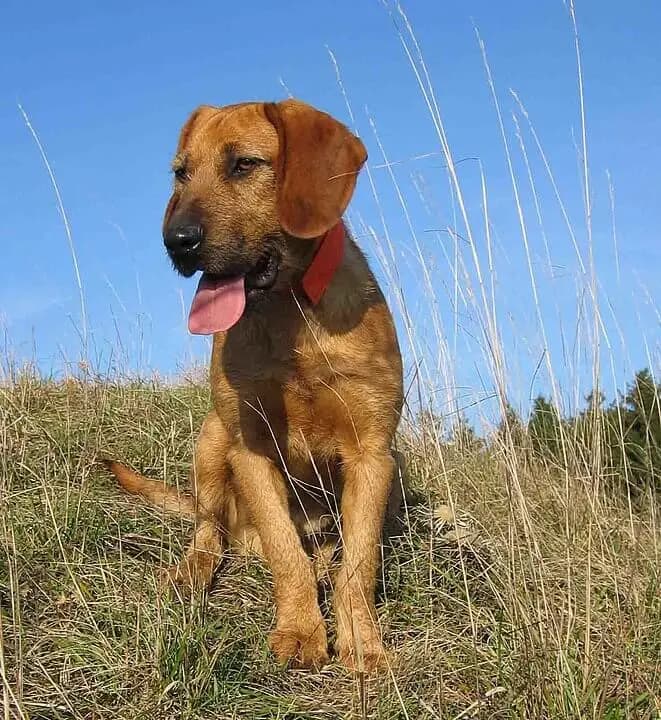 Illustrative imageIllustrative image
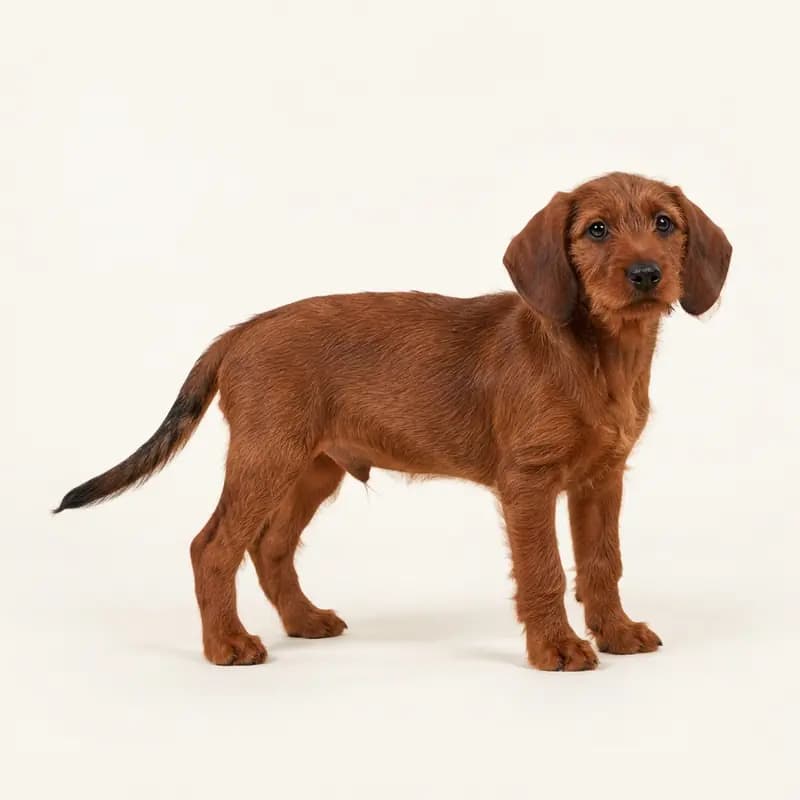 Illustrative image
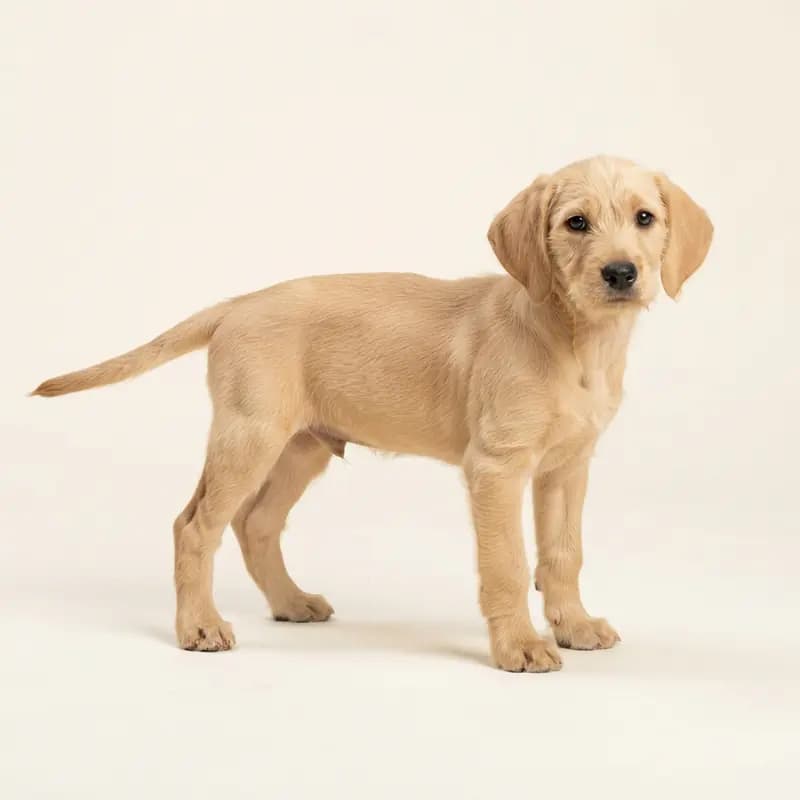 Illustrative image
The Steirische Rauhhaarbracke, also known as the Peintinger-Bracke, is an Austrian hunting dog breed with a precisely documented origin. In 1870, the Styrian industrialist Carl Peintinger began targeted breeding of these resilient dogs. He crossed a wire-haired hound from Istria with a high-performing Hanoverian Scenthound male named Hektor. The primary breeding goal was to create a robust, weather-hardy, and enduring hunting dog for the challenging, mountainous terrain of Styria. The breed was specifically optimized for loud hunting and demanding tracking work, i.e., following wounded big game. Its coarse, weather-resistant coat provided optimal protection against the harsh climatic conditions of the Alpine region. Its outstanding hunting qualities quickly led to widespread recognition. By 1889, the Steirische Rauhhaarbracke was officially recognized as an independent breed by the Austrian governing body. International recognition by the Fédération Cynologique Internationale (FCI) followed later. To this day, the breed is highly valued, particularly among hunting circles, for its reliable scenting ability, tireless work ethic, and sure-footedness in high mountains, and is almost exclusively placed with active hunters.
The Steirische Rauhhaarbracke was bred for hunting in mountainous terrain and for tracking wounded game.
Styria, Austria
1870
At home and with the family, owners often find that the Styrian Coarse-haired Hound has two faces. Indoors, the breed is mostly described as very calm, relaxed and cuddly. Many owners talk about affectionate "couch potatoes" and late sleepers that form a very close bond with their people. With enough exercise and work, it is unobtrusive indoors and settles down without trouble.
At the same time, owner reports stress that this is not an easy companion dog for just anyone. Many Styrians are clearly reserved or even suspicious with strangers, and some owners also report watchful behavior in the car or on the property. With other dogs, especially intact males, there are occasional reports of intolerance or posturing. Because of its strong prey drive, living with smaller pets or cats is considered tricky and calls for very watchful management from the start.
Sources:krautjunker.comforum.wildundhund.deedogs.dezoomalia.de
On training and handling, experienced owners and handlers agree: the Styrian Coarse-haired Hound was bred as a solo hunter for maximum independence and staying on the trail. Once it has a scent in its nose out in the field, it switches fully into work mode. Owners therefore stress that off-leash time in the woods is simply impossible for many of these dogs, since a trail it picks up can lead to hours of hunting on its own. Reliable loose-leash walking and a solid recall take a great deal of training.
When it comes to training, the dog is a tricky mix of stubbornness and sensitivity. According to handlers, the Styrian doesn't tolerate a heavy hand or rough punishment; pressure tends to lead to refusal and lost trust rather than obedience. What it needs instead is calm consistency, patience and a lot of tact. Owners clearly advise inexperienced first-time owners without a hunting background or hound experience against the breed, since blind obedience is not in its nature.
Sources:krautjunker.comforum.wildundhund.dehund.infozooplus.de
When it comes to health, breeders and owners consider the Styrian Coarse-haired Hound very vigorous, weatherproof and tough. Thanks to its rough, dense coat, cold, wet weather and thick undergrowth barely bother these dogs. Specific hereditary diseases play a minor role in breeding, and the club's screening is essentially limited to hip dysplasia (HD). With proper care and good husbandry, these dogs often live to 12 to 14 years.
One health topic that occasionally comes up on forums is the gene pool, which is smaller than that of more widespread breeds; for this reason breed associations have at times deliberately crossed in outside blood (such as the Bosnian Coarse-haired Hound). According to owners, the biggest real risk of injury and wear comes from the dogs' intense drive to work. Because they are tough about pain and often hunt to the point of exhaustion in difficult terrain, injuries, overworked joints and the dangers of run-ins with wild boar are the most common reasons for unplanned vet visits.
Sources:krautjunker.comedogs.deforum.wildundhund.desabinemiddelhaufeshundundnatur.net
Paraphrased from real owner reports · translated from German
The Styrian Coarse-haired Hound is an active dog that needs plenty of exercise and mental stimulation. Research the temperament, grooming needs, and space requirements before deciding.
The average life expectancy of a Styrian Coarse-haired Hound is 12-14 years. With proper care and regular vet visits, your dog can live a long, healthy life.
Styrian Coarse-haired Hound grooming requirements include regular brushing, nail trimming, and dental care. HonestDog provides detailed grooming tips for every breed.
The Styrian Coarse-haired Hound can be a great family dog. Proper training and socialization are key. HonestDog provides family suitability information for every breed.
The Styrian Coarse-haired Hound comes in these colors: Red, Fawn.
Showcase your kennel on HonestDog and reach families searching for a responsibly bred Styrian Coarse-haired Hound.