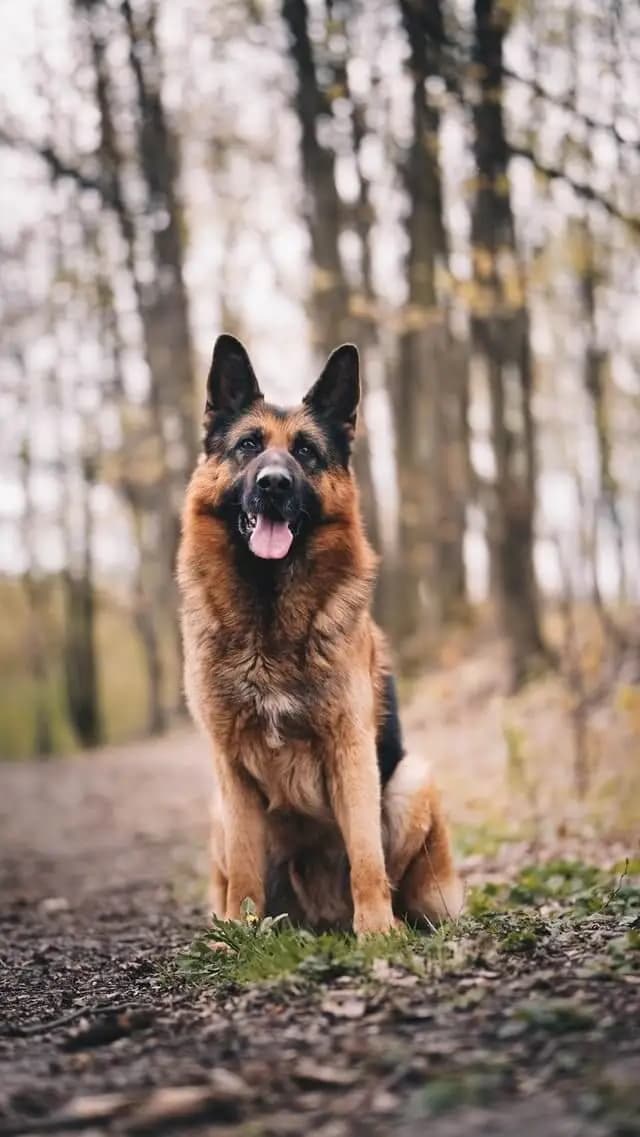
German ShepherdClose relative
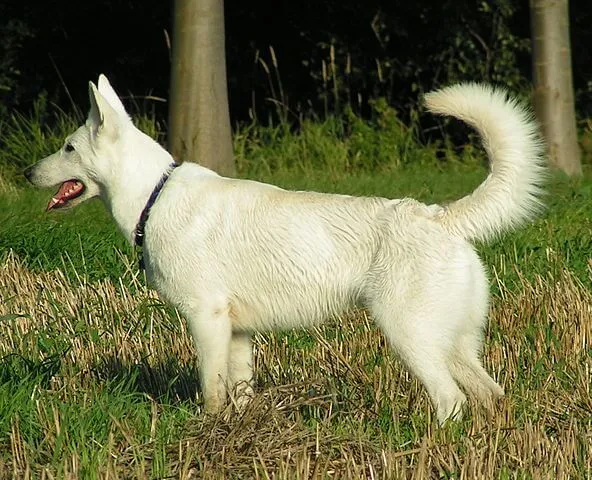
The White Swiss Shepherd is a sensitive companion who forms a deep bond with their humans—at heart, however, they remain a sensitive herding dog that watches attentively and wants to cooperate. Their gentle soul does not handle harshness well, yet they still require clear leadership and a real job to do.
How the health grade is calculated
Sources for required breeding screenings. Rassezuchtverein für Weisse Schweizer Schäferhunde e.V. (RWS)
Self-check
Answer 6 quick questions about your everyday life and see how well the White Swiss Shepherd Dog fits you — including an honest cost estimate per month, per year, and across the dog's lifetime.

At a glance
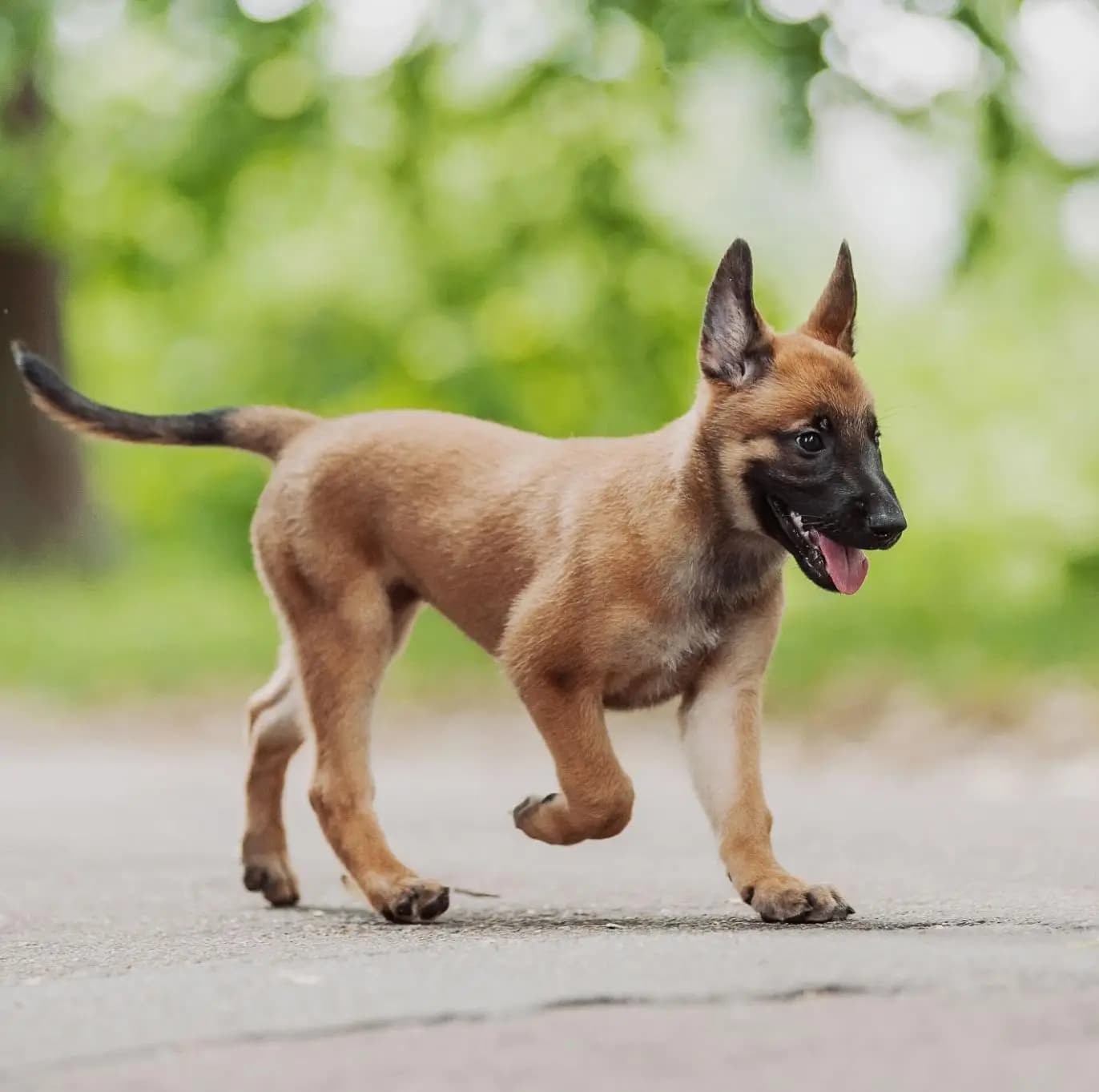
The essentials — key facts, traits, and health priorities — before you dive deeper.
Lifespan
12–14 yrs
Shoulder height
55–66 cm
Weight
25–40 kg
Practical
Temperament
Daily life
What matters most
Especially with a White Swiss Shepherd Dog, choosing the right breeder is the single most important decision you'll make. Serious breeders consistently test the parents for inherited conditions, prioritize healthy early socialization, and stay accountable long after handover. A cheap puppy without health screening tends to become the most expensive dog later on.
See HonestDog breeder standards →Colors & coat
The coat colors that occur in the White Swiss Shepherd Dog — including which ones fall outside the breed standard and which carry genetic risk.
Eye colors
 Brown
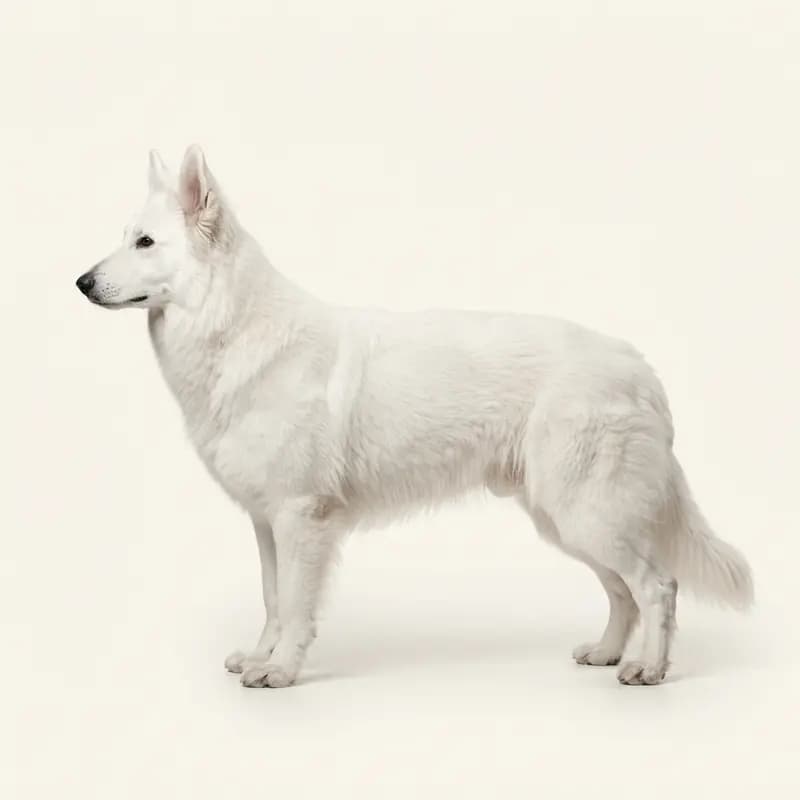
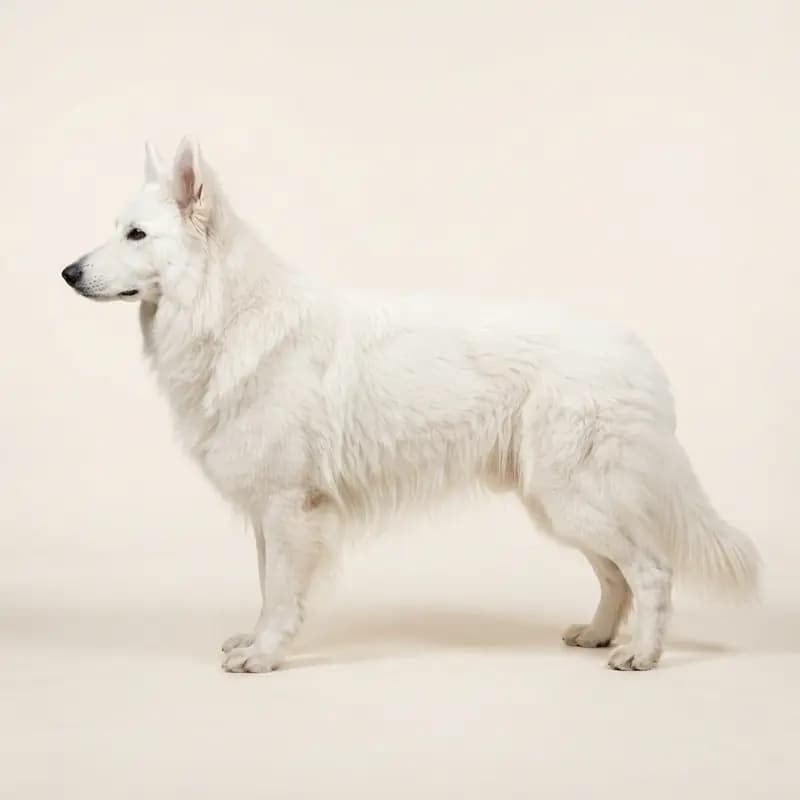
Coat type
 Illustrative image
Medium
 Illustrative image
Long
 Double coat
The real vibes check
A White Swiss Shepherd is like a fine mirror of your own mood—they read your emotions flawlessly. If you are confident and calm, you will have an unwavering, loyal colleague by your side. If you are hectic or unfair, however, their trust shatters like thin porcelain, and they become insecure and skittish.
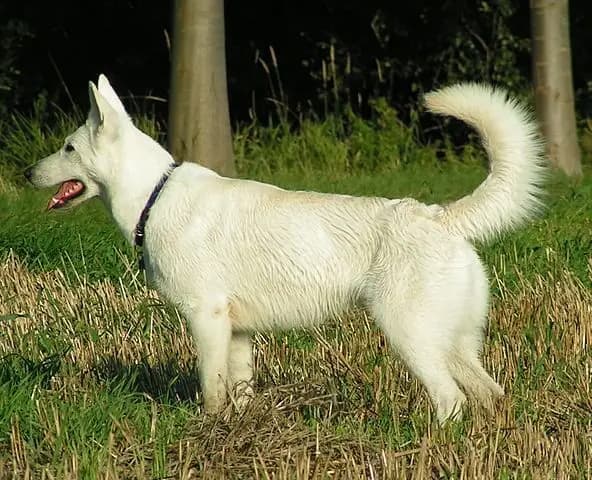
The White Swiss Shepherd, also called Berger Blanc Suisse, is an attractive and elegant herding dog. He belongs to FCI Group 1 and Section 1, the Shepherd Dogs. With his strong, well-muscled yet elegant appearance, he embodies both power and agility. His eyes are almond-shaped and dark brown, giving an intelligent and attentive expression. There are two types of fur: short-haired and stock-haired. Both variants have a dense undercoat that protects the dog from the elements.
The White Swiss Shepherd Dog is known for its friendly and even-tempered nature. He is very people-oriented and shows a high willingness to work with his people. They are neither fearful nor aggressive. They love to play and are often still very playful even as adult dogs. Their intelligence and desire to please make them quick learners. Their original use as herding dogs is reflected in their strong protective instinct. They are very alert and reliably report when they notice something unusual. However, they are not barkers and use their voice carefully. Despite their alertness, White Swiss Shepherds tend to be very social with other dogs and people. They also get along well with children and are therefore ideal to keep as family dogs. White Swiss Shepherds tend to form a very close bond with their caregiver or family. They always like to be around them and can therefore find staying alone problematic. It is therefore important to teach them carefully and gradually to stay alone as puppies. Their hunting instinct is usually rather low, but, as with any dog, it can be awakened by appropriate stimuli. It is therefore advisable to get them used to different environmental stimuli early on and to train their recall. In terms of activity, they can be classified as medium. They love long walks and games, but also have no problems relaxing once they've had enough exercise. It is important to note that the White Swiss Shepherd is a working dog. He needs both physical and mental exercise to be satisfied. They love completing tasks and are very successful in many areas of dog sports, such as agility, obedience or rescue dog work. Despite their willingness to work, White Swiss Shepherds are very sensitive dogs. They usually react to harsh upbringing or punishment with uncertainty and fear. Positive, reward-based training is therefore essential to maintain and promote the positive character of the White Swiss Shepherd. Overall, the White Swiss Shepherd is a versatile, friendly and loyal companion who fits well into an active family willing to support him both physically and mentally. With his gentle yet strong personality, he will be the perfect partner for people who lead an active lifestyle and are looking for a dog that is able to perform both physically demanding tasks and be a loyal and loving companion.
| Watchfulness A natural watchdog with real protective instinct. | High |
| Openness to Strangers Neither pushily friendly nor suspicious. | Neutral |
| Hunting or Herding Drive Mild interest in movement and small animals — easily managed. | Low |
Fun Fact!
Did you know that the White Swiss Shepherd Dog does not originally come from Switzerland, but has its roots in the USA? Only later was it bred further in Switzerland, which is how it got its name.
White Swiss Shepherds are versatile dogs that need meaningful activity. They can also be alert and territorial. They are considered good family dogs, but only with the appropriate training and activity. In addition to the long-haired (long-stock hair) variant, there is also the stock-hair coat variant.
The White Swiss Shepherd Dog is generally suitable as a city dog, provided it gets enough exercise and activity. He feels just as comfortable in an apartment as in a house with a garden, as long as his needs are met. This breed of dog usually gets along well with children and often shows strong protective instincts. At the same time, proper socialization and responsible coexistence should always be ensured. Small children should never be left unsupervised with a dog of any breed. When it comes to other pets, White Swiss Shepherds are generally tolerable as long as they have been accustomed to living with other animals from an early age. However, especially with cats and small pets, socialization should be done carefully and under supervision.
Lives for its family — the born family companion.
Extraordinarily patient and loving — a true family dog.
Actively enjoys the company of other dogs.
City-appropriate with enough exercise and stimulation.
Owning a dog is a privilege, but it's also a real responsibility. Before you bring one into your life, be honest with yourself about the commitment it takes.
The White Swiss Shepherd is an intelligent dog that is willing to learn. These characteristics make him an ideal candidate for various dog sports and training methods. For example, they are very successful in agility, obedience, rally obedience or even in rescue dog work. Despite their willingness to work, it is important to remember that White Swiss Shepherds also need rest periods. Therefore, they should not be overworked. Especially when temperatures are high or in stressful situations, it is important to take breaks and let the dog calm down. Training this breed should always be positive and reward based. They react very sensitively to harsh corrections or punishments. Instead, they should be raised with patience, clarity and consistency. Promoting frustration tolerance and impulse control can also be helpful in maintaining a balanced and well-socialized dog.
The White Swiss Shepherd Dog's diet should be balanced and high quality. They should contain plenty of proteins, fats and carbohydrates to meet the energy needs of this active dog. When choosing food, it is also important to ensure that it contains sufficient vitamins and minerals to ensure optimal health. In terms of care, White Swiss Shepherds are relatively easy to care for. They have an undercoat and shed more heavily, especially during the spring and autumn seasons. Regular brushing can help keep the coat clean and healthy and reduce the amount of hair lying around. Despite their thick fur, they cope well with the German climate. They are adapted to both warm summers and cold winters.
| Care Level Minimal effort — occasional brushing and bathing. | Low-maintenance |
| Exercise Needs Needs several hours of serious exercise every day. | Very active |
| Shedding Regular shedding — dog hair on clothes is now normal. | Moderate |
| Trainability Bred to work closely alongside humans. | Highly trainable |
Our experts are still reviewing this information. Spotted something wrong? Email us at info@honestdog.de.
Solid, watch carefully
Health grade
In the White Swiss Shepherd Dog, breed-typical risks exist for joint disorders such as hip dysplasia (HD) and elbow dysplasia (ED), as well as for severe hereditary diseases such as degenerative myelopathy (DM), pituitary dwarfism (PD), and the MDR1 defect (multidrug sensitivity). For breeding approval, the Rassezuchtverein für Weisse Schweizer Schäferhunde e.V. (RWS) mandates X-ray examinations for HD (limit HD A–B) and ED (limit ED 0 or borderline), as well as genetic testing for degenerative myelopathy, pituitary dwarfism, cerebellar hypoplasia (CH), and the MDR1 defect, where carriers may only be mated with clear partners. A health-focused breeder additionally has the parent animals tested for deafness and examined via an ophthalmological eye test (ECVO). Make sure to have these official X-ray reports and genetic test results presented to you without exception before buying a puppy.
Grade is relative to other breeds — AI-assisted and editorially reviewed.
Methodology and data: HonestDog Dog Breed Health Report 2026
What matters most for this breed
Tap any item to see details.
Without conscious management of medication tolerance and joint-friendly rearing—for example, through regular check-ups—health problems and veterinary costs can rise significantly later on.
Responsible breeders test parent animals for HD, ED, degenerative myelopathy, MDR1 defect, and pituitary dwarfism, and additionally check for deafness and eye problems.
Note: This health overview is AI-assisted and editorially reviewed. It is for orientation only and does not replace veterinary advice.
What matters most for this breed — what's common, how much it affects the dog's life, and how to protect yourself as a buyer.
Tap a body region to see the inherited conditions linked to it.
The three most important risks
Pick a region on the map to explore other areas.
Tier 1 is the core standard: the tests Rassezuchtverein für Weisse Schweizer Schäferhunde e.V. (RWS) requires, plus further tests from the recommended health standard for this breed. Tiers 2 and 3 show how responsible breeders go beyond.
Core standard. Tests marked “Club standard” are required by Rassezuchtverein für Weisse Schweizer Schäferhunde e.V. (RWS) for breeding approval; the others are part of the recommended health standard for this breed. Ask any reputable breeder for the results.
Not health tests, but required for breeding: the club asks for these results too. They don't count toward the risks or the rating.
DNA-Identitätsnachweis
Required by Rassezuchtverein für Weisse Schweizer Schäferhunde e.V. (RWS)
Acceptable result: result on file
Wesensbeurteilung
Required by Rassezuchtverein für Weisse Schweizer Schäferhunde e.V. (RWS)
Acceptable result: result on file
Dental and bite evaluation
Required by Rassezuchtverein für Weisse Schweizer Schäferhunde e.V. (RWS)
Acceptable result: normal
No entries in this tier.
Note: This health overview is AI-assisted and editorially reviewed. It is for orientation only and does not replace veterinary advice.
A White Swiss Shepherd Dog costs around ~€190 per month (€100 – €370, depending on your setup). The first year adds up to roughly ~€5,530 including purchase, equipment and puppy school; across the dog's life (13 years) it comes to about ~€33,130.
With surgery cover, running costs come to about ~€190 per month — in return, your share of a major operation drops from several thousand euros to around 20 percent.
Per month
~€190
In the first year
~€5,530
Across the dog's life
~€33,130
Estimated purchase price from a breeder: €1,800 – €3,000
Estimate at a mid-range setup (suburban, dry food, 1–2 hours of daily exercise), average German prices, as of July 2026.
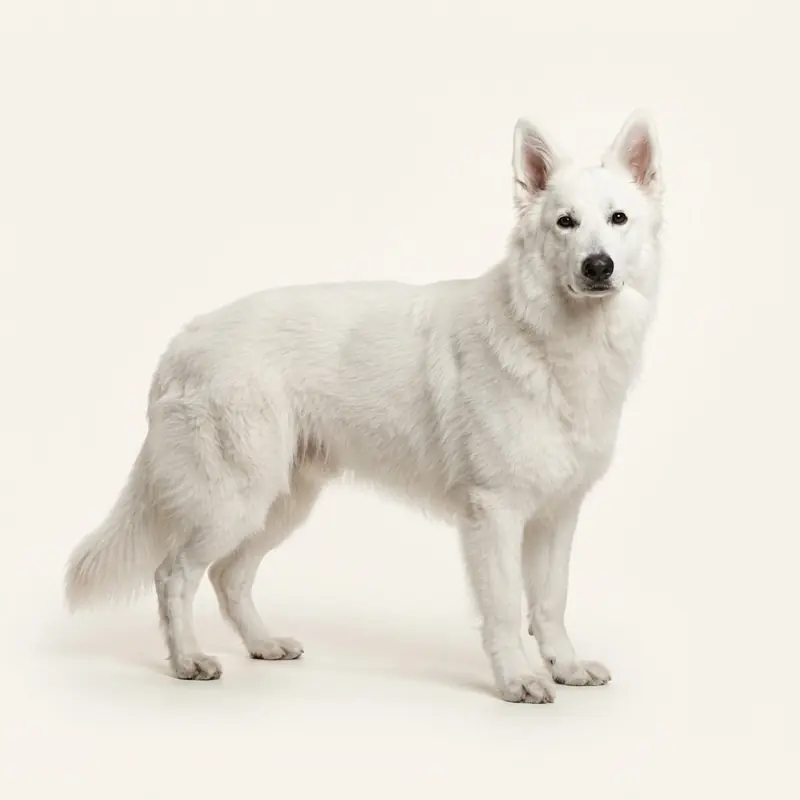 Illustrative imageIllustrative imageIllustrative image
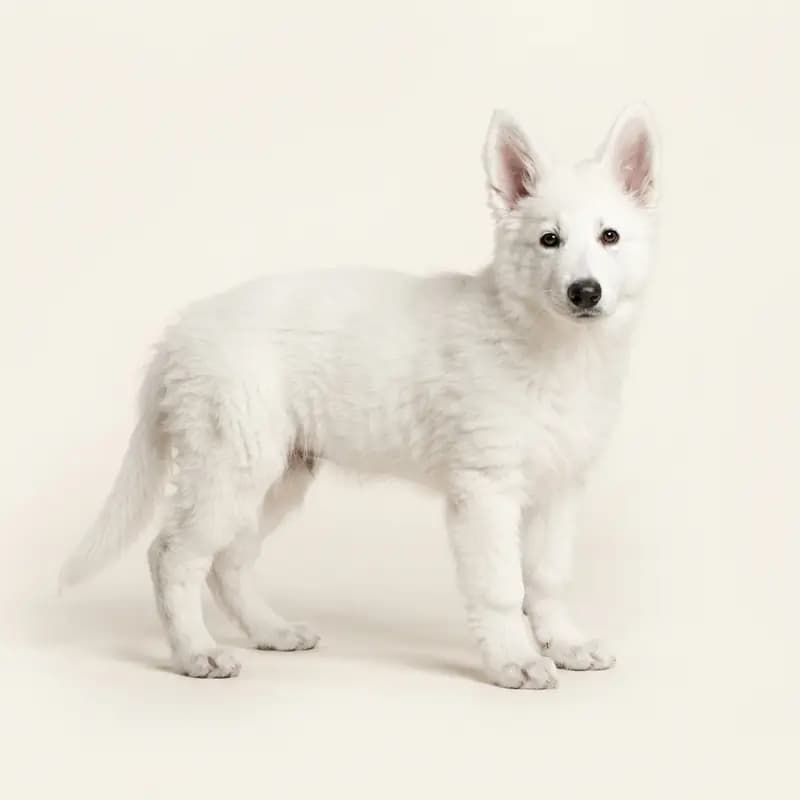 Illustrative image
The history of the White Swiss Shepherd is closely intertwined with that of the German Shepherd. White fur was a natural color variation within the breed, but over time the white color was rejected in German Shepherd breeding. Despite this, white German Shepherds continued to be bred and distributed by enthusiasts. The official recognition of the White Swiss Shepherd Dog as an independent breed only took place in 2003 by the FCI, although they had already been recognized as an independent breed in the USA and Canada since the 1970s.
The White Swiss Shepherd was bred as a herding and companion dog, known for its friendly nature and versatility.
Switzerland
1970
Owners often describe the White Swiss Shepherd as a loving, cuddly companion in everyday family life. Many call their dogs very affectionate, and the phrase "white shadow" comes up a lot, since these dogs like to follow their people from room to room. With familiar people and children, they're usually gentle, considerate and very cuddly.
At the same time, experienced owners point out that this strong bond has a downside: many of these dogs find it hard to be left alone, and that often has to be built up from puppyhood with a lot of patience and in very small steps. On top of that comes a practical everyday challenge that communities mention regularly, with a wink but in earnest: the heavy shedding. Both the short-coated and the long-coated variety shed sometimes considerable amounts of white undercoat all year round.
Sources:reddit.comdas-schaeferhund-forum.dechefkoch.deamba-versicherungen.deforum.hundund.de
On temperament and training, owners especially highlight these dogs' fine-tuned sensitivity and willingness to cooperate. They learn very quickly and have the typical shepherd's desire to work with their people. Owners and trainers unanimously warn against pressure, raised voices or harshness, though: when handled too roughly, these sensitive dogs quickly shut down, react with avoidance or withdraw, completely unsettled. They mirror their handler's emotions and inner restlessness far more than average.
A sticking point that comes up again and again in owners' accounts is a tendency toward insecurity and nervousness. While the breed standard speaks of alertness and reserve, many owners describe a fine line: without thoughtful, careful socialization in the first year, reserve toward new surroundings or strangers can easily tip into real fear behavior such as freezing, panic or trying to flee. Owners therefore stress that these dogs need calm, confident leadership that reliably gives them a sense of security.
Sources:heyholy.comdas-schaeferhund-forum.dechefkoch.deamba-versicherungen.dereddit.com
When it comes to exercise and things to do, many owners describe the White Swiss Shepherd as very versatile. It doesn't necessarily have the intense, sometimes nervous drive to work seen in some working lines of other shepherd breeds, but it still needs a meaningful job. Owners often turn to tracking, mantrailing, retrieving or agility, since purely physical walks usually aren't enough to keep the dog mentally balanced. In most dogs, the hunting drive is considered easy to manage, as long as owners work on triggers like wildlife or farm cats from an early age.
On health, owners' experiences are mixed. Many dogs from carefully chosen breeding are considered robust and agile well into old age. Even so, owners regularly compare notes on breed-typical weak spots: besides the standard X-rays for hip and elbow dysplasia (HD/ED) before starting intensive sports, owners more often mention a sensitive digestive tract that calls for careful food choices, and occasionally allergies or intolerances.
Sources:heyholy.comchefkoch.deamba-versicherungen.deforum.hundund.dereddit.com
Paraphrased from real owner reports · translated from German
The White Swiss Shepherd Dog is an active dog that needs plenty of exercise and mental stimulation. Research the temperament, grooming needs, and space requirements before deciding.
The average life expectancy of a White Swiss Shepherd Dog is 12-14 years. With proper care and regular vet visits, your dog can live a long, healthy life.
White Swiss Shepherd Dog grooming requirements include regular brushing, nail trimming, and dental care. HonestDog provides detailed grooming tips for every breed.
The White Swiss Shepherd Dog can be a great family dog. Proper training and socialization are key. HonestDog provides family suitability information for every breed.
The White Swiss Shepherd Dog comes in these colors: White.
Showcase your kennel on HonestDog and reach families searching for a responsibly bred White Swiss Shepherd Dog.