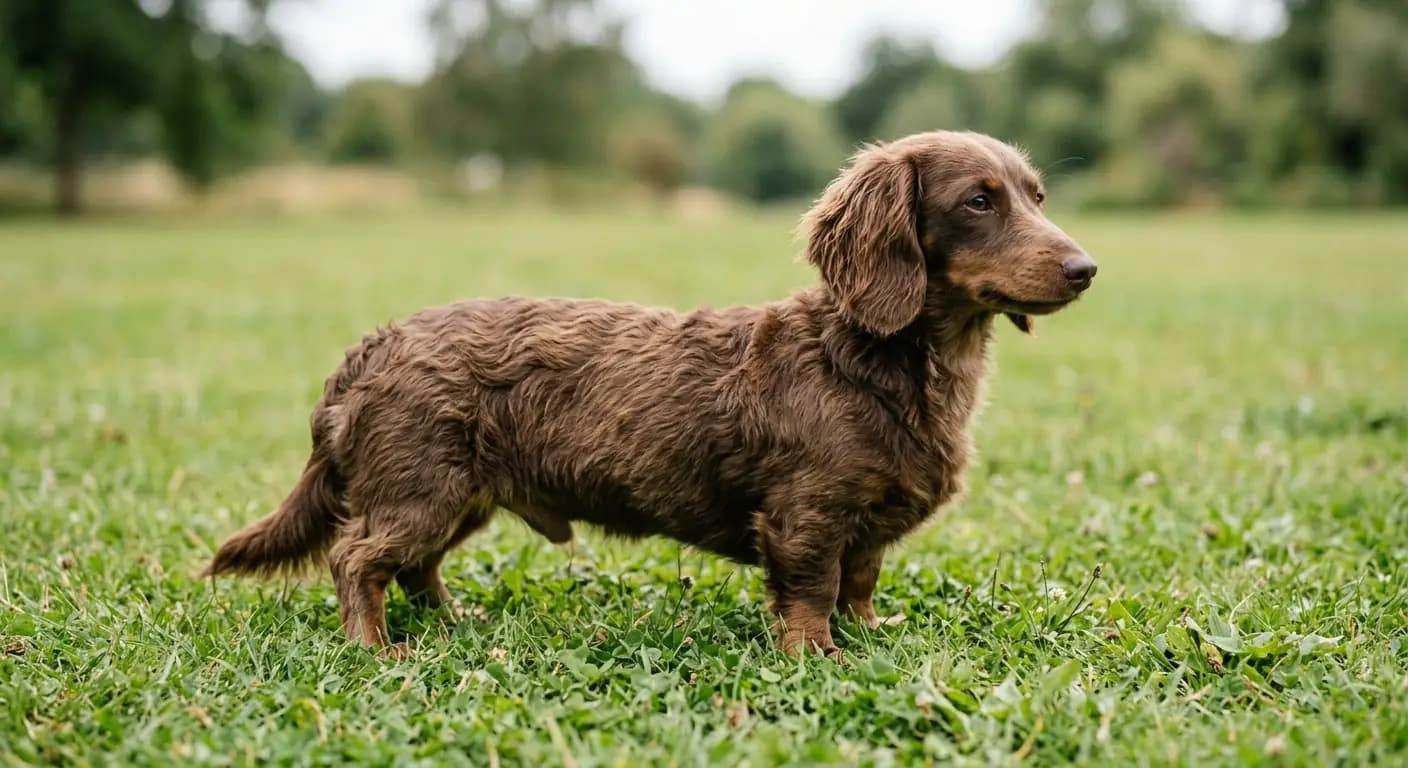
 AI image
Miniature Dachshund
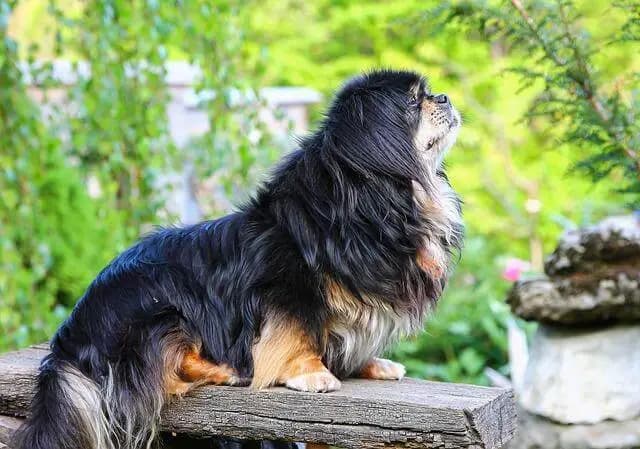
Close relative
Dogs love cookies, and so do we
Cookies for analytics and ads. Privacy
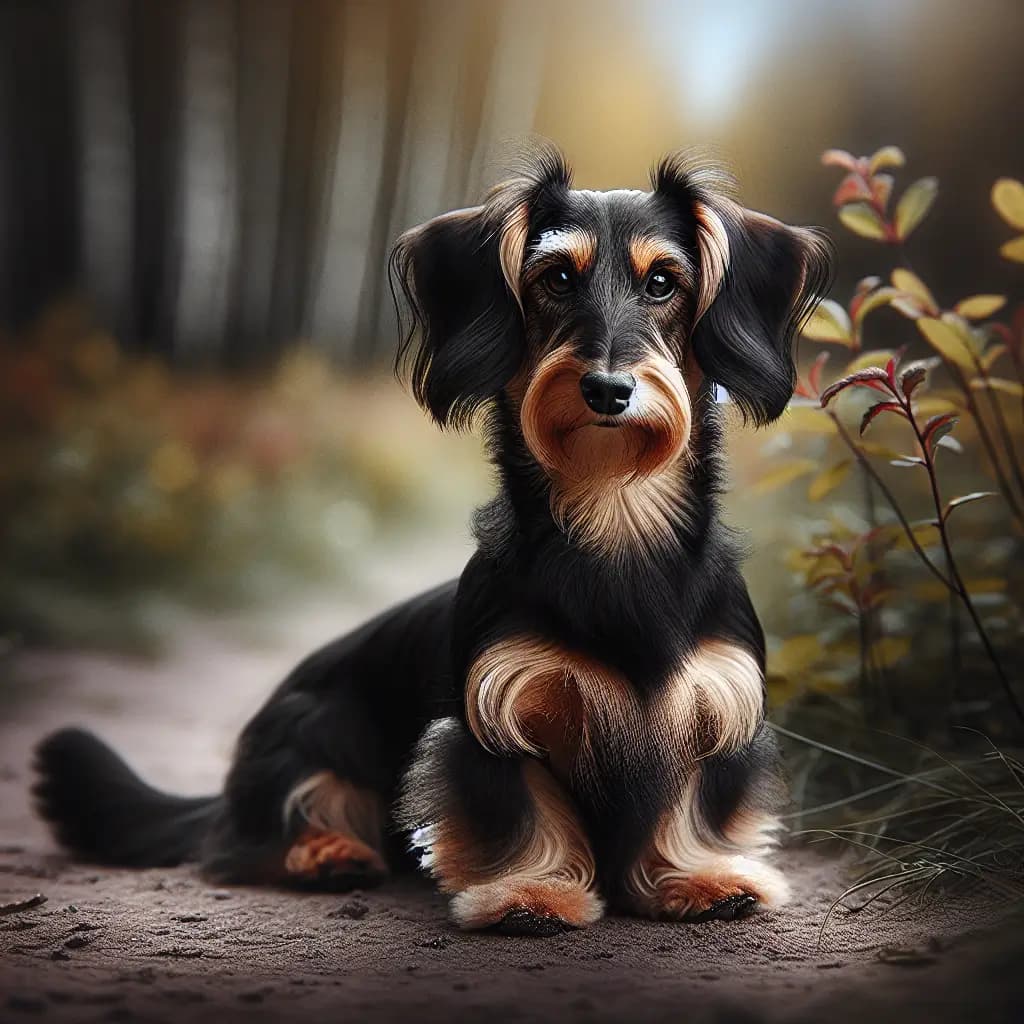
 AI-generated image
The Long-haired Zwergdackel is a charming yet headstrong Baujäger (burrow hunter)—bred to make decisions completely independently while underground, equipped with a healthy dose of hunting instinct and a softer temperament than its short-haired relatives.
How the health grade is calculated
Sources for required breeding screenings. Deutscher Teckelklub 1888 e.V. (DTK)
Self-check
Answer 6 quick questions about your everyday life and see how well the Miniature Long-haired Dachshund fits you — including an honest cost estimate per month, per year, and across the dog's lifetime.
Question 1 of 6
Count honestly — the normal day, not the best one.
AI image
 AI image
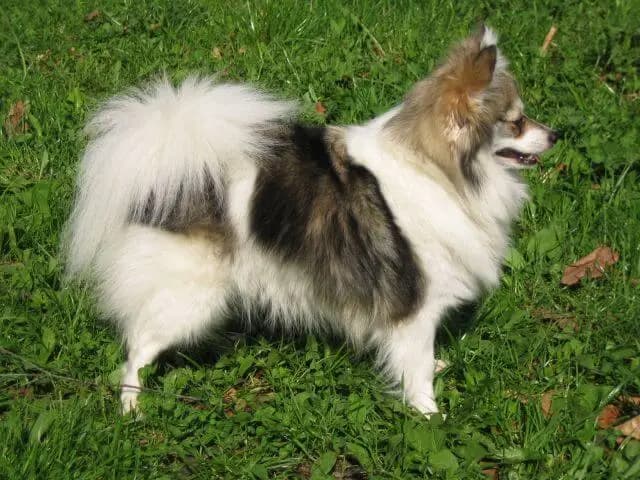
At a glance
The essentials — key facts, traits, and health priorities — before you dive deeper.
Lifespan
12–16 yrs
Shoulder height
18–21 cm
Weight
3–6 kg
Practical
Temperament
Daily life
What matters most
Especially with a Miniature Long-haired Dachshund, choosing the right breeder is the single most important decision you'll make. Serious breeders consistently test the parents for inherited conditions, prioritize healthy early socialization, and stay accountable long after handover. A cheap puppy without health screening tends to become the most expensive dog later on.
See HonestDog breeder standards →Colors & coat
The coat colors that occur in the Miniature Long-haired Dachshund — including which ones fall outside the breed standard and which carry genetic risk.
Eye colors
 Brown
 Odd-eyed
 Partial (split eye)
Coat type
 Long
 Silky
The real vibes check
A Long-haired Zwergdackel is not a decorative lapdog in a plush coat—it is a full-fledged hunting dog on very short legs. What was vital for survival deep in a burrow is not something it leaves behind on the sofa: in case of doubt, it decides for itself. If you take this stubborn independence with a sense of humor, you will gain an incredibly loyal, cuddly companion.
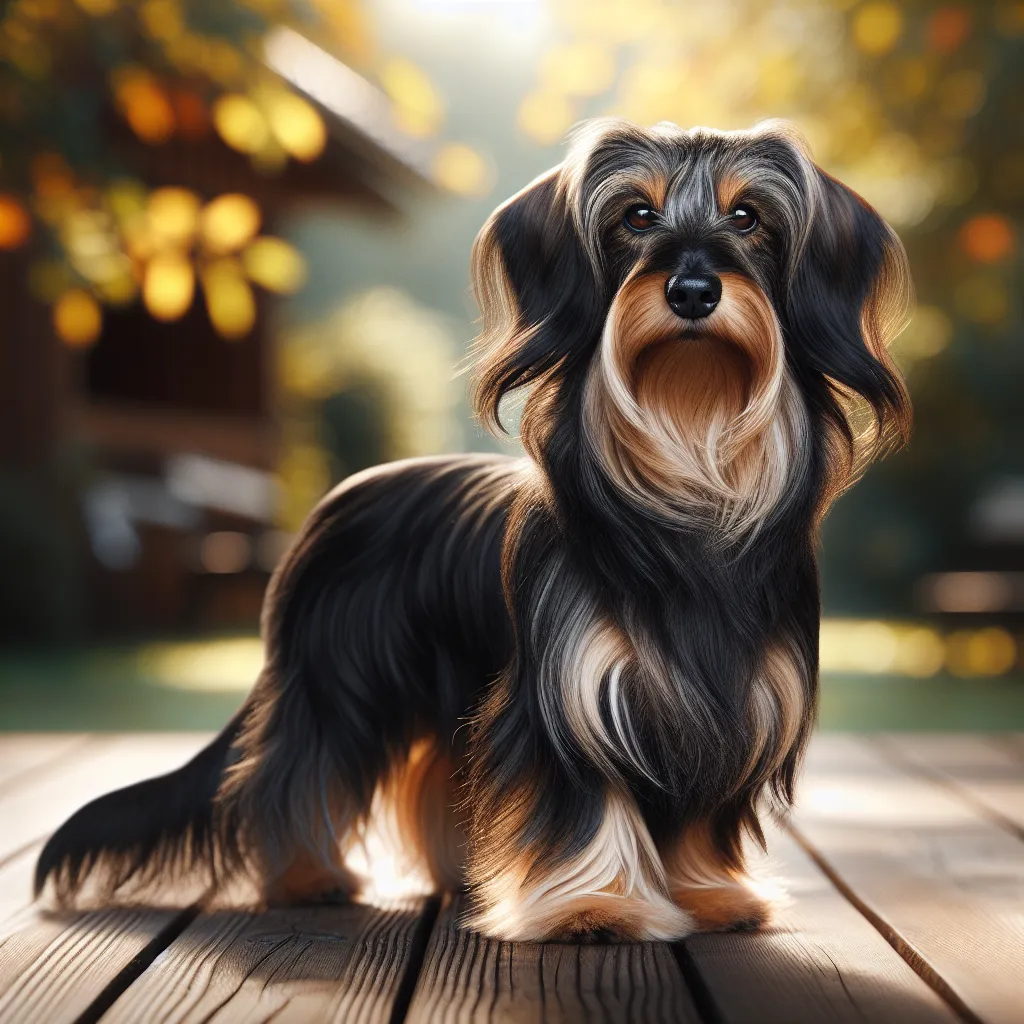
The miniature dachshund (long-haired) is a small but strong-willed dog breed that belongs to the dachshund group. Originally bred in Germany for hunting badgers and other small game, the miniature dachshund is distinguished by its long body, short legs, and dense, soft long hair, which gives it a particularly charming appearance. Its head is elongated with expressive, dark eyes and long, hanging ears. Despite its compact size, the miniature dachshund shows a lot of courage and endurance. Within the breed, there are various color patterns and markings that emphasize the individual character. The miniature dachshund is a lively and intelligent companion, appreciated both as a family dog and as a hunting dog.
The miniature dachshund (long-haired) is a lively and charming companion with a distinct character. Despite its small size, it shows a great deal of courage and self-confidence, making it a watchful and sometimes stubborn dog. Its long-haired, soft coat gives it a particularly friendly and appealing appearance. Miniature dachshunds are very people-oriented and enjoy being close to their family. They are playful and curious, which makes them entertaining and active companions. At the same time, they can show a certain stubbornness, so consistent but loving training is important. Due to their hunting instinct, which comes from their original use as a dachshund, they tend to chase small animals, which should be trained early on. The miniature dachshund learns quickly but also needs sufficient mental and physical activity to stay balanced. Despite their size, they require regular exercise and mental challenges to avoid overstrain or frustration. They are not classic guard dogs but show a good sense of their surroundings through their attentive nature. Overall, the miniature dachshund (long-haired) is a loyal, lively, and loving companion who brings much joy to the daily life of its people with the right guidance and enough activity.
| Watchfulness Reports unusual activity but stays controlled. | Moderate |
| Openness to Strangers Neither pushily friendly nor suspicious. | Neutral |
| Hunting or Herding Drive Powerful instinct that can override recall when triggered. | Strong |
Fun Fact!
Miniature Dachshund (Long-haired): The miniature dachshund with its long, silky coat not only looks cute but was originally bred to hunt in narrow fox burrows. Despite its small size, it has remarkable endurance and an unwavering hunting instinct – a true little adventurer on short legs!
The miniature dachshund (long-haired) is a lively and affectionate companion. These small dogs are curious and often show a strong hunting instinct. They require consistent training and sufficient activity to remain balanced. Due to their long coat, they are particularly high-maintenance but are well suited as family dogs and loyal companions.
Miniature dachshunds (long-haired) are lively and affectionate dogs that make good companions for families. They are very people-oriented and enjoy being close to their owners, but also need enough activity to stay mentally stimulated. Despite their small size, they are brave and often show surprising alertness. Miniature dachshunds generally get along well with children but should be handled carefully with small children as they can be sensitive. They usually get along well with other dogs and pets if socialized early. They are suitable for living in the city or an apartment as long as they get regular exercise and playtime outdoors.
Loves family life and thrives in a group.
Gets on well with children — with adult supervision.
Usually gets on fine with other dogs.
Adapts well to city living and urban environments.
Owning a dog is a privilege, but it's also a real responsibility. Before you bring one into your life, be honest with yourself about the commitment it takes.
Miniature Dachshunds (long-haired) are lively and intelligent dogs that, despite their small size, bring a large dose of stubbornness. Their training requires patience and consistency, as they tend to assert their own will. It is important to make the training varied and playful to keep motivation high. Short, regular sessions are more effective than long training sessions. Miniature Dachshunds learn quickly but also show a certain stubbornness, which is why positive reinforcement and rewards work particularly well. They are well suited for basic obedience and small tricks but are less suitable for intensive dog sports. Due to their hunting drive, it is important to work on impulse control early and establish reliable recall. Socialization and calm rest periods are also important to promote a balanced character. Those who are willing to invest time and patience will get a charming, lively, and loyal companion in the Miniature Dachshund, who impresses with their own mind and a lot of heart.
Miniature Dachshund (Long-haired): Miniature Dachshunds are small, lively dogs that need a balanced diet to stay healthy and fit. High-quality food with a good proportion of proteins and essential nutrients is ideal. Be careful to avoid overweight, as the short legs and long back of the miniature dachshund are prone to back problems. The long-haired coat of the miniature dachshund is soft and silky but requires regular care. Brush your dog at least 2-3 times a week to prevent matting and keep the coat shiny. During the shedding season in spring and autumn, increased shedding can occur, and more intensive brushing is helpful then. Miniature dachshunds adapt well to the Central European climate. Their coat protects them from the cold, but they should wear a dog coat in very cold weather. In summer, make sure there is enough shade and water to avoid overheating.
| Care Level Regular brushing and occasional professional grooming. | Moderate |
| Exercise Needs Needs 1–2 hours of real exercise daily. | Active |
| Shedding Regular shedding — dog hair on clothes is now normal. | Moderate |
| Trainability Has its own ideas and will test limits. | Strong-willed |
Our experts are still reviewing this information. Spotted something wrong? Email us at info@honestdog.de.
Every puppy that finds a home through HonestDog should start with 30 days of free insurance cover, for a stress-free start. We're currently looking for the right insurance partner.
Elevated risks
Health grade
In the Miniature Dachshund (long-haired), over 95% of dogs carry the genetic predisposition for chondrodystrophy (CDDY), and about one in six to seven dachshunds suffers a herniated disc during their lifetime; in individual varieties, the proportion is significantly higher. The Deutscher Teckelklub 1888 e.V. (DTK) therefore prescribes screening for chondrodystrophy (CDDY) and does not permit merle-to-merle matings. A responsible breeder also examines the parent animals for patellar luxation (PL) with a result of PL 0 and tests for cone-rod dystrophy 4 (cord4), osteogenesis imperfecta (OI), and neuronal ceroid lipofuscinosis (NCL). Have these findings presented to you and ensure that carriers of these three genetic defects are only mated with clear partners.
Grade is relative to other breeds — AI-assisted and editorially reviewed.
Methodology and data: HonestDog Dog Breed Health Report 2026
What matters most for this breed
Tap any item to see details.
In daily life this can mean
You should strictly limit stair climbing and jumping, maintain a lean weight, and honestly budget for higher veterinary costs regarding potential back issues.
The breeder's role
Responsible breeders verify chondrodystrophy (CDDY) screening results, refrain from merle-to-merle matings, and breed cone-rod dystrophy 4 (cord4) carriers only with non-carrier (clear) partners.
Note: This health overview is AI-assisted and editorially reviewed. It is for orientation only and does not replace veterinary advice.
What matters most for this breed — what's common, how much it affects the dog's life, and how to protect yourself as a buyer.
Tap a body region to see the inherited conditions linked to it.
The three most important risks
Pick a region on the map to explore other areas.
Tier 1 is the core standard: the tests Deutscher Teckelklub 1888 e.V. (DTK) requires, plus further tests from the recommended health standard for this breed. Tiers 2 and 3 show how responsible breeders go beyond.
Core standard. Tests marked “Club standard” are required by Deutscher Teckelklub 1888 e.V. (DTK) for breeding approval; the others are part of the recommended health standard for this breed. Ask any reputable breeder for the results.
No entries in this tier.
Note: This health overview is AI-assisted and editorially reviewed. It is for orientation only and does not replace veterinary advice.
These topics play a role in the Miniature Long-haired Dachshund. What they mean, what a healthy dog looks like and what to look out for is explained on dedicated pages.
A Miniature Long-haired Dachshund costs around ~€170 per month (€90 – €310, depending on your setup). The first year adds up to roughly ~€4,680 including purchase, equipment and puppy school; across the dog's life (14 years) it comes to about ~€30,650.
With surgery cover, running costs come to about ~€160 per month — in return, your share of a major operation drops from several thousand euros to around 20 percent.
Per month
~€170
In the first year
~€4,680
Across the dog's life
~€30,650
Estimated purchase price from a breeder: €1,200 – €2,500
Estimate at a mid-range setup (suburban, dry food, 1–2 hours of daily exercise), average German prices, as of July 2026.
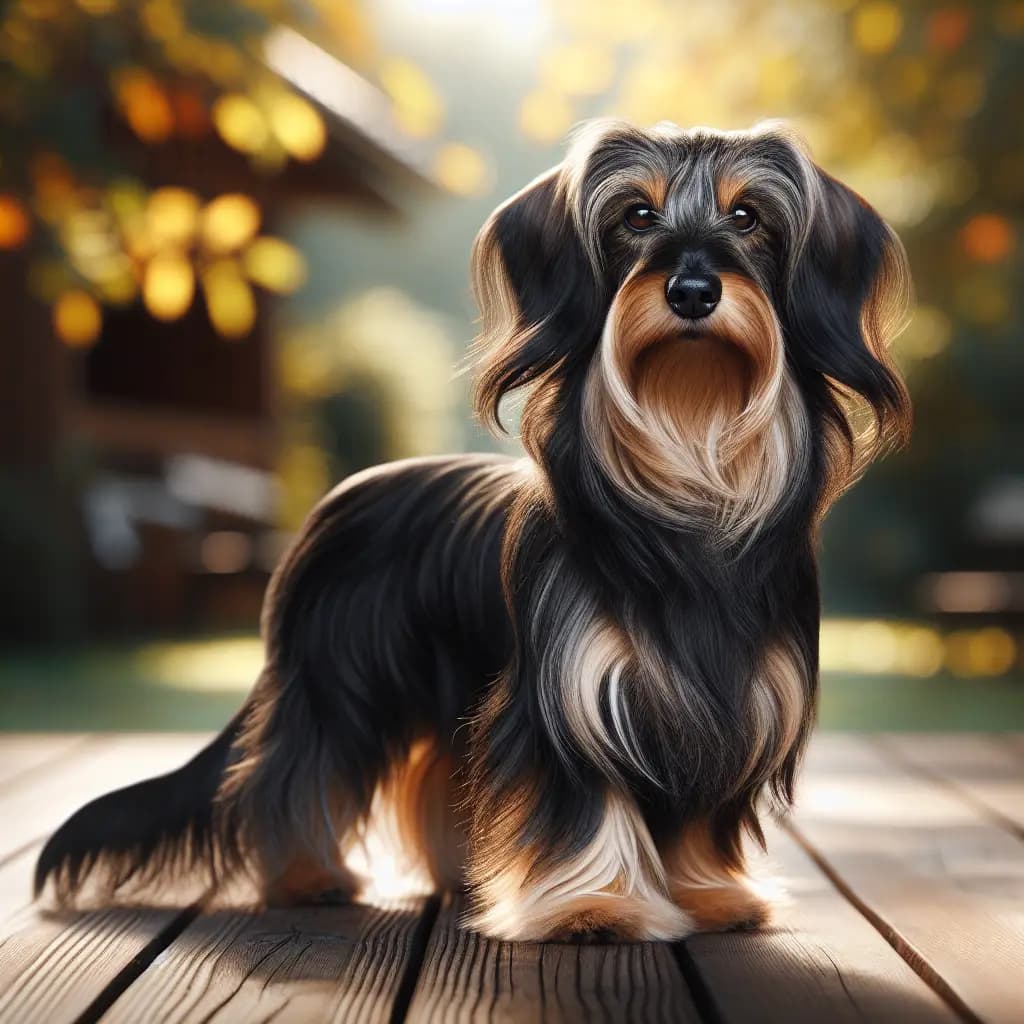 Illustrative image
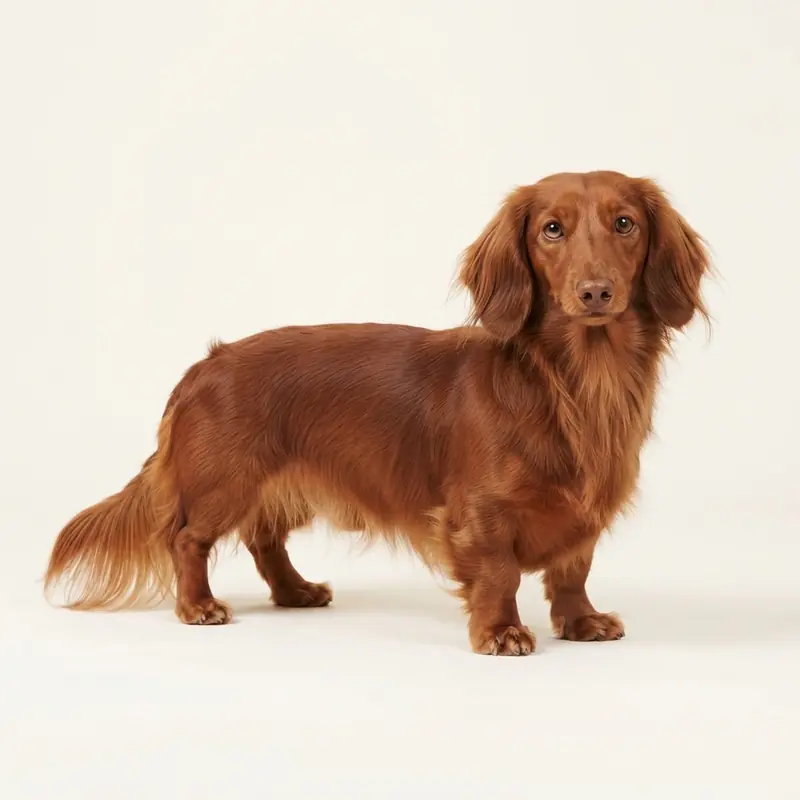 Illustrative image
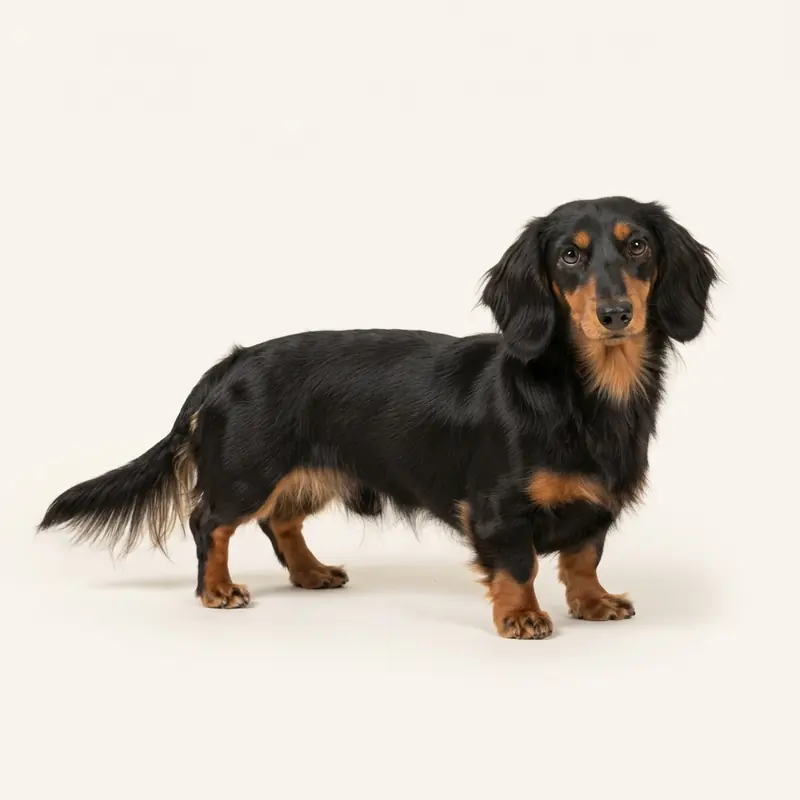 Illustrative image
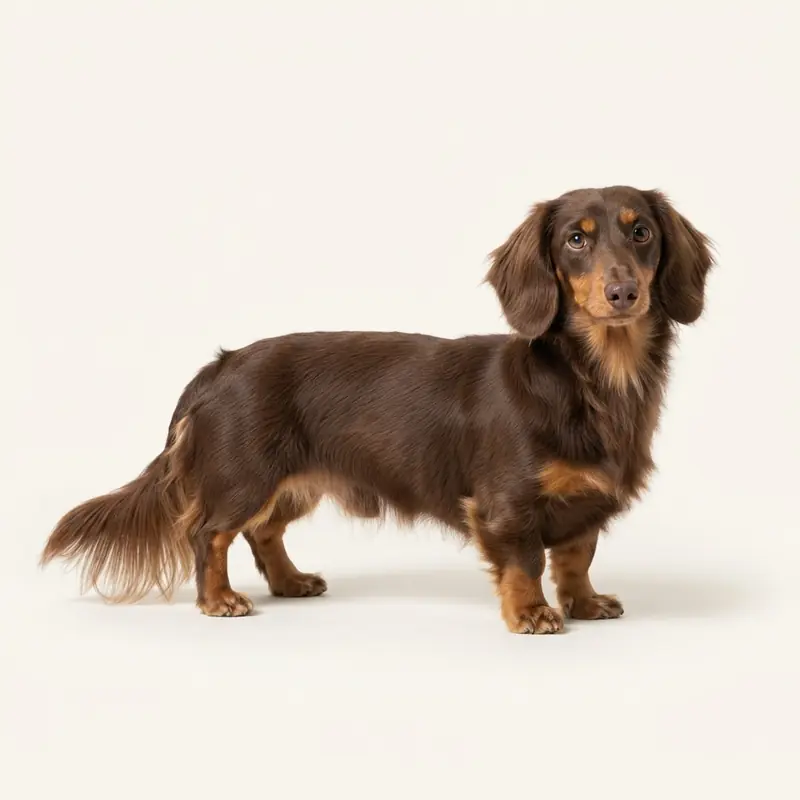 Illustrative image
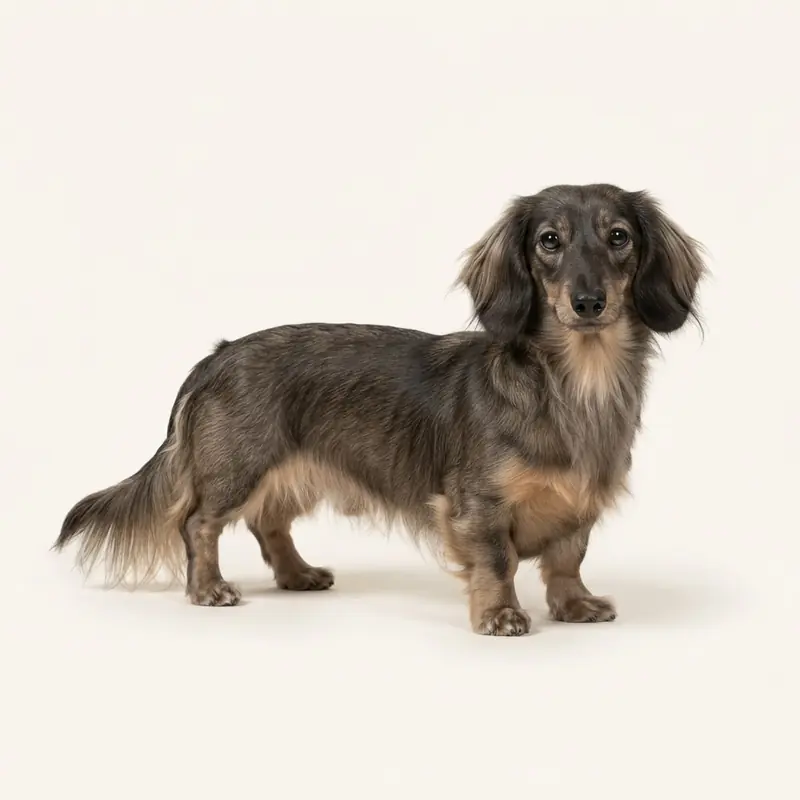 Illustrative image
The history of the miniature dachshund (long-haired) begins in the 19th century in Germany. Originally, dachshunds were bred as hunting dogs to pursue badgers and other animals in their burrows. The smaller variant, the miniature dachshund, was created through selective breeding to produce an agile and compact dog that could also work in tight burrows. The long-haired coat was preferred because it offered additional protection against rough terrain. The miniature dachshund quickly became valued as a versatile companion and family dog. Over time, the breed was standardized and recognized by the German Teckel Club.
Original Use
The long-haired miniature dachshund originated as a hunting dog for dense forests and smaller animals.
Origin
Germany
Date
1800
Many owners describe the Long-haired Miniature Dachshund at home as very affectionate, cuddly, and people-oriented. Compared with the spirited Wirehaired Dachshund, many owners see the Long-haired as somewhat gentler and softer in temperament. It loves lying close to its people on the sofa or under blankets and actively asks to be petted. Despite the dainty build, experienced owners keep stressing that you're not bringing home a mere lapdog: these dogs are curious and alert, and they like to announce noises in the hallway or at the front door with a surprisingly big voice.
A recurring challenge with young Miniature Dachshunds is house-training, which according to owner reports often takes more patience and time than with larger breeds. In bad or wet weather, many of these dogs also simply refuse to go outside or stubbornly won't sit down on damp ground. Grooming, on the other hand, is a relief: even with regular combing, the soft long coat tends to form small mats behind the ears and on the legs and likes to collect leaves or burrs in the fall, but forum reports describe it overall as surprisingly easy to care for and self-cleaning.
Sources:weltderdackel.comdackelwissen.dereddit.competsdeli.de
One line comes up again and again in owner reports about training: a Dachshund doesn't have much of a "will to please." Many owners describe, with amusement or exasperation, how a Miniature Dachshund pauses at a cue and seems to weigh whether it makes sense. Pressure or excessive harshness quickly make these sensitive Long-haired Dachshunds dig in their heels or withdraw. Long-time owners describe loving but unwavering consistency as the key to success, paired with high-value rewards, since the breed is usually very food-motivated and responds well to treats.
Outdoors, many of these dogs show the hunting instinct bred into a den hunter. As soon as the nose picks up a fresh trail of rabbits, birds, or mice, many Miniature Dachshunds "tune out" and barely respond when called. Owners report that reliable off-leash time in areas with lots of wildlife often takes months of anti-hunting training or keeping the dog on a long line for good. Many owners recommend scent work such as dummy searches, mantrailing, or tracking games as the ideal outlet to keep that independent mind satisfied.
Sources:dackelwissen.dedogforum.de
The dominant topic in health discussions is the long back and the related risk of herniated discs, commonly known as "Dachshund paralysis." In forums, many owners trade notes on strict everyday management: many have installed dog steps or ramps at the sofa and bed and consistently carry their Miniature Dachshund up and down every staircase to avoid jarring the spine. Unfortunately, stories of sudden paralysis, expensive emergency surgery, and months of physical therapy are not rare among owners who've been through it.
At the same time, many owners point out that with careful breeder selection, targeted work on building muscle, and strict weight management, the breed often reaches a ripe old age of 14 to 16 years or more. Owners name keeping a close eye on portion sizes as the most important preventive step, since even slight excess weight puts a lot of strain on the small dog's back. Despite these anatomical limits, owners stress that Miniature Dachshunds are not couch potatoes; they need regular, longer walks to keep their back muscles strong and stable.
Paraphrased from real owner reports · translated from German
The average life expectancy of a Miniature Long-haired Dachshund is 12-16 years.
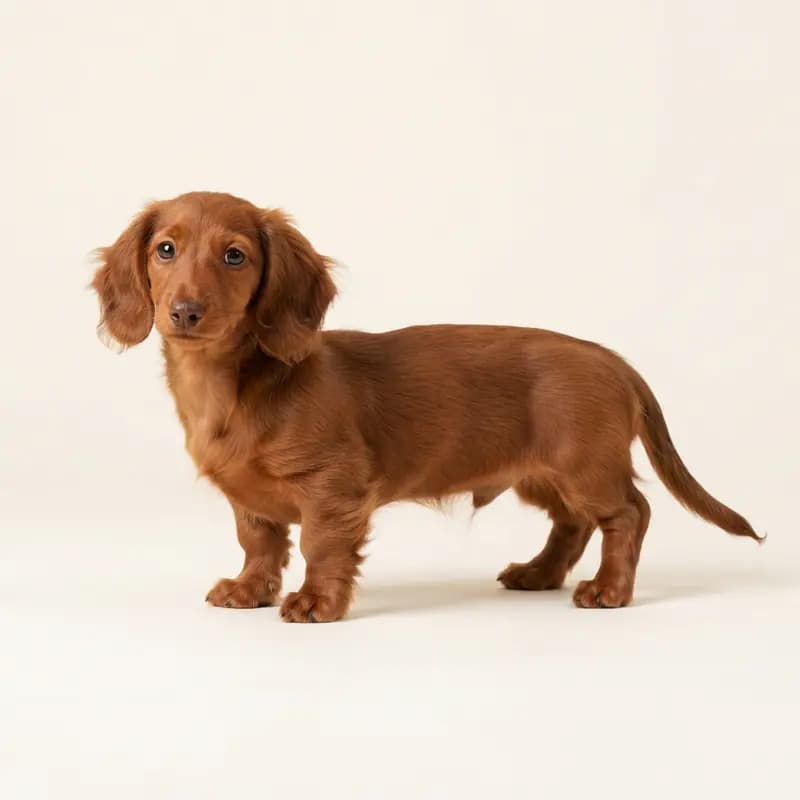
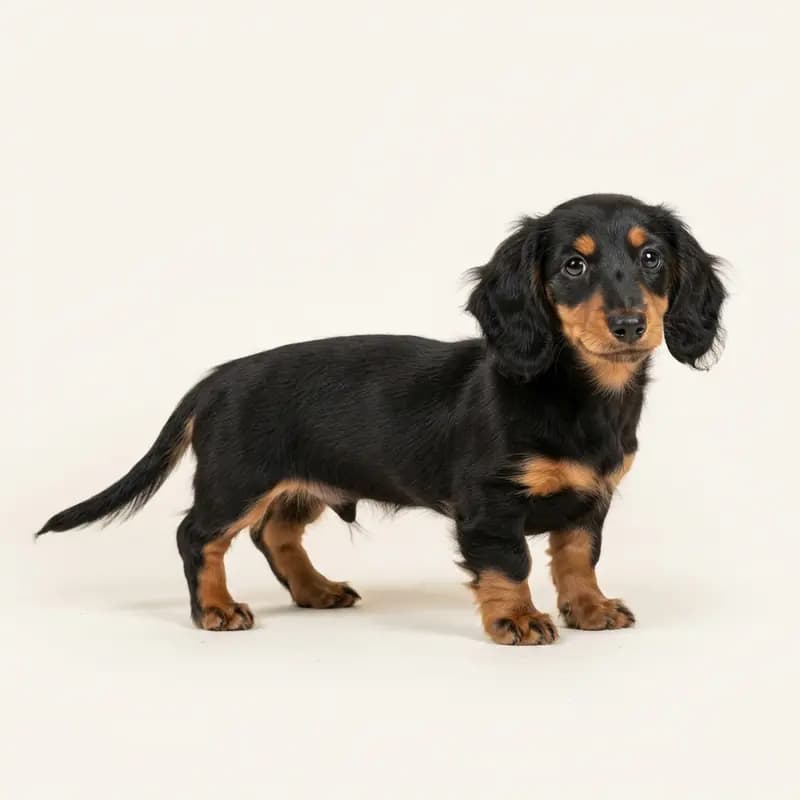
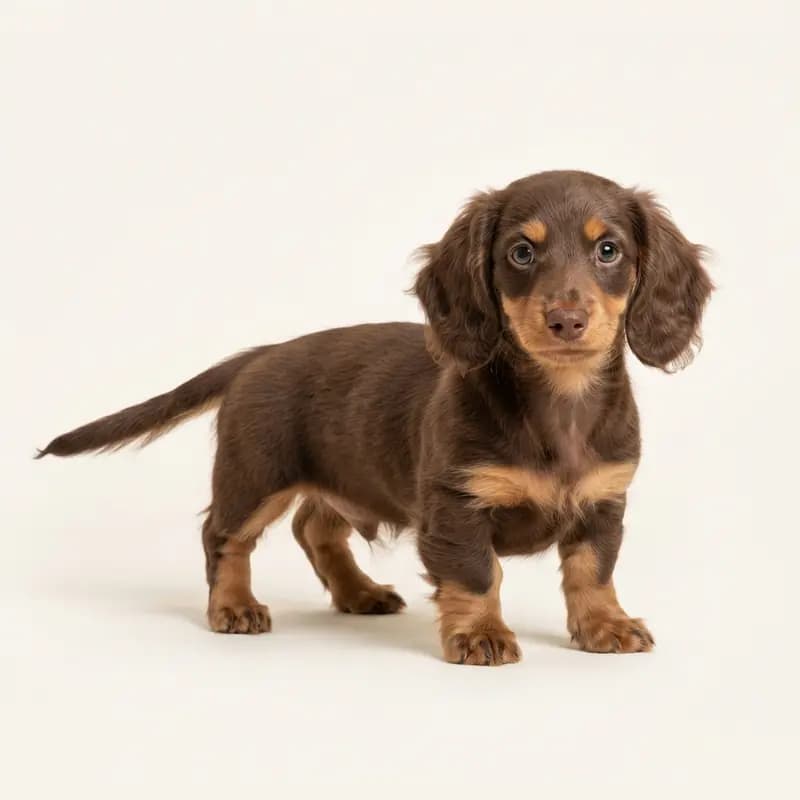
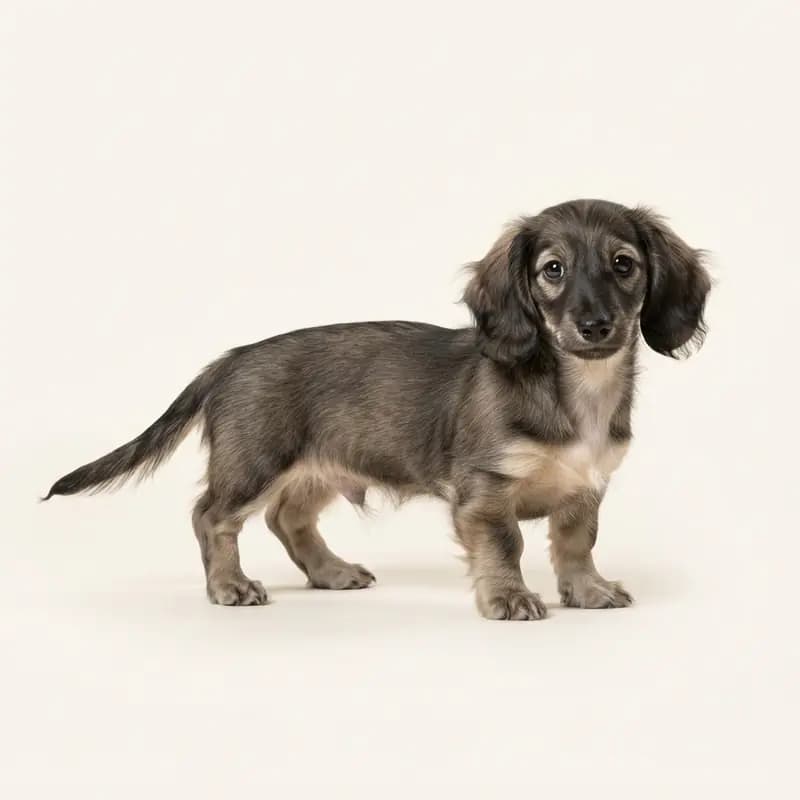
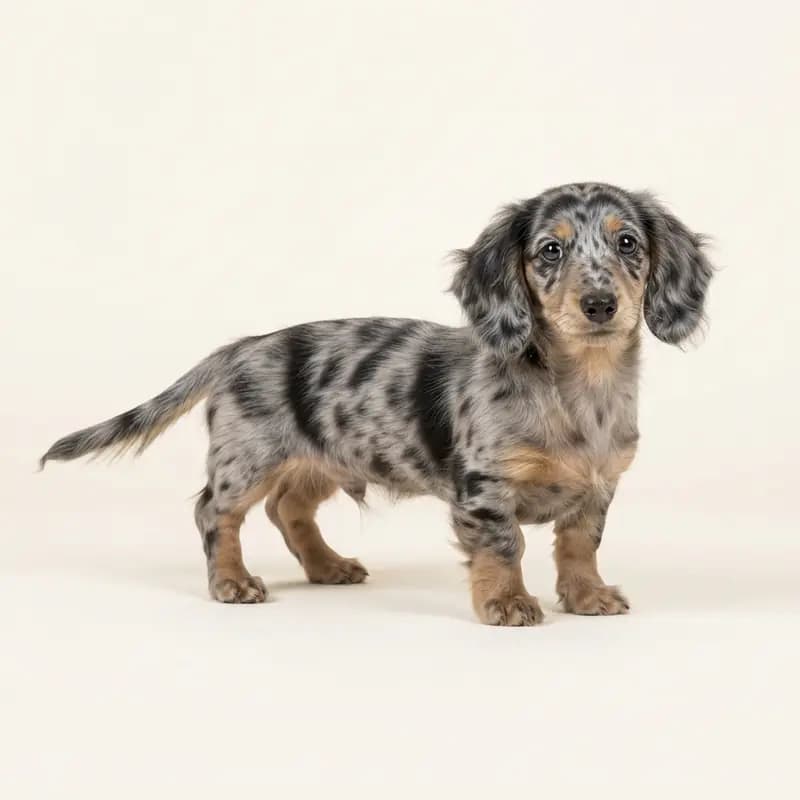
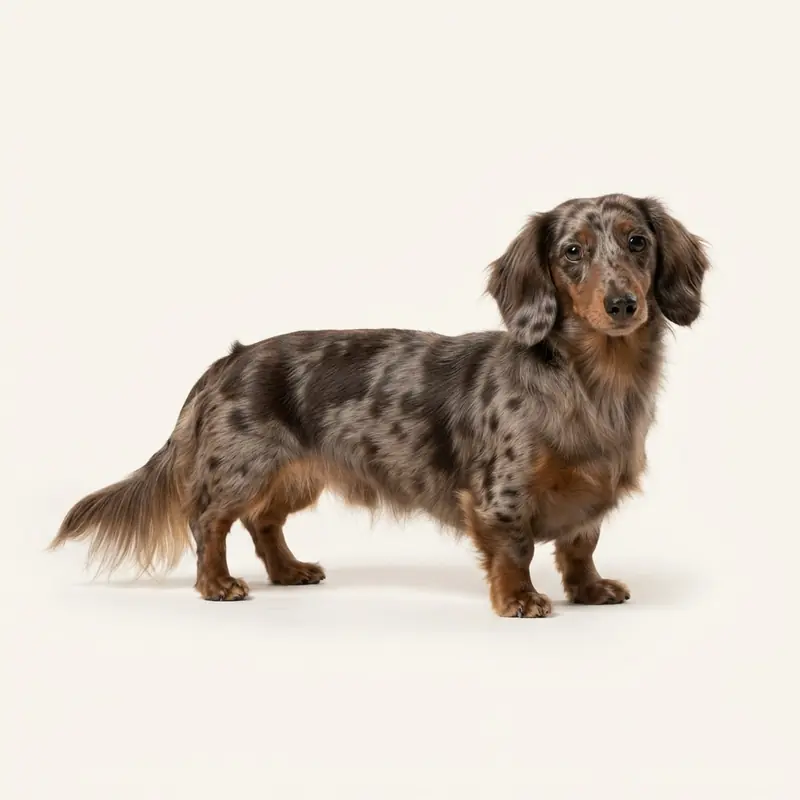
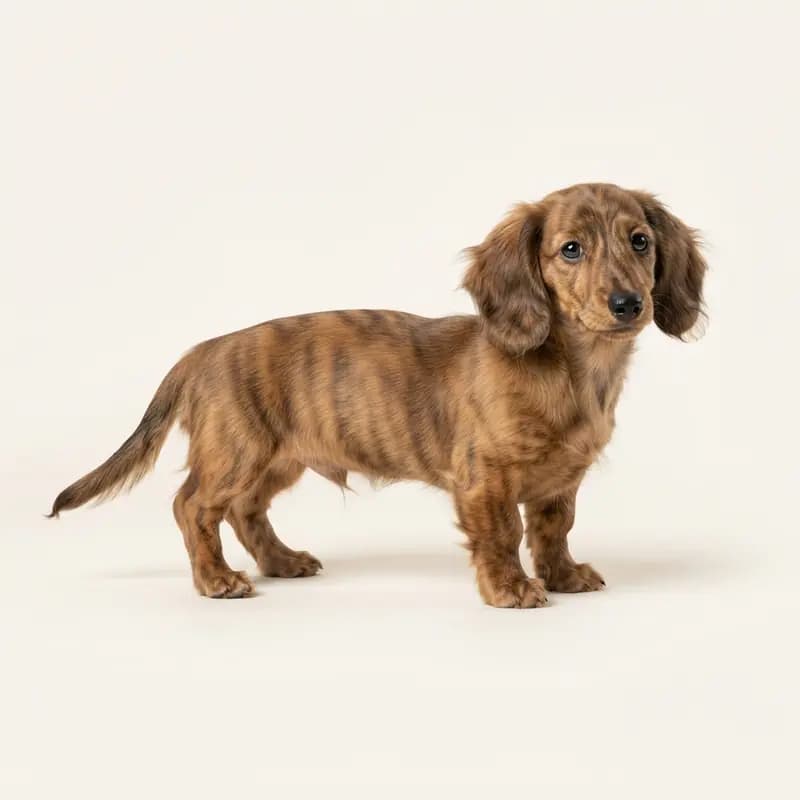
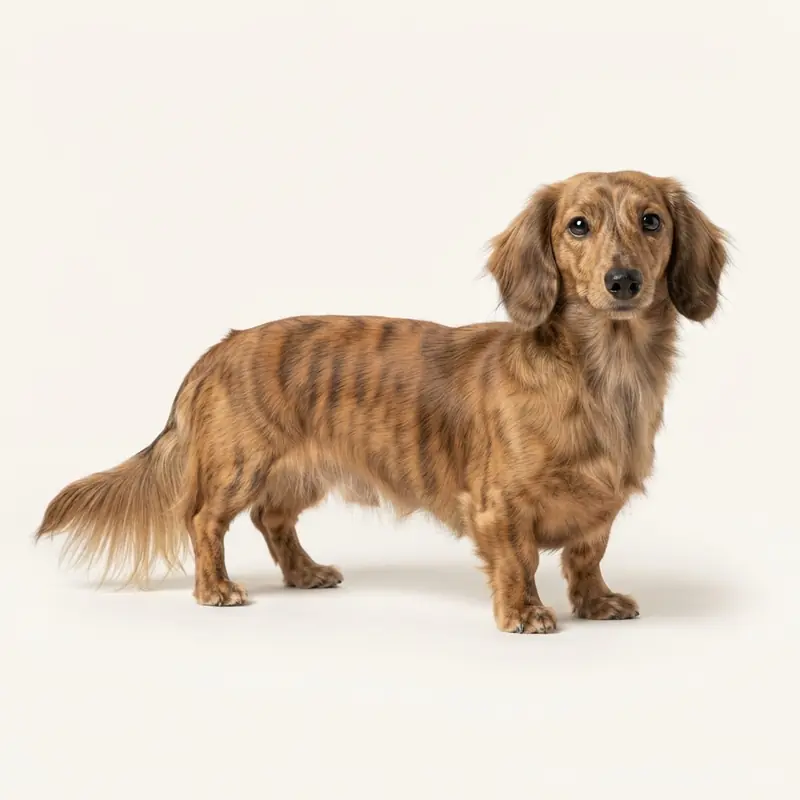
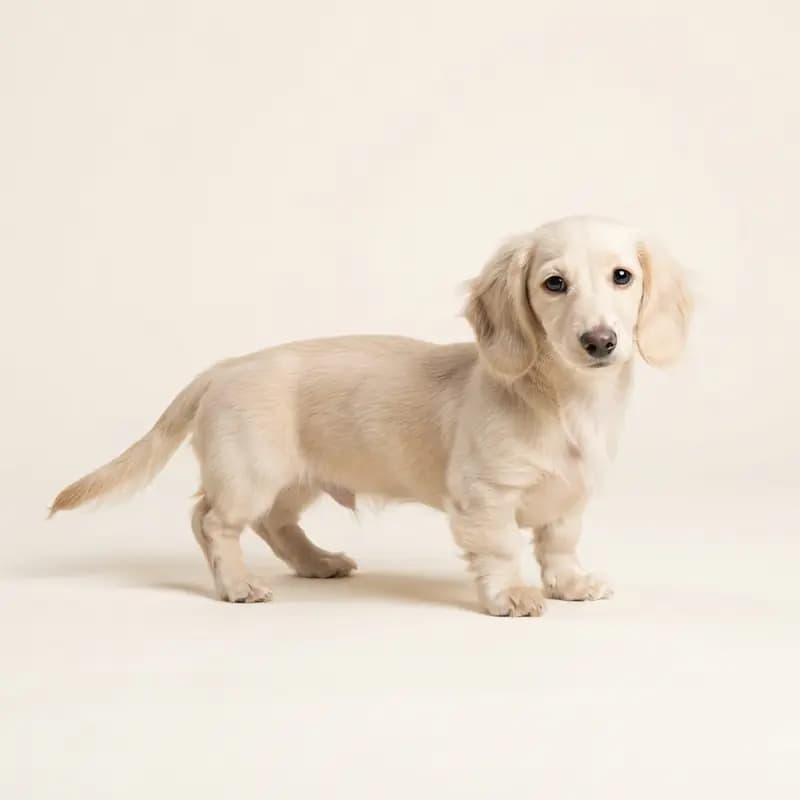
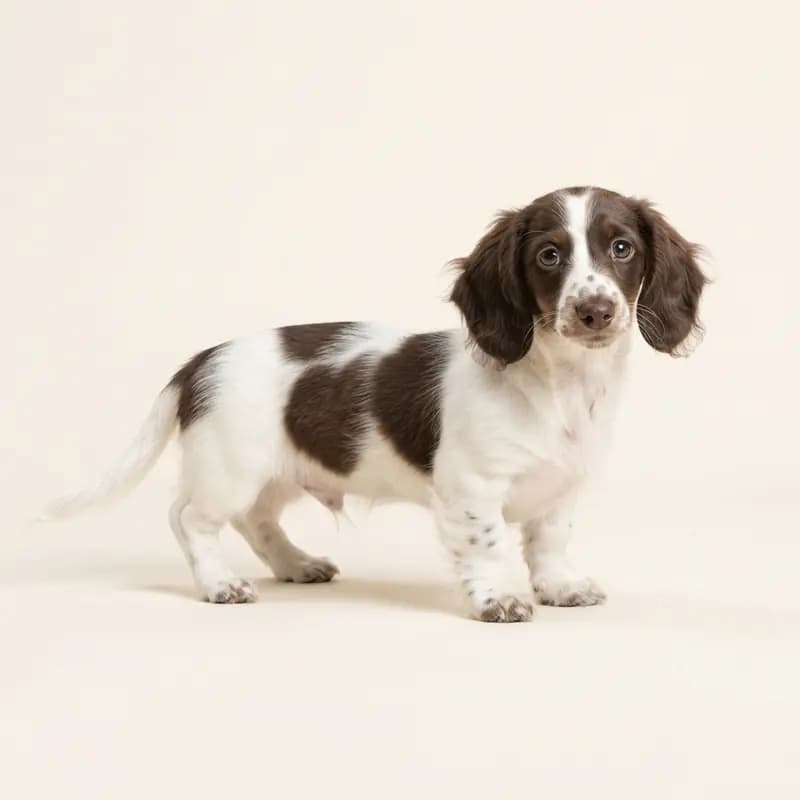
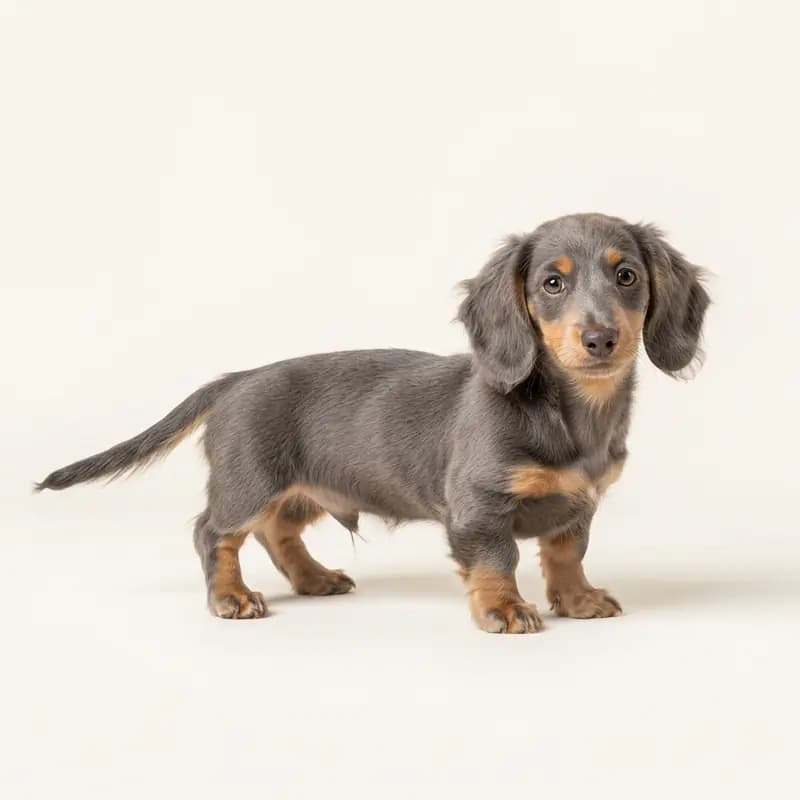
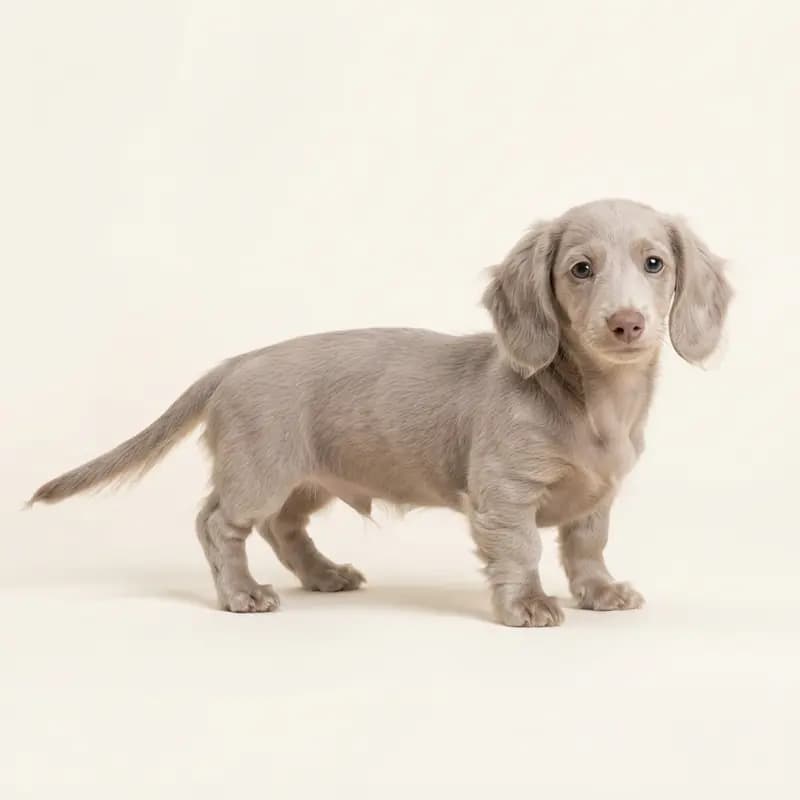
The Miniature Long-haired Dachshund comes in these colors: Red, Black and tan, Brown and tan, Wild boar, Merle, Brindle, Cream, Piebald, Blue and tan, Isabella. Colors that fall outside the breed standard are marked as such on the breed page.
Showcase your kennel on HonestDog and reach families searching for a responsibly bred Miniature Long-haired Dachshund.