
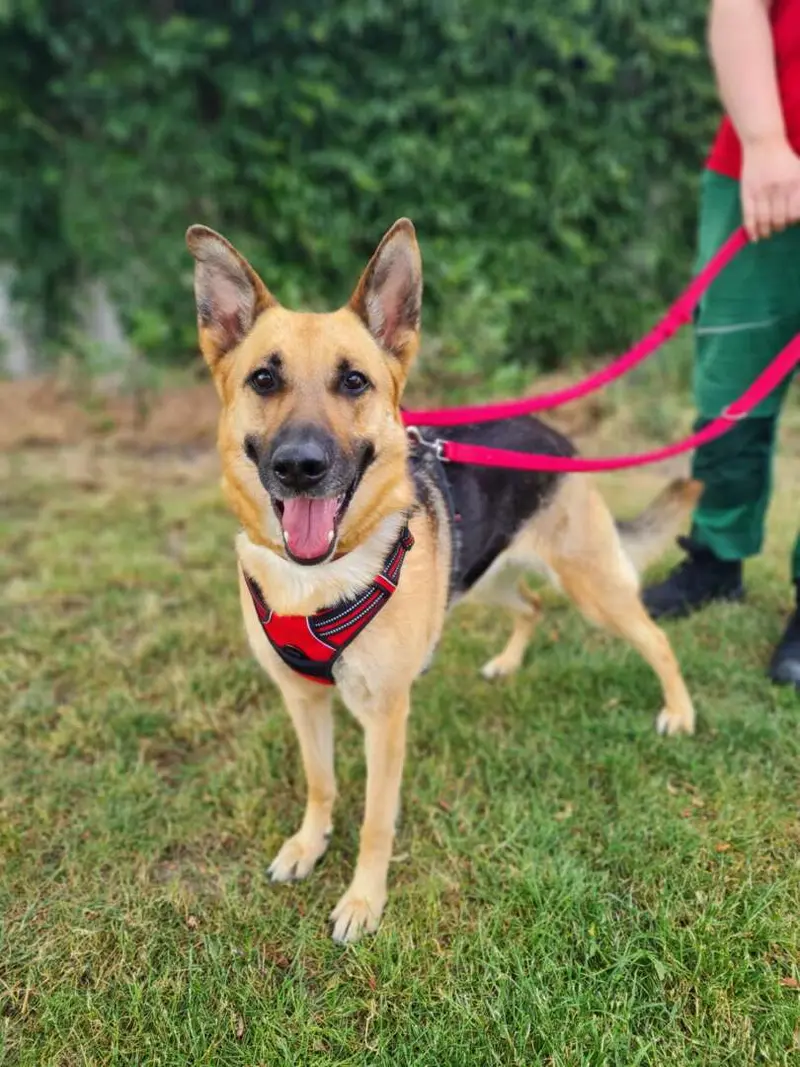
German Shepherd vs Doberman: An Honest Breed Comparison
If you are looking for a loyal, intelligent, and protective companion, you will inevitably come across two of the world's most legendary dog breeds. The decision between German Shepherd vs Doberman is one that many prospective dog owners struggle with. Both breeds originated in Germany and both enjoy a reputation as excellent guard and working dogs, yet they could hardly be more different in their temperament, grooming needs, and daily requirements.
As a dog expert, I am often asked which of these two proud companions is the better choice. The truth is: no breed is inherently "better." It depends entirely on your lifestyle, your experience with dogs, and your living situation. In this detailed guide, we will take a closer look at both breeds. We will examine character, care, health, and costs so that you know exactly which dog truly suits you.
Quick Overview: Breed Data Comparison
Before we dive deep into the character details, a look at the raw numbers helps. Here, you can see the most important breed traits compared clearly. This initial German Shepherd comparison with the Doberman already shows that both dogs play in the absolute heavyweight class of working dogs.
| Trait | German Shepherd | Doberman |
|---|---|---|
| Origin | Germany | Germany |
| Breed Group (FCI) | Group 1: Sheepdogs and Cattle Dogs | Group 2: Pinscher and Schnauzer, Molossoid breeds |
| Temperament | Confident, courageous, clever, hardworking | Loyal, fearless, watchful, sensitive |
| Shoulder Height (Male) | 60–65 cm | 68–72 cm |
| Weight (Male) | 30–40 kg | 40–45 kg |
| Coat Type | Dense, straight hair with thick undercoat | Short, dense, no undercoat |
| Life Expectancy | 9–13 years | 10–12 years |
| Grooming Effort | High (4/5) | Very low (1/5) |
Character and Temperament: Two Different Souls
When we look at the breeds on an emotional and psychological level, every Doberman comparison with the German Shepherd shows that their history has massively shaped their nature. Both dogs are clever and loyal, but they express it in completely different ways.
The German Shepherd: The Versatile All-Rounder
The German Shepherd was originally bred as a herding dog. This means it has an enormous "will to please" – it wants to please its owner and work together with them. It is highly intelligent, learns extremely quickly, and needs a job to do. An under-stimulated German Shepherd will quickly find its own "jobs," which you often won't appreciate in daily life (such as controlling visitors or herding family members).
It is important to distinguish between working lines and show lines. The working line has much higher drive, more energy, and requires dog sports like IGP (protection dog training), agility, or challenging scent work. The show line is often a bit calmer in family life but still has a high activity level (energy level 5/5) that goes far beyond that of a normal companion dog. German Shepherds bond closely with their family and are excellent protectors, though they often act somewhat more independently than the Doberman. You can find more about the fine details of the breed in our German Shepherd breed profile.
The Doberman: The Sensitive Shadow
The Doberman was explicitly bred by Louis Dobermann in the 19th century as a personal protection dog. This makes them a so-called "one-man dog" or "velcro dog." They build an almost obsessive bond with their primary person. Wherever you are, your Doberman wants to be. Being alone is traditionally very difficult for this breed, which is why early training is essential.
Despite their often intimidating appearance, the Doberman is extremely sensitive. A heavy hand or shouting during training will deeply disturb this delicate dog. They need clear, consistent, but very loving and fair leadership. Their guarding instinct is high (fearless and watchful), and they tend to proactively ward off threats. In a serious situation, the Doberman stands by you unconditionally. At the same time, they are often total "cuddle bugs" at home who prefer to snuggle under a blanket on the sofa. For detailed insights into their fascinating nature, I recommend our Doberman breed profile.
Care and Keeping in Daily Life
When asking German Shepherd or Doberman, daily life plays a huge role. How much time do you want to spend with a vacuum cleaner? What is your housing situation? This is where the two breeds drift far apart.
Coat Care: Undercoat vs. Short-haired
The grooming effort for the German Shepherd is 4 out of 5 points. Their coat is dense, water-repellent, and equipped with a thick layer of undercoat. This makes them extremely robust against cold and wet weather, but it leads to extreme shedding. They change their coat twice a year, and during this time, you will have to accept daily brushing and constant vacuuming of your home.
The Doberman, on the other hand, is extremely easy to care for (effort: 1/5). Their short coat has no undercoat. An occasional wipe down with a rubber grooming mitt is completely sufficient to remove loose hair. However, the lack of an undercoat comes at a price: the Doberman gets cold easily. In European winters, they often need a well-fitting dog coat, and living in a kennel or spending much time in a cold garden is absolutely taboo for them. They belong inside the warm house with their family.
Exercise and Housing
Both dogs are true athletes (energy level 5/5) and are excellent to train (trainability 5/5). They are suitable for people who enjoy jogging, cycling, or hiking. Due to their build, the Doberman is an explosive sprinter and loves fast movements. The German Shepherd shines as a tireless trotter.
In terms of city suitability, the Doberman (3/5) scores slightly better than the German Shepherd (2/5). This is because the Doberman is often calmer in the house and barks less, provided they have been properly exercised outside. The German Shepherd, due to their territorial heritage, often tends to announce noises in the stairwell. Nevertheless: both breeds are much happier in a house with a securely fenced garden than in a small city apartment.
Health and Life Expectancy: An Important Topic
As a responsible dog owner, you must deal with breed-typical diseases before acquiring a dog. This is precisely where the wheat is separated from the chaff when choosing the right breeder. Always inform yourself at official bodies like the VDH (German Kennel Club) about breeding standards.
German Shepherd Health
The German Shepherd reaches an age of 9 to 13 years. For decades, the breed was criticized for extremely sloping backs. Fortunately, reputable breeders are returning to a straighter back and more functionality. The best-known health weaknesses are:
- Hip Dysplasia (HD) and Elbow Dysplasia (ED): Joint diseases that can lead to lameness.
- Degenerative Myelopathy (DM): An incurable neurological disease of the spinal cord.
- Allergies and gastrointestinal sensitivities: Many German Shepherds react sensitively to certain food components.
Doberman Health
The Doberman's life expectancy is 10 to 12 years. Their physical elegance unfortunately masks a massive problem within the breed. If you decide on a Doberman, cardiology will be your constant companion. For this, it is best to consult specialist information from the Federal Chamber of Veterinarians or cardiological specialist groups.
- Dilated Cardiomyopathy (DCM): The Doberman heart problem is the biggest threat to the breed. Over 50% of all Dobermans develop this often fatal heart muscle weakness in the course of their lives. Regular ultrasound and long-term ECG examinations by a specialist are mandatory.
- Wobbler Syndrome: A neurological disease of the cervical spine.
- Von Willebrand Disease: A blood clotting disorder that good breeders test for via DNA testing.
Costs: Acquisition and Running Expenses
Both breeds are large, strong dogs that cost money to keep. High-quality food for a 40-kilo dog adds up significantly every month. Accessories (large beds, sturdy leashes) are also more expensive than for small breeds.
There are slight differences in acquisition costs:
- The price range for a healthy German Shepherd puppy from a reputable breeder is 1,300 to 2,500 EUR. If you are interested in a puppy, pay attention to the health evaluations of the parents. You can find suitable German Shepherd puppies here.
- A Doberman puppy from a breeder that places maximum value on DCM-free lines and comprehensive health checks is often slightly more expensive and ranges from 1,500 to 3,000 EUR. Find responsible breeders and current Doberman puppies on our platform.
Additional costs: For the Doberman, keep the ongoing veterinary costs for the annual heart screening in mind (approx. 150 to 300 EUR). For the German Shepherd, you should set aside a budget for potentially expensive physiotherapy if they develop joint problems in old age.
Which Breed Is Better for Whom?
Let's return to the core question: which dog fits into your life?
Choose the German Shepherd if...
- ... you want a dog that enjoys being outside in all weather conditions and handles the cold with ease.
- ... you have a genuine interest in classic dog sports (e.g., tracking, obedience).
- ... you don't mind dog hair in the house and on your clothes.
- ... you are looking for a breed that is reserved towards strangers but acts slightly less physically reactive than a Doberman.
Choose the Doberman if...
- ... you are looking for an extremely affectionate dog that wants to spend every second with you ("Velcro Dog").
- ... you train very sensitively, positively, and without unnecessary harshness.
- ... you intend to keep the dog primarily indoors anyway and are prepared to put a coat on them in winter.
- ... you place great importance on a clean home without constant dog-hair warnings.
Further valuable information on the character standards and suitability of both breeds can also be found at the German Shepherd Club (SV) as well as specific Doberman associations.
Frequently Asked Questions (FAQ)
Are these breeds suitable for beginners?
In principle, neither the German Shepherd nor the Doberman is an ideal beginner dog. Their high intelligence paired with guarding and protection instincts requires clear leadership and expertise. If you are a beginner, you must get support from a professional dog trainer from day one. The German Shepherd (especially from the show line) often forgives minor training mistakes more easily due to their "will to please" than the highly sensitive, extremely reactive Doberman.
Do German Shepherds and Dobermans get along with children?
Both breeds are considered child-friendly (3/5 stars each) if they have been well socialized. The Doberman often builds a very gentle, protective bond with the children of the family. The German Shepherd fits excellently into the family pack. Important for both: they are very large and sometimes boisterous dogs. Small children could be accidentally knocked over during play. Also, never leave dogs and small children unattended.
Can these dogs live with other animals?
Compatibility with other dogs is rated slightly higher for the Doberman (4/5) than for the German Shepherd (3/5). If they are accustomed to other dogs or cats from an early age, cohabitation is generally possible without problems. With same-sex adult dogs in the same household (especially unneutered males), there can be friction over social rank with both breeds.
Which dog barks more?
The German Shepherd tends to be more talkative. They were bred to herd flocks and loudly announce intruders. They often use barking and whining for communication. The Doberman usually only barks if there is a real reason. If a Doberman raises the alarm, you should definitely check what is going on.
Conclusion: Both Breeds Are Fantastic – If the Environment Is Right
The decision German Shepherd vs Doberman is one that only you can make. Both breeds demand a lot from you as an owner, but with the right training and stimulation, they give back a loyalty that is second to none. The German Shepherd is your robust, tireless outdoor partner and loyal guardian. The Doberman is your elegant, highly sensitive bodyguard who would love to crawl under your skin.
Regardless of which breed makes your heart beat faster: the most important step is to find a responsible, reputable breeder who puts health and temperament at the top of the list. Avoid puppy mills and bargain buys on the internet, because otherwise, you will pay later with high veterinary costs and dangerous behavioral problems.
At HonestDog, we are committed to absolute transparency, health testing, and ethical dog breeding. We carefully vet our breeders so that you can find your dream dog safely and with a clear conscience. Regardless of whether you decide on a German Shepherd or Doberman – visit our platform, compare the breed profiles, and contact verified breeders. Together, we will find the perfect new family member for you!