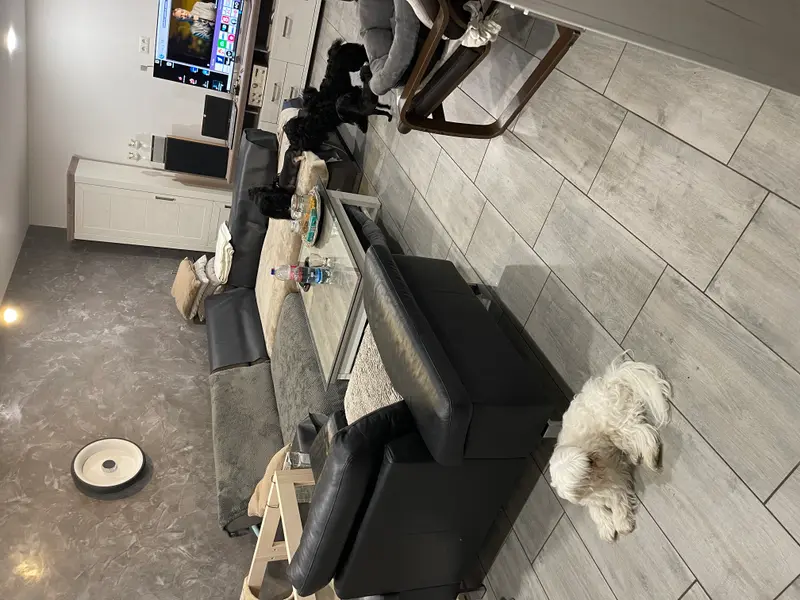
If you fell in love with the teddy-bear looks of a Maltipoo at first sight, you are certainly not alone. These small dogs have taken the hearts of dog lovers by storm in recent years. But behind those dark button eyes and the soft, curly coat lies much more than just a pretty exterior. As an experienced dog behaviorist, I often encounter people in my practice asking if the Maltipoo temperament truly fits their lifestyle. In this comprehensive guide, we dive deep into the psyche of this fascinating hybrid breed. I will give you an honest and detailed look at what to expect in everyday life with this charming companion.
The Maltipoo Temperament in Detail: A Heritage of Two Worlds
To truly understand the Maltipoo temperament profile, we must look at its parents. The Maltipoo is not a product of chance, but a deliberate cross (a so-called designer dog) between a Maltese and a Miniature or Toy Poodle. This genetic mix creates a fascinating psychological profile.
From the Poodle, the Maltipoo typically inherits high intelligence, a quick grasp of new concepts, and a strong "will to please" — the distinct desire to make their human happy. The Maltese, on the other hand, brings the traits of a classic companion dog: they are people-oriented through and through, affectionate, gentle, and cuddly. The result is a Maltipoo personality that can best be described as cheerful, charming, and extremely loving.
In everyday life, this often manifests as follows: your Maltipoo will likely follow you every step of the way. When you sit on the couch, they are on your lap. When you go to the kitchen, they trot behind you. This is a dog that needs proximity to its caregiver like air to breathe. Despite this intense attachment, they are lively dogs. A healthy Maltipoo has a medium energy level (3 out of 5) and is always ready for a game or a small adventure.
Who is the Maltipoo Right For? An Honest Assessment
The consistently friendly Maltipoo temperament makes these dogs extremely adaptable. Nevertheless, not every living situation is automatically perfect for this breed. Let's look at who this little curly-haired dog fits best.
The Maltipoo for First-Time Owners
There is a clear "Yes!" here. Due to their high willingness to learn and the fact that they often forgive training mistakes more generously than many highly specialized working dogs, they make excellent beginner dogs. They instinctively want to do everything right, which makes training a pleasant experience.
Families with Children
As a family dog, the Maltipoo scores nearly full points (5/5 for family friendliness, 4/5 for child friendliness). They love being the center of attention and live for playtime. However, it is important to note: With a weight of only 2 to 6 kilograms and a height of 20 to 35 centimeters, the Maltipoo is physically delicate. Small children must learn to treat the dog respectfully and carefully to avoid injuring the animal.
Singles and Seniors
For single people or seniors, the Maltipoo is often the perfect companion. Since they do not have an excessive urge for exercise like a Husky or Border Collie, moderate but regular walks are sufficient, provided they are mentally stimulated. For singles, however, the biggest hurdle is that this dog extremely dislikes being alone (more on that later).
Living Together: Housing and Other Pets
If you live in an apartment in the middle of the city, I have good news: the Maltipoo has a city suitability score of 5/5. As long as they are with you, they don't really care whether you live in a house with a garden or a two-room apartment. They don't necessarily need a large property to be happy.
Socializing with other dogs or pets also usually works out excellently. The Maltipoo nature is rarely confrontational. With a compatibility score of 4/5 towards other dogs, they usually meet peers openly and friendly, though sometimes a bit reserved at first. If they are socialized with cats or small animals from a young age, living together is usually completely unproblematic, as their hunting instinct (unless the Poodle heritage is exceptionally strong) is generally very moderate.
Exercise Needs and Species-Appropriate Activities
A common mistake I see in dog behavior practice is the assumption: "Small dog equals little work." This is a fatal misconception. The Maltipoo is not just a sofa cushion.
Their energy level is in the mid-range. Specifically, this means:
- Physical Activity: Three walks a day are mandatory. One long walk of 45 to 60 minutes plus two shorter rounds keep them physically fit.
- Mental Stimulation (Brain Work): This is where the clever Poodle shines! A Maltipoo that gets bored will quickly become creative — and seek out activities you won't like (e.g., chewing furniture or barking).
Appropriate activities for this Maltipoo temperament include:
- Intelligence Toys: Search games where they have to find treats under cups or in snuffle mats.
- Trick Training: Giving paws, sitting up, spinning — these dogs learn tricks incredibly fast and love the applause.
- Agility for Small Dogs: A small course in the garden or living room provides enormous physical and mental stimulation.
You can find more on species-appropriate activity and the traits of the parent breeds on the website of the Verband für das Deutsche Hundewesen (VDH) in the breed portrait of the Poodle, whose intelligence lives on strongly in the Maltipoo.
Challenges: Every Rose Has Its Thorn
To paint an honest picture, we must also talk about potential stumbling blocks. Many Maltipoo experiences shared by owners revolve around one central theme: separation anxiety.
Because the Maltipoo is so extremely people-oriented, they often suffer silently (or loudly) when left alone. Without step-by-step, patient training from puppyhood, staying alone can become a real problem. If you work away from home eight hours a day and cannot take the dog with you, the Maltipoo is not the right breed for you. Even well-trained Maltipoos should ideally not be left alone for more than 3 to 4 hours.
Another point is grooming. Although they hardly shed (hair loss 1/5) and are often advertised as allergy-friendly, the curly, medium-length coat without an undercoat requires high maintenance (3/5). If the fine hair is not brushed daily, it mats right down to the skin. Additionally, the dog must be professionally clipped or trimmed every 6 to 8 weeks. The Deutscher Tierschutzbund also points out that when buying designer dogs, one should pay close attention to reputable sources, as the price range of 2000 to 4000 EUR unfortunately attracts unethical breeders.
Training Tips from a Dog Behaviorist's Perspective
Training a Maltipoo doesn't require a heavy hand, but it does require consistency. The biggest danger with this breed is their "cute factor." When a little Maltipoo looks at you with big eyes while sitting on the sofa where they aren't supposed to be, it takes iron discipline to send them down again.
Be sure to use positive reinforcement during training. The sensitive Maltipoo temperament responds very poorly to loud scolding or pressure. They often freeze, become insecure, or refuse to cooperate. Work with small treats, plenty of praise, and your voice. If they notice that a certain behavior puts a smile on your face, they will offer it again and again on their own.
Also, make sure to manage "alerting" early on. The Maltipoo is not a chronic yapper, but they are watchful. They will let you know when the mail carrier rings. Show them that you have acknowledged their warning, then take over the situation as the "pack leader" so they can relax again.
Frequently Asked Questions (FAQ) About Maltipoos
Is the Maltipoo a barker?
Generally, no. The Maltipoo temperament is attentive but not prone to constant barking. However, they tend to alert you to anything unusual. Through consistent, loving training, this behavior can be well-controlled, ensuring they remain a quiet housemate.
Can a Maltipoo stay home alone?
This is the breed's biggest Achilles' heel. By nature, they dislike being alone because their bond with humans is so strong. Staying alone must be built up in very small steps (minute by minute) from puppyhood. For people with long full-time office jobs, the breed is not suitable without dog care.
Are Maltipoos truly suitable for allergy sufferers?
There is no such thing as a 100% hypoallergenic dog. However, the Maltipoo loses very little hair and dander due to its poodle-like coat, which often makes them very tolerable for people with mild allergies. It is advisable, however, to spend time with the specific puppy before purchasing to rule out individual reactions.
What is the life expectancy of a Maltipoo?
As a small dog, the Maltipoo has a very pleasing life expectancy. With good care, a species-appropriate diet, and the genetic health of the parent animals, they typically live between 12 and 15 years, sometimes even longer.
Conclusion: Is the Little Charmer Right for You?
In summary: the Maltipoo personality is a wonderful mix of intelligence, joy, and unconditional love. They are the perfect companion for people who have plenty of time, want to fully integrate their dog into their daily lives, and enjoy engaging with their four-legged friend both physically and mentally.
If you are willing to invest time in separation training, don't shy away from regular grooming, and don't let their sweet gaze wrap you around their little paw, you will find a loyal, joyful friend for life in this dog. The positive Maltipoo experiences of countless owners confirm that this small dog has a huge heart.
Would you like to dive even deeper into the fascinating world of this breed or are you looking for specific facts on size, weight, and health? Then visit our detailed Maltipoo breed profile on HonestDog, your trusted platform for everything concerning your perfect dog. If you are already sure that this breed fits your life perfectly and you want to give a small puppy a loving home, you can find reputable Maltipoo puppies here. We at HonestDog are happy to help you make the start with your new best friend as safe and transparent as possible!