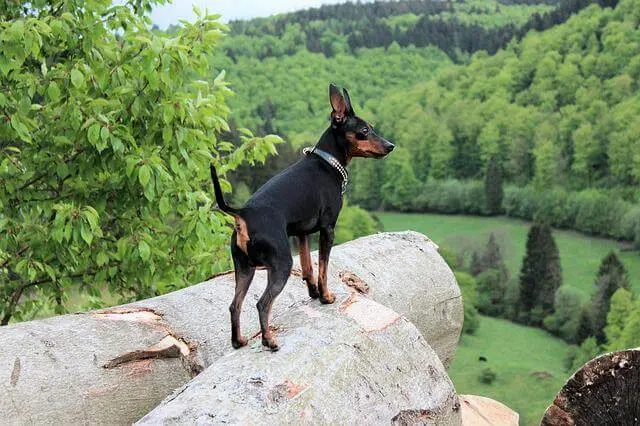
A Big Dog in a Small Package: The Core Miniature Pinscher Temperament
Anyone meeting a Miniature Pinscher for the first time is often surprised by the sheer presence this compact dog radiates. With a shoulder height of roughly 25 to 30 centimeters and a weight between four and six kilograms, they may belong to the smaller breeds physically, but their inner attitude speaks a completely different language. The miniature pinscher temperament is defined by fearlessness, intense self-confidence, and an enormous zest for life.
Pinschers were originally kept on farms to keep stables and barns free of rats and mice. This historical job as a "rattler" required quick action, courage, and a certain degree of independence. These traits are deeply rooted in the Miniature Pinscher personality. This is not a dog to hide timidly behind its owner's legs. Instead, it approaches new situations attentively, proudly, and often boldly.
Despite this fearlessness, the breed is extremely people-oriented. Within its family, the Miniature Pinscher shows an intensely affectionate side. It seeks physical closeness, loves to cuddle under blankets, and enjoys the undivided attention of its favorite humans. This duality of being an incorrigible watchdog on one hand and a cuddly companion on the other makes living with one very rewarding. It watches its surroundings closely and reliably alerts you to unfamiliar noises or strangers—without being needlessly aggressive, provided it has been well socialized.
Who Is the Miniature Pinscher Suited For?
Deciding on a dog should always be based on its character needs. Because of its adaptability, the Miniature Pinscher suits many lifestyles, but it does place clear demands on its owners.
Active Singles and Couples
This breed is often an ideal match for athletic individuals or couples. Its high energy level (4 out of 5 points) means this dog wants to experience things. It happily accompanies its humans on hikes, jogs, or extended walks. Because it often bonds very strongly with one or two primary caregivers, it thrives in smaller households.
Families with Children
The Miniature Pinscher's family-friendliness is generally rated as good, while its child-friendliness sits in the middle range (3 out of 5 points). There is a simple reason for this: due to its small size, it is physically vulnerable. At the same time, its proud miniature pinscher temperament does not tolerate rough handling. It dislikes being crowded or treated like a toy. In households with older children who respect the dog's body language and accept its quiet retreats, it can make a wonderful, playful companion. For homes with boisterous toddlers, sturdier or more nerve-solid breeds are usually recommended.
Seniors
The Miniature Pinscher can be a great partner for older adults, provided they still have the physical fitness for daily, extensive walks. Its light weight makes it easy to handle in everyday life—you can easily pick it up, and it won't pull with uncontrollable force on the leash. However, mental stimulation remains essential even in older age.
Are Miniature Pinschers Good for Beginners?
Thanks to its enormous willingness to learn (trainability 5 out of 5), dedicated dog beginners can also do well with this breed. However, the willingness to dive deep into dog training is essential. The clever Pinscher quickly turns inconsistent human behavior to its advantage. Anyone who sets clear rules from day one will be rewarded with an exceptionally loyal dog.
Coexistence: Other Pets and Living Situation
Integration into daily life heavily depends on the dog's early socialization. If you want to unlock the breed's full potential, take a detailed look at the Miniature Pinscher breed profile to understand all facets of living together.
Behavior Toward Other Dogs and Animals
Compatibility with other dogs tends to sit in the lower middle field (2 out of 5 points). This doesn't mean Miniature Pinschers are dog-aggressive; rather, it reflects their proud demeanor. They tend to view themselves as much larger than they are and often demand respect during meetings with large dogs, which can lead to misunderstandings. Early, well-guided socialization in puppy classes and controlled meetings are crucial so the dog learns to communicate politely with peers.
Living with cats is possible if the dog gets used to it from an early age. However, caution is required with small pets like guinea pigs or hamsters: their historic hunting instinct for rodents can flare up at any time.
Urban Suitability and Apartment Living
The Miniature Pinscher makes a stellar city dog (5 out of 5 points). It doesn't need a large house with a yard to be happy. An apartment is plenty, as long as it gets enough exercise outdoors. Its short, smooth, close-lying coat sheds very little (shedding 1 of 5), making it a very clean roommate. Overall easy maintenance (2 of 5 points) keeps dirt in the living space to a minimum.
One aspect to keep in mind for rental apartments, however, is its watchfulness. The Miniature Pinscher will announce noises in the hallway. Early training is needed here to prevent announcing from turning into persistent yapping.
Exercise Needs and Species-Appropriate Activities
A widespread misconception is that small dogs automatically need less exercise. The Miniature Pinscher disproves this cliché every day. It is a bundle of energy that demands both physical and mental engagement. A short walk around the block is nowhere near enough to balance it out.
Dog experts often emphasize the importance of mental stimulation for this intelligent breed. If a Miniature Pinscher cannot channel its energy, it quickly finds its own jobs—such as excessive guard duty in the apartment or constant barking. Suitable activities include:
- Agility for Small Dogs: Here, the Miniature Pinscher can show off its tremendous agility, speed, and jumping power. Close teamwork also strengthens the bond with the handler.
- Nosework and Mantrailing: Search games tire the dog out cognitively. A ten-minute intensive search session in the living room or garden can mentally exhaust the dog just as much as a long walk.
- Trick Dogging: Because the Miniature Pinscher learns very quickly and loves being the center of attention, learning small tricks brings it a lot of joy.
For well-founded information on species-appropriate activities and official breed requirements, it's worth checking out the guidelines of the Pinscher-Schnauzer-Klub 1895 e.V., which officially manages the breed in Germany.
Typical Challenges: What You Should Know
Every dog breed brings certain challenges along with its virtues. Anyone choosing a Miniature Pinscher should be prepared for the following aspects:
The Tendency to Bark
As a born watchdog, sounding the alarm is baked into its genetics. It reports reliably. The challenge is teaching it that after a quick "woof," the human takes over the situation. Without clear leadership, the Miniature Pinscher can quickly develop into a yapper that noisily comments on every pedestrian outside the window.
The Subliminal Hunting Drive
Although it isn't a classic gundog in the sense of a pointing dog, the drive to chase small, fast-moving objects is definitely there. A flushing bird, a fleeing squirrel, or a mouse in the field can tempt the Miniature Pinscher to take off. Reliable recall training is therefore a must from puppyhood onward.
Cold Sensitivity
The Miniature Pinscher has a very short coat without an insulating undercoat. Furthermore, due to its low body mass, it has few reserves to keep warm in wet and cold weather. It gets cold quickly in winter or heavy rain. Putting a well-fitting dog coat on it in bad weather isn't humanizing the dog—it's simply relevant to animal welfare and health.
Practical Training Tips for the Miniature Pinscher Temperament
Training a Miniature Pinscher is usually a lot of fun because the breed features high trainability (5 out of 5). They often grasp new commands after just a few repetitions. To ensure training works reliably in everyday life, keep a few principles in mind:
- Consistency Without Harshness: Miniature Pinschers are sensitive to moods. Loud words or harshness destroy trust. Calm but absolutely consistent leadership is key. If it isn't allowed on the couch today, it won't be allowed tomorrow either.
- Practicing Impulse Control: Because the breed is reactive and fast, the dog must learn to tolerate frustration and not instantly give in to every impulse. Exercises like waiting for food or sitting calmly before opening the door outside are valuable daily routines.
- Establishing Rest Periods: A dog with this much energy needs to learn how to switch off. Providing a fixed retreat indoors and demanding quiet there is important. It doesn't need to spring up and inspect every movement around the house.
The German Kennel Club (VDH) also offers valuable tips on raising and training this traditional German breed on its website.
Real Miniature Pinscher Experiences: What Everyday Life Shows
Looking at authentic Miniature Pinscher experiences from long-term owners paints a very consistent picture. Most owners rave about unconditional loyalty and the charming, sometimes clownish nature of their dogs. It is often reported that the Miniature Pinscher indoors is a true "shadow"—it always wants to be right where its humans are.
At the same time, many owners report a learning curve regarding dog-to-dog meetings. The brave Miniature Pinscher tends not to let anyone push it around. Confident handling by the owner is crucial to navigate the dog safely through daily life. A lifespan of 12 to 14 years ensures that human and dog have plenty of time to grow into an unbeatable team.
Frequently Asked Questions (FAQ)
Do Miniature Pinschers bark a lot?
In short, the Miniature Pinscher is a watchful dog that sounds the alarm. However, it is not a constant yapper if raised properly. Through consistent training and the human taking on the leadership role, barking can easily be reduced to a short, appropriate alert.
Can a Miniature Pinscher stay home alone?
Like any dog, this breed must learn to stay alone in small steps. Because Miniature Pinschers are very people-oriented, separation is often a bit harder for them. However, if you start training early in puppyhood with short intervals, they can usually stay home alone for a few hours without destroying furniture or annoying neighbors with barking.
Does a Miniature Pinscher need a coat in winter?
Yes, in most cases that is advisable. Due to their short hair without an undercoat and small body size, these dogs quickly chill in low temperatures, wind, and wet weather. A well-fitting, warming coat protects against cooling down and the muscle stiffness or colds that come with it.
Is the Miniature Pinscher a terrier?
No. Although their character often resembles terriers (brave, lively, persistent), cynologically the Miniature Pinscher belongs to the Pinscher and Schnauzer group. Visual similarity to the English Toy Terrier or Manchester Terrier often causes confusion, but genetically and historically there are differences in their breeding background.
Your Path to the Miniature Pinscher
The Miniature Pinscher is a fascinating, strong-willed dog that enriches its humans' lives with plenty of energy, humor, and affection. If you're looking for a companion who is a "real dog" with a strong work ethic and joy of movement despite compact dimensions, this breed might be a perfect fit. The important thing is that you're ready to invest time in exercise, training, and loving consistency.
Sure this brave little dog fits your life? At HonestDog, we place the utmost value on ensuring dogs come from responsible and vetted breeding programs. Healthy parent animals and excellent socialization in the first weeks of life are the foundation for a long, happy dog life (the price range for a responsibly bred puppy is typically 1,200 to 2,500 euros). If you're ready for your next family member, you can discover reputable breeders on our platform and find Miniature Pinscher puppies.