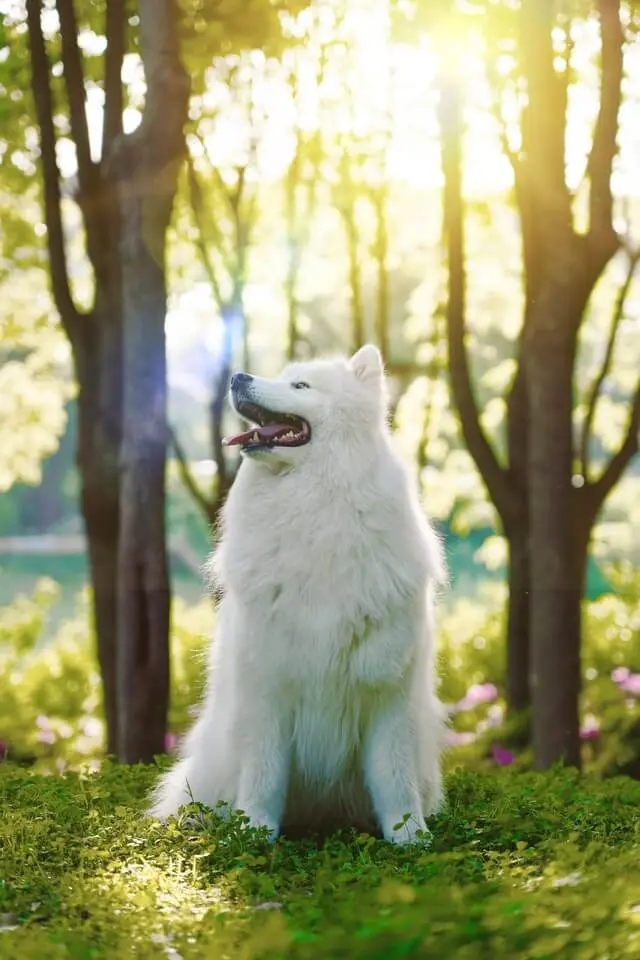
If you cross paths with a fluffy white dog sporting a seemingly smiling face, chances are you've met a Samoyed. That famous "Samoyed smile," created by slightly upturned lips, isn't just a physical trait. It actually reflects a large part of their inner disposition. Yet behind the fluffy facade of this Russian sled dog lies a complex, independent, and demanding personality.
Anyone interested in this breed should look far beyond its attractive exterior. The samoyed temperament is shaped by its history as a working companion to nomadic peoples in the harsh expanses of Siberia. To figure out whether this energetic spitz fits your lifestyle, let's examine all facets of its daily behavior, training requirements, and exercise needs.
The Typical Samoyed Personality: A Smile on Four Paws
The breed belongs to the spitz and primitive types group (Group 5). Unlike many other Nordic breeds kept primarily as pure draft animals, the ancestors of today's Samoyed lived closely inside the tents of the Nenets people (formerly called Samoyeds). They warmed the children on freezing nights, pulled light sleds, and helped herd reindeer. This deep historical bond with humans shapes the Samoyed temperament significantly to this day.
Strong People-Orientation
Samoyeds are known as extremely friendly, gentle, and people-oriented. They possess a strong need for company and affection. A Samoyed wants to be a full-fledged family member and be wherever their humans are. This deep desire for bonding makes them very affectionate companions, but conversely means they cope very poorly with loneliness.
Anyone looking for a dog that quietly retreats to a corner and waits eight hours a day alone at home won't find happiness with a Samoyed. They demand active participation in family life and clearly make that known.
The Active Samoyed Temperament
Cynologists and breed experts describe the samoyed temperament as cheerful, outgoing, and exceptionally energetic. They bring a high degree of adaptability to different living situations, provided their basic need for exercise is met. They generally approach strangers openly and without much reservation. A pronounced guarding instinct is usually entirely absent in this breed. While they often loudly announce unfamiliar noises or arriving visitors, the burglar is likely to be greeted joyfully rather than seriously warded off.
For detailed information on physical traits and exact history, check out our comprehensive Samoyed breed profile.
Who is a Samoyed Suitable For?
Deciding on a dog should always be based on a realistic assessment of your own living circumstances. Because of its size (males reach a shoulder height of 55 to 59 cm and a weight of 25 to 30 kg) and energy, the Samoyed places specific demands on its owners.
Families and Children
Due to its gentle nature, the breed is exceptionally well suited for families. It's not for nothing that its family-friendliness rating is at the highest level. Samoyeds are usually patient, robust, and playful around children. Still, as with all dogs, interaction between toddlers and a large, strong dog should always take place under adult supervision. Young Samoyeds in particular can be boisterous in their stormy joy and accidentally knock over a small child.
Singles, Couples, and Seniors
For active singles or couples who spend a lot of time in nature and can integrate the dog into their daily routine, the Samoyed is a loyal companion. For seniors, however, the breed can present a challenge. A full-grown Samoyed brings tremendous pulling power. If such a dog pulls in a certain direction on the leash, it takes a certain physical footing to hold them securely.
Is the Samoyed a Beginner Dog?
Dog experts view the Samoyed only conditionally as a beginner dog. While its friendly nature forgives the occasional training mistake in the sense of lacking aggression, its trainability requires consistency, patience, and plenty of humor. Anyone with no prior dog experience should urgently seek professional support in a good dog school familiar with Nordic breeds.
Coexistence and Living Situation
Home conditions play a major role in whether cohabitation is harmonious.
House with Garden vs. City Apartment
The Samoyed's urban suitability is generally rated as rather low. There are several reasons for this: firstly, these agile dogs need plenty of space. Secondly, Samoyeds are very communicative. They express their feelings through barking, howling, or rumbling sounds. In a thin-walled apartment building in the inner city, this talkativeness quickly leads to conflicts with neighbors.
An ideal setup is a house with a securely fenced garden in a more rural environment. Here, the dog can spend time outdoors even in cooler temperatures. However, it is important to emphasize: a garden never replaces daily exercise and mental stimulation.
Compatibility with Other Animals
Samoyeds usually get along well with other dogs. They have clear canine communication and enjoy playing with peers. When socializing with cats or small animals, much depends on socialization during puppyhood. Because they have a history where they sometimes had to forage independently, a certain hunting instinct can be present. Fleeting wildlife or a fleeing neighbor's cat can awaken the chasing instinct.
Exercise Needs and Species-Appropriate Activity
A short walk around the block is far from enough to satisfy a Samoyed. The energy level of this breed is high, and excess energy quickly turns into unwanted behavior like destructiveness or excessive barking.
Physical Activity: Sled Dog Sports and Hiking
The Samoyed is a persevering trotter. They love covering distance. Once the dog is fully grown and its skeleton has matured (usually from 15 to 18 months of age), drafting sports like canicross, bikejoring, or scootering are ideal for burning off energy. However, before starting sled dog sports, a thorough checkup is advisable. The Federal Association of Practicing Veterinarians recommends regular health checks for active sporting dogs, particularly for joints and the cardiovascular system.
The Samoyed is also the perfect companion for extended hikes in moderately difficult terrain. In summer, however, temperatures must be monitored. Due to their dense coat with lots of undercoat, these dogs suffer quickly from heat. Athletic activities in summer must strictly be moved to the early morning or late evening hours.
Mental Stimulation for a Clever Mind
Besides physical exercise, the Samoyed also demands mental nourishment. They are intelligent and learn quickly—if they understand the point of the exercise. Nose work, such as tracking or mantrailing, matches their natural disposition and makes them tired and content. Learning tricks can also be fun for them as long as the reward is right and the exercises aren't too monotonous.
Challenges: The Other Side of the Coin
Anyone reading through various forums looking for real Samoyed experiences will quickly come across recurring themes that can be challenging in everyday life. It is important not to romanticize these aspects.
Nordic Independence (Stubbornness)
Samoyeds do not possess the pronounced "will to please" (the unconditional urge to please humans) that you know from retrievers or shepherd dogs, for instance. Spitz and Nordic breeds were bred to make their own decisions in extreme situations. When a Samoyed receives a command, they often seem to weigh whether carrying it out makes sense for them right then. Owners often interpret this independence as stubbornness. Training here only works through positive reinforcement, a strong bond, and clear, calm consistency. Pressure or harshness lead to total refusal with this breed.
Grooming: An Effort Not to Be Underestimated
Overall grooming is demanding with this breed. The magnificent, brilliantly white coat consists of a dense, soft undercoat and longer, harsher topcoat. This coat splendor protects against both extreme cold and heat. Grooming effort is high. Regular brushing, especially during the biannual shedding season, is mandatory to prevent matting. During these phases, the Samoyed loses tufts of hair that spread throughout the entire household.
Separation Anxiety and Vocalization
As already mentioned, Samoyeds need their pack. If they haven't learned to stay alone in very small, patient steps from puppyhood, they strongly tend toward separation anxiety. This rarely manifests as silent suffering, but usually through loud, persistent howling reminiscent of their wolfish ancestors. Many Samoyeds also "talk" a lot with their owners during everyday life.
Training Tips Based on the Samoyed Temperament
To turn the fluffy puppy into a confident companion, certain principles tailored precisely to the breed's nature should be observed during training:
- Early socialization: Visiting a well-run puppy class is essential. Here the young Samoyed learns fine-tuned interaction with other breeds and builds environmental stability.
- Purposefulness instead of repetition: Practicing a command twenty times in a row quickly bores this clever mind. Short, varied training sessions lasting just a few minutes work better.
- Managing resources: Since food is an important motivator for many Nordic dogs, high-value training using food rewards establishes a solid foundation for basic obedience.
- Recall training: Due to a potential hunting drive and large roaming radius, recall must be built up positively and intensively from day one. A tracking leash is an important tool in the first few months.
Further information on official breed standards and breeder requirements can be found at the German Kennel Club (VDH), which also establishes breeding regulations for the breed.
Frequently Asked Questions (FAQ)
What is the life expectancy of a Samoyed?
With good health, species-appropriate nutrition, and adequate care, the typical life expectancy of a Samoyed is between 12 and 15 years. This makes them comparatively long-lived dogs for their size class.
How much does a Samoyed puppy cost?
Anyone choosing a puppy from a reputable, certified breeder must expect a price range of about 1,500 to 2,500 euros. These costs generally include important health screenings of the parent dogs, vaccinations, deworming, and the puppy's papers. Stay away from supposed bargains from dubious sources.
Can you keep a Samoyed in an apartment?
It's not impossible, but it is not recommended. The Samoyed has a high need for communication (tendency to bark) and often suffers from the heat in heavily heated apartments. Furthermore, the logistical effort is high to satisfy their strong exercise drive without an enclosed, secure outdoor space right outside the door. A house with a garden suits their needs much better.
Do Samoyeds shed a lot?
Yes. Although they shed moderately outside of shedding season, they lose almost their entire undercoat twice a year (usually in spring and autumn). During this time, owners must brush daily, and white dog hair on clothing and furniture is hard to avoid.
Find Your Matching Companion
The Samoyed is undoubtedly a dog that turns heads and wins many hearts with its friendly, smiling demeanor. Its personality is shaped by a deep affection for its humans, a huge dose of energy, and a charming independence. If you are ready to spend a lot of time in nature, view regular brushing as a meditative exercise, and understand training as a partnership task, this breed can immensely enrich your life.
It requires an owner who pairs consistency with patience and offers the dog clear structures in everyday life. If you meet their needs for exercise and companionship, they will reward you with unwavering loyalty and affection.
Have you come to the conclusion after careful consideration that you can do justice to the active temperament and high grooming effort of these dogs? Then it's time to look around for reputable breeders who care about the health and socialization of their animals. To discover responsible breeding facilities and meet healthy, well-socialized animals, you can browse directly on HonestDog and find Samoyed puppies.