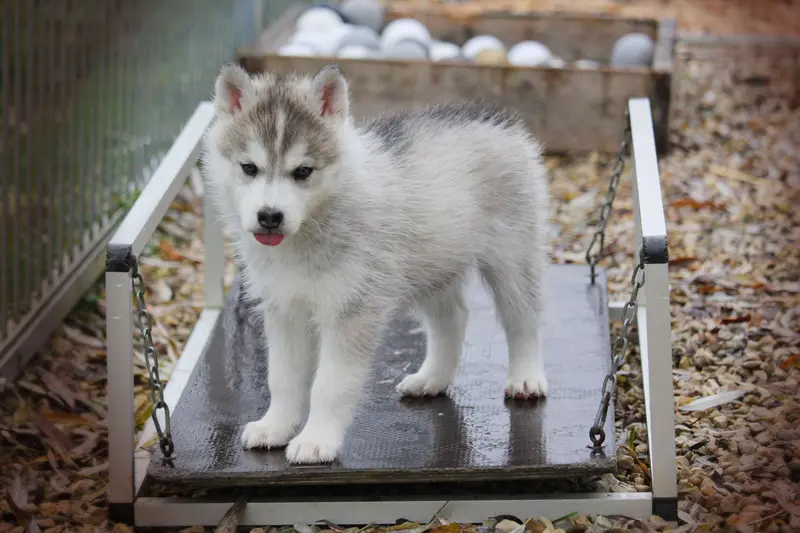
When it comes to breathtaking, fluffy, and primitive dog breeds, two candidates top the wish list for many dog lovers. Do you dream of a companion who brings the magic of the North into your home? Then you are inevitably asking yourself: Siberian Husky vs Samoyed – which of these fascinating dogs is the right fit for me and my lifestyle?
As an experienced dog expert, I can tell you: both breeds are absolute showstoppers, captivating people with their wild, wolf-like appearance and thick coats. But behind their beautiful facade lie two completely different personalities with very specific needs. You don't choose a Nordic dog based solely on looks; you choose an entirely new lifestyle. Let's dive deep into the world of these Nordic beauties to find out which canine is your perfect match.
Siberian Husky vs Samoyed: The Fascinating Northern Lights at a Glance
Before we go into the details, let's take a look at the hard facts. When you make a direct Siberian Husky comparison with a Samoyed comparison, you'll notice several decisive differences—as well as some similarities—even on paper.
| Feature | Siberian Husky | Samoyed |
|---|---|---|
| Origin | Russia | Russia |
| Breed Group | Spitz and Primitive Types | Spitz and Primitive Types |
| Temperament | Loyal, mischievous, outgoing, independent | Adaptable, friendly, gentle, people-oriented |
| Height (Male) | 53–60 cm | 55–59 cm |
| Weight (Male) | 20–27 kg | 25–30 kg |
| Energy Level | 5 / 5 (Extremely high) | 4 / 5 (High) |
| Trainability | 2 / 5 (Stubborn) | 2 / 5 (Stubborn, but playful) |
| Family Friendliness | 3 / 5 | 5 / 5 |
| Child Friendliness | 1 / 5 (Rather boisterous) | 4 / 5 (Very gentle) |
| Urban Suitability | 1 / 5 | 2 / 5 |
| Life Expectancy | 12–15 years | 12–15 years |
Note on data basis: The ratings on a scale of 1 to 5 reflect general breed tendencies and help provide initial guidance.
Character and Temperament: Independent Free Spirit or Smiling Shadow?
The appearance may be similarly "Nordic," but the temperaments of these two breeds are distinct. If you are wondering whether a Siberian Husky or Samoyed is a better fit for you, character is the absolute most important criterion.
The Siberian Husky: A Loyal yet Stubborn Athlete
The personality of the Siberian Husky is fascinating due to its primal nature, but it brings some challenges in training. Huskies aren't dogs that obey blindly just to please you. They are masters at assessing situations for themselves. Their independence can easily be misinterpreted as pure stubbornness, but they are simply dogs who make their own decisions and behave less childishly than, for instance, Retrievers.
A Husky is friendly and open toward almost everyone—making them a terrible choice for a guard dog. They would likely greet a burglar joyfully or even show them where the treats are hidden. However, their hunting, social, and territorial behaviors are pronounced. When a Husky catches a scent, their ears often turn off. You can learn more about this fascinating free spirit in our detailed Siberian Husky breed profile.
The Samoyed: The People-Oriented "Smiley Dog"
In contrast, Samoyeds are extremely people-oriented. They were bred by the Nenets (an indigenous people of Siberia) not only for herding reindeer and pulling sleds, but also to keep humans warm in their tents during freezing nights. This deep bond with humans is still felt today.
The Samoyed is adaptable, friendly, and incredibly gentle. They carry the famous "Samoyed smile"—upturned lips that historically prevented dog saliva from freezing on their faces in sub-zero temperatures. They have such a strong need for companionship that they can quickly wither if excluded from family life. For more detailed insights into this sunny disposition, I recommend the Samoyed breed profile.
Care and Husbandry: What These Nordic Breeds Demand
Anyone who chooses a Nordic dog must be prepared for hair. Everywhere. Both breeds have a double coat with extremely dense undercoat that protects them from Arctic temperatures. However, there are subtle differences in the intensity of care required.
Grooming and Shedding
The Husky (grooming effort 3/5) has a medium-length coat that is largely self-cleaning. Dirt usually falls off as soon as the dog dries. However, once or twice a year, the dreaded molting season occurs, during which the Husky sheds its undercoat in clumps. During this time, your vacuum cleaner will become your best friend.
The Samoyed (grooming effort 4/5) demands a bit more from you. Their long, white to cream-colored coat is more prone to matting. Regular, often daily brushing is mandatory to keep the undercoat airy and healthy. Additionally, every speck of dirt is visible on the white fur, although their coat is also remarkably self-cleaning.
Need for Exercise and Mental Stimulation
No compromises can be made here. The Siberian Husky has an energy level of 5/5. They were bred to pull light loads over immense distances at a brisk pace. A normal walk around the block isn't even a warm-up for them. Sled dog sports (canicross, bikejoring, or sledding) are almost a must to keep this breed happy.
With an energy level of 4/5, the Samoyed is no couch potato either, but they take things a bit more relaxed than the Husky. They love movement, enjoy playing, and are a great partner for long hikes or jogging sessions. However, they also require significant mental stimulation through new tasks or tricks.
Urban Suitability and Space Requirements
Honestly: both breeds are not suitable for a small city apartment. The Husky (urban suitability 1/5) ideally needs a house with a high, escape-proof fenced garden—they are gifted climbers and escape artists. Their tendency to howl (Huskies rarely bark; they communicate like wolves) makes them a nightmare for close-living neighbors.
The Samoyed (urban suitability 2/5) is slightly more adaptable. As long as their physical and mental needs are fully met, they can manage in quieter suburban areas, but they require an owner who spends a lot of time in nature. The Samoyed is also vocal; they tend to bark in joyful excitement.
Health and Life Expectancy of Sled Dogs
Fortunately, both the Siberian Husky and the Samoyed are among the more robust, primitive dog breeds. Both reach a life expectancy of 12 to 15 years, which is excellent for dogs of this impressive size (up to 30 kg for male Samoyeds).
Because they are of primitive type, they are less affected by overbreeding than some other modern breeds. Nevertheless, there are breed-specific health issues you should watch for:
- Siberian Husky: You should pay particular attention to eye diseases (such as cataracts or Progressive Retinal Atrophy - PRA) as well as hip dysplasia (HD). A good breeder will test their breeding stock for these.
- Samoyed: HD and eye diseases also occur in this breed. Additionally, there is a breed-specific kidney disease (Samoyed Hereditary Glomerulopathy) as well as a predisposition to diabetes.
Choosing the right breeder is essential to prevent health problems. Never support backyard breeders; instead, always turn to certified breeders. You can find reputable contacts and information on health standards at the VDH (German Kennel Club) or specifically at the German Club for Nordic Dogs (DCNH).
Costs: What Expenses Should You Expect?
Acquiring a well-socialized and healthy puppy comes at a price. For a Siberian Husky from a reputable breeder, the price range is between 1,200 and 2,500 Euros. A Samoyed is often slightly more expensive, ranging between 1,500 and 2,500 Euros.
However, keep in mind that the purchase price is just the tip of the iceberg. Ongoing costs for these large dogs include:
- High-quality food: Especially for sport-active Huskies, you need energy-dense, high-quality nutrition.
- Equipment: Special pulling harnesses, strong leashes, sturdy brushes (like an undercoat rake), and perhaps even a high-velocity dog dryer for the Samoyed will add up.
- Vet bills and insurance: Good medical and surgical insurance is absolutely advisable for large dogs.
If you are financially and temporally ready for this adventure, you can learn more about responsible breeders here to find Siberian Husky puppies or Samoyed puppies.
Which Dog Fits You? The Big Decision Checklist
Let's come to the core question: which of these wonderful dogs is your ideal companion? The decision should not be made based on pictures, but on your daily life.
For Families with Children
There is a clear winner here: the Samoyed. With their family-friendliness (5/5) and child-friendliness (4/5), they are an incredibly loving companion. They are gentle, patient, and forgive small clumsiness from children. They love being right in the middle of the action.
The Husky, on the other hand, only receives 1/5 points for child-friendliness in general breed ratings. This doesn't mean Huskies are vicious—quite the opposite! They are often boisterous, wild, and have little sense of their own strength. A running Husky can easily knock over a toddler while playing. Furthermore, they are less into "cuddling" and tend to look for peace and quiet when things get too hectic. For older, sturdy children, a Husky can be great; for households with babies and toddlers, the Samoyed is the safer choice.
For Active Singles and Athletic Couples
Are you an endurance athlete? Do you run marathons or cycle ambitiously? Then the Siberian Husky is your dream partner. They will motivate you to go out in wind and weather (especially weather that others call "bad") and rack up the kilometers.
Do you prefer a more moderate pace, enjoy hiking on weekends, and look for a dog that seeks physical contact on the sofa after a long day? Then you are better off with a Samoyed. They will joyfully accompany you on all outdoor activities but also value quiet cuddle moments much more than the independent Husky.
For Dog Beginners
To be honest: both breeds only get 2 out of 5 points for trainability. They are "Spitz and Primitive types," which means the "will to please" (the absolute desire to please humans, like in a German Shepherd) is barely present. They require consistency, patience, and a sense of humor in training.
For absolute beginners, the Samoyed is still slightly easier to handle as they seek a closer bond and have a gentler nature. The Husky, with its enormous urge to move and strong hunting instinct, often requires prior experience, especially when it comes to reading canine body language and long-line training.
Frequently Asked Questions
Can Nordic breeds be kept in warm regions?
Yes, but with limitations. The double coat not only insulates against cold but also to a certain extent against heat. However, it is important: never shave the coat! This destroys natural thermoregulation. In mid-summer, you should shift activities to early morning or late evening and offer the dog cooling spots (like cool tiles or cooling mats).
Who barks or howls more, Husky or Samoyed?
Huskies are known for their wolf-like howling and "talking" (whining, grumbling), but rarely bark. Samoyeds, on the other hand, do enjoy barking—often loudly—especially when they are excited, playing, or feeling left alone. Both breeds can be problematic in rented apartments with thin walls.
Can these dogs run free off-leash?
For a Siberian Husky, off-leash freedom is an absolute challenge and often not safely possible for a lifetime. Their hunting instinct is enormous and their roaming radius is extremely large. If they want to run, they run. While the Samoyed also has a certain hunting instinct, they are much more reliable to recall with good training (recall training) thanks to a stronger bond with their owner and can often run free in safe areas.
Can these dogs be left alone well?
No, both breeds hate being isolated. They are pack animals through and through. A Samoyed suffers in silence or barks their soul out in frustration because they miss their person. A bored Husky, on the other hand, often gets creative and starts redesigning the interior (chewing sofas, scratching doors). If you work full-time and cannot take the dog with you, you should avoid both breeds unless reliable dog care is organized or they are kept in a pack (e.g., in an outdoor enclosure).
Conclusion: No Breed is "Better" – It Depends on Your Life
The decision between a Siberian Husky and a Samoyed is not a question of which breed is objectively better. It is purely about compatibility with your lifestyle. Do you want an untiring sled dog, independent, slightly wild, and extremely enduring? A dog that challenges you and helps you push your athletic limits? Then the Siberian Husky is your companion.
Are you, on the other hand, looking for a gentle family dog closely bonded to you? Someone who is athletically active but equally happy to lie cuddled against you for hours and brighten every rainy day with their smile? Then the Samoyed will capture your heart in an instant.
No matter which of these wonderful Nordic dogs you ultimately decide on: prepare well. Get informed, talk to experienced owners, and visit breeders to experience both breeds live. At HonestDog.com, your trusted platform for dogs and breeders, we are happy to help you further. Discover detailed breed profiles, find reputable breeders near you, and optimally prepare for your life with your new best friend. Take a look and start your Nordic adventure with HonestDog!