Keeshond temperament: Is this breed right for you?
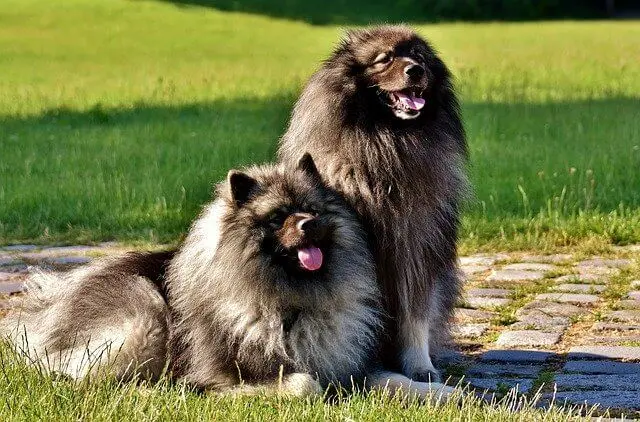
Anyone meeting a Keeshond for the first time is often struck by their imposing appearance. The lush, stand-off coat, the characteristic grey-clouded shading, and the attentive gaze truly recall a wild wolf. However, the first visual impression masks the true inner nature of this dog. Behind the wild facade lies an extremely people-oriented, friendly, and deeply loyal companion. To find out if this intelligent breed fits your life, it is worth taking a closer look at the Keeshond temperament and its breed-specific characteristics.
Spitz breeds were originally used as incorruptible guardians on farms, estates, and even river barges. This historical duty has shaped the behavior of the breed to this day. If you are interested in this breed, you are not bringing a stubborn loner into your home, but a dog that values its human pack above all else and considers itself an indispensable member of the family.
Core personality: The typical Keeshond temperament in daily life
The Keeshond temperament is characterized by a remarkable mix of strong bonding capability and independent vigilance. Toward its family, the dog shows a very soft, cuddly side. It actively seeks the closeness of its people, likes to lie at the feet of its owner, and thoroughly enjoys affection. This is not a dog that wants to live isolated in a kennel or alone in the garden for hours during the day. The Keeshond needs family connection to remain emotionally balanced.
In contrast, the Keeshond shows a natural distance toward strangers. It is neither aggressive nor fearful, but simply reserved. Visits from tradespeople or unknown guests are usually watched closely and often announced with a loud bark. This is where the born guard dog shows its true colors: The Keeshond has a distinct territorial instinct. It reliably reports when someone approaches the property. However, as soon as its owner signals that the visitor is welcome, the Spitz usually thaws out quickly and integrates the guests into its circle of attention.
A significant advantage of its historical legacy is its strong sense of home. A Keeshond is not prone to wandering off. Its job is to stay at the house and watch over it. This usually makes walks very relaxed, as the dog naturally stays close to its handler and maintains a tight radius.
Who is the Keeshond suitable for?
The decision to get a dog should always be based on an honest assessment of your own life circumstances. The Keeshond is a very adaptable dog, but it does come with certain basic needs.
Families with children
For families, the Keeshond is often an excellent choice. It is considered very sturdy and has a high tolerance threshold. With children in the household, it is usually playful and patient. However, it is important that children learn to respect the dog's retreat areas. If these quiet zones are respected, the Keeshond develops into a loyal protector and playmate for the youngest family members.
First-time dog owners
Thanks to its strong people-orientation and its "will to please," the Keeshond is certainly suitable for committed beginners. It is happy to take direction as long as the leadership provided is confident, calm, and fair. First-time owners should, however, seek support at a dog training school from the start to channel the guarding instinct, ensuring the dog does not learn to make independent decisions at the front door.
Singles and seniors
The breed is also a great companion for singles or active seniors. Since the Keeshond often focuses very strongly on a single person or a small group, a particularly intense bond is formed here. The prerequisite is that the dog is physically and mentally exercised enough. To learn more about the physical traits and origin, we recommend taking a look at the comprehensive Keeshond breed profile.
Coexistence: Living situation and other animals
The ideal living situation for a Keeshond is a house with a fenced garden where it can pursue its passion—observing and guarding. It likes to lie at elevated strategic points to keep an eye on its territory.
Living in a city apartment is possible in principle, but requires very good management. Since the Spitz tends to comment on noises in the hallway or outside the window, consistent training from puppyhood is necessary to avoid problems with neighbors. Life in the big city with its many stimuli can be exhausting for such a vigilant dog; quieter residential areas on the outskirts of the city or in the countryside suit its nature better.
As far as living with other pets is concerned, the Keeshond is usually uncomplicated. If it is accustomed to cats, small animals, or other dogs early on, it also considers them part of its pack that must be protected. With strange dogs on walks, the individual temperament often decides; generally, the breed is considered socially compatible, provided the socialization phase with the breeder went well.
Exercise needs and species-appropriate activities
The Keeshond is a medium-to-large dog, with males reaching a shoulder height of up to 55 centimeters and a weight of up to 26 kilograms. Its energy level is correspondingly high. This robust dog will not be satisfied with short laps around the block. Daily extended walks totaling about two hours are the minimum to keep it physically fulfilled.
But even more important than mere physical exercise is mental stimulation. The Keeshond temperament is lively, open-minded, and extremely intelligent. If this dog gets bored, it will find its own tasks—and these usually consist of excessive guarding or barking.
To keep the dog appropriately occupied, various forms of activity are suitable:
- Nose work and search games: Mantrailing or searching for hidden objects in the forest challenge concentration and tire the dog cognitively to a great extent.
- Trick training: The Keeshond learns quickly and loves to work. Practicing small tricks together strengthens the bond and is great fun for the dog.
- Rally Obedience: This dog sport combines obedience with fun and precision, which suits the attentive mind of the Spitz very well.
- Agility: While the Keeshond is not the fastest competitive dog, it masters hurdles and tunnels with great enthusiasm simply for the joy of movement.
Typical daily challenges
Anyone reading through owner reports will find that Keeshond experiences often highlight two major everyday challenges: coat care and communication via barking.
The dense coat with its massive undercoat requires discipline from the owner. Especially in spring and autumn, during the shedding season, the Keeshond loses large amounts of hair. During this time, daily thorough brushing is essential to prevent matting and keep the skin healthy. Outside of the shedding season, brushing the dog thoroughly once or twice a week is usually sufficient. Dirt falls out of the rather harsh topcoat almost by itself once it has dried. Serious information on breed-specific health and care standards can also be found at the Verein für Deutsche Spitze e.V., which oversees the development of the breed in Germany.
The second challenge is the barking behavior. A Keeshond is not a "yapper" in the sense of a nervous, uncontrolled dog. It barks with purpose and function. It is up to the owner to teach the dog when its job is done. When the doorbell rings, the Spitz may sound a quick alert. However, as soon as the owner takes over the situation, the dog must learn to retreat quietly. If this does not happen, the guarding can quickly become a trial of nerves.
Education and training: What matters
The Keeshond definitely has a mind of its own. Blind obedience is foreign to it; it wants to understand the purpose behind a task. In training, this breed reacts extremely sensitively to injustice, harshness, or shouting. Anyone trying to train a Spitz with pressure will hit a wall of stubbornness. In such moments, the dog will simply tune out and refuse to cooperate.
Successful training for the Keeshond is based on consistency, positive reinforcement, and mutual respect. If you act as a confident leader whom the dog can trust, it will willingly follow you. Praise, toys, and high-quality treats are excellent motivators.
A special focus in training should be placed on staying alone. Since the breed is so strongly attached to its humans, separation anxiety can occur if training is neglected. Staying alone must be practiced in tiny steps starting in puppyhood so that the dog learns its humans will always return reliably.
Additional standards and breed-specific traits are defined by the VDH, whose guidelines are followed by responsible breeders.
Frequently Asked Questions (FAQ)
Does the Keeshond have a strong hunting instinct?
No, that is one of the greatest assets of this breed. Unlike many other dogs, the Spitz was never bred for hunting. Its territory was the family farm. A well-socialized Keeshond generally shows little to no interest in game, which makes forest walks very relaxed and often allows for off-leash exercise.
Is the Keeshond a yapper?
It is not a yapper by nature, but it is vocal. It reports unusual occurrences reliably by barking. Through early and consistent training, this behavior can be regulated very well. The dog must learn that a short "woof" is sufficient and that the human takes over control of the situation from there.
How high-maintenance is the coat really?
Despite its impressive volume, the coat is easier to care for than it looks. The topcoat is dirt-repellent. Thorough brushing once or twice a week is usually sufficient outside of the shedding season. You should only bathe a Keeshond in an absolute emergency to avoid destroying the natural protective layer of the skin and coat.
Can a Keeshond stay alone well?
Because the Keeshond is very attached to its family, isolation for hours is torture for it. It can learn to stay alone for reasonable periods (about four to five hours) provided this was trained in small steps during puppyhood and the dog was exercised sufficiently beforehand. A full-time job away from home without the option to take the dog along, however, does not fit the nature of the Spitz.
Your path to your own Keeshond
The Keeshond is a dog with a big heart, an alert mind, and a deep connection to its humans. Anyone who appreciates the protective nature and the original character of this breed will find an incorruptible friend for the next 12 to 14 years. Initial stubbornness quickly gives way to a close partnership if you are willing to invest time, patience, and positive energy into training.
If you are sure that this loyal and lively companion fits your life, the next step is finding a responsible breeder. Good rearing and early socialization are decisive for the future character development of your dog. On HonestDog, you will find carefully vetted breeders who raise their puppies with love and expertise. Inform yourself now, get to know trustworthy breeders, and see where you can find healthy Keeshond puppies.