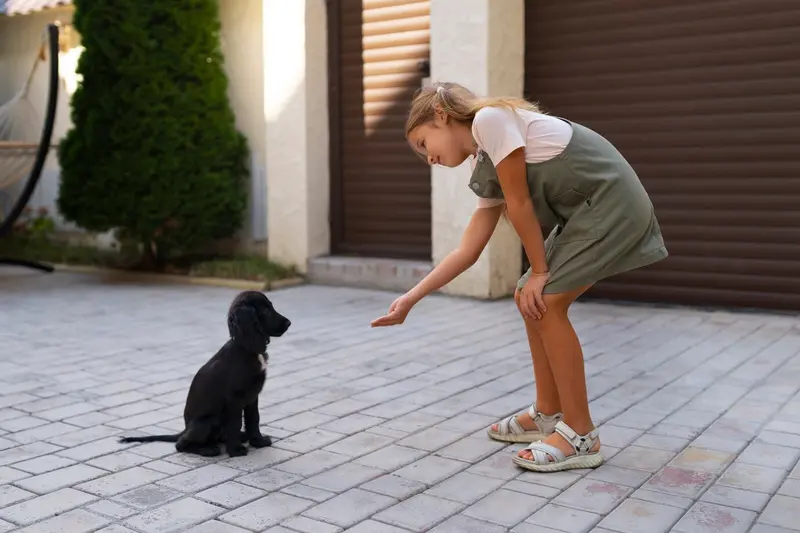
The decision to bring a puppy into your home is an exciting and rewarding challenge. But before a puppy moves in, you should be well prepared so that your new animal companion feels comfortable right from the start. In this article, you'll learn how to prepare your home, what initial supplies you'll need, what's important in the first few hours and days, how to manage visitors in the early days, and what to pay attention to with your puppy during the first month. A puppy is moving in! Now things are getting colorful!
Preparing your home
Before a puppy moves in, it's important to puppy-proof your home. Puppies are curious and explore their surroundings with great enthusiasm – often with their mouths.
Eliminate Hazards
Cables, small objects, poisonous plants, medicines, and cleaning products should be kept out of the puppy's reach. Secure cables with cable ducts and store cleaning products in locked cupboards. Also check that your garden is safe if your puppy is allowed outside.
Create a Retreat
A comfortable place for your puppy to retreat to is important. Set up a bed or blanket for him in a quiet area where he can sleep undisturbed. This space should always be accessible so your puppy feels safe and secure.
Initial Equipment for Puppies
To ensure your puppy feels comfortable right from the start, you should get the necessary initial equipment before it moves in.
Dog Bed
A comfortable dog bed is important. Some dogs prefer harder beds, others softer ones. You'll find this out over time. The initial equipment should be large enough for your puppy to stretch out in, even as it grows.
Food and Water Bowls
A sturdy food and water bowl is part of the basic equipment. Stainless steel or ceramic bowls are best because they are easy to clean and non-slip.
Puppy-Friendly Food
Get high-quality puppy food that is tailored to the specific needs of young dogs. It should be rich in nutrients to support your puppy's growth and health.
Leash, Collar, and Harness
Choose an adjustable leash and a matching collar or harness for your puppy. Make sure the collar or harness fits well and allows your puppy enough freedom of movement without chafing or being too loose. It's best to buy a harness with your puppy to find one that fits properly. Remember that your puppy will grow and you will need to repeat this purchase several times in the beginning.
Toys
Puppies need activities and chew toys to relieve their energy and ease teething. Make sure the toy is sturdy (not too soft and not too hard) and doesn't contain small parts that can be swallowed.
Carrier
A carrier is useful for safely transporting your puppy, for example, to the vet. It should be stable and offer enough space for your puppy to lie comfortably.
Grooming Products
Depending on the type of dog, you will need different grooming products. If your dog needs a lot of brushing later on, you can buy a brush and get your puppy used to you gently and briefly stroking it with the brush in quiet moments.
The first hours and days at home: Getting to know each other and settling in
The first hours and days are an exciting time for you and your puppy to get to know each other. Your puppy has just lost the entire world he knows and needs to re-orient himself. It's important to give your puppy time to settle in calmly.
Arriving Home
When a puppy moves in, your home should be as quiet as possible. Avoid loud noises and lots of people so your puppy doesn't feel overwhelmed. Let him explore his new surroundings at his own pace.
First Meal and Rest Times
Don't give your puppy a small meal right after his arrival, but feed him a little later. Make sure he has plenty of water right from the start. If he gets tired, respect his rest times and avoid over-pressing him during this time.
Getting to Know His Sleeping Place
Lead your puppy to his sleeping place and let him explore it. It's important that he sees this place as a safe retreat. At first, it can help to put a used blanket from the breeder with the scent of his mother and siblings in his bed.
Visits in the First Week
In the first few days after your puppy arrives, you should make sure to regulate the flow of visitors. Too many new impressions can overwhelm the puppy.
Introducing Family and Friends
When you receive visitors, ensure that the encounter is calm and relaxed. Give your puppy the opportunity to approach people on its own and do not force contact. It is especially important that children learn to treat the puppy respectfully.
Introducing Other Animals
If you already have other pets, the introduction should take place slowly and under supervision. Give all animals time to get used to each other and ensure each animal has its own place to retreat to.
The First Month with Your Puppy
The first month is crucial for how well your puppy settles into its new home. During this time, you lay the foundation for your life together.
House Training
Begin house training immediately. Take your puppy outside regularly, especially after sleeping, eating, or playing. Reward it every time it does its business outside.
Socialization
Socialization is an important part of your puppy's development. It should have as many positive experiences as possible with different people, animals, and environments during the first few weeks. This will help him to be confident and calm later on.
Upbringing instead of training
Now is not the time for upbringing, not training. This means that you should teach your puppy what he is allowed to do and what he is not allowed to do (not jumping up, not biting furniture, etc.).
Pro tip: Older dogs have a hard time learning to tolerate frustration and boredom, whereas they can still learn commands very well later on. Furthermore, a dog that is willing to work and is allowed to learn very early on that life consists of training and activity will demand this more vehemently later on. A puppy has a lot to learn and process (getting to know its surroundings, stimuli, what I am allowed to do, what I am not allowed to do, etc.), so it can simply be too much to start with commands now. This means that even if it's difficult and you unfortunately read differently in many places, now is not the time for commands like "sit," "down," and "come." Especially if the puppy is acting up (usually in the evening), it's a sign that you've done too much rather than too little.
Vet Visit and Vaccinations
A visit to the vet is essential in the first few weeks. The vet will examine your puppy, administer the necessary vaccinations, and give you tips on care. This is also a good opportunity to get your puppy used to car rides and vet visits.
Conclusion
When a puppy arrives, an exciting and sometimes challenging time begins. With the right preparation, well-thought-out initial equipment, and plenty of patience, you can ensure that your new friend settles in quickly and feels safe with you. The first weeks and months lay the foundation for a long and happy time together.