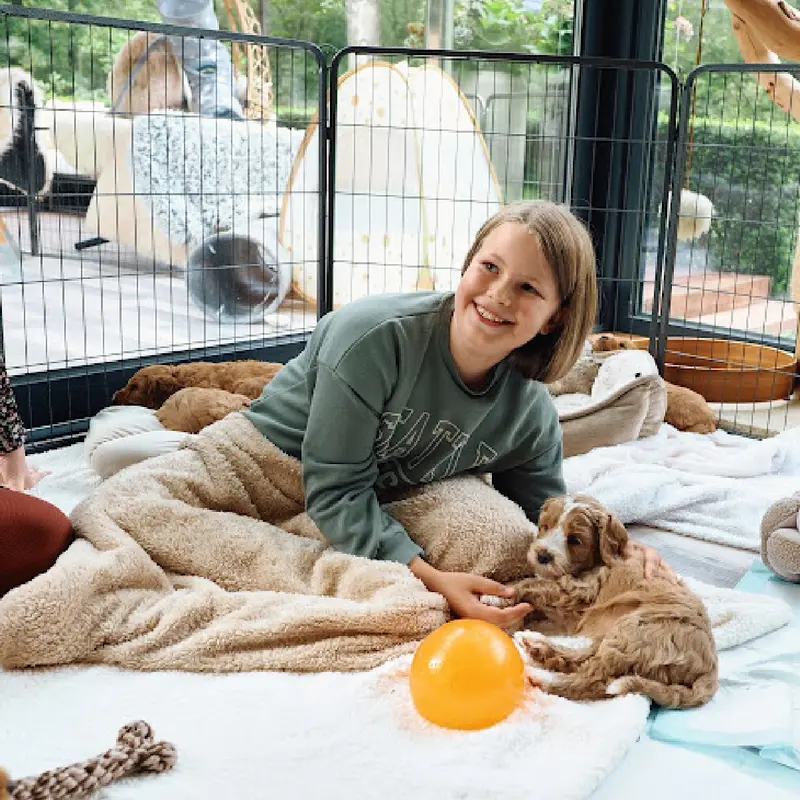
The dream of the perfect family dog is one shared by many. They should be gentle, intelligent, playful, and ideally, shed very little. It is no wonder that the Australian Labradoodle has become one of the most popular companion dogs in recent years. But while demand at breeders is booming, there is another side to the story: more and more of these wonderful dogs are losing their homes. If you are thinking about giving a four-legged friend a second chance, this guide is written just for you. Deciding to adopt an Australian Labradoodle is a significant commitment — and we are here to explain what you need to look out for so that you can become an unbeatable team.
Welcoming a rescue dog is much more than just a good deed; it is the beginning of a deep, often unique friendship. However, it also requires knowledge, patience, and a willingness to work on yourself. Before we dive into the practical side, you can get a detailed overview of the basic characteristics of this charming curly-haired breed in our comprehensive Australian Labradoodle breed profile.
Why adopting an Australian Labradoodle is a heartfelt decision
Adopting an Australian Labradoodle means giving a new life to a highly intelligent and extremely empathetic dog. These dogs were originally conceived in Australia as allergy-friendly service dogs for the blind. They possess an incredible focus on humans. With a life expectancy of 12 to 15 years, you are entering into a long-term bond. A rescue dog often comes with a history, but these dogs in particular often show a deep, incomparable gratitude once they finally feel they have arrived home.
Why do Australian Labradoodles end up in shelters?
Many people are shocked to hear that pedigree dogs or popular hybrids like the Australian Labradoodle end up in shelters or rescue centers. However, the reasons are often breed-specific and reflect that owners did not inform themselves sufficiently beforehand.
- Underestimated grooming needs: A common myth suggests these dogs are virtually maintenance-free because they hardly shed (Shedding: 2 out of 5). The reality is different. The wavy to curly coat with undercoat is extremely prone to matting. The overall grooming effort is a 3 out of 5, which means: thorough brushing down to the skin several times a week and regular visits to a professional groomer are mandatory. If owners cannot keep up, the dog often has to be completely shaved — or is surrendered due to overwhelm.
- Misaligned energy expectations: An Australian Labradoodle is not just a couch potato. With an energy level of 3 out of 5 and high intelligence, they demand engagement. They love nose work, agility, or fetching. A purely physical walk is often not enough to satisfy them cognitively. Under-stimulated Doodles quickly develop behavioral issues, find their own "tasks" around the house, and eventually end up in rescue because the owners are overwhelmed.
- Separation anxiety and daily stress: Because the Australian Labradoodle is so extremely human-oriented and empathetic, they suffer quickly if isolated for too long. While they can certainly learn to stay alone, an abrupt start to a full-time office routine for the owners often leads to frustration on both sides.
- Changing life circumstances: Breakups, financial difficulties, illness, or moving house are classic reasons why a dog may lose its home through no fault of its own.
What to expect when adopting a rescue Doodle
When you take in an Australian Labradoodle from a shelter or foster home, you rarely get a blank slate. But that is exactly what makes it so rewarding. These dogs already have a developed character; they have likes and dislikes. Often, they are already house-trained and know basic commands.
Due to their high level of empathy, however, they strongly reflect the emotions of their humans. A Doodle that experienced a lot of chaos and stress in its old home may initially be nervous and jumpy. It must first learn that it is allowed to rest and relax with you. It might also show resource guarding or react uncertainly to other dogs, even though the breed generally shows high compatibility with other dogs (4 out of 5).
Be prepared that your new companion may not be the "perfect show dog" you see on social media in the first few weeks. They need time to show their true colors. Patience, loving but consistent leadership, and plenty of understanding for their situation are your most important tools right now.
Cost comparison: Shelter vs. Breeder – How much is an Australian Labradoodle?
An honest look at finances is essential before any acquisition. The cost structure for adoption differs fundamentally from buying from a breeder.
At a breeder, the price range for an Australian Labradoodle today is usually between 2,000 and 3,500 Euros. Here, you are paying for careful rearing, health evaluations of the parents (as strictly prescribed by associations like the Australian Labradoodle Association Europe (ALAEU)), and socialization in the first weeks of life.
If you decide on a rescue animal, an adoption fee is usually required. This generally ranges between 350 and 500 Euros. But beware: adoption is not a "bargain." The fee only covers part of the costs the shelter incurred for vaccinations, neutering, microchipping, food, and veterinary care.
Additionally, you should set aside reserves for the start. A rescue dog should be presented to your own veterinarian promptly. The Bundestierärztekammer (Federal Chamber of Veterinarians) generally recommends an initial check-up after adoption to professionally evaluate the health status and identify potential hidden issues (such as dental problems or undetected allergies) early on.
The first few weeks: Successfully settling in your new companion
The day has come: your new Australian Labradoodle is moving in. One golden rule applies here: less is absolutely more in the first few days. Your dog has just lost its entire familiar environment. The so-called 3-3-3 Rule is a wonderful guideline for rescue dogs:
- The first 3 days: Your dog is in survival mode. They are stressed, perhaps anxious, might not eat well, and will either sleep a lot or not settle at all. Do not demand anything from them. Provide a safe retreat and only go for short potty breaks. Do not invite friends over to "meet the dog" yet.
- After 3 weeks: The dog has realized they are allowed to stay. They start to recognize routines. Now their true character begins to emerge — and sometimes some problematic behaviors as well. Structured training can now begin.
- After 3 months: Your dog has truly arrived. They feel at home, have built trust, and have developed a deep bond with you.
Building up coat care slowly
Since coat care is essential for a Labradoodle, but many rescue dogs have had bad experiences with brushing (pain from matting), you must approach this training gently. Start in relaxed moments. Let them sniff the brush, reward the mere touch of the brush, and increase in tiny steps until combing the undercoat is stress-free again.
Australian Labradoodle Rescue and International Welfare
In addition to local shelters, there are specialized organizations for Australian Labradoodle Rescue and rescue groups that focus on fluffy dogs from abroad. Often, these dogs come from high-kill shelters or unscrupulous breeders in Eastern or Southern Europe.
A particularly close look is important here. In international rescue, many mixed breeds with curly coats are simply declared as "Doodles" or "Water Dog Mixes" to increase their chances of being rehomed. You should be prepared for the fact that it is not always 100% clear if there is actually a Labradoodle in the dog. The shoulder height (normally 43–52 cm for males) and weight (13–30 kg) can vary greatly in mixed breeds from abroad.
Furthermore, for an Australian Labradoodle rescue from the Mediterranean or Eastern Europe, travel-related diseases play a major role. Leishmaniasis, ehrlichiosis, or babesiosis are serious illnesses. Reputable rescue organizations test dogs for these before they travel. Detailed and scientifically sound information on this topic can be found at expert organizations like ESCCAP, which provides comprehensive information on parasites and travel diseases in dogs.
Is a rescue Australian Labradoodle right for you?
To answer this question, you must look deep inside and honestly consider your own lifestyle. The Australian Labradoodle is rated 5 out of 5 for being extremely family-friendly and 4 out of 5 for being very child-friendly. They are suitable for city life (4 out of 5), as long as they find balance in nature.
An adoption is ideal for you if:
- You have enough time and the dog does not immediately have to stay alone for 8 hours a day.
- You enjoy active engagement (nose work, walks, agility).
- You are willing to invest time and money in demanding coat care.
- You have patience and give the dog the time they need to process past traumas.
- You have a certain amount of dog experience or are willing to work closely with a positive reinforcement trainer.
Reconsider adoption if:
- You are looking for a dog that "just tags along" and requires no work.
- You think a Doodle will automatically be perfect and self-training due to its genes.
- Your home is extremely loud, hectic, and unstructured (this stresses these empathetic dogs enormously).
- You are interested in the breed solely because they are supposedly "hypoallergenic" (no dog is 100% allergy-free; testing beforehand is mandatory!).
Frequently Asked Questions (FAQ)
Are Australian Labradoodles from shelters really suitable for allergy sufferers?
This cannot be generalized. Although they tend to shed less and lose less dander, every allergy sufferer reacts individually to the saliva and urine of a specific dog. Especially with rescue dogs, whose exact genetic heritage is often unclear, you should definitely spend time with the animal multiple times before adoption and seek medical advice if necessary to rule out an allergic reaction.
Can an older rescue Doodle still learn to stay home alone?
Yes, absolutely. Dogs learn throughout their lives. However, rescue dogs often have separation anxiety. Training must be built up in micro-steps (often just seconds at the beginning) and in an extremely positive way. It requires consistency and patience, but the Australian Labradoodle's high intelligence will work in your favor here.
How do I find reputable Australian Labradoodle rescue organizations?
Look for organizations that work transparently, conduct home checks, test for Mediterranean diseases (for international dogs), and provide you with advice and support even after the adoption. Reputable shelters will never pressure you into a quick decision and will not hide the dog's "quirks."
How do I properly care for the coat of a neglected rescue Doodle?
If you take in a severely matted dog, a visit to a professional dog groomer is essential. Often, a gentle full shave is the only way to free the dog from pain and skin inflammation. Once the coat grows back, you can gradually get them used to "line brushing" (brushing section by section from the root to the tip).
Find your dream dog on HonestDog
The decision to give a rescue dog a new, loving home shows great character. If you are aware of the responsibility, do not shy away from the grooming effort, and look forward to the adventure of dog training, this loyal, intelligent, and human-oriented companion will enrich your life for the rest of its days.
Are you ready for the next step? We at HonestDog want to accompany you on this journey. Our platform stands for transparency, animal welfare, and reliability. We connect you with verified shelters and reputable rescue organizations so you can find exactly the dog that fits your life. Discover wonderful dogs waiting for their second chance now, and learn how you can find an Australian Labradoodle in a shelter. Your new family member might already be waiting for you!