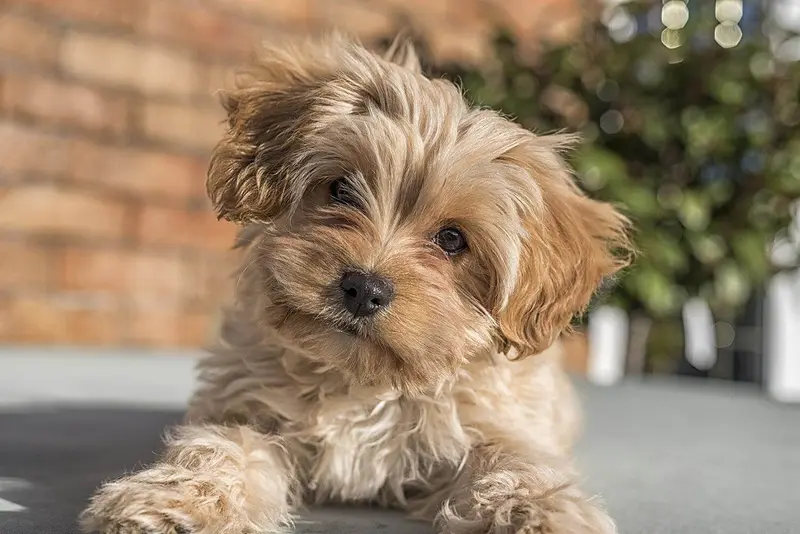
Are you dreaming of a loyal four-legged companion who will enrich your daily life with their fluffy appearance and a heart of gold? Deciding to get a dog is a life-changing event. If you are thinking about adopting a Cavapoochon, you are making a wonderful but also significant decision. These charming crossbreeds — a mix of Cavalier King Charles Spaniel, Toy Poodle, and Bichon Frisé — are considered absolute dream dogs. However, instead of spending a lot of money at a breeder, more and more animal lovers are consciously choosing to rescue.
In this comprehensive guide, you will learn from practical experience why these enchanting designer dogs lose their homes in the first place, what you need to look out for during adoption, and how to give your new best friend the perfect start to their new life.
Adopting a Cavapoochon: Why these dream dogs lose their homes
The Cavapoochon is a real trendsetter among dogs. Its look, which resembles an eternal puppy ("Forever Puppy"), and its reputation as an uncomplicated companion make many people's hearts beat faster. But this is often exactly where the problem lies. Many families underestimate what it means to keep a dog — even if it is advertised as being "easy."
The reasons why these dogs end up in shelters or foster homes are varied and rarely have anything to do with the dog itself:
- Underestimated grooming needs: With a grooming requirement of 3 out of 5 points, the curly, medium-length coat with undercoat requires regular attention. Many owners are surprised by how quickly the fur becomes matted. A professional dog groomer is often essential and costs both time and money.
- Lack of training: Even though the Cavapoochon has very high family and child friendliness (5/5), it doesn't train itself. A misguided, untrained young dog can quickly overwhelm its owners.
- Separation anxiety: This breed builds an extremely deep bond with its humans. If they are left alone too early or for too long, they can develop severe separation anxiety.
- Changed life circumstances: Divorces, financial bottlenecks, sudden illness, or moving to an apartment where pets are not allowed are classic reasons for surrender.
- Overwhelmed owners: These dogs are victims of their own popularity. People fall in love with the shiny eyes on Instagram but often forget that there is an intelligent living being behind them that requires attention, guidance, and love for 12 to 15 years.
A heart of gold with a past: What to expect at a Cavapoochon rescue
When you visit a Cavapoochon shelter or a regional foster home, you will meet dogs who bring their own unique history with them. The Cavapoochon is fundamentally a happy, adaptable dog. Whether in a family with children or with single individuals — it fits in wonderfully and impresses with its high suitability for city life (5/5).
Nevertheless, you must not forget that being surrendered is always a trauma for the dog. Behavioral patterns may emerge in a rescue dog that require time and patience:
- Uncertainty towards strangers: Although the breed is generally open-minded, bad experiences can lead to initial skepticism.
- Resource guarding: Dogs that had to compete for food or attention in a shelter might initially defend their "prey."
- Housebreaking: Stress or a long time spent in a kennel can cause a dog to temporarily forget the concept of housebreaking or perhaps they never learned it properly.
Despite these potential hurdles, the energy level of the Cavapoochon is moderate (3/5). It is playful but doesn't need hours of marathon runs. Daily, loving mental and physical stimulation is quite enough to keep them satisfied. If you want to find out more about breed-specific characteristics, such as size (males approx. 33–38 cm) and weight (9–12 kg), I recommend taking a look at our detailed Cavapoochon breed profile.
Adoption costs vs. buying from a breeder: An honest comparison
The purchase price for a puppy from a breeder is enormously high for a Cavapoochon. You can expect a price range of 1,500 to 3,000 Euros. This sum deters many interested parties — or ironically leads to the dog being viewed as a kind of status symbol.
In contrast, adoption from a rescue is significantly more moderate financially, but by no means "cheap." Reputable animal welfare organizations charge what is known as an adoption fee. In Germany, this is usually between 350 and 500 Euros.
Why is there an adoption fee?
It should not be understood as a "purchase price." Rather, it covers part of the immense costs incurred by the organization:
- Initial veterinary examination and treatments.
- Vaccinations, deworming, and parasite protection.
- Microchipping and issuing an EU pet passport.
- Neutering (depending on the age and health of the dog).
- Accommodation and food costs in the shelter or foster home.
Furthermore, the fee serves to protect the animal. It prevents impulse buys and ensures that the new owner is willing to provide for the animal financially. Important: Remember to register your adopted dog immediately in a pet register. Information on this is provided, for example, by TASSO e.V., the largest free pet register in Europe, which returns thousands of lost animals home every year.
The first few weeks: How to settle in after a Cavapoochon rescue
The day your dog moves in from a Cavapoochon rescue is exciting. But for the dog, it is primarily one thing: pure stress. Their entire world is upside down. To make the transition as smooth as possible, the 3-3-3 rule has proven effective in cynology and animal welfare.
The first 3 days: Decompression
In the first few days, your dog is in shock. They might eat poorly, hide under the sofa, or seem completely hyperactive. Your job: Let them arrive in peace. Don't demand anything from them. Provide a safe retreat, only pet them if they seek contact themselves, and limit walks to short potty breaks right outside the door. Do not invite visitors during this time!
The first 3 weeks: Learning routine
After a few weeks, the Cavapoochon begins to get used to the new sounds and smells. They learn your daily routine. When is food served? When do we go out? Routine is extremely important now. Feed and walk at similar times if possible. During this phase, the first behavioral issues may show up as the dog becomes bolder. Respond with gentle but consistent guidance.
After 3 months: Feeling at home
Now your four-legged friend has understood: "I am safe here; I am staying here." The Cavapoochon's true personality will blossom. You will feel their playfulness and unconditional love. This is the perfect time to start more intensive training (like recall or trick dogging).
Safety tip: For rescue dogs, be sure to use an escape-proof safety harness in the first few weeks and use double-leashing (one leash on the harness, one on the collar). Too many newly adopted dogs break free in moments of panic.
Special considerations for Cavapoochon rescue from abroad
It is not uncommon for the search for a companion to lead you to Cavapoochon rescues abroad. Especially in Eastern Europe, illegal puppy mills are booming, producing designer dogs under catastrophic conditions. If the dogs are not sold there or serve their time as "breeding machines," they end up on the street or in kill shelters.
Adopting such a dog is active animal welfare, but it brings special challenges:
- Mediterranean diseases: If the dog comes from Southern or Southeastern Europe, it must be tested for diseases such as Leishmaniasis, Ehrlichiosis, Babesiosis, and Dirofilariasis (heartworm). Reputable organizations will provide you with the laboratory results.
- Lack of socialization: A street dog or a dog from a puppy mill has often never seen the inside of a house. Vacuum cleaners, televisions, smooth floors, or stairs are completely foreign to them and can trigger panic reactions.
- Traumatization: A dog that has been mistreated requires an extreme amount of empathy. However, pity alone does not help; they need confident leadership and security.
When adopting through foreign organizations, look for seriousness. The association should be certified according to § 11 of the Animal Welfare Act and should remain available as a contact partner after the adoption. Helpful checklists for identifying reputable animal welfare organizations are provided by the Veterinary Association for Animal Welfare (TVT).
When is adoption the right choice – and when is it not?
As honorable as it is to give a rescue dog a home, you must be honest with yourself. Adoption does not fit every lifestyle.
Adoption is ideal for you if...
...you have patience and do not expect to get a "fully functioning" dog. If you are willing to work with a professional dog trainer and accept setbacks. Especially for people who want to skip the puppy stage (with nighttime wake-ups and chewed furniture), an adult Cavapoochon from a shelter is a real blessing. You already know their final size and their established character.
A puppy from a breeder might be better if...
...you are a total beginner with dogs and have small, very energetic children. Although the Cavapoochon has a child friendliness score of 5/5, this applies to the breed in general, not necessarily to a traumatized rescue dog. Also, if you have specific goals for the dog's athletic career (e.g., competitive agility), a dog without a health or psychological history is often the safer choice. Tips for buying a puppy responsibly and what to look out for with purebred dogs can be found at the Verband für das Deutsche Hundewesen (VDH).
Frequently Asked Questions (FAQ)
Are Cavapoochons from a shelter suitable for beginners?
Basically yes, because the breed brings many positive, adaptable qualities. However, it depends heavily on the individual dog's history. A well-socialized surrendered dog, whose owners acted only due to lack of time, is a great beginner dog. A traumatized street dog, on the other hand, often requires previous dog experience.
What is the life expectancy of a rescued Cavapoochon?
The genetic life expectancy of these dogs is an impressive 12 to 15 years. Even a rescue dog can reach this age without problems, provided they have been vet-checked, receive high-quality food, and are kept in a loving but species-appropriate manner. Possible pre-existing conditions from poor husbandry should be clarified by a veterinarian.
Does a Cavapoochon really not shed? How do I groom it?
The Cavapoochon has a shedding value of 2/5, meaning it loses very little hair in the house. But: The curly fur with undercoat does not fall out; it gets caught in the coat and mats extremely quickly. The grooming effort (3/5) is high. You must brush them several times a week and have them clipped every few months. Rescue dogs often arrive in poor condition and must first learn to accept the brush.
Do adopted Cavapoochons get along with other dogs?
The breed has a compatibility score with other dogs of 4/5. They are generally sociable and peaceful. However, rescue dogs may exhibit resource guarding (food aggression) or leash reactivity if they learned in their past that other dogs represent a threat. A confident resident dog can often be extremely helpful during the settling-in period.
Your path to a new best friend with HonestDog
The decision to take in a Cavapoochon from a rescue is the start of a wonderful journey. Yes, it requires work, empathy, and perseverance. But the look from grateful dog eyes and the trust that this small, fluffy companion gradually gives you cannot be matched by any amount of money. From my own experience, I can say: a rescued dog knows exactly that you have changed their life for the better — and they will thank you for it every day.
Are you ready for the adventure of a rescue dog and looking for a trustworthy platform that won't leave you alone? At HonestDog, we place the highest value on transparency, seriousness, and education so that dog and human really match. We carefully check animal welfare organizations and listings to give you the security you need for this important decision.
Take the first step now and discover your potential soulmate: Find a Cavapoochon in a shelter. Your new family member might already be waiting for you!