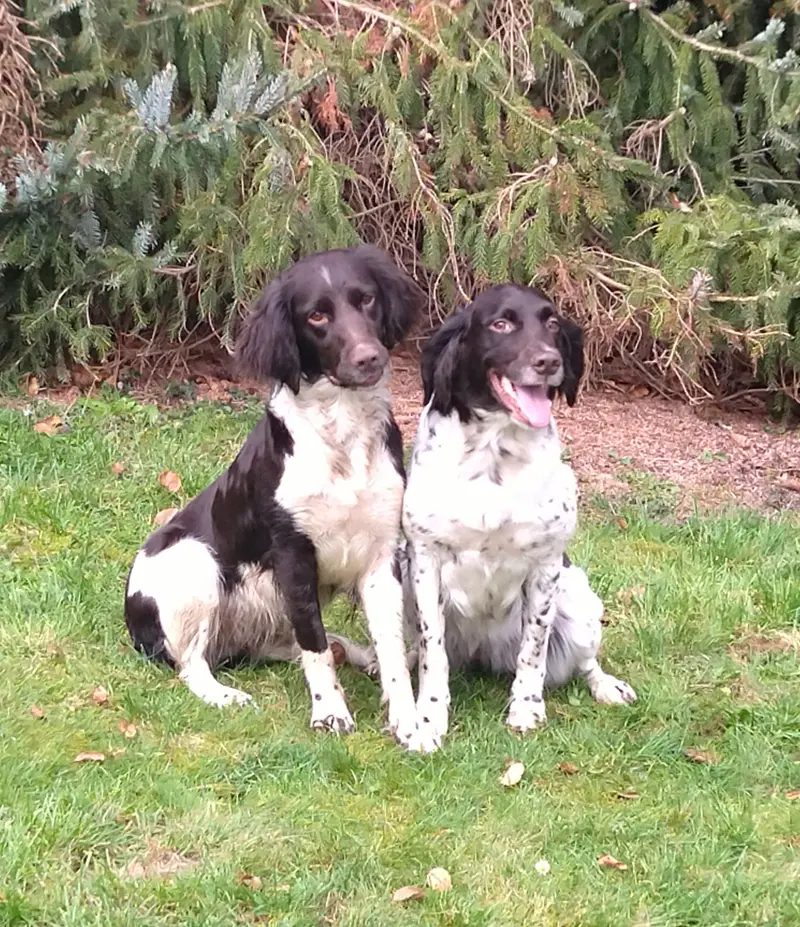
There is hardly a sight that warms a dog lover's heart as much as the attentive, gentle face of a Small Munsterlander. If you are thinking about a Small Munsterlander adoption, you are at the beginning of a wonderful, emotional, and often challenging journey. These dogs, which impress with their medium-length, dense coat and loyal eyes, are far more than just pretty companions. They are intelligent, committed, and highly cooperative working animals.
As an experienced animal welfare advocate and dog expert, I want to accompany you on this path. Taking in a dog from a rescue requires courage, empathy, and a good deal of knowledge about the breed's specific needs. In this guide, you will learn the unfiltered truth about what it means to give a second-hand pointing dog a new home, the hurdles you may face, and why adopting a rescue dog will be one of the most rewarding experiences of your life.
If you would like to find out more about the physical and breed characteristics first, I recommend taking a look at our detailed Small Munsterlander breed profile. There you will find all the basic data, such as the life expectancy of 12 to 14 years or the ideal shoulder height of about 54 centimeters with a weight of 20 to 28 kilograms.
Why do so many Small Munsterlanders end up in shelters?
The idea that pedigree dogs are rarely found in animal welfare is a common misconception. Time and again, beautiful representatives of this breed wait for a second chance in a Small Munsterlander shelter or at specialized foster homes. But how does it happen that these animals, considered extremely family-friendly (5/5 points) and child-friendly (5/5 points), lose their homes?
The reasons for this are usually breed-typical and are based on a fatal miscalculation by the previous owners:
- Underrated hunting instinct and energy requirements: The Small Munsterlander is historically and genetically a passionate hunting dog. With an energy level of 4 out of 5 points, it requires daily physical and, above all, mental stimulation. A simple walk around the block is not enough. If this prey drive is not channeled into organized activities (such as dummy training or scent work), the dog will find its own occupation – often to the chagrin of the owners.
- Lack of consistency: Due to their high intelligence (trainability: 5/5), these dogs learn incredibly fast. Unfortunately, they also learn bad habits just as quickly if human leadership is lacking. Overwhelming the owners is one of the main reasons for surrender.
- Changed life circumstances: Separation, illness, financial hardship, or moving to an apartment without a garden. Since the breed is only partially suitable for pure city life (city suitability: 3/5), moving to an urban environment often leads to massive stress for the animal, which ultimately results in surrender.
- Exclusion from breeding or lack of hunting suitability: Sometimes hunters also surrender animals that are gun-shy or do not possess the desired hunting sharpness. The rescue community is urgently looking for understanding families for these dogs.
The Verband für das Deutsche Hundewesen (VDH) repeatedly emphasizes how important it is to deal intensively with a hunting dog's predispositions before getting one. Unfortunately, in reality, this does not always happen.
What to expect from Small Munsterlander rescue and emergency aid
When you turn to a Small Munsterlander rescue, you are not taking on an "empty USB stick," but a dog with a past. This past may have left its mark. It is extremely important to go into the adoption with realistic expectations.
Many of these dogs bring a certain level of skepticism or uncertainty. Some may have been constantly jerked on a short lead by their previous owners because of their hunting instinct; others never learned how to properly stay home alone (even though the breed actually masters this excellently with early training). Still others may have been kept purely as kennel dogs and do not know life in the house with all its noises (vacuum cleaner, television, doorbell) at all.
The good news is: The Small Munsterlander is naturally people-oriented, eager to work, and has a high degree of "will to please" (the desire to please its human). If you approach a dog from a Small Munsterlander rescue with patience, clarity, and love, you will see how quickly the ice can break. As soon as he realizes that he is safe with you and that you are taking the lead, he develops an incomparably deep bond.
Breeder vs. Small Munsterlander Shelter: An Honest Cost Comparison
An important aspect that often plays a role when getting a dog is the cost. Let's be completely transparent here.
If you buy a puppy from a reputable breeder, the price range for a Small Munsterlander is currently between 1,500 and 2,500 Euros. In addition, there is the initial equipment and the first veterinary treatments such as vaccinations and deworming.
If you decide to adopt a Small Munsterlander, you pay an adoption fee (protection fee) to the shelter or the animal welfare organization. In Germany, this is usually between 350 and 550 Euros. This fee is not a "purchase price," but covers part of the costs incurred by the association for veterinary care, neutering, vaccinations, microchip, and EU pet passport. It also serves to prevent impulse purchases.
But beware: The purchase costs are the smallest part of dog ownership! A Small Munsterlander will cost you a considerable sum over the course of its 12 to 14 years of life. High-quality food, dog tax, liability insurance, equipment (harnesses, long lines for hunting training), and above all, veterinary costs apply to both paths. Veterinary services in particular have risen in recent years, which is why a look at the current fee schedule of the Federal Chamber of Veterinarians can be insightful. Good dog health or surgical insurance is therefore strongly recommended, regardless of where your dog comes from.
The First Few Weeks: Practical Tips for Settling In
The day has come; you pick up your new animal companion from the shelter. The first few weeks are crucial for your future life together. The dog is in a state of sensory overload. Everything is new: the smells, your voice, the environment, the rules.
1. The concept of "decompression" (relaxation)
Do not demand anything from your dog in the first 14 days. No strict obedience training, no trips to the busy shopping center, no invitations to the whole family for a "dog viewing." Your dog needs a safe retreat. Set up a permanent place for him to lie down where he is left absolutely in peace. Sleeping breaks down stress hormones like cortisol, which are often chronically elevated in rescue dogs.
2. Double securing is mandatory
Since the Small Munsterlander is a hunting dog and a rescue dog can initially react unpredictably to environmental stimuli (panic at loud noises, sudden chasing of wildlife), he must be doubly secured outdoors. Use a well-fitting safety harness (escape-proof harness) and a wide collar. Attach one leash to the collar and one to the harness, fastened to your waist. Do not let him off the lead under any circumstances in the first few months! A long drag line gives him enough freedom of movement while you maintain full control.
3. Structure and a predictable daily routine
Rescue dogs thrive when daily life is predictable. Feed him at fixed times, walk (initially small) rounds always on the same paths so that he can map the environment by smell without being overwhelmed by constant new stimuli. The high trainability of the Small Munsterlander (5/5) will soon show once he has mentally calmed down through fixed routines.
4. Gently redirect the hunting drive
As soon as your dog has arrived (often after a few weeks), you should start to encourage his natural talents. A Small Munsterlander wants to work. Hide his food bag in the tall grass and let him search for it (nose work). Start with simple retrieval training. This not only exhausts him cognitively but also massively strengthens the bond with you. You become an exciting team partner for him instead of just a "leash holder."
Specifics of Small Munsterlander Rescue from Abroad
Often we find dogs that look extremely similar to the Small Munsterlander (or are actually purebred specimens) in foreign animal welfare as well, especially in Southern Europe or the Balkans. These dogs were sometimes sorted out by hunters there because they did not work well enough and lived under precarious conditions.
If you adopt such a dog, there are additional factors to consider:
- Mediterranean diseases: Dogs from Southern Europe must be tested for diseases such as leishmaniasis, ehrlichiosis, babesiosis, and heartworm. A reputable animal welfare organization will provide you with these results (the so-called "Mediterranean check"). It is important to repeat this test after about six months in your local country with your veterinarian, as incubation periods can be long.
- Lack of socialization in the house: Many of these dogs have never seen a building from the inside. Stairs, slippery tiles, or window panes can trigger fear. Extreme patience is required here.
- Increased survival instinct: A dog that had to survive on the streets or in an overcrowded shelter may defend its food (resource guarding). Work here in small, positive steps and trade resources instead of just taking them away.
Reputable information on health care for dogs from abroad is provided by ESCCAP (European Scientific Counsel Companion Animal Parasites), which you can consult if you have questions about parasite control.
When is adoption the better choice – and when is it not?
To be clear: A Small Munsterlander from a rescue is not suitable for everyone. You should only make this decision if the framework conditions are right.
Adoption is the perfect choice for you if:
- You are active and enjoy spending a lot of time in nature (hiking, jogging, tracking).
- You have the patience to lead a dog with confident calmness, even during setbacks.
- Ideally, you live in a rural area or on the outskirts of town and have quick access to fields and forests.
- You enjoy working with the dog on a team level instead of just letting him run "on the side."
You should refrain from adoption (or the breed in general) if:
- You live in the middle of urban bustle and have no green spaces nearby.
- You are looking for a "couch potato" dog that is satisfied with three small walks a day.
- You have absolutely no experience with dogs and are not prepared to work closely with a professional, force-free dog trainer.
- Your time is very limited and the dog would regularly have to stay alone for eight hours or more at a time.
Frequently Asked Questions (FAQ)
Can a Small Munsterlander from a rescue become a good family dog?
Absolutely! The Small Munsterlander is known for its extraordinary friendliness towards children and families. Rescue dogs of this breed also usually thrive completely in a loving family environment. However, it is important, especially in the beginning, to establish clear rules for children in dealing with the dog (e.g., never disturb the dog in its sleeping place) to give the dog security.
How strong is the hunting drive really?
The hunting drive is strongly pronounced and genetically deeply rooted, as they are pointing dogs. It often shows through attentive observation, pointing (a raised paw and fixed gaze), and the urge to follow tracks. Through consistent anti-hunting training, impulse control, and above all alternative mental stimulation like dummy training, this drive can be well controlled, but it will never disappear.
Do Small Munsterlanders from shelters get along with cats?
That depends heavily on the individual history of the dog. Due to their hunting instinct, they may well see cats outdoors as prey. However, if the dog was socialized with cats early on or shows a lack of interest in a test at the shelter, living together in the house can work very well with a careful, step-by-step introduction (initially separated by a gate).
How high-maintenance is the coat of this breed?
Grooming efforts are limited (2/5 points). The medium-length, dense, and weatherproof coat with dense undercoat has a certain self-cleaning function. Dirt often falls off on its own after drying. It is enough to brush the dog thoroughly once or twice a week, especially after walks in the undergrowth, to remove burrs and twigs and prevent matting.
Can a Small Munsterlander also be kept in an apartment?
In principle, yes, provided he is adequately physically and mentally stimulated outdoors. However, a house with a fenced garden is more ideal. A small city apartment on the 4th floor without an elevator and without direct access to nature, on the other hand, is not the right environment for this freedom-loving and active breed.
Your journey to a new family member with HonestDog
The decision to give a rescue dog a new home not only saves a dog's life but also enriches yours in indescribable ways. If you are prepared to invest time, love, consistency, and perhaps a little sweat into education and training, you will gain a loyal, cheerful, and extremely intelligent partner for life with the Small Munsterlander.
Do not be discouraged by initial hurdles. Working together creates a bond, and the moment your adopted Munsterlander looks at you for the first time full of trust and relaxed is irreplaceable.
Are you ready for this wonderful adventure? As a trustworthy platform for animal welfare and reputable dog placement, HonestDog helps you find exactly the dog that fits your lifestyle. Browse through verified rescue profiles and meet dogs longing for their own couch. Start your search today and see where you can find a Small Munsterlander in a shelter. Your new best friend might already be waiting for you!