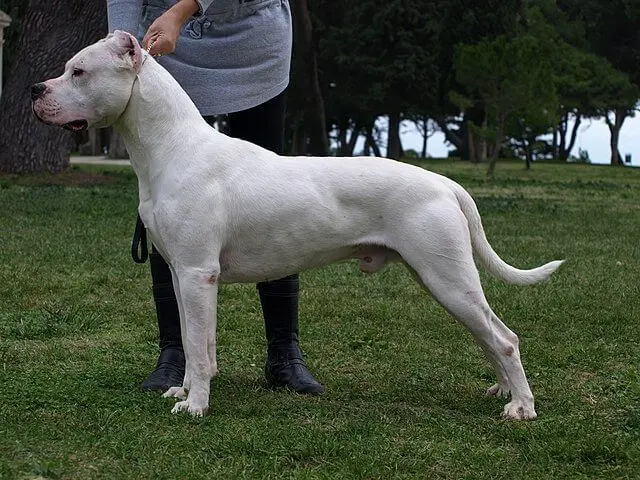
If you're thinking about welcoming a Dogo Argentino into your home, you're choosing an impressive dog breed with unique requirements. Originally bred in Argentina by Dr. Antonio Nores Martínez for big-game hunting, the Argentine Dogo combines a powerful, athletic exterior with a surprisingly gentle and affectionate nature toward its family. Beneath the flawless white coat lies a sensitive, fiercely loyal dog that nevertheless requires consistent leadership, solid breed knowledge, and early socialization.
The decision to dogo argentino price and purchase considerations should be carefully weighed. Beyond the initial acquisition costs, legal regulations in certain regions, specific health traits, and ongoing maintenance costs play a central role. This guide provides an objective overview of all essential aspects, from puppy prices and breeder selection to everyday breed requirements. For comprehensive details on breed standards, explore the Dogo Argentino breed profile.
How Much Does a Dogo Argentino Puppy Cost?
When buyers research the dogo argentino price, the purchase price for a health-screened puppy from a controlled breeding program typically ranges between 2,000 and 3,500 euros. Prices below this range should be viewed with caution, as professional rearing, genetic health screenings, and officially required hearing tests for this breed involve significant expenses.
What Factors Influence the Price?
A puppy's price reflects the various components that make up responsible breeding:
- Parent Health Screening: Evaluations for hip dysplasia (HD), elbow dysplasia (ED), heart screenings (DCM), and genetic tests generate substantial costs even before mating takes place.
- BAER Hearing Test: Because solid white dog breeds carry a genetic risk of congenital deafness, reputable breeders have every single puppy audiometrically tested before it leaves for its new home.
- Pedigree and Papers: Breeding documents from recognized organizations such as the VDH or international FCI-affiliated kennel clubs guarantee controlled minimum standards.
- Nutrition and Initial Veterinary Care: High-quality puppy food, routine deworming, initial vaccinations, microchipping, and the EU pet passport are included in the purchase price.
Ongoing Costs for Care and Maintenance
In addition to the one-time purchase price, owning a Dogo Argentino involves regular monthly expenses. Due to their height of 60 to 68 cm at the shoulder and a weight of about 40 to 45 kg, food and equipment costs are higher than for smaller breeds.
- Nutrition: An adult Dogo Argentino requires high-quality food with a high meat content. Food costs typically run between 90 and 150 euros per month.
- Third-Party Liability Insurance: Liability insurance is essential. Depending on your location and coverage limits, costs range from about 5 to 12 euros monthly.
- Dog Tax: In some regions, the Dogo Argentino is classified as a breed with increased potential danger (restricted breed category). In such municipalities, higher dog ownership taxes may apply, ranging from 300 to over 1,000 euros annually. In areas without such classification, taxes fall within the standard range of about 60 to 150 euros per year.
- Veterinary Costs: Routine check-ups, vaccinations, and parasite prevention should be budgeted at around 50 to 80 euros per month, or covered by pet health insurance.
Finding a Reputable Dogo Argentino Breeder
Choosing the right breeder is the most critical step in the buying process. Because the Dogo Argentino is a powerful dog with a pronounced protective and hunting drive, a stable temperament and excellent parental health form an indispensable foundation. Qualified Dogo Argentino breeders in Germany prioritize sound temperament, socialization, and transparent health records.
Characteristics of a Responsible Breeder
A reputable breeder is distinguished by clear standards in breeding practices and puppy rearing:
- Transparent Health Records: The breeder proactively provides written test results for the parent dogs regarding HD, ED, cardiac health, and the audiometric hearing test (BAER) for the entire litter.
- Access to the Environment: The dam and puppies live closely integrated with the family and grow up in a clean, stimulating environment. Prospective buyers are welcome to visit the puppies multiple times before adoption.
- Thoughtful Screening: A good breeder does not sell puppies to just anyone. They ask targeted questions about living arrangements, previous experience with molosser-type dogs, and daily management routines.
- In-Depth Guidance: The breeder provides factual information about the breed's characteristics, including its hunting instinct and local legal regulations.
Red Flags When Buying a Puppy
Exercise caution with offers that display any of the following warning signs:
- Puppies are offered in rest areas, out of car trunks, or without an opportunity to meet the mother first.
- The breeder cannot provide documentation of an audiometric hearing test (BAER test) for the puppies.
- The dogs appear fearful, aggressive, or show visible signs of parasites or malnourishment.
- The price is significantly below the standard level of 2,000 euros, or no pedigree papers are provided.
- Claims are made that the breed requires no consistency or training and is inherently an uncomplicated companion.
Health Check: Breed-Specific Conditions and Prevention
The Dogo Argentino is fundamentally a robust and athletic dog with a life expectancy of about 10 to 12 years. However, as with many solid white and large-scale breeds, specific health risks exist that must be checked prior to acquisition.
Congenital Deafness
Due to the solid white coat and lack of pigment cells in the inner ear, the breed carries a genetically linked risk of unilateral or bilateral deafness. Approximately one in four Dogo Argentinos may be affected by some degree of hearing impairment. A BAER test (Brainstem Auditory Evoked Response) measures brain waves in response to acoustic stimuli. This test is performed from the 7th week of life onward. Reputable breeders only release puppies with an individual, verified BAER test certificate.
Joint Disorders (HD and ED)
As a large, heavy dog breed, the Dogo Argentino is prone to hip dysplasia (HD) and elbow dysplasia (ED). Both breeding dogs must undergo radiographic evaluations before being used for breeding. Results should ideally be rated as "Free" (A) or "Near-normal" (B). During the growth phase, owners must also ensure puppies are not overworked and do not receive overly high-energy diets.
Heart Conditions and Metabolism
Dilated Cardiomyopathy (DCM), a disease of the heart muscle, occasionally occurs in the breed. A cardiological ultrasound examination of the parent dogs minimizes this risk. Additionally, genetic testing for Hyperuricosuria (HUU), a metabolic disorder that can lead to urinary stone formation, is recommended.
Skin and Allergies
The short, smooth coat without an undercoat makes the breed easy to groom (grooming effort 2/5), but offers little protection against extreme weather. Furthermore, white dogs are slightly more prone to food allergies or skin irritations, making a balanced diet essential.
Is the Dogo Argentino Right for You?
The Dogo Argentino impresses with a balanced and humble demeanor within the family. With proper socialization, it proves to be child-friendly (4/5) and builds a deep bond with its primary caregivers. Nevertheless, the breed demands a realistic assessment of your own capabilities.
Requirements for Owners and Daily Life
A Dogo Argentino places clear demands on its living environment and lifestyle:
- Experience and Leadership: This breed is not suitable as a first-time dog. Owners require confidence, patience, and clear boundaries. Force and harshness are entirely inappropriate, as the Dogo Argentino reacts sensitively to human moods.
- Drive for Exercise: With an energy level of 4 out of 5 points, the Dogo Argentino needs daily extended walks and mental stimulation. As a hunting dog, it possesses great stamina and a zest for movement.
- Hunting and Protective Instinct: The innate hunting drive requires reliable containment during off-leash activities. Toward strangers, the Dogo Argentino is often reserved and watchful. Early habituation to other dogs and everyday stimuli is mandatory.
- Living Situation: Because of its size and exercise needs, a house with a securely fenced yard is ideal. Urban adaptability is rated 2 out of 5, as sensory overload and cramped living quarters can stress this breed.
Legal Framework in Germany
Anyone planning to dogo argentino price research and acquire a puppy must inform themselves in advance about local regional legislation. In states such as Bavaria, Baden-Württemberg, Brandenburg, or Hesse, the Dogo Argentino is classified as a restricted or listed breed (usually Category 2). This means ownership is tied to specific conditions:
- Proof of owner competence (competency certificate).
- Submission of an official police clearance certificate.
- Successful completion of a temperament test with the dog to obtain a certificate of exemption.
- Potential leash and muzzle requirements until the temperament test is passed.
Further information on legal animal welfare regulations is provided by the Federal Ministry of Food and Agriculture (BMEL).
Dogo Argentino in Need: Adoption as an Alternative
A puppy directly from a breeder isn't the only option. Animal shelters and specialized breed rescue organizations regularly house adult Dogo Argentinos or mixes looking for a new home. These dogs are frequently surrendered because owners underestimated their size, training requirements, or breed restriction laws.
Adopting an older dog has the advantage that its character and traits are already established. Shelters and foster homes can provide precise details on how the dog interacts with other dogs, cats, or children. Prospective adopters should also check for a completed temperament test and known health records.
Frequently Asked Questions
Is a Dogo Argentino suitable as a family dog?
With professional training and early socialization, the Dogo Argentino is considered a loving, gentle, and patient family dog. It seeks close physical contact with its caregivers and generally behaves attentively and cautiously around children. However, consistent training and teaching children how to interact respectfully with the dog are vital.
Is the Dogo Argentino classified as a restricted breed everywhere in Germany?
No, dog laws fall under state jurisdiction in Germany. In some federal states like Bavaria, Baden-Württemberg, Brandenburg, or Hesse, the Dogo Argentino appears on the restricted breed list (Category 2). Other states have abolished breed lists or do not list the breed separately. Always check with your local municipal regulatory office before purchasing.
Are Dogo Argentino puppies often deaf?
Due to the genetic link between the white coat color and inner ear development, congenital unilateral or bilateral deafness occurs within this breed. A reputable breeder performs a BAER hearing test on every puppy before adoption. This is the only way to confirm definitively whether the puppy's hearing is fully functional on both sides.
How much exercise does a Dogo Argentino need daily?
As an athletic big-game hunting and working dog, an adult Dogo Argentino requires at least 1.5 to 2 hours of active exercise every day. Alongside walks, activities like tracking, mantrailing, or cycling (starting after 18 months once bones have fully matured) help keep the dog physically and mentally fulfilled.
Responsibly Finding the Right Puppy
Choosing a Dogo Argentino requires circumspection, responsibility, and careful preparation. Anyone who fulfills local legal requirements, provides a species-appropriate environment, and values consistent, affectionate training will gain an exceptionally loyal and expressive companion. If you're looking for the right companion and keeping an eye out for vetted breeders, you can find Dogo Argentino puppies on HonestDog and connect directly with experienced breeders.