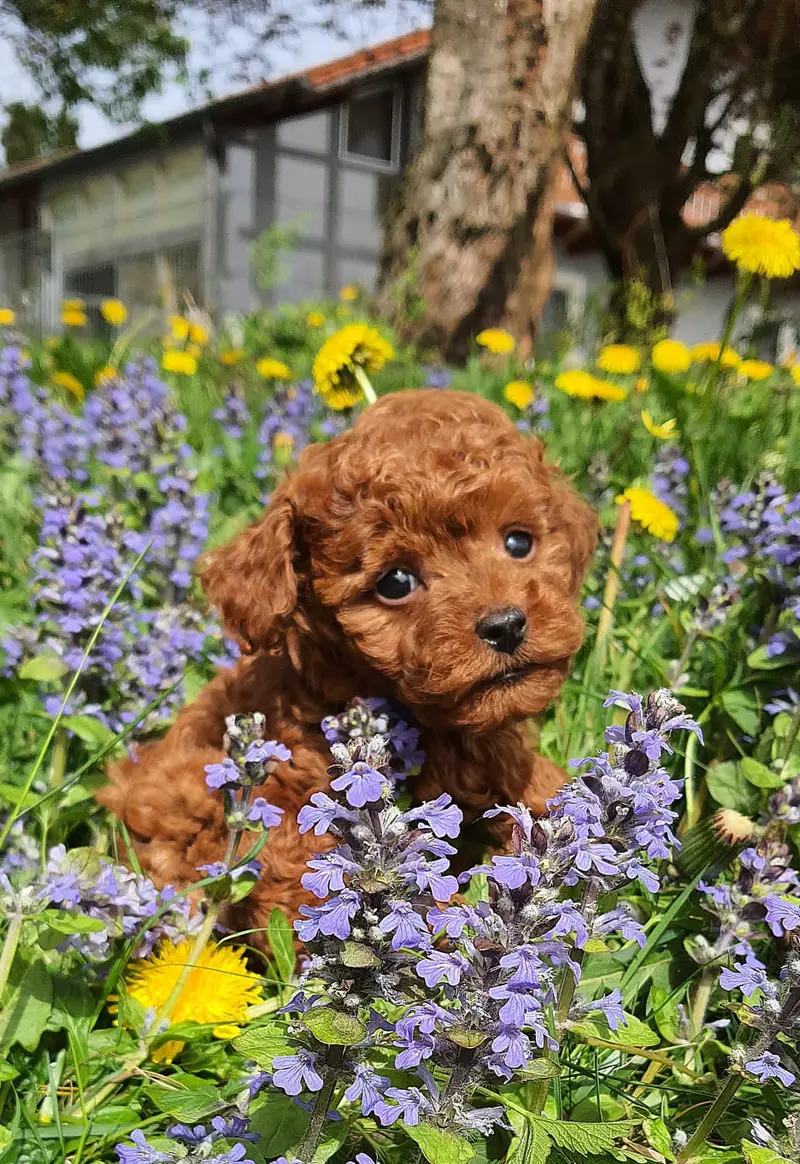
Finding the Right Poodle Breeder: Why It Matters So Much
There is hardly any dog breed as versatile, intelligent, and elegant as the Poodle. Once you have decided to share your life with one of these fascinating dogs, the first and most important step is finding a responsible Poodle breeder. This decision sets the foundation for the next 12 to 15 years you will spend with your new family member.
Poodles have their historical roots in Germany and France, where they were originally bred as robust water retrieval dogs. Today, they are classified in the "Non-Sporting Group" (companion dogs), but they haven't lost any of their drive or intelligence. A Poodle is proud, incredibly smart, and characterized by a high energy level (4 out of 5 points). This makes it all the more important not to be blinded by cute puppy photos, but to choose your breeder with care and logic.
A reputable breeder doesn't just focus on the Poodle's physical appearance—with that typical dense, curly coat and no undercoat—but prioritizes character and health above all. Especially with such popular breeds, there is always a risk of "backyard breeders" looking to make a quick profit at the expense of animal welfare. Genetic specificities and the risk of overbreeding, such as extreme miniaturization in Toy Poodles, make a careful selection of the kennel indispensable. Before you begin your search, we recommend diving deep into the breed's specifics. You can find everything regarding character and care in our detailed Poodle breed profile.
Breed Variety and Genetic Traits
The breed comes in various sizes—from the tiny Toy Poodle to the impressive Standard Poodle (often called a Royal Poodle), which can reach a shoulder height of up to 60 cm and a weight of up to 28 kg. Regardless of size, they are all highly trainable (5 out of 5 points) and form an extremely close bond with their humans. This sensitivity requires an upbringing that provides the puppies with security and trust from their very first week. A good breeder understands these traits and socializes the puppies early on through targeted environmental stimuli.
Signs of Reputable Poodle Breeders: How to Recognize Quality
Searching for the perfect puppy can be overwhelming. However, there are clear criteria that help you distinguish reputable Poodle breeders from questionable ones. An outstanding breeder doesn't see their work as a mere business, but as a passionate calling to preserve and improve the breed.
Membership in an Official Breeding Association
An essential quality marker is the breeder's membership in a recognized club. In Germany, this is primarily the Verband für das Deutsche Hundewesen (VDH), as well as its affiliated specialty clubs like the Deutsche Pudel-Klub e.V. (DPK) or the Allgemeine Deutsche Pudelclub (ADP). Breeders operating under the umbrella of these associations must adhere to strict breeding regulations. These rules dictate kennel inspections, the minimum and maximum age of breeding females, the frequency of litters, and mandatory health screenings.
Transparent and Loving Raising Conditions
Poodles are absolute family dogs (family friendliness 5/5) and are exceptionally people-oriented. Keeping them in outdoor kennels is an absolute no-go for this breed. Reputable breeders raise their puppies indoors, ideally right in the middle of the living room. This way, the little ones get used to everyday noises like vacuum cleaners, the TV, or clattering dishes from the start.
When you visit the breeder, look for the following:
- The mother is present: The dam should be with the puppies and appear relaxed, healthy, and friendly toward people.
- Cleanliness and smell: Even where several dogs live, it should be clean and not smell strongly of urine or feces.
- Puppy behavior: The little Poodles should be curious, alert, and not extremely fearful or lethargic.
- Transparency: A good breeder welcomes your visit, shows you the facilities willingly, and never pressures you into an immediate purchase.
Health Comes First: Essential Tests in Poodle Breeding
The Poodle is generally considered a robust and long-lived breed with a life expectancy of 12 to 15 years. However, as with almost any purebred dog, there are hereditary predispositions. In professional Poodle breeding, certain genetic tests and veterinary examinations for the parent dogs are absolutely mandatory before they are even allowed to mate.
Breed-Specific Diseases and Necessary Screenings
Depending on the size of the Poodle, health priorities vary slightly, but a responsible breeder should proactively provide proof of the following examinations:
- Progressive Retinal Atrophy (PRA): A hereditary eye disease that can lead to blindness. A simple DNA test of the parent dogs can rule out puppies developing prcd-PRA.
- Cataracts: The eyes of breeding dogs should be regularly examined by a specialized veterinarian (DOK).
- Patellar Luxation (PL): Especially in Miniature and Toy Poodles, the kneecap can shift. Breeding dogs must be tested for PL and can only be used if they have clear results.
- Hip Dysplasia (HD): This screening is particularly important for Standard Poodles. Parent dogs must be X-rayed and evaluated by an independent expert to minimize the risk for offspring.
- Neonatal Encephalopathy (NE) and von Willebrand Disease (vWD): Additional genetic dispositions that reputable breeders test for to rule out neurological or bleeding disorders.
A breeder who presents all these evaluations transparently proves that they care about the long-term health of the breed. For further independent information on health standards, you can also consult the Bundestierärztekammer guidelines for buying a puppy.
6 Essential Questions to Ask Your Poodle Breeder
A conversation with a breeder should always be a dialogue. They will interview you to see if you can provide a good home, but you must also ask critical questions. Prepare well for your first call or visit. These six questions will help you evaluate the quality of the breeder:
- "How many years have you been breeding Poodles and why did you choose this breed?" – This reveals a lot about the breeder's passion and expertise.
- "What health screenings can you prove for the parent dogs?" – Ask to see the certificates for HD, PL, PRA, and others.
- "How do you socialize the puppies in the first few weeks?" – A good breeder gets puppies used to car rides, children (child-friendliness is 4/5), everyday noises, and ideally the vital topic of grooming. Since Poodle grooming effort is 5/5, it is worth its weight in gold if the puppy already knows brushes and clippers.
- "How often has this female had litters?" – According to strict breeding rules, a female should have sufficient recovery periods between litters and not be used as a "litter machine."
- "Can I see the mother?" – The answer must always be "Yes." If the mother is locked away or allegedly "out for a walk," alarm bells should ring.
- "What do you feed them, and what do the puppies take home with them?" – High-quality food is expensive but essential for growth. Reputable breeders often provide a starter pack and the food the puppy is used to for the first few days in their new home.
If you are looking for trustworthy contacts near you, take a look at our curated list of Poodle breeders in Germany. There you will find addresses selected according to high quality standards.
Red Flags: How to Spot Irresponsible Breeders and Puppy Mills
Unfortunately, the Poodle's popularity also attracts people focused only on profit. The so-called "puppy mafia" often operates very professionally, hiding their true intentions behind seemingly sweet internet ads. To avoid unknowingly supporting animal cruelty and facing high vet costs later, watch for these clear warning signs:
- Multiple breeds for sale: If someone offers Poodles, French Bulldogs, Chihuahuas, and Golden Retrievers at the same time, they are likely a commercial dog dealer.
- Handovers in neutral locations: An absolute taboo! Anyone offering to hand over a dog in a parking lot or at a highway rest stop has something to hide.
- Suspiciously low prices: A purebred dog from controlled breeding has its price. Offers significantly below average always mean that health, food, or veterinary care for the parent dogs was compromised.
- Missing papers and lack of vaccinations: In Germany, puppies must be at least 8 weeks old (ideally 9-10 weeks) before being rehomed. They must be microchipped, dewormed multiple times, and have their first essential vaccinations (EU pet passport).
- No interest in you: Unscrupulous sellers don't care where the dog ends up as long as the money is paid. A real breeder will pepper you with questions because they want to ensure their protégé finds a forever home.
To eliminate such risks from the start, plan your purchase carefully. You can also read more about the correct process in our section on buying Poodle puppies.
Price Overview: What Does a Poodle from a Reputable Breeder Cost?
Many prospective owners are initially surprised by the price of purebred puppies. For a Poodle from a recognized and controlled breeder, the realistic price range currently lies between 1,500 and 2,800 EUR. The exact price may vary depending on the size (Standard Poodles are often more expensive to raise), specific color lines, or the sporting/breeding pedigree of the parents.
But why does a dog cost this much? The price isn't just the "value" of the puppy; it reflects the breeder's massive upfront costs and expenses:
- Health tests for parents: X-rays, DNA tests, and eye exams often cost over a thousand euros per breeding dog.
- Stud fees and travel: To find the perfect male for a female, breeders often travel long distances, sometimes abroad. The stud fee itself is usually in the four-figure range.
- Veterinary costs for the litter: Ultrasounds during pregnancy, birth assistance, vaccinations, deworming, and microchipping add up quickly.
- High-quality nutrition: Pregnant females and growing puppies require special, highly digestible premium food.
- Time and labor: During the 8 to 10 weeks the puppies spend with the breeder, it is a 24/7 job. Vacation is unthinkable. Socialization, grooming, and cleaning take countless hours.
When looking at these facts, it becomes clear: a breeder does not get rich through their work. The puppy price, at best, covers the overhead and allows the breed to be maintained at a healthy, high level.
The Poodle in Everyday Life: What You Should Be Prepared For
Once you've found an excellent breeder, you must ensure you can meet the needs of this breed. While Poodles shed almost no hair (shedding 1/5), which makes them very pleasant indoors, the lack of undercoat and the curly hair come with a grooming price. Total grooming needs are at 5 out of 5 points. This means you must brush your Poodle thoroughly several times a week to avoid matting down to the skin. Additionally, a visit to the groomer is necessary every six to eight weeks for bathing, blow-drying, and clipping.
Furthermore, Poodles are not dogs satisfied with three short walks around the block. Standard Poodles are excellent for dog sports like agility, obedience, dog dancing, or even therapy dog training. Their high intelligence requires regular mental stimulation. Scent work, trick training, or tracking should be on your weekly schedule. When their physical and mental needs are met, they are wonderfully calm, balanced companions in the house and perfectly suited for city life (5/5).
Frequently Asked Questions (FAQ) About Poodle Breeding
When is the best time to contact a breeder?
It is best to contact the breeder well in advance, not just when the puppies are already born. Many renowned kennels have waiting lists that can be over a year long. Early contact allows you to get to know the breeder, the mother dog, and the breeding philosophy in peace before the busy puppy phase begins.
Are Poodles truly hypoallergenic?
Poodles are often called "allergy-friendly" because they don't shed and don't go through seasonal coat changes. However, there is no guarantee. Allergy sufferers usually react to dander, saliva, or urine. Before buying a puppy, you should spend significant time with the adult dogs at the breeder's home to test for any allergic reactions.
Which Poodle size fits me best?
This depends heavily on your lifestyle. Toy and Miniature Poodles are very portable, great for smaller apartments, and easier to travel with. Medium and Standard Poodles are more robust, need a bit more space, and are ideal for very active people who want a dog for cycling or jogging. Standard Poodles are also often a bit more stoic and calm around small children.
How can I tell if the puppy's papers are real?
Recognized pedigree certificates in Germany carry the logo of the VDH (Verband für das Deutsche Hundewesen) and the FCI (Fédération Cynologique Internationale). Ask the breeder exactly which association issues the papers. Beware of made-up clubs or self-printed "certificates." If in doubt, you can call the specified breeding association directly and ask about the breeder's membership.
Your Path to Your Dream Dog: Find Certified Poodle Breeders on HonestDog
Searching for the perfect lifelong companion takes time, patience, and a lot of research. We know how hard it can be to navigate the jungle of internet ads and separate the good from the bad. That is exactly why we at HonestDog have made it our mission to make this path as safe and transparent as possible for you.
On our platform, you will find exclusively verified, reputable breeders who meet our strict quality criteria. We check backgrounds, association memberships, and transparency so that you can focus entirely on what matters most: the excitement of meeting your new best friend. Start your search today and discover certified, responsible kennels in your region on HonestDog. Your dream Poodle might already be waiting for you!