
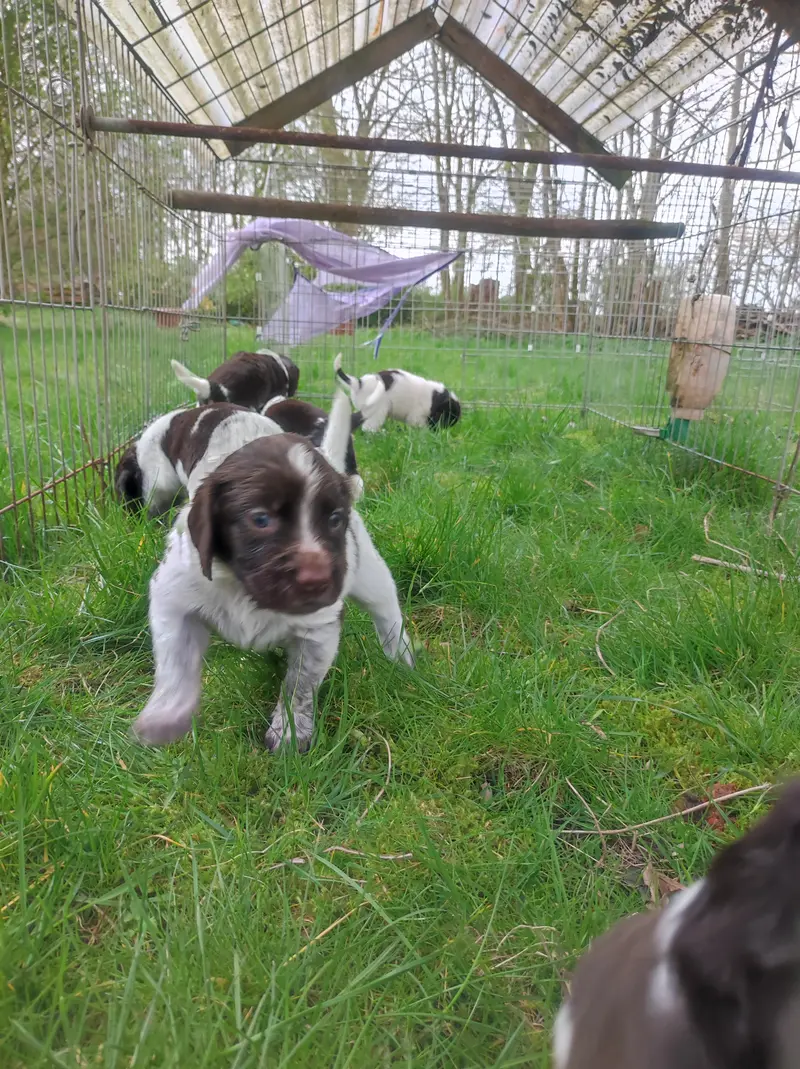
Congratulations on your decision to share your life with one of the most versatile and friendly gundogs out there. The Small Münsterländer – often affectionately called the "SM" by enthusiasts – is an intelligent, dedicated, and confident companion characterized by great loyalty. However, as family-friendly and charming as this dog is: proper Small Münsterländer training is the absolute key to a harmonious life together. Without consistent leadership, this breed's strong hunting instinct can quickly become a challenge.
As an experienced dog trainer, I know that this breed brings an enormous joy for work. Your dog wants to learn, wants to please (the so-called "will to please"), and needs a job to do. In this comprehensive guide, I will show you how to optimally shape your four-legged friend from a playful puppy to a mature, confident companion. We will look at which methods work best for this sensitive but hardworking dog and how to master breed-specific challenges.
The Basics of Small Münsterländer Training: An Intelligent Student
When we talk about Small Münsterländer training, we first need to understand what these dogs were bred for. As classic pointing dogs, they possess a level of trainability that is at the top of the scale (5 out of 5 points). They are selected to work closely with their humans, pay attention to the smallest signals, and solve problems independently. For you as an owner, this high intelligence means: your dog learns incredibly fast – unfortunately, this also applies to undesirable behavior if you are not careful.
The Small Münsterländer's character is balanced and friendly. Unlike some other extremely hard hunting breeds, the SM is very sensitive to moods and volume. Training with a heavy hand or unfair punishment will permanently destroy trust. Instead, successful Small Münsterländer training is based on positive reinforcement, clear communication, loving consistency, and mutual respect.
To help you prepare for your new companion, I recommend studying the detailed Small Münsterländer breed profile beforehand. There you will find all the important data on size, weight, and the general requirements of this fascinating breed. Further well-founded historical and breeding backgrounds are also offered by the Verband für das Deutsche Hundewesen (VDH).
Small Münsterländer Puppy Training: The First 16 Weeks
Small Münsterländer puppy training begins the exact moment the little ball of fur moves in with you. The first 16 weeks of life are the so-called imprinting and socialization phase. What your dog learns positively during this time will strengthen them for the rest of their life. What they miss out on can only be made up for later with great effort.
Housebreaking: Patience and Observation
A puppy cannot control its bladder at first. The rule is: after every sleep, after every meal, after playing, and otherwise every two hours, go outside briefly. Take your puppy to a quiet spot to relieve themselves. As soon as they do their business, praise them warmly. Punishing accidents in the house is absolutely taboo; just wipe it up without comment. Your little SM will usually understand the principle of housebreaking very quickly thanks to their intelligence.
Training Bite Inhibition
Like all puppies, the Small Münsterländer explores the world with its teeth. Since it is intended to retrieve prey later as a hunting dog (or at least carries the genetic heritage to do so), mouthing and nipping during play is completely normal. However, bite inhibition must be learned. If the puppy bites too hard during play, let out a short, high-pitched "Ouch" and stop the game for a minute. This way, they learn: biting too hard ends the fun.
Socialization and Environmental Conditioning
A hunting dog must be environmentally sound. Gently expose your puppy to various stimuli:
- Car rides and public transport
- Different surfaces (metal grates, forest floor, tiles)
- Other animals (horses, cows, cats – important to keep the future hunting drive controllable!)
- People of all ages, especially children (the breed is considered extremely child-friendly at 5/5 points)
- Everyday noises like vacuum cleaners, thunderstorms, or road traffic
Always make sure not to overwhelm your puppy. Less is often more during the imprinting phase. The Bundestierärztekammer also advises ensuring full vaccination protection before socialising with other dogs to avoid infectious diseases.
Essential Small Münsterländer Commands for Everyday Life
To give your dog freedom (like off-leash runs in the forest), obedience must be solid. The basic Small Münsterländer commands do not differ in name from those of other breeds, but they do in the importance of their execution under high distraction.
Sit and Down
The SM usually learns these basic commands within a few repetitions. Use the lure method: guide a treat over the dog's nose towards the back until they sit. As soon as their bottom touches the ground, say "Sit" and give the food. For "Down," guide the food from the sitting position straight down between the paws and then slightly forward. Important: always release the command actively with a release word (e.g., "Okay" or "Free").
The Stay Command (Impulse Control)
For a passionate hunting dog, impulse control is everything. "Stay" teaches them to endure frustration and not immediately give in to stimuli. Start in small steps: have them sit, give the command "Stay," move only half a step away, immediately go back, and reward. Increase distance and duration over weeks. Later, you can throw balls while your dog must remain in the "Stay" – an excellent exercise for pointing dog genetics!
The Recall: A Lifesaver
The recall is the most important command of all. Build it up first in a low-distraction environment like the house or your own garden. Call your dog's name and your recall word (e.g., "Here"). When they come, give a super-reward (cheese, sausage, or a great tug game). In nature, you should initially secure the recall with a long training lead. Don't just call your Small Münsterländer when it's time to go home or when another dog approaches, but repeatedly in between, reward them, and release them again. This way, they won't associate the recall with the end of their freedom.
Breed-Specific Challenges in Small Münsterländer Training
Every breed comes with its own set of traits. Even though the SM is considered very people-oriented and friendly, we must not forget its roots. It is a full-blooded hunting dog. Its energy level is 4 out of 5 points. Keeping them as a pure couch potato will inevitably lead to behavioral problems.
The Hunting Instinct
You cannot train the hunt out of a hunting dog – it is embedded in its DNA. The art of Small Münsterländer training lies in channeling this instinct and making it controllable. When your dog gets a scent, their brain often switches to "autopilot." Training with a long lead in combination with an established stop or interrupt signal helps here. Additionally, you should learn to read your dog's body language: before they bolt, they usually show pointing behavior (tensing of the body, lifting a front paw, a fixed gaze). It is exactly in this second of tension that you must intervene, address them, and redirect.
Tendency to Bark and Alert
The Small Münsterländer is a watchful dog. They will alert you when someone approaches the property. To prevent them from becoming an uncontrolled barker, you should teach them early on that you are the one in charge. A short "woof" is fine; after that, send them to their place and take over the situation (e.g., at the front door).
Advanced Training and Breed-Appropriate Activities
Once the basics are set, the real fun in Small Münsterländer training begins. Since this breed wants to be challenged not only physically but above all mentally, walks alone are not enough. If mental stimulation is lacking, the dog will quickly find its own hobbies – usually ones you won't like.
Dummy Training and Retrieving
Retrieving is in the SM's blood. Dummy training isn't just about throwing a stick; it's complex teamwork. The dog must wait until the dummy is thrown, remember the fall site (marking), run on command, pick up the dummy, and bring it directly back to your hand. Later, you can hide dummies and have the dog search for them (blind search). This provides immense mental exercise and satisfies their need to find and bring prey to you.
Scent Work and Mantrailing
The Small Münsterländer's nose is a high-performance organ. Scent work, such as tracking or mantrailing (searching for missing persons based on their individual scent), are perfect forms of engagement. They make the dog tired and happy and strengthen the bond between you enormously as you succeed as a team.
Dog Sports
Thanks to its agility and eagerness to learn, the SM also performs well on the dog sports field. Agility, Flyball, or Rally Obedience are great ways to be active together. However, make sure the dog doesn't get too overexcited during fast sports like agility. Rest phases are extremely important for this high-energy breed. Information on special hunting or breed-specific tests can often be found through breed clubs like the Verband für Kleine Münsterländer e.V., which also offers valuable tips for engagement to non-hunters.
Avoiding Common Mistakes in Dog Training
Even the most motivated dog owners make mistakes. With the Small Münsterländer, you should pay particular attention to the following points:
- Lack of Consistency: The SM is intelligent enough to immediately exploit inconsistency. If they aren't allowed on the sofa today but are tomorrow because they look so cute, they will constantly question your rules. Remain predictable.
- Too Much Harshness: Loud, aggressive shouting or physical discipline will destroy the fine bond between you and your Münsterländer. They will show avoidance behavior and no longer work with you joyfully. Authority instead of volume is required!
- Overwhelming the Puppy: Because the puppy learns so quickly, owners often tend to demand too much too soon. The result is a stressed, hyperactive young dog. The most important thing a Small Münsterländer puppy must learn is calmness!
- Exclusively Physical Exercise: Anyone trying to tire this dog out with hours of cycling is merely breeding a high-stamina athlete who will demand more and more. 15 minutes of intensive nose work tires the dog more than an hour of mindless running.
Frequently Asked Questions
Is the Small Münsterländer suitable for beginners?
Basically yes, but only for dedicated beginners. Thanks to its trainability (5/5) and high level of people-orientation, it forgives the occasional mistake in communication. However, its hunting drive and high energy level require an owner willing to invest time in education, training, and appropriate activities. Attending a good dog school is a must for first-time owners.
Can a Small Münsterländer be kept in an apartment?
City suitability is rated 3 out of 5. It is possible to keep one in an apartment as long as you provide sufficient exercise and mental stimulation outdoors. However, a house with a securely fenced garden is more ideal. It's vital that the dog learns to relax and be calm while indoors.
How long can this breed be left alone?
No dog should be left alone regularly for eight hours or more. However, if you build up the separation positively in tiny steps (minute by minute) starting in puppyhood, an adult Small Münsterländer can easily stay alone for 4 to 5 hours. The prerequisite is that they have been well exercised and are tired beforehand.
Do I have to go hunting with a Small Münsterländer?
No, you don't necessarily have to be a hunter to make an SM happy. Many Small Münsterländers live purely as family and companion dogs. However, you are obligated to offer substitute activities that channel its hunting instincts (scent work, retrieving, tracking) into orderly paths. Without this substitute work, the dog will become frustrated on walks or start hunting wildlife on its own.
Conclusion: A Loyal Companion for Life
Small Münsterländer training is not a side task but a real hobby that brings much joy. If you are willing to engage with the sensitive, hard-working nature of this pointing dog, you will be rewarded with an incredibly loyal, cuddly, and reliable companion. With positive reinforcement, clear consistency, and the right mental and scent stimulation, you will master every training session – from your puppy's first "sit" to challenging tracking work in the forest.
Are you looking for more expert tips, in-depth breed portraits, or want to exchange ideas with other dog owners? Discover everything you need for a happy life with your four-legged friend on HonestDog. Visit our platform, compare breeders, and get comprehensive information so that your everyday life with your dog becomes a new adventure every day!