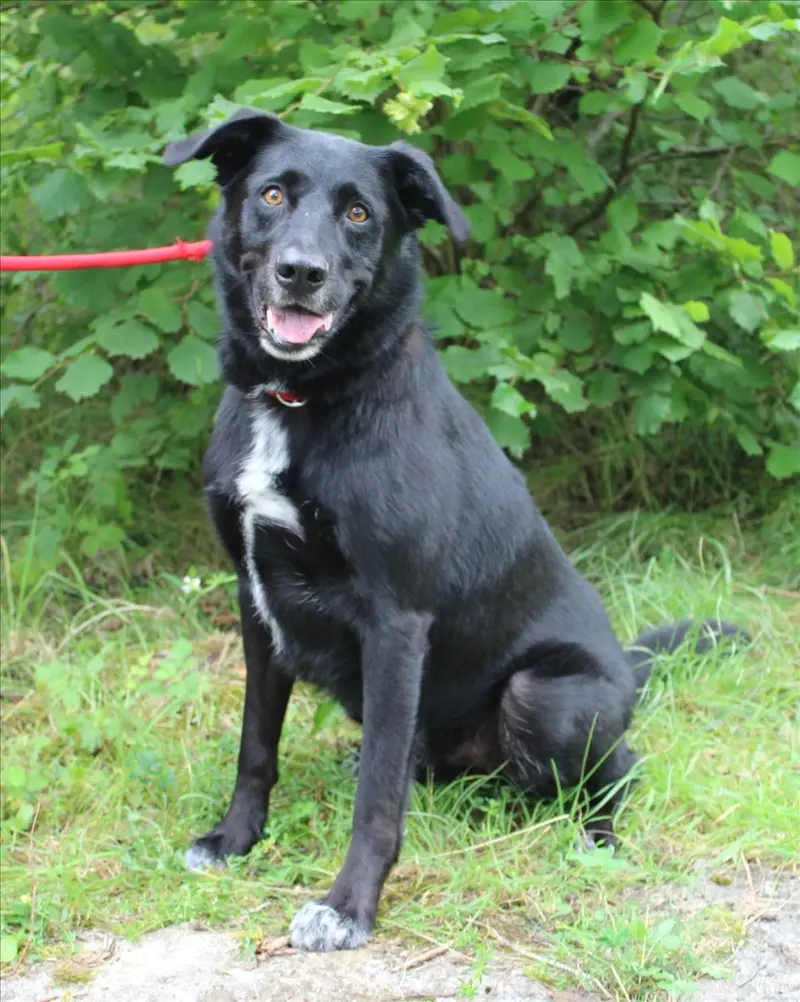
A Gaze That Reaches the Soul: Why Adopting a Border Collie Will Change Your Life
Anyone who has ever looked into the alert, highly intelligent eyes of a Border Collie won't soon forget the moment. These dogs scan their surroundings; they think along with you, and they analyze. If you are considering to adopt a Border Collie, you are facing one of the most fascinating yet demanding tasks in the canine world. As an experienced dog owner and animal welfare advocate, I can tell you: taking in a herding dog from a rescue is an emotional rollercoaster that, with the right preparation, transforms into an unconditional partnership.
Choosing a dog from a rescue is always an honorable decision. However, with a breed that breaks all scales in terms of energy and intelligence, pity alone is not enough. You need knowledge, patience, and leadership. In this guide, I will show you honestly and without sugarcoating what to expect when you give a second-hand Border Collie a new home.
Adopting a Border Collie: Why So Many of These Genies Are Waiting in Shelters
It is a sad paradox: precisely because the Border Collie is so incredibly smart and eager to learn, they often end up behind bars. A look at any Border Collie shelter or the waiting lists of foster homes reveals a flood of misunderstood dogs. But how does this happen?
Originally bred in Great Britain, the Border Collie belongs to the "Herding Group." For centuries, their purpose in life was to independently yet closely work with shepherds to guide flocks of sheep in the rugged Scottish borderlands. This results in an energy level of a proud 5 out of 5 and a trainability of 4 out of 5. This is exactly where the problem lies for many average dog owners.
- Owners being completely overwhelmed: Many people fall in love with the look of this medium-sized, elegant dog with its thick coat. However, they underestimate that a Border Collie needs a full-time job for its brain.
- Misdirected herding instinct: If a Border Collie has no sheep, it will herd whatever is available. This can be cars, bicycles, joggers, or even the family's children. This staring and nipping at heels often leads to the dog being surrendered quickly.
- Lack of rest: A representative of the breed from a working line naturally has no "off-switch." If they aren't taught to rest from puppyhood, they develop obsessive behaviors like shadow chasing or compulsive ball playing.
In such cases, specialized Border Collie rescues often step in to save the dogs from worse situations and rehome them into experienced hands.
What to Expect When Adopting: Baggage, Scars, and Huge Potential
When you take on a rescue dog, you rarely get a blank slate. The dogs bring their "baggage" – a mixture of history, learned bad habits, and often traumatic experiences.
In the first few days in a new home, many dogs show their best side. In animal welfare, we call this the "honeymoon phase." The dog is still insecure, behaving quietly and inconspicuously. However, after about three to six weeks, once they feel safe, they start to unpack their bags. Suddenly, it becomes apparent that they have leash aggression, guard resources, or cannot be left alone.
Since Border Collies are extremely affectionate and loyal dogs, they bond very closely with their primary person. This is beautiful, but it also means they mirror your every mood. If you are stressed, the dog is too. They learn incredibly fast – unfortunately, that includes the bad stuff. A single moment of inconsistency on your part is immediately saved by the dog as a new rule.
Before you decide on a specific dog, you should study the breed-specific characteristics intensively. It is best to read the detailed Border Collie breed profile to understand how these fascinating animals tick.
Adoption Costs vs. Buying from a Breeder: An Honest Financial Check
Many people mistakenly believe that a dog from a rescue is primarily "cheaper." Let’s be very open here.
If you buy a puppy from a reputable breeder (for example, via the VDH - German Kennel Club), the price range for a Border Collie is currently between €1,200 and €2,500. Here, you are paying for controlled breeding, health certificates of the parents, and optimal socialization in the first weeks of life.
If you adopt from a rescue, you pay a so-called adoption fee. This is usually between €300 and €450. This fee covers part of the costs for vaccinations, neutering, microchip, EU pet passport, and transport. However, it is only a "bargain" at first glance.
A traumatized or behaviorally challenging Border Collie will require a significant additional budget in the first months or even years:
- Professional dog training: Private sessions with a trainer specializing in herding dogs often cost between €60 and €100 per hour.
- Existing health issues: Stress often affects a dog's gastrointestinal tract. Untreated joint problems can also occur in dogs from poor backgrounds.
- Management equipment: Safety harnesses, crates for place training, or special puzzle games for mental stimulation add up.
The First Weeks: Specific Tips for Settling In
The day is here; your new companion is moving in. Now, one thing is more important than anything else: deceleration. The biggest mistake new Border Collie owners make is an immediate oversupply of action. "He needs a lot of exercise," they think, and start throwing balls or jogging miles from day one.
Please don't do that. Your dog's stress level is already at an absolute maximum due to the move. Their brain can no longer process new stimuli.
1. The 3-3-3 Rule
Always remember this rule of thumb for rescue dogs:
- 3 Days: To even realize they are no longer in the shelter. During this time, they need a lot of sleep, a quiet corner, and no visitors.
- 3 Weeks: To understand new routines, gain trust, and build initial bonds. s
- 3 Months: To truly arrive, feel safe, and show their real personality.
2. Rest is the Most Important Exercise
Border Collies have a general grooming and care requirement in the medium range (3/5), but their mind needs level 10 care. The first thing to teach your dog is how to do nothing. Set up a permanent spot (a bed or an open crate) and establish a ritual where the dog learns to switch off. Physical activity in the first weeks should consist only of quiet sniffing walks on a long leash.
3. Avoid Wild Fetch Games
Avoid mindless ball or stick throwing. In this breed, this extremely quickly promotes addictive behavior and drives the already high adrenaline levels to unhealthy heights. Instead, focus on nose work, tracking, or small tricks that require brainpower.
Special Considerations for Border Collie Rescues from Abroad
Not every rescue dog comes from the local city shelter. Many Border Collies and their mixes come from abroad. When it comes to Border Collie rescues from countries like Romania, Spain, or Ireland (where they are often discarded as retired farm dogs), there are a few things to consider.
Dogs from Eastern or Southern Europe have often lived a life on the streets. They don't know what it's like to live in a house. Glass doors, TVs, stairs, or slippery laminate floors can mean pure terror for them. This requires step-by-step training.
Furthermore, health is essential. Dogs from southern countries must be tested for so-called Mediterranean diseases (Leishmaniasis, Ehrlichiosis, Babesiosis, etc.). Reputable rescue organizations do this as standard before departure and recommend a re-test after six months. For health risks, it's best to consult the guidelines of ESCCAP (European Scientific Counsel Companion Animal Parasites), which are supported by the Federal Chamber of Veterinarians, to minimize health risks.
When Adoption is the Best Choice – and When You Should Reconsider
A Border Collie is not a dog you have "on the side." It is a lifestyle. To ensure the adoption doesn't result in the dog being returned, you must be honest with yourself.
A Border Collie from a rescue is a good fit if:
- You live in a rural area or a quiet suburb. Their suitability for city life is a meager 2 out of 5. Noise, honking cars, and crowds mean constant stress for these highly sensitive animals.
- You are willing to invest time in real dog training (Agility, Hoopers, Treibball, or Mantrailing) but can also maintain a balance with relaxation.
- You are an experienced dog owner and can read the subtle body language of a herding dog.
- You have a family (family friendliness 4/5), but the children are older and respect the dog's quiet zones (friendliness with small children is only 3/5, often due to herding behavior).
You should reconsider adoption if:
- You are looking for a pure couch potato who sleeps contentedly after a 15-minute walk.
- You live in the middle of a hectic metropolis and want the dog to come to a noisy office every day.
- You find it hard to maintain consistency. The Border Collie will recognize every weakness in your leadership style and take command.
If you are still unsure if the breed is a good fit, the Club für Britische Hütehunde e.V. (Club for British Herding Dogs) offers deeper advice and contacts who focus on these special characters.
Frequently Asked Questions (FAQ)
Is a Border Collie from a shelter suitable for beginners?
Usually, no. A Border Collie already brings high breed-specific demands. If you add the baggage from a rescue (such as trauma or poor imprinting), beginners are usually completely overwhelmed. There are absolute exceptions, such as older, very settled dogs, but generally, this breed requires experience, precise timing in training, and a deep knowledge of body language.
How much exercise does a Border Collie really need?
Quality over quantity. A Border Collie doesn't necessarily need three hours of hard running next to a bicycle. Two hours of walking a day, peppered with 15 to 20 minutes of intense mental work (nose work, tricks, impulse control), satisfies the dog much better and more healthily than endless running, which only turns them into a high-performance athlete demanding even more.
Can a Border Collie stay alone without problems?
This depends heavily on the rescue dog's history. Fundamentally, Border Collies are strongly fixated on their humans and tend to lose control when under-stimulated and left alone. In most cases, staying alone must be rebuilt after adoption in minute-long, very gradual, and positive steps.
Do Border Collies from shelters get along with other dogs?
Their compatibility with other dogs is generally rated quite high (4 out of 5). However, herding dogs communicate very specifically – often creeping, staring, and using strong eye control. This can irritate or provoke other breeds. A well-socialized Border Collie is usually compatible but often decides based on individual sympathy. With rescue dogs, introductions should always take place on neutral ground.
Find Your Dream Dog and Gift a New Life
Taking in a herding dog with a past is a challenge that will help you grow. If you are ready to work on yourself, create clear structures, and give the dog the leadership it so desperately seeks, you will be rewarded with a companion who would literally go through fire for you. Their loyalty, their tenderness, and that alert gaze that understands you every second make all the hard work of the first few months worth it.
Are you ready for this adventure? At HonestDog, we work closely with verified and reputable animal welfare organizations to ensure that dogs and people are a perfect match. No rehoming at any cost, but honest education and transparent histories.
Start your journey now and look at the wonderful souls currently waiting for a warm bed. You can find your perfect Border Collie to adopt in a shelter here. Give a dog a second chance – it could be the best decision of your life.