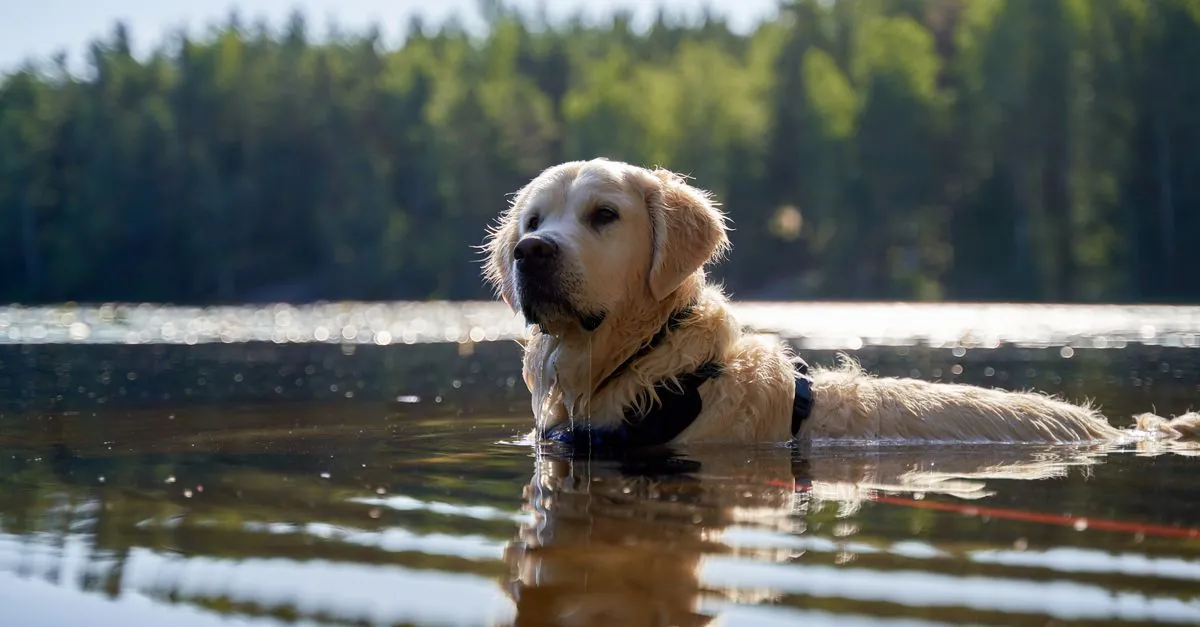
Summer brings long, sunny days: when temperatures rise across Germany, there is hardly anything better for many four-legged friends than unwinding by the water at one of the country's popular dog-friendly swimming lakes. A trip to the lake is often the undisputed highlight of the warm season. Swimming doesn't just offer wonderful relief from the heat; it is also a fantastic, low-impact, full-body workout that is gentle on your dog's joints.
Before you pack your towel and head straight to the nearest body of water, there are a few critical things to keep in mind. Not every lake permits dogs, and seemingly idyllic waters can hide unseen hazards. This guide shows you how to plan the perfect swim day, what to look out for regarding water quality, and how to reliably steer clear of life-threatening issues like water intoxication and blue-green algae.
Can Dogs Swim Anywhere? Lake Rules in Germany
The legal regulations across Germany can feel like a patchwork quilt. As a general rule, dogs are not automatically allowed at every public swimming lake. Especially on beaches heavily frequented by families with small children, strict dog bans are often enforced throughout the summer months. These rules primarily address hygiene, but they also ensure safety and peace of mind for all visitors.
Fortunately, more and more municipalities are recognizing the needs of pet owners by setting up designated dog beaches. In these clearly marked areas, your pup can dig, run, and splash around to their heart's content—often off-leash. Nature reserves, however, follow entirely different rules: leash laws are virtually always in effect, and straying from marked paths or letting your dog swim in the lake is strictly prohibited to protect local wildlife and plant habitats.
Editor's Tip: Check with the local municipality or browse regional tourism websites before your trip to verify whether a particular swimming lake welcomes dogs. A quick phone call or website check will save you from frustrating discussions once you arrive.
Unseen Hazards: Blue-Green Algae and Water Intoxication
Even when the water looks clear and inviting, responsible dog owners should always keep a close eye on water quality. Two of the most serious dangers tied to swimming with dogs are all too often underestimated.
Blue-Green Algae (Cyanobacteria): A Severe Risk in Shallow Water
During summer heatwaves, sustained high water temperatures in stagnant or slow-moving bodies of water frequently trigger algal blooms. What is commonly called blue-green algae is biologically not an algae at all, but rather a bacterium: cyanobacteria. These organisms produce potent toxins (such as microcystin and anatoxin) that are acutely life-threatening for dogs.
You can often spot heavy cyanobacterial growth by a cloudy, greenish, or bluish hue in the water, reminiscent of thick pea soup. You might also notice foamy scums, streaks, or dense mats floating on the surface that get pushed toward the shore by the wind. Right there, in the shallow edge of the water where dogs love to wade and drink, toxin concentrations reach their absolute peak.
If your dog ingests these toxins while drinking, by chewing on washed-up algal mats, or by licking their wet coat, it can trigger severe organ damage—especially acute liver failure—or neurological collapse within a remarkably short time. Symptoms of cyanobacteria poisoning include:
- Excessive drooling and vomiting
- Bloody diarrhea
- Panting and respiratory distress
- Muscle tremors, seizures, and loss of coordination
- Severe lethargy progressing to collapse or unconsciousness
If you suspect your dog has had contact with blue-green algae, rinse their coat thoroughly with clean tap water right away, stop them from licking their fur, and seek immediate veterinary emergency care—every single minute counts. Veterinary associations and health authorities regularly issue warnings regarding cyanobacteria blooms during hot spells.
Water Intoxication (Hyponatremia): When Play Turns Dangerous
Another frequently overlooked hazard is water intoxication, clinically known as hypotonic hyperhydration. Countless dogs love nothing more than retrieving balls or water toys for hours on end. What many owners don't realize is that with every bite and grab in the water, the dog swallows a small amount of liquid. Pups that bite playfully at waves or chase garden hose streams also ingest huge volumes of water unnoticed.
When a dog takes in excessive amounts of water in a brief window (as little as 10 to 15 percent of their body weight can be fatal), their electrolyte balance is thrown into acute turmoil. The bloodstream becomes diluted, and vital blood sodium levels drop precipitously. To balance this deficit, the body's cells draw in excess fluid and swell. This swelling is especially catastrophic inside the brain, where the rigid skull leaves zero room for expansion. The resulting intracranial pressure triggers severe neurological damage.
Symptoms of water intoxication include a noticeably bloated abdomen, staggering, extreme fatigue, pale gums, a slack lower jaw, and, in severe cases, seizures and coma. Small dogs and lean, highly muscular breeds with minimal body fat are at exceptionally high risk.
First Aid: If you notice your dog has swallowed significant amounts of water while swimming and displays early signs of distress, remove all access to water immediately. As an initial measure, you can offer a small salty snack (like a salted pretzel stick) to help gently raise sodium levels. Follow this with immediate veterinary care so your vet can safely stabilize electrolytes via controlled IV therapy.
How to Prepare for the Perfect Swim Day
To make sure your trip to the swimming lake is a safe and enjoyable adventure for both of you, a little preparation goes a long way. Packing the right gear in your dog's beach bag makes all the difference.
What to Pack in Your Dog's Beach Bag
- Fresh drinking water and a travel bowl: Even though you're right by a lake, never let your dog drink lake water, to prevent gastrointestinal infections and toxic exposures.
- Towels or a dog drying robe: To dry your dog off thoroughly after swimming and protect them from chilly drafts.
- Sun protection: Dogs with white or thin coats, light skin, or pink noses can easily get sunburned. A pet-safe dog sunscreen provides essential protection.
- Life jacket: For hesitant swimmers, senior dogs, or boat outings, a well-fitted canine life jacket is a vital safety measure.
- Floating toys: Skip wooden sticks (which splinter and cause severe mouth and throat injuries) and choose floating water dummies instead. Always limit repetitive water-retrieval sessions to prevent water intoxication.
- Poop bags: Cleaning up after your dog is an absolute must on every shoreline.
Water Acclimation: Turning a Skeptic into a Water Lover
Not every dog charges into the water on their very first visit. Puppies and rescue dogs that haven't encountered large lakes before are often hesitant. Never force your dog into the water! Carrying or throwing a dog into the lake shatters their trust and can trigger lasting panic.
Lead by example instead. Roll up your pant legs and wade into the shallows yourself. Encourage your dog gently with a calm voice, a favorite toy, or high-value treats. Reward every voluntary step toward the waterline with enthusiastic praise. Having a calm, water-confident canine friend along often works wonders; dogs learn quickly through social modeling. If your dog prefers to wade in only belly-deep, respect that preference—wading cools them off effectively on hot days without putting them under unnecessary stress.
Beach Etiquette and Consideration for Others
A pleasant day at the lake depends on mutual respect among all visitors. Never let your dog run unchecked toward sunbathers or unfamiliar dogs. Many beachgoers prefer not to have a wet dog shaking lake water over their towels. Keep your dog within sight and ensure they get regular, structured rest breaks in the shade. Swimming is physically taxing, and driven dogs rarely set their own limits. Veterinarians advise against overexerting dogs in hot weather and recommend keeping aquatic exercise measured.
Another condition to watch for is "limber tail" (also known as cold water tail or acute caudal myopathy). This painful inflammation of the tail muscles occurs when dogs spend too long in cold water or get chilled while wet afterward. Affected dogs let their tail hang limp, hold it clamped between their legs, and show acute discomfort when touched near the base of the spine. Always dry your dog thoroughly after swimming and provide a warm, draft-free spot for them to rest.
Which Dog Breeds Are Natural Swimmers?
Not every dog is anatomically built for open water. While breeds like the Labrador Retriever, Newfoundland, and Portuguese Water Dog naturally gravitate to water—thanks to water-repellent coats and webbed feet that make them phenomenal swimmers—other breeds face real physical challenges.
Dogs with short legs and elongated spines (such as Dachshunds and Basset Hounds) struggle to maintain safe buoyancy in deep water. Brachycephalic (flat-faced) breeds like French Bulldogs and Pugs already contend with compromised airways. In the water, where hydrostatic pressure presses against the chest wall alongside intense physical exertion, these dogs can quickly experience acute breathing distress. Flat-faced dogs should stick to belly-deep wading to cool off and should never be made to swim.
If you're curious about breed-specific traits and want to know whether your favorite breed leans toward being a dedicated water dog or a land-loving lounger, take a look at our comprehensive breed directory on HonestDog. There you'll find in-depth breed profiles to help you find the ideal match for your active lifestyle.
Conclusion & Your HonestDog Community
A day out at the swimming lake is a wonderful way to deepen the bond you share with your dog. By keeping an eye on water quality, pacing aquatic fetch games wisely, and respecting your dog's breed-specific build, you can look forward to safe, carefree summer fun.
At HonestDog, our mission is to help dogs and their humans live the best possible life together. As your trusted platform for responsible dog adoption, ethical breeding, and vetted canine advice, we are here for you every step of the way. Looking for the perfect four-legged companion for warm-weather adventures, or want to connect with fellow dog owners? Join our community and discover responsible breeders, verified shelters, and expert guidance on HonestDog. We can't wait to welcome you!
FAQ: Common Questions About Swimming Lakes with Dogs
1. How do I identify dangerous blue-green algae in a lake?
Blue-green algae (cyanobacteria) typically appears as heavy discoloration that looks like pea soup, showing greenish, bluish, or brownish cloudiness. Severe blooms produce foamy scums, streaks, or surface mats, especially along the shoreline. If you cannot see your own feet in knee-deep water, do not let your dog swim or drink from that lake.
2. How much water can a dog safely swallow while swimming?
While exact milliliter limits vary by body size, the rule of thumb is simple: dogs should swallow as little lake water as possible. Life-threatening water intoxication can occur when a dog ingests roughly 10 to 15 percent of their body weight in water within a short span. Limit fetch games in the water to short sessions (10 to 15 minutes at a time) and make sure your dog rests on dry land afterward.
3. Are dogs allowed to swim in every public lake?
No, there is no universal right to let dogs swim in public lakes in Germany. Many popular bathing beaches prohibit dogs entirely, especially throughout the peak summer months. Look specifically for designated dog beaches (Hundestrände) or check with the local municipal office. In nature reserves, dogs are almost always barred from entering the water to safeguard sensitive wildlife habitats.
Sources
- zooplus.de
- gesundheitszentrum-fuer-kleintiere-luedinghausen.de
- thieme.de
- antenne.de
- hunde-ferienhaeuser.de
- thieme.de
- gesundheitszentrum-fuer-kleintiere-luedinghausen.de
- tierklinik-neustadt.de