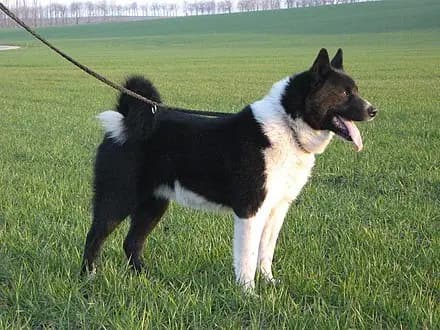
Karelian Bear DogSame FCI section
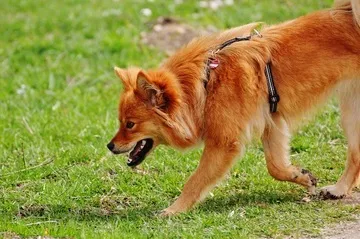
The Finnen-Spitz is a lively, extremely alert, and vocal Nordic hunting dog—bred to track down grouse in dense forests and pin them in place for the hunter with persistent, high-pitched barking.
Self-check
Answer 6 quick questions about your everyday life and see how well the Finnish Spitz fits you — including an honest cost estimate per month, per year, and across the dog's lifetime.
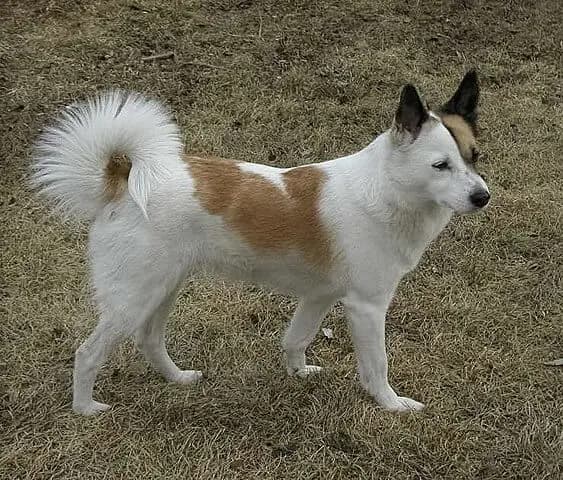

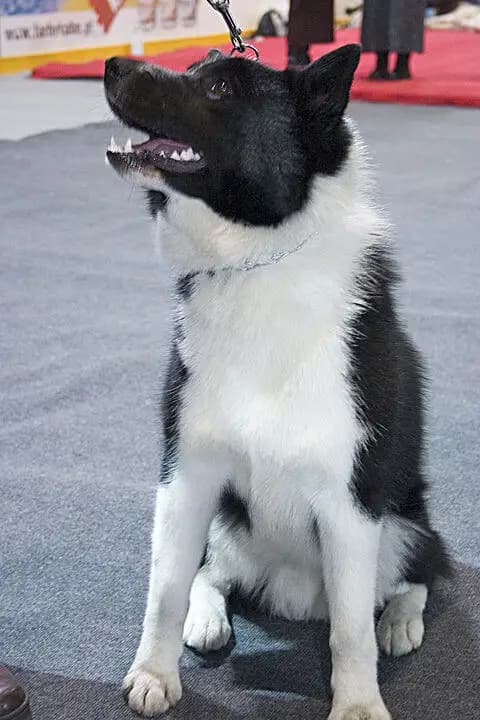
At a glance
The essentials — key facts, traits, and health priorities — before you dive deeper.
Lifespan
12–14 yrs
Shoulder height
39–50 cm
Weight
7–14 kg
Practical
Temperament
Daily life
What matters most
Especially with a Finnish Spitz, choosing the right breeder is the single most important decision you'll make. Serious breeders consistently test the parents for inherited conditions, prioritize healthy early socialization, and stay accountable long after handover. A cheap puppy without health screening tends to become the most expensive dog later on.
See HonestDog breeder standards →Colors & coat
The coat colors that occur in the Finnish Spitz — including which ones fall outside the breed standard and which carry genetic risk.
Eye colors
 Brown
BrownCoat type
 Medium
 Double coat
The real vibes check
A Finnen-Spitz doesn't just go for a walk; he scans the treetops and comments on every movement in the undergrowth. If you are looking for a silent follower, his acoustic need to communicate will drive you crazy. But if you accept his talkative, independent nature, you will gain a brilliant forest companion.
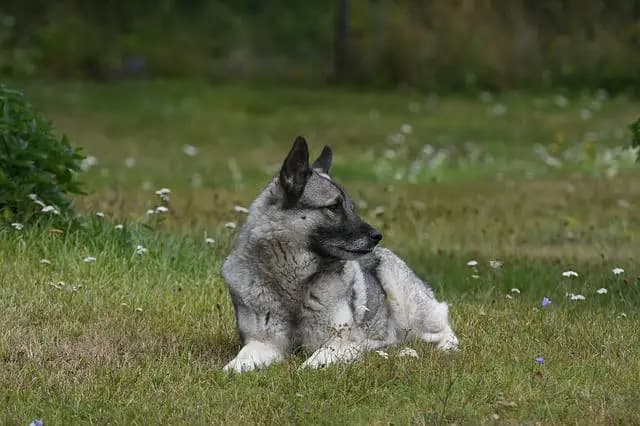
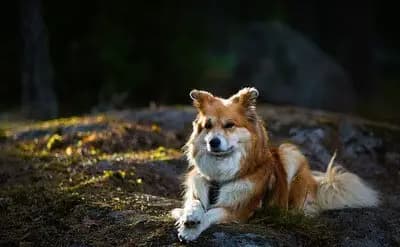
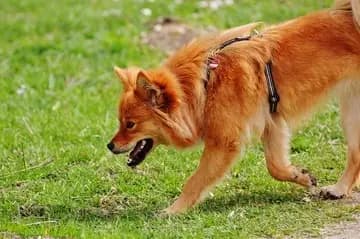
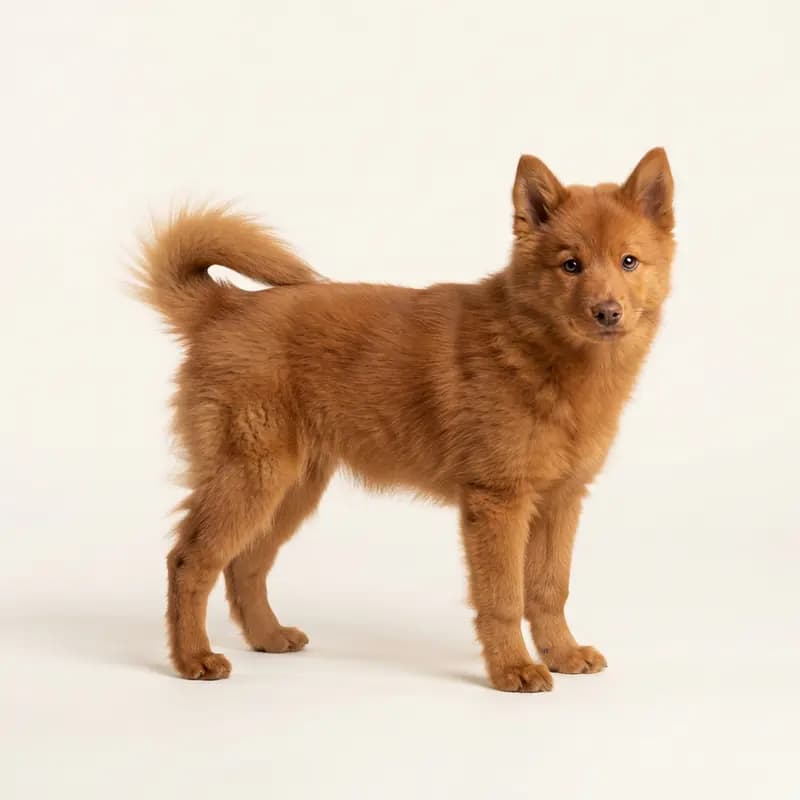
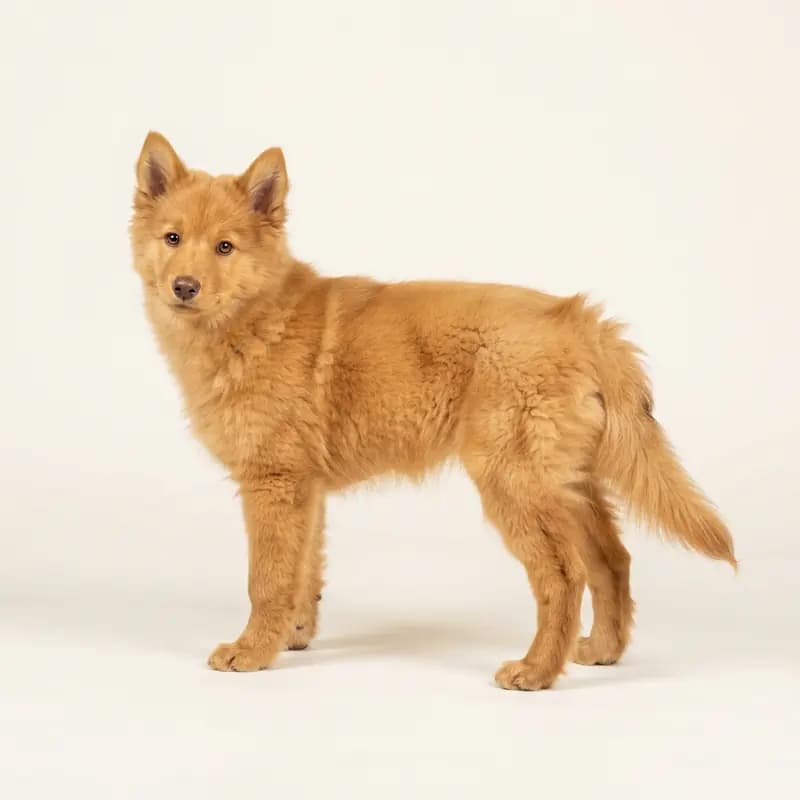
The Finnish Spitz has an impressive appearance that reflects both grace and strength. He has a well-proportioned body, with a square stature and strong, straight legs. Its ears are erect and pointed, giving it an alert appearance. The bushy tail is curled over the back, forming an elegant bow. The Finnish Spitz's eyes are dark and almond-shaped, giving it a friendly and intelligent expression. He belongs to FCI Group 5, one of the top dogs and dogs of the original type, and is listed as a hunting dog. There is no distinction between performance and show lines in the Finnish Spitz, as it is generally kept as a versatile hunting and family dog.
The Finnish Spitz is a real treasure when it comes to his character. He is known for his liveliness and intelligence, which makes him a wonderful companion. This dog loves to be busy and needs mental and physical stimulation to be happy. It is often used as a hunting dog, particularly for bird hunting, and is known for its "tree barking" habit, where it attracts birds by barking. But don't worry, he doesn't bark all the time! This is a special technique that he uses when hunting. The Finnish Spitz is very people-oriented and forms close bonds with his family. He is loyal and protective and makes a good guard dog as he is attentive and vigilant. This dog is also quite playful and enjoys interactive games and activities with his family. In terms of temperament, the Finnish Spitz is lively rather than hyperactive. He is an active dog, but not overly restless. It's important to give him enough exercise, but he will also enjoy the quiet moments at home. Although the Finnish Spitz forms a strong bond with his family, he can also be independent. This means that sometimes he has a mind of his own and decides what he wants to do. This independence comes from his past as a hunting dog, where he often had to make decisions without waiting for human instructions. In terms of hunting behavior, the Finnish Spitz typically shows a keen interest in birds and small game, but this can be kept in check with training and socialization. It is also important to note that the Finnish Spitz can learn well to stay alone, but it is advisable to practice this gradually to avoid separation anxiety.
| Watchfulness Reports unusual activity but stays controlled. | Moderate |
| Openness to Strangers Warms up quickly and is generally welcoming. | Friendly |
| Hunting or Herding Drive Mild interest in movement and small animals — easily managed. | Low |
Fun Fact!
Did you know that the Finnish Spitz is considered the “national dog breed of Finland?” is known and highly valued in Finnish culture?
Finnish Spitz are hunting dogs that are supposed to make decisions independently. Therefore, they not only need a lot of exercise and activity, but also an experienced dog owner who can consistently train this type of dog.
The Finnish Spitz is an active dog and needs space to move around. Although he can adapt to city life, it is important that he gets regular exercise and exercise. A house with a garden would be ideal. The Finnish Spitz is generally friendly around children, but as with all dogs, it is important that interactions between dogs and small children be supervised. The Finnish Spitz can also usually get along well with cats and other pets, especially if they are used to them from an early age.
Lives for its family — the born family companion.
Takes boisterous and affectionate children in its stride.
Actively enjoys the company of other dogs.
Adapts well to city living and urban environments.
Owning a dog is a privilege, but it's also a real responsibility. Before you bring one into your life, be honest with yourself about the commitment it takes.
The Finnish Spitz is an intelligent dog that loves to learn. It is important to start training early and use positive, reward-based training. The Finnish Spitz is a hunting dog by nature, so activities like agility or tracking are good ways to keep him mentally and physically busy. It is important to be careful not to over-stimulate this breed as they can tend to become restless with too much stimulation. At the same time, she can show a certain degree of independence, which is why it is important to promote frustration tolerance and impulse control. Since the Finnish Spitz also has a strong hunting behavior, it is advisable to offer alternatives that satisfy this need in a controlled manner. A well-behaved Finnish Spitz is a balanced and happy dog who integrates well into family life and is a loyal companion.
When feeding your Finnish Spitz, it is important to ensure a balanced diet with high-quality ingredients. This breed benefits from a diet rich in proteins and healthy fats, as well as the right balance of vitamins and minerals. When it comes to care, the Finnish Spitz has a dense undercoat and a medium-length coat. It tends to shed, especially during the spring and fall transition periods. Regular brushing, about two to three times per week, is recommended to keep the coat in good condition and avoid piles of loose hair in your home. When it comes to the climate in Germany, the Finnish Spitz copes well because its fur protects it from the cold, but in the hot season you should make sure it cools down sufficiently.
| Care Level Minimal effort — occasional brushing and bathing. | Low-maintenance |
| Exercise Needs Needs several hours of serious exercise every day. | Very active |
| Shedding Hair everywhere, always — no white clothing survives. | Very heavy |
| Trainability Has its own ideas and will test limits. | Strong-willed |
Our experts are still reviewing this information. Spotted something wrong? Email us at info@honestdog.de.
Robust
Health grade
The Finnish Spitz presents as a very robust and primal breed with an encouragingly low genetic burden. Special attention is paid to hereditary eye anomalies, which are nevertheless well controlled through mandatory breeding tests. In addition, buyers should look out for known risks such as patellar luxation and epilepsy, which occur sporadically in the breed.
Grade is relative to other breeds — AI-assisted and editorially reviewed.
Methodology and data: HonestDog Dog Breed Health Report 2026
What matters most for this breed
Tap any item to see details.
With joint-friendly rearing, a healthy weight, and regular veterinary eye exams, you lay the foundation for a long, active dog life.
Reputable breeders have the parents' knees, hips, and eyes checked and know their lines inside out to reduce the risk of hereditary neurological diseases.
Note: This health overview is AI-assisted and editorially reviewed. It is for orientation only and does not replace veterinary advice.
What matters most for this breed — what's common, how much it affects the dog's life, and how to protect yourself as a buyer.
Tap a body region to see the inherited conditions linked to it.
The three most important risks
Pick a region on the map to explore other areas.
We sort tests into three tiers — from the mandatory club standard to a fully exemplary program.
Club standard. Tests that the relevant breed club (VDH / FCI / AKC parent club) requires. Any serious breeder should be able to show you these.
Note: This health overview is AI-assisted and editorially reviewed. It is for orientation only and does not replace veterinary advice.
A Finnish Spitz costs around ~€160 per month (€90 – €300, depending on your setup). The first year adds up to roughly ~€4,770 including purchase, equipment and puppy school; across the dog's life (13 years) it comes to about ~€28,000.
With surgery cover, running costs come to about ~€150 per month — in return, your share of a major operation drops from several thousand euros to around 20 percent.
Per month
~€160
In the first year
~€4,770
Across the dog's life
~€28,000
Estimated purchase price from a breeder: €1,500 – €2,500
Estimate at a mid-range setup (suburban, dry food, 1–2 hours of daily exercise), average German prices, as of July 2026.
HonestDog Concierge
We currently have no breeders for this breed who have passed our verification. Create your short buyer profile: we'll set up your search alert, review a possible source and email you within 28 days.
 Illustrative image
 Illustrative image
The Finnish Spitz comes from Finland and is one of the oldest dog breeds in the country. It is believed to have been used thousands of years ago by Finno-Ugric peoples who valued it as a hunting companion. Originally used to hunt wild birds and small game, the Finnish Spitz developed a remarkable talent for attracting birds by barking. Over the years, the Finnish Spitz became an indispensable companion for Finnish hunters and was highly valued for its intelligence and loyalty. At the end of the 19th century, Finnish enthusiasts began specifically breeding the Finnish Spitz to preserve its unique characteristics and abilities. It was recognized as a separate breed in 1892 and is now the national dog of Finland.
The Finnish Spitz was bred to hunt birds and small game in the forests of Finland and has a distinctive barking behavior to indicate game.
Finland
1800
In family life, owners describe the Finnish Spitz as a very affectionate, playful, and loyal companion. Within its own pack it's cuddly and actively seeks close contact with its people. Many owners also describe it as a cheerful, patient playmate for children, as long as it has places to retreat to.
At the same time, owner reports point out that the dog is very watchful. It's often aloof and suspicious with visitors and strangers at first. Unfamiliar noises or guests get announced reliably and loudly. Experienced owners also stress that the breed has a noticeable need to move: just tagging along isn't enough, and it needs daily activity and mental tasks to be balanced and calm at home.
On training, owners agree: the Finnish Spitz has no automatic "will to please" and can't be shaped with harshness or pressure. Experienced owners consistently report a highly intelligent but very independent dog that likes to question commands and make its own decisions. The breed reacts very sensitively to harsh words, unfair treatment, or yelling, and it holds a grudge.
In owners' experience, successful training rests on a lot of patience, consistency, and positive reinforcement. Even the best treats won't always win over a Finnish Spitz if it doesn't see the point of an exercise or training gets too monotonous. It quickly loses interest in repetition. But if you engage with its fine, proud character and set clear boundaries with calm confidence, you'll gain a cooperative partner who meets you as an equal.
One central point in every owner account is the breed's love of barking and its hunting instinct. The dog was historically bred to mark prey, especially birds and small game, by barking nonstop at the foot of a tree, so this vocalizing is deeply rooted in its genes. Owners warn against underestimating it: even with intensive anti-barking training, the barking can usually only be reduced, never switched off completely. In thin-walled apartment buildings, this often leads to problems.
Off leash, its sight-driven hunting and urge to search through cover call for a lot of attention. Many owners report that a reliable recall outdoors takes long, consistent training from puppyhood. Birds, squirrels, and small animals trigger the instinctive hunting sequence almost instantly. Owners therefore advise channeling the hunting drive through targeted nose work, retrieving, or other activities that suit the breed.
Sources:paw-champ.comdogforum.dereddit.comdogpackapp.comdogorama.app
Paraphrased from real owner reports · translated from German
The Finnish Spitz is an active dog that needs plenty of exercise and mental stimulation. Research the temperament, grooming needs, and space requirements before deciding.
The average life expectancy of a Finnish Spitz is 12-14 years. With proper care and regular vet visits, your dog can live a long, healthy life.
Finnish Spitz grooming requirements include regular brushing, nail trimming, and dental care. HonestDog provides detailed grooming tips for every breed.
The Finnish Spitz can be a great family dog. Proper training and socialization are key. HonestDog provides family suitability information for every breed.
The Finnish Spitz comes in these colors: Red, Gold.
Showcase your kennel on HonestDog and reach families searching for a responsibly bred Finnish Spitz.