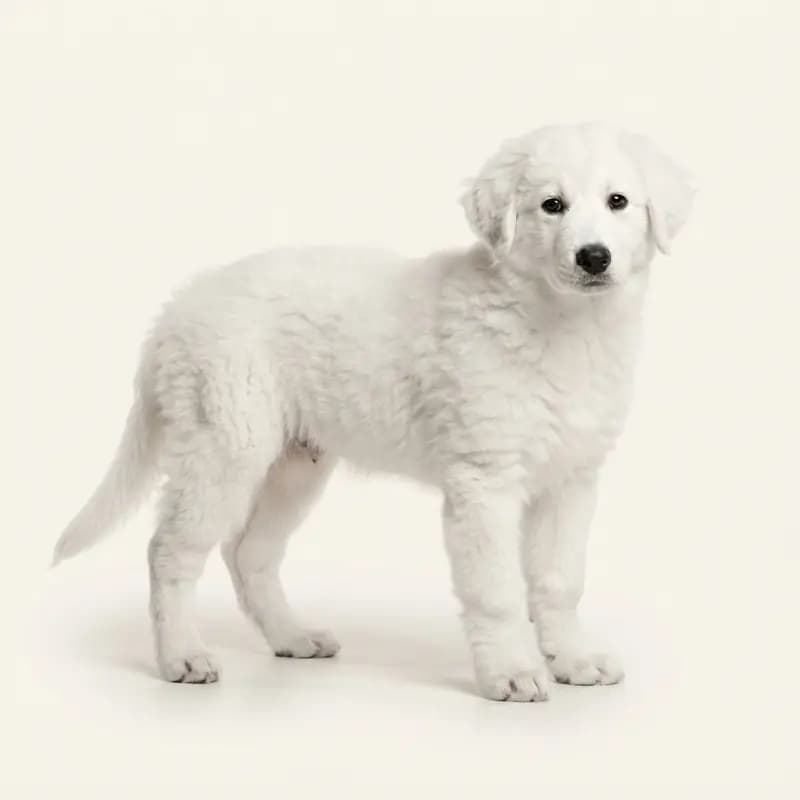
Slovakian ChuvachSame FCI section
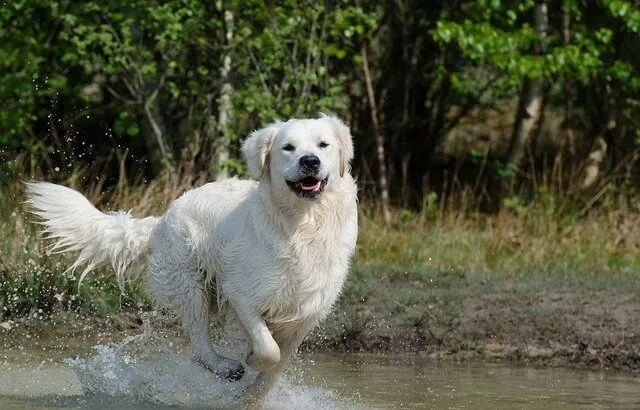
The Kuvasz is an imposing, uncompromisingly loyal dog—an independent livestock guardian dog bred in Hungary to protect herds from wolves on his own, which means he always assesses situations for himself.
Self-check
Answer 6 quick questions about your everyday life and see how well the Kuvasz fits you — including an honest cost estimate per month, per year, and across the dog's lifetime.

At a glance
The essentials — key facts, traits, and health priorities — before you dive deeper.
Lifespan
10–12 yrs
Shoulder height
66–76 cm
Weight
37–62 kg
Practical
Temperament
Daily life
What matters most
Especially with a Kuvasz, choosing the right breeder is the single most important decision you'll make. Serious breeders consistently test the parents for inherited conditions, prioritize healthy early socialization, and stay accountable long after handover. A cheap puppy without health screening tends to become the most expensive dog later on.
See HonestDog breeder standards →Colors & coat
The coat colors that occur in the Kuvasz — including which ones fall outside the breed standard and which carry genetic risk.
Eye colors
 Brown
Coat type
 Medium
 Double coat
The real vibes check
A Kuvasz is not a subordinate waiting for your command—he is an independent security chief who assesses situations himself and makes his own decisions when in doubt. His protective instinct is deeply anchored in his hardware and cannot be cuddled away. You aren't getting a dog you can mold, but a fully formed, imposing personality that needs to respect you as a confident partner.
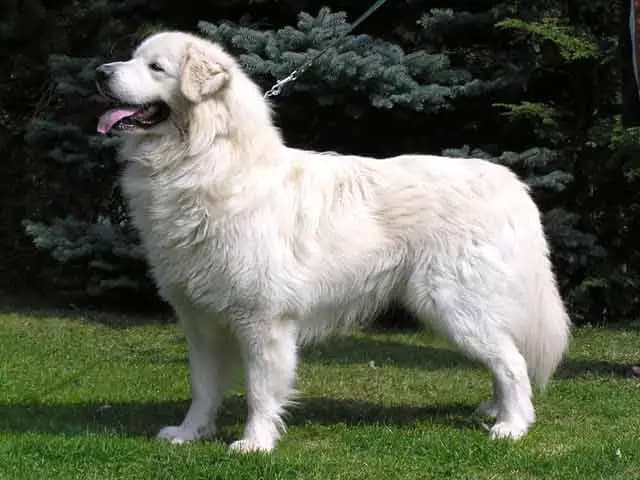
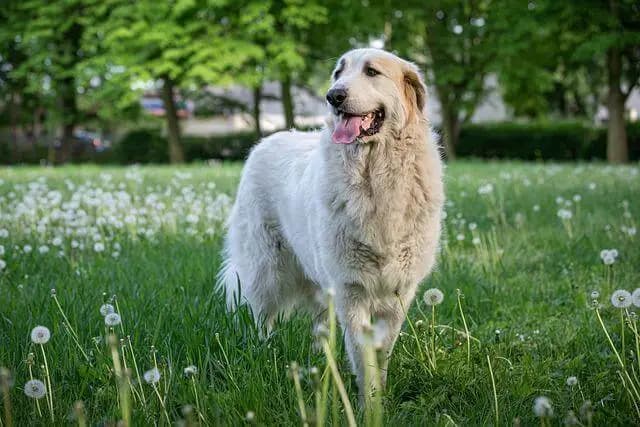
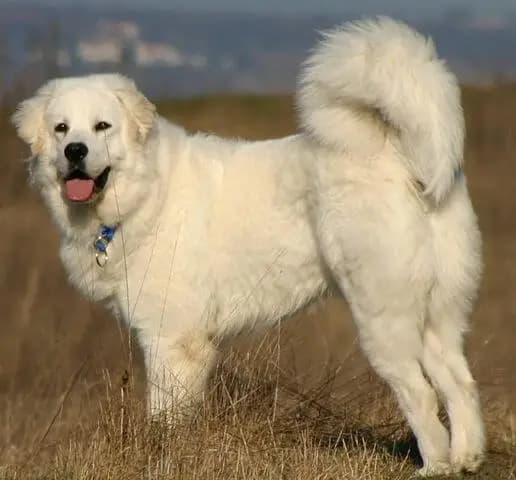
The Kuvasz is an impressive sight, exuding both strength and elegance. His powerful, well-muscled body, topped by an expressive head with dark brown eyes, is covered in a beautiful, thick white fur that protects him from the elements. The ears are droopy and in the shape of a V. Something very special is the Kuvasz's coat. Not only is it beautiful, but it is also incredibly functional, protecting him from extreme temperatures. The Kuvasz belongs to FCI Group 1, which includes the herding and driving dogs. In terms of lines, there is no clear distinction between performance and show lines in the Kuvasz, as the breed was traditionally bred as a working dog and the emphasis is on herding and protective qualities.
The Kuvasz is a remarkable dog that has many sides. He is an independent thinker, which comes from his history as a herding dog. He is trained to work independently and make decisions to protect the herd. This independence makes him a great guard dog, defending his territory and his family with determination. But don't be fooled: although the Kuvasz is a fearless protector, he also has a gentle and loving side, especially towards his family. He forms strong bonds and is very loyal. This aspect of the Kuvasz makes him a wonderful family dog as long as you have the time to give him the proper training and socialization. When it comes to temperament, the Kuvasz tends to be quiet and reserved. He is not the type of dog that wags his tail at every encounter. He prefers to observe and form his own opinion about the situation. It is important to know that the Kuvasz has an extremely alert nature and is suspicious of strangers. A Kuvasz needs a lot of mental and physical stimulation, but he is not hyperactive. Long walks, mental work and the opportunity to guard an area are ideal for him. He loves being outside and needs a big garden to be happy. Living in an apartment is not suitable for the Kuvasz. It is possible to train the Kuvasz to stay alone, but it should be done gradually. Because of his strong bond with his family, he feels most comfortable when someone is at home. His hunting behavior is not particularly developed, but he has a natural protective instinct that leads him to defend his family and his territory. When dealing with a Kuvasz, you should keep in mind that this dog has a strong personality and not a submissive nature. He needs clear leadership, but also respect and love. If you are willing to give him this and embrace the needs of this fascinating breed, the Kuvasz can be a wonderful companion who will loyally support you and your family.
| Watchfulness Strong territorial instinct — may actively confront intruders. | Very high |
| Openness to Strangers Careful around unfamiliar people — thaws slowly. | Cautious |
| Hunting or Herding Drive Mild interest in movement and small animals — easily managed. | Low |
Fun Fact!
Did you know that the Kuvasz was once the favorite dog of the Hungarian King Matthias I? It is said that the king had more trust in his kuvaszok than in his palace guards!
The Kuvasz is a territorial and alert dog that needs a lot of exercise and a large territory. In this he is rather suspicious of strangers. He is motivated to hunt and very independent.
Due to its size and need for movement, the Kuvasz is not particularly suitable for living in an apartment in the city. He needs space and ideally a garden that he can guard. Small children are usually not a problem if the dog has been properly socialized, but due to its size and strength, interactions should be monitored. The Kuvasz can learn to get along with cats and other pets if he is raised with them from an early age.
Loves family life and thrives in a group.
Takes boisterous and affectionate children in its stride.
Usually gets on fine with other dogs.
Can manage in the city, but only with very active owners.
Owning a dog is a privilege, but it's also a real responsibility. Before you bring one into your life, be honest with yourself about the commitment it takes.
Raising a Kuvasz requires patience, consistency and understanding of his peculiarities. As a livestock guard dog, the Kuvasz has a strong protective instinct. This should be taken into account during training by ensuring the dog has positive experiences with people and other animals. It is important to teach the Kuvasz frustration tolerance and impulse control to prevent him from becoming overly vigilant or protective. The Kuvasz needs mental and physical activity, but be careful not to over-exercise as this can lead to stress. Sports like obedience, mantrailing or agility can be fun, but should be practiced moderately. The Kuvasz does not tend to become a ball junkie, but it is important to find a balance between play and rest. Training should begin in puppyhood, with a focus on socialization and basic obedience. Since the Kuvasz is an independent thinker, training should be varied to keep him happy.
A balanced diet with high-quality food is essential for Kuvasz. This large dog requires an appropriate amount of protein and fat to support his active lifestyle. Make sure the food contains the right amount of nutrients and avoid overfeeding to minimize joint problems. In terms of care: Kuvaszok have a thick, slightly wavy coat with a dense undercoat. This protects them from extreme weather conditions, but it also means they shed quite a bit. Regular brushing (at least once a week) is necessary to prevent tangles and remove dead hair. In Germany, the Kuvasz copes well with the climate, but they should be protected from strong heat in summer.
| Care Level Regular brushing and occasional professional grooming. | Moderate |
| Exercise Needs Needs several hours of serious exercise every day. | Very active |
| Shedding Hair everywhere, always — no white clothing survives. | Very heavy |
| Trainability Has its own ideas and will test limits. | Strong-willed |
Our experts are still reviewing this information. Spotted something wrong? Email us at info@honestdog.de.
Solid
Health grade
In the Kuvasz, orthopedic risks such as hip dysplasia (HD) and elbow dysplasia (ED), as well as hereditary eye diseases like progressive retinal atrophy, take center stage. A responsible breeder has parent animals thoroughly examined and genetically screened for these conditions before breeding. Before buying a puppy, ask to see official X-ray results showing at most HD A–C and ED 0–1. In genetic testing for progressive retinal atrophy or chondrodysplasia (SLC13A1), a carrier may only be mated with a demonstrably clear partner, and there should also be a clear result for dermatomyositis (DMS).
Grade is relative to other breeds — AI-assisted and editorially reviewed.
Methodology and data: HonestDog Dog Breed Health Report 2026
What matters most for this breed
Tap any item to see details.
Especially during the first year, you should focus on joint-friendly growth and appropriate nutrition to keep the risk of later joint problems low.
Reputable breeders have the joints and eyes of the parent animals thoroughly checked and test the puppies' hearing to reduce health risks in the lineage.
Note: This health overview is AI-assisted and editorially reviewed. It is for orientation only and does not replace veterinary advice.
What matters most for this breed — what's common, how much it affects the dog's life, and how to protect yourself as a buyer.
Tap a body region to see the inherited conditions linked to it.
The three most important risks
Pick a region on the map to explore other areas.
Tier 1 is the recommended health standard for this breed. Tiers 2 and 3 show how responsible breeders go beyond.
Recommended standard. These tests make up the recommended health standard for this breed — the baseline of any careful breeding program. Ask any reputable breeder for the results.
Note: This health overview is AI-assisted and editorially reviewed. It is for orientation only and does not replace veterinary advice.
A Kuvasz costs around ~€220 per month (€120 – €440, depending on your setup). The first year adds up to roughly ~€6,270 including purchase, equipment and puppy school; across the dog's life (11 years) it comes to about ~€33,220.
With surgery cover, running costs come to about ~€230 per month — in return, your share of a major operation drops from several thousand euros to around 20 percent.
Per month
~€220
In the first year
~€6,270
Across the dog's life
~€33,220
Estimated purchase price from a breeder: €2,000 – €3,500
Estimate at a mid-range setup (suburban, dry food, 1–2 hours of daily exercise), average German prices, as of July 2026.
The history of Kuvasz goes back a long way. Although the exact origin is unclear, it is believed that the Kuvasz's ancestors came to the Carpathian Basin with nomadic tribes from Central Asia. The breed developed in Hungary, where it was used to protect and herd livestock. The name Kuvasz comes from the Turkish word "kawasz", which means "armed guard". In the 15th century, Kuvasz dogs were particularly valued at the court of the Hungarian King Matthias I. The king bred these dogs himself and often gave them as treasured gifts to nobles. Throughout the centuries, the Kuvasz remained a valued working dog in Hungary, particularly among shepherds. The breed was recognized by the Fédération Cynologique Internationale (FCI) in the 1930s. During and after World War II, the number of Kuvasz dogs declined sharply, but dedicated breeders worked to preserve the breed.
The Kuvasz was originally used as a livestock guard dog to protect livestock from predators and thieves.
Hungary
Mittelalter
Many owners describe life with a Kuvasz as a deep, almost symbiotic partnership. Within its close circle, this Hungarian guardian breed is very cuddly, affectionate and sensitive. It usually treats the family's own children with great patience and gentleness. Experienced owners stress, though, that the dog needs a set retreat where it's left in peace. Owners firmly reject keeping it only in a kennel or outdoors without close family contact; without being truly part of the pack, these dogs become lonely and often develop behaviors that get out of control.
The biggest everyday challenge is its strong protective and territorial behavior. Visitors generally can't just stroll through the garden gate. Several owners report that situations the dog reads as a threat to its family, such as outsiders roughhousing loudly with the children or tickling them, trigger immediate, resolute defensive action. Walks also call for planning ahead: males in particular tend toward dominance and a lot of posturing with unfamiliar dogs, which is why a well-fenced property and confident leash handling are essential.
Sources:issnruede.dezooroyal.deforum.hundund.demit-tier.dehunde-fan.de
Owner accounts of training agree that the Kuvasz isn't a dog for blind obedience. Standard training-club commands bore it quickly or are simply ignored if the dog sees no point in them. Owners repeatedly stress that drill-style obedience or pressure are completely out of place; the Kuvasz responds to harshness and unfair treatment with stubborn withdrawal or open defiance. The only way to get cooperation from this breed is through respect, trust and calm, unshakable consistency.
Development during the first three years of life gets particular attention. While puppies and young dogs often still seem playful and approachable, the breed's typical protective and distrustful behavior usually only emerges as it reaches adulthood. Owners report that very early, varied exposure to the world is vital, so the dog learns to take unfamiliar noises, visitors and changing situations in stride. Without that guidance, the Kuvasz will, when in doubt, decide on its own what counts as danger, which quickly leads to serious problems with a dog of this size and strength.
Sources:zooroyal.demit-tier.dehundeforum.comissnruede.deforum.hundund.de
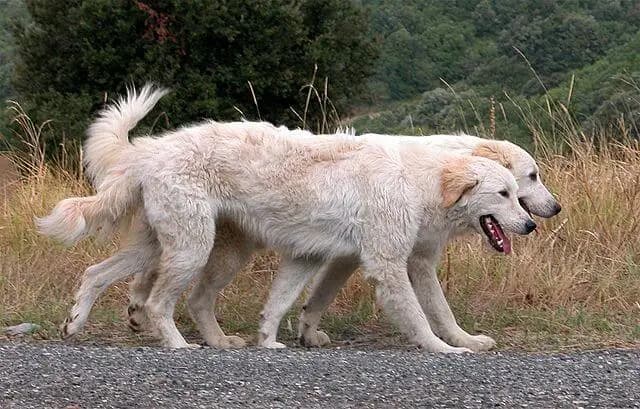
In practice, owners mostly see the Kuvasz as a hardy, weatherproof breed that shrugs off cold and wet with ease. Owners describe caring for the dense, wavy coat as surprisingly simple: a thorough brushing is normally enough, since dirt usually falls off by itself once dry. They do point out, though, that the twice-yearly shed comes with huge amounts of hair and that the dense undercoat is a limitation in summer heat; on hot days these dogs prefer to retreat to shady spots and noticeably cut back their activity.
The typical concerns owners and breed experts name for a large dog of this build center on the musculoskeletal system, especially hip dysplasia (HD) and joint strain during its rapid growth. Many owners are meticulous about avoiding stairs and sudden jumps in the first year. Despite its imposing size, the Kuvasz is often a modest eater; in old age, however, age-related joint problems and limitations can appear, so virtually all owners consider living on an upper floor without ground-level yard access unacceptable.
Sources:zooroyal.dewirliebenhunter.dego4vet.comforum.hundund.demartinruetter.com
Paraphrased from real owner reports · translated from German
The Kuvasz is an active dog that needs plenty of exercise and mental stimulation. Research the temperament, grooming needs, and space requirements before deciding.
The average life expectancy of a Kuvasz is 10-12 years. With proper care and regular vet visits, your dog can live a long, healthy life.
Kuvasz grooming requirements include regular brushing, nail trimming, and dental care. HonestDog provides detailed grooming tips for every breed.
The Kuvasz can be a great family dog. Proper training and socialization are key. HonestDog provides family suitability information for every breed.
The Kuvasz comes in these colors: White.
Showcase your kennel on HonestDog and reach families searching for a responsibly bred Kuvasz.