
English Springer SpanielSame FCI section
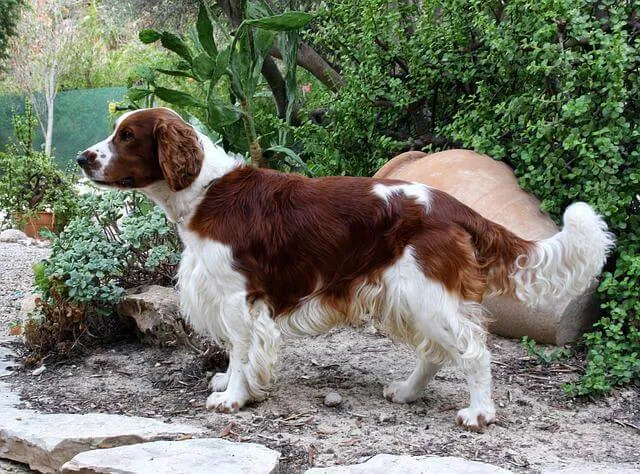
The Welsh Springer Spaniel is a tireless, people-oriented Stöberhund (flushing dog)—bred to persistently track and flush out game in dense thickets. He is slightly more reserved than his English cousin, but just as passionate once his nose hits the ground.
Self-check
Answer 6 quick questions about your everyday life and see how well the Welsh Springer Spaniel fits you — including an honest cost estimate per month, per year, and across the dog's lifetime.


At a glance
The essentials — key facts, traits, and health priorities — before you dive deeper.
Lifespan
12–15 yrs
Shoulder height
44–50 cm
Weight
16–23 kg
Practical
Temperament
Daily life
What matters most
Especially with a Welsh Springer Spaniel, choosing the right breeder is the single most important decision you'll make. Serious breeders consistently test the parents for inherited conditions, prioritize healthy early socialization, and stay accountable long after handover. A cheap puppy without health screening tends to become the most expensive dog later on.
See HonestDog breeder standards →Colors & coat
The coat colors that occur in the Welsh Springer Spaniel — including which ones fall outside the breed standard and which carry genetic risk.
Eye colors
 Brown
Coat type
 Illustrative image
Medium
 Smooth
 Double coat
The real vibes check
A Welsh Springer Spaniel is like a red flash in the undergrowth that always keeps one ear tuned to you. He doesn't work stubbornly on his own, but constantly seeks feedback from his human—provided you have taught him that you are more exciting than a pheasant trail. You aren't getting a 'follower,' but a highly sensitive outdoor colleague who prefers to sleep on your feet when indoors.
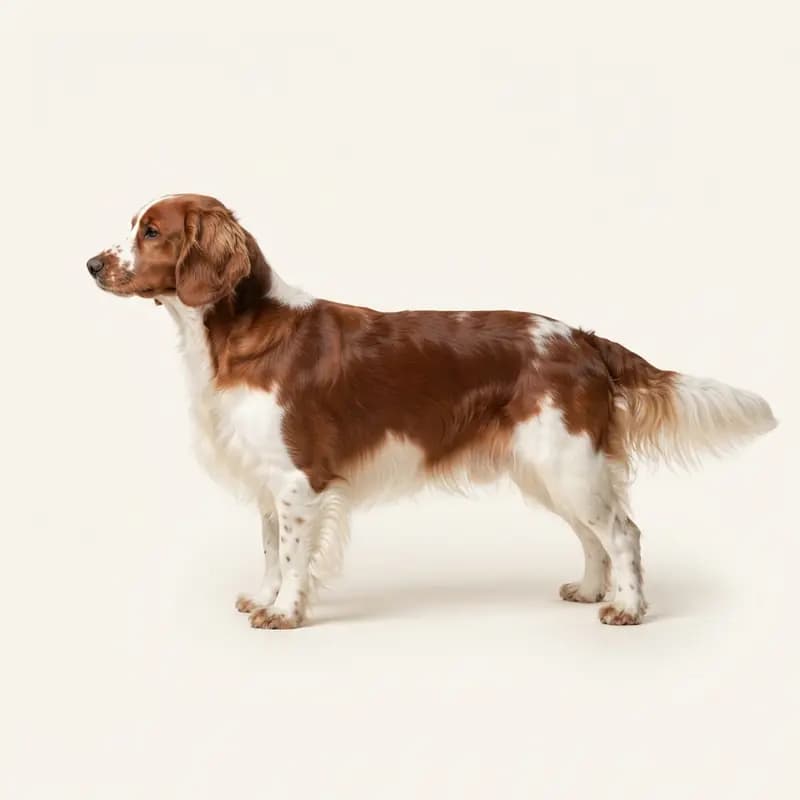
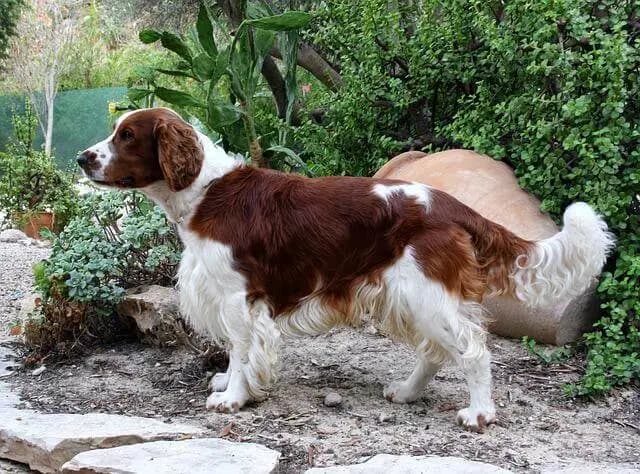
The Welsh Springer Spaniel is a medium-sized breed with a balanced and harmonious physique. Its powerful body is compact, but not cumbersome. His head is appropriately large and his expression is friendly and alert. Its eyes are mostly hazel brown and its ears are medium-sized, set high and hanging close to its head. Its back is straight and strong, and the tail is carried in the extension of the back line. The Welsh Springer Spaniel has a smooth or slightly wavy, medium-length coat that is dense and soft. Its coat color is always white with red, although the distribution of red spots varies. The Welsh Springer Spaniel belongs to FCI Group 8, the retrieving, searching and water dogs. He is a natural worker, bred to track game for hunters. As a rule, no distinction is made between performance and show lines for this breed, as they have retained their working characteristics and are also successful as show dogs.
The Welsh Springer Spaniel is known for its friendly, even-tempered and loyal nature. He is lively and energetic, but not overly hyperactive. These dogs love being part of the family and are affectionate and loving towards their people. They are known for their friendly nature and get along well with children and other dogs. However, it is important to note that despite their clinginess, they retain a certain degree of independence and can sometimes need some peace and quiet. Although they were bred as hunting dogs, most Welsh Springer Spaniels have medium to low hunting abilities and can learn to control their instincts with proper training and socialization. They are naturally alert and notice visitors or unknown things in their surroundings, but are not outright watchdogs. Welsh Springer Spaniels are intelligent dogs that enjoy learning and working. They respond well to positive reinforcement and can learn a variety of commands and tricks. They are also great for various dog sports such as agility, flyball and obedience. It is important to ensure balanced employment and avoid the Welshie from becoming "over-employed". A constantly busy dog doesn't have time to relax and enjoy his surroundings. A proper balance between activity and rest is crucial. It is important to train frustration tolerance and impulse control in Welsh Springer Spaniels. They are naturally very motivated and can sometimes be a bit "overexcited". Good recall is also important to ensure they can run freely in a safe environment. Welsh Springer Spaniels can learn to stay alone, but they prefer to be in company. They are not the best choice for people who spend long hours away from home unless there is appropriate care for the dog. Welsh Springer Spaniels are dogs with a natural hunting instinct. This should be taken into account during training and socialization to ensure that they get along well with other animals and are not prone to prey-catching behavior.
| Watchfulness Occasionally alerts but is fundamentally open. | Low |
| Openness to Strangers Warms up quickly and is generally welcoming. | Friendly |
| Hunting or Herding Drive Noticeable drive — needs attention around small animals. | Moderate |
Fun Fact!
Welsh Springer Spaniels are often referred to as "howling dogs" because they tend to make a unique yodeling or howling sound that sounds like happy singing. This distinctive sound can be both amusing and endearing, making the Welsh Springer Spaniel a unique breed.
The Welsh Springer Spaniel is a strong, medium-sized bird dog with a cheerful disposition, known everywhere for its versatility in the field, sociability at home and dashing appearance. The Welshie is one of Britain's oldest sporting dog breeds.
Welsh Springer Spaniels are adaptable dogs and can live well in both urban and rural environments. However, they need regular exercise and mental stimulation to stay happy and healthy. A fenced yard or regular walks are important to meet their exercise needs. This breed is generally good-natured and friendly, making it a good choice for families. They are patient and friendly with children and can build good relationships with them. However, when introducing a Welsh Springer Spaniel to a family with young children, it is important to supervise interactions and teach children how to treat the dog respectfully. In terms of compatibility with other pets, including cats, this can vary from dog to dog. However, with proper socialization and introduction, they can live well with other animals.
Lives for its family — the born family companion.
Extraordinarily patient and loving — a true family dog.
Actively enjoys the company of other dogs.
City-appropriate with enough exercise and stimulation.
Owning a dog is a privilege, but it's also a real responsibility. Before you bring one into your life, be honest with yourself about the commitment it takes.
The Welsh Springer Spaniel is an intelligent dog that is willing to learn. They respond well to positive training and are eager to please their owners. It is important to take into account their natural abilities as a hunting dog and provide them with mental and physical challenges. This breed can be well suited to various dog sports, such as agility, obedience and flyball. Because they have certain energy levels, it is important to ensure they receive enough exercise and mental stimulation to avoid unwanted behavior. Being underemployed can lead to boredom and destructive behavior. However, it is also important not to overwhelm or overtrain them to avoid injury. Good training and socialization are crucial to ensuring that the Welsh Springer Spaniel is a well-adjusted and happy member of the family. Promoting frustration tolerance, impulse control, and other basic obedience commands is important to help them succeed in various situations.
A Welsh Springer Spaniel's diet should be balanced and tailored to its size, age, activity level and health status. Most dogs of this breed do well on high-quality dry or wet food that contains sufficient protein and healthy fats. As with all dogs, it is important to avoid overweight as this can lead to health problems. In terms of grooming, the Welsh Springer Spaniel has a medium-length, silky coat with an undercoat that requires regular grooming. A weekly brushing should be enough to keep the coat clean and tangle-free. During the shedding phases in spring and autumn, increased hair loss may occur and more frequent brushing may be necessary. This breed's coat is well suited to protecting them from most weather conditions and they also cope well with the German climate.
| Care Level Regular brushing and occasional professional grooming. | Moderate |
| Exercise Needs Needs several hours of serious exercise every day. | Very active |
| Shedding Hair everywhere, always — no white clothing survives. | Very heavy |
| Trainability Picks up commands quickly and wants to please. | Eager to learn |
Our experts are still reviewing this information. Spotted something wrong? Email us at info@honestdog.de.
Solid
Health grade
In the Welsh Springer Spaniel, the health profile is primarily defined by hip dysplasia (HD), elbow dysplasia (ED), and hereditary eye diseases such as pectinate ligament dysplasia (PLD). A responsible breeder therefore has their breeding dogs orthopedically X-rayed, examined by an ophthalmologist, and additionally utilizes genetic tests. Before buying, ask to see written test results for HD (HD A–B), ED (ED 0), as well as a clear ophthalmological eye test and a clear result for pectinate ligament dysplasia (PLD). For findings regarding dilated cardiomyopathy, progressive retinal atrophy, or factor VII deficiency (F7), ensure that carriers are mated only with clear partners.
Grade is relative to other breeds — AI-assisted and editorially reviewed.
Methodology and data: HonestDog Dog Breed Health Report 2026
What matters most for this breed
Tap any item to see details.
You should focus on joint-friendly development and schedule regular veterinary eye and kidney check-ups so that potential issues can be detected early.
Responsible breeders test breeding dogs for hip dysplasia (HD), elbow dysplasia (ED), and pectinate ligament dysplasia (PLD) to reduce the risk of severe joint and eye diseases.
Note: This health overview is AI-assisted and editorially reviewed. It is for orientation only and does not replace veterinary advice.
What matters most for this breed — what's common, how much it affects the dog's life, and how to protect yourself as a buyer.
Tap a body region to see the inherited conditions linked to it.
The three most important risks
Pick a region on the map to explore other areas.
Tier 1 is the recommended health standard for this breed. Tiers 2 and 3 show how responsible breeders go beyond.
Recommended standard. These tests make up the recommended health standard for this breed — the baseline of any careful breeding program. Ask any reputable breeder for the results.
Note: This health overview is AI-assisted and editorially reviewed. It is for orientation only and does not replace veterinary advice.
A Welsh Springer Spaniel costs around ~€180 per month (€90 – €340, depending on your setup). The first year adds up to roughly ~€4,980 including purchase, equipment and puppy school; across the dog's life (13.5 years) it comes to about ~€31,920.
With surgery cover, running costs come to about ~€170 per month — in return, your share of a major operation drops from several thousand euros to around 20 percent.
Per month
~€180
In the first year
~€4,980
Across the dog's life
~€31,920
Estimated purchase price from a breeder: €1,500 – €2,500
Estimate at a mid-range setup (suburban, dry food, 1–2 hours of daily exercise), average German prices, as of July 2026.
HonestDog Concierge
We currently have no breeders for this breed who have passed our verification. Create your short buyer profile: we'll set up your search alert, review a possible source and email you within 28 days.
 Illustrative image
 Illustrative image
The Welsh Springer Spaniel is a very old dog breed whose origins probably date back to the 13th century. It was bred in Wales as a working dog and was originally used for tracking game. In the 18th and 19th centuries, the Welsh Springer Spaniel enjoyed great popularity among the landed gentry, who used it for hunting. The breed was only officially recognized by the Kennel Club in Great Britain in 1902 and has been a separate breed since 1903. The Welsh Springer Spaniel has always been less common in the UK than the English Springer Spaniel, but has a loyal following worldwide.
The Welsh Springer Spaniel was bred to hunt birds and retrieve game.
Wales, UK
Mittelalter
Owners consistently describe the Welsh Springer Spaniel as a very affectionate, cheerful and sensitive companion in everyday family life. Many lovingly call their dog a real shadow or "Velcro dog" that always wants to be near its people. With children and other dogs, the breed is usually very easygoing, playful and free of aggression. At home, well-exercised Welshies are considered pleasantly calm, as long as they're challenged mentally and physically.
At the same time, owners point out typical everyday challenges: many of these dogs find it hard to be left alone, and that needs to be built up very gently from an early age. Their fondness for water, mud and digging in the yard also comes up regularly. The fine, feathered coat attracts dirt and burrs like a magnet; once the mud dries, it often rains down generously around the house, which calls for a certain calm about housekeeping.
Sources:sabinemiddelhaufeshundundnatur.netvom-lehmhuegel.demit-tier.dehaustierforum.ch
Owners describe the Welsh Springer Spaniel in training as a very teachable, intelligent partner with a strong desire to cooperate (a "will to please"). The breed reacts very sensitively to pressure, harshness or a loud voice, though; the dogs then quickly become insecure or refuse to cooperate. According to owners' accounts, the best approach is loving, patient consistency combined with positive reinforcement. Alongside its strong willingness to cooperate, a certain Welsh stubbornness also shows up in daily life now and then, and it calls for consistent leadership.
Outdoors, the breed's heritage as a keen flushing dog shows: many owners stress that its hunting drive shouldn't be underestimated. Off leash, Welshies like to range with their nose glued to the ground and, without guidance, quickly widen their radius. A reliable recall and targeted anti-hunting and impulse-control training are therefore must-haves from puppyhood on. To keep these dogs content, owners swear by structured nose and brain work such as dummy training, mantrailing or tracking.
Sources:sabinemiddelhaufeshundundnatur.netvom-lehmhuegel.dehaustierforum.chpetbook.deeinfachtierisch.de
On health and grooming, owners describe the Welsh Springer Spaniel as an overall robust, healthy and long-lived breed without extreme exaggeration of type. Unlike in some other gundog breeds, there's hardly any strict split between pure show lines and pure working lines, so these dogs keep a lot of natural energy and love of movement well into old age.
The floppy ears are the weak spot owners mention most. Because of the dense hair and the breed's strong love of water and mud, the ear canal tends to get too little air, which can lead to stubborn ear infections without regular checks and cleaning. The silky coat also needs ongoing combing to get out burrs and undercoat. Some owners also point to breed-typical health screenings such as hip dysplasia (HD) and hereditary eye diseases, which is why they stress choosing parent dogs carefully from a reputable breeder.
Sources:sabinemiddelhaufeshundundnatur.netvom-lehmhuegel.dehaustierforum.chfressnapf.defressnapf.ch
Paraphrased from real owner reports · translated from German
The Welsh Springer Spaniel is an active dog that needs plenty of exercise and mental stimulation. Research the temperament, grooming needs, and space requirements before deciding.
The average life expectancy of a Welsh Springer Spaniel is 12-15 years. With proper care and regular vet visits, your dog can live a long, healthy life.
Welsh Springer Spaniel grooming requirements include regular brushing, nail trimming, and dental care. HonestDog provides detailed grooming tips for every breed.
The Welsh Springer Spaniel can be a great family dog. Proper training and socialization are key. HonestDog provides family suitability information for every breed.
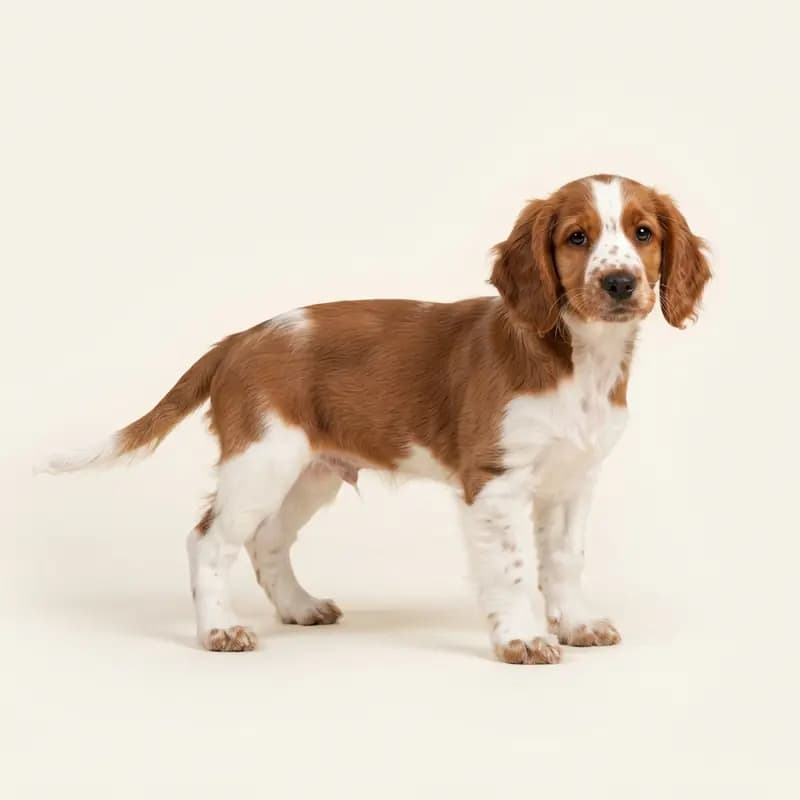
The Welsh Springer Spaniel comes in these colors: Red and white.
Showcase your kennel on HonestDog and reach families searching for a responsibly bred Welsh Springer Spaniel.