
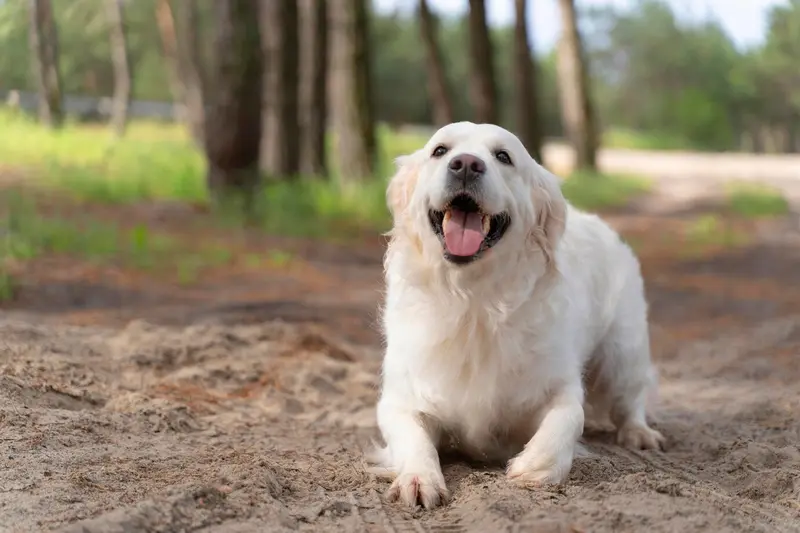
Dog breed is a term that no longer necessarily reflects what dog breeding needs to achieve healthy and long-lived dogs. In this article, we explain why this is the case and why we will gradually replace the term dog breed with dog type on Honstdog.
Dog breed: What is it?
The classification of dog breeds is very complex and can be confusing. What exactly a breed is is not really defined. The term breed is used in animal breeding and usually refers to a group of animals of a species whose offspring are very similar to their parents over several generations. In dog breeding, this went so far that stud books were closed. Stud books are the documents that list all individuals of a breed whose owners belong to the respective club. Closed here means that only individuals in this stud book may be bred.
There are now many breeding clubs, and some are organized into so-called umbrella organizations, ranging from regional to international. These private clubs not only set the rules for breeding, they also decide which dog groups they recognize as breeds and which they do not.
To complete this confusion, so-called designer or hybrid breeds have been around for some time. These are, strictly speaking, mixed breeds whose parents come from two different breeds. One example is the Labradoodle, which is a Labrador and a Poodle. Here, the good qualities of both parents are combined. We'll explain later whether this really works and why many people think it's not breeding, but rather so-called multiplication of dogs.
Pedigree Dog Breeding: What Went Wrong?
More and more attention was paid to appearance, and the so-called conformation value (this describes how similar a dog is to the ideal breed appearance defined by a particular club) moved to the forefront at dog shows. (For some breeds, one or another working test is still a prerequisite for breeding today – depending on the club.) Breeding for appearance, with a limited number of individuals, has not been good for the genetic health of today's dog breeds. We remember the closed stud books, because strictly speaking, this means that a Labrador from club X cannot be crossed with a Labrador from club Y. In some clubs, this is permitted under very strict rules and conditions, including conditions for the offspring. However, this is a very complex and lengthy process that not every breeder is willing to undertake.
In this already limited gene pool, popular and beautiful males were also used excessively in breeding, thus further reducing the gene pool. Some hereditary diseases also became more prevalent than average.
The result is that we have dog breeds with many hereditary diseases (the number of diseases and their frequency can vary depending on the breed) and that are so closely related that almost every mating in many breeds is equivalent to a sibling mating. We humans should know from our own experience that closely related matings are not good (Pharaohs, European royal families).
Do we even need breeds?
Even today, there are dogs with jobs, e.g., police dogs, herding dogs, hunting dogs, and therapy dogs. For these, as well as for family dogs, it is important to be able to accurately assess the characteristics of the dog selected. Therefore, it is advantageous to have different varieties of dogs with predictable behavioral tendencies. However, pedigree dog breeding, as we have practiced it for the last 100-150 years, is leading us down a dead end with an increasing number of sick, short-lived, and behaviorally disturbed dogs. Therefore, we should distance ourselves from our idea of purebredness and, symbolically, from the term "breed" and everything associated with it.
Are hybrid or designer breeds the future?
A designer dog, as described above, consists of two (or more) breeds. The aim is to obtain the best characteristics from the breeds involved. This can work, but it doesn't have to. In most cases, the offspring in the first generation look very similar. If these were to be bred further (from different parents, of course!), the dogs could suddenly look very different. This is based on simple genetic laws. Of course, here too, one can create a uniform appearance through selective breeding and, unfortunately, most easily through inbreeding, thus establishing a separate breed, as is already done in some cases. But that brings us back to the beginning.
Most breeders of such dogs, however, only breed first-generation dogs, for example, always producing Labradoodle puppies by mating a Labrador and a Poodle. This means they cannot contribute to the improvement of the dogs or their genetics, as they do not plan for multiple generations. Therefore, many refer to them not as breeders, but as dog breeders.
Mixing breeds can have many advantages in breeding, but if you take two already highly compromised dog breeds, such as the French Bulldog and the Pug, you won't get a healthy dog, but rather one that combines the genetic diseases of both breeds.
Furthermore, no matter what negative things you can say about breeding associations, most of them at least thoroughly monitor their breeders and require one or more health tests (even if in most cases, more are necessary). Virtually no breeding association allows what they consider "mixed-breed breeders." This means that many of these breeders are not subject to any regulations or controls other than their own.
New Breeds and Their Recognition
Small breeding associations that dedicate themselves to a breed they invent, so to speak, are becoming increasingly popular. The Elo is an example of this. The breeding goal of the Elo is to breed a healthy dog that is suitable for families. The name Elo is protected by the Patent and Trademark Office.
Here, too, of course, not everything that glitters is gold. Which parent animals and original breeds are chosen, how large is the breeding base, which health tests are conducted, and what is excluded from breeding?
The major breeding associations do not recognize these new breeds any more than they recognize designer dogs or other mixed breeds.
Are there good ways out of this impasse?
There are various suggestions and approaches from experts and scientists. All of these are still met with considerable resistance from the major breed dog associations, who would rather observe the situation for a while before taking action.
A good possibility would be if we abandon the term "purebred" and the associated meaning and breeding restrictions and return to what was formerly known as "landrace" or "breeds." Dogs that were not necessarily visually uniform, but were healthy and suitable for the work they were supposed to do. Even the stray dog from next door was allowed to crossbreed for greater genetic diversity. This would mean that the sometimes very good attempts to make the Pug a healthy dog with a nose again by crossbreeding with other breeds should not be done individually and outside of the large associations, but together with them, in a coordinated manner, for the best possible result, with a large breeding base and many breeders.
More and more hereditary diseases can be tested, so this should be done. The extent to which dogs can then be excluded for which disease or which genetic traits is controversial and certainly far from being conclusively clarified. However, in most cases, there is still no obligation to test for ALL! possible diseases of the respective breeds that are testable (this is not much more expensive than individual tests, and one sample is sufficient).
Abandoning the Term "Breed"
For the reasons stated above, and to make this distinction clear in people's minds, HonestDog is increasingly abandoning the term "breed" and replacing it with the term "type." Completely in the spirit of the Alaskan Husky. A dog type with a certain degree of variation, made for work (pulling sleds) and selected for suitability and health. Breeding is welcome to achieve this goal of improving the dog for work.
Conclusion
Breeding dog types for specific purposes, with good health and the desired characteristics at the forefront, with appearance as the last criterion, with genetic diversity and the explicit permission of crossbreeding with other types: this could be a possible future, so that we can continue to share our lives with dogs without causing them as much suffering as unfortunately happens to a large extent today.
If you would like to learn how many dog breeds there are, you can read this article .