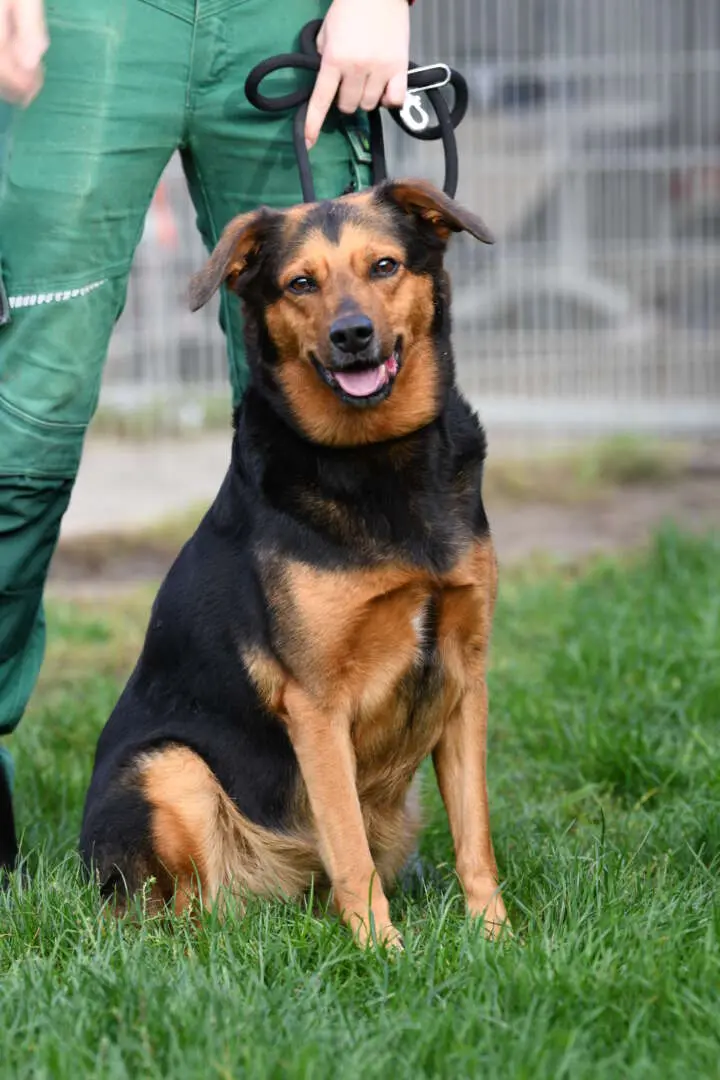
If you are looking for a loyal, brave, and impressive companion, you will inevitably come across two of the most famous dog breeds in the world. The question of German Shepherd vs Rottweiler often arises for prospective owners seeking a vigilant family dog or a reliable working partner. Both breeds originate from Germany and enjoy a worldwide reputation as excellent guard and working dogs, yet their temperament, work ethic, and requirements could hardly be more different.
As a dog expert, I am often asked for a detailed German Shepherd comparison or an in-depth Rottweiler comparison. It is not enough to just look at their appearance. These dogs bring immense power, a strong character, and specific genetic traits. A wrong decision can end in frustration for both human and animal. That is why we are taking a closer look at both breeds today. By the end of this article, you will know exactly which of these two fascinating dogs better suits your lifestyle, housing situation, and experience level.
A Quick Overview: Breed Data Comparison
Before we dive deep into the character traits and living conditions, let’s look at the hard numbers. The following table provides initial guidance on what to expect from these two giants.
| Trait | German Shepherd | Rottweiler |
|---|---|---|
| Origin | Germany | Germany |
| FCI Group | Group 1 (Sheepdogs and Cattle Dogs) | Group 2 (Pinscher and Schnauzer type, Molossoids) |
| Weight (Male) | 30–40 kg | 42–50 kg |
| Height (Male) | 60–65 cm | 61–68 cm |
| Life Expectancy | 9–13 years | 8–10 years |
| Coat Type | Dense, straight hair, thick undercoat | Short, dense, with undercoat |
| Temperament | Confident, brave, intelligent | Loyal, affectionate, self-assured |
| Puppy Price Range | 1,300 – 2,500 EUR | 1,800 – 3,500 EUR |
Focus on Character and Temperament
When we address the question of German Shepherd or Rottweiler, we must look at the history of the breeds. The original purpose of a dog continues to shape its personality today.
The German Shepherd: The Highly Intelligent Workaholic
The German Shepherd was bred in the late 19th century to herd and guard sheep. This heritage can still be felt in every fiber of their being. They are highly intelligent and extremely eager to work. Their "will to please"—the desire to satisfy their human and work alongside them—is highly developed. They respond lightning-fast to commands, body language, and the moods of their owner.
It is important to distinguish between the working line and the show line. A German Shepherd from a working line is a high-performance athlete. They absolutely require a job. Whether nose work (mantrailing), demanding obedience training, agility, or protection sports—this dog must engage both body and mind. The show line often has a slightly calmer temperament, but they still have a very high need for exercise.
The German Shepherd is incredibly human-oriented and forms a very close bond with their owner. This makes them a fantastic companion, but it also requires early and consistent training. If they don't receive guidance, their sensitivity and herding instinct can lead them to take charge, which often manifests as uncontrolled barking or attempting to discipline others. If you want to learn more about their specific traits, take a look at the detailed German Shepherd breed profile.
The Rottweiler: The Calm Powerhouse with a Heart of Gold
The Rottweiler has a very different history. Their ancestors accompanied the Roman legions across the Alps, guarding cattle. Later, in the Rottweil region, they were used as cattle drovers and butcher's dogs. They pulled carts and guarded the livestock merchants' earnings. The Rottweiler is a molosser: sturdy, powerful, and characterized by a stoic calm.
People who aren't familiar with Rottweilers sometimes tend to view them as intimidating. But beneath that massive, muscular appearance lies an incredibly soft, loving heart. Rottweilers are exceptionally loyal and attached to their family. Experts often jokingly call them "lap dogs in the wrong body" because they love nothing more than cuddling with their humans.
Unlike the reactive German Shepherd, the Rottweiler is more contemplative. They think before they act. This can sometimes be mistaken for stubbornness. They may occasionally question the purpose of a command. Their protective instinct is deeply rooted. If you open your heart to a Rottweiler, you gain a guardian who would protect you with their life. As highly intelligent dogs, Rottweilers also seek mental stimulation, but they will shut down if faced with harsh, unfair treatment. Confident, calm consistency is the key here. Deepen your knowledge about this fascinating breed in the detailed Rottweiler breed profile.
Care, Housing, and Exercise Needs
Bringing a large dog into your life changes your routine completely. Both breeds are rated with an energy level of 5/5. They are definitely not couch potatoes, even if the Rottweiler loves to sleep in on a rainy Sunday.
How Much Space Do They Need?
Both the German Shepherd and the Rottweiler receive a rating of only 2/5 for city living. A small apartment on the fourth floor without an elevator is a no-go for both breeds. Both dogs reach considerable weights (a male Rottweiler up to 50 kg), and climbing stairs is very hard on their joints.
A house with a securely fenced yard is ideal. But be careful: A yard does not replace a walk or mental exercise! The German Shepherd enjoys patrolling the fences, while the Rottweiler often finds a strategic spot to calmly monitor "their" territory for hours.
Coat Care: A World of Difference
In the German Shepherd comparison regarding maintenance, the double coat with its extremely thick undercoat stands out immediately. Dog owners often joke: "The German Shepherd only sheds twice a year—each time for six months." With a German Shepherd (grooming effort 4/5), you will need to reach for the vacuum and brush almost daily. They lose clumps of hair, especially during shedding season.
The Rottweiler wins on maintenance here. Their coat is short, dense, and close-lying (grooming effort 2/5). Brushing once a week with a curry comb or soft brush is plenty to remove dead hair and maintain the beautiful shine of their black-and-tan coat.
Health and Life Expectancy
As a responsible owner, you must deal with the health risks of the breed. Large dogs age faster and have specific weaknesses in their musculoskeletal system.
Health of the German Shepherd
The life expectancy of a German Shepherd is a good 9 to 13 years. The biggest and most well-known issue is hip dysplasia (HD) and elbow dysplasia (ED). In the past, extreme breeding for a sloping back line caused many dogs to suffer. Reputable breeders strictly organized within the German Shepherd Dog Club (SV) have countered this heavily. Degenerative myelopathy (an incurable neurological disease) also occurs. Always ensure you purchase your puppy from breeders who perform health tests on the parents.
Health of the Rottweiler
The massive Rottweiler has a slightly shorter life expectancy of 8 to 10 years. Joint issues (HD/ED) are also a major topic here, as the dog gains weight very rapidly during its growth phase. Keeping the dog lean during its first year of life is essential! Furthermore, Rottweilers are more prone to heart disease, cruciate ligament tears, and certain types of cancer (such as bone cancer). Another risk is JLPP (Juvenile Laryngeal Paralysis & Polyneuropathy), a nerve disease that reputable breeders in the Allgemeiner Deutscher Rottweiler-Klub (ADRK) fortunately test for as standard.
General cross-association information on health checks for purebred dogs can always be found on the website of the umbrella organization, the German Kennel Club (VDH).
Costs: What to Expect for Your Wallet
A dog of this size is an expensive family member. The purchase price is just the tip of the iceberg.
- Purchase Price: If you are looking for German Shepherd puppies, plan for between 1,300 and 2,500 euros from a reputable breeder. Rottweiler puppies are usually slightly more expensive due to more complex rearing and higher stud fees, ranging between 1,800 and 3,500 euros.
- Nutrition: A 50 kg Rottweiler logically eats significantly more than a 35 kg German Shepherd. You should plan for high-quality food, which can easily cost between 80 and 150 euros per month.
- Dog Tax and Breed Legislation: There is a massive difference in the Rottweiler comparison here! In some regions, the Rottweiler is classified as a restricted breed (Category 2). This often means a temperament test, mandatory muzzling, a clean criminal record for the owner, and drastically increased dog taxes. Check with your local municipality beforehand! German Shepherds are generally not affected by these breed lists.
- Vet and Insurance: Liability insurance is absolutely mandatory for both. Health insurance (surgery or full coverage) is also highly recommended for these breeds, as joint surgeries can quickly run into the thousands of euros.
German Shepherd or Rottweiler: Who Fits Your Lifestyle?
The decision of German Shepherd vs Rottweiler depends less on the dogs and more on you, your personality, and your daily life. Neither breed is a classic beginner dog. Both need confident leadership, clear rules, and appropriate activity.
Who is the German Shepherd suitable for?
The German Shepherd is the perfect partner for very active, athletic people who ideally enjoy dog sports themselves. If you enjoy jogging, cycling, hiking, and visiting the training field several times a week, you won't find a more loyal and eager-to-work dog. They happily submit to fair leadership and learn incredibly fast. They are well-suited for families (child-friendliness 3/5), provided the children learn to respect the dog's retreat space. Due to their strong herding instinct, they sometimes tend to want to "herd" running children—your management is required here.
Who is the Rottweiler suitable for?
The Rottweiler needs a mentally strong, very relaxed leader. Nervousness or hectic behavior transfers negatively to this massive dog. They are excellently suited for people looking for a reliable guardian for house and property who is also a cuddly companion in the living room. They don't necessarily need high-dynamic dog sports like agility (which isn't optimal for their joints anyway), but appreciate quiet nose work, tracking, or carting. In a family, they are often extremely protective. As an owner, you must be capable of taking responsibility at all times, especially when guests arrive, as Rottweilers are often initially suspicious or indifferent toward strangers.
Frequently Asked Questions (FAQ)
Are Rottweilers more dangerous than German Shepherds?
No. No breed is "dangerous" per se. Both dogs possess high bite pressure and an innate guarding instinct. A poorly trained German Shepherd can be just as dangerous as an uncontrolled Rottweiler. The Rottweiler is only on the restricted breed list in some states due to its mass and history, which classifies it as "more dangerous" legally, but that does not reflect its biological nature.
Can you keep both breeds in an apartment?
Theoretically yes, if the dog is fully exercised physically and mentally outside the home. Practically, for dogs of this weight class, I strongly advise against apartments without an elevator. Climbing stairs will ruin the joints of both breeds in the long run. A house with ground-level access and a yard is a much better choice for both.
Which breed is easier to train?
The German Shepherd learns faster and has a higher "will to please." They want to perform tasks and satisfy you. This makes practicing commands easier. The Rottweiler is a late developer, learns a bit slower, and questions commands more often. They require more patience, calm, and assertiveness, but impress with absolute nerves of steel once they have understood what you want from them.
Are these dogs good with children?
Both breeds reach 4/5 on our scale for family-friendliness and 3/5 for child-friendliness. They can be fantastic and protective family dogs. The prerequisite is that the dogs come from a reputable breeder, were excellently socialized from puppyhood, and that children learn to treat the dog with respect. However, never leave such large dogs to play with small children unsupervised.
Conclusion: A Decision for Life
The German Shepherd vs Rottweiler debate has no clear winner. Both breeds are masterpieces of German dog breeding. The German Shepherd is the quick-reacting, always-ready athlete who will go through thick and thin with you and is up for any task. The Rottweiler is the confident, powerful bodyguard who stands firmly by your side with their calm demeanor and offers you unconditional love.
Make your choice honestly based on the time, patience, and leadership you can offer a dog. Once you have decided on one of these wonderful breeds or wish to research further, visit us at HonestDog.com. We offer not only transparent breed profiles but also connect you with reputable breeders who breed with heart and mind. Find your perfect companion for life today!