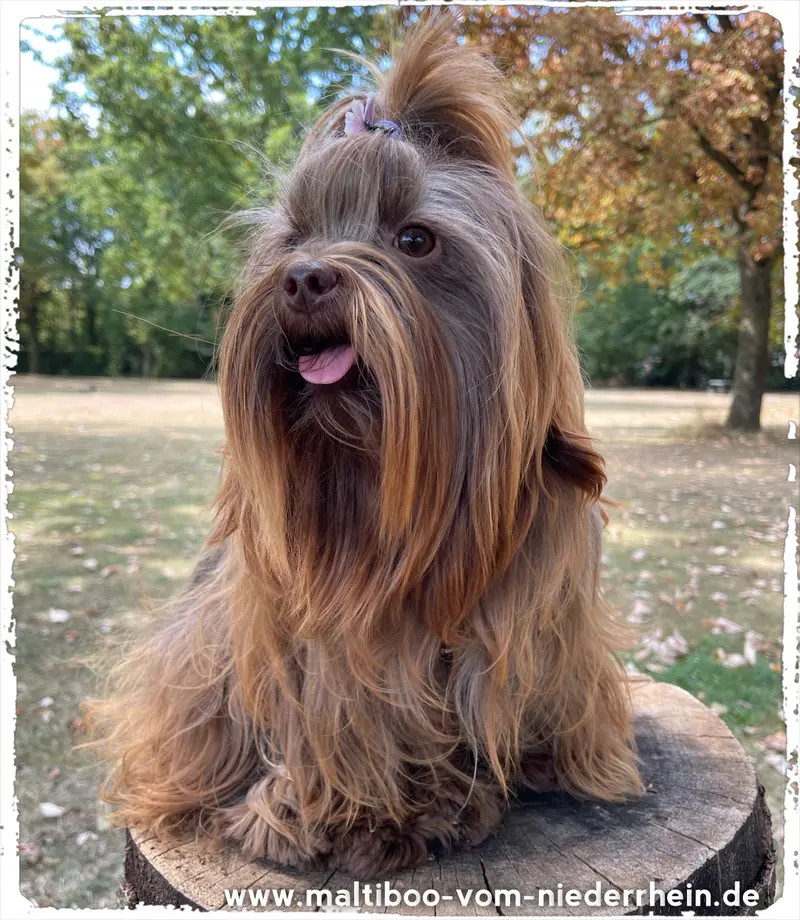
Choosing a new four-legged companion is one of the most exciting yet challenging moments in any prospective dog owner's life. If you are interested in the fascinating world of hybrid dogs—often affectionately called "doodles"—you will likely face the big question sooner or later: Maltipoo vs Goldendoodle? Both breeds have enjoyed meteoric popularity in recent years, and for good reason. They combine the intelligence and low-shedding coat of the Poodle with the wonderful personality traits of the Maltese and the Golden Retriever, respectively.
However, behind those curly ears and loyal button eyes are two very different dogs that place completely different demands on your daily routine, living space, and experience as a dog owner. An impulsive decision can lead to frustration for both you and the animal. That is why, in this comprehensive guide, we are taking a close look at both breeds. We compare temperament, grooming needs, health aspects, and ongoing costs so that you know exactly which fluffy friend best fits your lifestyle.
Maltipoo vs Goldendoodle: The Big Overview
Before we dive into the details, let's take a look at the hard facts. In the following comparison, you will see the key data at a glance. This gives you an initial sense of which categories these two dogs differ in most significantly.
| Feature | Maltipoo | Goldendoodle |
|---|---|---|
| Origin | USA (Hybrid: Maltese & Poodle) | USA (Hybrid: Golden Retriever & Poodle) |
| Breed Group | Companion Dogs | Retrievers & Water Dogs |
| Height | 20–35 cm (Small to Medium) | 55–63 cm (Large) |
| Weight (Males) | 2–6 kg | 25–35 kg |
| Coat Type | Curly, mid-length, no undercoat | Curly to wavy, mid-length, with undercoat |
| Life Expectancy | 12–15 years | 10–15 years |
| Energy Level | 3 out of 5 | 3 out of 5 |
| City Suitability | 5 out of 5 | 4 out of 5 |
As you can see, both are in the same price range (approx. 2,000 to 4,000 euros for a puppy) but differ significantly in size and weight. If you would like more detailed information on specific breed characteristics in advance, I recommend taking a look at our extensive Maltipoo breed profile as well as the detailed Goldendoodle breed profile.
Character & Temperament: Two Hearts, One Poodle Gene
When you ask yourself Maltipoo or Goldendoodle, character is often the deciding factor. Both breeds inherit the high intelligence and eagerness to learn from the Poodle (trainability for both: 4/5). However, the genetic influence of the other parent creates subtle but vital differences in their nature.
The Charming Maltipoo: A Lap Dog with Brains
The Maltipoo is a born companion dog. With a temperament described as friendly, charming, and extremely affectionate, they quickly wrap their humans around their paws. Maltipoos are incredibly people-oriented. They love being the center of attention and spending every spare minute with their family. This deep bond is beautiful, but it brings a challenge: Maltipoos tend not to like being left alone. Separation anxiety can be an issue with this breed, so being alone must be trained gently and patiently from puppyhood.
Despite their playfulness, they are not hyperactive dogs. A Maltipoo enjoys long walks but equally loves cozy afternoons on the sofa. This makes them a perfect companion for people who spend a lot of time at home or for those who can easily bring their dog into the office.
The Sensitive Goldendoodle: The Gentle Giant
A detailed Goldendoodle comparison shows that this breed has inherited the extremely social and tolerant nature of the Golden Retriever. Their temperament is loving, polite, and remarkably sensitive. They possess a kind of internal radar for their human's moods. It is not for nothing that Goldendoodles are frequently and successfully used as therapy or assistance dogs.
The Goldendoodle loves all living creatures. They usually greet strangers as joyfully as they greet their own family. If you are looking for a guard dog, you are looking in the wrong place. With a child-friendliness rating of 5 out of 5, they are extremely tolerant and robust enough to handle the sometimes boisterous play of small children (always under supervision, of course). They are absolute "good-mood dogs" who prefer to accompany their family everywhere.
Grooming and Care: Curly Coats and Living Space
A key factor in choosing between these two dream dogs is your everyday life. How much time do you want to invest in grooming? How big is your apartment? These questions are crucial.
Coat Care: Debunking a Myth
Doodle breeds are often marketed as completely low-maintenance and hypoallergenic. That is not entirely correct. Yes, the Maltipoo has a shedding score of only 1/5, and the Goldendoodle is at 2/5. They shed very little, which makes them interesting for allergy sufferers. However, a dog that doesn't shed will mat!
The Maltipoo comparison regarding coat shows: They have curly to wavy hair but no undercoat. This makes brushing somewhat easier, yet they must be combed several times a week to prevent knots. The Goldendoodle, on the other hand, often has the Retriever's undercoat paired with the Poodle's curls. This requires very consistent, deep grooming. Daily brushing with specialized tools is often a must here. Both dogs also require regular professional shearing or trimming (about every 8 to 12 weeks). Reliable information on species-appropriate dog grooming can be found at the Verband für das Deutsche Hundewesen (VDH).
Space Requirements and City Suitability
The small Maltipoo shines here. With a maximum weight of 6 kilograms and a height of up to 35 cm, they are the perfect city dog (city suitability: 5/5). They feel perfectly at home in a compact apartment as long as they get their daily walks and mental stimulation. Climbing stairs is no problem – and if they get tired, you can simply scoop them up.
The Goldendoodle is a different caliber. At up to 35 kg and over 60 cm tall, they are a large dog. While they are also well-suited for city life (4/5) because they are usually calm and relaxed indoors, they simply need more space. A large dog in a small apartment on the fifth floor without an elevator? That is not a good idea. Carrying a 35-kg dog becomes impossible in old age or illness. A house with a garden or a spacious ground-floor apartment is significantly better for a Goldendoodle.
Exercise and Mental Stimulation
Both breeds have a moderate energy level (3/5). They are not working machines that need to run for hours every day, but they are intelligent and want to be kept busy. The Goldendoodle is excellent for physically demanding activities. Whether jogging, hiking, or dog sports like agility and dummy training—they participate with enthusiasm.
The Maltipoo also loves walks, but their little legs are not built for marathons. They benefit immensely from brain games, trick training, or indoor scent work. Mental stimulation often tires them out more than just walking endless kilometers.
Health and Life Expectancy: The Heritage of Parent Breeds
Hybrid breeding is often attributed to the so-called "heterosis effect"—the assumption that mixed breeds are healthier and more vital than purebreds. However, this is only partially true. A hybrid dog can inherit the genetic weaknesses of both parent breeds. Therefore, choosing a responsible breeder who subjects all parent animals to strict health screenings is absolutely essential.
The little Maltipoo boasts a life expectancy of 12 to 15 years. Typical health aspects to watch out for at this size include patellar luxation (a dislocating kneecap), dental diseases due to a small jaw, and eye diseases (such as PRA) that can be inherited from the Poodle or Maltese.
The Goldendoodle has a very good life expectancy for large breeds of 10 to 15 years. Due to their weight and size, the joints are the primary weak point here. Hip dysplasia (HD) and elbow dysplasia (ED) are conditions that occur in both Golden Retrievers and Standard Poodles. Breeders should also test for heart and eye diseases. For information on general health standards and recommended exams in dog breeding, visit the Bundestierärztekammer (German Veterinary Chamber) or specialized clinics.
Costs: From Purchase to Golden Years
A dog costs money—and not a small amount. If you are wondering which breed fits your budget better, you have to think beyond the purchase price alone.
The Purchase Price
Both the Maltipoo and Goldendoodle are highly sought-after dogs. The price range for both is between 2,000 and 4,000 euros. This high price from reputable breeders is justified by expensive DNA tests, veterinary check-ups for the parents, and the loving, time-consuming rearing of puppies within the family. Please avoid alleged "bargains" on dubious portals—the veterinary costs for a sick puppy from a puppy mill will quickly exceed the amount you saved many times over.
If you are ready to take this step, look on verified and secure platforms. You can browse for reputable Maltipoo puppies here or, if your decision has fallen on the larger breed, find responsibly bred Goldendoodle puppies here.
Ongoing Costs
This is where the costs diverge significantly in the Maltipoo vs Goldendoodle comparison:
- Food: A 5-kg Maltipoo eats a fraction of what a 35-kg Goldendoodle requires daily. The food costs for the large Doodle can easily be four to five times higher.
- Dog Grooming: Both need regular professional grooming. Since groomers often charge by time and effort, shearing a large Goldendoodle is significantly more expensive than grooming a small Maltipoo.
- Accessories and Vet: Large dog beds, large travel crates, high-dose medication in case of illness (as these are priced by weight)—everything is more expensive for the Goldendoodle.
Which Breed is Right for You?
Which dog fits perfectly into your life? Let's summarize the findings in ideal owner profiles:
The Maltipoo is perfect for you if...
- you live in a city apartment (even without an elevator).
- you are looking for an affectionate companion dog that you can take with you often (e.g., in a small bag to a restaurant or office).
- you are prepared to train "being alone" in very small steps.
- your monthly budget for food and grooming should remain moderate.
- you may not be physically capable of holding back a 30-kg dog on a leash.
The Goldendoodle is perfect for you if...
- you have a family with children (even smaller ones) and are looking for a robust, extremely good-natured playmate (child-friendliness: 5/5).
- you have plenty of space, ideally live on the ground floor, or have a garden.
- you are physically very active and are looking for a buddy for long hikes or dog sports.
- you can comfortably afford the significantly higher ongoing costs for food and vet bills.
- you are looking for an "everybody's darling" who gets along wonderfully with dogs, cats, and people alike.
Frequently Asked Questions (FAQ)
1. Do Maltipoos and Goldendoodles really not shed at all?
No dog is 100% hypoallergenic or completely hair-free. However, it is true that both breeds shed very little (Maltipoo 1/5, Goldendoodle 2/5). Instead of shedding hair throughout your home, the dead hair gets caught in the curly coat. That is why regular brushing is an absolute must, otherwise, the coat will mat and, in the worst case, must be shaved down to the skin.
2. Can I leave a Maltipoo or Goldendoodle alone without problems?
Both breeds bond very closely with their humans. Especially the Maltipoo tends to have separation anxiety due to their strong need for companionship. No dog should be left alone for 8 hours daily. With consistent and very patient training during puppyhood, both breeds can learn to relax while alone for reasonable periods (approx. 3 to 4 hours).
3. Which of the two dogs barks more?
Generally, neither is considered a classic "yapper." However, due to their Maltese heritage, the Maltipoo often brings a slightly higher level of alertness and may bark at noises in the hallway or the postman. The Goldendoodle is usually calmer and more stoic but is often so happy to see visitors that they comment on it with joyful whining or barking.
4. Is the Goldendoodle suitable for beginners?
Yes, definitely. They are extremely intelligent, eager to please their humans, and forgive minor training mistakes. However, you should not underestimate their size and strength. A 35-kg dog that hasn't learned leash manners can quickly become a problem. Therefore, attending a good dog training school is strongly recommended for beginners.
5. How do I finally decide between a Maltipoo or a Goldendoodle?
Let your living space and budget decide. If you have plenty of space, are financially flexible, and are looking for a robust family dog, choose the Goldendoodle. If you live in an urban environment and are looking for a flexible little companion that adapts to your rhythm, the Maltipoo is the better choice.
Conclusion: Neither breed is "better"—it depends on your life
When we draw the Maltipoo vs Goldendoodle comparison at the end of the day, we find that both breeds are fantastic dogs with wonderful traits. They are intelligent, extremely friendly, highly adaptable, and have a deep desire to be close members of your family. The decision ultimately isn't between "good" or "bad," but between "small and flexible" or "large and robust."
It is important that you honestly reflect on your own life situation. A dog will be with you for the next 10 to 15 years. Take the time to visit breeders, meet the parent animals, and familiarize yourself with the nuances of coat care.
No matter which of these two adorable curly heads you choose—buying a puppy is a matter of trust. At HonestDog, we place the utmost importance on animal welfare, transparency, and animal health. We strictly verify our breeders so that you don't have to worry about illegal puppy traders. Start your search on our platform today and find the dog that perfectly fits you and your life with a clear conscience!