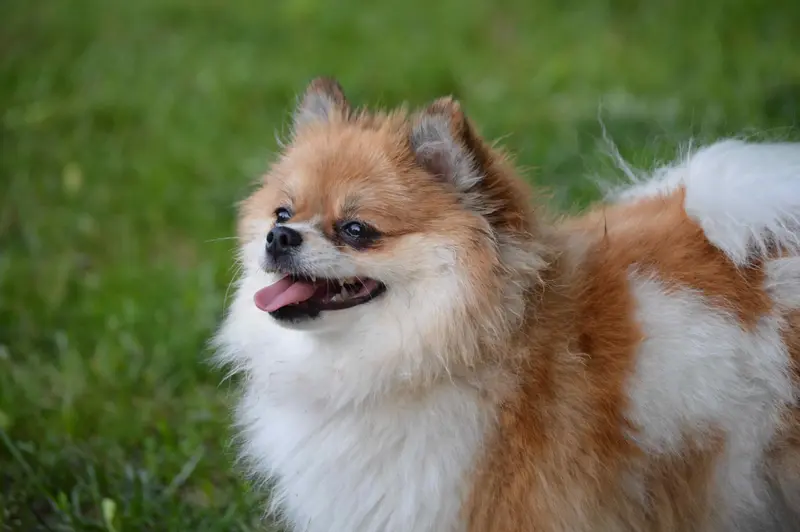
Pomeranian Temperament & Personality: Big Spirit in a Small Package
When you first meet a Pomeranian, you often notice only its lush mane and fox-like face. Yet beneath that compact, fluffy exterior lies a dog that is entirely unaware of its petite 18 to 22 centimeter height. The Pomeranian temperament features a remarkable blend of courage, curiosity, and a deep devotion to its humans.
These dogs belong to FCI Group 5 for Spitz and primitive types. This heritage explains a great deal about their behavior. Although they are regarded today as classic companion dogs, they carry the legacy of alert, resilient farm dogs. The Pomeranian personality is therefore not that of a passive lapdog, but rather that of an attentive, lively partner eager to join in on daily life.
Core Personality: Confident, Bold, and Fiercely Loyal
Dog experts often describe the pomeranian temperament as lively and bold. These dogs approach their surroundings with an assurance that can be surprising given their body weight of just one to three kilograms. They tend not to back down from larger dogs and will defend their territory or favorite people with immense seriousness.
The Strong Human Bond
A central trait of this breed is immense loyalty. Pomeranians typically form a very close, almost symbiotic relationship with their primary caregiver. They prefer to follow you into every room and keep an eye on the action. This attachment makes them wonderful, empathetic companions who possess a fine antenna for your moods.
The flip side of this close bond, however, is a distinct vulnerability to separation anxiety. A Pomeranian dislikes being left alone for hours at a time. If you don't train them gently and incrementally from puppyhood, leaving the dog behind can cause severe stress, often showing up as persistent barking or destructive behavior.
Vigilance as a Historical Heritage
The Pomeranian was not created as a purely ornamental pet, but descends from larger Spitz dogs whose job was guarding home and hearth. This guarding instinct remains deeply anchored in the Pomeranian personality today. They observe their surroundings closely and reliably announce unfamiliar noises or strangers. Because their voice carries, this trait requires forward-thinking training so that reporting alerts doesn't morph into uncontrolled, constant barking.
For an in-depth overview of the physical traits and history of this breed, take a look at the Pomeranian breed profile, where all relevant facts are compiled compactly.
Who is the Pomeranian suited for?
Choosing the right dog breed should always depend on your personal lifestyle reality. Thanks to its adaptability, the Pomeranian fits into many different living situations, but it does require an awareness of its specific needs.
City Dogs with High Adaptability
The Pomeranian is wonderfully suited for life in the city or an apartment. Its urban suitability is exceptionally high because it doesn't strictly need a private yard, provided it receives sufficient walks and mental stimulation. In rental housing, however, it's important to channel the aforementioned vocal Pomeranian temperament into orderly paths to avoid conflicts with neighbors.
Singles, Seniors, and First-Time Owners
For single individuals or seniors who spend a lot of time at home, the Pomeranian makes an ideal companion. It enjoys undivided attention and is physically easy to handle due to its compact size. The breed is also suitable for dedicated first-time dog owners. The key requirement here is that beginners shouldn't be fooled by the cute appearance and must provide the dog with clear rules and structures.
Families and Living with Children
Family and child friendliness in the Pomeranian is solid, but comes with a few important caveats. Due to its fragile physique—especially during puppyhood—rough play with toddlers carries a high risk of injury for the dog. Furthermore, the Pomeranian values respectful handling and will withdraw or nip as an absolute last resort if cornered. Families with older children who have already learned to respect an animal's boundaries generally harmonize much better with this breed. Compatibility with other dogs or pets is usually good, provided the Pomeranian was socialized early and positively.
Comprehensive information on breeding and the official standards of this breed is also offered by the VDH (Association for German Dogs).
Exercise Needs and Species-Appropriate Activities
A frequent misconception is that small dogs need hardly any exercise. The Pomeranian has a moderate energy level. While it doesn't demand hours of running alongside a bicycle, regular, varied walks are essential for its physical and mental well-being. Two to three daily walks of 30 to 45 minutes each, paired with playtime, usually cover its physical needs well.
Brain Work Instead of Counting Kilometers
The Pomeranian personality is extremely inquisitive. These dogs learn quickly and take great joy in mental challenges. Pure physical exercise often doesn't tire them out completely. Meaningful activities include:
- Trick Dogging: Learning small tricks strengthens the bond and mentally exercises the dog.
- Nosework: Search games in the living room, working with snuffle mats, or small tracking trails in the garden challenge the sense of smell.
- Puzzle Toys: Wooden puzzles where the dog gets treats by sliding or pulling encourage frustration tolerance and concentration.
Grooming as a Fixed Part of Daily Life
The Pomeranian features long, straight topcoat with extremely dense undercoat. Grooming effort is correspondingly high. Brushing daily or every other day is a must to prevent the undercoat from matting. You should establish this routine not as a chore, but as quality time between dog and owner. Regular combing and checking eyes, ears, and teeth require the dog to tolerate being touched all over its body. You must train this early, because an assertive Pomeranian temperament will otherwise quickly spark arguments during grooming sessions.
Health aspects and recommendations for keeping the dog healthy through proper care can also be read up on at expert organizations such as the Federal Chamber of Veterinarians, which provides owners with well-founded preventive knowledge.
Challenges in Training and Everyday Life
The trainability of the Pomeranian is often rated as moderate. This isn't due to a lack of intelligence—quite the contrary. Pomeranians are clever dogs that bring a certain degree of independence and stubbornness, however. If they don't see the point of an exercise or if the reward isn't attractive enough, they gladly tune out.
Delusions of Grandeur and Overconfidence
One of the biggest practical challenges is a lack of respect for large dogs. A Pomeranian that feels provoked will try to put a full-grown German Shepherd in its place. This is where the owner must step in to take the lead and steer the small dog away from potentially dangerous situations before it gets into trouble.
Consistency is Key
With small dogs, inconsistent behavior is often forgiven faster than with large breeds, since a leash-pulling Pomeranian is physically easy to hold. Yet if you fail to set clear boundaries for your Pomeranian, you will inadvertently raise a tiny household tyrant. Rules that apply to a large dog should apply to the Pomeranian as well. If the dog isn't allowed on the couch, you must enforce this gently but firmly from day one.
The Association for German Spitz also recommends attending a well-run puppy class. Here, the Pomeranian learns canine etiquette and appropriate interaction with peers of various sizes in a controlled setting.
Pomeranian Experiences: What Shapes Daily Life
Looking at the Pomeranian experiences of long-time owners reveals a clear picture: the greatest joy these people experience is the cheerful, almost clownish nature of their dogs. Pomeranians bring life to the room. They communicate a lot, not just through barking, but also via facial expressions and body language. Owners frequently report that their dogs know precisely how to get their way with a charming look.
Challenging experiences usually revolve around coat shedding and guest management. Since the Pomeranian likes to announce strangers, you often need consistent ongoing training here so the dog learns that you take responsibility for incoming guests and that it can stop its "guard duty."
Frequently Asked Questions (FAQ)
Is a Pomeranian hard to train?
They aren't necessarily hard to train, but they require a lot of consistency. The Pomeranian is very intelligent and grasps commands quickly. However, its independent nature means it spots inconsistency immediately and takes advantage of it. With positive reinforcement, short training sessions, and clear rules, it can be shaped very well.
Can a Pomeranian easily stay home alone?
By nature, this breed dislikes being left alone. The Pomeranian is heavily attached to its human. You must build up alone-time starting from puppyhood in tiny steps (on a minute-by-minute basis). If you work a full-time job out of the house and cannot take the dog with you, this breed is not the ideal choice.
How much does a Pomeranian really bark?
As descendants of guard dogs, Pomeranians are very attentive and typically announce noises or strangers by barking. They are definitely not silent dogs. How pronounced the barking is depends heavily on training. If the dog learns early that its owner controls the situation, you can reduce the alerting to a brief “woof.”
How much time does coat grooming take?
Grooming is time-consuming. The double coat with its dense undercoat ideally requires daily brushing, or at minimum thorough brushing two to three times a week. If neglected, the undercoat quickly mats, which can lead to skin problems. Owners should plan for about two hours weekly dedicated purely to coat care.
Do Pomeranians get along with cats or other pets?
With early and gentle habituation, living with cats and other pets usually works very well. The Pomeranian has a very low prey drive. It's important that both animals have retreat spaces and that initial meetings unfold in a relaxed and controlled manner.
The Path to a Well-Balanced Companion
The Pomeranian temperament is characterized by liveliness, a strong attachment to its humans, and a healthy dose of self-confidence. It makes a fantastic dog for anyone wanting an active companion in a small format who is ready to invest in training and coat care. A life expectancy of 12 to 16 years means you have a long journey ahead of you together with this dog.
The foundation for a healthy and well-socialized dog always begins with choosing the right breeder. A reputable breeder shapes the Pomeranian personality decisively during the first sensitive weeks. If you feel this breed fits your life perfectly and you're ready for this wonderful responsibility, you can discover trustworthy breeders on our platform. Start your search and find your new companion by learning where you can find reputable Pomeranian puppies for sale.