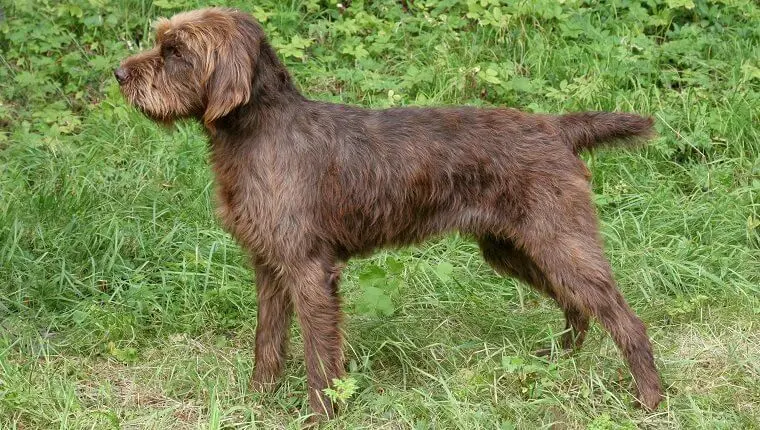
The Origins Shape the Behavior: How the Pudelpointer Ticks
If you're exploring the pudelpointer temperament, you inevitably look back at the history of this breed. In the late 19th century, the idea emerged in Germany to cross the exceptional water-love and high intelligence of the Poodle with the outstanding scenting ability and endurance of the English Pointer. The goal was a versatile, robust hunting dog. It is precisely this genetic blend that still defines the pudelpointer character today. This is a working dog that seeks a close bond with its humans while possessing enormous energy and a keen instinct for game.
In everyday life, the breed presents itself as friendly, clever, and driven by a strong "will to please"—the deep desire to work alongside humans and solve tasks correctly. This willingness to cooperate clearly sets it apart from dog breeds bred for independent action, such as livestock guardian dogs. A pudelpointer seeks eye contact with its handler and waits for instructions, making it an exceptionally pleasant companion, provided its basic needs for exercise and mental stimulation are met.
Core Character: The Typical Pudelpointer Personality in Detail
Dogs of this breed bring remarkable adaptability to the table. They can switch from a highly focused working mode in the field to a relaxed family mode in the living room at home. Nevertheless, the pudelpointer temperament is defined by a baseline energy that looks for a suitable outlet.
Intelligence and Working Drive
The intelligence that the Poodle contributed to the breed makes the pudelpointer extremely trainable. It often grasps new commands and routines after just a few repetitions. This is a major advantage during training, but it also means the dog requires mental stimulation. Mindlessly repeating the exact same obedience drills quickly bores it. Experienced owners know that nosework, retrieving games, and challenging tracking tasks mentally engage and satisfy these dogs.
People-Oriented and Sensitive
Despite its robust appearance and a height of up to 68 centimeters at the shoulder, the pudelpointer is quite a sensitive dog. It reacts poorly to harsh words or rough handling. A loud environment or constant stress in the household can unsettle it. It builds a deep bond with its primary caregivers and prefers to be present for all family activities. Because of this attachment, many representatives of the breed do not like being left isolated for many hours.
Who Is This Pointing Dog Suitable For?
Deciding on a dog of this size and energy level should always be carefully considered. Many dog owners share in their experiences that the pudelpointer is a wonderful companion when the framework conditions are right.
Families and Children
As a family dog, the pudelpointer brings excellent traits. It is considered strong-nerved and generally very friendly and patient with children. However, as with all dogs, coexistence must be supervised by adults. An adult male weighing between 25 and 30 kilograms can accidentally knock over a small child during boisterous play. Yet when children learn to respect the dog's resting zones, an intimate and playful friendship often develops.
Singles, Active Couples, and Novice Owners
For active people who spend a lot of time in nature, this breed is ideal. Anyone who enjoys jogging, going on extended hikes, or even cycling will find an enduring partner here. The breed is only conditionally suitable for absolute dog novices. Its high willingness to learn makes many things easy, but its hunting instinct requires consistent and forward-looking training, which can present beginners with challenges unless they seek professional support at a dog school.
Seniors
Because of its high energy level—which definitely hits the maximum score on a scale from one to five—the pudelpointer is only suitable for older individuals if they are still very spry and steady on their feet. The physical strength of the dog on the leash, especially when it spots game, requires corresponding physical stability on the other end of the leash.
Coexistence: Other Pets, Animals, and Living Situations
The social structure and environment play an essential role in the dog's well-being. Due to its breeding history, the pudelpointer is a socially competent dog that can integrate into various households.
Compatibility with Other Animals
Toward other dogs, the breed is usually open-minded and compatible. In hunting, it was and is important that dogs can work smoothly in packs or with unfamiliar dogs without getting into fights. Aggression toward conspecifics is not typical of the breed. However, caution is advised with smaller pets such as cats, rabbits, or guinea pigs. The genetically anchored hunting instinct can easily be triggered here. While many pudelpointer reviews show that dogs introduced early on as puppies can live with the family cat without issues, the situation outdoors in the field usually looks different for stray cats.
The Ideal Living Situation: City or Country?
A house with a securely fenced yard in a rural area is the ideal environment. Here, the dog can gather impressions, move freely, and live out its guarding instincts, which are present to a moderate degree. Keeping one in a city apartment is fundamentally possible, but it demands a high level of commitment from the owner. A quick walk around the block is not enough for this outdoorsman. City residents must plan daily trips to parks, forests, or off-leash dog areas so the dog can get species-appropriate exercise.
Exercise Needs and Species-Appropriate Engagement
An under-stimulated pudelpointer will find its own tasks—and these rarely match the owner's ideas. Constant barking, destructive behavior toward furniture, or excessive patrolling along garden fences are almost always symptoms of under-stimulation.
More Than Just Walking
Two to three hours of exercise a day should be the minimum for a healthy, adult pudelpointer. This is not just about plain running. These dogs love to swim, roam through the underbrush, and explore new environments. Their dense, harsh, medium-length coat with protective undercoat makes them largely impervious to cold, wetness, and thickets.
Dog Sports as an Alternative to Hunting
Even though the breed was bred for hunters, it is enjoying growing popularity as an athletic companion. Anyone who does not work their pudelpointer as a hunter must provide substitute tasks. According to information from the German Kennel Club (VDH), pointing dogs are characterized by an excellent nose and high endurance. These traits can be perfectly utilized in dog sports:
- Mantrailing and tracking: Here, the dog gets to use its excellent nose, which mentally exhausts and satisfies it greatly.
- Dummy training: Searching for and retrieving objects corresponds to natural behavior after a shot while hunting.
- Agility and Hoopers: Physical dexterity and close cooperation with humans take center stage here.
- Water work: The love of water inherited from the Poodle often makes these dogs passionate swimmers and retrievers from bodies of water.
General guidelines for the healthy physical conditioning of large dog breeds are also provided by the Federal Chamber of Veterinary Surgeons in their animal health recommendations. According to these, growing dogs must not have their joints and ligaments overloaded by premature jump training or cycling.
Potential Everyday Challenges
As uncomplicated as the dog's demeanor often seems indoors, certain breed characteristics can become challenges in everyday life and require consistent leadership.
The Hunting Instinct Cannot Be Switched Off
The pudelpointer is a thoroughbred hunting dog. It picks up scents, observes the slightest movements in the bushes, and has the urge to indicate game (known as pointing) or pursue it. This instinct can be controlled through training and channeled appropriately, but it can never be completely bred out. An absolutely reliable recall (anti-hunting training) is essential. Until this is mastered, the dog belongs on a long training leash in game-rich areas. For owners, this means constant attentiveness during walks in nature.
The Issue of Being Alone
The strong fixation on caregivers means that pudelpointers dislike being isolated for extended periods. If a dog of this breed is regularly left alone in an apartment for eight hours, it can develop separation anxiety. Training the dog to be alone must be built up gently in tiny steps starting in puppyhood. Even so, the pudelpointer remains a dog that feels most comfortable sharing daily life with its family.
Training: Consistency Meets Sensitivity
The trainability of the pudelpointer is rated as high. It wants to learn and please. Nonetheless, training requires a delicate touch.
Early Socialization
As with any large dog, the socialization phase in the first months of life lays the foundation for later behavior. Contact with various people, environmental stimuli, noises, and other dogs should happen gently but steadily. If questions regarding behavior arise with a puppy or young dog, exchanging views with a reputable breeder is often helpful. Specific information on breeding and owner requirements is offered, among others, by the Verein Pudelpointer e.V., which is dedicated to preserving breed-typical traits.
Cooperation Instead of Drill
The pudelpointer responds best to positive reinforcement. Praise, play, and food rewards strongly motivate it. Harshness or loud shouting lead more toward avoidance behavior, loss of trust, or complete shutdown in this breed. At the same time, it requires clear rules and structures. Its intelligence means it quickly sees through inconsistencies in its humans and takes advantage of them. A clear "no" that applies today must also hold true tomorrow.
Frequently Asked Questions (FAQ)
Is the pudelpointer a beginner dog?
The pudelpointer is manageable for dedicated beginners, provided they are willing to thoroughly engage with dog training—especially the hunting instinct—and attend a good dog school. Its friendly and people-oriented nature helps beginners, but its energy level and hunting drive require expert guidance.
How pronounced is the hunting instinct?
As a classic pointing dog, the pudelpointer has a strongly pronounced hunting drive. It is bred to track down and indicate game. Owners must establish consistent recall training from the start and offer alternative activities for its nose and mind to keep this drive under control.
Does the pudelpointer shed heavily?
Hair loss is in the moderate range. The dense, harsh coat with undercoat protects the dog from weather extremes. Regular brushing, about once or twice a week, helps remove loose hair and dirt. The grooming effort remains limited overall since the harsh coat repels a lot of dirt on its own once it has dried.
How long can a pudelpointer stay alone?
After careful and slow training, an adult dog can typically stay alone for about four to five hours. However, the breed is very people-oriented and needs the closeness of its pack. This breed is not ideal for people who work full-time and cannot take the dog to the office or arrange alternative care.
Conclusion: Deciding on the Pudelpointer
The pudelpointer temperament is characterized by a wonderful mix of joy in working, intelligence, and deep attachment to its humans. Anyone seeking a robust partner for outdoor activities, spending lots of time in nature, and enjoying active dog training will find a loyal and adaptable companion in this pointing dog. It is less suited for a primarily sedentary city life without sufficient opportunities for free movement in fields and forests.
Acquiring such a dog brings responsibility for the next 12 to 14 years. It is worthwhile to gather detailed information in advance and contact various breeders to ensure the dog matches your lifestyle.
If you want to dive deeper into the details of this fascinating breed, feel free to read our detailed Pudelpointer breed profile. Should you, after careful consideration, be ready to share your life with one of these athletic dogs, HonestDog offers a secure starting point. On our platform, you will find trustworthy breeders and can look around at your leisure if you want to find pudelpointer puppies.