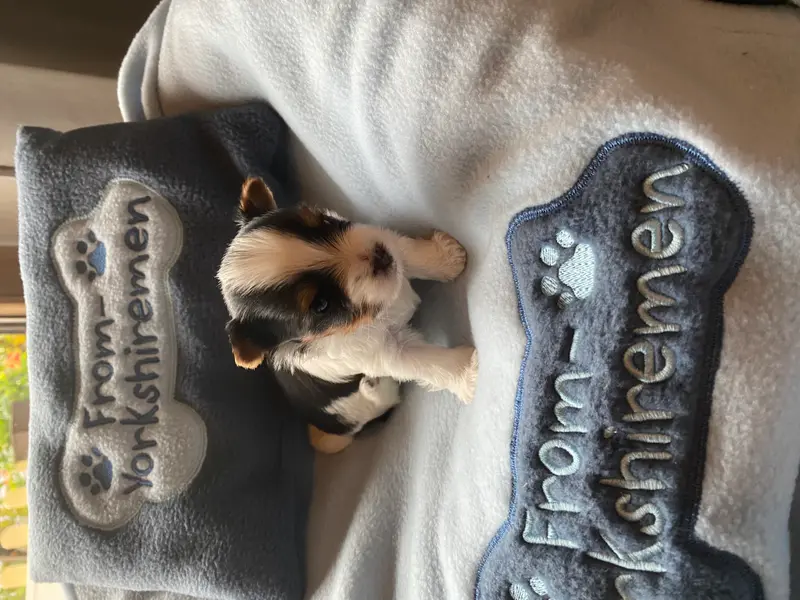
If you're looking for a small, loyal companion who captivates you not just with an adorable look, but also with a big personality, you’ve likely narrowed your search down to two of the most popular dog breeds in the world. Many prospective owners face the Yorkshire Terrier vs. Maltese dilemma. At first glance, both breeds share many similarities: they are small, have long, silky hair without an undercoat, barely shed, and are excellently suited for apartment living. However, once you take a closer look, fascinating differences in temperament, history, and daily needs emerge.
As an experienced dog expert, I would like to take you on a journey into the world of these two wonderful breeds. We will clear up myths, dive deep into their personality traits, and help you answer the question, "Yorkshire Terrier or Maltese?" honestly and informatively based on your individual life situation.
The Ultimate Breed Comparison at a Glance
Before we dive into the fine details of character traits and grooming requirements, a quick fact check is helpful. The following table provides a compressed overview of the key data you should consider when comparing the Yorkshire Terrier and the Maltese.
| Feature | Yorkshire Terrier | Maltese |
|---|---|---|
| Origin | England | Mediterranean |
| Breed Group (FCI) | Group 3: Terriers | Group 9: Companion and Toy Dogs |
| Height (Male) | 15–18 cm | 21–25 cm |
| Weight (Male) | 2–3 kg | 3–4 kg |
| Temperament | Affectionate, lively, spirited, confident | Gentle, playful, charming, clingy |
| Trainability | 3 out of 5 | 5 out of 5 |
| Child-Friendliness | 2 out of 5 | 3 out of 5 |
| Dog Compatibility | 3 out of 5 | 4 out of 5 |
| Life Expectancy | 13–16 years | 12–15 years |
| Price Range | 1,500–3,000 EUR | 1,500–3,000 EUR |
For deeper, up-to-date information on breed standards, it is always worth checking the official websites of the VDH (German Kennel Club). However, numbers never tell the whole story. So, let’s take a look at the soul of these dogs.
Character & Temperament: Terrier Spirit vs. Companion Dog
The most significant difference between the two breeds lies in their DNA and original purpose. Understanding a dog's history helps you better interpret its behavior in modern daily life.
The Yorkshire Terrier: A Big Dog in a Small Package
The Yorkshire Terrier may be small, but its character is anything but. It was originally bred in 19th-century England to hunt rats and mice in textile mills. You can still see this legacy today. They are lively, energetic, and brimming with a level of self-confidence usually expected from much larger dogs. A Yorkie rarely backs down and presents itself to the world as courageous and spirited.
One of the Yorkie's most beautiful qualities is their deep devotion. They love being close to their humans and often develop an especially tight, almost exclusive bond with one specific person in the family. Their natural curiosity ensures they react quickly to anything that moves – the terrier in them certainly has a tendency toward a certain prey drive. They are highly intelligent and learn tricks in a flash, but they can also display a healthy portion of stubbornness. You can find more details about their character in our comprehensive Yorkshire Terrier breed profile.
The Maltese: A Heart of Gold
In contrast to the working Yorkie, the Maltese has been kept as a pure companion and lap dog in the Mediterranean since ancient times. Their only task has always been to bring joy to their humans – and they do exactly that with flying colors. The Maltese is gentle, extremely playful, and possesses an undeniable charm.
This little dog wants to come along everywhere and participate in everything you do. They have a cheerful and sometimes downright clownish temperament that is guaranteed to keep spirits high. While they also have a certain curiosity and might chase a butterfly during play, a true, deep-seated hunting instinct is barely present. They are much more focused on pleasing their owners (the "will to please"), which makes them more cooperative in many situations. We have summarized all the in-depth information on this in our Maltese breed profile.
Care & Maintenance: Silky Fur Takes Effort
Both breeds have one thing in common: they possess beautiful, silky hair without a warming undercoat. This brings a huge advantage: both breeds score a shedding level of only 1 out of 5. They won't cover your home in annoying fur balls. However, this also means high maintenance requirements.
Grooming and Hygiene
For the Yorkshire Terrier, grooming requires a full 5 out of 5. The fine, human-like hair tangles easily and requires daily brushing and combing. Furthermore, the hair grows continuously, making regular visits to a dog groomer (about every 6 to 8 weeks) a must. Many owners opt for a shorter "puppy cut" to make daily grooming more practical.
The Maltese is only slightly easier to groom (4 out of 5 points). Their pure white coat is extremely prone to dirt. Special attention must be paid to eye care: Maltese are prone to teary eyes, which can quickly lead to unsightly reddish-brown staining (tear stains) on their white fur. The eye area should therefore be cleaned gently every day. Both breeds also require consistent dental care, as small dog breeds are highly prone to tartar.
Exercise and Living Space
When it comes to housing, both breeds are extremely adaptable. With a city-suitability score of 5 out of 5, both the Yorkie and the Maltese are ideal apartment dogs. They don't need a huge garden to be happy. Nevertheless, they are not couch potatoes!
With an energy level of 3 out of 5, both require daily, stimulating walks. The Maltese loves searching games and small obedience exercises in the park, while the Yorkie enjoys exploring the area at a brisker pace and sniffing out its terrier instincts.
Health & Life Expectancy
Small dogs often have the privilege of reaching a ripe old age. The Yorkshire Terrier has a remarkable life expectancy of 13 to 16 years, while the Maltese follows closely behind with 12 to 15 years. However, their small size and specific breeding come with certain health predispositions.
- Yorkshire Terrier: Commonly prone to patellar luxation (slipped kneecaps), tracheal collapse (narrowing of the windpipe, leading to a honking cough), and sensitive digestion.
- Maltese: Patellar luxation is also an issue here. Additionally, there are occasional eye diseases, breed-specific allergies often manifesting as skin irritation, and the so-called "White Dog Shaker Syndrome," a treatable neurological condition.
For both breeds, prevention is the best protection. According to recommendations from the German Federal Chamber of Veterinarians, especially for small dog breeds, regular cardiac check-ups and, above all, close dental monitoring should be carried out from middle age onwards, as gum inflammation can put a strain on internal organs.
Costs: What Does a Small Dog Cost?
If you are seriously asking yourself: "Yorkshire Terrier or Maltese?", you shouldn't ignore the financial aspects. Regarding the initial purchase costs, there isn't much difference between the two breeds. A puppy from a reputable, health-tested VDH breeder currently costs between 1,500 and 3,000 euros for both breeds.
The price is justified when you consider the expensive health screenings, the loving home upbringing, and the usually small litter sizes (often only 2 to 4 puppies). Please never fall for supposed bargains from dubious backyard breeders. If you are ready for a new family member, look for certified breeders. Via HonestDog, you can safely and transparently find Yorkshire Terrier puppies and Maltese puppies.
Ongoing costs for small dogs are lower than for a Newfoundland, but should not be underestimated. You should budget about 80 to 150 euros per month for:
- High-quality food (small dogs need food with specialized kibble sizes).
- Dog groomer (approx. every 6-8 weeks).
- Dog liability insurance and potentially health or surgery insurance.
- Supplies and vet emergency savings.
Which Breed is Best for Whom?
We arrive at the most important question in every Yorkshire Terrier vs. Maltese comparison: Which dog fits perfectly into your life?
For Families with Children
Here, the Maltese has a slight edge. They score 3 out of 5 points for child-friendliness (Yorkie: 2 out of 5). The Maltese is gentler and more forgiving of small clumsiness. The Yorkie is more defensive due to their terrier heritage; if they feel pressured or a toddler is too rough, they can draw a clear boundary. Additionally, the extremely delicate bones of the Yorkie (they often weigh only 2 kilos!) are prone to injury during wild children’s play. Both breeds are better recommended for households with older, understanding children who respect the dog's space.
For First-Time Owners
If you have never had a dog, the Maltese is the easier choice. Their trainability is 5 out of 5. They want to please you, love to learn, and don't have a strongly pronounced prey drive. The Yorkie (trainability 3 out of 5) requires more consistency. If you let them get away with too much, they quickly develop "Small Dog Syndrome" – they take charge, bark at the leash, and terrorize guests. A Yorkie needs loving but very clear leadership.
For Multi-Dog Households
The Maltese is very compatible with other dogs, scoring 4 out of 5. They love social interaction. The Yorkie (3 out of 5) is often so confident that they will challenge dogs five times their size. They vastly overestimate themselves. Good socialization during puppyhood is therefore absolutely critical for a Yorkie.
For Singles and Seniors
Both breeds are a perfect match here. They form extremely close bonds with their owners, love to cuddle, and adapt excellently to their owner's rhythm. However, it is important to know: both breeds are prone to separation anxiety. Because they are so extremely clingy, they suffer greatly if left alone for hours. Being alone must be trained in small, very careful steps from puppyhood for both.
Frequently Asked Questions (FAQ)
Which dog barks more, the Yorkie or the Maltese?
Tends to be, the Yorkshire Terrier is more talkative and vigilant. As a former working dog, they alert quickly when they hear noises in the hallway. While the Maltese can also bark when the doorbell rings, they generally calm down significantly faster and are less persistent barkers than the terrier.
Are Yorkshire Terriers and Maltese hypoallergenic?
Yes, both breeds are considered very allergy-friendly because they have hair instead of fur and lack the undercoat that sheds seasonally. However, it should be noted: allergies are often triggered not by the hair itself, but by dander or saliva. A preliminary test at the breeder is therefore essential for allergy sufferers.
How long can these dogs be left alone?
Both breeds are very people-oriented. A grown, well-trained dog should never be left alone regularly for longer than 4 to a maximum of 5 hours. For full-time workers without the possibility of taking the dog to the office or hiring a dog walker, neither the Yorkie nor the Maltese is suitable.
Which breed is more robust in bad weather?
Since both breeds lack a warming undercoat, they get cold quickly in wet and chilly conditions. Neither is a robust "all-weather dog." In autumn and winter, both the Yorkshire Terrier and the Maltese need a well-fitting, protective dog coat or sweater to prevent them from chilling.
Conclusion: It Depends on Your Life
As you can see, there is no clear winner in the question of "Yorkshire Terrier vs. Maltese" – and that's a good thing! No breed is objectively "better" than the other. It all depends entirely on what you want from your future companion and what you can offer them in return.
Are you looking for a courageous, spirited little rascal who forms a deep, almost exclusive bond with you and makes you laugh every day with their terrier charm? Then the Yorkshire Terrier is your soulmate. If, on the other hand, you want a thoroughly gentle, adaptable, and cooperative ray of sunshine who avoids any conflict and simply wants to please, you will have the time of your life with a Maltese.
No matter what you decide – both breeds will enrich your life with pure love and joy. At HonestDog, we place the greatest importance on ensuring that person and dog harmonize perfectly. We support you not only with honest breed portraits but also on the most important step of your journey: the search for a healthy, temperamentally sound puppy from an absolutely trustworthy and verified breeder. Let's find the perfect companion for you together!