
Bichon FriseSame FCI section

The Maltese is a cheerful, extremely loyal companion dog—bred for thousands of years to provide constant company to its human. This very nature makes them the perfect, sensitive shadow, though they struggle to be left alone.
How the health grade is calculated
Sources for required breeding screenings. Malteser Club Deutschland 1983 e.V.
Self-check
Answer 6 quick questions about your everyday life and see how well the Maltese fits you — including an honest cost estimate per month, per year, and across the dog's lifetime.


At a glance
The essentials — key facts, traits, and health priorities — before you dive deeper.
Lifespan
12–15 yrs
Shoulder height
20–25 cm
Weight
3–4 kg
Practical
Temperament
Daily life
What matters most
Especially with a Maltese, choosing the right breeder is the single most important decision you'll make. Serious breeders consistently test the parents for inherited conditions, prioritize healthy early socialization, and stay accountable long after handover. A cheap puppy without health screening tends to become the most expensive dog later on.
See HonestDog breeder standards →Colors & coat
The coat colors that occur in the Maltese — including which ones fall outside the breed standard and which carry genetic risk.
Eye colors
 Brown
Coat type
 Long
 Silky
The real vibes check
A Maltese is like a living, fluffy shadow that adapts seamlessly to your daily life, as long as they can be by your side. They don't demand complex tasks, just your undivided presence. If you are looking for an independent dog, you will find this absolute fixation overwhelming; if you are looking for a true soulmate in miniature form, this is exactly what you get.
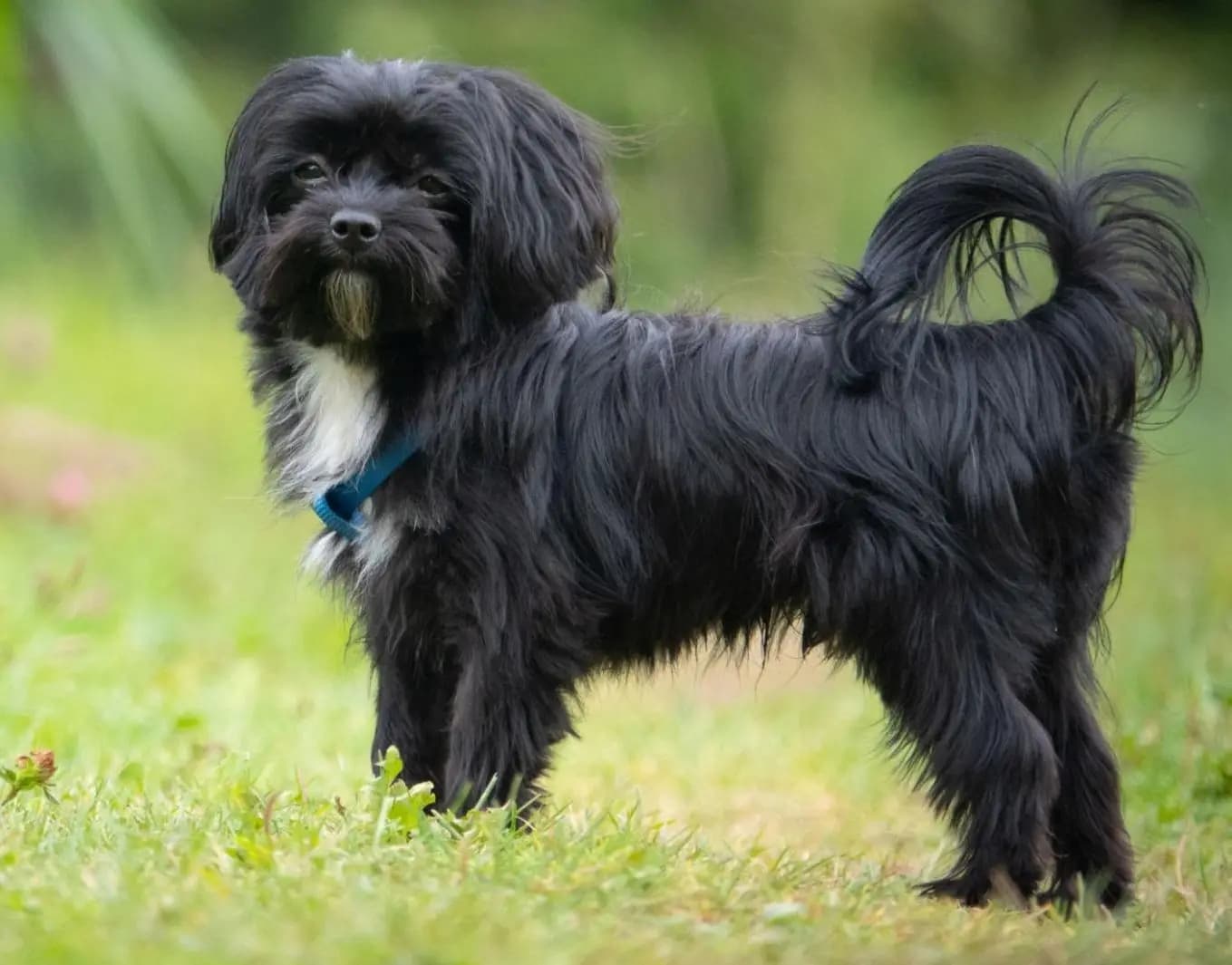
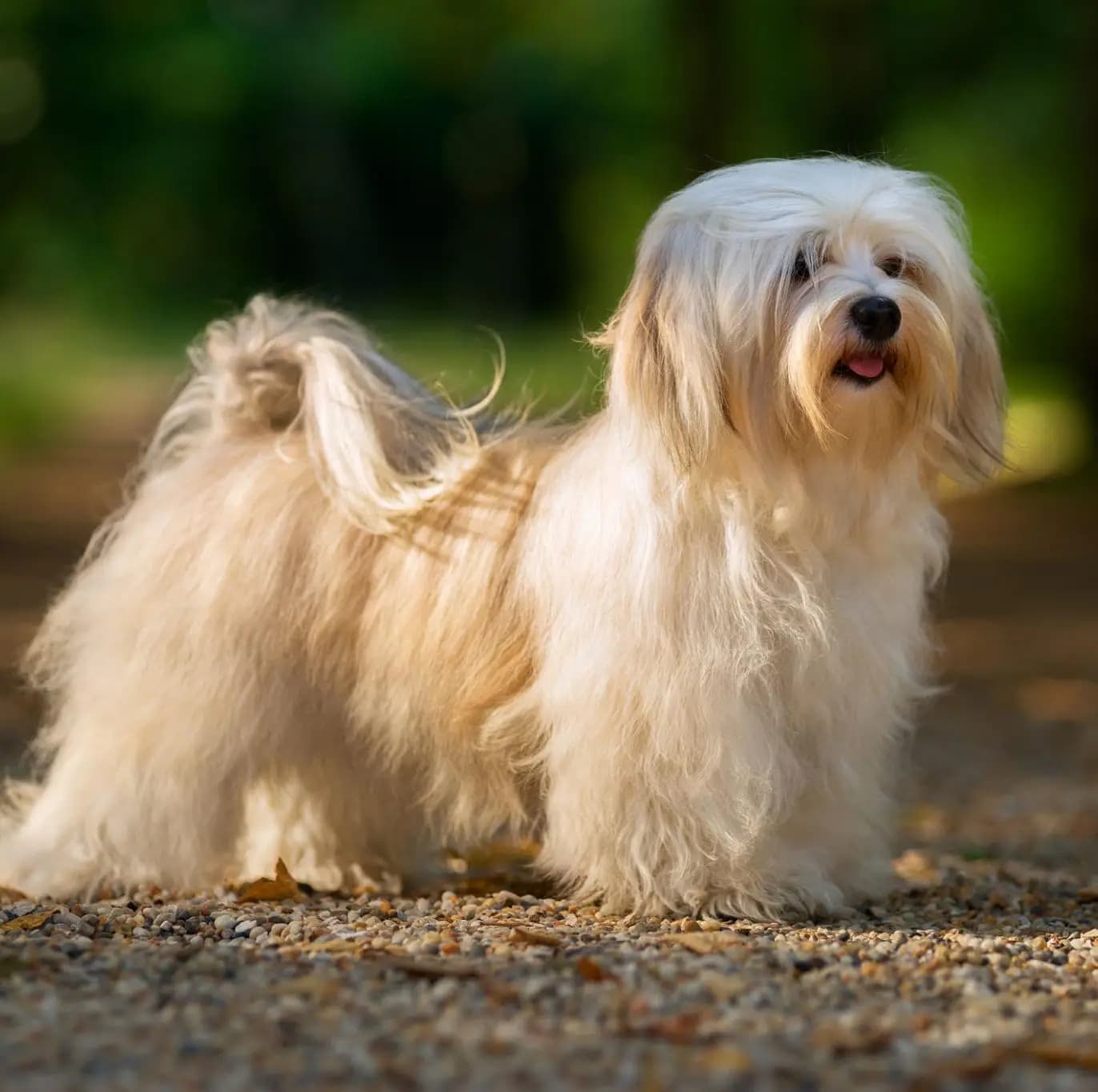
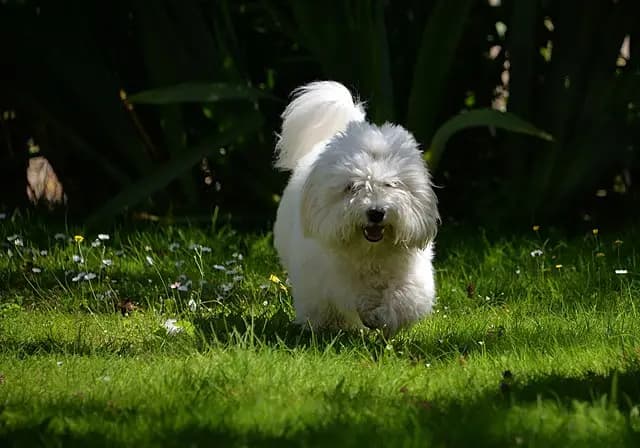
The Maltese is a small, elegant dog with a beautiful, long, silky coat that touches the ground. His large, dark eyes and fluffy tail that drapes over his back give him an adorable appearance that many people find irresistible. As a member of FCI Group 9, the Maltese is one of the companion and toy dogs. There are no specific line differences between show and performance dogs in the Maltese, as this breed is primarily bred as a companion dog. Although small, Maltese are robustly built and have a well-proportioned body.
The Maltese is a dog with a heart of gold. He is known for his devotion and affection towards his owners. This little dog wants to come with you everywhere and be a part of everything you do. He is very playful and enjoys playing with toys and learning tricks. Despite his small size, he has a cheerful and sometimes even clownish temperament that puts you in a good mood. Since Maltese are sociable by nature, they do not tolerate being left alone for long periods of time. It's important to slowly get them used to short periods of separation right from the start. Maltese are not known for having strong hunting behavior, but they can be curious and sometimes chase small animals or movements. Maltese are often alert and will alert you if someone is at the door, but they are usually not aggressive. They are often wary of strangers, but once they realize there is no danger, they can be very friendly. In terms of intelligence, Maltese are surprisingly smart for their size. They learn quickly and enjoy intellectual stimulation. At the same time, they are very sensitive to their owners' moods and can sometimes even appear a little "sentient", as if they know exactly how you feel. Although they are not herding or working dogs, Maltese can be used in various activities such as agility, trick training and even as therapy dogs as they often have a calming effect on people. As companion dogs, Maltese are ideal for people who want to spend a lot of time with their dog. Their size makes them ideal apartment dogs, but they still need regular walks and playtime to stay happy and healthy. It is also important to note that the Maltese's long coat requires grooming. The coat can easily tangle and needs to be brushed regularly. Many owners choose to keep the coat shorter to make grooming easier.
| Watchfulness Greets everyone as a friend — no natural guarding instinct. | Very low |
| Openness to Strangers Warms up quickly and is generally welcoming. | Friendly |
| Hunting or Herding Drive Barely any prey drive — small animals trigger nothing. | Very low |
Fun Fact!
The Maltese is one of the oldest toy dog breeds and is believed to have existed for over 2,000 years, with even aristocrats in ancient Rome valuing them as a companion dog.
Maltese are intelligent and alert dogs that like to move and be exercised.
Maltese are well suited as city dogs because they are small and do not need a large garden to run around in. Still, they need regular walks and mental stimulation. Because Maltese are very affectionate, they often get along well with children, but due to their small size, caution is advised, especially with very young children. Maltese can also get along well with other pets, including cats, if properly socialized.
Loves family life and thrives in a group.
Gets on well with children — with adult supervision.
Actively enjoys the company of other dogs.
Small space, noise, lots of people — no problem at all.
Owning a dog is a privilege, but it's also a real responsibility. Before you bring one into your life, be honest with yourself about the commitment it takes.
Maltese are intelligent and trainable dogs that benefit from regular training. It is important to start training early and use positive reinforcement methods. Although they aren't necessarily ball junkies, they enjoy playtime and can engage in interactive play like ball fetching. Since they also have a sensitive side, it is important not to overstress them and to give them enough rest periods. It is also important for the Maltese to learn frustration tolerance and impulse control. Patient training with clear instructions helps them understand what is expected of them. The Maltese is not a working dog, but he enjoys activities that stimulate his brain and body. Agility, obedience training or simple trick training at home can be a lot of fun and exercise him mentally and physically.
Maltese benefit from a balanced diet that supports their energy and health. High quality food suitable for small breeds is often recommended. Make sure that the food contains all the necessary nutrients and is as free of artificial additives as possible. When it comes to grooming, the Maltese requires regular grooming due to its long, silky coat with no undercoat. Daily brushing is necessary to prevent tangles. The breed copes well with the climate in Germany, although it may require a coat in very cold weather. Maltese don't shed heavily, which makes them attractive to people with allergies.
| Care Level Needs regular professional grooming — time-consuming and costly. | High-maintenance |
| Exercise Needs Needs 1–2 hours of real exercise daily. | Active |
| Shedding No or minimal hair loss — suitable for allergy sufferers. | No shedding |
| Trainability Bred to work closely alongside humans. | Highly trainable |
Our experts are still reviewing this information. Spotted something wrong? Email us at info@honestdog.de.
Solid
Health grade
In the Maltese, patellar luxation (PL) occurs primarily, as well as more serious risks such as patent ductus arteriosus (PDA), portosystemic shunt (hepatic encephalopathy), or hydrocephalus (water on the brain). The Malteser Club Deutschland 1983 e.V. mandatorily prescribes a patellar luxation (PL) examination with a limit of PL 0–1 as well as an inconspicuous tooth and bite evaluation for breeding. Responsible breeders additionally screen their animals for heart and vascular problems as well as congenital neurological diseases. Before buying, make sure to ask for the complete veterinary findings on patellar luxation (PL) and the dentition of both parent animals.
Grade is relative to other breeds — AI-assisted and editorially reviewed.
Methodology and data: HonestDog Dog Breed Health Report 2026
What matters most for this breed
Tap any item to see details.
You should focus on consistent dental care, regular cleaning of the eye area, and maintaining a healthy weight and joint-friendly exercise to relieve pressure on the knees and airways.
Responsible breeders have the mandatory patellar luxation (PL) and dental and bite evaluation performed and additionally screen for diseases such as patent ductus arteriosus (PDA).
Note: This health overview is AI-assisted and editorially reviewed. It is for orientation only and does not replace veterinary advice.
What matters most for this breed — what's common, how much it affects the dog's life, and how to protect yourself as a buyer.
Tap a body region to see the inherited conditions linked to it.
The three most important risks
Pick a region on the map to explore other areas.
Tier 1 reflects the tests Malteser Club Deutschland 1983 e.V. actually mandates. Tiers 2 and 3 show how responsible breeders go beyond.
Club standard. Malteser Club Deutschland 1983 e.V. requires these tests for breeding approval. Ask any reputable breeder for the results.
Not health tests, but required for breeding: the club asks for these results too. They don't count toward the risks or the rating.
Note: This health overview is AI-assisted and editorially reviewed. It is for orientation only and does not replace veterinary advice.
A Maltese costs around ~€180 per month (€90 – €330, depending on your setup). The first year adds up to roughly ~€4,060 including purchase, equipment and puppy school; across the dog's life (13.5 years) it comes to about ~€30,650.
With surgery cover, running costs come to about ~€170 per month — in return, your share of a major operation drops from several thousand euros to around 20 percent.
Per month
~€180
In the first year
~€4,060
Across the dog's life
~€30,650
Purchase price per HonestDog's market analysis (asking prices in Germany, as of October 2026): €900 – €1,300
Median asking price: €1,200; 20 unique listings in the rolling three-month window. Data for this breed · Methodology
Estimate at a mid-range setup (suburban, dry food, 1–2 hours of daily exercise), average German prices, as of July 2026.

 Illustrative image
 Illustrative image
 Illustrative image
 Illustrative image
The Maltese is one of the oldest known dog breeds and its history goes back more than 2,000 years. It comes from the central Mediterranean and was named after the island of Malta, although its origin is not exactly located there. The breed was mentioned in the writings of the Greek philosopher Aristotle and was very popular among nobles and royalty in ancient Greece and Rome. Over the centuries, the Maltese has been valued for its adorable looks and charming personality. The breed was recognized as a separate breed by the FCI at the end of the 19th century.
The Maltese was bred as a companion dog for the aristocracy and is known for its long, silky coat.
Mediterranean area
Antike
Many owners describe the Maltese as an easygoing, affectionate, and very people-oriented companion. These dogs often stick to their people like a little shadow and enjoy close contact on the sofa. Because they shed very little and have no undercoat, forums often recommend them for allergy sufferers or for apartment living. Taking them along to the office, to restaurants, or on trips is usually easy thanks to their handy size, since people mostly react positively to these little dogs.
The flip side of this close bond is being left alone. In owner communities it is one of the most frequently discussed problems: many owners report that their Maltese find it hard to learn to relax without their people. If alone time isn't built up in small steps from an early age, many dogs are prone to separation stress, which shows up as constant whining, barking at the apartment door, or restlessness. Experienced owners consider full-day absences with no one to look after the dog about as unsuitable as it gets for this sensitive breed.
Sources:forum.hundund.dedogorama.appmamacommunity.dedogforum.dehunde.com
Owners stress again and again that despite their dainty looks, Maltese are by no means mere lap dogs but real, lively dogs with surprising energy. They learn tricks and basic commands in no time and enjoy working with their people. Experienced owners warn against underestimating the breed, though: because they are so cute, consistent training is often allowed to slide. This not uncommonly leads to dogs that tend to act out on the leash or bark loudly at visitors, since they do have a strong watchful streak.
Outdoors, many Maltese are much more agile than outsiders expect. Several owners report that their dogs love to run and romp on walks and sometimes show a surprising urge to move or chase, whether that means going after birds, small animals, or anything that moves fast. Loving but clear leadership from puppyhood on is therefore described as essential, to give the little dog security and to nip unwanted yapping in the bud.
Sources:forum.hundund.dedogforum.dehundeforum.comrehakids.de
The central grooming issue is the Maltese's silky white coat. Many owners say daily combing and brushing becomes a must, since hair without an undercoat mats very quickly, especially in the armpits, behind the ears, and on the paws. To make daily life easier and let the dog romp freely in messy weather, most pet owners opt for a practical short cut (a "puppy cut") and regular visits to the grooming salon. Another constant topic in forums is unsightly reddish-brown tear stains under the eyes, which call for ongoing hygiene and care.
On health, owners mainly share experiences with patellar luxation (a dislocating kneecap), which is typical of small dogs. Owners often first notice a brief "skip" or a hind leg being held up, and depending on severity, treatment ranges from conservative physical therapy to surgery. Owners also recommend paying attention to dental care early, since Maltese, like many toy breeds, are especially prone to tartar buildup.
Paraphrased from real owner reports · translated from German
The Maltese is an adaptable dog that adjusts well to various lifestyles. Research the temperament, grooming needs, and space requirements before deciding.
The average life expectancy of a Maltese is 12-15 years. With proper care and regular vet visits, your dog can live a long, healthy life.
Maltese grooming requirements include regular brushing, nail trimming, and dental care. HonestDog provides detailed grooming tips for every breed.
The Maltese can be a great family dog. Proper training and socialization are key. HonestDog provides family suitability information for every breed.
The Maltese comes in these colors: White, Cream.
Havanese vs Maltese: An honest look at temperament, grooming, costs, and which loving toy dog fits your lifestyle best.
Yorkshire Terrier or Maltese? An honest comparison of character, care, costs, and which breed is the right fit for your lifestyle.
Showcase your kennel on HonestDog and reach families searching for a responsibly bred Maltese.